A healthy yum yum sauce is a cold-emulsified condiment that replaces the standard soybean oil mayonnaise base with Greek yogurt and a small amount of heart-healthy oil. It delivers the same tangy, sweet, and slightly smoky flavor for about 35 calories per serving instead of 110.
The American Heart Association recommends limiting saturated fat to less than 6 percent of daily calories to support cardiovascular health. Standard bottled yum yum sauces often rely on egg-based mayo and soybean oil, packing 11 grams of total fat per serving. A homemade healthy version cuts that to 2 grams.
We will walk you through the exact recipe, the food science of the emulsion, and the specific storage rules that prevent your garlic-infused sauce from becoming a food safety risk. This is a 5-minute recipe, but the knowledge behind it will change how you make every future condiment.
Healthy Yum Yum Sauce
The healthy yum yum sauce formula swaps the calorie-dense mayo base for a protein-rich yogurt foundation. The yogurt provides the creamy body. A neutral oil like avocado oil or light olive oil adds the silky, fatty mouthfeel that makes the sauce cling to grilled chicken and shrimp.
The flavor architecture remains identical to the steakhouse original. Tomato paste provides the umami depth and pinkish-orange hue. Rice vinegar delivers the signature tang. Paprika and a whisper of cayenne give the smokiness and gentle heat. A granulated sweetener rounds out the acidity.
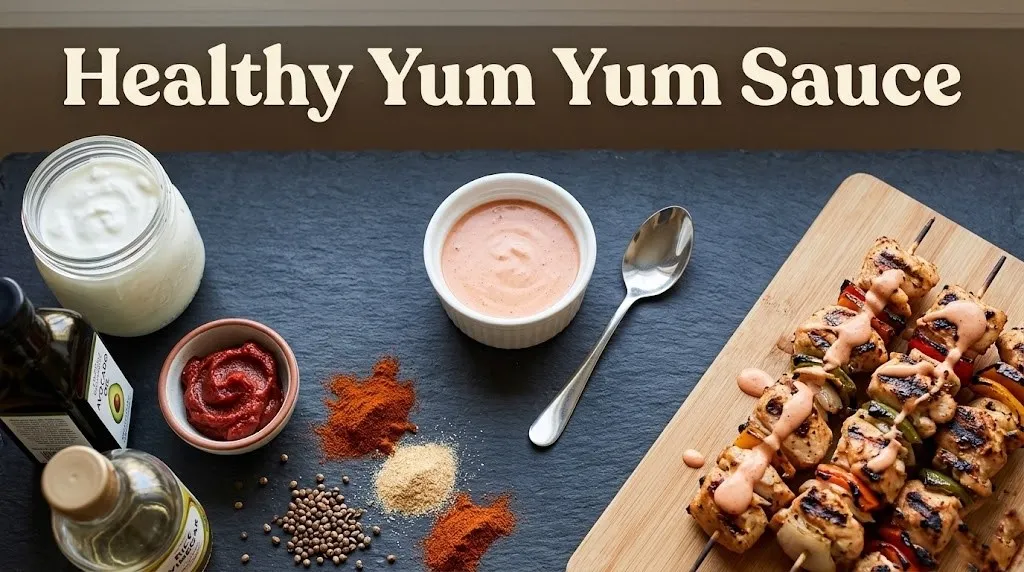
Texture is the biggest challenge when lightening this sauce. Full-fat mayo is a stable, thick emulsion. Watery, non-fat yogurt breaks easily and weeps liquid into the storage container. Using 2% or full-fat Greek yogurt solves this problem. The milk fat stabilizes the emulsion and keeps the sauce thick enough to coat the back of a spoon.
| Version (per 2 tbsp) | Calories | Fat (g) | Carbs (g) | Protein (g) |
|---|---|---|---|---|
| Standard Restaurant/Bottled | 110 | 11 | 2 | 0 |
| Healthy Greek Yogurt Version | 35 | 2 | 3 | 1 |
| Vegan Tofu-Based Version | 45 | 3 | 3 | 2 |
Healthy Yum Yum Sauce Recipe
This recipe takes under five minutes with a single bowl and a whisk. No cooking is required. The only skill involved is whisking the oil into the yogurt base slowly enough to build a stable emulsion.
To make healthy yum yum sauce:
- Place 1/2 cup of 2% Greek yogurt into a medium mixing bowl.
- Add 2 tablespoons of avocado oil, one tablespoon at a time, whisking continuously until fully incorporated.
- Whisk in 1 tablespoon of tomato paste, 1 tablespoon of rice vinegar, and 1 teaspoon of coconut aminos or low-sodium tamari.
- Add 1 teaspoon of garlic powder, 1/2 teaspoon of onion powder, 1 teaspoon of smoked paprika, and 1/4 teaspoon of cayenne pepper.
- Whisk in 1 to 2 tablespoons of cold water until the sauce reaches a pourable, creamy consistency. Refrigerate for 30 minutes before serving.
The resting step is not optional. Garlic and onion powders need time to hydrate in the cold emulsion. A sauce tasted immediately after mixing will have a raw, powdery finish. After 30 minutes in the refrigerator, the flavors meld into the signature yum yum profile.
Homemade Yum Yum Sauce Healthy
Making it at home means you control the sodium content. Bottled yum yum sauce contains roughly 150 to 200 milligrams of sodium per tablespoon. A homemade version using low-sodium tamari or coconut aminos can reduce that to 60 to 80 milligrams without sacrificing the savory backbone.
You also control the sweetener source. Standard versions use high-fructose corn syrup or cane sugar. A 2026 healthy home kitchen relies on a teaspoon of monk fruit sweetener, allulose, or a tiny pinch of pure stevia. These provide sweetness without the 3 to 4 grams of added sugar per serving.
The cost comparison favors the homemade version. A $7 bottle of Terry Ho’s provides about 12 servings. The ingredients for a homemade batch cost roughly $4 and yield a fresher, more vibrant sauce. If you make hibachi-style dinners regularly, the homemade route saves money and refrigerator space over time.
Key Takeaway: Homemade yum yum sauce gives you control over sodium, sweetener quality, and freshness, three things no bottled sauce can match.
Is Yum Yum Sauce Healthy
Standard bottled or restaurant yum yum sauce is not healthy as a dietary staple. It is a calorie-dense, fat-forward condiment with minimal micronutrient value. It is healthy only in strict moderation, defined as a 1 to 2 tablespoon serving used to make lean proteins and vegetables more palatable.
The primary health concern is the fat source. Soybean oil, the main ingredient in most commercial versions, is high in omega-6 polyunsaturated fatty acids. The ratio of omega-6 to omega-3 in the standard diet is already heavily skewed toward omega-6s, a pattern associated with chronic inflammation in observational studies.
The secondary concern is the added sugar. A single tablespoon contains roughly 2 grams of sugar. For someone eating a hibachi meal with fried rice and sweet carrots, the sauce adds hidden sugar on top of an already carbohydrate-rich plate. The healthy homemade version eliminates this added sugar entirely.
What Is Yum Yum Sauce Made Of
Traditional yum yum sauce is made from soybean oil, egg yolk, water, high-fructose corn syrup, distilled vinegar, tomato paste, paprika, garlic powder, and preservatives. It is a highly processed, shelf-stable emulsification designed to survive months in a plastic squeeze bottle.
The egg yolk in the standard version acts as the emulsifier. Lecithin in the yolk bridges the water and oil molecules, holding the sauce together. The healthy version uses the milk proteins and fat in Greek yogurt to achieve the same stabilization without raw egg or industrial stabilizers.
The pink color comes from a combination of tomato paste and paprika. There is no ketchup in authentic yum yum sauce, though some homemade shortcuts incorrectly use ketchup as a base. Ketchup adds unnecessary sugar and vinegar sharpness. Stick with plain tomato paste for the correct depth.
Low Calorie Yum Yum Sauce
A low calorie yum yum sauce clocks in at 25 to 40 calories per 2-tablespoon serving. The calorie reduction comes from two specific swaps. First, the base shifts from pure mayonnaise at 90 calories per ounce to Greek yogurt at 25 calories per ounce.
Second, the oil volume is drastically reduced. Traditional recipes use half a cup of oil. The light version uses 2 tablespoons for an entire batch. The remaining moisture comes from water or unsweetened almond milk, which thins the sauce without adding fat.
The taste trade-off is real. A fully fat-free version with zero oil and non-fat yogurt tastes flat and slightly chalky on the palate. Fat carries flavor. A small amount of avocado oil, roughly 2 tablespoons per cup of sauce, provides enough lipid content to distribute the spice notes across your tongue.
Healthy Yum Yum Sauce for Chicken
This sauce was designed for grilled chicken, shrimp, and steak. The healthy version works identically as a dipping sauce or a drizzle. The creamy texture clings to the charred ridges of grilled chicken breast, adding moisture to notoriously dry lean protein.
To use as a marinade booster, reserve 2 tablespoons of the sauce before adding water. Whisk it with an equal amount of rice vinegar and brush it onto chicken thighs 10 minutes before grilling. The sugars in the tomato paste caramelize over high heat, creating a lacquered finish.
Chicken breast and yum yum sauce have a natural synergy. The sauce fills the flavor gap left by the breast’s low fat content. A 4-ounce chicken breast provides 26 grams of protein and minimal fat. Two tablespoons of the healthy sauce add a juicy, indulgent mouthfeel without derailing the meal’s macro balance.
Key Takeaway: Yum yum sauce is a lean protein’s best friend; it adds the fat and acid that chicken breast lacks, keeping the meal satisfying and macro-friendly.
Sugar Free Yum Yum Sauce
A sugar free yum yum sauce eliminates all added sugars, including honey, maple syrup, and corn syrup. The sweetness is supplied by a zero-glycemic granulated sweetener such as monk fruit sweetener or a few drops of liquid stevia.
The flavor balance is delicate. Yum yum sauce relies on a sweet-sour equilibrium. Too much vinegar without enough sweetener creates an aggressive, pickle-like sauce. Too much sweetener tips it into a dessert dip. The target is 1 to 2 teaspoons of granulated sweetener per cup of sauce, adjusted to taste.
Diabetics and strict keto followers benefit from this version. The total net carbohydrates drop from 3 grams to under 1 gram per serving. The sauce remains suitable for a ketogenic diet where every gram of carbohydrate counts. The small amount of natural sugar in the tomato paste is negligible across a 2-tablespoon portion.
Vegan Yum Yum Sauce
A vegan yum yum sauce replaces the Greek yogurt base with silken tofu or a high-quality vegan mayonnaise. Silken tofu provides the creamiest, most neutral-tasting result. Blend it in a small food processor until completely smooth before adding other ingredients.
The tofu version needs a flavor adjustment. Tofu is blander than yogurt. Increase the rice vinegar by a half-tablespoon and the paprika by a quarter-teaspoon to compensate. A small pinch of salt, even if the soy sauce is already salty, helps the tofu lose its bean-like character.
Nut-free vegan versions use oat milk yogurt or soy milk yogurt. Coconut milk yogurt works texturally but adds a distinct coconut flavor that conflicts with the Japanese hibachi profile. If coconut-free yogurt is unavailable, the silken tofu base is the more reliable option.
Dairy Free Yum Yum Sauce
A dairy free version swaps Greek yogurt for a plain, unsweetened plant-based yogurt or the silken tofu base described in the vegan recipe. The oil component stays the same. Avocado oil is dairy-free and provides the needed richness.
Dairy-free yogurts vary in thickness. Almond milk yogurt is thin and watery, making it a poor candidate for a thick sauce. Cashew milk yogurt is creamier and closer to the Greek yogurt texture. Coconut yogurt is thickest but carries the coconut taste.
To thicken a thin dairy-free sauce without adding more oil, incorporate a quarter-teaspoon of xanthan gum or a teaspoon of chia seeds ground into a powder. These binders absorb water and create viscosity. Let the sauce rest for 10 minutes after adding any thickener to allow full hydration.
Healthy Yum Yum Sauce Without Mayo
A mayo-free yum yum sauce relies entirely on Greek yogurt, silken tofu, or a combination of yogurt and mashed avocado for the creamy body. The avocado version is an entirely different color, pale green instead of pinkish-orange, but the fat-rich mouthfeel is remarkably similar to the original.
The emulsification is simpler without mayo. Yogurt is already a stable emulsion. You do not need to slowly drizzle in oil while whisking. Add all ingredients to a bowl and stir vigorously until uniform. The sauce comes together in less than two minutes.
Avocado-based versions oxidize. The bright green color fades to an unappealing brown within 24 hours. If making the avocado version, prepare it fresh immediately before serving and do not plan for leftovers. The yogurt version lasts 4 to 5 days refrigerated.
Key Takeaway: A mayo-free sauce works beautifully with yogurt as the solo base; the avocado version is a same-day-only treat due to rapid oxidation.
Healthy Yum Yum Sauce Meal Prep
Meal prep storage requires strict adherence to food safety rules. Yum yum sauce contains garlic powder in a low-acid oil environment. The FDA warns that garlic-in-oil mixtures stored improperly can develop Clostridium botulinum spores, which produce a dangerous neurotoxin.
To store the sauce safely for 4 to 5 days in the refrigerator:
- Transfer the sauce to a clean, airtight glass jar immediately after mixing.
- Smooth the top surface flat to eliminate air pockets.
- Cover the surface directly with a small piece of plastic wrap pressed against the sauce before sealing the lid.
- Label the jar with the date prepared and the discard date, 5 days out.
- Store at the back of the refrigerator, not in the door where temperature fluctuates.
Never store this sauce at room temperature for more than 2 hours. The rice vinegar lowers the pH slightly, but not enough to guarantee safety against spore-forming pathogens without refrigeration. If the sauce smells yeasty, looks bubbly, or the lid bulges, discard it immediately without tasting.
Frequently Asked Questions About Healthy Yum Yum Sauce
Is yum yum sauce bad for you?
Standard yum yum sauce is not bad in small amounts, but it is a high-fat, low-nutrient condiment.
Two tablespoons contain roughly 110 calories and 11 grams of fat, mostly from soybean oil.
The healthy homemade version reduces fat by 80 percent and eliminates added sugar, making it a neutral or positive addition to a meal.
How many calories are in healthy yum yum sauce?
A healthy yum yum sauce made with Greek yogurt contains approximately 35 calories per 2-tablespoon serving.
The standard restaurant or bottled version contains 110 calories for the same serving size.
The calorie savings come from replacing mayonnaise with yogurt and reducing the oil volume.
Can you make yum yum sauce without mayonnaise?
Yes, you can make yum yum sauce without mayonnaise by using full-fat Greek yogurt, silken tofu, or a combination of both.
The texture remains thick and creamy, and the tangy flavor profile is nearly identical.
A small amount of avocado oil is added to carry the fat-soluble flavors, but the volume is far less than a mayo-based recipe.
How long does homemade yum yum sauce last in the fridge?
Homemade yum yum sauce lasts 4 to 5 days in an airtight container in the back of the refrigerator.
The garlic and oil mixture must be kept consistently cold to prevent the growth of Clostridium botulinum.
Discard the sauce if the container shows any signs of swelling, bubbling, or off odors.
What is a healthy substitute for yum yum sauce?
A mixture of Greek yogurt, rice vinegar, smoked paprika, and a pinch of sweetener makes an instant healthy substitute.
Tzatziki or a light chipotle crema can work in a similar dipping role, though the flavor profile shifts.
No single bottled product matches the exact flavor and low-calorie profile of the homemade version.
Your healthy yum yum sauce belongs in a clean glass jar at the back of the fridge, labeled with the date, and used within five days. The garlic safety rule is the one piece of knowledge that separates a smart home cook from a dangerous one. Botulism is rare, but it is lethal, and it grows silently in the anaerobic emulsion you just made.
This sauce is a nutritional upgrade, not just a calorie cut. You swapped industrial soybean oil for protein-rich yogurt. You eliminated added sugar. You kept the flavor that makes grilled chicken and vegetables feel like a Friday night hibachi dinner.
Make it on a Sunday. Use it all week. The Japanese steakhouse experience lives in your refrigerator now, and it costs 35 calories per serving.