To digest food faster, the most effective strategies are eating smaller portions, chewing thoroughly, staying hydrated, taking a short walk after meals, and managing chronic stress. These aren’t vague wellness suggestions; they’re interventions backed by clinical research on gastric emptying rate and gastrointestinal motility.
Slow digestion affects a large portion of adults regularly. The National Institute of Diabetes and Digestive and Kidney Diseases (NIDDK) reports that digestive diseases account for more than 100 million ambulatory care visits per year in the United States. Bloating, post-meal heaviness, and sluggish transit are among the most common complaints driving those visits, and most of them respond to behavioral and dietary changes before any medical intervention is needed.
This article covers all 16 evidence-based strategies for speeding up digestion, from immediate post-meal relief to long-term dietary habits. You’ll find out which foods accelerate or slow gastric emptying, what the research actually says about popular remedies like ginger and apple cider vinegar, and when persistently slow digestion signals something worth discussing with a gastroenterologist.
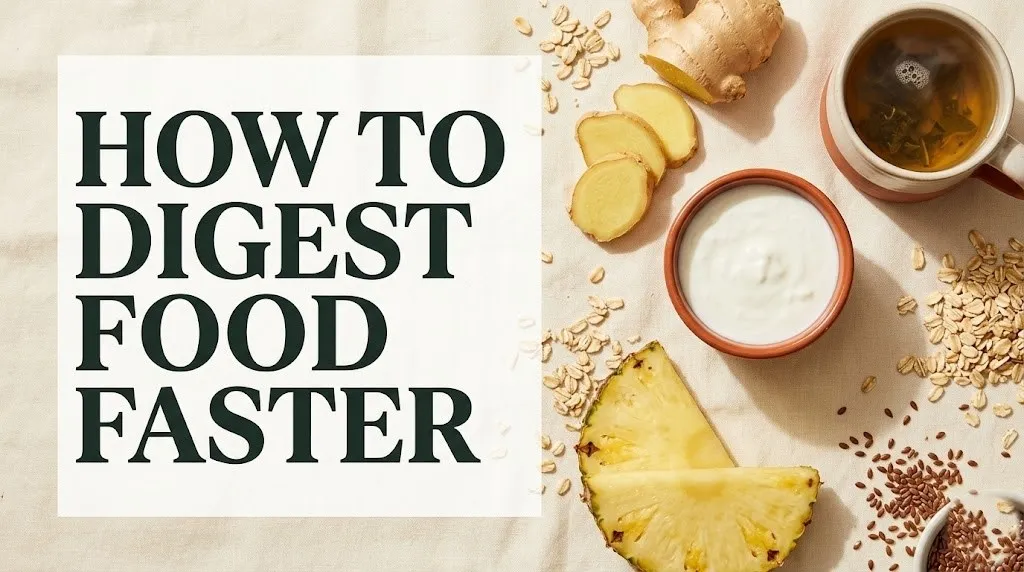
How to Digest Food Faster
The most direct ways to digest food faster are reducing meal size, increasing physical activity, chewing food more thoroughly, and choosing lower-fat, lower-fiber meal compositions when speed matters. Each of these interventions targets a specific phase of the digestive process.
Human digestion occurs in three overlapping phases. Gastric emptying is the process by which the stomach moves food into the small intestine, typically taking 2 to 5 hours depending on meal composition. Small intestinal transit takes an additional 2 to 6 hours. Colonic transit (large intestine) takes 10 to 59 hours, with the total gut transit time for a mixed meal averaging 24 to 72 hours in healthy adults, according to the NIDDK.
Think of the digestive system like a highway with three distinct speed zones. What you eat, how you eat it, and what you do after eating affects the speed limit in each zone differently. No single tip fixes all three at once, which is why most generic advice (“eat more fiber,” “drink more water”) delivers mixed results for different people.
| Digestive Phase | Typical Time Range | Primary Influencing Factors |
|---|---|---|
| Gastric emptying (stomach) | 2 to 5 hours | Meal fat content, meal size, stress level |
| Small intestinal transit | 2 to 6 hours | Enzyme activity, bile secretion, food type |
| Colonic transit (large intestine) | 10 to 59 hours | Fiber intake, hydration, physical activity |
| Total gut transit time | 24 to 72 hours | All of the above combined |
Ranges represent healthy adult averages. Individual variation is normal; transit time outside these ranges warrants a conversation with a gastroenterologist.
How Long Does It Take to Digest Food?
The total time to fully digest a meal ranges from 24 to 72 hours in healthy adults, with the stomach phase alone taking 2 to 5 hours. The wide range reflects differences in meal composition, individual gut motility, age, sex, and stress level.
Fat is the macronutrient that slows gastric emptying most dramatically. A high-fat meal can remain in the stomach for 6 to 8 hours or longer. Protein digestion is slower than carbohydrate digestion but faster than fat. Simple carbohydrates (white bread, cooked white rice, fruit) leave the stomach fastest, often within 1 to 2 hours. A mixed meal with fat, protein, and fiber occupies the middle range.
Women, on average, have slower gastric emptying than men, a difference researchers attribute to hormonal factors including progesterone, which relaxes smooth muscle tissue throughout the gastrointestinal tract. This means the same meal may genuinely feel heavier and linger longer in a woman’s stomach than in a man’s, even in the complete absence of any digestive problem.
Age matters too. Gastric emptying rate tends to slow modestly with age, particularly after 65. Seniors who experience persistent post-meal fullness should mention it to their physician, as slowed gastric emptying in older adults is sometimes associated with underlying conditions including gastroparesis (delayed gastric emptying beyond normal range) or medication side effects.
What Makes Food Digest Faster or Slower?
Food digests faster when it’s low in fat, low in insoluble fiber, cooked rather than raw, and consumed in smaller portions. It digests slower when meals are high in fat, high in fiber, very large, or eaten under stress.
The macronutrient composition of a meal is the single strongest predictor of its gastric emptying rate. Research published in the American Journal of Physiology: Gastrointestinal and Liver Physiology consistently shows that dietary fat slows gastric emptying through a hormonal mechanism: fat in the duodenum (upper small intestine) triggers the release of cholecystokinin (CCK), a hormone that signals the stomach to slow its emptying process. This is a protective mechanism designed to give the small intestine time to process fat properly.
Physical state of food also matters. Cooked vegetables empty from the stomach faster than raw ones because cooking breaks down the cellular matrix, reducing the mechanical work required. Liquid meals empty faster than solid ones. Ground meat digests faster than whole cuts. These aren’t minor differences: research suggests a liquid meal can leave the stomach in as little as 20 to 30 minutes, while a large solid meal with high fat content may take 4 to 6 hours.
Key factors that speed up digestion:
- Small meal portions (under 400 to 500 calories per sitting)
- Low fat content (under 10g fat per meal speeds gastric emptying)
- Cooked or softened food textures
- Simple carbohydrates as the primary food category
- Adequate hydration (see the hydration section for specifics)
- Physical activity taken within 30 to 60 minutes after eating
Key factors that slow digestion:
- High fat content (particularly saturated fat)
- Very high insoluble fiber load (such as raw bran and raw cruciferous vegetables)
- Large portion sizes
- Chronic stress and anxiety (through cortisol and nervous system effects)
- Lying down immediately after eating
- Certain medications including opioids, tricyclic antidepressants, and anticholinergic drugs
Key Takeaway: Fat slows gastric emptying more than any other macronutrient, which is why a greasy meal sits heavy for hours. Reducing fat content and portion size are the two fastest mechanical levers for speeding up digestion.
Foods That Speed Up Digestion
Foods that speed up digestion include those high in insoluble dietary fiber, foods containing natural digestive enzymes, fermented foods with live bacterial cultures, and warm liquids that stimulate peristalsis. No single food delivers dramatic or immediate results, but consistent dietary patterns do produce measurable changes in transit time.
Insoluble fiber (found in wheat bran, the skins of fruits and vegetables, and whole grains) speeds colonic transit by adding bulk to stool, which stimulates the muscular contractions of the colon. The Academy of Nutrition and Dietetics recommends 25g of dietary fiber per day for adult women and 38g per day for adult men, noting that most Americans consume less than half that amount. Closing the fiber gap is one of the most reliably effective long-term strategies for improving digestive transit.
Pineapple (Ananas comosus) contains bromelain, a proteolytic enzyme that breaks down dietary protein. Papaya (Carica papaya) contains papain, a cysteine protease with a similar protein-digesting function. Both enzymes support protein digestion in the stomach and small intestine. Neither food dramatically accelerates total gut transit time, but they can reduce post-protein-meal heaviness.
| Food | Active Compound | Digestive Effect | Best Used For |
|---|---|---|---|
| Pineapple (Ananas comosus) | Bromelain | Protein breakdown | After high-protein meals |
| Papaya (Carica papaya) | Papain | Protein breakdown | After high-protein meals |
| Ginger (Zingiber officinale) | Gingerols, shogaols | Accelerates gastric emptying | Post-meal bloating and nausea |
| Kefir | Lactobacillus, Bifidobacterium | Improves colonic transit | Daily use for regularity |
| Oats | Beta-glucan (soluble fiber) | Regulates transit | Daily breakfast staple |
| Wheat bran | Insoluble fiber | Accelerates colonic transit | Constipation and sluggish colon |
| Warm water or herbal tea | Heat, hydration | Stimulates peristalsis | Immediate post-meal comfort |
People with latex food allergy syndrome should be cautious with pineapple and papaya, as both share cross-reactive proteins with natural rubber latex. People with fructose malabsorption may find that large portions of high-fructose fruits worsen bloating rather than relieving it.
Foods That Slow Down Digestion
Foods that consistently slow digestion are those high in fat, high in protein without accompanying fiber, very processed and low in residue, or high in compounds that interfere with digestive enzyme activity. Understanding which foods are brakes, not accelerators, is as useful as knowing the accelerators.
High-fat foods are the most reliably documented brake on gastric emptying. Full-fat dairy, fried foods, fatty cuts of red meat, and foods with high oil content all trigger the CCK response described above. A meal like a double cheeseburger with fries can take 6 to 8 hours to fully clear the stomach, compared to 1 to 2 hours for a meal of white rice and steamed fish.
Certain high-fiber foods, paradoxically, can also slow aspects of digestion when consumed in excess or without adequate water. Soluble fiber (oats, beans, lentils, psyllium husk) forms a gel-like mass in the stomach and small intestine, which slows gastric emptying deliberately. This is beneficial for blood sugar management and satiety, but it means a bowl of oatmeal with chia seeds and almond butter may leave the stomach more slowly than a plain white toast breakfast of equal calories.
Foods to be aware of if you’re experiencing slow digestion:
- Fried foods (chips, fried chicken, onion rings): delay gastric emptying by several hours
- Full-fat cheese and cream-based sauces: high saturated fat content slows the stomach
- Legumes (beans, lentils, chickpeas): high in fermentable fiber, which causes gas and slows transit in sensitive individuals
- Red meat (especially in large portions): slow protein digestion rate, takes 3 to 5 hours
- Carbonated drinks: can increase gas and bloating, though do not directly slow motility
How to Digest Food Faster After Overeating
To digest food faster immediately after overeating, take a 15 to 20-minute walk, sit upright or stand rather than lying down, sip warm water or ginger tea, and loosen any clothing that compresses the abdomen. These steps won’t reverse a large meal, but they meaningfully reduce discomfort and support the stomach’s emptying process.
Walking after eating is one of the best-studied immediate interventions. A review published in the World Journal of Gastroenterology found that light physical activity after meals accelerated gastric emptying rates in healthy adults. The key word is “light.” A brisk 15-minute walk, not intense exercise. Vigorous activity immediately after a large meal can redirect blood flow away from the digestive tract and trigger nausea.
Posture is underappreciated in post-meal digestion. The stomach’s natural emptying process is partly gravity-assisted. Remaining upright for at least 30 minutes after eating keeps the gastroesophageal junction properly oriented and allows the stomach to move its contents into the small intestine efficiently. Slouching on a couch or lying flat on your back mechanically impedes this process and increases the likelihood of reflux in people prone to gastroesophageal reflux disease (GERD).
To relieve post-overeating discomfort:
- Stop eating and give the stomach a rest. No “dessert will help settle things” logic.
- Stand or walk slowly for 15 to 20 minutes.
- Sip 150 to 250ml of warm water or ginger tea at room temperature.
- Loosen a belt or tight waistband to reduce abdominal compression.
- Sit upright in a chair rather than lying down for at least 30 minutes.
- Avoid carbonated drinks, which add gas volume to an already distended stomach.
Key Takeaway: After overeating, a short walk and staying upright are the two most effective immediate interventions. They work with your body’s natural gastric motility, not against it.
Does Walking Help Digestion?
Walking after eating does help digestion by accelerating gastric emptying and improving intestinal motility, with research supporting even a short 10 to 15-minute walk as effective. It’s one of the most accessible and well-evidenced strategies for post-meal digestive comfort.
The mechanism is straightforward. Physical movement stimulates the rhythmic muscular contractions of the gastrointestinal tract called peristalsis. These contractions move food through the stomach and intestines. Light aerobic activity increases the frequency and coordination of these contractions without disrupting the blood flow needed for enzyme secretion and nutrient absorption.
A 2022 study published in the Journal of Gastrointestinal and Liver Diseases found that participants who walked for 15 minutes after meals had measurably faster gastric emptying compared to those who remained seated. The effect was consistent regardless of the meal’s fat or calorie content.
Timing matters. The post-meal window of 15 to 60 minutes is when a short walk delivers the most benefit. Walking two hours later, while still beneficial for general health, doesn’t influence the stomach-emptying phase that determines much of how heavy or comfortable you feel after a meal.
Quick Tip:
- A 10 to 20-minute walk at a comfortable pace is enough. You don’t need speed or distance.
- People with severe GERD may find that walking immediately after a very large meal worsens reflux temporarily. Start with a 10-minute walk and gauge your individual response.
- If walking isn’t accessible, standing at a kitchen counter or doing light household tasks produces a similar, if smaller, benefit compared to sitting on a couch.
Does Drinking Water Help Digestion?
Drinking adequate water helps digestion by supporting the production of digestive secretions, softening stool for easier colonic transit, and helping dissolve soluble nutrients for absorption. The key is adequate baseline hydration, not drinking large amounts of water during a meal.
The NIDDK identifies dehydration as a contributing factor in constipation, which is one of the most common causes of slow colonic transit. Water makes up a significant portion of digestive fluids including saliva, gastric juices, intestinal secretions, and bile. When total body water is low, all of these secretions are produced in reduced volumes, slowing the mechanical and chemical processes of digestion.
Drinking large amounts of water immediately during a meal is a different matter. Some research suggests that consuming more than 500ml of water with a meal can dilute gastric acid and digestive enzymes, potentially slowing breakdown of proteins and fats in the stomach. The practical implication is that sipping water with meals is fine; drinking an entire large glass or bottle while eating a heavy meal is not the digestive boost people assume it to be.
The Cleveland Clinic recommends aiming for consistent daily hydration (approximately 2 to 2.5 liters from all fluid sources for most adults) rather than timing large water intake around meals. Warm or room-temperature water after eating may support peristalsis by gently stimulating the stomach lining, though the evidence for this specific claim is based primarily on clinical observation rather than controlled trials.
People with kidney disease, heart failure, or conditions requiring fluid restriction should follow their physician’s specific fluid intake guidance, as general hydration recommendations do not apply uniformly across these populations.
How Chewing Affects Digestion Speed
Thorough chewing accelerates digestion by mechanically breaking food into smaller particles and mixing it with salivary amylase, the enzyme that begins carbohydrate digestion in the mouth before food ever reaches the stomach. Inadequate chewing is one of the most commonly overlooked causes of post-meal bloating and digestive discomfort.
Each bite of food should ideally be chewed 20 to 30 times before swallowing, according to general guidance from digestive health researchers. Most people chew far fewer times, particularly when eating quickly. Poorly chewed food arrives in the stomach in larger particle sizes that require more mechanical churning and acid exposure before moving into the small intestine, which extends gastric emptying time.
Think of the stomach like a blender that can only process what the mouth pre-shredded. The finer the incoming material, the faster the blender clears it. Large chunks require extra blender cycles, which is exactly what happens when unchewed or poorly chewed food sits in the stomach longer.
Beyond particle size, thorough chewing stimulates the production of more saliva, which contains not just salivary amylase (for starch digestion) but also lingual lipase, an enzyme that begins fat digestion in the mouth. A research review in the Journal of Gastroenterology found that increased chewing frequency was associated with reduced post-meal bloating and earlier satiety signals in healthy adults. Eating more slowly also reduces the amount of air swallowed during meals, which is a primary contributor to post-meal gas and bloating.
Key Takeaway: Chewing thoroughly, walking after meals, and drinking water consistently throughout the day address three completely different digestive mechanisms. Doing all three together delivers more benefit than any single change alone.
Does Ginger Help with Digestion?
Ginger (Zingiber officinale) does help with digestion by accelerating gastric emptying and reducing nausea, with multiple clinical trials supporting its effect on gastric motility. It’s one of the few home remedies for digestion with a genuine evidence base rather than just traditional use.
The active compounds in ginger, gingerols and shogaols, appear to work by interacting with serotonin receptors in the gastrointestinal tract, which are involved in regulating gut motility. A 2008 study published in the European Journal of Gastroenterology and Hepatology found that healthy volunteers who consumed 1.2g of ginger before a meal had a gastric emptying rate approximately 25% faster than those who consumed a placebo. The effect was measurable and reproducible.
Practical dosing matters. Culinary amounts of ginger (a few thin slices in tea or a teaspoon of fresh grated ginger in food) deliver the gingerol concentration relevant for digestive effects. Ginger supplements vary widely in concentration and standardization; a registered dietitian or gastroenterologist is the appropriate resource for anyone considering higher-dose ginger supplementation for a specific digestive condition.
Ginger is safe for most people at culinary doses. However, people taking anticoagulant medications (blood thinners such as warfarin) should be cautious with high-dose ginger supplements, as gingerols may have mild platelet-inhibiting effects at concentrated doses. This concern does not apply to normal culinary use.
To make an effective ginger digestive tea:
- Slice 4 to 5 thin rounds from a fresh ginger root (approximately 1 inch of root).
- Place in 250ml (approximately 1 cup) of boiling water.
- Steep for 5 to 7 minutes. Longer steeping increases gingerol concentration.
- Strain and sip warm, not scalding. Aim to drink within 15 to 20 minutes of finishing a meal.
- Add a small amount of honey if needed for palatability; avoid adding large amounts of sugar.
Does Apple Cider Vinegar Speed Up Digestion?
The evidence that apple cider vinegar speeds up digestion is weak, and for some people it may worsen digestive symptoms rather than relieve them. The popular belief that it “boosts stomach acid” is an oversimplification that does not hold up under review of the available clinical research.
Apple cider vinegar is a dilute solution of acetic acid, typically at a concentration of approximately 5%. The rationale behind its supposed digestive benefit is that adding acidity to the stomach helps break down food faster. In healthy adults with normal gastric acid production, there is no evidence that adding small amounts of external acidity improves digestion speed. The stomach already produces hydrochloric acid at a far more concentrated level than any vinegar solution.
For people with conditions involving reduced gastric acid production (such as achlorhydria or chronic use of proton pump inhibitors), the situation is different and warrants direct consultation with a gastroenterologist rather than self-treatment with vinegar. For people with GERD, esophageal erosions, or stomach ulcers, apple cider vinegar may significantly worsen symptoms by adding external acidity to an already irritated mucosal lining.
The Academy of Nutrition and Dietetics does not include apple cider vinegar in its evidence-based recommendations for digestive health. Until larger controlled clinical trials are conducted, treating it as a reliable digestive aid is premature based on current evidence.
Quick Tip:
- If you choose to try apple cider vinegar, always dilute it: no more than 1 tablespoon in 250ml of water.
- Never drink it undiluted. Undiluted acetic acid can erode tooth enamel and irritate the esophageal lining.
- If you experience burning, increased reflux, or nausea after taking it, stop immediately.
Key Takeaway: Ginger has real clinical evidence behind its digestive effects. Apple cider vinegar does not, and carries real risks for people with GERD or acid-related conditions. Knowing the difference saves you from a remedy that could make things worse.
Digestive Enzymes for Faster Digestion
Digestive enzyme supplements can speed up the breakdown of specific foods when the body’s natural enzyme production is insufficient, but for people with normal digestive enzyme levels, they are unlikely to produce a noticeable difference in digestion speed.
The body naturally produces three categories of digestive enzymes: amylases (break down carbohydrates), lipases (break down fats), and proteases (break down proteins). These are secreted by the salivary glands, stomach, pancreas, and small intestinal lining. In healthy adults, production is typically sufficient for normal dietary loads.
Enzyme supplements are most effective for documented deficiency conditions. Lactase supplements (sold as Lactaid and similar products) are clinically proven to help people with lactose intolerance digest dairy-containing meals. People with exocrine pancreatic insufficiency (EPI), a condition in which the pancreas fails to secrete adequate enzymes, rely on pancreatic enzyme replacement therapy (PERT) prescribed by their gastroenterologist. For these populations, enzyme supplements are a meaningful and evidence-backed intervention.
For healthy people without documented enzyme deficiency, over-the-counter enzyme blends marketed for “better digestion” or “faster breakdown” have limited clinical evidence. A 2019 review in the Journal of Clinical Gastroenterology found that enzyme supplements provided measurable benefit primarily in people with diagnosed digestive conditions, with minimal effect in people without deficiency.
People with cystic fibrosis, chronic pancreatitis, or post-surgical pancreatic conditions who require enzyme supplementation should work with a specialist to determine appropriate enzyme dose and formulation, as incorrect dosing can cause significant gastrointestinal side effects.
Probiotics and Digestion Speed
Probiotics can improve overall digestive transit time, particularly in people with constipation-predominant digestive patterns, but they are not a rapid-acting solution and typically require 2 to 4 weeks of consistent use before measurable changes occur.
Probiotics are live microorganisms, primarily from the genera Lactobacillus and Bifidobacterium, that colonize the intestinal lining and modulate the gut microbiome’s activity. Research published in the American Journal of Gastroenterology found that specific probiotic strains, particularly Bifidobacterium lactis, reduced whole gut transit time by an average of 12.4 hours in constipated adults over a four-week intervention period. The effect was strain-specific, meaning not all probiotic products delivered the same benefit.
Probiotic-rich foods include kefir, yogurt with live active cultures, sauerkraut, kimchi, miso, and tempeh. These deliver lower bacterial concentrations than supplements but also provide additional nutrients and are generally well tolerated. People who are lactose intolerant can opt for non-dairy fermented options like kimchi or water kefir.
Probiotic supplements are not regulated the same way pharmaceutical drugs are. The FDA classifies them as dietary supplements, meaning manufacturers do not need to prove efficacy before sale. Choosing a product with documented strains, third-party testing, and a refrigerated storage requirement (for live cultures that require cold chain) is a more reliable approach than selecting by price or marketing language alone. Immunocompromised individuals should discuss probiotic use with their physician before starting, as live bacterial supplementation carries a small but real risk in compromised immune states.
How Stress Slows Digestion
Stress slows digestion by activating the sympathetic nervous system (the “fight-or-flight” response), which redirects blood flow away from the digestive organs and reduces the secretion of digestive enzymes, saliva, and gastric acid. The effect is real, well-documented, and often underestimated as a driver of chronic digestive complaints.
The relationship between the brain and the gut runs through the vagus nerve, a long cranial nerve that connects the brainstem directly to the gastrointestinal tract. Under stress, the hypothalamic-pituitary-adrenal (HPA) axis releases cortisol and activates the sympathetic nervous system. This suppresses the parasympathetic (“rest and digest”) signals that normally coordinate stomach emptying, enzyme secretion, and intestinal motility. The result is measurably slower gastric emptying and reduced peristalsis.
Research published in the World Journal of Gastroenterology found that psychological stress altered gastrointestinal motility in multiple studies, with effects ranging from slowed gastric emptying to accelerated colonic transit (which explains why some people experience constipation under stress while others experience diarrhea; both can be stress responses depending on where in the gut the effect is strongest).
Practical stress-reduction strategies that support digestive function:
- Eating without screens or distractions activates the parasympathetic nervous system more reliably than eating while anxious or rushed.
- Diaphragmatic breathing (slow, deep belly breathing) for 2 to 3 minutes before meals stimulates vagal tone and prepares the digestive system for food.
- Chronic stress management through consistent physical activity and sleep has documented effects on baseline cortisol levels, which in turn affects long-term digestive baseline function.
People experiencing persistent digestive symptoms alongside high stress, anxiety, or mood disorders may benefit from evaluation by both a gastroenterologist and a mental health professional, as conditions like irritable bowel syndrome (IBS) have a well-documented gut-brain axis component that requires both physical and psychological approaches.
Key Takeaway: Chronic stress is a physiological brake on digestion, not just a mental health concern. Managing the stress response through breathing, eating without distraction, and regular physical activity has direct and measurable effects on how quickly food moves through your system.
How Sleep Affects Digestion
Sleep affects digestion because gastrointestinal motility follows a circadian rhythm that is synchronized with the sleep-wake cycle, meaning the digestive system does its most active processing during waking hours and slows substantially during deep sleep. Disrupting sleep patterns consistently disrupts this digestive rhythm.
The interstitial cells of Cajal (pacemaker cells in the gut wall) that coordinate peristalsis are influenced by circadian clock genes. Research published in the Journal of Clinical Investigation has shown that circadian rhythm disruption (from shift work, late-night eating, or chronic sleep deprivation) alters the timing and coordination of gastric emptying, colonic motility, and intestinal enzyme secretion.
Eating large meals late at night works against the circadian digestive pattern. The stomach’s acid secretion and motility are naturally reduced in the late evening and overnight hours. A large meal consumed within 2 to 3 hours of bedtime is being processed by a digestive system that is preparing to slow down, not speed up. This contributes to the common experience of waking after a late, heavy dinner still feeling full and uncomfortable.
The National Sleep Foundation recommends 7 to 9 hours of sleep per night for adults. Consistent sleep at consistent times (not just adequate total hours) is what stabilizes circadian rhythms. For people with persistent post-meal bloating or sluggish digestion, auditing meal timing relative to sleep is a simple and often effective starting point.
Late-night eating also raises the risk of nocturnal GERD, a form of acid reflux that occurs during sleep when the supine position reduces the gravitational assistance that keeps stomach contents below the esophageal sphincter.
When Slow Digestion Needs Medical Attention
Slow digestion that persists for more than 2 to 3 weeks, occurs without an identifiable dietary or lifestyle cause, or is accompanied by specific warning symptoms warrants evaluation by a gastroenterologist, as these patterns can indicate conditions that do not respond to dietary changes alone.
Several medical conditions cause slow digestion as a primary symptom. Gastroparesis is a condition in which the stomach’s muscular activity is impaired, causing food to remain in the stomach far beyond normal emptying times. It is most commonly associated with type 1 and type 2 diabetes (where autonomic nerve damage slows stomach motility), but can also occur after certain viral infections or surgeries. A gastroenterologist diagnoses it through a gastric emptying scintigraphy test, and management typically involves dietary modification, medication, or both.
Hypothyroidism (underactive thyroid) is another frequently overlooked cause of systemic slowing of gastrointestinal motility. The thyroid hormone thyroxine (T4) and its active form triiodothyronine (T3) regulate metabolic rate in virtually all body tissues, including the smooth muscle of the gastrointestinal tract. People with undiagnosed or undertreated hypothyroidism often experience constipation and post-meal fullness as primary symptoms.
Warning symptoms that specifically indicate the need for prompt medical evaluation:
- Persistent vomiting or nausea after meals not explained by obvious dietary causes
- Unexplained weight loss alongside slow digestion
- Blood in stool or black tarry stools
- Severe abdominal pain accompanying meals
- Difficulty swallowing (dysphagia)
- Post-meal fullness lasting more than 6 to 8 hours regularly
- Visible abdominal distention that does not resolve within a few hours after eating
People with diabetes who experience new or worsening post-meal fullness should mention it to their endocrinologist or primary care physician, as diabetic gastroparesis is both common and often underdiagnosed in this population.
Frequently Asked Questions About How to Digest Food Faster
How do you digest food faster when you feel too full?
To digest food faster when you feel overly full, stand up or take a short walk for 10 to 20 minutes rather than lying down.
Sipping warm water or ginger tea and loosening any tight clothing around the abdomen also provides measurable relief by reducing gastric pressure.
Avoid carbonated drinks and additional food, as both add volume to an already distended stomach and slow the emptying process.
What is the fastest digesting food you can eat?
Simple carbohydrates in liquid or semi-liquid form are the fastest digesting foods, with options like diluted fruit juice, white rice porridge, or plain cooked oatmeal leaving the stomach within 1 to 2 hours.
Solid high-fat, high-protein meals can take 4 to 8 hours to clear the stomach in comparison.
For deliberate fast digestion (such as before physical activity), choosing low-fat, low-fiber carbohydrate sources in small portions is the most evidence-aligned approach.
Does lying down after eating slow digestion?
Yes, lying down after eating slows gastric emptying by removing the gravitational assistance that helps the stomach move food into the small intestine.
Remaining upright for at least 30 minutes after eating is the standard recommendation from gastroenterology guidelines.
In people with GERD, lying down within 2 to 3 hours of eating can trigger nocturnal acid reflux, which compounds digestive discomfort.
How long does it take to fully digest a meal?
Full digestion of a mixed meal, from swallowing to complete elimination, takes 24 to 72 hours in healthy adults.
The stomach phase alone takes 2 to 5 hours for an average meal, with high-fat meals extending this to 6 to 8 hours.
The colonic phase (10 to 59 hours) accounts for the majority of total transit time and is most influenced by fiber intake, hydration, and physical activity level.
Can you train your digestive system to work faster?
Yes, consistent dietary and lifestyle habits can improve baseline digestive transit time over weeks to months.
Regular physical activity, adequate daily fiber intake (25 to 38g depending on sex), consistent hydration, and stable sleep-wake patterns all contribute to faster and more regular digestive transit.
These changes take time: most people see measurable improvement in transit time after 3 to 4 weeks of consistent new habits, not after a single meal change.
Closing
Digestion speed is not fixed. The practical levers are real: meal composition, chewing time, a short post-meal walk, hydration, sleep consistency, and stress management each affect a different phase of the digestive process.
Start with the two highest-impact changes: reduce fat content in your heaviest meal of the day, and take a 15-minute walk after eating. Both are supported by strong clinical evidence and require no supplements, special foods, or major dietary overhaul.
If symptoms persist for more than two to three weeks despite consistent changes, a conversation with a gastroenterologist is the right next step.