Brie cheese is healthy in moderate amounts for most people, providing meaningful protein, calcium, vitamin B12, and vitamin A in every ounce. Like all full-fat dairy, it deserves thoughtful portioning rather than avoidance, and the current nutrition science on cheese fat is more nuanced than the “avoid saturated fat” message most people grew up with.
A single 1-ounce (28g) serving of brie delivers roughly 5.9 grams of protein and 52 milligrams of calcium, according to USDA FoodData Central data. That’s not trivial nutrition packed into a slice most people would eat on a cracker. The National Institutes of Health notes that calcium intake remains below recommended levels for a large portion of American adults, making cheese a genuinely useful dietary source.
This guide covers everything you need to know: brie’s full nutritional profile, what the fat and cholesterol research actually shows, who should be careful, and how to eat it in a way that works for your health goals.
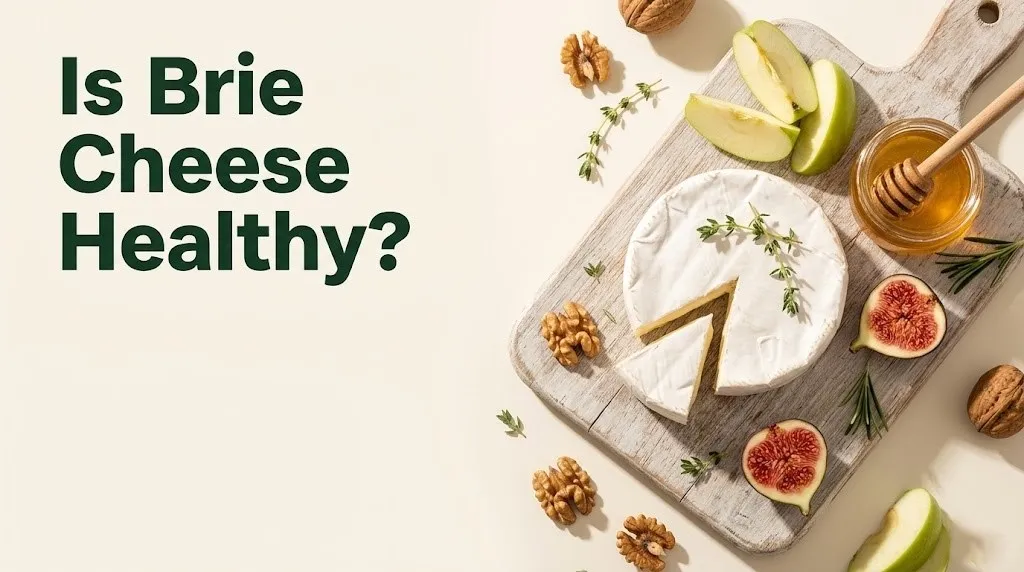
Is Brie Cheese Healthy?
Brie cheese is a nutritionally dense food that fits into a healthy diet when consumed in reasonable portions. It provides complete protein, several B vitamins, calcium, and phosphorus, and it’s lower in lactose than most fresh dairy products.
The case against brie usually starts and ends with saturated fat. That conversation is worth having, but it’s more complicated than a single number on a nutrition label suggests. The USDA Dietary Guidelines for Americans 2020-2025 recommend limiting saturated fat to less than 10% of daily calories, which means a 2,000-calorie diet has a budget of roughly 22 grams of saturated fat per day. One ounce of brie contains about 5 grams, which is substantial but not disqualifying.
What matters is the full dietary picture. A person eating brie with vegetables, fruit, and whole grains is in a very different nutritional position than someone eating brie alongside processed meats and refined carbohydrates.
| Factor | Brie Cheese Assessment |
|---|---|
| Protein quality | Complete protein (all essential amino acids) |
| Calcium density | Moderate (52mg per oz) |
| Saturated fat | High relative to serving size |
| Lactose content | Low (lower than milk or yogurt) |
| Sodium | Moderate (178mg per oz) |
| Vitamins present | B12, A, B2 (riboflavin) |
| Processed status | Minimally processed fermented food |
For people without specific dietary restrictions, brie is not a food to avoid. It’s a food to portion thoughtfully.
Brie Cheese Nutrition Facts per Serving
One ounce (28 grams) of brie cheese contains approximately 95 calories, 7.9 grams of fat, 5.9 grams of protein, and less than 0.5 grams of carbohydrate, based on USDA FoodData Central data.
That macro profile places brie firmly in the high-fat, high-protein, very-low-carbohydrate category. It’s satisfying in small amounts because fat and protein are both more satiating per calorie than carbohydrates. A cracker-sized slice (roughly 1 oz) delivers enough protein to register as a genuine nutritional contribution to a meal, not just a condiment.
The sodium content deserves attention. At roughly 178 milligrams per ounce, brie is moderately salty. Three ounces at a dinner party brings you to around 534 milligrams of sodium, which is a meaningful chunk of the American Heart Association’s recommended daily maximum of 2,300 milligrams (and nearly half of the AHA’s ideal target of 1,500 milligrams for adults managing blood pressure).
| Nutrient | Per 1 oz (28g) | Per 100g |
|---|---|---|
| Calories | 95 kcal | 334 kcal |
| Total Fat | 7.9g | 27.7g |
| Saturated Fat | 5.0g | 17.4g |
| Protein | 5.9g | 20.8g |
| Carbohydrates | 0.1g | 0.5g |
| Sodium | 178mg | 629mg |
| Calcium | 52mg | 184mg |
| Phosphorus | 53mg | 188mg |
Source: USDA FoodData Central
How Many Calories Are in Brie Cheese?
Brie cheese contains approximately 95 calories per 1-ounce (28-gram) serving, making it moderately calorie-dense compared to other protein sources of the same weight.
For reference, 1 ounce of chicken breast contains around 50 calories. Brie contains nearly twice as many per ounce because almost 75% of its calories come from fat. That doesn’t make it a poor nutritional choice, but it does mean that calorie density matters when you’re tracking intake.
The wedge of brie at a restaurant or dinner party often weighs 2 to 3 ounces without anyone measuring it. That’s closer to 190 to 285 calories before any crackers, bread, or accompaniments. If you’re aware of this, you can portion accordingly. If you’re eating mindlessly from a cheese board, those calories add up quickly.
Quick Tip:
- A standard restaurant charcuterie portion of brie is typically 1.5 to 2 ounces (roughly the size of two stacked dice)
- Pairing brie with fiber-rich accompaniments like sliced apple or whole grain crackers slows digestion and increases satiety
- Weighing brie once or twice helps calibrate your visual sense of portion size accurately
Brie Cheese Protein, Fat, and Carbohydrates
Brie provides 5.9 grams of complete protein per ounce, meaning it contains all nine essential amino acids the body cannot synthesize on its own.
That protein quality matters. Not all protein sources are equal in amino acid completeness. Brie’s protein profile is comparable to other dairy products and supports muscle maintenance, enzyme production, and immune function in the same way other complete proteins do.
The fat in brie is predominantly saturated (about 63% of total fat), with smaller amounts of monounsaturated fat (around 28%) and very little polyunsaturated fat. The specific saturated fatty acids present include palmitic acid, stearic acid, and myristic acid. These behave differently in the body, and stearic acid in particular has a neutral effect on LDL cholesterol according to research published in the American Journal of Clinical Nutrition.
Carbohydrates in brie are negligible at under 0.5 grams per ounce. This makes brie naturally compatible with low-carbohydrate and ketogenic dietary patterns. People following strict ketogenic diets often include brie as a fat and protein source without concern for glycemic impact.
People with cow’s milk allergy should avoid brie entirely. Those with lactose intolerance may tolerate brie better than they expect: the aging and fermentation process breaks down most of the lactose, leaving very low residual amounts compared to fresh milk or soft cheeses like cottage cheese.
Vitamins and Minerals in Brie Cheese
Brie is a meaningful dietary source of vitamin B12 (cobalamin), vitamin A (retinol), riboflavin (vitamin B2), calcium, and phosphorus.
Vitamin B12 is worth highlighting. It’s found almost exclusively in animal products, and deficiency is a genuine concern for people eating mostly plant-based diets. One ounce of brie provides roughly 0.5 micrograms of B12, which contributes to the NIH’s recommended daily intake of 2.4 micrograms for adults. It’s not a dominant source, but it contributes.
Vitamin A in brie is in the retinol form (preformed vitamin A), which is directly usable by the body without conversion. The beta-carotene found in plant foods must be converted to retinol, and that conversion is inefficient in many people. One ounce of brie provides approximately 57 micrograms of retinol activity equivalents (RAE), contributing to the NIH’s adult daily target of 700 to 900 mcg RAE.
| Vitamin/Mineral | Per 1 oz (28g) | % of Daily Value (approx.) |
|---|---|---|
| Vitamin B12 | 0.5 mcg | ~21% |
| Vitamin A (RAE) | 57 mcg | ~6 to 8% |
| Riboflavin (B2) | 0.15 mg | ~12% |
| Calcium | 52 mg | ~4% |
| Phosphorus | 53 mg | ~4% |
| Zinc | 0.7 mg | ~6% |
Source: USDA FoodData Central; % DV based on 2,000-calorie diet reference values
Key Takeaway: Brie is a nutritionally complete food, not just a fat source. Per ounce, it delivers complete protein, meaningful B12, retinol-form vitamin A, and calcium, with almost no carbohydrates.
Is Brie Cheese Good for Weight Loss?
Brie cheese can be part of a weight-loss eating plan when portioned appropriately, primarily because its fat and protein content supports satiety without spiking blood sugar.
Weight management comes down to total caloric balance over time, not whether a single food is permitted or forbidden. Brie is calorie-dense at 95 calories per ounce, so a small portion does a lot of calorically. The practical question is whether that 95-calorie portion keeps you satisfied longer than a lower-calorie, lower-fat alternative would. For many people, it does.
Research published in the British Journal of Nutrition has found that higher-protein, higher-fat dairy foods can increase satiety hormones and reduce subsequent calorie intake compared to low-fat, high-carbohydrate snacks. Brie’s protein-fat combination fits this profile better than, say, fat-free crackers with the same calorie count.
The portion discipline challenge is real. Brie is easy to eat without registering how much you’ve had. Treating it as a deliberate component of a meal rather than casual snacking makes a practical difference. A 1-ounce serving paired with a large portion of vegetables or fruit is a different dietary experience than four uncounted slices from a board.
People following medically supervised very-low-calorie diets should work with a registered dietitian to determine whether full-fat cheese fits their specific caloric targets.
Brie Cheese and Saturated Fat: What Does the Research Say?
The relationship between saturated fat in cheese and cardiovascular disease risk is more nuanced than older dietary guidelines suggested, with recent research indicating that the food matrix matters as much as the fat content alone.
For decades, the standard advice was simple: saturated fat raises LDL cholesterol, LDL cholesterol raises heart disease risk, therefore reduce saturated fat. That framework is still broadly supported, and the American Heart Association continues to recommend limiting saturated fat intake. But the research has grown more complicated.
A 2021 review in the American Journal of Clinical Nutrition examined cheese-specific data and found that cheese consumption was not associated with increased cardiovascular disease risk in most population studies, despite its saturated fat content. Researchers proposed a “food matrix effect”: the proteins, calcium, and other compounds in cheese may modify how the body processes its fat, potentially reducing its LDL-raising impact compared to saturated fat from processed foods.
This does not mean saturated fat from brie is harmless in unlimited quantities. It means the old blanket rule of “fat in cheese equals heart risk” is an oversimplification. Context, total diet quality, and individual metabolic factors all matter.
Key Considerations:
- Brie contains approximately 5 grams of saturated fat per ounce, which is roughly 23% of the USDA’s recommended daily limit on a 2,000-calorie diet
- The dominant saturated fatty acids in brie (palmitic, stearic, myristic) have different effects on LDL cholesterol, with stearic acid considered cardiovascular-neutral
- People with familial hypercholesterolemia or existing cardiovascular disease should discuss full-fat dairy intake with their cardiologist or a registered dietitian
Does Brie Cheese Have Probiotics?
Brie does contain live bacteria and mold cultures from the production process, but whether those cultures survive digestion and act as probiotics in the human gut is not firmly established by clinical research.
The white rind on brie is formed by Penicillium camemberti, a mold species. The interior also contains lactic acid bacteria introduced during fermentation. Both contribute to brie’s distinctive flavor and texture. Some food science researchers have identified strains within brie that may exhibit probiotic-like properties under laboratory conditions.
The clinical picture is less clear. Unlike yogurt or kefir, where specific probiotic strains (such as Lactobacillus acidophilus or Bifidobacterium longum) are added in controlled concentrations and have been studied in humans, brie has not been the subject of the same rigorous clinical trials. The bacteria present in brie vary by producer, batch, and aging conditions.
What’s reasonable to say: brie is a fermented food produced with live cultures, which places it in a different category from ultraprocessed dairy products. Whether it delivers clinical probiotic benefit comparable to purpose-formulated fermented foods requires more direct human research to confirm.
People with known mold sensitivities should note that Penicillium camemberti is related to (though distinct from) the mold used to produce penicillin. Those with penicillin allergies don’t automatically react to brie, but anyone with documented mold-related food sensitivities should exercise caution.
Brie Cheese Benefits for Bone Health
Brie provides calcium and phosphorus, both of which are required for maintaining bone mineral density, making it a useful contributor to dietary bone health support.
Calcium gets most of the press, but phosphorus is equally essential in bone formation. About 85% of the body’s phosphorus is stored in bones and teeth, according to the NIH Office of Dietary Supplements. Brie provides approximately 53 milligrams of phosphorus per ounce, contributing alongside calcium to the structural needs of bone tissue.
Think of calcium and phosphorus in bone health the way you’d think of cement and rebar in construction. Calcium provides the mineral bulk, but phosphorus gives it structural integrity. Getting adequate amounts of both from food sources is preferable to relying on supplementation for most healthy adults.
The USDA Dietary Guidelines for Americans recommend that adults consume 3 cups of dairy equivalents per day as part of a nutrient-adequate diet. Brie counts toward this target. One ounce of brie is approximately equivalent to one-third of a standard dairy serving in terms of calcium contribution.
Vitamin K2, which is found in some fermented dairy products and plays a role in directing calcium into bones rather than soft tissues, has been identified in small amounts in aged cheeses. Research on K2 content in soft-ripened cheeses like brie is limited, and brie is not considered a primary K2 source compared to hard aged cheeses or fermented soy (natto).
Key Takeaway: Brie’s saturated fat story is more nuanced than the old rules suggested, its probiotic status is real but clinically unconfirmed, and its calcium-phosphorus combination makes it a genuine contributor to bone health.
Is the Rind of Brie Cheese Edible and Safe?
The white rind on brie is fully edible, formed by Penicillium camemberti mold, and is safe to eat for most healthy adults.
The rind is not merely a coating. It’s a bioactive part of the cheese that contributes to its flavor development and contains the same Penicillium camemberti cultures that give brie its characteristic earthy, mushroomy aroma. Removing the rind is a personal preference, not a food safety necessity for most people.
The rind does have a more pronounced flavor than the paste (the interior). Some people find it appealingly funky; others find it too intense. Texture-wise, it’s firmer and slightly chalky compared to the creamy interior. Neither eating nor avoiding the rind changes the core nutritional profile significantly, since the rind makes up a small percentage of total mass.
Safety considerations for specific groups:
- Immunocompromised individuals (those undergoing chemotherapy, organ transplant recipients, people with HIV/AIDS) should exercise caution with mold-ripened cheeses including brie. The risk is not the Penicillium camemberti itself, but the broader handling and microbiological environment of soft-ripened cheeses.
- People with mold-related food sensitivities may find the rind more problematic than the paste and can reasonably choose to remove it.
- For healthy adults with no specific immune or sensitivity concerns, eating the rind is completely standard and expected.
Is Brie Cheese Pasteurized?
Most brie cheese sold in the United States is made from pasteurized milk, but unpasteurized (raw milk) brie is produced in France and may be imported or found at specialty retailers.
Pasteurization kills harmful pathogens including Listeria monocytogenes, Salmonella, and E. coli. Soft-ripened cheeses like brie carry a higher inherent risk of Listeria contamination than hard cheeses, because their high moisture content and surface mold environment are more hospitable to bacterial growth, even after production.
The FDA requires that cheeses made from unpasteurized milk be aged for at least 60 days before sale in the US. Soft-ripened cheeses like brie and camembert do not meet this aging requirement by nature of their production style, which means genuine raw-milk brie imports face regulatory restrictions and are less commonly available than raw-milk hard cheeses.
To verify whether a specific brie is pasteurized, check the ingredient label. It will state “pasteurized milk” or “pasteurized cow’s milk.” If the label says “raw milk” or “lait cru” (the French term), it is unpasteurized.
Quick Tip:
- At cheese counters and specialty shops, ask specifically whether a brie is made from raw or pasteurized milk before purchasing
- Domestic American brie brands are almost universally pasteurized
- Imported French brie labeled “Brie de Meaux AOP” or “Brie de Melun AOP” may be raw-milk depending on the producer and import pathway
Can You Eat Brie Cheese When Pregnant?
Pregnant women are advised to avoid soft-ripened cheeses like brie made from unpasteurized milk due to the risk of Listeria monocytogenes infection, which can cause miscarriage, stillbirth, or serious illness in the newborn.
The CDC classifies pregnant women as among the groups at highest risk from listeriosis. Listeria can grow in refrigerated conditions and is particularly associated with soft, mold-ripened cheeses. The risk is not theoretical: the CDC estimates that pregnant women are about 10 times more likely to contract listeriosis than the general healthy adult population.
Pasteurized brie is a different situation. The NHS (UK) and the FDA both note that soft cheeses made from pasteurized milk are considered lower-risk for pregnant women, though the FDA continues to note that all soft cheeses carry more moisture-related risk than hard cheeses. Individual obstetric providers may have varying guidance on this point, and confirming with the treating provider is the appropriate step for pregnant women with specific questions about dairy during pregnancy.
| Brie Type | Pasteurized? | Safe During Pregnancy? |
|---|---|---|
| Standard US commercial brie | Yes | Generally considered lower-risk (confirm with provider) |
| Imported raw-milk French brie (lait cru) | No | Avoid during pregnancy |
| Brie-style goat cheese | Varies by producer | Check label; confirm with provider |
Key Takeaway: Check whether your brie is pasteurized before buying. For most people this is simple brand research; for pregnant women, it’s a genuine food safety question worth verifying on every purchase.
Brie vs Camembert: Which Is Healthier?
Brie and camembert have nearly identical nutritional profiles per ounce, with differences too small to meaningfully favor one over the other on health grounds alone.
Both are soft-ripened, bloomy-rind cheeses made from cow’s milk using similar production methods. Both are aged briefly (typically 4 to 8 weeks) and develop their characteristic white rind from Penicillium camemberti cultures. Their macronutrient profiles at the 1-ounce serving size are effectively interchangeable for practical dietary purposes.
The most notable difference is flavor intensity. Camembert tends to have a stronger, earthier flavor and develops a more pronounced aroma as it ages. Brie is generally milder and creamier. Neither characteristic has nutritional significance, but flavor intensity does affect how much you eat: a more intensely flavored cheese is often eaten in smaller quantities because a little goes further palatably.
| Nutrient (per 1 oz / 28g) | Brie | Camembert |
|---|---|---|
| Calories | 95 kcal | 85 kcal |
| Total Fat | 7.9g | 6.9g |
| Saturated Fat | 5.0g | 4.3g |
| Protein | 5.9g | 5.6g |
| Calcium | 52mg | 110mg |
| Sodium | 178mg | 239mg |
Source: USDA FoodData Central
One practical note: camembert tends to have more calcium per ounce in many USDA measurements, though values vary by producer and production method. If calcium is your primary concern, camembert may offer a slight advantage. For sodium-conscious eaters, brie’s lower sodium content is worth noticing.
Brie Cheese and Cholesterol: Should You Be Concerned?
For most healthy adults eating brie in typical serving sizes, the cholesterol impact is modest and should be understood in the context of overall diet quality rather than as an isolated concern.
Brie contains roughly 28 milligrams of dietary cholesterol per ounce. Dietary cholesterol guidelines have evolved considerably. The 2020-2025 USDA Dietary Guidelines removed the specific cap of 300mg per day on dietary cholesterol that appeared in earlier editions, reflecting updated evidence that dietary cholesterol has a smaller effect on blood cholesterol levels than saturated fat intake for most people.
The more relevant discussion for brie and heart health is saturated fat, which does influence LDL cholesterol levels. The American Heart Association recommends that people with elevated LDL or existing cardiovascular disease pay attention to saturated fat intake, and brie at 5g saturated fat per ounce is not a food to eat freely when managing these conditions.
For healthy adults with normal cholesterol levels, occasional or moderate brie consumption as part of a diet rich in vegetables, whole grains, and lean protein is unlikely to adversely affect cardiovascular risk according to current evidence. People with familial hypercholesterolemia or triglyceride disorders should seek specific guidance from a registered dietitian or cardiologist regarding full-fat dairy, since these conditions alter how the body processes dietary fats.
How Much Brie Cheese Should You Eat per Day?
For most adults, a serving of 1 to 1.5 ounces (28 to 43 grams) of brie per day is a reasonable portion that delivers nutritional value without dominating saturated fat or sodium intake.
That’s roughly the size of a large dice to a small matchbox. It sounds small, but brie’s flavor intensity and fat content mean that a 1-ounce portion is genuinely satisfying when eaten slowly with accompaniments rather than snacked rapidly from a block.
The USDA Dietary Guidelines don’t specify a brie-specific limit. They recommend keeping saturated fat below 10% of daily calories and staying within an overall healthy dietary pattern. Running the numbers: one ounce of brie uses about 23% of a 2,000-calorie diet’s saturated fat budget. Two ounces uses nearly half. That leaves meaningful room for other fat-containing foods in the same day, but it does establish that three or more ounces of brie daily would crowd out other dietary fat allowances.
Think of your daily saturated fat budget like a monthly spending account. Brie is not a budget buster in small portions, but it’s not a free food either. Knowing your general daily intake pattern helps you decide whether today’s cheese board is a reasonable splurge or requires adjustments elsewhere.
| Daily Intake | Saturated Fat | Sodium | Calories |
|---|---|---|---|
| 1 oz brie | 5g | 178mg | 95 |
| 1.5 oz brie | 7.5g | 267mg | 143 |
| 2 oz brie | 10g | 356mg | 190 |
| 3 oz brie | 15g | 534mg | 285 |
Key Takeaway: One to 1.5 ounces of brie per day fits comfortably into a balanced diet for most healthy adults. Beyond 2 ounces daily, saturated fat and sodium start demanding attention.
Who Should Avoid or Limit Brie Cheese?
Certain groups should avoid brie entirely or limit it carefully, including pregnant women (when the source is unpasteurized), people with cow’s milk allergy, immunocompromised individuals, and those managing sodium-sensitive hypertension.
The distinction between avoidance and moderation matters here. A cow’s milk allergy requires strict avoidance. Managing blood pressure on a low-sodium diet requires reduced portions rather than complete elimination in most cases.
People who should avoid brie or exercise particular caution:
- Pregnant women: Should avoid unpasteurized brie. Pasteurized brie may be lower-risk but warrants discussion with the treating obstetric provider, since individual pregnancy risk factors vary.
- Immunocompromised individuals: Soft-ripened mold-aged cheeses carry higher microbiological risk. Medical guidance from the treating provider should inform whether brie is appropriate.
- People with cow’s milk allergy: Brie is made from cow’s milk and contains milk proteins including casein and whey. It is not safe for those with true cow’s milk allergy.
- Individuals managing severe sodium restriction: At 178mg per ounce, brie adds up quickly for those on very low-sodium diets (below 1,500mg per day). Portion reduction rather than elimination may be appropriate.
- People with elevated LDL cholesterol or cardiovascular disease: Not a blanket restriction, but worth discussing with a cardiologist or registered dietitian given brie’s saturated fat content.
- Infants under 12 months: Whole cow’s milk dairy products including cheese are generally not recommended as a primary food for infants under 12 months. Introduction timing and form should follow pediatric guidance.
People following halal diets should verify that the rennet used in a specific brie product is halal-certified, as animal-derived rennet from non-halal slaughtered animals is sometimes used in traditional cheese production.
Frequently Asked Questions About Brie Cheese
Is brie cheese healthy to eat every day?
Brie cheese can be eaten daily in small portions as part of a balanced diet for most healthy adults.
A daily serving of 1 ounce (28g) contributes protein, calcium, and B vitamins without exceeding saturated fat limits when the rest of the diet is varied.
People managing cardiovascular disease, high cholesterol, or sodium-sensitive hypertension should consult a registered dietitian to determine an appropriate daily amount given their individual health context.
How many calories are in a slice of brie cheese?
A standard 1-ounce (28g) slice of brie contains approximately 95 calories, according to USDA FoodData Central.
Thicker slices or restaurant portions often run 1.5 to 2 ounces, bringing the calorie count closer to 143 to 190 calories before any accompaniments.
Weighing your portion once establishes a useful visual reference so you can estimate more accurately without a scale each time.
Is brie cheese high in protein?
Brie provides 5.9 grams of complete protein per ounce, which is a reasonable amount for a condiment-sized serving but lower than protein-focused foods like chicken or Greek yogurt.
Across a 2-ounce serving, you’d get approximately 11.8 grams of protein, comparable to two large eggs.
Brie’s protein is complete, meaning it contains all nine essential amino acids, making it nutritionally higher quality than plant proteins that require combining.
Can people who are lactose intolerant eat brie cheese?
Many people with lactose intolerance tolerate brie better than fresh dairy because the fermentation process breaks down most of the lactose.
Brie is considered a low-lactose cheese, with residual lactose levels significantly below those found in milk, yogurt, or cottage cheese.
Individual tolerance varies, so starting with a small portion and assessing your own response is the practical approach before eating freely.
Is brie cheese good for you when you’re trying to lose weight?
Brie can fit into a weight-loss plan when portioned to 1 ounce per serving, using its fat and protein content to increase satiety without overcounting calories.
The challenge is that brie is calorie-dense and easy to eat without registering the amount, so deliberate portioning matters more than it would with lower-calorie foods.
Pairing a small portion of brie with high-fiber, high-volume foods like sliced vegetables or fruit improves the satiety-per-calorie ratio of the overall snack or meal.
Closing
Brie is a genuinely nutritious food when treated as what it is: a flavorful, calorie-dense, high-fat dairy product best consumed in deliberate portions. The research doesn’t support avoiding it, and it doesn’t support eating it without paying attention.
For most people, 1 to 1.5 ounces a few times per week sits comfortably within a healthy diet. Pair it with real food, check the pasteurization label if you’re in a high-risk group, and enjoy it as something worth eating slowly rather than mindlessly.
That’s how most of the best foods work.