Eating healthy pregnancy meals means choosing foods that deliver the right nutrients at the right time for you and your developing baby. The good news is that building a strong pregnancy diet isn’t about perfection; it’s about consistent, practical choices across every trimester.
According to the American College of Obstetricians and Gynecologists (ACOG), adequate intake of iron, folate, calcium, and docosahexaenoic acid (DHA) during pregnancy is directly linked to reduced risk of neural tube defects, preterm birth complications, and fetal growth issues. Getting these nutrients from real food first, with prenatal vitamins as a backup, is the approach most obstetric dietitians recommend.
This guide covers what to eat at each trimester, how to handle nausea and food aversions, which specific foods carry the most nutritional weight, and exactly what to avoid. You’ll also find concrete meal ideas for breakfast, lunch, dinner, and snacks built around foods your body actually needs right now.
Healthy Pregnancy Meals: The Foundation of What You Need
Healthy pregnancy meals are balanced eating patterns that consistently deliver folate, iron, calcium, DHA, choline, iodine, protein, and fiber across daily meals and snacks. No single food covers everything. The goal is variety built on whole, minimally processed foods prepared safely.
The USDA Dietary Guidelines for Americans 2020-2025 recommend that pregnant people base their eating pattern on vegetables, fruits, whole grains, lean proteins, and low-fat or fat-free dairy. The key shift from pre-pregnancy eating is intentional: you’re not simply eating more, you’re eating with specific nutrient targets in mind.
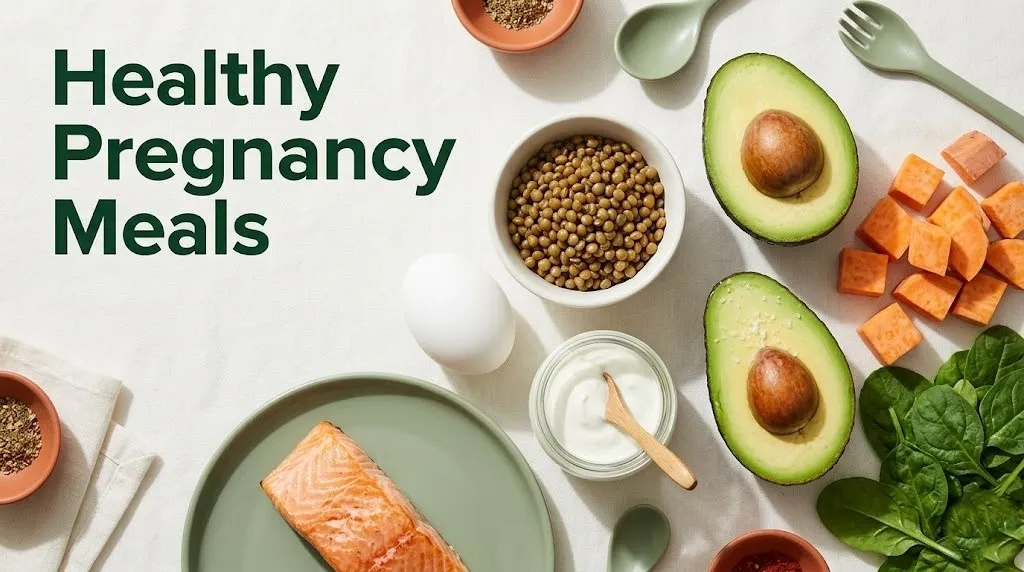
Pregnancy increases the daily requirement for nearly every essential nutrient. According to the NIH Office of Dietary Supplements, daily iron needs jump from 18mg to 27mg during pregnancy. Folate (as dietary folate equivalents, DFE) needs rise to 600mcg per day. Calcium stays at 1,000mg per day but becomes harder to meet as the baby draws on maternal stores.
Understanding these targets gives you a practical framework for building every meal.
| Nutrient | Pre-Pregnancy Daily Need | Pregnancy Daily Need | Top Food Sources |
|---|---|---|---|
| Folate (DFE) | 400mcg | 600mcg | Lentils, spinach, fortified cereals |
| Iron | 18mg | 27mg | Beef, lentils, spinach, fortified grains |
| Calcium | 1,000mg | 1,000mg | Yogurt, milk, fortified plant milk, sardines |
| DHA | 200mg | 200-300mg | Salmon, sardines, DHA-fortified eggs |
| Choline | 425mg | 450mg | Eggs, beef, soybeans |
| Iodine | 150mcg | 220mcg | Dairy, seafood, iodized salt |
| Protein | 46g | 71g | Eggs, meat, legumes, Greek yogurt |
People managing gestational diabetes should pay particular attention to carbohydrate portions even within these healthy food categories. A registered dietitian with prenatal experience can help set individualized carbohydrate targets.
What to Eat During Pregnancy Every Day
What to eat during pregnancy every day comes down to building each meal around one good protein source, one or two vegetables, a whole grain or starchy vegetable, and a calcium-containing food. This structure, repeated across three meals and two snacks, covers most nutrient needs without requiring daily tracking.
Think of your daily eating pattern like a construction schedule. The protein and iron are the structural steel. The folate and DHA are the electrical wiring. Miss either for too long, and the building doesn’t function the way it should.
The Academy of Nutrition and Dietetics recommends pregnant women aim for a daily pattern that includes:
- 3 servings of dairy or fortified alternatives (milk, Greek yogurt, fortified plant-based milk) for calcium and iodine
- At least 2 servings of lean protein daily (eggs, legumes, poultry, fish, lean beef) for protein, iron, and choline
- 5 or more servings of fruits and vegetables, with emphasis on dark leafy greens for folate and magnesium
- 6 or more servings of whole or enriched grains for B vitamins, fiber, and steady blood glucose levels
- 1 to 2 servings of fatty fish per week (not raw) for DHA and iodine
- Prenatal vitamins daily to fill gaps, especially for folate and DHA if fish intake is low
Hydration matters too. The ACOG recommends at least 8 to 12 cups (64 to 96 ounces) of water daily during pregnancy. Dehydration is one of the most common and preventable pregnancy complaints.
People following a vegan or plant-based diet during pregnancy should work with a dietitian to ensure adequate vitamin B12, DHA (from algae-based supplements), calcium, iron, iodine, and zinc. These nutrients are bioavailable in lower quantities from plant sources alone.
Pregnancy Nutrition by Trimester: How Your Needs Shift
Pregnancy nutrition by trimester changes in calorie demand, specific nutrient priorities, and the physical experience of eating itself. Your body’s requirements don’t stay fixed across nine months.
In the first trimester (weeks 1 to 12), your calorie needs don’t increase much. The USDA Dietary Guidelines note that additional calorie needs in the first trimester are minimal: roughly 0 to 100 extra calories per day. The priority is folate and iodine, since neural tube closure happens by week 6 or 7 of fetal development, often before many people know they’re pregnant.
In the second trimester (weeks 13 to 27), calorie needs increase by approximately 340 extra calories per day above pre-pregnancy intake, according to the USDA. Iron and calcium demands become more pressing as the baby develops bone structure and blood volume increases significantly in the mother.
The third trimester (weeks 28 to 40) brings the highest calorie need: approximately 450 extra calories per day. DHA becomes the standout priority for this stage, since fetal brain and retinal development reaches peak intensity in the final weeks. Protein remains critical as the baby gains most of its birth weight.
| Trimester | Extra Calories/Day | Top Nutrient Priorities | Physical Eating Challenges |
|---|---|---|---|
| First (weeks 1-12) | 0-100 | Folate, iodine, vitamin B6 | Nausea, food aversions, fatigue |
| Second (weeks 13-27) | ~340 | Iron, calcium, vitamin D | Usually improved appetite, heartburn starting |
| Third (weeks 28-40) | ~450 | DHA, protein, fiber, magnesium | Reduced stomach capacity, heartburn, constipation |
Healthy First Trimester Meals That Actually Work
Healthy first trimester meals focus on folate, iodine, and vitamin B6 while accommodating the nausea and food aversions that affect most pregnant people in weeks 6 through 14. Eating anything is better than eating nothing during periods of severe nausea.
The challenge in the first trimester is that your nutritional needs are most urgent at exactly the time when eating feels most difficult. Neural tube development requires adequate folate from weeks 4 through 8. If nausea is severe, prioritizing folate-dense foods that are also bland or cold can bridge the gap.
First trimester meals that tend to work even with nausea:
- Peanut butter or almond butter on whole grain toast (protein, B6, some folate, stays down easily)
- Cold Greek yogurt with berries (calcium, protein, antioxidants, no cooking smell required)
- Scrambled eggs with spinach (choline, folate, iron, protein; cook thoroughly to avoid Salmonella risk)
- Lentil soup (high folate, iron, and protein; can be eaten warm or at room temperature)
- Fortified breakfast cereal with milk (often the easiest tolerated meal; check the label for at least 400mcg DFE of folate per serving)
- Smoothie with spinach (Spinacia oleracea), banana, Greek yogurt, and flaxseed (folate, calcium, protein, omega-3 fatty acids; blended texture avoids chewing strong-smelling foods)
Vitamin B6 (pyridoxine) is one of the few nutrients with documented evidence for reducing nausea severity in early pregnancy. The ACOG notes that vitamin B6 supplementation of 10 to 25mg three times daily is often recommended for pregnancy nausea. Foods highest in B6 include chicken, salmon, sweet potatoes, and bananas.
Women experiencing hyperemesis gravidarum (severe pregnancy vomiting) should discuss nutrition support options with their obstetric provider. Oral nutrition may not be sufficient, and medical intervention may be necessary.
Foods for Morning Sickness During Pregnancy
Foods for morning sickness during pregnancy work best when they are bland, cold or room temperature, low in fat, and eaten in small amounts frequently rather than in large meals. The term “morning sickness” is misleading; nausea can strike at any hour.
Gastric emptying slows during pregnancy due to elevated progesterone levels. Large meals sit in the stomach longer, increasing nausea. Eating small amounts every 2 to 3 hours keeps the stomach from being either too empty (which triggers nausea) or too full (which worsens it).
Foods with the strongest track record for tolerability during pregnancy nausea:
- Plain crackers or dry toast eaten immediately upon waking, before getting out of bed
- Ginger (Zingiber officinale): research published in the journal Obstetrics and Gynecology found ginger reduced nausea in pregnancy with no documented adverse effects at culinary doses. Ginger tea, ginger chews, or fresh ginger in broth all work.
- Cold fruit: watermelon, frozen grapes, and apple slices have high water content and minimal smell
- Cold boiled potatoes: low fat, bland, filling, and easy to tolerate
- Rice with a small amount of soy sauce: high starch, low fat, easy to digest
- Broth-based soups at room temperature: provide sodium and hydration without overwhelming the stomach
Quick Tip:
- Keep crackers on your nightstand and eat a few before standing up in the morning.
- Avoid cooking foods with strong smells if they trigger nausea. Ask someone else to cook, or rely on cold meals and smoothies during peak nausea periods.
- Carbonated water can ease nausea for some people. Plain sparkling water, not sweetened sodas, is the better option.
People who cannot keep any food or liquid down for more than 24 hours during pregnancy should contact their obstetric care provider. Dehydration during pregnancy carries real risk and may require clinical treatment.
Healthy Second Trimester Meals and Key Nutrients
Healthy second trimester meals shift focus toward iron, calcium, vitamin D, and fiber as appetite often returns and the baby’s bone structure and circulatory system develop rapidly. For many pregnant people, the second trimester is the most practical window to build a strong eating routine.
Iron demand rises sharply in the second trimester because blood volume increases by up to 50 percent during pregnancy, according to the NIH. The body needs significantly more iron to produce additional hemoglobin. Iron deficiency anemia is one of the most common pregnancy complications worldwide.
Strong second trimester meal options include:
- Beef and lentil stew: combines heme iron (beef) and non-heme iron (lentils) in one meal. Eating vitamin C-rich foods (like tomatoes or bell peppers in the same stew) increases non-heme iron absorption.
- Grilled salmon with roasted sweet potato and steamed broccoli: covers DHA, beta-carotene (converted to vitamin A), vitamin C, and fiber in one plate.
- Chicken and chickpea grain bowl with spinach and tahini dressing: delivers iron, folate, calcium, protein, and zinc together.
- Fortified oatmeal with almond butter and sliced banana: covers iron (if fortified), B6, and fiber in under 10 minutes.
Key Takeaway: In the first trimester, prioritize folate and managing nausea; in the second trimester, shift to iron, calcium, and fiber as your appetite and cooking capacity return.
Calcium from dairy during the second trimester doesn’t just support fetal bone development. If dietary calcium is low, the baby draws calcium from maternal bone. The ACOG notes this can affect the mother’s long-term bone density if intake is consistently inadequate.
People who are lactose intolerant can meet calcium needs through calcium-fortified plant-based milks, canned sardines (Sardina pilchardus, eaten with bones), tofu made with calcium sulfate, and dark leafy greens like kale and bok choy.
Healthy Third Trimester Meals to Prepare Your Body
Healthy third trimester meals focus on DHA, protein, and fiber to support the final weeks of fetal brain development, maintain the mother’s energy, and prevent the constipation that affects most pregnant people late in pregnancy. Stomach capacity decreases as the uterus expands.
Smaller, more frequent meals work better than three large ones in the third trimester. Heartburn is common because the growing uterus pushes upward on the stomach. Eating every 2 to 3 hours in portions of roughly 300 to 400 calories each tends to manage both hunger and discomfort better than large meals.
Third trimester meal strategies:
- Eat the protein first: protein digests more slowly and keeps you full longer on smaller portions.
- Prioritize omega-3 fatty acids: DHA accumulates rapidly in the fetal brain in the final trimester. Salmon, sardines, and DHA-fortified eggs are the most accessible sources.
- Add magnesium-rich foods: magnesium supports muscle relaxation and sleep, both of which become harder in late pregnancy. Pumpkin seeds, black beans, and dark chocolate (70% cacao or higher) are good sources.
- Increase dietary fiber deliberately: the Academy of Nutrition and Dietetics recommends 25 to 35 grams of fiber per day during pregnancy. Most people fall well short of this. Legumes, oats, pears, and raspberries are high-fiber options that pair well with other pregnancy staples.
A third trimester dinner plate might look like: 3 oz baked salmon (DHA, protein), 1/2 cup cooked quinoa (complete protein, magnesium, fiber), 1 cup roasted broccoli (vitamin C, calcium, folate), and 1/2 an avocado (Persea americana; healthy monounsaturated fats, folate, fiber).
People carrying twins or multiples have higher calorie and nutrient needs throughout all three trimesters. An obstetric dietitian or provider should guide specific targets for multiple pregnancies, as general guidance doesn’t apply equally.
Best Foods to Eat While Pregnant
The best foods to eat while pregnant deliver the highest concentration of pregnancy-critical nutrients per calorie, support both mother and fetal development, and can be prepared safely at home. These are the foods that consistently appear in nutrition research as most impactful.
Here are the foods most consistently supported by pregnancy nutrition research:
- Eggs (Gallus gallus domesticus): one of the most complete single foods for pregnancy. One large egg contains 6g protein, 147mg choline, 44mcg folate, and 41IU vitamin D. Choline is often overlooked; it plays a direct role in fetal brain and spinal cord development. Must be fully cooked during pregnancy.
- Lentils (Lens culinaris): one cup cooked provides 18g protein, 16g fiber, 358mcg folate (about 60% of daily pregnancy need), and 6.6mg iron. The most efficient single plant food for pregnancy nutrition.
- Salmon (Atlantic farmed: Salmo salar; Pacific wild: Oncorhynchus spp.): 3 oz provides roughly 1,500 to 2,000mg omega-3 fatty acids (EPA and DHA combined), 22g protein, and significant vitamin D. Limit to two servings per week due to mercury concerns; salmon is a low-mercury fish, but total fish intake limits still apply per FDA guidance.
- Greek yogurt (plain, full-fat or 2%): 6 oz provides approximately 17g protein and 200mg calcium. Contains live cultures (Lactobacillus species). Choose pasteurized brands only.
- Sweet potatoes (Ipomoea batatas): rich in beta-carotene (provitamin A), vitamin C, potassium, and fiber. One medium sweet potato provides roughly 4g fiber and 100% or more of daily vitamin A needs from beta-carotene.
- Spinach (Spinacia oleracea): 1 cup cooked provides 263mcg folate, 6mg iron, and significant calcium and magnesium.
- Avocado (Persea americana): high in monounsaturated fats, folate (approximately 82mcg per half avocado), potassium, and fiber. One of the few whole foods that delivers both folate and healthy fat together.
- Sardines (Sardina pilchardus, canned in water or olive oil): provide DHA, EPA, calcium (from edible bones), and iodine. Lower mercury than most larger fish.
| Food | Key Pregnancy Nutrients | Safe Preparation Note |
|---|---|---|
| Eggs | Choline, protein, vitamin D, folate | Fully cooked; no runny yolks |
| Lentils | Folate, iron, fiber, protein | Cook thoroughly; soak first to improve digestion |
| Salmon | DHA, EPA, protein, vitamin D | Cook to internal temp of 145°F (63°C) |
| Greek yogurt | Calcium, protein, probiotics | Pasteurized only |
| Sweet potato | Beta-carotene, fiber, vitamin C | Bake, roast, or steam; no raw |
| Spinach | Folate, iron, calcium | Raw or cooked; wash thoroughly |
| Avocado | Folate, monounsaturated fats, potassium | Fresh; no raw-sprout combinations |
| Sardines | DHA, calcium, iodine | Canned in water or olive oil; check sodium |
Folate-Rich Foods for Pregnancy
Folate-rich foods for pregnancy are essential from the earliest weeks because adequate folate (vitamin B9) before and during the first trimester reduces the risk of neural tube defects, including spina bifida, by up to 70 percent, according to the CDC.
Folate and folic acid are related but distinct. Folate is the naturally occurring form found in food. Folic acid is the synthetic form used in supplements and fortified foods. Folic acid is actually more bioavailable than natural folate, which is why prenatal vitamins use the folic acid form and why fortified cereals can be a particularly efficient source.
The NIH Office of Dietary Supplements sets the daily folate target during pregnancy at 600mcg DFE (dietary folate equivalents).
Top folate-rich foods for pregnancy:
- Lentils (1 cup cooked): 358mcg DFE
- Spinach (1 cup cooked): 263mcg DFE
- Black-eyed peas (1 cup cooked): 358mcg DFE
- Asparagus (1 cup cooked): 268mcg DFE
- Fortified breakfast cereal (1 serving): 100 to 400mcg DFE (varies by brand; check the label)
- Avocado (1/2 medium): 82mcg DFE
- Broccoli (1 cup cooked): 168mcg DFE
- Oranges (1 medium): 47mcg DFE
Key Takeaway: If you can only change three things in your pregnancy diet, prioritize a prenatal vitamin with at least 400mcg folic acid, eat lentils or spinach several times a week, and choose fortified whole grain cereal as a daily meal option.
People with the MTHFR genetic variant may have reduced ability to convert folic acid into the active form (methylfolate). A healthcare provider can order testing and may recommend methylfolate supplementation in addition to dietary folate. This is not a universal recommendation; it requires individual evaluation.
High-Iron Foods for Pregnancy
High-iron foods for pregnancy are among the most important dietary targets because iron-deficiency anemia is estimated to affect approximately 40 percent of pregnant women globally, according to the WHO. Anemia during pregnancy is associated with premature birth, low birth weight, and maternal fatigue.
Iron comes in two forms with different absorption rates. Heme iron, found in meat, poultry, and fish, is absorbed at a rate of approximately 15 to 35 percent by the body. Non-heme iron, found in plant foods and fortified grains, is absorbed at a much lower rate of 2 to 20 percent, but absorption improves when eaten with vitamin C-rich foods.
Pairing is everything with iron. A bowl of lentil soup with a squeeze of fresh lemon juice, or a spinach salad with sliced strawberries and orange segments, dramatically increases the non-heme iron your body actually absorbs.
High-iron foods to include regularly:
- Beef (3 oz cooked): 3mg heme iron
- Chicken liver (3 oz cooked): 11mg heme iron (limit to once weekly due to high preformed vitamin A content)
- Lentils (1 cup cooked): 6.6mg non-heme iron
- Spinach (1 cup cooked): 6.4mg non-heme iron
- Tofu (1/2 cup firm): 3mg non-heme iron
- Fortified oatmeal (1 packet): 8 to 10mg non-heme iron (varies by brand)
- Canned beans (1/2 cup): 1.5 to 2.5mg non-heme iron
- Pumpkin seeds (1 oz): 2.7mg non-heme iron
Conversely, tannins in tea and coffee can inhibit iron absorption when consumed with iron-rich meals. Drinking tea or coffee between meals rather than with them is an easy way to preserve iron uptake without eliminating these beverages entirely.
DHA Sources During Pregnancy
DHA sources during pregnancy matter because docosahexaenoic acid (DHA) is an omega-3 fatty acid that accumulates directly in the developing fetal brain and retina, particularly in the third trimester. Low maternal DHA intake has been associated with reduced fetal brain development and preterm birth risk in multiple observational studies published in journals including the American Journal of Clinical Nutrition.
ACOG recommends pregnant women consume at least 200 to 300mg of DHA per day. Most people in the United States fall below this target without intentional food choices.
The body can convert alpha-linolenic acid (ALA), found in flaxseeds and walnuts, to DHA, but the conversion rate is very low (typically less than 10 percent). Relying solely on ALA-rich plant foods for DHA during pregnancy is not reliable. Eating fatty fish or taking an algae-derived DHA supplement (which is vegan-safe and what fish get their DHA from originally) is a more dependable strategy.
Best DHA food sources:
- Salmon (3 oz cooked): 1,200 to 2,000mg DHA + EPA combined
- Sardines (3 oz canned): 740mg DHA + EPA
- Herring (3 oz cooked): 940mg DHA + EPA
- DHA-fortified eggs (1 egg): approximately 100mg DHA
- Anchovies (1 oz): 411mg DHA + EPA
- Algae-based DHA supplements: 200 to 400mg DHA per capsule (suitable for vegans and vegetarians)
The FDA and EPA advise pregnant women to eat 2 to 3 servings of low-mercury fish per week (totaling 8 to 12 oz) and specifically to choose fish low in mercury. Salmon, sardines, trout, herring, and anchovies are all on the FDA’s “best choices” list for pregnancy.
Healthy Pregnancy Breakfast Ideas
Healthy pregnancy breakfast ideas combine protein, folate or iron, and a source of complex carbohydrates to stabilize blood glucose early in the day and cover the nutrients most likely to be missed by midday. Breakfast is also the meal when prenatal vitamins are most often recommended to be taken (with food, to reduce nausea from the supplement itself).
Some people cannot face food immediately upon waking during pregnancy, particularly in the first trimester. In that case, keeping crackers on the nightstand, eating a small amount before getting vertical, and having the main breakfast 30 to 60 minutes later can reduce nausea while still meeting nutritional needs.
Practical, nutritionally strong pregnancy breakfast options:
- Scrambled eggs (2 large, fully cooked) on whole grain toast with half an avocado: provides choline, protein, folate, healthy fats, and fiber.
- Plain Greek yogurt with fresh berries, ground flaxseed (Linum usitatissimum), and a drizzle of honey: delivers calcium, protein, antioxidants, and ALA omega-3 fatty acids.
- Fortified oatmeal (rolled oats or steel-cut oats, Avena sativa) with almond butter (2 tablespoons) and banana slices: iron (from fortified oats), B6, protein, and fiber.
- Spinach and egg white omelet with cheese (using fully cooked eggs and pasteurized cheese): folate, protein, calcium, and choline together.
- Smoothie with 1 cup spinach, 1 banana, 6 oz plain Greek yogurt, 1 tablespoon chia seeds (Salvia hispanica), and 1/2 cup pasteurized orange juice: iron, folate, vitamin C (to boost iron absorption), calcium, protein, and omega-3s in one drink.
Quick Tip:
- Cook eggs fully (no runny yolks) throughout pregnancy to eliminate Salmonella risk.
- Fortified cereals vary widely in folate and iron content. Check the Nutrition Facts panel; aim for at least 100mcg DFE folate and 8mg iron per serving.
- If nausea hits hardest in the morning, cold breakfasts (yogurt, smoothies, overnight oats) are often easier to tolerate than hot cooked foods.
Healthy Pregnancy Lunch Ideas
Healthy pregnancy lunch ideas work best when they’re portable, don’t require reheating to a dangerous internal temperature mid-workday, and deliver iron, protein, and vegetables that might have been missed at breakfast. Lunch is the easiest meal to skip when busy, and skipping it during pregnancy creates blood glucose dips that worsen fatigue and nausea.
Deli meats, unpasteurized cheeses, and premade cold salads from salad bars are pregnancy food safety concerns at lunch. These are covered in detail in the foods to avoid section. The workaround is simple: build lunches around foods you’ve prepared and refrigerated yourself, or choose hot restaurant options where the protein is freshly cooked.
Strong pregnancy lunch ideas:
- Lentil and roasted vegetable grain bowl: 1/2 cup cooked lentils, 1/2 cup cooked quinoa, 1 cup roasted vegetables (bell peppers, zucchini, cherry tomatoes), olive oil and lemon dressing. Covers folate, iron, fiber, and vitamin C.
- Whole grain wrap with canned salmon, avocado, lettuce, and tomato: protein, DHA, folate, and healthy fats. Use canned salmon (which is cooked during the canning process and safe during pregnancy).
- Chickpea and spinach soup with whole grain bread: covers iron, folate, protein, and fiber. Make a large batch at home and refrigerate for the week.
- Turkey and cheese sandwich on whole wheat (using freshly cooked turkey rather than deli slices, which carry Listeria risk): protein, calcium, iron, and B vitamins.
- Egg salad on whole grain bread (fully hard-boiled eggs): choline, protein, B12. Refrigerate immediately and consume within 24 hours.
| Lunch Option | Key Pregnancy Nutrients | Prep Time |
|---|---|---|
| Lentil grain bowl | Folate, iron, fiber, protein | 20 min (or batch-prep Sunday) |
| Canned salmon wrap | DHA, protein, folate, healthy fats | 5 min |
| Chickpea spinach soup | Iron, folate, protein, fiber | 30 min batch |
| Egg salad sandwich | Choline, protein, B12 | 15 min |
| Turkey and cheese on whole wheat | Protein, calcium, iron, B vitamins | 5 min (freshly cooked turkey) |
Healthy Pregnancy Dinner Ideas
Healthy pregnancy dinner ideas serve as the primary opportunity to hit daily iron, DHA, calcium, and fiber targets that may have been partially missed earlier in the day. Dinner is usually the meal with the most cooking flexibility, making it the best time to focus on nutrient-dense whole foods.
In the third trimester, when stomach capacity shrinks, dinner should be earlier (ideally at least 2 hours before lying down) and slightly smaller than usual. Heartburn worsens with large, late meals. Splitting the third trimester “dinner” into a 5pm light meal and a small 7pm snack often works better than one large dinner.
Nutritionally strong pregnancy dinner ideas:
- Baked salmon with roasted broccoli and brown rice: DHA, EPA, vitamin C, fiber, complex carbohydrates. One of the most nutritionally complete pregnancy dinners possible.
- Beef and vegetable stir-fry with brown rice (beef cooked to internal temperature of 160°F / 71°C): heme iron, zinc, protein, vitamin C from vegetables.
- Black bean and sweet potato tacos on corn tortillas with shredded cabbage and lime: folate, fiber, beta-carotene, vitamin C, plant-based iron. Skip raw sprouts and unpasteurized salsas.
- **Chicken thigh (fully cooked to **165°F / 74°C) with roasted root vegetables and quinoa: protein, iron, complex carbs, magnesium.
- Lentil and tomato curry over brown rice: folate, iron, fiber, lycopene. Paired with a small yogurt raita for calcium.
- Pasta with turkey meat sauce and a large green salad: iron, protein, folate (from spinach in the salad), fiber.
Key Takeaway: Dinner is your most flexible meal and the best opportunity to fill whatever nutrient gaps breakfast and lunch left behind. Build at least three or four go-to pregnancy dinners you can rotate each week without having to think too hard on tired evenings.
Vegetarians and vegans should ensure at least one of their dinner proteins is a complete protein or a strategic combination: quinoa (a complete plant protein), edamame, or a legume-plus-grain combination like rice and beans, which together provide all essential amino acids.
Healthy Pregnancy Snacks
Healthy pregnancy snacks prevent the blood glucose drops that worsen nausea and fatigue, bridge nutrient gaps between meals, and help meet the increased calorie needs of the second and third trimesters without relying on three enormous meals.
The best pregnancy snacks pair a protein or fat with a fiber-rich carbohydrate. This slows glucose absorption, keeps you full longer, and avoids the energy spike-and-crash cycle that processed snack foods create.
Practical, nutritionally useful pregnancy snack ideas:
- Apple slices with 2 tablespoons almond butter: fiber, healthy fat, vitamin E, some protein
- Hard-boiled egg with whole grain crackers: choline, protein, complex carbs (egg must be fully cooked)
- 6 oz plain Greek yogurt with a tablespoon of pumpkin seeds: calcium, protein, magnesium, zinc
- Handful of walnuts (Juglans regia) and dried apricots (no sulfites): ALA omega-3, iron, fiber
- Hummus (made from chickpeas, Cicer arietinum) with raw carrot and cucumber sticks: folate, fiber, plant-based iron, vitamin A
- Whole grain toast with avocado and a pinch of iodized salt: folate, healthy fat, potassium, iodine
- Smoothie with kefir, banana, and frozen berries: calcium, probiotics, vitamin C, potassium
- Canned sardines on whole grain crackers: DHA, calcium, iodine (check sodium; choose low-sodium varieties)
| Snack | Key Nutrients | Calories (approx.) |
|---|---|---|
| Apple + almond butter | Fiber, healthy fat, vitamin E | 200 |
| Hard-boiled egg + crackers | Choline, protein, complex carbs | 180 |
| Greek yogurt + pumpkin seeds | Calcium, protein, magnesium | 220 |
| Hummus + raw vegetables | Folate, fiber, plant iron | 150 |
| Avocado toast | Folate, healthy fat, potassium | 230 |
| Sardines on crackers | DHA, calcium, iodine | 200 |
People with gestational diabetes should choose snacks with lower glycemic impact: opt for nut butter over fruit alone, add protein to any carbohydrate-based snack, and monitor portion sizes of even whole-fruit options. A registered dietitian can set individualized targets.
Foods to Avoid During Pregnancy
Foods to avoid during pregnancy are those that carry elevated risk of foodborne illness, contain high levels of mercury or other harmful compounds, or include substances documented to negatively affect fetal development. This is not about eliminating entire food groups; it’s about specific high-risk items with clear evidence behind the caution.
Foodborne illness is more dangerous during pregnancy than at other life stages. The CDC reports that pregnant women are approximately 10 times more likely to contract Listeria monocytogenes infection than the general population. Listeriosis can cause miscarriage, stillbirth, premature delivery, and severe illness in the newborn.
Foods with documented pregnancy safety concerns:
- Raw or undercooked meat, poultry, and seafood: risk of Listeria, Salmonella, Toxoplasma gondii, and E. coli. All meat must reach safe internal temperatures: 145°F (63°C) for whole cuts (with 3-minute rest), 160°F (71°C) for ground meat, 165°F (74°C) for poultry.
- Deli meats and hot dogs: risk of Listeria even when refrigerated. If consumed, must be heated to steaming (165°F / 74°C) immediately before eating.
- Raw or soft-cooked eggs: risk of Salmonella. Avoid runny yolks, homemade hollandaise, raw cookie dough, and homemade Caesar dressing using raw egg.
- Unpasteurized dairy products and soft cheeses made from unpasteurized milk (Brie, Camembert, queso fresco, queso blanco): Listeria risk. Choose pasteurized versions only; hard cheeses are generally safe.
- High-mercury fish: shark, swordfish, king mackerel, tilefish from the Gulf of Mexico, orange roughy, and bigeye tuna. The FDA advises pregnant women to avoid these entirely. Albacore (white) canned tuna should be limited to 1 serving (4 oz) per week.
- Raw sprouts (alfalfa, clover, radish, mung bean): associated with Salmonella and E. coli outbreaks. Avoid raw; cook thoroughly if desired.
- Unpasteurized juices: risk of E. coli and other pathogens. Choose pasteurized juice only.
- Alcohol: no safe level of alcohol consumption during pregnancy has been established. The ACOG recommends complete abstinence throughout pregnancy. Alcohol exposure is the leading preventable cause of fetal alcohol spectrum disorders.
- Excess caffeine: ACOG recommends limiting caffeine to 200mg per day or less during pregnancy. One 8 oz cup of brewed coffee contains approximately 95 to 165mg of caffeine depending on the brew method.
- Unpasteurized honey: risk of Clostridium botulinum spores. This is more relevant for infant feeding, but pasteurized honey is a safer choice during pregnancy.
| Food/Substance | Risk | Safe Alternative |
|---|---|---|
| Deli meats | Listeria monocytogenes | Heat to 165°F or choose freshly cooked protein |
| High-mercury fish | Mercury accumulation | Salmon, sardines, trout, herring |
| Raw eggs | Salmonella | Fully cooked eggs; pasteurized eggs for raw applications |
| Unpasteurized soft cheeses | Listeria | Pasteurized hard cheeses; pasteurized soft cheese varieties |
| Raw sprouts | Salmonella, E. coli | Cooked sprouts or substitute shredded vegetables |
| Alcohol | Fetal alcohol spectrum disorders | Non-alcoholic sparkling beverages |
| Excess caffeine (>200mg/day) | Associated with preterm risk | Tea, half-caf options, herbal teas (caffeine-free) |
Herbal teas deserve a specific note. Many are considered safe during pregnancy (peppermint, ginger), but others (red raspberry leaf, chamomile in large amounts, licorice root) have insufficient safety data or potential uterine-stimulating effects. If you drink herbal tea regularly, check with your obstetric provider about the specific varieties you use.
Frequently Asked Questions About Healthy Pregnancy Meals
What should I eat every day during pregnancy?
Every day during pregnancy, aim to eat at least one serving of a folate-rich food, one iron-rich food, one calcium source, one protein source, and at least five servings of fruits and vegetables.
Building meals around lentils, eggs, leafy greens, Greek yogurt, and whole grains covers most of these categories efficiently.
A daily prenatal vitamin with at least 400mcg folic acid and 27mg iron fills gaps that diet alone may not consistently meet.
How many extra calories do I need when pregnant?
In the first trimester, additional calorie needs are minimal: roughly 0 to 100 extra calories per day above your pre-pregnancy intake.
The second trimester increases this to approximately 340 extra calories per day, and the third trimester to approximately 450 extra calories per day, according to the USDA Dietary Guidelines.
These additional calories should come from nutrient-dense foods rather than processed snacks; think one extra serving of Greek yogurt, a handful of nuts, or an additional serving of whole grain bread.
What are the best snacks for pregnancy?
The best pregnancy snacks pair a protein or fat source with a fiber-rich carbohydrate to stabilize blood glucose and hold you between meals.
Strong options include hard-boiled eggs with whole grain crackers, Greek yogurt with pumpkin seeds, apple slices with almond butter, and hummus with raw vegetables.
Avoid snacks made with raw eggs, unpasteurized dairy, or raw sprouts, and be cautious with high-caffeine energy bars or drinks.
Which fish is safe to eat during pregnancy?
The FDA recommends pregnant women eat 2 to 3 servings (8 to 12 oz total) of low-mercury fish per week.
Safe, low-mercury options include salmon, sardines, trout, herring, anchovies, tilapia, and catfish.
Avoid shark, swordfish, king mackerel, tilefish from the Gulf of Mexico, orange roughy, and bigeye tuna due to high mercury content.
Can I eat eggs every day while pregnant?
Yes, fully cooked eggs are safe to eat daily during pregnancy and are one of the most nutritionally valuable foods you can include.
One large egg provides approximately 6 grams of protein, 147mg choline, 44IU vitamin D, and 44mcg folate.
The key safety rule is that eggs must be fully cooked throughout pregnancy: no runny yolks, no soft scrambles, and no raw egg in sauces or batters.
Getting Your Pregnancy Meals Right in 2026
The most practical thing you can take from this guide is that healthy pregnancy meals don’t require an entirely new way of eating. They require making your existing meals more intentional: more lentils, more eggs, more leafy greens, more fatty fish, and far fewer of the specific high-risk foods covered in the safety section.
Build a rotation of five or six dinners, three or four go-to breakfasts, and a handful of reliable snacks that cover your key nutrient targets. Cook proteins to safe temperatures. Choose pasteurized dairy. Keep canned salmon and sardines in your pantry for easy DHA without planning ahead.
Every trimester brings different priorities, and your appetite and tolerance will shift throughout. Use the trimester-specific sections here as a practical reference when your needs change, and bring specific questions about your individual nutrient targets to your obstetric dietitian or provider.