
Gyro meat can be a genuinely healthy protein source, but the answer depends heavily on whether you’re eating traditional rotisserie lamb or chicken versus a commercially pre-formed processed gyro loaf. Most people eating a gyro are getting a real mix of protein, fat, iron, and sodium, and understanding which version is on your plate changes the entire nutritional story.
Protein from lamb and chicken is among the most bioavailable dietary protein available to humans. The Dietary Guidelines for Americans 2020-2025 recommends that adults get roughly 0.8 grams of protein per kilogram of body weight daily, and a single gyro serving can contribute meaningfully toward that target. What you order alongside the meat, specifically the pita, tzatziki, and toppings, matters just as much as the meat itself.
This guide covers the full nutritional picture of gyro meat: the calorie and macronutrient breakdown, the difference between lamb and chicken options, how much sodium you’re actually getting, how gyro fits within a Mediterranean eating pattern, and practical ways to enjoy it without overloading on saturated fat or sodium.
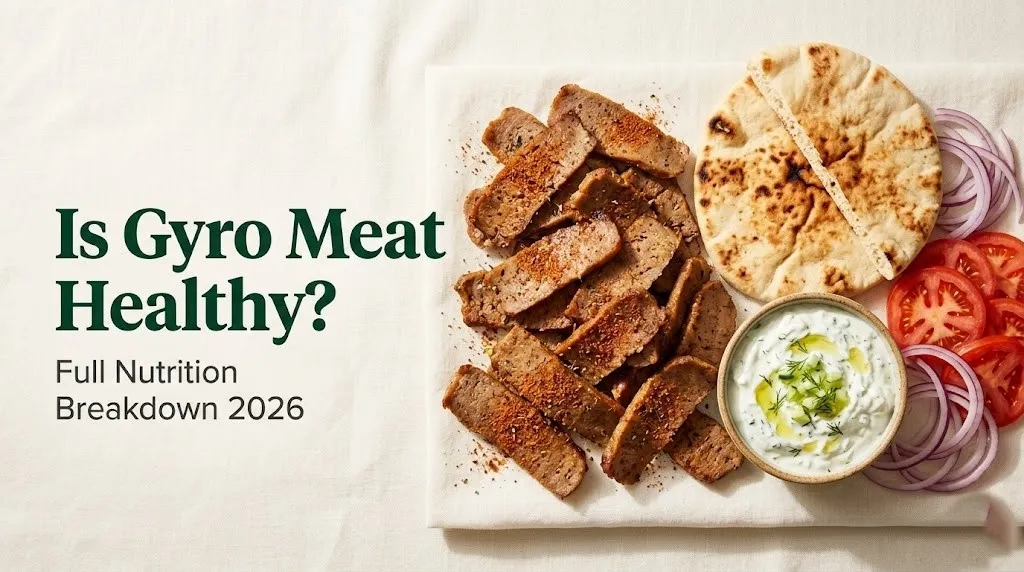
Is Gyro Meat Healthy?
Gyro meat is moderately healthy when eaten as part of a balanced diet, particularly when it consists of lean rotisserie lamb or chicken seasoned with herbs and spices rather than a heavily processed commercial blend.
The protein content is one of gyro meat’s strongest qualities. A 3.5 oz (100g) serving of lamb gyro meat provides approximately 16 to 20 grams of complete protein, meaning it contains all nine essential amino acids the body cannot produce on its own. That’s comparable to a chicken breast at similar serving sizes.
The less favorable side is the fat and sodium profile. Traditional lamb carries higher saturated fat than chicken. Commercial gyro loaf products often add sodium, preservatives, and wheat-based fillers to hold the shape of the cone, pushing the nutritional profile closer to a processed deli meat than a whole-food protein.
Whether gyro meat is healthy for you personally depends on three factors:
- Preparation type: Hand-seasoned rotisserie vs. commercial pre-formed loaf
- Portion size: A 3 oz serving at home vs. a restaurant portion that can reach 6 to 8 oz
- What it’s eaten with: Whole grain pita, fresh vegetables, and tzatziki vs. white pita, fries, and creamy sauces
For most healthy adults eating a balanced overall diet, one to two gyros per week from a restaurant using quality ingredients is a reasonable choice.
What Is Gyro Meat Made Of?
Gyro meat is traditionally made from seasoned ground or thinly sliced lamb, chicken, pork, or a beef-lamb blend stacked onto a vertical rotating spit and slow-roasted until the outer layer is browned and crisped.
The word “gyro” (from the Greek “gyros,” meaning “turn”) refers to the cooking method: meat rotating on a spit over a heat source. In Greek tradition, lamb is the most historically authentic protein. In the United States, the most common restaurant preparation uses a pre-formed commercial loaf of ground beef and lamb pressed together, sliced directly from a rotating cone.
The seasoning blend typically includes:
- Oregano (Origanum vulgare)
- Garlic (Allium sativum)
- Cumin (Cuminum cyminum)
- Paprika
- Salt and black pepper
- Sometimes rosemary or thyme
These herbs and spices add flavor without meaningful caloric contribution, and some, particularly garlic and oregano, carry documented antioxidant properties. The preparation method itself, slow rotisserie cooking, allows excess fat to drip away from the meat as it cooks, which can reduce total fat content compared to pan-frying or baking the same meat.
People with wheat sensitivities should note that commercial pre-formed gyro loaf products sometimes include breadcrumbs or wheat-based binders. Ask specifically about the composition before assuming the meat component alone is gluten-free.
Gyro Meat Nutrition Facts
A standard 3 oz (85g) serving of lamb gyro meat from a commercial pre-formed loaf provides approximately the following nutritional values, based on USDA FoodData Central data:
| Nutrient | Per 3 oz (85g) Serving |
|---|---|
| Calories | 185 to 210 kcal |
| Total Fat | 14 to 17g |
| Saturated Fat | 6 to 8g |
| Protein | 13 to 16g |
| Total Carbohydrates | 1 to 3g |
| Sodium | 380 to 520mg |
| Iron (heme) | 1.5 to 2.5mg |
| Vitamin B12 | 1.8 to 2.5mcg |
| Zinc | 3 to 4.5mg |
These figures apply to the meat portion only. A complete assembled gyro in a standard white pita with tzatziki adds approximately 200 to 300 additional calories, 300 to 500mg more sodium, and 25 to 35g of carbohydrates from the bread alone.
Vitamin B12 (cobalamin) is one of the most noteworthy micronutrients in gyro meat. The National Institutes of Health recommends 2.4 micrograms of B12 daily for adults, and a single serving of lamb gyro meat can deliver close to that entire daily requirement. This makes gyro a particularly good meal for people who eat minimal other animal products.
Heme iron, found in red meat like lamb, is absorbed by the body at a rate of 15 to 35 percent, compared to just 2 to 20 percent for non-heme iron found in plant foods. For people at risk of iron deficiency anemia, this is a real practical advantage.
Key Takeaway: Gyro meat delivers complete protein, vitamin B12, and heme iron in a single serving, but the calorie and sodium count roughly doubles once you factor in the pita, sauce, and toppings.
Is Gyro Meat Processed?
Whether gyro meat counts as “processed” depends on which product you’re actually eating, and this distinction matters more than most food discussions acknowledge.
Hand-seasoned rotisserie gyro meat, prepared by marinating fresh lamb or chicken in herbs and spices and roasting it on a spit, is not a processed meat by any major classification standard. The IARC (International Agency for Research on Cancer) classifies processed meat as meat that has been transformed through salting, curing, fermentation, smoking, or the addition of preservatives. Fresh marinated meat does not meet that definition.
Commercial pre-formed gyro loaf, the product most commonly used in American fast-casual restaurants and sold frozen in grocery stores, is a different story. This product typically combines ground beef and lamb with salt, sodium phosphates, and stabilizers, pressed into a cone shape. That preparation does qualify as a processed meat under standard food science definitions.
The difference between the two is meaningful. Harvard T.H. Chan School of Public Health research has found that regular consumption of processed red meat is associated with higher cardiovascular risk. Fresh rotisserie lamb does not carry the same volume of evidence for this association.
When ordering at a restaurant, you can ask whether the gyro meat is a fresh-seasoned preparation or a commercial loaf product. Many independent Greek restaurants use the loaf for consistency and speed; some prepare their own blend fresh. The answer changes the nutritional picture in ways worth knowing.
Gyro Meat Protein and Fat Content
Gyro meat is a high-protein, moderate-to-high-fat food. Getting those numbers in context requires knowing what protein and fat are actually doing in this meal.
A 3 oz serving of lamb gyro meat delivers approximately 14 to 16 grams of protein. The Academy of Nutrition and Dietetics identifies complete animal proteins, including lamb and chicken, as highly bioavailable, meaning the amino acids they contain are efficiently absorbed and used by the body for muscle maintenance, immune function, and enzyme production.
The fat content is where lamb and chicken diverge most. Lamb gyro meat at a 3 oz serving contains roughly 6 to 8 grams of saturated fat. The American Heart Association recommends keeping saturated fat intake to less than 6 percent of total daily calories, which works out to approximately 13 grams per day on a 2,000-calorie diet. A single lamb gyro serving can deliver more than half that daily limit in the meat alone, before counting dairy, cheese, or butter elsewhere in the day’s eating.
Think of it like a budget: lamb gyro meat spends a meaningful portion of your daily saturated fat allowance in one meal. That’s not automatically a problem, but it does mean the rest of the day’s meals should lean lighter on saturated fat.
Chicken gyro meat, particularly breast meat, reduces the saturated fat figure to approximately 1 to 2 grams per 3 oz serving while delivering a comparable or slightly higher protein count. For people actively managing cholesterol or following AHA dietary guidance for cardiovascular health, chicken is the more favorable option.
Is Gyro Meat High in Sodium?
Yes, gyro meat is moderately to significantly high in sodium, particularly in commercial pre-formed preparations.
A 3 oz serving of commercial lamb gyro loaf meat typically contains 380 to 520mg of sodium. The Dietary Guidelines for Americans 2020-2025 recommends that adults consume fewer than 2,300mg of sodium per day. A single gyro sandwich, once the pita, tzatziki, and any pickled toppings are included, can reach 900 to 1,400mg of sodium total.
That represents roughly 40 to 60 percent of the recommended daily sodium limit in one meal.
People managing hypertension, kidney disease, or heart failure are most directly affected by this. The AHA recommends that people with high blood pressure aim even lower, toward 1,500mg of sodium per day, which a single complete gyro could approach on its own.
The specific sources of sodium in a gyro meal include:
- Commercial gyro meat blend: 380 to 520mg per 3 oz serving
- Pita bread (one standard pita): 280 to 340mg
- Tzatziki sauce (2 tbsp): 80 to 130mg
- Feta cheese (if added, 1 oz): 315 to 370mg
- Pickled vegetables (if added): variable, 150 to 300mg
Fresh-seasoned restaurant gyro meat made without added sodium phosphates or stabilizers will run lower, often in the 200 to 350mg range per serving. Asking the restaurant whether they use a commercial loaf or a fresh preparation can give you a clearer idea of where you land.
Key Takeaway: A complete gyro sandwich with pita and toppings can deliver between 900 and 1,400mg of sodium, which means it’s worth asking about the meat preparation method if sodium management matters to you.
Are Lamb Gyros Healthy?
Lamb gyros are a reasonable choice for most healthy adults, offering complete protein, iron, and vitamin B12. The main consideration is their saturated fat content, which is higher than chicken or turkey.
Lamb (from Ovis aries) is a red meat with a specific nutritional advantage: its fat contains naturally occurring conjugated linoleic acid (CLA), a fatty acid that some research published in the American Journal of Clinical Nutrition has associated with favorable body composition outcomes at higher dietary intakes. This doesn’t make lamb a health food by virtue of CLA content alone, but it does distinguish it from processed meats with synthetic additives.
The iron content in lamb is particularly practical. A 3 oz serving of lamb gyro meat provides approximately 1.5 to 2.5mg of heme iron, which is well-absorbed by the body. The National Institutes of Health recommends 8mg of iron daily for adult men and 18mg for premenopausal women. Regular lamb consumption can make a meaningful contribution to iron status, especially in people who don’t eat other red meats frequently.
Lamb gyros are worth moderating for:
- People with high LDL cholesterol: The saturated fat content can contribute to LDL elevation when intake is high
- People with gout: Lamb is a moderate-to-high purine food, and frequent red meat consumption can raise uric acid levels
- People following a strict cardiovascular diet: The AHA’s guidance to limit saturated fat makes lamb a “sometimes” food rather than a daily protein
One or two lamb gyros per week, as part of a diet otherwise rich in vegetables, legumes, and fiber, fits within generally accepted parameters for cardiovascular health.
Is Chicken Gyro Meat Healthy?
Chicken gyro meat is one of the leaner high-protein options available in street food and fast-casual dining, making it a strong choice for people monitoring fat intake.
Chicken thigh gyro meat is the most common preparation in traditional Greek and Middle Eastern gyro cooking, because the fat content in thighs keeps the meat moist during long rotisserie cooking. A 3 oz (85g) serving of chicken thigh gyro meat provides approximately:
- 160 to 180 calories
- 19 to 22 grams of protein
- 7 to 9 grams of total fat
- 2 to 3 grams of saturated fat
- 250 to 400mg of sodium (depending on marinade)
Chicken breast gyro meat, when available, drops the fat figure further to roughly 3 to 5 grams of total fat per serving, though the meat can dry out during rotisserie cooking without a generous marinade.
The vitamin B12 content of chicken is lower than lamb, approximately 0.3 to 0.4 micrograms per 3 oz serving. For people who rely on meat as a primary B12 source, this is a real nutritional gap compared to red meat. People eating chicken gyro as their main animal protein source may want to ensure other dietary B12 sources are present.
For people with cardiovascular concerns, following a DASH diet, or keeping saturated fat under the AHA’s recommended threshold, chicken gyro is the better-performing protein in this category by a clear margin.
Lamb vs. Chicken Gyro: Nutrition Comparison
When choosing between lamb and chicken gyro, the nutritional differences are real and worth understanding before you order.
| Nutrient | Lamb Gyro (3 oz) | Chicken Thigh Gyro (3 oz) |
|---|---|---|
| Calories | 185 to 210 kcal | 160 to 180 kcal |
| Total Fat | 14 to 17g | 7 to 9g |
| Saturated Fat | 6 to 8g | 2 to 3g |
| Protein | 13 to 16g | 19 to 22g |
| Vitamin B12 | 1.8 to 2.5mcg | 0.3 to 0.4mcg |
| Heme Iron | 1.5 to 2.5mg | 0.8 to 1.2mg |
| Zinc | 3 to 4.5mg | 2 to 3mg |
| Sodium (approx.) | 380 to 520mg | 250 to 400mg |
Data based on USDA FoodData Central estimates. Restaurant preparations vary.
The tradeoff is clear. Lamb wins on micronutrients: B12, iron, and zinc are all substantially higher per serving. Chicken wins on macronutrients: lower calories, less total fat, less saturated fat, and often slightly more protein per ounce.
This is not unlike choosing between salmon and tilapia. Salmon has more fat, but it’s largely unsaturated omega-3 fat that carries cardiovascular benefits. In the lamb-versus-chicken comparison, you’re trading nutrient density against fat load.
For a person eating gyro once or twice a week with no specific cardiovascular concerns: lamb is a perfectly fine choice. For someone managing LDL cholesterol, reducing saturated fat intake, or following an AHA-aligned eating plan: chicken is the more sensible routine option, with lamb reserved for occasional eating.
Key Takeaway: Chicken gyro meat outperforms lamb on protein per calorie and saturated fat; lamb wins on B12, iron, and zinc. Your best choice depends on what your current diet is actually missing.
Is Gyro Healthy for Weight Loss?
A gyro can fit into a weight-loss eating plan, but it requires some attention to portion size, preparation, and what the meat is served with.
The protein content of gyro meat is the primary advantage for weight management. Research published in the American Journal of Clinical Nutrition has consistently found that higher dietary protein increases satiety, preserves lean muscle mass during caloric restriction, and reduces total energy intake across the day. A 3 oz serving of chicken gyro meat delivering 19 to 22 grams of protein at roughly 170 calories is a favorable calorie-to-protein ratio for a weight-loss meal.
The challenge is the assembled gyro as it’s typically served. A standard restaurant gyro sandwich in a full pita with tzatziki, onions, and tomatoes runs approximately 450 to 650 calories. Add fries and a dipping sauce and you’re at 800 to 1,000 calories for a single meal.
Adjustments that keep gyro compatible with a calorie-managed eating plan:
- Order the gyro plate instead of the pita sandwich, which gives you the meat and salad without the bread
- Request a half portion of pita or a whole wheat pita where available
- Use tzatziki as the sauce rather than fry sauce or aioli
- Load up on the tomatoes, onions, and lettuce included in most servings
- Skip the fries as a side or substitute a Greek salad
Portion size is the biggest variable. Restaurant gyro meat portions regularly run 5 to 8 oz, which can double the calorie figures compared to a 3 oz serving. Eating a gyro plate with extra salad and a smaller meat portion is a practical strategy for calorie-conscious eating.
Gyro and the Mediterranean Diet
Traditional gyro sits comfortably within Mediterranean dietary patterns, particularly when the full meal is assembled with vegetables, tzatziki, and modest amounts of bread.
The Mediterranean diet, which the Academy of Nutrition and Dietetics and the American Heart Association both identify as one of the most well-researched dietary patterns for cardiovascular health and longevity, emphasizes olive oil, vegetables, legumes, whole grains, fish, and moderate amounts of poultry and lean red meat. Lamb, the traditional protein in Greek cuisine, has been eaten within this pattern for centuries.
A study in the American Journal of Clinical Nutrition found that adherence to a Mediterranean eating pattern was associated with reduced risk of cardiovascular events and lower inflammatory markers. Gyro meat as a component within this pattern, meaning lamb or chicken eaten alongside raw vegetables, olive oil-dressed salad, and cultured dairy like tzatziki, aligns with those principles.
Where the typical American gyro departs from the Mediterranean model is in the commercial processing of the meat and the size of the pita portion. In Greek street food culture, the bread portion is thin and the vegetable-to-meat ratio is high. American restaurant versions tend to use a larger white pita and a more generous meat portion.
Quick Tip:
- Order gyro plates over gyro sandwiches to better approximate the Mediterranean ratio of meat to vegetables
- Ask for tzatziki made with Greek yogurt, which adds protein and calcium without significant added fat
- Add hummus or a tomato-cucumber salad on the side to bring the meal closer to a Mediterranean dietary profile
Is Tzatziki Healthy?
Tzatziki is one of the healthier condiment choices available across any restaurant category, and it actively improves the nutritional profile of a gyro meal.
Traditional tzatziki is made from:
- Greek yogurt (strained whole milk or low-fat)
- Cucumber (Cucumis sativus), grated and drained
- Garlic (Allium sativum)
- Olive oil (Olea europaea)
- Fresh dill or mint
- Lemon juice
A standard 2 tablespoon (30g) serving of tzatziki provides approximately 25 to 35 calories, 1 to 2 grams of protein, 1.5 to 2.5 grams of total fat, and 80 to 130mg of sodium. Compared to mayonnaise (approximately 90 calories and 10 grams of fat per tablespoon), tzatziki is dramatically lighter without sacrificing flavor or creaminess.
Greek yogurt in tzatziki contributes calcium, phosphorus, and live probiotic cultures, specifically Lactobacillus and Bifidobacterium strains, which support digestive function according to research reviewed by the Academy of Nutrition and Dietetics. The garlic provides allicin, a sulfur compound with documented antimicrobial and modest cardiovascular benefits.
Restaurant tzatziki can vary. Some preparations use sour cream as the base instead of Greek yogurt, which raises the fat content substantially. Others add more oil than the recipe calls for. Asking about the base ingredient is worth doing if you’re comparing the light tzatziki you’d make at home to a commercial version.
People with a dairy allergy or lactose intolerance should note that tzatziki contains dairy as a primary ingredient. Plant-based tzatziki made with coconut yogurt is a functional substitute, though it alters the protein and calcium profile.
Key Takeaway: Tzatziki is an actively beneficial condiment: low in calories, rich in protein from Greek yogurt, and far lighter than the creamy sauces typically served with street food. It genuinely improves the nutritional balance of a gyro meal.
Is Gyro Meat Gluten Free and Halal?
Gyro meat’s gluten-free and halal status depends entirely on the specific product and restaurant, and both questions deserve a direct answer before ordering if they matter to you.
Gluten-Free Status:
Fresh, traditionally prepared gyro meat made from marinated lamb or chicken seasoned with herbs is naturally gluten-free. The ingredients themselves contain no wheat, barley, or rye.
Commercial pre-formed gyro loaf products are a different category. Many manufacturers use breadcrumbs or wheat-based fillers as binders within the meat mixture. The exact composition varies by brand. If you are managing celiac disease or non-celiac gluten sensitivity, you cannot assume that restaurant gyro meat is safe without asking specifically about the product being used and whether cross-contact with wheat is possible in the kitchen.
Halal Status:
Traditional lamb gyro prepared and slaughtered according to Islamic dietary law is halal. However, the commercial beef-lamb blend used in many American gyro restaurants is not always halal-certified. Some restaurants do source halal-certified gyro loaf; others use conventional commercial products.
Look for:
- A visible halal certification from a recognized authority (e.g., the Halal Food Authority, IFANCA, or ISNA)
- Restaurants that specifically advertise halal-certified sourcing
- Chicken gyro at halal-certified establishments, which is often more consistently sourced than beef-lamb blends
Pork content: Some European gyro preparations include pork in the meat blend. In the United States this is less common, but not unheard of at non-specialist restaurants. People who avoid pork for religious, dietary, or personal reasons should confirm the specific blend used.
How to Make a Gyro Healthier
The healthiest version of a gyro keeps the protein quality high, reduces unnecessary sodium and saturated fat, and increases the vegetable content without sacrificing the flavors that make gyro worth eating.
To build a healthier gyro at home or order more strategically at a restaurant:
- Choose chicken thigh or breast over commercial lamb-beef loaf as your protein base. This reduces saturated fat by roughly 4 to 5 grams per serving.
- Season fresh rather than buying pre-formed: If cooking at home, mix ground lamb or chicken with oregano, cumin, garlic, paprika, and black pepper. Skip added salt or use no more than 1/4 teaspoon per pound of meat.
- Use a whole wheat pita instead of white pita. This adds 2 to 4 grams of dietary fiber per serving and reduces the glycemic load of the meal.
- Load up vegetables: Sliced tomatoes, red onion, shredded lettuce, and cucumber add volume and fiber with minimal calorie contribution.
- Use tzatziki generously and skip fry sauce, aioli, or ranch. Two tablespoons of tzatziki adds roughly 30 calories versus 150 to 200 calories from the same volume of mayonnaise-based dressings.
- Control the meat portion: Aim for 3 to 4 oz of protein rather than the 6 to 8 oz typical of restaurant servings. A kitchen scale makes this straightforward at home.
- Skip the fries. A Greek side salad with olive oil and lemon dressing adds beneficial monounsaturated fat, fiber, and micronutrients at roughly 100 to 150 calories versus 350 to 500 calories for a standard fry portion.
| Gyro Version | Calories | Sat. Fat | Sodium |
|---|---|---|---|
| Standard restaurant lamb gyro with fries | 850 to 1,100 kcal | 12 to 16g | 1,200 to 1,600mg |
| Restaurant lamb gyro, no fries | 450 to 650 kcal | 8 to 11g | 800 to 1,100mg |
| Home-made chicken gyro, whole wheat pita | 380 to 450 kcal | 3 to 5g | 400 to 600mg |
| Gyro plate (no pita), mixed salad | 300 to 420 kcal | 5 to 8g | 600 to 850mg |
Estimates based on standard serving sizes. Restaurant preparations vary.
Frequently Asked Questions About Gyro Meat
How many calories are in a gyro?
A complete gyro sandwich in a standard white pita with meat, tzatziki, and vegetables contains approximately 450 to 650 calories.
The meat component alone contributes roughly 185 to 210 calories for a 3 oz serving of lamb, or 160 to 180 calories for chicken.
Adding fries and extra sauce can push the full meal to 850 to 1,100 calories total.
Is gyro meat high in fat?
Lamb gyro meat is moderately high in fat, with approximately 14 to 17 grams of total fat per 3 oz serving, including 6 to 8 grams of saturated fat.
Chicken gyro meat has roughly 7 to 9 grams of total fat and only 2 to 3 grams of saturated fat at the same serving size.
The American Heart Association recommends keeping saturated fat below 13 grams per day on a 2,000-calorie diet, so a lamb gyro uses a substantial portion of that budget.
Is eating a gyro once a week bad for you?
Eating a gyro once a week is generally fine for healthy adults eating an otherwise balanced diet.
The protein, iron, and vitamin B12 in gyro meat are genuine nutritional benefits.
Managing sodium on the days you eat a gyro by keeping other meals lower in salt is a practical way to keep weekly averages in check.
Which is healthier: lamb gyro or chicken gyro?
Chicken gyro is lower in calories, total fat, and saturated fat than lamb gyro, making it the better routine choice for people managing cardiovascular risk.
Lamb gyro is richer in vitamin B12, heme iron, and zinc per serving.
If you eat a varied diet with other red meat sources, chicken is the leaner everyday option; if you eat very little red meat otherwise, lamb offers micronutrients worth considering.
Is gyro meat good for building muscle?
Yes, gyro meat is a solid protein source for muscle maintenance and growth, delivering 13 to 22 grams of complete protein per 3 oz serving depending on the protein type.
Complete proteins containing all essential amino acids, particularly leucine (a branched-chain amino acid critical for muscle protein synthesis), support muscle recovery when eaten as part of an adequate-protein diet.
Pairing gyro meat with a complex carbohydrate like a whole wheat pita helps replenish glycogen stores after a workout, making it a functional post-training meal.
The Bottom Line
Gyro meat earns its place as a real meal, not just a convenient one. The protein quality, B12 content, and iron in both lamb and chicken preparations are genuine nutritional assets. The main variables to watch are sodium, saturated fat from lamb-heavy commercial blends, and the calorie additions that come from a full pita, sauce, and sides.
Ordering strategically, choosing chicken when fat intake is a priority, going for the plate over the sandwich, and using tzatziki as your sauce, gets you most of the flavor with a meaningfully better nutritional profile.
One gyro a week, built with attention to the whole plate rather than just the meat, is a meal worth eating.