Food aversion is a strong, often involuntary feeling of disgust, nausea, or intense dislike toward a specific food or group of foods. It can happen gradually over time or appear without warning, turning a once-loved meal into something you can barely look at.
This is not a fringe experience. Research published in the British Journal of Nutrition suggests that food aversions affect a broad range of the population, with pregnant women, people recovering from illness, and individuals with anxiety-related conditions among the most commonly affected groups. The Academy of Nutrition and Dietetics recognizes food aversion as a genuine physiological and psychological response with real nutritional consequences when left unaddressed.
This article covers exactly what food aversion is, why it happens, how it differs from food allergies and phobias, what triggers sudden onset, and what the research says about managing it. Whether you are newly pregnant, recovering from illness, or just can’t explain why certain foods now repulse you, you’ll find clear answers here.
What Is Food Aversion?
Food aversion is a persistent or acute negative reaction to a specific food, characterized by disgust, revulsion, or nausea rather than simple dislike.
This goes beyond being a picky eater. A person with a food aversion may find the sight, smell, or even the thought of a particular food genuinely distressing. The response is often physical, involving stomach discomfort, gagging, or an immediate urge to avoid the trigger food at all costs.
Food aversion is classified as a behavioral and physiological response, distinct from allergic reactions. The Cleveland Clinic describes it as a learned avoidance pattern that can be rooted in a past negative experience, a hormonal change, sensory sensitivity, or psychological stress. It is the body’s way of protecting itself from something it has categorized as a threat, whether that categorization is accurate or not.
| Feature | Food Aversion | Food Dislike |
|---|---|---|
| Intensity of reaction | Strong, often physical | Mild, preference-based |
| Triggered by smell or sight | Often yes | Rarely |
| Associated nausea or gagging | Common | Uncommon |
| Can appear suddenly | Yes | Rarely |
| Requires active avoidance | Usually | Not always |
People experiencing food aversion should know it is a recognized response pattern, not a character flaw or a simple matter of willpower.
What Does Food Aversion Mean for Your Body and Mind?
Food aversion means your brain and body have formed a strong negative association with a specific food, triggering a protective avoidance response.
The word “aversion” comes from the Latin aversio, meaning a turning away. In food psychology and clinical nutrition, it refers specifically to the combination of disgust, avoidance behavior, and physical discomfort that can accompany even the thought of the trigger food.
Practically speaking, food aversion means your sensory system, your memory, and your emotional response circuitry are all working together to keep you away from that food. The signal might originate in the nose (the smell triggers disgust before you’ve taken a bite), the eyes (seeing the food is enough), or the mind (a memory of eating it resurfaces and activates nausea).
From a nutritional standpoint, food aversion matters because it can narrow your diet in ways that lead to gaps in protein, iron, folate, zinc, or other micronutrients, depending on which foods you are avoiding. The Academy of Nutrition and Dietetics recommends working with a registered dietitian nutritionist (RDN) when food aversions are severe enough to restrict dietary variety over weeks or months.
Quick Tip:
- Food aversion is a recognized physiological and psychological response, not a lifestyle preference
- The impact on nutrition depends on which foods are avoided and for how long
- When food aversion restricts a major food group (all proteins, all vegetables, all grains), professional dietary guidance becomes genuinely warranted
What Causes Food Aversions?
Food aversions are caused by a combination of neurological conditioning, hormonal changes, sensory sensitivities, and psychological triggers, with the specific cause varying significantly by individual and context.
The most well-documented cause is conditioned taste aversion, a Pavlovian learning process in which the brain links a particular food to a negative physical experience such as vomiting, nausea, or illness. This is one of the most powerful forms of learning the human brain is capable of. According to research in Physiology and Behavior, conditioned taste aversion can form from a single exposure and persist for years, even decades.
Hormonal shifts are another major driver. During pregnancy, rising levels of human chorionic gonadotropin (hCG) and estrogen alter taste and smell perception dramatically. Foods that smelled neutral before pregnancy can become intensely repulsive almost overnight. High estrogen levels are also thought to heighten olfactory sensitivity, amplifying food smells in ways that directly trigger the brain’s disgust response.
Psychological causes include anxiety disorders, post-traumatic responses to food-related events (such as severe food poisoning), and depression, which can reduce appetite and make food in general feel unappealing rather than targeting a single item.
Key causes of food aversion include:
- A past experience of illness, nausea, or vomiting associated with a specific food
- Hormonal changes during pregnancy, the menstrual cycle, or menopause
- Anxiety or stress disrupting normal appetite and food perception
- Sensory processing differences that make certain textures, smells, or temperatures intolerable
- Chemotherapy or radiation therapy affecting taste and smell receptors
- Medications (some antibiotics, antidepressants, and pain medications alter taste perception)
- Eating disorders, including ARFID, where food avoidance has psychological or sensory roots
Why Am I Disgusted by Food All of a Sudden?
Sudden food disgust typically signals that your brain has made a rapid negative association with that food, often linked to recent illness, a hormonal shift, a medication change, or an acute stress response.
This sudden-onset pattern is one of the most unsettling aspects of food aversion for people who experience it. You ate this food for years without incident, and then one day it becomes genuinely repulsive. Understanding why requires looking at what changed in your body or environment in the days or weeks before the aversion appeared.
The most common triggers for sudden food disgust are:
- A recent bout of nausea, vomiting, or gastrointestinal illness that coincided with eating that food
- The start of a new medication affecting taste or smell
- Early pregnancy (even before a positive test, rising hCG can alter food perception)
- A period of elevated anxiety or a recent stressful event
- An autoimmune flare or chronic inflammatory condition affecting appetite signaling
According to the Mayo Clinic, sudden changes in food preference or tolerance, especially when accompanied by nausea, unexplained weight loss, or persistent appetite loss over more than two weeks, are worth discussing with a physician. This is particularly relevant when no obvious trigger (illness, medication, pregnancy) is present, as sudden and unexplained food disgust can occasionally reflect an underlying condition such as hypothyroidism, adrenal insufficiency, or a gastrointestinal disorder.
Key Fact: Sudden food aversion that cannot be linked to a clear trigger and persists longer than two to three weeks, or that causes meaningful weight loss, warrants a medical evaluation to rule out underlying physiological causes.
Why Do I Get Nauseous When I Think About Food?
Nausea triggered by the thought of food is a well-documented phenomenon in which the brain activates the body’s physical illness response through memory and anticipation alone.
This is not imaginary. The vagus nerve, which connects the brain to the digestive system, can carry signals in both directions. When the brain retrieves a negative food memory, it can trigger the same physiological cascade it would if you were actually about to eat that food: increased salivation, gastric motility changes, and activation of the nausea response. This is the same mechanism that makes people feel queasy just from reading about certain foods after a bad illness.
The limbic system, which manages emotional memory and threat detection, plays a central role. When a food is tagged as a past threat, even seeing its name written on a menu can activate the amygdala’s alarm response. The stomach then responds physically. Research in Neuroscience and Biobehavioral Reviews has described this as anticipatory nausea, a recognized phenomenon most studied in cancer patients undergoing chemotherapy but applicable more broadly to conditioned food responses.
Anticipatory nausea linked to food is particularly common in:
- People who experienced repeated vomiting after eating a specific food
- Cancer patients who developed aversions during chemotherapy
- Pregnant women in the first trimester, where hCG amplifies the smell-memory-nausea loop
- People with generalized anxiety disorder, where anticipatory dread extends to food situations
- Individuals with ARFID, where imagining certain textures or smells is enough to trigger distress
Key Takeaway: Food aversion is a real physiological response, not a preference. The brain encodes negative food experiences through powerful learned associations that can make even the thought of a food genuinely nauseating.
Food Aversion vs. Food Allergy vs. Food Phobia: What’s the Difference?
Food aversion, food allergy, and food phobia are three distinct conditions that are frequently confused but have entirely different causes, mechanisms, and appropriate responses.
| Feature | Food Aversion | Food Allergy | Food Phobia |
|---|---|---|---|
| Cause | Learned or hormonal | Immune (IgE-mediated) | Anxiety / psychological |
| Physical reaction | Nausea, disgust, avoidance | Hives, swelling, anaphylaxis | Panic, avoidance, distress |
| Requires ingestion to trigger? | No (smell or sight can trigger it) | Usually yes | No |
| Diagnosed by | Clinical history, behavioral eval | Skin prick test, blood test | Mental health assessment (DSM-5) |
| Treated by | RDN, therapist, exposure work | Allergist, avoidance, epinephrine | Cognitive behavioral therapy (CBT) |
| Danger if food is consumed? | Discomfort, nausea | Potentially life-threatening | Psychological distress |
A food allergy involves the immune system producing immunoglobulin E (IgE) antibodies in response to a food protein. This can cause reactions ranging from mild hives to potentially fatal anaphylaxis. A food allergy is not about disgust; it is an immune system error.
Food phobia, classified under specific phobias in the DSM-5 by the American Psychiatric Association, involves intense fear and anxiety around certain foods or the act of eating itself, rather than a visceral disgust response rooted in past experience.
Food aversion sits between the two. It is experiential and learned, driven by the body’s powerful memory for negative physical experiences, not by immune dysfunction or clinical fear.
People with confirmed food allergies should not attempt any form of exposure therapy or desensitization without direct medical supervision. The distinction matters because the management approaches are fundamentally different.
What Are the Types of Food Aversion?
There are four primary types of food aversion: conditioned taste aversion, pregnancy-related aversion, sensory-based aversion, and anxiety-driven aversion.
Understanding which type you are dealing with is the first practical step, because each has a different likely duration, trigger pattern, and management approach.
| Type | Cause | Typical Onset | Who It Affects |
|---|---|---|---|
| Conditioned taste aversion | Past illness or vomiting linked to a food | Sudden, after an incident | Anyone |
| Pregnancy-related aversion | hCG and estrogen changes | First trimester, weeks 6-10 | Pregnant people |
| Sensory-based aversion | Texture, smell, or temperature intolerance | Often since childhood | People with sensory processing differences or ARFID |
| Anxiety-driven aversion | Psychological stress, trauma, or disordered eating | Variable | People with anxiety disorders, OCD, PTSD, or eating disorders |
Conditioned taste aversion is perhaps the most universal. Almost everyone can recall a food they ate right before getting sick that they still can’t stomach years later. This is classic Pavlovian conditioning: the brain pairs the food with the illness and builds an avoidance response, even when the food itself had nothing to do with the illness.
Sensory-based aversions tend to be the most persistent because they are rooted in how the nervous system processes sensory input, not in a single past event. People who find certain food textures (slimy, mushy, gritty) or temperatures unbearable often have heightened sensory sensitivity that does not simply resolve with time or repeated exposure without structured support.
Anxiety-driven aversions can generalize over time. What starts as a specific disgust response to one food can expand to several foods or even to eating situations in general, particularly in people who also have obsessive-compulsive tendencies or a history of disordered eating.
When Does Food Aversion Start in Pregnancy?
Food aversion in pregnancy typically begins between weeks 6 and 10 of the first trimester, coinciding with the peak rise in human chorionic gonadotropin (hCG).
This timing is not a coincidence. Research published in the American Journal of Clinical Nutrition has linked the onset and severity of first-trimester food aversions directly to hCG levels. The hormone, which is produced by the placenta and reaches its highest concentration in the first trimester, directly influences the brain’s nausea center in the medulla oblongata and amplifies smell sensitivity through its effects on estrogen.
For most pregnant people, food aversions begin to ease between weeks 14 and 16, as hCG levels naturally decline in the second trimester. However, research suggests that roughly 10 to 15 percent of pregnant individuals experience persistent aversions well into the second trimester, and a smaller subset carries them through the entire pregnancy.
Key Takeaway: Pregnancy food aversions begin in the first trimester, peak when hCG is highest, and usually ease by the second trimester. But persistent or severe cases affecting nutrition need structured dietary support.
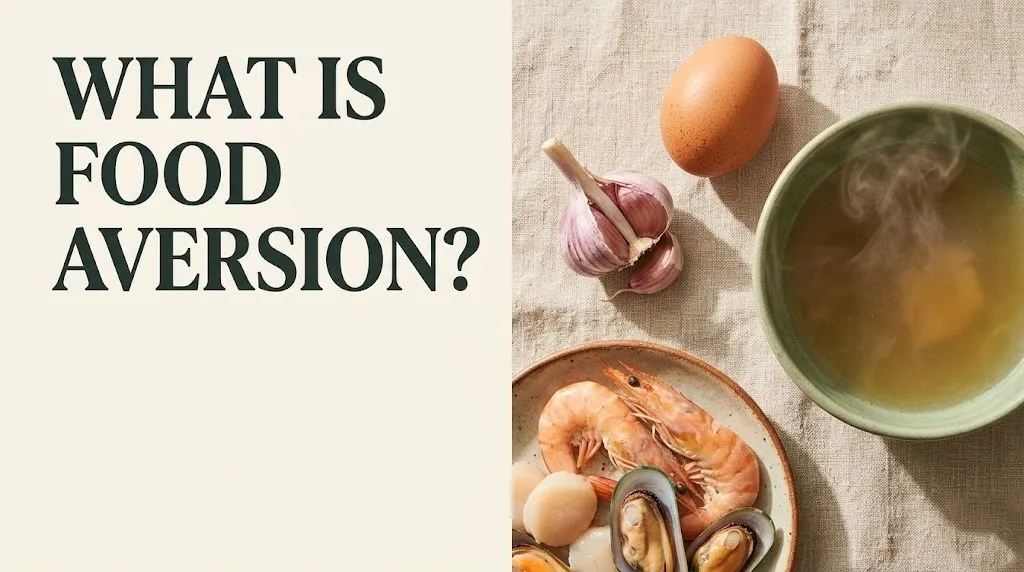
The most commonly reported foods that become aversive during pregnancy include:
- Meat, particularly raw or cooking meat
- Eggs
- Garlic and onions
- Coffee and caffeinated beverages
- Seafood, especially oily or strongly scented fish
- Spicy foods
- Highly processed snack foods with strong artificial flavors
Why Am I Having Food Aversions During Pregnancy?
Food aversions during pregnancy happen because rising hormone levels, especially hCG and estrogen, rewire the body’s taste and smell systems in ways that make certain foods genuinely intolerable.
This is the body doing exactly what it evolved to do. The prevailing theory among reproductive biologists is that first-trimester food aversions function as a protective mechanism, steering the pregnant person away from foods that might carry pathogens or teratogenic compounds (substances that could harm fetal development) during the period of highest embryological vulnerability. Meat, eggs, and certain vegetables contain real microbial risks when consumed undercooked, and the strong aversions commonly directed at these foods align with this hypothesis.
Practically, estrogen amplifies olfactory sensitivity to the point where smells that were previously neutral or pleasant become overwhelming and nauseating. The brain’s threat-detection circuitry then tags the associated foods as dangerous, even after the smell has passed.
For pregnant people managing food aversions nutritionally, the Academy of Nutrition and Dietetics advises focusing on:
- Getting folate (folic acid) from tolerated sources such as fortified cereals, lentils, and avocado if leafy greens have become aversive
- Maintaining iron intake through sources that may be better tolerated, such as lentils, fortified bread, or iron-fortified cereals, when red meat is aversive
- Using ginger in tolerated forms (ginger tea, ginger chews, fresh ginger in broth) to reduce nausea without medication
- Eating smaller, more frequent meals to keep the stomach from emptying completely, which can worsen nausea
When food aversions during pregnancy are so severe that you cannot maintain adequate caloric or fluid intake, the clinical condition is called hyperemesis gravidarum, and it requires medical evaluation and often intravenous fluid or nutritional support.
Food Aversion After Illness or Chemotherapy
Food aversion following illness or cancer treatment is caused by the brain’s conditioning of negative associations between specific foods and the physical distress experienced during that illness.
Chemotherapy-induced food aversion is one of the most studied forms of conditioned taste aversion in clinical literature. Research published in the journal Appetite found that patients often develop strong aversions to foods consumed shortly before or during chemotherapy sessions, because the brain links those foods to the severe nausea produced by the treatment rather than by the food itself.
Cancer treatment teams are now specifically advised to recommend that patients avoid eating their favorite or nutritionally essential foods in the hours before chemotherapy. This strategy, sometimes called a “scapegoat food” approach, gives the brain a low-value food to associate with treatment nausea, protecting preferred foods from becoming aversive.
Post-illness food aversions from standard gastrointestinal illness (gastroenteritis, food poisoning, norovirus) follow the same conditioning pathway. A study in Physiology and Behavior noted that even a single illness experience paired with a specific food can produce an aversion lasting years. The strength of the aversion tends to correlate with how severe the illness was and how distinctively the food was consumed close to the onset of symptoms.
Recovery strategies supported by clinical evidence include:
- Gradual, low-pressure re-introduction of the avoided food in very small amounts
- Pairing the aversive food with a food that carries positive associations (e.g., adding a small amount of the avoided food to a much larger portion of a liked food)
- Working with an RDN to ensure nutritional adequacy during the avoidance period
- Discussing with an oncologist or physician whether the aversion is expected to resolve spontaneously after treatment ends
Key Takeaway: Post-illness food aversion is rooted in Pavlovian conditioning, not in the food itself being harmful. Gradual, structured re-introduction and nutritional support are the two most evidence-backed approaches.
Food Aversion in Children
Food aversion in children is common and can range from typical developmental pickiness to clinically recognized feeding disorders that require professional support.
Most children display some degree of food selectivity, particularly between ages 2 and 6, as part of normal development. Food neophobia, the fear of trying new foods, is a documented and age-appropriate pattern in this developmental window. The challenge is distinguishing typical selectivity from aversions that are significantly restricting the child’s diet and growth.
Signs that a child’s food aversion warrants professional evaluation include:
- Limiting eating to fewer than 20 different foods across the diet
- Gagging or vomiting when presented with certain foods, even at a distance
- Significant mealtime distress affecting the child and family daily
- Consistent avoidance of an entire food category (no proteins, no vegetables, no grains)
- Measurable growth faltering or nutrient deficiency attributable to dietary restriction
- Refusal to eat foods based on texture, smell, or color, even when previously tolerated
According to the American Academy of Pediatrics, children who show these patterns may have a pediatric feeding disorder or sensory-based feeding difficulty that responds well to structured feeding therapy from a multidisciplinary team. This team typically includes a speech-language pathologist, an occupational therapist, and a pediatric registered dietitian.
Parents should approach aversive foods with low pressure, repeated neutral exposure, and no force. Research consistently shows that pressure and forced eating worsen food aversions in children and reduce dietary variety over time. The “division of responsibility” model developed by dietitian Ellyn Satter is widely endorsed by pediatric nutrition organizations as a practical framework for managing mealtime conflict without escalating aversions.
Food Aversion in Adults and Anxiety
Food aversion in adults is frequently connected to anxiety disorders, with the anxiety either triggering aversive responses to specific foods or being amplified by the social and nutritional consequences of the aversion itself.
The relationship between anxiety and food aversion runs in both directions. Anxiety can create anticipatory nausea around meals, reduce appetite to the point of making food generally unappealing, and heighten sensory sensitivity so that smells or textures that were previously tolerable become genuinely distressing. Conversely, having a food aversion that limits what you can eat in social settings, restaurants, or professional environments often increases anxiety, especially in people who already struggle with social situations.
Adults with generalized anxiety disorder (GAD) or obsessive-compulsive disorder (OCD) show higher rates of food-related avoidance than the general population, according to research in the Journal of Anxiety Disorders. In some cases, the aversion is tied specifically to fears about contamination, foodborne illness, or choking, which are distinct from disgust-based aversion but equally limiting.
Depression is another adult-specific driver. The Mayo Clinic notes that appetite disruption and food aversion are recognized symptoms of major depressive disorder, reflecting changes in dopamine and serotonin signaling that alter the brain’s food reward system. In these cases, treating the underlying depression typically improves food aversion over time.
For adults experiencing food aversion connected to anxiety or mood disorders, cognitive behavioral therapy (CBT) and, where appropriate, pharmacological treatment for the underlying anxiety or depression, are the most evidence-supported first-line approaches. An RDN can work concurrently to ensure nutritional needs are met during treatment.
Sensory Food Aversion and ARFID
Avoidant/Restrictive Food Intake Disorder (ARFID) is a formally recognized eating disorder in the DSM-5 that is characterized by severe food avoidance rooted in sensory sensitivity, fear of aversive consequences (choking, vomiting), or a general lack of interest in eating.
ARFID is distinct from typical food aversion in its severity, persistence, and the degree to which it impairs daily functioning and nutritional status. The American Psychiatric Association’s criteria for ARFID include significant weight loss or failure to meet growth expectations, nutritional deficiency, dependence on nutritional supplements or tube feeding, or marked interference with psychosocial functioning, all resulting from the eating disturbance.
Sensory-based ARFID is particularly relevant to food aversion discussions because many people with ARFID experience food rejection driven by texture, color, smell, temperature, or appearance rather than taste. Mushy textures, mixed-texture foods, slimy foods, and strongly aromatic foods are the most commonly reported triggers. Think of it like a volume dial on your sensory processing system stuck at maximum: what most people experience as mildly unpleasant becomes genuinely overwhelming.
ARFID is treated by a multidisciplinary team and typically involves:
- Cognitive behavioral therapy (CBT) adapted for ARFID, including food-specific exposure hierarchies
- Occupational therapy targeting sensory processing and tolerance
- Registered dietitian nutritionist (RDN) support to address nutritional deficiencies and manage food reintroduction
- In some cases, medication to address co-occurring anxiety that maintains avoidance behaviors
ARFID affects children and adults equally and is not a phase that resolves with age without intervention. The National Eating Disorders Association (NEDA) helpline (1-800-931-2237) can connect individuals and families to ARFID-informed treatment resources.
Key Takeaway: Sensory food aversion at the level of ARFID is a recognized eating disorder requiring professional treatment. Self-directed pressure or forced eating worsen outcomes; structured, low-pressure exposure with professional support is the evidence-backed path.
How to Get Rid of Food Aversion
Reducing or eliminating food aversion depends on identifying its type and using the approach matched to that specific cause, since a strategy that works for pregnancy-related aversion will not work for ARFID.
For conditioned taste aversion after illness, the most effective self-directed strategy is gradual re-introduction with positive pairing. This means introducing a tiny amount of the aversive food in a context that carries positive associations: at a meal you enjoy, with people you feel comfortable with, in the smallest possible quantity so the exposure is genuinely low-stakes. Over repeated exposures at increasing amounts, the brain begins to update its threat assessment.
For pregnancy-related aversion, the most practical approach is accommodation rather than elimination. Eating around the aversion by finding nutritional substitutes for avoided foods, choosing cold or room-temperature foods (which have less aroma than hot foods), and eating small amounts frequently rather than three full meals tends to be more effective than trying to push through the aversion.
For sensory-based aversion, structured exposure therapy with an occupational therapist or feeding specialist is the most evidence-supported route. This typically involves a systematic desensitization hierarchy: starting with tolerating the food’s presence in the room, then on the plate, then touching it, then smelling it, then tasting a tiny amount, over weeks or months of consistent work.
For anxiety-driven aversion, treatment of the underlying anxiety through CBT is the most direct approach. The aversion often improves substantially when the anxiety driving it is treated.
Practical self-directed strategies that research supports across most types include:
- Removing pressure completely. Force, negotiation, or performance anxiety around eating worsens aversions in both children and adults.
- Controlling the eating environment. Eating in a calm, familiar setting with people you trust reduces the stress load on the system.
- Adjusting preparation methods. If a food’s texture is the trigger, changing how it is prepared (roasting rather than steaming, pureeing rather than leaving chunky) can significantly reduce the sensory intensity.
- Using smell masking. Eating aversive foods cold, adding strong-flavored condiments you tolerate, or eating outside where smells disperse can reduce olfactory triggers.
- Tracking triggers. Keeping a simple log of what, when, and what preceded the aversion can reveal patterns that are not obvious in the moment, and this information is useful for any professional you work with.
When food aversion is causing meaningful weight loss, nutritional deficiency, social impairment, or significant distress, working with a registered dietitian nutritionist alongside a therapist trained in eating and feeding disorders represents the most effective combination approach.
Frequently Asked Questions About Food Aversion
Is food aversion the same as a food allergy?
Food aversion and food allergy are completely different conditions with different causes and risks.
A food allergy involves the immune system producing IgE antibodies to a food protein, which can cause reactions ranging from hives to anaphylaxis.
Food aversion is a learned disgust or avoidance response driven by neurological conditioning, hormonal changes, or sensory sensitivity, with no immune system involvement.
Can food aversion go away on its own?
Yes, some types of food aversion resolve on their own, but the timeline depends heavily on the underlying cause.
Pregnancy-related aversion typically eases after the first trimester as hCG levels decline.
Conditioned taste aversion after illness can persist for years without active re-introduction, while sensory-based and anxiety-driven aversions rarely resolve without structured intervention.
What foods are most commonly avoided during food aversion?
The most frequently reported aversive foods across research studies include meat (especially raw or cooking meat), eggs, garlic and onion, coffee, seafood, and strongly spiced dishes.
In pregnancy, meat and eggs are the most common triggers, likely because of their strong aroma during cooking.
In sensory-based aversion, mixed textures, mushy foods, and slimy foods (such as oysters, overcooked pasta, or soft-cooked eggs) are the most common culprits.
When should I see a doctor about food aversion?
You should seek a medical evaluation when food aversion causes unexplained weight loss, significant nutritional deficiency, inability to maintain adequate caloric or fluid intake, or when it has no clear trigger and persists for more than two to three weeks.
Children who gag consistently around specific foods, limit themselves to fewer than 20 foods, or show growth faltering should be evaluated by a pediatric feeding specialist.
Adults experiencing food aversion alongside depression, anxiety, or significant social impairment benefit from a combined evaluation by an RDN and a mental health professional.
Can stress or anxiety cause food aversion?
Yes, stress and anxiety are recognized causes of food aversion in both adults and children.
Anxiety activates the body’s stress response, which can suppress appetite, increase sensory sensitivity, and create anticipatory nausea around food situations.
According to the Journal of Anxiety Disorders, people with generalized anxiety disorder and OCD show elevated rates of food-related avoidance, and treating the underlying anxiety often significantly improves the food aversion.
The Bottom Line
Food aversion is a real and well-documented response, not a preference you can simply talk yourself out of. The brain is extraordinarily good at encoding negative food experiences, and those associations can persist long after the original trigger has passed.
The most useful thing you can do is identify which type of aversion you are dealing with, because the cause shapes everything about how it resolves. Pregnancy-related aversion eases with time; conditioned aversion responds to gradual re-introduction; sensory-based and anxiety-driven aversions often need professional support.
If your food aversion is narrowing your diet enough to affect your nutrition, your social life, or your daily function, working with a registered dietitian nutritionist and a therapist familiar with feeding and eating concerns is a practical next step worth taking seriously.