
You keep your teeth healthy by combining proper daily cleaning habits with a diet rich in calcium, phosphorus, and vitamins, while limiting sugar and acidic foods, a two-part approach that protects enamel, supports gum tissue, and prevents the cavities and gum disease that affect nearly every adult at some point in life.
Teeth are remarkably resilient structures. Enamel, the outer layer, is the hardest substance in the human body. But it is not indestructible. Every meal, every sip of a sugary drink, every day without flossing tips the balance slightly toward decay or slightly toward repair. The American Dental Association reports that 90 percent of adults have had at least one cavity, and nearly half of adults over 30 have some form of gum disease.
The good news is that the daily decisions that protect your teeth are straightforward. This article walks through the 10 most effective ways to keep your teeth healthy, starting with the cleaning habits that remove plaque and ending with the foods and nutrients that build strong enamel and healthy gums from the inside out.
1. Brush Your Teeth Properly Twice a Day
Brush your teeth twice a day for two full minutes using a soft-bristled toothbrush held at a 45-degree angle to the gum line, using gentle circular motions that clean the tooth surface and gum margin without scrubbing so hard that you damage enamel or cause gum recession.
Brushing is the foundation of dental health. It removes dental plaque, a sticky film of bacteria that forms constantly on teeth. When plaque sits undisturbed for more than 24 hours, it begins to mineralize into tartar (calculus), a hardened deposit that can only be removed by a dental professional. Plaque bacteria produce acid as they feed on sugars in your mouth. That acid demineralizes enamel, pulling out calcium and phosphate ions and creating microscopic pores that, over time, become cavities.
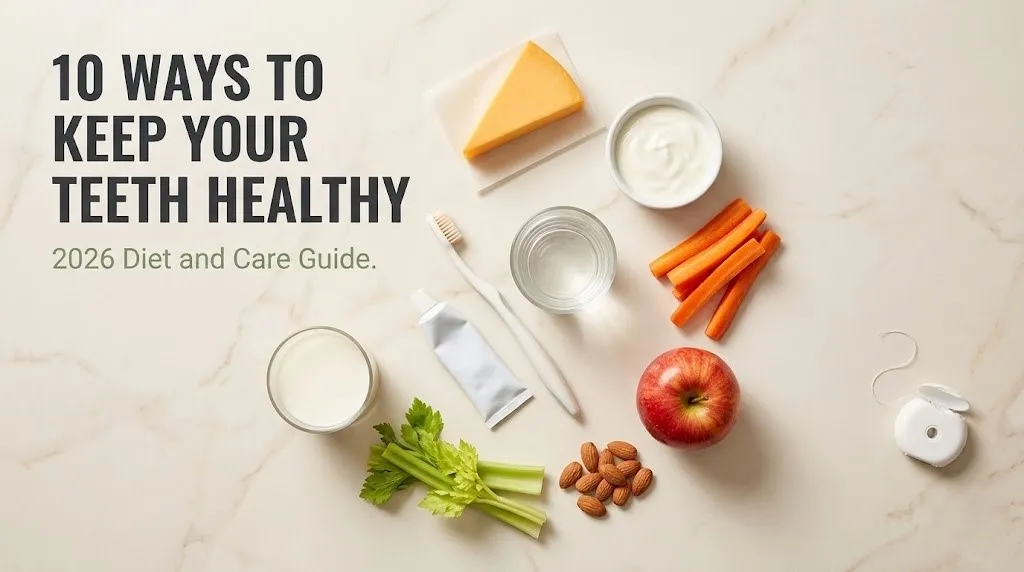
The American Dental Association recommends brushing for two full minutes twice a day. Most people brush for about 45 seconds. Set a timer on your phone or use an electric toothbrush with a built-in timer. Divide your mouth into four quadrants: upper right, upper left, lower right, lower left. Spend 30 seconds on each quadrant.
Technique matters as much as duration. Hold the brush at a 45-degree angle to the gum line. Use gentle, circular or vibrating motions. Do not scrub back and forth like a saw. Aggressive brushing wears down enamel at the gum line and causes gum recession. The bristles should barely bend against the teeth. If your toothbrush looks flattened and splayed after a few weeks, you are pressing too hard.
Replace your toothbrush or electric brush head every 3 to 4 months, or sooner if the bristles are frayed. Worn bristles do not clean effectively.
Quick Tip:
- Brush your tongue or use a tongue scraper. The tongue harbors bacteria that contribute to bad breath and can recolonize teeth after brushing. A few gentle strokes from back to front are sufficient.
2. Floss Daily to Keep Gums Healthy
Floss at least once a day to remove plaque and food particles from between teeth and below the gum line where a toothbrush cannot reach, which is the primary way to prevent gingivitis and the gum disease that causes bleeding, recession, and eventual tooth loss.
Brushing alone cleans about 60 percent of tooth surfaces. The remaining 40 percent are the surfaces between teeth. Plaque that accumulates between teeth causes inflammation of the gums called gingivitis. The gums become red, swollen, and bleed easily when brushed or flossed. Gingivitis is reversible with improved cleaning. If left untreated, it can progress to periodontitis, a more serious infection that damages the bone and connective tissue holding teeth in place.
Flossing removes plaque from between teeth and from the sulcus, the small pocket where the gum meets the tooth. The American Academy of Periodontology recommends flossing once daily. The time of day matters less than the consistency. Floss before or after brushing. Floss in the morning or at night. Just floss.
Proper flossing technique:
- Use about 18 inches of floss wound around your middle fingers, with an inch or two of working length between them
- Guide the floss between teeth with a gentle sawing motion
- When the floss reaches the gum line, curve it into a C shape against one tooth
- Slide the floss gently into the space between the gum and the tooth
- Move the floss up and down against the side of the tooth
- Repeat on the adjacent tooth
- Use a clean section of floss for each space
Alternatives to traditional floss include interdental brushes (effective for wider spaces), water flossers (useful for people with braces or dexterity issues), and floss picks (convenient but less effective than string floss for adapting to tooth contours). The best method is the one you will use consistently.
Key Takeaway: Flossing is not optional. It is the only way to clean between teeth where cavities and gum disease most often start. Bleeding gums when you start flossing is a sign of existing inflammation, not a reason to stop.
3. Use Fluoride Toothpaste and Mouthwash
Use fluoride toothpaste every time you brush and consider a fluoride mouthwash as an additional layer of protection, because fluoride integrates into tooth enamel to form fluorapatite, a compound more resistant to acid attacks than the natural hydroxyapatite of untreated enamel.
Fluoride is the most evidence-supported tool in preventive dentistry. The CDC named community water fluoridation one of the ten great public health achievements of the 20th century. The mineral works through two mechanisms. First, it inhibits the ability of plaque bacteria to produce acid. Second, and more importantly, it enhances remineralization. When acid pulls calcium and phosphate out of enamel, fluoride helps redeposit those minerals in a form that is more resistant to future acid attacks.
The American Dental Association recommends fluoride toothpaste with the ADA Seal of Acceptance for all ages. For adults, a pea-sized amount is sufficient. Children under 3 should use a smear the size of a grain of rice. Children 3 to 6 should use a pea-sized amount and be supervised to prevent swallowing.
Fluoride mouthwash provides additional protection but is not a substitute for brushing or flossing. Use it at a different time than brushing, such as after lunch or mid-afternoon. If you use mouthwash immediately after brushing, you rinse away the higher concentration of fluoride left on your teeth from the toothpaste. The ADA recommends using mouthwash at a separate time.
Some natural toothpaste brands do not contain fluoride. While they may clean teeth effectively, they do not provide the remineralization benefit that fluoride does. The ADA does not award its Seal of Acceptance to fluoride-free toothpastes.
Dietary Sensitivity Note: Fluoride is safe at recommended levels. Excessive fluoride intake during tooth development can cause dental fluorosis, a cosmetic condition that appears as white spots on teeth. Using the correct amount of toothpaste and supervising children prevents this.
4. Eat Calcium-Rich Foods for Strong Teeth
Eat calcium-rich foods including dairy products, leafy greens, almonds, and fortified plant milks to supply the raw mineral that, along with phosphorus, forms hydroxyapatite, the crystalline structure that gives teeth their hardness and resistance to fracture.
Teeth are not solid bone. The outer enamel layer is approximately 96 percent mineral, primarily calcium phosphate in the form of hydroxyapatite crystals. The dentin layer beneath is about 70 percent mineral. Your body cannot build or maintain these mineral structures without a steady dietary supply of calcium.
The National Institutes of Health recommends 1,000 milligrams of calcium per day for adults aged 19 to 50, increasing to 1,200 milligrams for women over 50 and men over 70. A cup of milk provides about 300 milligrams. A cup of cooked collard greens provides about 270 milligrams. A serving of yogurt provides 300 to 400 milligrams.
Here are the best food sources of calcium for dental health:
| Food | Serving Size | Calcium (mg) |
|---|---|---|
| Plain yogurt | 1 cup | 400 |
| Milk | 1 cup | 300 |
| Cheese (cheddar) | 1 oz | 200 |
| Collard greens (cooked) | 1 cup | 270 |
| Sardines (with bones) | 3 oz | 325 |
| Almonds | 1/4 cup | 95 |
| Fortified orange juice | 1 cup | 350 |
| Tofu (calcium-set) | 1/2 cup | 250 |
| Kale (cooked) | 1 cup | 180 |
Calcium does not work alone. Phosphorus, the other major mineral in hydroxyapatite, is abundant in protein-rich foods including meat, poultry, fish, eggs, and dairy. Most people who eat a varied diet get enough phosphorus without specifically focusing on it.
Dietary Sensitivity Note: People who avoid dairy can meet calcium needs through fortified plant milks, calcium-set tofu, leafy greens, almonds, and sardines. Vegans should pay attention to calcium intake and consider a supplement if dietary sources fall short.
5. Get Enough Vitamin D for Calcium Absorption
Get adequate vitamin D through sunlight exposure, fatty fish, egg yolks, and fortified foods because vitamin D is required for the intestinal absorption of calcium, and without it, even a calcium-rich diet cannot effectively mineralize teeth and bones.
Vitamin D functions as a hormone that regulates calcium metabolism. When calcium enters the small intestine, vitamin D is required to produce the transport proteins that move calcium from the intestinal lumen into the bloodstream. Without adequate vitamin D, the body absorbs only 10 to 15 percent of dietary calcium. With adequate vitamin D, absorption rises to 30 to 40 percent.
The National Institutes of Health recommends 600 to 800 IU of vitamin D per day for adults. Sunlight exposure triggers vitamin D synthesis in the skin. Ten to 30 minutes of midday sun exposure on arms and legs several times per week is sufficient for many people, though skin color, latitude, season, and sunscreen use affect synthesis.
Food sources of vitamin D:
| Food | Serving Size | Vitamin D (IU) |
|---|---|---|
| Salmon (wild) | 3 oz | 450-600 |
| Sardines (canned) | 3 oz | 250 |
| Egg yolks | 2 large | 80 |
| Fortified milk | 1 cup | 120 |
| Fortified orange juice | 1 cup | 100 |
| Cod liver oil | 1 tsp | 450 |
Vitamin D deficiency is common, particularly in northern latitudes during winter, in people with darker skin, and in those who spend most of their time indoors. A blood test can determine vitamin D status. Supplementation may be appropriate if dietary intake and sun exposure are insufficient.
Vitamin K2 is a complementary nutrient that helps direct calcium to bones and teeth rather than soft tissues. It is found in fermented foods like natto, aged cheese, and egg yolks. Research on vitamin K2 and dental health is still emerging, but the mechanistic rationale is strong.
Key Takeaway: Calcium builds teeth. Vitamin D makes it possible to use that calcium. Without vitamin D, dietary calcium passes through the body unabsorbed.
6. Eat Crunchy Fruits and Vegetables for Natural Cleaning
Eat crunchy, fibrous fruits and vegetables like apples, carrots, celery, and cucumbers, which act as natural toothbrushes by mechanically scrubbing tooth surfaces, stimulating saliva production, and providing vitamins that support gum health.
Crunchy fruits and vegetables clean teeth through three mechanisms. First, the fibrous texture physically abrades soft plaque from tooth surfaces during chewing. This is not a replacement for brushing, but it helps between meals. Second, the chewing action stimulates saliva flow. Saliva is the mouth’s natural cleaning and remineralizing fluid. It contains calcium, phosphate, and bicarbonate that neutralize acid and help rebuild enamel. Third, these foods are low in sugar and high in water, making them unlikely to contribute to decay.
The best crunchy foods for dental health:
- Apples: The malic acid in apples has a mild cleansing effect and stimulates saliva. Eat the skin for fiber.
- Carrots: Hard and fibrous. Chewing raw carrots scrubs tooth surfaces and massages gums.
- Celery: Stringy fibers act like natural floss between teeth. High water content.
- Cucumbers: High water content, neutral pH, gentle crunch.
- Raw broccoli: The florets have a brushing effect. High in vitamin C for gum health.
- Pears: Similar to apples but less acidic. Good for people sensitive to malic acid.
These foods are not a substitute for brushing. They are a helpful addition, especially as a snack between meals or as the final course of a meal to help clear food debris from teeth.
The Academy of Nutrition and Dietetics notes that raw vegetables and fruits support oral health not only through their physical properties but also through their content of vitamin C, which is required for collagen synthesis in gum tissue, and vitamin A, which supports salivary gland function.
Dietary Sensitivity Note: Apples and pears contain natural sugars and malic acid. They are far better for teeth than candy or cookies, but they are not completely harmless. Rinse with water after eating acidic fruits.
7. Limit Sugary Foods and Drinks That Cause Cavities
Limit sugary foods and drinks because sugar feeds Streptococcus mutans and other bacteria in dental plaque, which metabolize the sugar and produce acid that demineralizes tooth enamel for 20 to 40 minutes after each exposure, and repeated acid attacks throughout the day overwhelm the saliva’s ability to remineralize.
Sugar is the primary dietary driver of dental caries. The bacteria in plaque do not cause cavities on their own. They need a food source. That food source is sugar, specifically sucrose, glucose, and fructose. When bacteria ferment these sugars, they produce lactic acid as a metabolic byproduct. The acid drops the pH at the tooth surface below 5.5, the critical threshold at which enamel begins to dissolve.
The World Health Organization recommends that free sugars (added sugars plus sugars naturally present in honey, syrups, and fruit juices) make up less than 10 percent of total daily calories, with an ideal target of less than 5 percent. For a 2,000-calorie diet, that is 25 to 50 grams of sugar per day.
The frequency of sugar exposure matters more than the total amount. Each sugar exposure triggers an acid attack that lasts 20 to 40 minutes. If you eat a candy bar in one sitting, your teeth experience one acid attack. If you sip a sugary soda over two hours, your teeth experience a continuous acid bath. Snacking or sipping on sugary items throughout the day is more damaging than consuming the same amount of sugar at mealtime.
Worst foods and drinks for teeth:
| Item | Problem |
|---|---|
| Sugary soda | Sugar plus phosphoric/citric acid; double damage |
| Sticky candy | Adheres to teeth; prolonged sugar exposure |
| Dried fruit | Sticky, concentrated sugar; clings to teeth |
| Fruit juice | High sugar, acidic; no fiber to buffer |
| Sugary cereal | Starchy and sugary; sticks to teeth |
| Sports drinks | High sugar, acidic; continuous sipping pattern |
Dietary Sensitivity Note: Artificial sweeteners like xylitol, erythritol, and stevia do not feed cavity-causing bacteria. Xylitol, in particular, has been shown in multiple studies to reduce Streptococcus mutans levels and decrease cavity risk when used in gum or mints.
8. Limit Acidic Foods and Drinks That Erode Enamel
Limit acidic foods and drinks including citrus fruits, soda, wine, and vinegar-based dressings, because acid directly dissolves enamel through a chemical process called erosion that is separate from bacterial decay and cannot be reversed once enamel is lost.
Acid erosion is distinct from bacterial decay. Bacteria produce acid that causes cavities. But acid can also come directly from foods and drinks. When the mouth’s pH drops below 5.5, enamel begins to dissolve regardless of whether bacteria are present. This is chemical erosion, not biological decay. It thins enamel, makes teeth more sensitive, and creates a yellow appearance as the darker dentin beneath becomes more visible.
Common acidic foods and drinks:
| Item | pH Level | Risk |
|---|---|---|
| Lemon juice | 2.0-2.6 | Very high |
| Soda (regular and diet) | 2.5-3.5 | Very high |
| Wine | 3.0-3.8 | High |
| Orange juice | 3.3-4.2 | High |
| Coffee | 4.5-5.5 | Moderate |
| Tomatoes | 4.0-4.6 | Moderate |
| Vinegar | 2.4-3.4 | Very high |
Protection strategies against acid erosion:
- Drink acidic beverages through a straw to bypass teeth
- Rinse with water after consuming acidic foods or drinks
- Wait at least 30 minutes after acid exposure before brushing. Brushing immediately after acid exposure brushes away enamel softened by the acid
- Eat cheese or drink milk after acidic foods. Dairy neutralizes acid and provides calcium and phosphate
- Chew sugar-free gum to stimulate saliva, which neutralizes acid
- Do not hold acidic drinks in your mouth or swish them around
Diet and regular sodas are equally damaging to enamel. Diet sodas contain no sugar, so they do not feed bacteria. But they are highly acidic due to phosphoric and citric acids, so they erode enamel directly. From an enamel perspective, diet soda is only marginally better than regular soda.
Key Takeaway: Acid erodes enamel directly, separate from sugar’s role in bacterial decay. Rinse with water after acidic foods and wait 30 minutes before brushing.
9. Drink Plenty of Water Throughout the Day
Drink water throughout the day, especially fluoridated tap water, because water rinses food debris and sugars from teeth, dilutes acids, stimulates saliva production, and, when fluoridated, provides a continuous low-level supply of remineralizing fluoride to tooth surfaces.
Water is the most tooth-friendly beverage. It has a neutral pH. It contains no sugar. It contains no acid. It rinses the mouth. It supports saliva production. If it is fluoridated tap water, it provides the additional benefit of fluoride exposure throughout the day.
The CDC reports that community water fluoridation reduces tooth decay by approximately 25 percent in children and adults. Fluoride in drinking water provides a low, continuous level of fluoride in saliva that enhances remineralization between brushings.
Dry mouth, or xerostomia, is a significant risk factor for dental decay. Saliva is the mouth’s natural defense system. It washes away food particles, neutralizes acid, and supplies the calcium and phosphate needed for remineralization. When saliva production decreases, due to medications, aging, radiation therapy, or autoimmune conditions like Sjogren’s syndrome, cavity risk increases dramatically.
Strategies to maintain hydration for oral health:
- Sip water throughout the day, not just at meals
- Drink a full glass of water first thing in the morning
- Keep a water bottle at your desk or in your bag
- Drink water after every meal and snack
- Choose fluoridated tap water when available
- If you drink coffee or alcohol, alternate with water
The Academy of Nutrition and Dietetics recommends water as the primary beverage for hydration. Sugary drinks, fruit juices, and even diet sodas should be occasional items, not daily staples.
Dietary Sensitivity Note: Bottled water may not contain fluoride. Some brands add it. Most do not. If you drink primarily bottled water, check the label for fluoride content or use fluoride toothpaste and mouthwash to compensate.
10. Visit Your Dentist Regularly for Checkups
Visit a dentist for a professional cleaning and examination every six months, or more frequently if recommended, because professional cleanings remove tartar that cannot be brushed or flossed away, and examinations catch cavities, gum disease, and oral cancer at early stages when treatment is simpler and less expensive.
Home care is necessary but not sufficient. Even the most diligent brushing and flossing leaves some plaque behind, especially in hard-to-reach areas like the deep grooves of molars and below the gum line. Over time, this plaque hardens into tartar, which can only be removed with professional instruments.
The American Dental Association recommends that the frequency of dental visits be determined by individual risk factors. People with a history of cavities, gum disease, diabetes, or smoking may need visits every 3 to 4 months. People with excellent oral health and low risk may be fine with annual visits. The standard recommendation of every 6 months is a reasonable starting point for most adults.
What happens at a dental checkup:
- Professional cleaning (prophylaxis): Removal of tartar above and below the gum line using specialized instruments
- Examination: Visual inspection of teeth, gums, tongue, and oral tissues for signs of decay, gum disease, and oral cancer
- X-rays (as needed): Detection of cavities between teeth, bone loss, and other issues not visible to the naked eye
- Fluoride treatment (as recommended): Professional-strength fluoride application for people at high cavity risk
- Risk assessment and education: Personalized guidance based on your specific oral health status
Preventive dental care is less expensive and less invasive than treating problems after they develop. A filling costs significantly less than a root canal and crown. A professional cleaning costs less than treating advanced gum disease.
Dietary Sensitivity Note: If you have dental anxiety, discuss it with your dentist. Sedation options, shorter appointments, and clear communication about what to expect can make regular visits manageable.
Foods That Naturally Clean and Protect Your Teeth
The best foods for dental health work through multiple mechanisms: physically scrubbing teeth during chewing, stimulating protective saliva, neutralizing acid, supplying minerals for remineralization, and delivering vitamins that support gum tissue integrity.
This section consolidates the food guidance scattered through the earlier tips into a comprehensive framework.
Foods that actively help your teeth:
| Food | Mechanism | Best Use |
|---|---|---|
| Cheese | Neutralizes acid, supplies calcium and phosphorus, stimulates saliva | After meals or as a snack |
| Yogurt (plain) | Calcium, phosphorus, protein, probiotics | Breakfast or snack |
| Milk | Calcium, phosphorus, vitamin D (if fortified) | With meals |
| Apples | Mechanical cleaning, saliva stimulation | As a snack or meal ender |
| Carrots (raw) | Mechanical scrubbing, vitamin A for gums | Snack or salad |
| Celery | Fibrous cleaning, high water content | Snack or salad |
| Leafy greens | Calcium, vitamin C, folic acid for gums | Salads, smoothies |
| Green tea | Polyphenols inhibit bacteria, fluoride content | Between meals |
| Nuts and seeds | Calcium, phosphorus, healthy fats | Snack, topping |
| Sugar-free gum (xylitol) | Stimulates saliva, xylitol inhibits bacteria | After meals |
Foods that harm teeth (minimize these):
| Food | Harm Mechanism | Smarter Choice |
|---|---|---|
| Sugary soda | Sugar plus acid, double erosion | Sparkling water, unsweetened tea |
| Sticky candy | Adheres to teeth, prolonged sugar | Dark chocolate (melts, less sticky) |
| Dried fruit | Sticky, concentrated sugar | Fresh fruit |
| Fruit juice | High sugar, acidic, no fiber | Whole fruit |
| Crackers and chips | Starchy, sticky, break down to sugar | Nuts, cheese |
| Sports drinks | Sugar, acid, frequent sipping | Water with electrolytes |
Dietary Sensitivity Note: Dairy is the most studied protective food group for dental health. For those avoiding dairy, calcium-fortified plant milks, leafy greens, almonds, and sardines provide calcium. Xylitol gum provides saliva stimulation without dairy.
Key Takeaway: The best foods for teeth work on multiple fronts: scrubbing, neutralizing, remineralizing, and nourishing. Cheese and raw vegetables are the two most protective food categories for dental health.
How to Keep Gums Healthy and Prevent Gum Disease
Keep gums healthy by flossing daily to remove plaque from below the gum line, eating foods rich in vitamin C to support collagen formation in gum tissue, avoiding tobacco products that reduce blood flow to gums, and treating early signs of gum disease like bleeding when brushing as a signal to improve cleaning, not a reason to stop.
Gum disease is the leading cause of tooth loss in adults. It begins as gingivitis, an inflammation of the gums caused by plaque at the gum line. The gums become red, swollen, and bleed easily. Gingivitis is reversible. If plaque is not removed, the inflammation can progress to periodontitis, in which the gum and bone pull away from the teeth, forming pockets that become infected. The body’s immune response, combined with bacterial toxins, breaks down the bone and connective tissue that hold teeth in place.
The American Academy of Periodontology identifies these key steps for gum health:
Flossing is non-negotiable. Gingivitis starts between teeth where a toothbrush cannot reach. Flossing once daily removes the plaque that causes gum inflammation. Bleeding when you start flossing is a sign of existing gingivitis. With consistent flossing, the bleeding should stop within one to two weeks as the gums become healthier.
Vitamin C supports gum tissue. Vitamin C (ascorbic acid) is a required cofactor for the enzymes that cross-link collagen fibrils. Collagen is the primary structural protein in gum tissue. Without adequate vitamin C, gums become weak, bleed easily, and heal poorly. The National Institutes of Health recommends 75 to 90 milligrams per day for adults. Smokers need an additional 35 milligrams per day. Food sources include bell peppers, citrus fruits, strawberries, broccoli, and leafy greens.
Tobacco destroys gum health. Smoking and smokeless tobacco reduce blood flow to the gums, impair immune function, and mask the signs of gum disease by reducing bleeding. Smokers are significantly more likely to develop periodontitis and to lose teeth. The American Dental Association identifies tobacco cessation as one of the most impactful actions for oral health.
Watch for warning signs:
- Gums that bleed during brushing or flossing
- Red, swollen, or tender gums
- Gums that have pulled away from teeth
- Persistent bad breath
- Loose or separating teeth
- Changes in how teeth fit together when biting
Dietary Sensitivity Note: Vitamin C is water-soluble and easily destroyed by heat. Eat some raw vitamin C-rich foods daily. A single raw bell pepper provides more than 100 percent of the daily vitamin C requirement.
Vitamins and Minerals for Healthy Teeth and Gums
The vitamins and minerals most directly involved in dental health are calcium and phosphorus for enamel structure, vitamin D for calcium absorption, vitamin C for gum collagen, vitamin A for salivary function, and vitamin K2 for directing calcium to bones and teeth.
Teeth and gums require the same nutrients as the rest of the skeletal system, with some additions specific to oral soft tissues. Deficiencies show up in the mouth.
| Nutrient | Daily Adult Need | Dental Function | Top Food Sources |
|---|---|---|---|
| Calcium | 1,000-1,200mg | Enamel and dentin mineralization | Dairy, leafy greens, almonds |
| Phosphorus | 700mg | Enamel mineralization partner to calcium | Meat, dairy, fish, eggs |
| Vitamin D | 600-800 IU | Calcium absorption | Sunlight, fatty fish, fortified milk |
| Vitamin C | 75-90mg | Collagen synthesis in gums | Bell peppers, citrus, broccoli |
| Vitamin A | 700-900mcg RAE | Salivary gland function, mucosal health | Sweet potato, carrots, liver |
| Vitamin K2 | No RDA | Directs calcium to bones and teeth | Natto, aged cheese, egg yolks |
| Magnesium | 310-420mg | Enamel crystal structure | Nuts, seeds, leafy greens |
| Fluoride | Varies | Enamel remineralization | Fluoridated water, toothpaste |
Calcium, phosphorus, vitamin D, and vitamin C are the four nutrients with the strongest evidence for dental health. A diet that regularly includes dairy, fatty fish, leafy greens, and raw vegetables covers the major bases.
A multivitamin can fill gaps but cannot compensate for a diet high in sugar and low in whole foods. The dietary pattern matters more than any single nutrient.
Dietary Sensitivity Note: Vegans should monitor calcium, vitamin D, and vitamin B12 intake. Calcium-fortified plant milks, calcium-set tofu, and leafy greens provide calcium. Vitamin D supplementation may be needed, especially in winter.
Lifestyle Habits That Damage Teeth and Gums
Smoking, frequent alcohol consumption, using teeth as tools, grinding or clenching, and oral piercings all damage teeth and gums through direct physical trauma, reduced blood flow, chemical erosion, and increased bacterial activity.
These habits are less discussed than diet and brushing, but they can undermine even the most diligent oral care routine.
Smoking and tobacco use: Tobacco reduces blood flow to the gums, masks gum disease symptoms, increases plaque and tartar, and dramatically raises the risk of oral cancer. The American Dental Association reports that smokers are twice as likely to develop gum disease as nonsmokers.
Alcohol: Alcohol is acidic and can contribute to enamel erosion. It also dries the mouth, reducing the protective flow of saliva. Heavy alcohol use is a risk factor for oral cancer, especially when combined with smoking.
Using teeth as tools: Opening bottles, tearing packages, or holding objects with teeth can chip, crack, or fracture enamel. The damage is immediate and often requires dental repair.
Grinding and clenching (bruxism): Many people grind their teeth at night without realizing it. Signs include worn, flattened tooth surfaces, jaw pain, morning headaches, and tooth sensitivity. A dentist can fit a custom nightguard to protect teeth from grinding damage.
Oral piercings: Tongue and lip piercings can chip teeth, irritate gums, and increase the risk of infection. The constant contact of metal against enamel causes wear over time.
Dietary Sensitivity Note: Alcohol and tobacco are the two largest modifiable risk factors for oral cancer. Reducing or eliminating both is the single most impactful lifestyle change for oral health beyond brushing and flossing.
How to Get Healthy Teeth and Gums Again Naturally
You can improve tooth and gum health naturally by starting a consistent oral care routine, upgrading your diet to include more calcium-rich and vitamin C-rich foods, reducing sugar and acid exposure, and giving your gums time to heal from gingivitis through daily flossing, though existing cavities and advanced gum disease require professional treatment.
Teeth can remineralize. Early-stage cavities, called incipient caries or microcavities, can be reversed if the enamel surface is still intact. Remineralization requires reducing acid exposure and providing the minerals, calcium, phosphate, and fluoride, that enamel needs to rebuild.
Gums can heal. Gingivitis is fully reversible with improved cleaning. The gums will stop bleeding, return to a healthy pink color, and tighten around the teeth within one to two weeks of consistent flossing and brushing.
Steps to improve oral health starting today:
- Begin flossing daily. Expect bleeding for the first week. This stops as gums heal.
- Switch to a soft-bristled toothbrush and brush for two full minutes twice daily.
- Replace sugary drinks with water or unsweetened tea.
- Add a serving of dairy or calcium-rich food to each meal.
- Eat one raw, crunchy vegetable or fruit daily.
- Chew xylitol-sweetened gum after meals.
- Rinse with water after acidic foods and drinks.
- Schedule a dental checkup if you have not had one in the past year.
What cannot be reversed at home:
- Cavities that have broken through the enamel into dentin
- Tartar buildup (requires professional scaling)
- Advanced periodontitis with bone loss
- Gum recession (the gum tissue does not grow back)
- Cracked or fractured teeth
Dietary Sensitivity Note: If your diet has been high in sugar and acidic foods for years, the transition to a tooth-friendly eating pattern will benefit your teeth immediately. Each meal is a choice between demineralization and remineralization.
Key Takeaway: Early tooth decay and gingivitis are reversible with improved hygiene and diet. Professional care is needed for established cavities, tartar, and advanced gum disease.
Frequently Asked Questions About Keeping Teeth Healthy
What foods make your teeth stronger?
Dairy products like milk, cheese, and yogurt make teeth stronger by providing calcium and phosphorus for enamel remineralization.
Crunchy vegetables like carrots and celery stimulate protective saliva and mechanically clean tooth surfaces.
Fatty fish provides vitamin D, which is required for calcium absorption and utilization in teeth.
Can you reverse tooth decay naturally?
Early tooth decay, microcavities limited to the enamel surface, can be reversed through remineralization with fluoride, calcium, and phosphate while reducing sugar and acid exposure.
Once a cavity breaks through the enamel into the dentin layer, it cannot be reversed at home and requires a filling.
The key is catching decay at the earliest stage, which is why regular dental checkups matter.
How can I rebuild my gums naturally?
Gingivitis, the early stage of gum disease, can be reversed by flossing daily, brushing properly, and eating vitamin C-rich foods to support collagen formation.
Gum tissue that has receded or been lost to advanced periodontitis does not grow back naturally and may require surgical grafting.
Consistent flossing is the single most effective way to improve gum health at home.
What vitamins are best for teeth and gums?
Vitamin D is best for teeth because it enables calcium absorption for enamel mineralization.
Vitamin C is best for gums because it is required for collagen synthesis in gum tissue.
Calcium and phosphorus are the minerals that physically form the hydroxyapatite crystals of tooth enamel.
Is brushing enough to keep teeth healthy?
Brushing alone is not enough because it only cleans about 60 percent of tooth surfaces.
Flossing is required to clean between teeth where cavities and gum disease most often begin.
A complete oral care routine includes brushing twice daily, flossing once daily, using fluoride toothpaste, drinking fluoridated water, and visiting a dentist regularly.
Your teeth are the only part of your skeletal system you can see. They are worth the ten minutes a day it takes to keep them healthy. Brush properly for two full minutes. Floss every single day, not just when food feels stuck. Use fluoride toothpaste. Drink water. Eat calcium-rich foods and crunchy vegetables. Limit sugar and acid. See a dentist before something hurts.
The mouth is not separate from the rest of the body. The same eating pattern that protects your teeth, a diet rich in whole foods, dairy, vegetables, and water, with limited sugar and processed snacks, protects your heart, your blood sugar, and your waistline. Taking care of your teeth is taking care of yourself. The daily habits are simple. The payoff is decades of strong teeth, healthy gums, and the confidence of a smile that does not need to hide.