Korean food is among the world’s healthiest cuisines when you choose traditional dishes built around vegetables, fermented foods, lean proteins, and balanced portions. The foundation of a Korean meal, rice, soup, and multiple vegetable side dishes called banchan, delivers fiber, probiotics, vitamins, and protein in a structure that naturally limits overconsumption of any single ingredient. Dishes like bibimbap, kimchi jjigae, and grilled bulgogi can anchor a nutritious eating pattern.
South Korea’s adult obesity rate sits at roughly 5 percent compared to 42 percent in the United States, according to OECD Health Statistics data through 2025. The traditional Korean dietary pattern, rich in vegetables, moderate in protein, and low in added sugars and ultra-processed foods, contributes to that statistical gap. Fermented staples like kimchi, doenjang (fermented soybean paste), and gochujang (fermented chili paste) deliver live microorganisms and bioactive compounds that research links to improved metabolic markers. A 2021 study in the journal Nutrients found that daily kimchi consumption was associated with lower fasting blood glucose in a cohort of Korean adults with prediabetes.
This guide ranks the healthiest Korean dishes with calorie and sodium estimates, explains the nutritional science behind key ingredients like kimchi and gochujang, and provides practical strategies for eating Korean food while managing sodium intake, gluten sensitivity, or a vegan diet. You will walk away knowing exactly what to order at a Korean restaurant and how to cook Korean food at home without the nutritional pitfalls.
Is Korean Food Healthy
Korean food is healthy in its traditional form, which emphasizes vegetables, fermented foods, lean proteins, and moderate portions served across multiple small dishes. The traditional Korean table setting, called bansang, includes bap (cooked rice), guk (soup), and multiple banchan (vegetable and protein side dishes) that together create a nutritionally complete meal without relying on any single high-calorie centerpiece. This structure, vegetables surrounding a modest protein and a grain, mirrors the dietary patterns that nutrition research consistently associates with lower chronic disease risk.
The health profile of Korean food draws from three core nutritional strengths. First, vegetables dominate the plate. A typical Korean meal includes three to five banchan, most of which are seasoned vegetables like spinach side dish (sigeumchi namul), bean sprouts (kongnamul), stir-fried eggplant (gaji bokkeum), or pickled radish (kkakdugi). The Academy of Nutrition and Dietetics notes that dietary patterns rich in varied vegetables are associated with reduced cardiovascular disease risk and improved weight management.
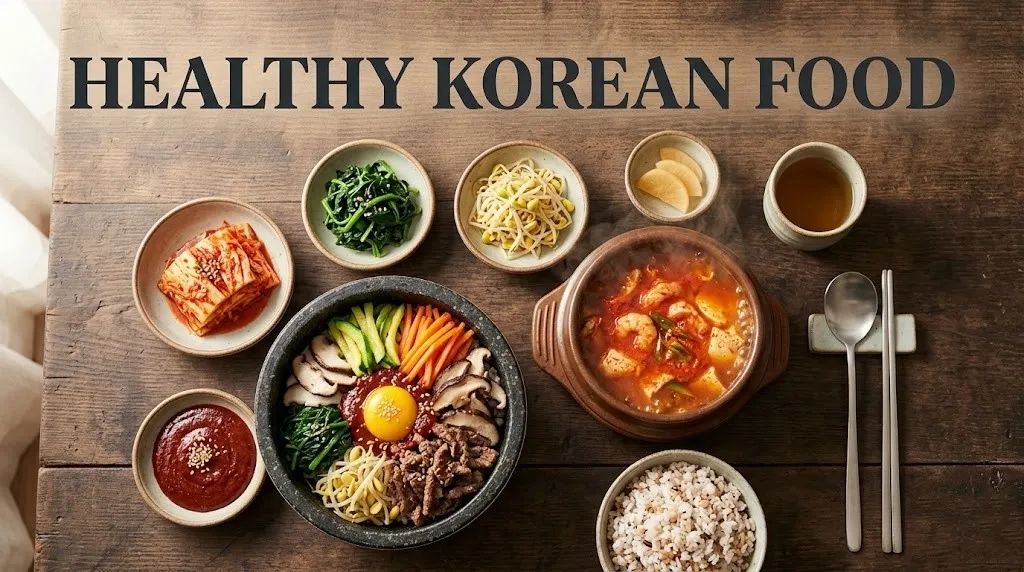
Second, fermentation is not an occasional garnish in Korean cuisine. It is the preservation method for the cuisine’s foundational condiments and side dishes. Kimchi, doenjang, gochujang, and ganjang (soy sauce) are all fermented products that develop complex flavors and bioactive compounds during aging. Fermented foods introduce live microorganisms into the digestive tract. The specific Lactobacillus, Leuconostoc, and Weissella species identified in kimchi by food microbiologists have been studied for their potential roles in supporting immune function and reducing inflammatory markers, though the clinical evidence for specific health outcomes in humans is still developing.
Third, Korean cooking methods favor grilling, braising, steaming, and quick stir-frying over deep-frying. Dishes like bulgogi (grilled marinated beef) and samgyetang (ginseng chicken soup) use heat methods that render fat away from the protein or keep it suspended in a broth that is consumed as part of the meal. Deep-fried foods exist in Korean cuisine, Korean fried chicken and twigim (battered and fried vegetables or seafood) being the most notable examples, but they are a small fraction of the total culinary repertoire compared to the volume of soups, stews, grilled proteins, and seasoned vegetables.
| Nutritional Strength | How Korean Food Delivers It | Specific Examples |
|---|---|---|
| High vegetable intake | Banchan culture, 3 to 5 vegetable sides per meal | Sigeumchi namul, kongnamul, oi muchim |
| Fermented foods | Foundation condiments and kimchi | Kimchi, doenjang, gochujang, ganjang |
| Lean cooking methods | Grilling, braising, steaming, quick stir-fry | Bulgogi, samgyetang, jjim dishes |
| Portion control via structure | Rice, soup, banchan create natural variety and limit overeating | Traditional bansang setting |
The primary nutritional weakness of Korean food is sodium. Soy sauce, doenjang, gochujang, and the salt-fermented seafood (jeotgal) used in kimchi all contribute sodium. A single bowl of kimchi jjigae can contain 1,500 to 2,500 milligrams of sodium, which is 65 to 109 percent of the American Heart Association ideal daily limit of 2,300 milligrams. The strategies to manage sodium without abandoning Korean food are covered in detail later in this guide.
Key Takeaway: Traditional Korean food is structurally healthy due to its vegetable dominance, fermented condiments, and lean cooking methods. The sodium content is the one factor that requires active management for people with hypertension or sodium sensitivity.
Healthy Korean Food
Healthy Korean food means choosing dishes that lean into the cuisine’s natural strengths, vegetables, fermentation, lean proteins, and broth-based soups, while moderating dishes high in added sugar, refined carbohydrates, and excessive sodium. The phrase is broad, but it narrows quickly when you apply the lens of nutrient density per calorie. A bowl of doenjang jjigae (fermented soybean paste stew) with tofu and vegetables delivers protein, fiber, probiotics from the fermented paste, and roughly 250 to 350 calories. A plate of samgyeopsal (grilled pork belly) with dipping sauces, rice, and minimal vegetables delivers significantly more saturated fat and calories for the same volume of food.
The healthiest Korean foods cluster around soups and stews, grilled lean proteins, and vegetable-forward mixed rice dishes. The soup and stew category includes doenjang jjigae, sundubu jjigae (soft tofu stew), miyeok guk (seaweed soup), and samgyetang (ginseng chicken soup). These dishes use water or broth as the cooking medium, which naturally limits calorie density while extracting flavor and nutrients from the ingredients. Sundubu jjigae with seafood or vegetables is one of the most nutrient-dense Korean dishes available, combining protein from soft tofu and sometimes egg with the mineral content of the broth and any added vegetables.
Grilled lean proteins include bulgogi made from sirloin or tenderloin rather than fattier cuts, dak gui (grilled chicken), and saengseon gui (grilled fish). Bulgogi’s marinade typically contains soy sauce, sesame oil, garlic, and a small amount of sugar. The sugar content in restaurant bulgogi is higher than most people assume, often 8 to 15 grams per serving from the marinade. Requesting a lighter marinade or making bulgogi at home with reduced sugar is a practical modification. The grilling process allows excess fat to drip away from the meat, producing a leaner final dish than pan-frying.
The mixed rice category is headlined by bibimbap, which is analyzed in detail later in this guide. Other healthy mixed rice dishes include kimbap (seaweed rice rolls) made with vegetables and lean protein rather than processed meat, and kongnamul bap (soybean sprout rice bowl). These dishes combine grain, vegetable, and protein in a single bowl, which naturally supports portion balance without requiring the diner to consciously portion separate dishes.
| Healthy Korean Dish Category | Calories per Serving | Key Nutrients | Sodium Estimate |
|---|---|---|---|
| Doenjang jjigae (tofu and veg) | 250 to 350 | Protein, fiber, vitamin K2, isoflavones | 800 to 1,200mg |
| Sundubu jjigae (seafood or veg) | 200 to 300 | Protein, calcium (from tofu), iron | 700 to 1,100mg |
| Bulgogi (lean sirloin, 4 oz) | 250 to 350 | Protein, iron, B vitamins | 600 to 900mg |
| Saengseon gui (grilled fish) | 150 to 250 | Protein, omega-3s (if fatty fish) | 200 to 500mg |
| Kimbap (vegetable and lean protein) | 250 to 350 per roll | Carbohydrate, fiber, protein | 400 to 700mg |
People managing type 2 diabetes should note that Korean meals are built around white rice, which has a high glycemic index. Replacing white rice with multigrain rice (japgokbap) that includes barley, millet, and legumes reduces the glycemic response. Some Korean restaurants offer multigrain rice as an alternative. When it is not available, reducing the rice portion and increasing the banchan and protein portions is a practical blood sugar management strategy.
Best Healthy Korean Food
The best healthy Korean food delivers maximum nutrient density for minimum calorie and sodium load while remaining satisfying enough to eat regularly. Ranking dishes by nutritional quality requires evaluating the vegetable content, protein type and amount, cooking method, sodium level, and presence of fermented ingredients simultaneously. The following tiered list reflects that multi-factor analysis rather than a single-nutrient ranking.
Tier 1 dishes are the nutritional standouts. They are vegetable-heavy or fermented-forward, moderate in calories, and provide protein alongside meaningful micronutrient content. Sundubu jjigae with vegetables or seafood tops the list. The soft tofu provides plant protein and calcium. The broth carries water-soluble vitamins from any vegetables and the gochugaru adds capsaicin without excessive sodium if the stew is made with restraint. Samgyetang, a whole young chicken stuffed with glutinous rice, ginseng, garlic, and jujube dates, delivers collagen from the slow-simmered bones, protein from the chicken, and the adaptogenic compounds in ginseng. A single bowl contains roughly 350 to 500 calories with high protein satiety.
Bibimbap with lean protein and extra vegetables earns its Tier 1 placement when the gochujang is added sparingly and the rice is multigrain. The dish combines at least five distinct vegetables, a controlled portion of protein, one egg, and rice in a format that encourages mixing, which distributes the flavors and nutrients evenly. Mul naengmyeon, cold buckwheat noodles in an icy broth, is a lower-calorie noodle option compared to wheat noodle dishes. The buckwheat provides the flavonoid rutin, which has documented vascular benefits according to research from the Harvard T.H. Chan School of Public Health.
Tier 2 dishes are healthy choices with some nutritional caveat that prevents them from ranking in Tier 1. Doenjang jjigae is nutritionally excellent but its sodium content typically runs higher than sundubu jjigae due to the concentrated fermented soybean paste base. Bulgogi made from lean sirloin is a strong choice, but the marinade’s sugar content and the tendency to consume larger portions of grilled meat push it to Tier 2. Japchae (stir-fried glass noodles with vegetables) is vegetable-rich but the sweet potato starch noodles are a refined carbohydrate with minimal fiber, and the sesame oil finish adds calories quickly.
Tier 3 dishes are satisfying choices for occasional consumption rather than daily staples. Samgyeopsal (grilled pork belly) is high in saturated fat and typically consumed with minimal vegetables beyond the lettuce wraps. Tteokbokki (spicy rice cakes) is a refined carbohydrate dish with minimal protein or vegetable content and significant sugar in the gochujang-based sauce. Korean fried chicken is deep-fried and often coated in a sweet glaze, placing it firmly in the occasional indulgence category.
| Tier | Dishes | Why This Tier | Best For |
|---|---|---|---|
| Tier 1 (Excellent) | Sundubu jjigae, samgyetang, bibimbap (multigrain, light gochujang), mul naengmyeon | Maximum vegetable/fermented content, lean protein, moderate sodium | Daily consumption |
| Tier 2 (Good) | Doenjang jjigae, bulgogi (lean cut), japchae, miyeok guk, grilled fish | Strong nutrition but higher sodium, sugar, or refined carbs | Regular rotation |
| Tier 3 (Occasional) | Samgyeopsal, tteokbokki, Korean fried chicken, jjajangmyeon | High saturated fat, sugar, refined carbs, or minimal vegetables | Once weekly or less |
Key Takeaway: The best healthy Korean foods are sundubu jjigae, samgyetang, and vegetable-heavy bibimbap. Build your regular Korean eating pattern around Tier 1 and Tier 2 dishes, saving Tier 3 indulgences for once weekly or special occasions.
Healthiest Korean Dishes
The healthiest Korean dishes share a common profile: they are broth-based or vegetable-forward, include a fermented element, and provide protein without excessive saturated fat. Sundubu jjigae is the single healthiest Korean dish by the numbers. A standard bowl contains 200 to 300 calories, 15 to 20 grams of protein from soft tofu and sometimes egg or seafood, and 2 to 4 grams of fiber from vegetables. The capsaicin in the gochugaru increases perceived satiety, which may help with portion control.
Kimchi jjigae made with tofu and vegetables, not fatty pork, also ranks highly. The kimchi base provides probiotics that survive the brief cooking process, though not all beneficial bacteria withstand the heat. The fermentation metabolites, short-chain fatty acids, bioactive peptides, and the flavor compounds created during kimchi’s aging process, remain active regardless of whether the live bacteria survive cooking. The NIH notes that even heat-treated fermented foods retain many of their bioactive compounds.
Samgyetang is the healthiest Korean dish for protein-to-calorie ratio. A whole Cornish hen or small chicken stuffed with glutinous rice, garlic, ginseng, and jujube dates, simmered for hours until the meat falls from the bone, delivers roughly 40 to 50 grams of protein in a 450-calorie serving. The long simmering extracts collagen from the bones and connective tissue into the broth. Ginseng (Panax ginseng) contains ginsenosides, compounds that research suggests may support immune function and reduce fatigue, though the evidence quality varies and more rigorous trials are ongoing.
Miyeok guk (seaweed soup) is the healthiest Korean soup for mineral content. Miyeok (Undaria pinnatifida, also known as wakame) is a brown seaweed rich in iodine, calcium, magnesium, and iron. A single bowl provides more than the daily iodine requirement for most adults, supporting thyroid function. Pregnant and postpartum women in Korea have consumed miyeok guk daily for centuries due to its calcium and iodine content supporting bone health and milk production. The Academy of Nutrition and Dietetics recognizes seaweed as a nutrient-dense food, though it notes that excessive iodine from seaweed can be problematic for people with thyroid conditions. One bowl per day is reasonable. Multiple servings daily is not.
Quick Tip:
- When ordering jjigae at a restaurant, ask for it to be made with less salt (sogeum jeogeo) if possible. The broth is prepared in batches in many restaurants, so this request may or may not be accommodated. When it cannot, compensate by eating less of the broth itself and focusing on the solid ingredients.
- Request multigrain rice (japgokbap) instead of white rice (ssalbap) to increase the fiber content of the meal. The fiber slows carbohydrate absorption and improves the glycemic profile of the entire meal.
Healthy Korean Meals
A healthy Korean meal is defined by its structure, not just its individual components. The traditional bansang format provides a template for building nutritionally complete meals: one bowl of rice or multigrain rice, one bowl of soup or stew, three to five banchan covering different vegetables and preparation methods, and one modest protein dish. This structure automatically includes vegetables, limits the protein portion to a reasonable size, and prevents the meal from becoming a single oversized entree.
A healthy Korean breakfast might consist of a small bowl of rice, miyeok guk for minerals and hydration, a portion of grilled fish (saengseon gui) for protein, and two vegetable banchan such as seasoned spinach (sigeumchi namul) and braised lotus root (yeongeun jorim). This meal delivers roughly 400 to 500 calories, 25 to 30 grams of protein, 5 to 8 grams of fiber, and a full spectrum of vitamins and minerals before 9 AM. It is a substantial improvement over a standard American breakfast of cereal or a pastry.
A healthy Korean lunch might be bibimbap with multigrain rice, extra namul (seasoned vegetables), a controlled tablespoon of gochujang, and a side of kimchi. The mixed format makes it convenient for meal prep because all components can be prepared in advance and assembled cold or at room temperature. A healthy Korean dinner might be sundubu jjigae with a small bowl of rice and several banchan, or grilled fish with doenjang jjigae on the side and a full spread of vegetable banchan. The soup provides hydration and satiety without adding significant calories.
The banchan culture is the unsung hero of healthy Korean meals. Each banchan is a small serving, typically 2 to 4 tablespoons, of a vegetable prepared with a specific seasoning method. The variety across banchan types means you consume multiple vegetables, cooking methods, and nutrient profiles in a single meal without conscious effort. A meal with five banchan might include kimchi (fermented, probiotic), kongnamul (blanched, high in vitamin C), sigeumchi namul (blanched and seasoned, high in iron and beta-carotene), oi muchim (fresh cucumber, hydrating and low-calorie), and gaji bokkeum (stir-fried eggplant, rich in fiber and anthocyanins). The nutritional diversity is built into the meal structure.
| Meal Time | Sample Korean Meal | Estimated Calories | Protein (g) | Fiber (g) |
|---|---|---|---|---|
| Breakfast | Rice, miyeok guk, grilled fish, 2 banchan | 400 to 500 | 25 to 30 | 5 to 8 |
| Lunch | Bibimbap (multigrain, extra veg, light gochujang), kimchi | 450 to 550 | 18 to 25 | 7 to 10 |
| Dinner | Sundubu jjigae, small rice, 4 banchan | 500 to 650 | 20 to 30 | 6 to 9 |
| Snack | Kimbap (1 roll, vegetable and egg) | 250 to 300 | 8 to 12 | 2 to 3 |
People with gastritis or acid reflux should approach heavily spiced Korean stews with caution. The combination of capsaicin from gochugaru and the acidity of fermented kimchi can trigger symptoms in sensitive individuals. Milder options like samgyetang, miyeok guk, or grilled fish with plain rice and non-spicy banchan are better choices during a flare.
Korean Healthy Food
The phrasing “korean healthy food” searches the same nutritional evaluation as the main keyword, often with higher intent to find specific dishes that qualify. The foods that consistently meet the criteria across multiple nutritional dimensions include the fermented trinity of kimchi, doenjang, and gochujang, plus the broth-based soups and stews that form the backbone of everyday Korean eating.
Kimchi is the most famous Korean health food and the designation is earned. A quarter-cup serving contains 10 to 15 calories, 0.5 grams of fiber, and a variable but often meaningful amount of vitamin C (15 to 25 milligrams per 100 grams depending on fermentation stage). The fermentation process generates lactic acid bacteria at concentrations of 10 to 100 million colony-forming units per gram, comparable to some probiotic supplements. The NIH recognizes that fermented foods can contribute to gut microbial diversity, though it stops short of endorsing specific health claims for any single fermented product.
Doenjang (fermented soybean paste) is less famous than kimchi but arguably equally health-relevant. The Bacillus subtilis fermentation produces menaquinone-7 (vitamin K2), a nutrient that directs calcium into bones and away from arterial walls. The isoflavones in soybeans, genistein and daidzein, are converted during fermentation into more bioavailable forms. Doenjang is high in sodium, approximately 300 to 400 milligrams per tablespoon, so its health benefits must be weighed against the salt content. Using doenjang as the primary seasoning in a soup, replacing some or all of the added salt, is a practical way to gain the benefits while controlling total sodium.
Shigumchi namul (seasoned spinach) and kongnamul (seasoned soybean sprouts) are the two most common vegetable banchan and both are nutritional assets. Spinach namul provides iron, beta-carotene, and vitamin K1. The blanching step reduces oxalate content, improving mineral absorption compared to raw spinach. Soybean sprouts contain vitamin C, which increases during the sprouting process, and isoflavones. A single meal containing both namul dishes alongside kimchi and a protein covers a substantial fraction of the daily targets for vitamins A, C, and K.
Key Takeaway: The korean healthy food designation applies most firmly to kimchi, doenjang-based soups, and the vegetable banchan that accompany every traditional meal. These are the foods that deliver the fermentation benefits, vegetable diversity, and micronutrient density that define Korean cuisine’s health reputation.
Healthy Korean Foods
The plural form searches for a list of specific food items, and the following list ranks Korean foods by their nutrient density and health relevance. Each entry includes the primary nutritional strength and one practical note for healthier consumption.
- Kimchi: Fermented napa cabbage with gochugaru, garlic, ginger, and jeotgal. Provides probiotics, vitamin C, capsaicin, and fiber at minimal calories. Choose versions with shorter fermentation times (3 to 7 days) for maximum probiotic viability. Vegan kimchi without fish products is available for those avoiding seafood.
- Doenjang jjigae: Soybean paste stew with tofu and vegetables. Combines the isoflavones and vitamin K2 from fermented soy with the protein of tofu and the fiber of added vegetables. Request extra vegetables and less salt when possible.
- Sundubu jjigae: Soft tofu stew with gochugaru, often including egg, seafood, or vegetables. The soft tofu provides calcium sulfate-set tofu that contributes dietary calcium. The broth is typically lower in sodium than doenjang-based stews.
- Bibimbap: Mixed rice with assorted vegetables, protein, egg, and gochujang. The most customizable healthy Korean dish. Request multigrain rice, extra namul, and gochujang on the side to control the sugar and sodium from the sauce.
- Samgyetang: Whole chicken soup with ginseng, garlic, and jujube. High-protein, collagen-rich, and lower in sodium than fermented stews. The ginseng adds adaptogenic compounds though the clinical evidence for specific health outcomes is mixed.
- Miyeok guk: Seaweed soup with beef or mussels. Rich in iodine, calcium, and iron. Choose versions made with lean beef or mussels rather than fatty cuts. One bowl is sufficient for daily iodine needs.
- Japchae: Stir-fried sweet potato noodles with vegetables and sesame oil. Vegetable-forward but the noodles are refined carbohydrate. Request extra vegetables and a lighter sesame oil finish to improve the nutritional profile.
- Saengseon gui: Grilled fish, typically mackerel (godeungeo), Spanish mackerel (samchi), or yellow croaker (jogi). Provides protein and, for fatty fish, omega-3 fatty acids without the added sugars of marinated grilled meats. The grilling renders fat and produces a lean finished dish.
- Kimbap: Seaweed rice rolls filled with vegetables, egg, and optional protein. Choose versions with vegetable and egg fillings over processed meat or fried fillings for the healthiest option. The seaweed wrapper adds iodine and trace minerals.
- Mul naengmyeon: Cold buckwheat noodles in chilled broth with cucumber, pear, and boiled egg. Lower in calories than most noodle dishes. The buckwheat contributes rutin. The broth is refreshing but can be high in sodium.
Quick Tip:
- At Korean restaurants, the banchan are usually refillable. Fill your plate with an extra round of vegetable banchan and reduce the rice portion. The nutrient-to-calorie ratio of the meal improves substantially with this single adjustment.
- Korean pear (bae) is served as a palate cleanser or dessert in many Korean meals. It is lower in calories than most desserts and provides fiber and vitamin C. Choose the fresh pear over the sweet rice cakes when offered.
Low Calorie Korean Food
Low-calorie Korean food concentrates in the soup, stew, and vegetable banchan categories. The lowest-calorie Korean dishes deliver 150 to 350 calories per serving, making them suitable for weight management eating patterns without requiring special ordering. The key to low-calorie Korean eating is selecting dishes where water or broth serves as the primary cooking medium, which lowers the energy density of the food while maintaining volume and satiety.
Miyeok guk is the lowest-calorie Korean soup that still delivers meaningful nutrition. A bowl contains 80 to 150 calories depending on whether it is made with beef or mussels. The seaweed expands in the broth, creating volume without calories. Kongnamul guk (soybean sprout soup) is similarly low at 60 to 100 calories per bowl. The soybean sprouts provide bulk and a mild nutty flavor. These clear soups are consumed daily in many Korean households as a hydrating, low-calorie meal component.
Sundubu jjigae ordered with vegetables rather than pork or beef contains 200 to 250 calories per bowl while providing 15 to 18 grams of protein from the soft tofu. The spice level increases satiety through capsaicin’s effect on appetite-regulating hormones. Research on capsaicin and weight management suggests a modest effect on energy expenditure and fat oxidation, though the clinical magnitude is small, roughly 50 extra calories burned per day, and should not be overstated as a weight loss mechanism.
Mul naengmyeon is the lowest-calorie Korean noodle dish at 350 to 400 calories per full serving. The broth is seasoned with vinegar and mustard, which add flavor without calories. The buckwheat noodles provide more fiber than wheat noodles, slowing digestion and extending satiety. The boiled egg on top adds 6 grams of protein for roughly 70 calories, a highly efficient protein-to-calorie ratio.
| Low-Calorie Korean Dish | Estimated Calories | Protein (g) | Why It Works for Weight Management |
|---|---|---|---|
| Miyeok guk | 80 to 150 | 3 to 8 (with beef) | High water content, mineral-rich, filling |
| Kongnamul guk | 60 to 100 | 3 to 5 | Very low calorie density, hydrating |
| Sundubu jjigae (vegetable) | 200 to 250 | 15 to 18 | High protein from tofu, capsaicin satiety |
| Mul naengmyeon | 350 to 400 | 8 to 12 | Lower calorie noodle option, fiber from buckwheat |
| Bibimbap (half rice, extra veg, light sauce) | 350 to 450 | 15 to 20 | Customizable, vegetable volume reduces calorie density |
People tracking calories should be aware that the banchan, while individually low in calories, can add up. A meal with six banchan, each at 30 to 50 calories, plus rice, soup, and a main dish, can total 700 to 900 calories. The banchan are not the problem. The total meal composition is. Tracking a full Korean meal accurately requires accounting for the cumulative banchan calories, which is easy to underestimate.
Is Bibimbap Healthy
Bibimbap is one of the healthiest Korean dishes when made with multigrain rice, extra vegetables, a lean protein, and a modest amount of gochujang. A standard restaurant bibimbap in a stone pot (dolsot bibimbap) contains 500 to 700 calories, 18 to 25 grams of protein, and 5 to 8 grams of fiber from the vegetables. The nutritional profile shifts significantly based on the rice type, protein choice, and sauce quantity. A bibimbap made with white rice, bulgogi beef, a fried egg, and three tablespoons of gochujang can exceed 800 calories and 25 grams of sugar from the sauce and marinade combined.
The vegetable content is bibimbap’s strongest nutritional attribute. A properly made bibimbap contains five to seven distinct vegetables, typically including spinach (sigeumchi), soybean sprouts (kongnamul), zucchini (hobak), carrot (danggeun), mushrooms (beoseot), and fernbrake (gosari). Each vegetable contributes a different set of vitamins, minerals, and phytonutrients. The variety is not just colorful. It provides nutritional diversity that a single-vegetable dish cannot match. The USDA Dietary Guidelines for Americans recommend consuming vegetables from all five subgroups, and a single bibimbap touches at least three of them.
The protein source affects both nutrition and flavor. A bibimbap with tofu or a raw egg yolk provides protein with minimal saturated fat. A bibimbap with bulgogi beef adds iron and B vitamins alongside the sugar from the marinade. A bibimbap with raw beef (yukhoe bibimbap) carries the food safety considerations of raw meat consumption and is not recommended for pregnant women, young children, older adults, or immunocompromised individuals per standard food safety guidance from the CDC.
The gochujang sauce is the nutritional wildcard. One tablespoon of gochujang contains roughly 25 to 35 calories and 5 to 7 grams of sugar from the glutinous rice and sweeteners used in fermentation. A standard bibimbap might include two to three tablespoons. That is 10 to 21 grams of added sugar before the first bite of the dish itself. Requesting gochujang on the side and using one tablespoon instead of three cuts 10 to 14 grams of sugar from the meal.
| Bibimbap Variation | Calories | Protein (g) | Sugar (g) | Fiber (g) |
|---|---|---|---|---|
| Standard dolsot bibimbap (white rice, bulgogi, fried egg, 2 tbsp gochujang) | 650 to 750 | 22 to 28 | 12 to 18 | 5 to 7 |
| Healthier bibimbap (multigrain rice, tofu, raw egg, 1 tbsp gochujang) | 450 to 550 | 18 to 22 | 5 to 7 | 7 to 10 |
| Vegetable-heavy bibimbap (multigrain, no protein, extra veg, 1 tbsp gochujang) | 350 to 450 | 10 to 14 | 5 to 7 | 9 to 12 |
| Yukhoe bibimbap (white rice, raw beef, pear, egg) | 600 to 700 | 25 to 30 | 8 to 12 | 4 to 6 |
Key Takeaway: Bibimbap is healthy when you choose multigrain rice, pile on the vegetables, select a lean protein, and use one tablespoon of gochujang on the side. The restaurant version with white rice, sweet marinated beef, and heavy sauce is calorically equivalent to a pasta entree.
Is Kimchi Healthy
Kimchi is genuinely healthy, supported by epidemiological data, food microbiology research, and its nutrient composition. A quarter-cup serving of baechu kimchi (napa cabbage kimchi) contains 10 to 15 calories, 0.5 grams of fiber, and a variable but significant dose of vitamin C ranging from 15 to 25 milligrams per 100 grams depending on the fermentation stage. The fermentation process generates lactic acid bacteria at concentrations that rival probiotic supplements, and these bacteria survive passage through the stomach to reach the intestine in measurable numbers.
A 2021 study in the journal Nutrients examined kimchi consumption in a cohort of Korean adults with prediabetes and found that higher daily kimchi intake, 2 to 3 servings of 40 grams each, was associated with lower fasting blood glucose and improved insulin sensitivity compared to lower intake. The study was observational and cannot establish causation, but the association held after adjusting for confounders. The proposed mechanism involves the probiotics in kimchi influencing the gut microbiota composition in ways that improve glucose metabolism, though the exact microbial pathways are still under investigation.
The garlic in kimchi contributes allicin, a sulfur compound with documented antimicrobial and potential cardiovascular benefits. The gochugaru (Korean chili flakes) contribute capsaicin, which has been studied for its effects on metabolism and pain perception. The ginger adds gingerol, which has anti-nausea properties recognized by the NIH National Center for Complementary and Integrative Health. The combination of these bioactive compounds in a single fermented food creates a synergistic nutritional package that no single extracted compound replicates.
The sodium content of kimchi is the one nutritional drawback that requires acknowledgment. A quarter-cup serving contains 150 to 300 milligrams of sodium depending on the recipe. A person who eats three servings of kimchi daily, at 250 milligrams each, consumes 750 milligrams of sodium from kimchi alone, roughly one-third of the American Heart Association daily ideal. For someone with normal blood pressure and an otherwise moderate sodium intake, this is a reasonable amount. For someone with hypertension or sodium sensitivity, reducing kimchi to one serving daily and rinsing it briefly before eating removes some surface sodium while preserving the fermented interior.
Quick Tip:
- The live bacteria concentration in kimchi peaks at 3 to 7 days of fermentation at room temperature, then declines slowly during cold storage. Fresh kimchi has fewer probiotics but a crunchier texture. Aged kimchi (3 to 6 months) has fewer live bacteria but more developed flavor compounds and potentially more bioactive peptides from protein breakdown. Both are healthy. Choose based on flavor preference.
- Vegan kimchi omits the fish sauce and salted shrimp (jeotgal) used in traditional recipes. The fermentation still proceeds normally, and the probiotic profile is similar. Look for kimchi labeled as vegan or make it at home to control the sodium and avoid seafood allergens.
Is Korean BBQ Healthy
Korean BBQ is the least healthy common Korean dining format, but it can be improved with specific choices during the meal. The core problem is not the grilling method. Grilling is a fat-reducing cooking technique that renders marbling away from the meat. The problem is the cut of meat selected, the quantity consumed, and the sauces and sides that accompany the grilled protein.
A standard Korean BBQ meal featuring samgyeopsal (pork belly) delivers roughly 500 to 700 calories from the meat alone for a typical 6 to 8 ounce portion, with 40 to 55 grams of fat of which 15 to 20 grams are saturated. The American Heart Association recommends limiting saturated fat to no more than 13 grams per day for a 2,000-calorie diet. A single Korean BBQ meal with pork belly can exceed that limit by 50 percent before accounting for rice, dipping sauces, or any additional dishes. The sesame oil and salt dipping sauce (gireumjang) adds 40 to 60 calories per tablespoon. The ssamjang (fermented soybean and chili paste dipping sauce) adds 30 to 50 calories and 200 to 400 milligrams of sodium per tablespoon.
Healthier Korean BBQ choices exist. Chadolbaegi (thinly sliced beef brisket) is leaner than pork belly. Dak gui (grilled chicken) is leaner still. Saengseon gui (grilled fish) is the healthiest grill option by a significant margin, providing protein and omega-3 fatty acids without the saturated fat load of red meat. Bulgogi made from lean sirloin rather than ribeye or chuck reduces the saturated fat while maintaining the flavor profile from the marinade. Requesting a lighter marinade or blotting excess marinade before grilling reduces the sugar and sodium that cling to the meat surface.
The lettuce wrap (ssam) culture of Korean BBQ is a built-in health mechanism that many diners underutilize. Each wrap should include a piece of meat, a small amount of ssamjang, a slice of raw garlic or chili, and possibly a piece of kimchi, all wrapped in a lettuce or perilla leaf. The leaf adds fiber and volume. The raw garlic adds allicin. The small amount of sauce limits the sodium and sugar per bite. Increasing the wrap-to-meat ratio, literally using more lettuce and perilla leaves for the same amount of meat, improves the nutritional balance of the meal without requiring willpower to eat less.
| Korean BBQ Protein | Calories per 4 oz | Total Fat (g) | Saturated Fat (g) | Better Choice? |
|---|---|---|---|---|
| Samgyeopsal (pork belly) | 470 to 550 | 45 to 55 | 18 to 22 | Least healthy |
| Chadolbaegi (beef brisket) | 250 to 320 | 18 to 24 | 7 to 10 | Better |
| Bulgogi (sirloin, light marinade) | 220 to 280 | 10 to 15 | 4 to 6 | Good |
| Dak gui (chicken thigh, no skin) | 180 to 220 | 7 to 10 | 2 to 3 | Good |
| Saengseon gui (grilled mackerel) | 150 to 200 | 8 to 12 | 2 to 3 | Healthiest |
People with gout should approach Korean BBQ cautiously. Red meat and organ meats, sometimes included in Korean BBQ (beef tongue, liver), are high in purines that raise uric acid levels. The beer frequently consumed with Korean BBQ further elevates uric acid. Grilled chicken or fish with water or barley tea is a gout-friendlier Korean BBQ approach.
Key Takeaway: Korean BBQ can be part of a healthy eating pattern when you choose lean proteins like grilled chicken or fish, wrap every piece of meat in lettuce or perilla leaves, limit the dipping sauces to one tablespoon total, and avoid the all-you-can-eat format that encourages overconsumption.
Healthy Korean Recipes
Healthy Korean cooking at home gives you control over the three variables that most affect the nutritional quality of Korean food: sodium level, sugar content, and fat quantity. Restaurant Korean food tends to be heavier on salt, sugar, and oil than home-cooked versions because those elements drive the immediate flavor impact that customers expect. Cooking Korean food at home allows you to reduce each of these while maintaining the flavor principles that make the cuisine satisfying.
The foundational healthy Korean pantry starts with a few key ingredients. Gochugaru (Korean chili flakes) provide heat and color without added sodium. Doenjang and gochujang provide the fermented depth that defines many Korean soups and stews. Look for gochujang without added wheat or corn syrup if managing gluten or sugar intake. Sesame oil is a finishing oil used in small amounts for its aromatic flavor. A teaspoon of sesame oil stirred into a finished dish provides more flavor impact than a quarter cup of neutral oil used for frying.
A healthy bibimbap at home uses multigrain rice (japgokbap) made with short-grain white rice mixed with barley, millet, and black rice for fiber and a lower glycemic index. The vegetables are blanched or lightly stir-fried individually with a teaspoon of sesame oil per batch. The protein can be a raw egg yolk, pan-fried tofu, or lean bulgogi made with sirloin and a marinade that uses half the sugar of restaurant recipes. The gochujang is served on the side in a small dish with a teaspoon. The final dish contains 450 to 550 calories, roughly 200 calories less than a restaurant dolsot bibimbap.
A healthy sundubu jjigae at home uses a low-sodium vegetable or anchovy broth as the base instead of a heavily salted commercial stock. The gochugaru is bloomed in a teaspoon of sesame oil to release its flavor before the broth is added. Soft tofu, sliced zucchini, mushrooms, and an egg go into the pot. The finished stew contains 250 to 300 calories and roughly 600 to 800 milligrams of sodium, less than half the sodium of some restaurant versions.
| Korean Recipe Modification | Standard Restaurant Version | Healthier Home Version | Nutrition Improvement |
|---|---|---|---|
| Bibimbap | White rice, 3 tbsp gochujang, bulgogi, fried egg | Multigrain rice, 1 tbsp gochujang, lean tofu or egg, extra veg | Minus 150 cal, minus 10g sugar, plus 3g fiber |
| Sundubu jjigae | High-sodium stock, pork, 2 tbsp gochugaru oil | Low-sodium stock, vegetable, 1 tsp sesame oil | Minus 400mg sodium, minus 100 cal |
| Bulgogi | Ribeye, 5 tbsp sugar in marinade | Sirloin, 1 tbsp sugar, 2 tbsp soy sauce | Minus 200 cal, minus 15g sugar, minus 8g fat |
| Japchae | 3 tbsp sesame oil, 2 tbsp soy sauce | 1 tbsp sesame oil, 1 tbsp low-sodium soy sauce, extra veg | Minus 150 cal, minus 500mg sodium |
Quick Tip:
- Bloom gochugaru in a small amount of sesame oil over low heat for 30 seconds before adding liquid to a stew. This releases the fat-soluble flavor compounds and achieves the deep red color of restaurant jjigae without requiring the larger oil quantities restaurants use.
- Use rice vinegar or a squeeze of fresh lemon juice to brighten the flavor of reduced-sodium Korean dishes. Acid compensates for the flavor perception of missing salt by activating the same taste receptors.
Low Sodium Korean Food
Low-sodium Korean food is achievable with ingredient substitutions and specific ordering strategies. Korean cuisine is inherently high in sodium because its foundational condiments are salt-fermented products. Soy sauce contains roughly 900 to 1,000 milligrams of sodium per tablespoon. Doenjang contains 300 to 400 milligrams per tablespoon. Gochujang contains 200 to 300 milligrams per tablespoon. A soup made with a tablespoon of each can contain 1,500 to 2,000 milligrams of sodium before any salt is added.
The most effective sodium-reduction strategy in Korean cooking is reducing the number of high-sodium condiments that appear in a single dish. A jjigae that uses both doenjang and soy sauce is layering two high-sodium ingredients. Omitting the soy sauce and letting the doenjang carry the salt load reduces the sodium by 300 to 500 milligrams without losing the fermented flavor. A banchan that is seasoned with sesame oil, garlic, and a splash of soy sauce can shift to using rice vinegar and a smaller amount of soy sauce, reducing sodium while increasing acidity for balance.
At Korean restaurants, the lowest-sodium dishes are the grilled proteins without marinade and the clear soups. Grilled fish (saengseon gui), grilled chicken (dak gui), and grilled beef brisket (chadolbaegi) receive minimal sodium during cooking. The salt comes from the dipping sauce, which the diner controls. Using the sesame oil and pepper dipping sauce (gireumjang) without the salted soybean paste reduces the sodium per bite. Clear soups like miyeok guk and kongnamul guk are lower in sodium than fermented stews because they use salt rather than fermented condiments for seasoning, and the salt quantity is more visible to the cook.
| High-Sodium Korean Dish | Sodium Estimate | Low-Sodium Alternative | Sodium Estimate |
|---|---|---|---|
| Doenjang jjigae | 1,200 to 1,800mg | Sundubu jjigae (vegetable) | 700 to 1,000mg |
| Kimchi jjigae (with pork) | 1,500 to 2,500mg | Miyeok guk | 300 to 600mg |
| Japchae (restaurant) | 800 to 1,200mg | Japchae (homemade, low-sodium soy) | 400 to 600mg |
| Tteokbokki | 1,000 to 1,500mg | Grilled fish with lemon | 200 to 400mg |
| Bulgogi (marinade sodium) | 600 to 900mg | Grilled chicken (no marinade) | 100 to 200mg |
People managing hypertension should pair low-sodium Korean dishes with potassium-rich banchan like seasoned spinach (sigeumchi namul), soybean sprouts (kongnamul), and fresh cucumber salad (oi muchim). Potassium helps counterbalance sodium’s effect on blood pressure by promoting sodium excretion through the kidneys. A meal that combines moderate sodium with adequate potassium from vegetables is metabolically different from the same sodium load without potassium.
Key Takeaway: Low-sodium Korean eating requires choosing grilled proteins over fermented stews, using one fermented condiment per dish instead of two, and increasing potassium-rich vegetable banchan to offset sodium’s physiological effects.
Gluten Free Korean Food
Gluten-free Korean food requires vigilance with soy sauce and gochujang, the two primary gluten-containing ingredients in Korean cuisine. Traditional Korean soy sauce (guk-ganjang) is made from fermented soybeans and salt without wheat, but many modern Korean soy sauces, including the widely used jin-ganjang, contain wheat as an ingredient. Gochujang traditionally contains glutinous rice powder, which is gluten-free, but many commercial brands add wheat flour or barley malt as a fermentation substrate. The celiac-safe approach is to verify every soy sauce and gochujang label or use certified gluten-free versions.
Naturally gluten-free Korean dishes include bibimbap made with certified gluten-free gochujang or with the sauce omitted and replaced with sesame oil and a fried egg for richness. Sundubu jjigae is gluten-free when made with a pure anchovy or kelp broth and gochugaru rather than gochujang. Samgyetang is gluten-free as traditionally prepared. Grilled fish, grilled chicken, and grilled unmarinated beef are gluten-free when the dipping sauce is sesame oil with salt and pepper rather than a soy-based sauce.
The dishes that require modification for gluten-free eating are primarily the marinated proteins and the noodle dishes. Bulgogi and galbi marinades contain soy sauce. A gluten-free version uses tamari or certified gluten-free soy sauce in the marinade with no other changes needed. Japchae uses sweet potato starch noodles (dangmyeon), which are naturally gluten-free. The soy sauce in the seasoning is the only gluten source and is easily replaced. Naengmyeon noodles are made from buckwheat, which is naturally gluten-free despite its name, but some brands mix buckwheat with wheat flour. Verify the noodle ingredient list.
| Korean Dish | Naturally Gluten-Free? | Modification Required | Celiac-Safe Approach |
|---|---|---|---|
| Bibimbap | Partially (gochujang contains wheat in many brands) | Gluten-free gochujang or omit sauce | Certified GF gochujang + tamari for marinades |
| Sundubu jjigae | Yes | None if made with gochugaru only | Confirm no gochujang added |
| Bulgogi | No | Soy sauce in marinade | Tamari or certified GF soy sauce |
| Japchae | Partially (noodles GF, soy sauce not) | Gluten-free soy sauce | Tamari for seasoning |
| Naengmyeon | Verify (buckwheat noodles may contain wheat) | 100% buckwheat noodles | Check noodle ingredient label |
| Kimbap | Partially (rice and seaweed GF, fillings vary) | Gluten-free soy sauce in fillings | Tamari for any seasoned fillings |
People with celiac disease should communicate their needs clearly at Korean restaurants. Soy sauce is used in many marinades, seasoning sauces, and dipping sauces that may not be obvious from the menu description. A dish described as grilled may still have been marinated in soy sauce before cooking. The phrase “soy sauce” in Korean is “ganjang,” and asking whether a dish contains ganjang is a practical communication strategy when ordering.
Vegan Korean Food Healthy
Vegan Korean food draws heavily from Korean temple cuisine (sachal eumsik), a centuries-old culinary tradition developed by Buddhist monks that excludes all animal products including meat, fish, eggs, dairy, and the five pungent vegetables (garlic, onion, green onion, chives, leek) avoided in some temple traditions. Temple cuisine demonstrates that Korean food can be entirely plant-based while maintaining the flavor complexity and nutritional depth that define the cuisine.
The healthiest vegan Korean dishes include bibimbap made with tofu instead of meat and egg, and with gochujang that does not contain the fish or shrimp products sometimes added to traditional versions. Doenjang jjigae can be made with a kelp and mushroom broth instead of anchovy broth, and with vegetables and tofu as the solid ingredients. The doenjang itself is typically vegan, made from soybeans, salt, and the fermentation starter. Japchae is vegan when made without meat and with a mushroom-based umami boost replacing the beef that some recipes include.
Vegan kimchi requires attention to the jeotgal (salted seafood) used in most traditional recipes. Vegan kimchi omits the fish sauce, salted shrimp, and sometimes the oyster that appear in standard baechu kimchi. The fermentation proceeds using the naturally occurring lactic acid bacteria on the cabbage leaves and in the gochugaru and garlic. The probiotic profile is similar. The flavor is lighter and cleaner without the seafood note, which some people prefer. Many commercial kimchi brands now offer a vegan version, and Korean temple kimchi recipes are entirely plant-based.
| Vegan Korean Dish | Plant-Based Protein Source | Key Nutrients | Flavor Profile |
|---|---|---|---|
| Bibimbap (vegan) | Tofu, edamame | Protein, fiber, iron from spinach | Gochujang heat, sesame, vegetable variety |
| Doenjang jjigae (vegan) | Tofu, mushrooms | Protein, vitamin K2, isoflavones | Fermented soybean depth, earthy |
| Japchae (vegan) | Tofu, mushrooms | Fiber from vegetables, iron from spinach | Sesame, sweet potato noodle sweetness |
| Kimbap (vegan) | Tofu, avocado, pickled radish | Carbohydrate, fiber, iodine from seaweed | Seaweed, sesame, pickled contrast |
| Vegan kimchi | N/A (condiment) | Probiotics, vitamin C, capsaicin | Spicy, sour, funky |
People transitioning to a fully plant-based vegan Korean diet should monitor their intake of vitamin B12, iron, and omega-3 fatty acids. Korean temple cuisine, while nutritionally rich, was designed for monks with lower caloric needs and limited nutritional science knowledge of B12. Vegans eating Korean food should ensure a reliable B12 source from fortified foods or supplements and combine iron-rich foods like spinach namul with a vitamin C source like kimchi to improve iron absorption.
Key Takeaway: Vegan Korean food is not a modern adaptation. It is rooted in a centuries-old temple cuisine tradition that delivers fermented foods, vegetable diversity, and plant protein without animal products. The primary nutritional consideration for vegans is supplementing B12, which temple cuisine does not address.
Frequently Asked Questions About Healthy Korean Food
What is the healthiest Korean dish to order?
Sundubu jjigae with vegetables or seafood is the single healthiest Korean dish, providing 200 to 300 calories, 15 to 20 grams of protein from soft tofu, and fiber from vegetables in a broth that is lower in sodium than doenjang-based stews.
Bibimbap with multigrain rice, extra vegetables, and gochujang on the side is the most customizable healthy option.
Samgyetang offers the best protein-to-calorie ratio at roughly 40 to 50 grams of protein for 450 calories.
Is Korean food good for weight loss?
Korean food can support weight loss when you focus on broth-based soups, grilled lean proteins, and vegetable banchan while limiting rice portions and avoiding deep-fried dishes and heavy gochujang usage.
The traditional bansang meal structure with multiple small vegetable sides naturally supports portion control.
The key weight loss pitfalls are the refillable rice, the sugar in marinades and gochujang, and the all-you-can-eat Korean BBQ format.
Can I eat Korean food if I have high blood pressure?
Yes, choose grilled fish or chicken without marinade, clear soups like miyeok guk, and vegetable banchan while avoiding fermented stews (doenjang jjigae, kimchi jjigae) and limiting gochujang and soy sauce dipping sauces.
Increase potassium-rich banchan like spinach namul and kongnamul to help counterbalance the sodium.
Communicate your sodium needs at the restaurant, though some dishes are pre-prepared and cannot be modified.
Is all kimchi healthy?
All kimchi provides probiotics, vitamin C, and capsaicin at minimal calories, making it a genuinely healthy food across its many variations.
The sodium content ranges from 150 to 300 milligrams per quarter cup, which requires moderation for people with hypertension.
Vegan kimchi offers a similar probiotic and nutritional profile without the fish sauce and salted shrimp found in traditional versions.
What is the healthiest Korean soup?
Miyeok guk (seaweed soup) is the healthiest Korean soup due to its mineral content, including iodine, calcium, and iron, at only 80 to 150 calories per bowl.
Samgyetang (ginseng chicken soup) is the best choice for a high-protein meal soup at 40 to 50 grams of protein per serving.
Kongnamul guk (soybean sprout soup) is the lowest-calorie option at 60 to 100 calories and provides vitamin C from the sprouts.
Korean food does not need to be a dietary compromise. The cuisine’s structural strengths, vegetables at every meal, fermentation as a preservation method, lean cooking techniques, and a meal format that limits overconsumption of any single ingredient, make it one of the world’s most inherently healthy ways of eating. The sodium and sugar that accumulate in restaurant versions are deviations from the traditional home-cooked Korean diet, not features of it.
The practical path forward is simple. Cook Korean food at home when you can, using low-sodium soy sauce, less sugar in marinades, and restrained sesame oil. When you eat at Korean restaurants, anchor your meal around a soup or stew with vegetables, add a grilled protein without heavy marinade, fill your plate with banchan, and treat the rice as a side rather than the main event. Request gochujang and dipping sauces on the side and use half of what the table offers.
The Korean grandmothers who built this cuisine around vegetables, fermentation, and balanced portions were not thinking about nutrition science. They were working with what the land produced and what preservation methods existed. The result, several centuries later, is a dietary pattern that nutrition researchers now study as a model for how traditional food cultures can inform modern healthy eating.