
Lamb is healthy for most people when eaten in appropriate portions, and it delivers one of the most complete nutrient profiles of any commonly available meat, including high-quality protein, heme iron, vitamin B12 (cobalamin), zinc, and selenium. The full answer depends on which cut you choose, how you cook it, and your individual health context.
Red meat consumption is a topic the World Health Organization (WHO) and the American Heart Association (AHA) have both weighed in on with specific guidance, and lamb occupies an interesting position in that conversation. It’s nutritionally dense in ways that make it genuinely useful for some people, including those managing iron deficiency, older adults with B12 absorption challenges, and athletes focused on muscle protein synthesis.
This article covers lamb’s complete nutritional profile by serving size, compares cuts including chops, ground lamb, and leg of lamb, examines what the research says about lamb and cardiovascular health, and gives you practical guidance on how often and in what form lamb fits most eating patterns.
Is Lamb Healthy to Eat
Lamb is healthy to eat as part of a balanced diet, offering a concentrated source of complete protein, heme iron, vitamin B12, zinc, and selenium in a single 3 oz (85g) cooked serving.
Like any red meat, the health picture isn’t flat. The cut matters. The cooking method matters. How often you eat it matters. And your individual health circumstances matter more than any single food choice.
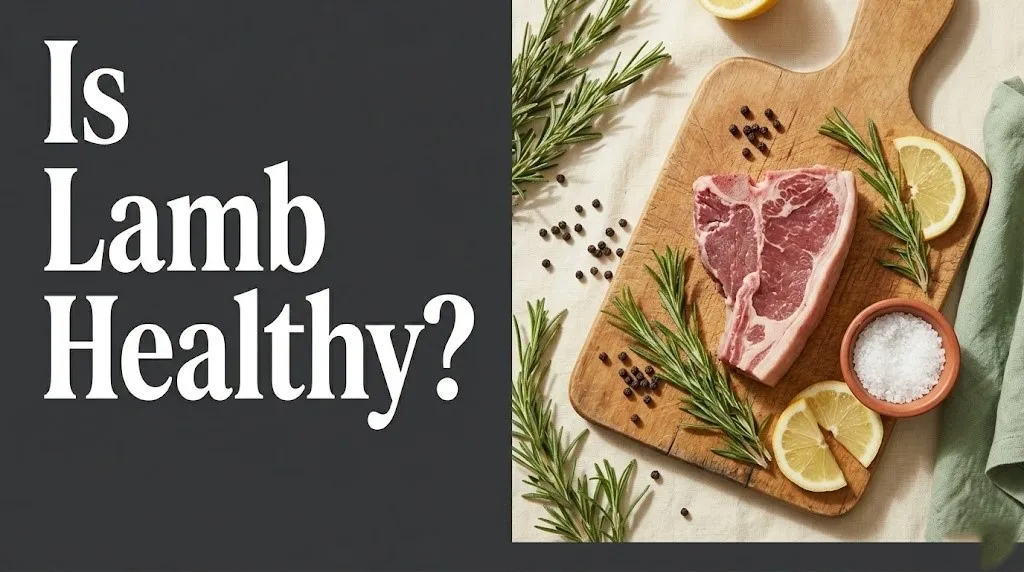
What lamb has going for it nutritionally is density. A standard serving provides roughly 23 grams of protein, significant amounts of two nutrients many adults fall short on (B12 and zinc), and heme iron, the form of iron your body absorbs most efficiently compared to the non-heme iron found in plant foods.
What it also carries is saturated fat, at around 3 grams per lean 3 oz serving and considerably more in fattier cuts. That’s not disqualifying, but it’s relevant context, particularly for people with elevated LDL cholesterol levels or cardiovascular risk factors.
The USDA Dietary Guidelines for Americans 2020-2025 include lean meats, including lean cuts of lamb, within the protein foods group as part of a health-supporting dietary pattern. Lamb is not classified as a processed meat, which places it in a different risk category than cured or smoked meat products.
Quick Tip:
- Choose loin or leg cuts over shoulder or ground lamb when you want the leanest option
- Trim visible fat before or after cooking to reduce saturated fat meaningfully
- A 3 oz (85g) cooked portion is the standard reference size for comparing lamb to other proteins
Lamb Nutrition Facts: Calories, Protein, and Fat Per Serving
A 3 oz (85g) serving of cooked lean lamb contains approximately 175 calories, 23g of protein, and 8g of total fat, according to USDA FoodData Central data.
Those numbers shift substantially by cut. Lamb loin chops, trimmed of visible fat, come in at the leaner end of the spectrum. Lamb shoulder and untrimmed rib chops carry significantly more fat and calories for the same serving weight.
| Lamb Cut (3 oz / 85g cooked) | Calories | Protein | Total Fat | Saturated Fat |
|---|---|---|---|---|
| Lamb loin, lean only | 175 | 23g | 8g | 3g |
| Lamb leg (sirloin half, lean) | 162 | 24g | 6.6g | 2.4g |
| Lamb rib chop, lean only | 200 | 22g | 12g | 4.5g |
| Ground lamb (cooked) | 241 | 21g | 17g | 7g |
| Lamb shoulder (arm, lean) | 237 | 22g | 16g | 6.5g |
Protein quality in lamb is high by any standard measure. Lamb contains all nine essential amino acids, making it a complete protein. It’s particularly high in leucine, the amino acid most directly involved in triggering muscle protein synthesis after eating. This matters for anyone focused on muscle maintenance or recovery.
Lamb contains zero carbohydrates and zero dietary fiber, which makes it compatible with low-carbohydrate, ketogenic, and carnivore-style eating patterns. People following those patterns should be aware that fat intake from lamb varies widely by cut and trimming method.
What Vitamins and Minerals Does Lamb Contain
Lamb contains exceptional concentrations of vitamin B12 (cobalamin), zinc, selenium, phosphorus, and niacin (vitamin B3), all within a standard serving.
Per 3 oz (85g) of cooked lean lamb, according to USDA FoodData Central:
| Nutrient | Amount per 3 oz | % Daily Value |
|---|---|---|
| Vitamin B12 (cobalamin) | 2.2 mcg | ~92% DV |
| Zinc | 4.4 mg | ~40% DV |
| Selenium | 24 mcg | ~44% DV |
| Iron (heme) | 1.9 mg | ~11% DV (men) / ~10% DV (women) |
| Phosphorus | 190 mg | ~15% DV |
| Niacin (B3) | 5.6 mg | ~35% DV |
| Riboflavin (B2) | 0.2 mg | ~15% DV |
The B12 figure is particularly notable. According to the NIH Office of Dietary Supplements, the recommended daily intake for adults is 2.4 mcg. A single serving of lean lamb gets most adults to or near that target from one food source alone.
Zinc from animal sources like lamb is substantially more bioavailable than the zinc in plant foods, because plant foods contain phytates that bind zinc and reduce absorption. The NIH Office of Dietary Supplements notes that heme zinc from meat is absorbed at higher rates than non-heme zinc from legumes and grains.
Lamb also provides selenium, an essential trace mineral that supports thyroid hormone metabolism and functions as a cofactor for antioxidant enzyme systems. People following strict plant-based diets often need to monitor selenium intake carefully, as plant sources vary widely in content depending on soil conditions.
Health Benefits of Eating Lamb
The health benefits of eating lamb are tied to its specific nutrient content: high bioavailability iron that supports red blood cell production, B12 that supports neurological function, zinc that supports immune response, and complete protein that supports muscle tissue maintenance and repair.
Starting with iron: the heme iron in lamb is absorbed by the body at rates of approximately 15% to 35%, compared to 2% to 20% for non-heme iron from plant sources, according to research published in the American Journal of Clinical Nutrition. For anyone managing iron-deficiency anemia, or at risk of it (including menstruating women, pregnant women, and distance runners), this absorption efficiency difference is meaningful.
Vitamin B12 from lamb is critical for the synthesis of myelin, the protective sheath around nerve fibers, and for the production of red blood cells. B12 deficiency causes neurological symptoms that are irreversible if left untreated long enough. Older adults absorb B12 from food less efficiently due to reduced stomach acid production, making high-B12 foods like lamb particularly useful in that demographic.
Lamb also contains conjugated linoleic acid (CLA), a naturally occurring fatty acid found in the meat and milk fat of ruminant animals. Research on CLA, including work published in the British Journal of Nutrition, suggests it may play a role in body composition, though the evidence from human trials is more modest than early animal studies suggested. CLA in lamb should not be overstated, but it’s a real bioactive compound present in measurable amounts.
The zinc in lamb supports immune system function, wound healing, and the activity of over 300 enzyme systems in the body, according to the NIH Office of Dietary Supplements. Most adults in the United States consume adequate zinc, but absorption from meat sources is reliably higher than from plant sources.
Key Takeaway: Lamb delivers one of the highest concentrations of vitamin B12 per serving of any commonly eaten food, alongside highly bioavailable zinc and heme iron, making it particularly useful for people who struggle to meet these micronutrient targets from other sources.
Is Lamb High in Saturated Fat and Cholesterol
Lamb does contain saturated fat, with lean cuts providing approximately 3g of saturated fat per 3 oz serving and fattier cuts providing 6 to 7g or more, but lean lamb fits within the American Heart Association’s saturated fat guidance when portions and cut selection are managed.
The AHA recommends that saturated fat account for no more than 5% to 6% of total daily calories. For someone eating 2,000 calories per day, that’s roughly 11 to 13 grams of saturated fat total from all food sources. A single serving of lean lamb loin uses approximately 23% to 27% of that daily saturated fat budget, which is meaningful but not prohibitive.
The dietary cholesterol conversation around lamb is somewhat different than it was a decade ago. The USDA Dietary Guidelines for Americans 2020-2025 removed the specific numerical limit on dietary cholesterol that appeared in previous editions, reflecting updated evidence that dietary cholesterol has a more variable effect on blood LDL levels than previously thought, and that saturated fat is the more clinically relevant concern for most people.
A 3 oz (85g) lean lamb serving contains approximately 80 mg of dietary cholesterol. For comparison, the same serving of cooked chicken breast contains approximately 72 mg. The difference is small.
People following a low-saturated-fat eating pattern for cardiovascular health management, such as the DASH diet or a medically supervised heart-healthy diet, should account for lamb’s saturated fat as part of their total daily intake and choose leaner cuts more consistently.
Is Lamb Healthier Than Beef or Chicken
Lamb is nutritionally similar to lean beef in protein and fat content, and it provides more iron and zinc per serving than chicken, but it’s generally higher in saturated fat than skinless chicken breast.
Think of these three proteins as sitting on a spectrum rather than a hierarchy. Chicken breast sits at one end: very lean, lower in iron and zinc. Lean beef sits in the middle. Lamb sits near lean beef but often with a slightly more varied fat content depending heavily on cut.
| Protein (3 oz / 85g cooked) | Calories | Protein | Saturated Fat | Iron | Zinc | B12 |
|---|---|---|---|---|---|---|
| Chicken breast (skinless) | 128 | 26g | 0.9g | 0.9 mg | 1.0 mg | 0.3 mcg |
| Lean beef (top sirloin) | 180 | 26g | 2.6g | 2.0 mg | 5.5 mg | 1.4 mcg |
| Lamb loin (lean) | 175 | 23g | 3.0g | 1.9 mg | 4.4 mg | 2.2 mcg |
| Ground beef (85% lean) | 218 | 22g | 5.8g | 2.2 mg | 5.3 mg | 2.3 mcg |
Source: USDA FoodData Central
Lamb’s clearest advantage over chicken is micronutrient density, specifically B12, iron, and zinc. Its clearest disadvantage compared to chicken is higher saturated fat.
Compared to lean beef, lamb is nutritionally very close. Beef edges lamb on zinc; lamb edges beef on B12. For the majority of healthy adults, the choice between lean lamb and lean beef is less about health impact and more about personal preference and culinary context.
Lamb is not processed meat. The WHO’s International Agency for Research on Cancer (IARC) classified processed meat (like bacon, hot dogs, and cured sausages) as a Group 1 carcinogen in 2015. Unprocessed red meat like lamb sits in the Group 2A category (“probably carcinogenic”), a classification that applies to all unprocessed red meat and reflects population-level associations, not a fixed per-serving risk.
Are Lamb Chops Healthy
Lamb chops are healthy when trimmed of excess visible fat and eaten in appropriate portions, providing approximately 175 to 200 calories, 22 to 23g of protein, and strong micronutrient content per 3 oz (85g) cooked serving.
The term “lamb chops” covers several different cuts, and they’re not nutritionally identical. Loin chops are leaner. Rib chops carry more intramuscular fat and therefore more calories and saturated fat. Shoulder chops fall somewhere between the two.
| Lamb Chop Type (3 oz / 85g cooked, lean only) | Calories | Total Fat | Saturated Fat |
|---|---|---|---|
| Loin chop, lean only | 175 | 8g | 3g |
| Rib chop, lean only | 200 | 12g | 4.5g |
| Shoulder chop, lean only | 179 | 9g | 3.5g |
Source: USDA FoodData Central
When restaurants serve lamb chops, they’re often plated with bone-in rib or loin cuts that include more fat than the trimmed values above. Eating the fatty cap and marbling on a restaurant-portioned lamb chop meaningfully increases the saturated fat content beyond what you’d get from the lean-only values.
For people following a halal or kosher diet, lamb chops are one of the most widely available permissible red meat options. Lamb is broadly included in both dietary frameworks, though specific preparation and slaughter standards apply and should be confirmed with product sourcing.
Is Ground Lamb Healthy
Ground lamb is healthy as part of a balanced diet, but it is the highest-fat form of lamb you’re likely to encounter at a grocery store, with approximately 241 calories, 21g of protein, and 17g of total fat per 3 oz (85g) cooked serving.
The fat content in ground lamb comes partly from the fact that ground products typically include trimmings from fattier primal cuts. Unlike ground beef, which is often sold at specific lean-to-fat ratios (80/20, 90/10, etc.), ground lamb is less commonly labeled by fat percentage in most retail markets.
That higher fat content doesn’t make ground lamb a poor choice, but it does mean portion size and cooking method matter more. Browning ground lamb in a pan and draining the rendered fat before adding other ingredients to a dish is the most straightforward way to reduce its total fat content without changing the recipe substantially.
Ground lamb is widely used in Mediterranean, Middle Eastern, and South Asian cuisines. Dishes like kofta (spiced ground lamb skewers), keema (Indian spiced ground meat), and Greek-style stuffed peppers rely on it as a primary protein.
People managing sodium intake should watch what ground lamb is combined with in prepared dishes. Ground lamb itself contains no added sodium, but spice blends, sauces, and cured additions used in common preparations can add substantially.
Quick Tip:
- Drain rendered fat from browned ground lamb before saucing to reduce fat by an estimated 30 to 40% of cooking loss
- Mixing ground lamb with lean ground turkey (50/50) creates a blended protein closer to 150 calories and 10g fat per 3 oz equivalent
- Store raw ground lamb in the refrigerator for no more than 1 to 2 days, or freeze immediately for up to 3 to 4 months, per USDA guidance
Key Takeaway: Ground lamb is the highest-fat form of lamb at retail and benefits most from fat-draining after browning, while lamb chop choice matters more than most people realize since loin chops are meaningfully leaner than rib chops at the same serving weight.
Is Leg of Lamb Healthy
Leg of lamb is one of the leanest cuts available, with approximately 162 calories, 24g of protein, and 6.6g of total fat per 3 oz (85g) cooked serving from the sirloin half, making it a nutritionally strong choice among red meat options.
The leg is a large, well-exercised muscle group, which gives it naturally lower intramuscular fat than cuts from the rib or shoulder. When the sirloin half of the leg is trimmed of external fat and roasted, it comes out as lean as some cuts of beef top round.
Leg of lamb is most commonly sold bone-in for roasting or boneless for easier carving and stuffing. Nutritionally, the bone-in vs. boneless preparation doesn’t change the macro composition of the meat itself, but bone-in roasting tends to preserve moisture better, which can reduce the temptation to add fat during cooking.
The USDA Dietary Guidelines for Americans 2020-2025 identify lean cuts of meat as appropriate within a health-supporting protein pattern. The sirloin half of leg of lamb qualifies as a lean cut by USDA standards, defined as fewer than 10g of total fat, 4.5g or less of saturated fat, and fewer than 95mg of cholesterol per 3 oz cooked serving.
People preparing leg of lamb for a group meal or holiday dinner should note that pre-marinated or pre-seasoned products sold at retail often contain added sodium. Checking the nutrition label before purchasing a seasoned leg of lamb is worthwhile for anyone monitoring sodium intake for blood pressure management.
Is Braised Lamb Healthy
Braised lamb is healthy when prepared with lean cuts and minimal added fat, though the braising liquid and accompanying ingredients substantially influence the final nutritional profile of the dish.
Braising as a cooking method involves slow-cooking lamb in liquid (broth, wine, tomatoes, or water) at low heat for an extended period, typically 2.5 to 4 hours at 300°F to 325°F (149°C to 163°C). The method does not inherently add fat to the meat, but it does render fat from the cut into the cooking liquid.
The rendered fat in braising liquid is easy to remove if you allow the dish to cool and skim the solidified fat layer from the surface before reheating and serving. This step alone can reduce the final saturated fat content of a braised lamb dish meaningfully.
Braising tends to be applied to tougher, fattier cuts: shoulder, shank, and neck. These cuts are more economical but higher in saturated fat than loin or leg. The choice of cut for braising has more impact on the nutritional profile of the finished dish than the braising method itself.
Braised lamb dishes common in Mediterranean and Middle Eastern cuisines often include legumes, root vegetables, and tomatoes, which add dietary fiber, vitamins, and phytonutrients to a meal that might otherwise be meat-heavy. A braised lamb shank served over lentils, for example, creates a more nutritionally complete meal than the meat alone.
People following a low-sodium diet should make braised lamb with low-sodium broth and avoid commercial braising sauces, which frequently contain 400 to 800 mg of sodium per serving before any additional seasoning.
Is Grass-Fed Lamb Healthier Than Grain-Fed
Grass-fed lamb contains higher concentrations of omega-3 fatty acids and conjugated linoleic acid (CLA) than grain-fed lamb, which gives it a meaningfully different fatty acid profile, though the total macro content per serving is broadly similar.
Think of the fatty acid difference like this: the overall size of the lamb’s fat budget doesn’t change dramatically between feeding systems, but what’s inside that budget shifts. Grass-fed animals produce fat with a better omega-6 to omega-3 ratio, which researchers studying dietary fatty acid balance consider favorable for long-term cardiovascular and inflammatory outcomes.
Research published in the British Journal of Nutrition has documented that grass-fed ruminant meat contains higher levels of alpha-linolenic acid (ALA), the plant-derived omega-3, and moderately higher EPA (eicosapentaenoic acid) and DHA (docosahexaenoic acid) compared to grain-fed equivalents. The absolute amounts are still lower than in oily fish like salmon, but the difference between grass-fed and grain-fed lamb is real and measurable.
Grass-fed lamb also tends to be higher in CLA, with some analyses finding two to three times the CLA content compared to grain-finished animals, according to research in the Journal of Nutrition. CLA is synthesized naturally in the rumen (digestive chamber) of grass-eating ruminants.
| Fatty Acid Comparison | Grass-Fed Lamb | Grain-Fed Lamb |
|---|---|---|
| Omega-3 (ALA) | Higher | Lower |
| CLA | 2 to 3x higher | Baseline |
| Omega-6 to Omega-3 ratio | More favorable | Less favorable |
| Total saturated fat | Broadly similar | Broadly similar |
| Total calories per serving | Broadly similar | Broadly similar |
Grass-fed lamb typically costs more at retail and is more commonly found at specialty grocers, farmers’ markets, and direct-from-farm sources. For most people, the nutritional difference is real but not dramatic enough to make conventionally raised lamb a poor choice.
Key Takeaway: Grass-fed lamb offers a genuinely better omega-3 and CLA profile than grain-fed, but both forms are nutritionally strong, and the cut and cooking method you choose matters more than the feeding system for most people’s day-to-day nutrition.
Is Lamb Good for Weight Loss and Muscle Building
Lamb supports both weight management and muscle building when portion-controlled and eaten as part of a protein-adequate eating pattern, primarily because of its high-quality complete protein content and appetite-regulating properties.
Protein is the most satiating macronutrient, calorie for calorie. A 3 oz (85g) lean lamb serving provides 23g of protein at around 175 calories, which is a favorable protein-to-calorie ratio compared to higher-fat options. For someone managing calorie intake while trying to preserve or build muscle mass, lean cuts of lamb are a practical protein source.
Muscle protein synthesis specifically relies on adequate leucine intake at each meal. Lamb, like other animal proteins, contains substantial leucine within its complete amino acid profile. Research published in the American Journal of Clinical Nutrition indicates that a meal providing approximately 25 to 40g of protein from a high-quality animal source is sufficient to maximally stimulate muscle protein synthesis in most adults.
For weight loss specifically, the relevant factor is total calorie intake, not the specific protein source. Lamb is not a weight-loss food in isolation. But lean lamb, chosen over higher-fat or higher-calorie proteins and prepared without added fats or high-calorie sauces, fits comfortably into a calorie-managed eating pattern.
Ground lamb is the form most likely to work against weight-loss goals, not because it’s a different food, but because its higher fat content means fewer grams of protein per calorie compared to loin or leg cuts. Choosing leg of lamb or trimmed loin over ground lamb or untrimmed shoulder gives you the same nutrient advantages with fewer calories.
Who Should Be Cautious About Eating Lamb
People with cardiovascular disease history, elevated LDL cholesterol, or kidney disease requiring protein restriction should eat lamb with specific awareness of portion size, cut selection, and overall dietary context.
| Population Group | Consideration | Practical Guidance |
|---|---|---|
| Cardiovascular disease history | Saturated fat from all red meat sources | Choose lean cuts; limit to 1 to 2 servings per week |
| Elevated LDL cholesterol | Total saturated fat intake | Count lamb’s saturated fat within daily AHA limit (11 to 13g) |
| Kidney disease (CKD) | High protein load may stress kidneys | Amount should be discussed with a nephrologist or renal dietitian |
| Pregnant women | High B12 and iron are beneficial; food safety matters | Cook lamb to 160°F (71.1°C) for ground, 145°F (62.8°C) for whole cuts |
| Older adults | B12 absorption declines with age; lamb is a useful source | Lean cuts several times per week are generally appropriate |
| People with alpha-gal syndrome | Tick-bite-triggered mammalian meat allergy | May react to lamb along with beef and pork; confirm with an allergist |
| People following a vegan or plant-based diet | Lamb is an animal product | Not compatible; iron, B12, and zinc needs require plant-based alternatives |
The alpha-gal syndrome note deserves more attention than most nutrition articles give it. Alpha-gal syndrome is an allergy to a carbohydrate (galactose-alpha-1,3-galactose) found in mammalian meat, triggered by certain tick bites. People with this condition can experience allergic reactions ranging from hives to anaphylaxis after eating lamb, beef, or pork. An allergist experienced with this condition can confirm diagnosis through a blood test.
People with type 2 diabetes can generally eat lean lamb as part of a protein-forward meal that doesn’t spike blood glucose (lamb contains no carbohydrates). The total calorie and saturated fat content is the more relevant concern, and individual carbohydrate management from accompanying foods matters more than the lamb itself.
How to Cook Lamb the Healthiest Way
The healthiest ways to prepare lamb are methods that minimize added fat, preserve moisture without adding sodium, and bring the meat to a safe internal temperature without charring the surface.
Ranked from lowest to highest fat impact:
- Roasting (lean cuts like leg or loin): Place trimmed lamb on a rack over a roasting pan so fat drips away during cooking. Roast at 325°F (163°C) for large cuts. Use herbs, garlic, and citrus as flavor without adding calories.
- Grilling or broiling (chops or skewers): High-heat, dry-heat methods render surface fat and allow it to drip away. Avoid charring, which produces heterocyclic amines (HCAs) associated with cancer risk in high-temperature charred meat. Cook to an internal temperature of 145°F (62.8°C) for whole cuts.
- Braising (shoulder, shank): Slow-cook in liquid at 300°F to 325°F (149°C to 163°C) for 2.5 to 4 hours. Skim fat from the braising liquid before serving.
- Pan-searing (chops): Use a non-stick or cast-iron pan with 1 teaspoon of olive oil rather than butter. Sear over medium-high heat, then finish in the oven at 325°F (163°C) to the target internal temperature.
The USDA recommends these minimum safe internal temperatures for lamb:
- Whole cuts (roasts, chops, steaks): 145°F (62.8°C) with a 3-minute rest
- Ground lamb: 160°F (71.1°C) throughout
Marinating lamb in acidic ingredients (lemon juice, yogurt, wine) before cooking is a flavor technique that may also modestly reduce HCA formation during high-heat cooking, according to research referenced by the American Institute for Cancer Research.
How Much Lamb Should You Eat Per Week
Most healthy adults can eat lamb two to three times per week in 3 to 4 oz (85 to 113g) cooked portions, provided they choose lean cuts and balance their overall red meat intake within broader dietary guidance.
The USDA Dietary Guidelines for Americans 2020-2025 recommend that most adults eat a variety of protein foods, including meat, poultry, seafood, eggs, and legumes, rather than relying heavily on any single source. Red meat, including lamb, is not singled out for elimination, but the guidelines do note that many Americans benefit from reducing overall red and processed meat intake.
The American Heart Association recommends limiting saturated fat to 5% to 6% of total daily calories and suggests choosing lean meats when eating red meat. Eaten as lean cuts two to three times per week alongside fish, poultry, legumes, and other protein sources, lamb fits within these parameters for most adults.
Frequency guidance shifts for specific groups:
- People with cardiovascular disease or a family history of heart disease should keep all red meat to 1 to 2 servings per week and prioritize fish and legumes as primary protein sources. A cardiologist or registered dietitian can provide individualized guidance based on LDL levels and overall diet pattern.
- Athletes and people focused on muscle protein synthesis may eat lean lamb more frequently as part of a higher overall protein diet, provided total saturated fat stays within evidence-based ranges.
- Pregnant women benefit from lamb’s iron and B12 content. Frequency should be balanced with adequate fish intake (for omega-3 fatty acids including DHA) and variety across protein sources.
The practical takeaway: lamb works well as a protein two to three times per week for most healthy adults. It’s not a daily-protein replacement for chicken or fish in typical health-focused eating patterns.
Key Takeaway: For most healthy adults, lean lamb two to three times per week in 3 to 4 oz portions fits within both AHA and USDA dietary guidance, with the main variable being which cut you choose and how much visible fat you trim before or after cooking.
Frequently Asked Questions About Lamb and Health
Is lamb healthier than beef?
Lamb and lean beef are nutritionally very similar per 3 oz serving, with lamb providing slightly more vitamin B12 and beef providing slightly more zinc.
Neither is clearly “healthier” overall. The cut, fat content, and how much you eat matter more than the species of animal.
For specific health goals like maximizing B12 intake, lamb has a modest edge over most lean beef cuts.
Is lamb good for you if you have high cholesterol?
Lean lamb in moderate portions can fit into a cholesterol-management eating pattern, provided you count its saturated fat within your daily total.
The American Heart Association recommends keeping saturated fat below 5% to 6% of total daily calories, roughly 11 to 13g per day on a 2,000-calorie diet.
If you have elevated LDL and are working with a cardiologist or dietitian on a specific dietary plan, discuss how frequently red meat in general, including lean lamb, fits your individual targets.
How many calories are in a lamb chop?
A 3 oz (85g) cooked lamb loin chop (lean only) contains approximately 175 calories.
A bone-in restaurant-served lamb chop with fat intact typically weighs 4 to 6 oz of meat and can range from 250 to 400 calories depending on preparation.
Rib chops carry more fat than loin chops at the same serving weight, adding approximately 25 to 50 extra calories per serving.
Is lamb considered a lean meat?
Lean cuts of lamb, specifically the sirloin half of the leg and the trimmed loin, qualify as lean meat by USDA standards, meaning fewer than 10g total fat, 4.5g saturated fat, and fewer than 95mg cholesterol per 3 oz cooked serving.
Ground lamb and untrimmed shoulder or rib cuts do not meet the USDA lean meat definition.
Trimming visible fat before cooking is the most effective way to bring most lamb cuts closer to lean standards.
Can you eat lamb on a Mediterranean diet?
Yes, lamb is eaten within traditional Mediterranean dietary patterns, typically as an occasional red meat source rather than a daily protein.
The Mediterranean diet emphasizes fish, legumes, vegetables, olive oil, and whole grains as primary foods, with red meat consumed in smaller amounts and less frequently than poultry or seafood.
Lamb appears most traditionally in Mediterranean cuisine in roasted or braised preparations served alongside vegetables and legumes, which reflects the balanced dietary context the pattern recommends.
Lamb earns its place on a healthy plate. Lean cuts deliver impressive amounts of B12, zinc, and complete protein per serving. The key is choosing the right cut, trimming visible fat, cooking to the correct internal temperature, and eating it as part of a diet that includes fish, legumes, and plenty of vegetables.
Start with leg of lamb or loin chops if you want the leanest entry point. Save ground lamb and shoulder cuts for dishes where the cooking method lets you manage the fat. Eat it two to three times a week at most, and let the rest of your plate reflect variety.
That’s how lamb works at its best: not as a daily staple, but as a genuinely nutrient-dense option that more than holds its own against other proteins when you use it well.