Fried fish sits in a nutritional gray zone. It delivers the high-quality protein, selenium, and partial omega-3 fatty acids of the fish itself, but the frying process adds calories, oxidized fats, and compounds that work against cardiovascular health. Whether fried fish ends up a net positive or negative for your health depends on the fish species, the oil type and freshness, the breading, and how often you eat it.
The American Heart Association recommends eating fish, particularly fatty fish, at least twice a week for cardiovascular health. That recommendation does not specify cooking method because the research supporting fish consumption is based on dietary pattern studies where fish is prepared in various ways. A 2024 analysis in the Journal of the American Heart Association confirmed that the omega-3 benefits of fish persist even when the fish is fried, though they are reduced compared to baking or grilling. The benefit does not disappear entirely, but it does take a hit.
This article breaks down the full nutritional picture of fried fish, from calories and omega-3 retention to the health risks of reused frying oil and heavy breading. You will learn how pan-frying compares to deep-frying, which oils hold up best under heat, what to order at a fish fry or seafood restaurant, and how often fried fish can reasonably appear in a healthy eating pattern.
Is fried fish healthy
Fried fish is moderately healthy as an occasional food but should not be a primary way you consume fish if cardiovascular health is your goal. The fish itself provides lean protein, selenium, vitamin B12, and omega-3 fatty acids that survive the frying process in reduced amounts. The frying adds calories from oil absorption and, depending on the oil and temperature, can introduce oxidized lipid compounds and advanced glycation end products that have been associated with inflammation and cardiovascular risk in observational studies.
The nutritional tradeoff is measurable. A 3.5-ounce serving of baked cod contains roughly 105 calories, 1 gram of fat, and 23 grams of protein. The same portion deep-fried in batter contains approximately 230 to 280 calories, 12 to 18 grams of fat, and 15 to 20 grams of protein, with the protein displaced by the carbohydrate-heavy batter. The fish’s omega-3 content drops by 20% to 50% depending on frying temperature and duration, according to research from the USDA Agricultural Research Service. The protein remains high quality. The selenium and B vitamins survive heat well. The omega-3s take the biggest nutritional hit.
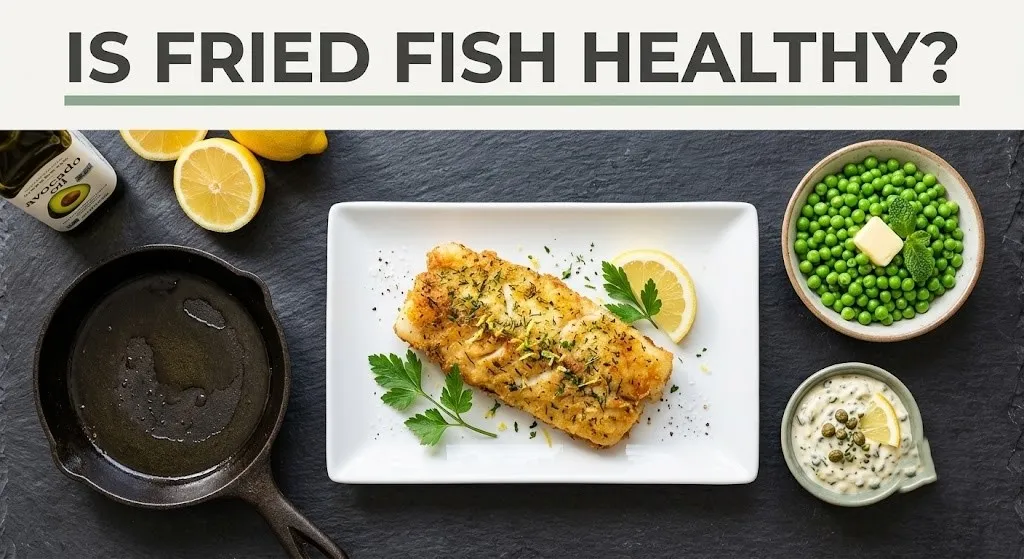
The preparation context matters more than most people realize. A piece of white fish pan-fried at home in fresh avocado oil with a light dusting of seasoned flour is a different food from a deep-fried battered fish filet from a fast-food restaurant where the oil may have been in use for days. The homemade version has fewer calories, less degraded oil, and a shorter ingredient list. The restaurant version carries the accumulated oxidation products of reused frying oil. The health gap between these two versions of fried fish is wide enough that treating them as the same food is misleading.
Key Takeaway: Fried fish retains some nutritional value but loses omega-3s and gains calories and oxidized fats. Homemade pan-fried fish in fresh oil is far healthier than restaurant deep-fried fish in reused oil.
Fried fish nutrition facts
Fried fish nutrition facts vary by species, coating type, and frying method, but a standard 3.5-ounce serving of battered and deep-fried white fish like cod or haddock provides approximately 230 to 280 calories, 15 to 20 grams of protein, 12 to 18 grams of total fat, 2 to 4 grams of saturated fat, and 15 to 25 grams of carbohydrates from the batter or breading. The sodium content typically ranges from 400 to 700 milligrams, higher for restaurant and fast-food versions that salt generously.
The protein in fried fish remains high quality and highly digestible. The frying heat does not damage the essential amino acid profile of fish protein the way it damages delicate omega-3 fats. You are still getting complete protein with all nine essential amino acids. The USDA FoodData Central database confirms that the protein content of fried fish is comparable to baked fish on a per-weight basis, though the added weight of absorbed oil and breading means protein makes up a smaller percentage of total calories.
The fat profile of fried fish depends on the frying oil. Fish fried in canola or peanut oil absorbs predominantly monounsaturated and polyunsaturated fats. Fish fried in partially hydrogenated oils, now largely phased out in the United States, absorbed trans fats. The FDA banned partially hydrogenated oils in 2018, but enforcement exceptions and imported foods mean trans fats are not entirely gone from the food supply. The Academy of Nutrition and Dietetics recommends that consumers check ingredient lists for “partially hydrogenated” on packaged fried fish products and ask restaurants about their frying oil if trans fat exposure is a concern.
| Nutrient (per 3.5 oz) | Baked Cod | Pan-Fried Cod | Deep-Fried Battered Cod |
|---|---|---|---|
| Calories | 105 | 170 | 250 |
| Protein | 23g | 21g | 18g |
| Total Fat | 1g | 8g | 16g |
| Carbohydrates | 0g | 5g | 20g |
| Sodium | 80mg | 250mg | 550mg |
Key Takeaway: Fried fish delivers 230 to 280 calories per serving with protein intact but significant added fat and carbohydrates from oil and breading.
Fried fish calories
Fried fish calories depend on the fish species, the coating, the frying method, and the amount of oil absorbed during cooking. A thin piece of sole pan-fried with minimal oil and a light flour dusting may contain 150 to 180 calories per serving. A thick piece of battered cod deep-fried in a commercial fryer absorbs more oil and can reach 300 to 350 calories for the same serving size. The calorie range is broad enough that blanket statements about fried fish calories are unhelpful without specifying the preparation details.
Oil absorption is the primary calorie driver in fried fish. When fish is submerged in hot oil, the water in the fish tissue turns to steam and escapes, creating voids that the surrounding oil fills. Properly fried fish at the correct oil temperature, typically 350 to 375 degrees Fahrenheit, absorbs less oil than fish fried at too low a temperature. Low-temperature frying causes the batter or breading to absorb oil before it sets into a crust. A crisp, golden crust formed quickly at high heat is the sign of properly fried fish that has absorbed less oil.
The breading or batter contributes additional calories beyond the oil. A thick beer batter absorbs more oil than a thin dusting of seasoned flour. Panko breadcrumbs create an airy crust that absorbs less oil than dense, fine breadcrumbs. Cornmeal coatings fall somewhere in between. A battered fish filet from a fast-food restaurant can contain 20 to 25 grams of carbohydrates from the coating alone, adding 80 to 100 calories before the oil is factored in. The coating is not nutritionally neutral. It is refined flour and starch that adds calories, carbohydrates, and, depending on the recipe, additional sodium and sugar.
Key Takeaway: Fried fish calories range from 150 to 350 per serving. High frying temperature reduces oil absorption. Heavy batter adds calories from refined carbohydrates.
Fried fish omega-3
Fried fish omega-3 content is lower than baked or grilled fish, but the loss is partial rather than total. The eicosapentaenoic acid (EPA) and docosahexaenoic acid (DHA) in fish oil are polyunsaturated fats with multiple double bonds that make them vulnerable to oxidation at high temperatures. Frying temperatures of 350 to 375 degrees Fahrenheit accelerate this oxidation. A study published in the Journal of Food Science found that frying salmon reduced its omega-3 content by 25% to 35% compared to raw salmon, with longer frying times causing greater losses.
The type of fish determines whether enough omega-3s survive frying to matter nutritionally. A fatty fish like salmon or mackerel starts with 1,500 to 2,500 milligrams of combined EPA and DHA per serving. Even after a 30% frying loss, the remaining 1,000 to 1,800 milligrams still represents a meaningful contribution toward the American Heart Association’s recommendation of 1 gram of combined EPA and DHA per day for people with documented coronary heart disease. Frying a naturally lean white fish like cod, which starts with only 200 to 300 milligrams of omega-3s per serving, leaves very little behind. The omega-3s are essentially lost in the frying process.
Choosing fatty fish for frying preserves more omega-3s in absolute terms, even though the percentage loss is similar. A fried salmon filet still delivers omega-3s worth caring about. A fried cod filet delivers protein and selenium but negligible omega-3s regardless of cooking method. If omega-3 intake is your goal, the fish species choice matters more than whether you fry it. The Harvard T.H. Chan School of Public Health emphasizes that total fish intake, regardless of preparation, is associated with lower cardiovascular risk in population studies, suggesting that cooking method does not negate the benefits entirely.
Key Takeaway: Frying reduces omega-3s by 25% to 35%, but fatty fish like salmon still deliver meaningful amounts after frying. Lean white fish has minimal omega-3s to begin with.
Does frying destroy fish nutrients
Frying does not destroy fish nutrients uniformly. Some nutrients survive the process well. Others degrade measurably. Heat-stable minerals like selenium, iodine, and phosphorus remain largely intact through frying. The selenium in fish, which supports thyroid function and antioxidant defense, survives cooking temperatures without significant loss. The B vitamins, particularly vitamin B12 and niacin, are moderately heat stable, with losses of 10% to 30% depending on cooking time and temperature. The protein is denatured by heat, which is the same process that occurs in all cooking. Denatured protein is not damaged protein. It is more digestible.
The nutrients most affected by frying are the heat-sensitive omega-3 fatty acids and, to a lesser extent, vitamin D. Vitamin D in fish, which is already present in modest amounts in most species, can degrade by 20% to 40% during frying. Vitamin E, if present in the fish or added through the frying oil, also degrades at high temperatures. The fat-soluble vitamin losses are real but not catastrophic because fish is not the primary dietary source of these vitamins for most people. The omega-3 loss is the nutritionally significant degradation because fish is the primary dietary source of EPA and DHA for many people.
The frying process also introduces compounds that were not in the raw fish. The high heat of frying triggers the Maillard reaction between amino acids and reducing sugars, the same reaction that browns bread crust and seared meat. This reaction creates desirable flavor compounds and also produces acrylamide and advanced glycation end products (AGEs). Acrylamide is classified as a probable human carcinogen by the International Agency for Research on Cancer. AGEs are associated with oxidative stress and inflammation in human studies. These compounds are present in small amounts in all high-heat cooked foods, not just fried fish, and their health significance at dietary exposure levels remains an active area of research.
Key Takeaway: Minerals survive frying intact. Protein remains high quality. Omega-3s and vitamin D degrade partially. New compounds like acrylamide form in small amounts.
Fried fish vs baked fish
Fried fish and baked fish deliver similar amounts of protein, selenium, and B vitamins but differ substantially in fat content, calorie density, and omega-3 retention. A baked white fish filet contains minimal fat beyond what is naturally present in the fish, roughly 1 gram per serving. A fried filet absorbs 8 to 18 grams of oil during cooking. That oil adds calories and, depending on the oil type, shifts the fatty acid profile of the meal. The protein content per serving is comparable because the fish itself is the same.
The cooking method changes the overall nutritional character of the meal through the oil and the coating. Baked fish can be prepared with a drizzle of olive oil, herbs, and lemon, adding heart-healthy monounsaturated fat in a controlled amount. Fried fish absorbs whatever oil it is cooked in, including the oxidation products that accumulate in oil that has been heated repeatedly. The American Heart Association notes that while both methods produce acceptable fish dishes, baking, broiling, and grilling preserve more of the native omega-3 content and avoid the calorie density increase that comes with frying.
The practical difference between fried and baked fish is most pronounced in restaurant settings. Baked fish on a restaurant menu is typically prepared to order with fresh ingredients and minimal added fat. Fried fish in the same restaurant may be cooked in oil that has been in the fryer for hours or days, accumulating polar compounds and lipid peroxides. The oil quality difference between fresh oil and degraded oil is not visible on the plate, but it affects the health impact of the meal. At home, where you control the oil and the cooking time, the gap between fried and baked narrows.
Key Takeaway: Fried fish adds 8 to 18 grams of fat per serving compared to baked fish. The protein and mineral content are similar. Oil quality and freshness make the difference.
Pan fried fish healthy
Pan-fried fish can be a healthy preparation method when the right oil, temperature, and coating are used. Pan-frying uses a thin layer of oil in a skillet rather than submerging the fish in a deep fryer. The fish absorbs less oil because only one surface contacts the oil at a time, and the total cooking time is typically shorter. A pan-fried fish filet cooked in a tablespoon of avocado oil absorbs roughly 4 to 7 grams of oil, compared to 12 to 18 grams for a deep-fried filet.
Oil choice matters for pan-frying in ways it does not for baking or steaming. The oil must have a smoke point above the cooking temperature of 350 to 400 degrees Fahrenheit. Avocado oil and refined peanut oil have smoke points above 450 degrees Fahrenheit and resist oxidation well. Extra virgin olive oil has a smoke point around 375 to 400 degrees Fahrenheit, which is sufficient for most pan-frying, but its delicate polyphenols degrade with prolonged high heat. Refined olive oil, sometimes labeled “light olive oil,” has a higher smoke point and neutral flavor more suited to frying. The Academy of Nutrition and Dietetics recommends oils high in monounsaturated fats, like olive and avocado oils, for pan-frying because their fatty acid structure resists oxidation better than polyunsaturated oils like soybean or corn oil.
The coating on pan-fried fish can be minimal compared to deep-fried battered fish. A light dusting of seasoned whole-wheat flour or almond flour provides a crisp exterior with fewer refined carbohydrates and less oil absorption than a thick wet batter. Omitting the coating entirely and pan-searing the fish with salt, pepper, and herbs produces a result closer to baked fish nutritionally, with only the added oil from the pan contributing additional calories. This approach retains more omega-3s because the fish is exposed to heat for a shorter time than deep-frying requires.
Key Takeaway: Pan-frying in a small amount of high-smoke-point oil with a light coating is a healthier fried fish method that reduces oil absorption and preserves more nutrients.
Deep fried fish health risks
Deep-fried fish carries health risks beyond the added calories and fat, primarily related to the frying oil’s quality and the compounds formed when oil is heated repeatedly to high temperatures. When oil is used for deep-frying, it undergoes hydrolysis, oxidation, and polymerization. Triglycerides break down into free fatty acids and glycerol. Unsaturated fatty acids oxidize into lipid peroxides and aldehydes. These compounds accumulate with each hour the oil stays at frying temperature. A 2023 study in the Journal of Agricultural and Food Chemistry found that total polar compounds, a standard measure of oil degradation, exceeded safe thresholds after 8 to 12 hours of continuous commercial frying.
Restaurant deep fryers are the primary source of degraded oil exposure for most consumers. Fast-food seafood chains and independent fish fry restaurants often filter their oil daily to remove food particles, but filtering does not remove dissolved oxidation products. The oil is typically changed based on visual and flavor cues rather than chemical testing for polar compounds. A batch of oil in a busy restaurant fryer may remain in use for days. The same fried fish ordered at lunch on Tuesday and Friday could have been cooked in oil at very different stages of degradation, even though the food looks identical.
The breading on deep-fried fish adds its own set of concerns. Wheat flour and starch-based batters are high-glycemic carbohydrates that digest rapidly, contributing to the post-meal blood glucose spike. The Maillard reaction that creates the golden-brown crust also produces acrylamide. The USDA monitors acrylamide levels in fried foods, and fried fish with batter falls into the moderate acrylamide category, below french fries and potato chips but above baked goods. Occasional exposure at these levels is not a demonstrated health threat for most people. Frequent consumption of deep-fried foods, including fish, is associated with higher cardiovascular risk in observational studies, though the specific causal mechanism, degraded oil, oxidized fats, or simply the extra calories, remains under investigation.
Key Takeaway: Deep-fried fish in reused restaurant oil contains oxidized lipids and polar compounds. The batter adds acrylamide and refined carbohydrates. Occasional consumption poses minimal risk.
Is battered fish healthy
Battered fish is less healthy than unbreaded fried fish because the batter adds refined carbohydrates, absorbs more oil, and contributes to acrylamide formation without providing meaningful nutrition. A typical beer batter or tempura batter is made from refined wheat flour, starch, and liquid, which is a delivery system for fried texture and flavor, not a source of fiber, vitamins, or minerals. The batter can add 15 to 25 grams of carbohydrates and 80 to 120 calories to a fish filet before accounting for oil absorption.
The batter’s structure affects how much oil the fish absorbs during frying. A thick, wet batter creates a sealed crust that can actually reduce oil penetration into the fish flesh while absorbing significant oil into the batter itself. A thin batter or a light dusting of flour absorbs less total oil. Tempura-style batters, which use ice-cold water and minimal mixing, create a lacier, less oil-absorbent crust than dense, heavily mixed batters. The batter technique matters as much as the batter ingredients for the final fat content of the dish.
The nutritional downside of battered fish is manageable when the fish is fried in fresh, hot oil and eaten in reasonable portions. A single piece of battered fish as part of a meal that includes vegetables and whole grains fits into a healthy eating pattern. A plate of fish and chips with two large battered filets, a heap of french fries, and a cup of tartar sauce is a high-calorie, high-fat, high-sodium meal that should be occasional rather than routine. The batter itself is not the villain. The total meal composition and frequency are what push battered fish into indulgence territory.
Key Takeaway: Batter adds refined carbohydrates and oil absorption without nutritional benefit. Thin batters and proper frying temperatures reduce the nutritional damage.
Fried fish oil type
The type of oil used for frying fish significantly affects the final food’s fatty acid profile, oxidative stability, and potential health impact. Oils high in monounsaturated fats, like avocado oil, peanut oil, and high-oleic sunflower oil, resist oxidation better than oils high in polyunsaturated fats, like soybean oil, corn oil, and conventional sunflower oil. Saturated fats like coconut oil and palm oil are the most oxidation-resistant but add saturated fat to the food, which the American Heart Association recommends limiting.
Restaurant frying oil choices are driven by cost, not health optimization. Soybean oil and commodity vegetable oil blends dominate commercial frying because they are inexpensive and have acceptable fry life. These oils are high in polyunsaturated omega-6 fatty acids, which are more prone to oxidation at frying temperatures. A 2021 analysis in the journal Nutrients found that fish fried in soybean oil had higher levels of lipid oxidation products than fish fried in olive oil or avocado oil under identical conditions. The health difference is measurable in a laboratory but has not been directly linked to different health outcomes in human feeding trials.
At home, the best oil for frying fish is one with a smoke point above 400 degrees Fahrenheit and a fatty acid profile high in monounsaturated fat. Avocado oil meets both criteria and has a neutral flavor. Refined peanut oil is traditional for deep-frying and performs well. Light olive oil, not extra virgin, has a suitable smoke point and resists oxidation. These oils cost more than commodity vegetable oils, but the amount used in a home frying session is small enough that the cost difference per meal is negligible.
Key Takeaway: Avocado oil, peanut oil, and light olive oil resist oxidation better than soybean and corn oils. Oil choice affects the health profile of the finished fried fish.
Best oil for frying fish
The best oil for frying fish combines a high smoke point, oxidative stability, and a neutral flavor that does not overpower the delicate taste of the fish. Avocado oil leads this category with a smoke point of 520 degrees Fahrenheit, a fatty acid profile that is 70% monounsaturated, and a clean, buttery flavor. It is the top choice for home frying from a health perspective. Refined peanut oil, with a smoke point of 450 degrees Fahrenheit and excellent fry life, is the traditional choice for deep-frying fish and works well. Light refined olive oil, not extra virgin, has a smoke point around 465 degrees Fahrenheit and good oxidative stability.
Oils to avoid for frying fish include unrefined oils with low smoke points, like extra virgin olive oil and flaxseed oil, which burn and produce acrid flavors and compounds. Oils high in polyunsaturated omega-6 fatty acids, like soybean oil, corn oil, and grapeseed oil, are more prone to oxidation at frying temperatures. While these oils are widely used in commercial frying because of their low cost, they create more oxidation byproducts per hour of frying than monounsaturated-dominant oils. For occasional home frying, the absolute health difference between oil types is small. For frequent frying or for people with existing cardiovascular concerns, choosing a more stable oil is sensible.
Reusing frying oil at home is common and can be done safely with limits. Oil used for frying fish can be strained through a fine mesh strainer to remove food particles and stored in a sealed container in a cool, dark place. The oil should be discarded when it darkens significantly, foams, smokes at lower temperatures than expected, or develops an off odor. The USDA recommends discarding frying oil after three to four uses or when any of these degradation signs appear.
Quick Tip:
- Choose avocado oil, refined peanut oil, or light olive oil for frying fish.
- Discard oil after three to four uses or when it darkens, foams, or smells off.
Key Takeaway: Avocado oil is the best health-conscious choice for frying fish. Peanut oil and light olive oil are good alternatives. Discard oil after three to four uses.
Fried fish sodium content
Fried fish sodium content ranges from moderate to very high depending on where and how it is prepared. A homemade fried fish filet seasoned with a reasonable amount of salt before cooking contains 200 to 400 milligrams of sodium per serving. A restaurant or fast-food fried fish filet can contain 500 to 900 milligrams, driven by salt in the batter, seasoning on the fish, and additional salt applied after frying. The American Heart Association’s 2,300-milligram daily sodium limit means a single fast-food fish filet can use 20% to 40% of the day’s sodium budget.
The sodium in fried fish comes from multiple sources. The fish itself contains naturally occurring sodium at 60 to 100 milligrams per serving in marine species. The batter or breading typically includes salt for flavor. Commercial batters may include sodium-based leavening agents like sodium bicarbonate and sodium acid pyrophosphate. The tartar sauce, cocktail sauce, and malt vinegar served alongside fried fish contribute additional sodium. Two tablespoons of tartar sauce can add 150 to 250 milligrams. A packet of cocktail sauce adds 200 to 300 milligrams.
Reducing sodium in fried fish at home is straightforward. Season the fish itself rather than the batter, using less total salt. Lemon juice, herbs, and spices provide flavor without sodium. Commercial seasoning blends labeled “lemon pepper” or “seafood seasoning” often contain salt as the first ingredient, so read labels or make your own salt-free blends. At restaurants, requesting unsalted fried fish is unlikely to be accommodated because the batter is pre-seasoned. Asking for sauces on the side allows you to control how much you add.
Key Takeaway: Homemade fried fish sodium runs 200 to 400 milligrams per serving. Restaurant versions reach 500 to 900 milligrams. Sauces add another 150 to 300 milligrams.
Is fried fish heart healthy
Fried fish is not heart healthy in the way that baked or grilled fatty fish is, but it is also not the equivalent of fried red meat in terms of cardiovascular risk. The omega-3 fatty acids that remain after frying still exert anti-inflammatory and triglyceride-lowering effects, though reduced compared to non-fried fish. A 2022 study in the European Journal of Preventive Cardiology found that fried fish consumption was associated with a neutral cardiovascular risk profile, neither protective nor harmful, while baked or grilled fish was associated with reduced risk. This suggests frying moves fish from the protective category into the neutral category.
The cardiovascular concern with fried fish is not the fish. It is the oil, the breading, and the side dishes that accompany it. Fish fried in degraded oil introduces oxidized lipids that may promote endothelial dysfunction, a precursor to atherosclerosis. The refined carbohydrates in the batter and in typical accompaniments like french fries and hush puppies contribute to post-meal blood glucose spikes that stress the vascular system. The high sodium content of restaurant fried fish meals can raise blood pressure acutely and, with regular consumption, contribute to hypertension. These factors combine to offset the fish’s native cardiovascular benefits.
For someone with existing heart disease or significant cardiovascular risk factors, baked, broiled, or grilled fish is the clearly recommended preparation. The American Heart Association’s guidance on fish consumption does not mention frying as a recommended method. For someone with no cardiovascular risk factors who enjoys an occasional fried fish meal, the evidence does not suggest harm at infrequent intervals. The frequency and the total dietary context matter more than the single food. Fried fish once a month as part of a Mediterranean-style eating pattern is a different risk proposition than fried fish three times a week as part of a Southern-fried diet pattern.
Key Takeaway: Fried fish is cardiovascularly neutral rather than protective. The oil quality, breading, and side dishes determine the net heart health impact.
Is fried fish good for weight loss
Fried fish is not ideal for weight loss because the added oil and breading increase the calorie density significantly compared to baked or grilled fish. A weight loss eating plan depends on a calorie deficit, and foods that pack more calories into smaller, less filling portions make deficit maintenance harder. A 3.5-ounce serving of fried fish at 250 calories provides the same protein as a 105-calorie serving of baked fish but with 145 extra calories from oil and breading. Those extra calories do not add satiety in proportion to their energy content.
That said, fried fish can fit into a weight loss plan if accounted for within the calorie budget and paired with low-calorie-density side dishes. A single piece of pan-fried fish with a large serving of steamed vegetables and a small portion of whole grains is a reasonable weight loss meal. The same fried fish with french fries, coleslaw dressed in mayonnaise, and a biscuit is a calorie surplus meal for most people. The fish is not the weight loss variable. The total plate composition is.
The protein in fried fish supports weight loss by promoting satiety and preserving lean body mass during calorie restriction. The 18 to 20 grams of protein in a serving of fried fish trigger satiety hormones and have a high thermic effect, meaning the body burns more calories digesting protein than digesting fat or carbohydrates. This metabolic advantage is present regardless of whether the fish is fried or baked. The advantage is simply stronger with baked fish because the protein comes with fewer competing calories.
Key Takeaway: Fried fish is less supportive of weight loss than baked fish due to higher calorie density. It can fit into a weight loss plan when paired with low-calorie sides.
Fried fish during pregnancy
Fried fish during pregnancy should be approached with attention to both the fish species and the frying method. The FDA and EPA joint guidance recommends that pregnant individuals eat 8 to 12 ounces of low-mercury fish per week for the neurodevelopmental benefits of omega-3 DHA. That recommendation is based on cooked fish, not specifically fried fish. Frying does not reduce mercury content, which is bound in the fish tissue and unaffected by cooking heat. Choosing low-mercury fish for frying is the priority.
Suitable low-mercury fish for frying during pregnancy include cod, haddock, pollock, tilapia, and catfish. These white fish are the same species commonly used in fish and chips and fried fish sandwiches. High-mercury fish to avoid during pregnancy include shark, swordfish, king mackerel, and tilefish. Tuna, including canned light tuna, should be limited to 6 ounces per week. These species are rarely used for fried fish in the United States, so the mercury risk from typical fried fish meals is lower than the mercury risk from high-end seafood restaurant fish.
The frying method adds considerations beyond mercury. The extra calories from fried fish can contribute to excess gestational weight gain, which is associated with complications for both parent and infant. The sodium in restaurant fried fish can exacerbate pregnancy-related fluid retention and blood pressure issues. The Institute of Medicine’s gestational weight gain guidelines do not specifically address fried foods, but the general principle of nutrient-dense eating during pregnancy favors baked or grilled fish over fried. Occasional fried fish from low-mercury species is not contraindicated. It is simply not the optimal way to meet the weekly fish recommendation during pregnancy.
Key Takeaway: Pregnant individuals can eat fried fish made from low-mercury species like cod and haddock. The added calories and sodium make baked fish a better choice for meeting weekly intake goals.
Restaurant fried fish healthy
Restaurant fried fish varies in healthfulness based on the restaurant type, the oil management practices, and the portion size. A high-end seafood restaurant that pan-fries a fresh filet in olive oil to order is serving a different product than a fast-food chain that drops frozen battered fish into a shared fryer that has held oil at 350 degrees for ten hours. The restaurant category tells you a lot about what you are eating before you see the plate.
Fast-food seafood chains face structural challenges in serving healthy fried fish. The economics of fast food require using commodity oils, typically soybean or canola blends, and reusing them for extended periods. The fish is often pre-battered and frozen, which standardizes the product but adds preservatives and sodium to the batter. A Long John Silver’s battered fish filet contains 230 calories, 13 grams of fat, and 590 milligrams of sodium, according to the company’s published nutrition data. A Captain D’s batter-dipped fish filet contains 210 calories and 12 grams of fat. These numbers are moderate for a single filet, but a typical meal includes two or three filets plus sides.
Independent fish fry restaurants and Friday night fish fries at churches and community centers use varied practices. Some fry in fresh oil for each event. Some use oil that has been filtered and reused for multiple weeks. There is no practical way for a customer to know the oil’s condition. Ordering grilled fish when available, asking about the frying oil, and being mindful of portion sizes are the consumer’s primary tools. A single piece of fried fish at a fish fry, eaten with coleslaw and a baked potato rather than fries and hush puppies, is a reasonable meal. The problem is rarely the single piece of fish. It is the platter of fried food that arrives with it.
Key Takeaway: Restaurant fried fish health varies by venue. Fast-food fried fish is moderate in calories for one piece but becomes a high-calorie meal with multiple filets and fried sides.
Fish and chips healthy
Fish and chips is not a healthy meal in its traditional preparation. A standard restaurant portion of fish and chips delivers 800 to 1,200 calories, 40 to 60 grams of fat, 80 to 100 grams of carbohydrates, and 1,500 to 2,500 milligrams of sodium. That is half to three-quarters of a day’s calories for many adults, more than a full day’s saturated fat, and potentially more than the entire daily sodium limit. The meal is fried fish plus fried potatoes, which is a double hit of oil absorption and refined carbohydrates with minimal vegetables involved.
The individual components of fish and chips can be improved without abandoning the dish entirely. A pub or restaurant that offers a grilled fish option with a side of roasted potatoes delivers the same flavor concept with a fraction of the oil and calories. At home, oven-frying fish and potatoes with a light coating of oil on a sheet pan produces a crisp texture closer to fried than to steamed, with significantly less fat absorption. These modifications shift fish and chips from an indulgence meal to a weekly possibility.
When eating traditional fried fish and chips at a restaurant, portion control is the practical harm reduction strategy. Ordering the small or lunch portion reduces calories by 30% to 50%. Eating half the chips or replacing them with a side salad or peas cuts another 200 to 300 calories. Sharing a single fish filet between two people as an appetizer rather than an entree changes the meal from excessive to reasonable. The vinegar and lemon served with fish and chips are health-neutral, but the tartar sauce and curry sauce add 100 to 200 calories per serving, primarily from mayonnaise.
Key Takeaway: Traditional fish and chips is a high-calorie, high-fat, high-sodium meal. Smaller portions, side substitutions, or oven-fried homemade versions reduce the nutritional impact.
How often can I eat fried fish
How often you can eat fried fish depends on your overall health status, your cardiovascular risk factors, and what else you eat in a typical week. For a healthy adult with no cardiovascular disease, normal cholesterol levels, and a diet otherwise rich in vegetables, whole grains, and healthy fats, eating fried fish once every one to two weeks fits within a balanced eating pattern. This frequency is consistent with the American Heart Association’s recommendation to eat fish twice per week without specifying a method restriction.
For someone with diagnosed heart disease, elevated cholesterol, or hypertension, the frequency should shift toward once a month or less, and the rest of the week’s fish meals should be baked, broiled, or grilled. The reduction in omega-3 retention from frying matters more for this population because they are relying on fish’s cardioprotective effects more directly. The added sodium from restaurant fried fish is an additional concern for blood pressure management.
The dietary context around the fried fish matters as much as the frequency. A person who eats fried fish once a week but pairs it with vegetables and whole grains and avoids other fried foods and processed meats is in a different risk category than someone who eats fried fish once a week alongside a diet heavy in fried chicken, processed snacks, and sugary beverages. The Academy of Nutrition and Dietetics emphasizes that overall dietary pattern, not any single food frequency, is the strongest predictor of long-term health outcomes. Fried fish is not a forbidden food. It is a food whose place in your life is determined by what surrounds it on the plate and across the week.
Key Takeaway: Healthy adults can eat fried fish every one to two weeks. People with heart disease or hypertension should limit it to once a month or less and prioritize baked or grilled fish.
Frequently Asked Questions About Fried Fish
Is fried fish good for your heart?
Fried fish is neutral for heart health rather than protective, unlike baked or grilled fish which is associated with reduced cardiovascular risk.
The omega-3s that survive frying still provide some benefit, but oxidized oils and added sodium offset the fish’s native protective effects.
People with heart disease should choose baked or grilled fish over fried.
Can I eat fried fish and still lose weight?
You can eat fried fish and lose weight if you account for the 250 to 300 calories per serving within your daily calorie budget.
Pairing fried fish with low-calorie-density sides like steamed vegetables rather than fries keeps the total meal calories manageable.
Baked fish is more weight-loss-friendly because it provides the same protein for fewer calories.
What is the healthiest oil for frying fish?
Avocado oil is the healthiest oil for frying fish due to its 520-degree Fahrenheit smoke point and high monounsaturated fat content.
Refined peanut oil and light olive oil are good runner-up choices with suitable smoke points and oxidative stability.
Avoid soybean oil and corn oil for frequent frying because their polyunsaturated fats oxidize more readily.
Is restaurant fried fish less healthy than homemade?
Restaurant fried fish is generally less healthy than homemade because commercial fryers reuse oil for extended periods, accumulating oxidation products.
Restaurant portions are typically larger and come with high-calorie sides like fries and hush puppies.
Homemade fried fish lets you choose fresh oil, control the coating, and manage the portion size.
How often is it safe to eat fried fish?
Healthy adults can safely eat fried fish once every one to two weeks as part of an overall balanced diet.
People with heart disease, high cholesterol, or hypertension should limit fried fish to once a month or less.
The total dietary pattern matters more than the single food frequency, so what you eat the rest of the week determines how fried fish fits in.
Fried fish is not a health food. It is also not a dietary villain that undoes the benefits of eating fish. The truth sits in the middle, where most food truths live. A piece of fish pan-fried at home in avocado oil with a light coating is a reasonable meal. A fast-food fish platter with fries, hush puppies, and tartar sauce is an indulgence. Both are fried fish. They are not the same thing nutritionally.
The most practical shift you can make is to match your fried fish consumption to your health profile. If your heart is healthy and your diet is solid, enjoy fried fish when the craving hits. If you are managing cholesterol or blood pressure, make fried fish the exception and baked fish the rule. Pay attention to what comes with the fish. A mountain of fries does more nutritional damage than the batter on the fish. Swap the sides and you change the meal.