Triscuits are a genuinely healthy cracker option for most people, built on a short, recognizable ingredient list and a whole-grain base that holds up well to nutritional scrutiny. They’re not a superfood, but compared to the vast majority of packaged snack crackers, they earn their spot in a balanced eating plan.
That matters more than it might sound. According to the 2025-2030 Dietary Guidelines for Americans, most Americans still fall dramatically short of the recommended daily fiber intake, and only a tiny fraction meet whole-grain targets. A cracker that delivers both, without added sugar or artificial ingredients, is genuinely useful.
This guide covers Triscuits’ full nutritional profile, how they affect heart health and blood sugar, which flavors are worth choosing, who should be careful, and how the new 2025 dietary guidelines actually frame crackers like these. You’ll leave with a clear answer you can act on.
Are Triscuits Healthy?
Triscuits are a healthy snack choice for most adults when eaten in reasonable portions, thanks to their whole-grain base, fiber content, zero added sugar, and short ingredient list.
That’s the direct answer. It’s a qualified yes, not a blanket endorsement. The word “healthy” always depends on how much you eat, what else you’re eating alongside them, and whether you have any specific dietary conditions that change the calculation.
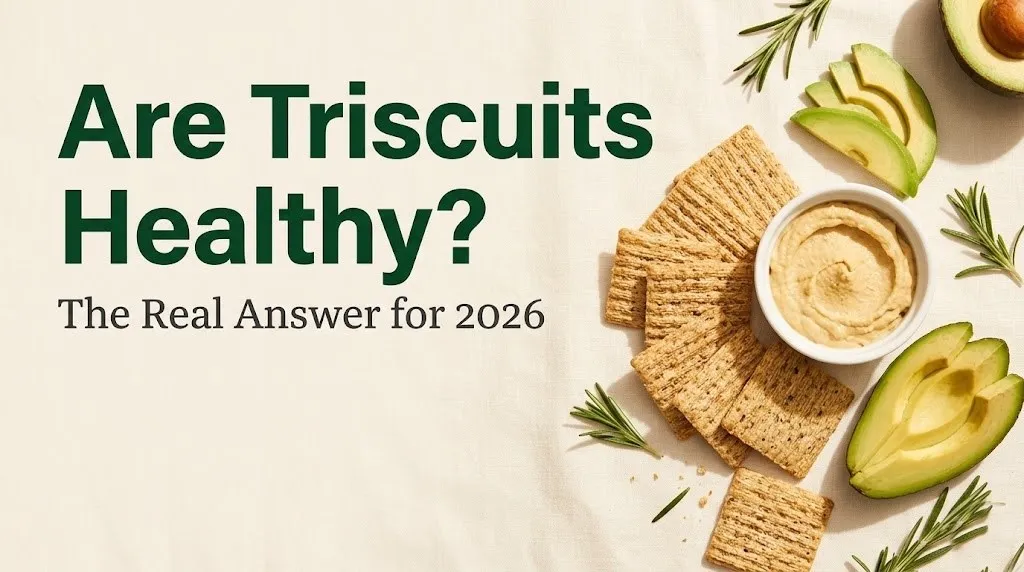
What sets Triscuits apart from most packaged crackers is their ingredient simplicity. The Original variety contains three ingredients: whole grain wheat, canola oil, and sea salt. That’s it. No refined flour, no artificial flavors, no preservatives in the food itself. For a shelf-stable snack that fits easily into a lunch bag or office desk, that’s a genuinely short list.
The main nutritional flags worth watching are sodium and carbohydrate load, especially if you’re managing blood pressure or blood sugar. Both are manageable with appropriate serving sizes and smart pairing, which later sections cover in detail.
Key fact: The 2025-2030 Dietary Guidelines for Americans specifically calls for reducing “highly processed, refined carbohydrates, such as crackers.” Triscuits are a direct exception to that concern because their grain is whole, not refined.
What Are Triscuits Made Of?
Triscuits are made from three core ingredients: whole grain wheat (Triticum aestivum), vegetable oil (canola or soybean), and sea salt. That minimal list has stayed consistent since Nabisco (now under Mondelez International) introduced the cracker in the early 1900s.
The whole grain wheat is the defining feature. Unlike refined white flour, whole grain wheat retains all three parts of the kernel: the bran (outer layer, rich in fiber and B vitamins), the germ (the nutrient-dense core), and the endosperm. According to Harvard T.H. Chan School of Public Health’s Nutrition Source, refining wheat strips away more than half of the B vitamins, 90 percent of the vitamin E, and virtually all of the fiber. Triscuits avoid that problem entirely.
The canola oil adds fat to the cracker for texture and palatability. It’s a polyunsaturated fat source, primarily linoleic acid (an omega-6 fatty acid), which is not harmful in the quantities found in a standard serving. Some versions use soybean oil instead, which has a similar fatty acid profile.
One packaging note: some Triscuit boxes list “BHT added to packaging material to preserve freshness.” BHT (butylated hydroxytoluene) is a synthetic antioxidant used in the packaging film, not added directly to the food. The FDA has approved it for this use. Some countries have restricted BHT out of caution, though current evidence does not establish harm at these trace exposure levels. If this concerns you, the Triscuit Organic line does not include BHT in its packaging.
Key facts about ingredients:
- Non-GMO Project Verified: Triscuits’ primary lines carry this certification.
- No added sugar: Zero, across all non-dessert flavors.
- No artificial preservatives: In the food itself.
- Flavored varieties add herbs, spices, cheese powder, or vinegar, which may introduce small amounts of additional sodium or dairy.
Triscuit Nutrition Facts Per Serving
One serving of Original Triscuits is 6 crackers (approximately 28 grams), containing 120 calories, 3g total fat, 20g carbohydrates, 3g dietary fiber, 0g added sugar, 3g protein, and approximately 160mg sodium.
Those numbers tell a coherent story. The calorie count is reasonable for a packaged snack. The fat is low, almost entirely unsaturated. The protein is modest but real. The fiber-to-carb ratio is strong for a cracker category that often delivers almost none.
Here’s the full macro breakdown alongside micronutrients per 6-cracker serving:
| Nutrient | Amount per Serving | % Daily Value |
|---|---|---|
| Calories | 120 | 6% |
| Total Fat | 3.5g | 4% |
| Saturated Fat | 0g | 0% |
| Trans Fat | 0g | 0% |
| Sodium | 160mg | 7% |
| Total Carbohydrates | 20g | 7% |
| Dietary Fiber | 3g | 11% |
| Added Sugars | 0g | 0% |
| Protein | 3g | 6% |
| Iron | 1.5mg | 8% |
| Potassium | 125mg | 3% |
The serving size reality is worth acknowledging plainly. Six crackers is a modest portion that most adults exceed. Twelve crackers doubles the sodium to 320mg and the calories to 240. That’s not alarming, but it’s worth knowing before you eat from the box while distracted.
People watching their sodium intake specifically should factor their Triscuit portions into their full daily sodium budget. The American Heart Association recommends no more than 2,300mg of sodium per day for most adults, and ideally under 1,500mg for those managing high blood pressure.
Key Takeaway: Triscuits’ three-ingredient whole-grain base and solid fiber-to-carb ratio make them one of the nutritionally cleaner options in the packaged cracker category, but portion awareness matters, especially for sodium.
How Much Fiber Do Triscuits Have?
Triscuits deliver 3 grams of dietary fiber per 6-cracker (28g) serving, which is 11 percent of the daily value for most adults. That’s roughly double what you’d find in most standard refined-grain crackers.
Fiber from whole wheat is primarily insoluble fiber, meaning it doesn’t dissolve in water but adds bulk to stool and speeds transit time through the digestive system. Think of insoluble fiber as a steady traffic manager for your digestive tract. It keeps things moving at a reasonable pace and reduces the stagnation that can lead to constipation and discomfort.
The fiber gap in the American diet is real. Research published in the journal Nutrients found that only about 5 to 7 percent of Americans meet the recommended daily fiber intake of 25 grams for women and 38 grams for men. Three grams from Triscuits won’t close that gap on its own, but it’s a consistent, low-effort contribution.
Fiber also affects satiety. Higher-fiber foods digest more slowly than low-fiber refined carbohydrates. Eating Triscuits as part of a snack rather than alone, paired with a fat source like nut butter or a protein like cottage cheese, extends that satiety effect further by slowing gastric emptying even more.
Quick Tip:
- Six crackers gives you 11% of your daily fiber. Pair with a protein or fat source to extend the fullness effect.
- If you want more fiber per snack, try Mary’s Gone Crackers Super Seed (5g per serving) or Wasa Crispbread Fiber (5g per serving) as comparisons.
- For people with irritable bowel syndrome (IBS) sensitive to fermentable fibers (FODMAPs), wheat-based insoluble fiber can aggravate symptoms. A registered dietitian familiar with the low-FODMAP protocol can help determine whether Triscuits are appropriate for your pattern.
Are Triscuits Heart Healthy?
Triscuits support cardiovascular health primarily through their whole-grain fiber content, which research links to reduced LDL (low-density lipoprotein) cholesterol levels and lower cardiovascular disease risk.
The mechanism is worth explaining precisely. Soluble fiber, found in smaller amounts in whole wheat, binds to bile acids in the small intestine. Your liver then draws cholesterol from the bloodstream to replace those bile acids. The net result over time is a lower LDL cholesterol level. Insoluble fiber, the dominant type in Triscuits, doesn’t have that direct effect on LDL, but whole-grain foods contain both types in combination.
The American Heart Association recommends choosing whole grain foods and limiting refined grain products as part of a heart-healthy dietary pattern. Triscuits’ zero saturated fat and zero trans fat profile aligns well with those guidelines. Many comparable crackers, including Ritz and many flavored varieties, contain partially hydrogenated oils or more saturated fat.
The sodium piece matters here too. At 160mg per serving for Original Triscuits, the sodium is moderate. The low-sodium “Hint of Salt” variety drops to 50mg per serving, making it a much better choice for people managing hypertension or recovering from a cardiac event. For heart-health-focused eating specifically, the Hint of Salt line is the smarter pick.
| Cracker | Saturated Fat | Sodium | Fiber | Added Sugar |
|---|---|---|---|---|
| Triscuit Original (6 crackers) | 0g | 160mg | 3g | 0g |
| Triscuit Hint of Salt (6 crackers) | 0g | 50mg | 3g | 0g |
| Ritz Original (5 crackers) | 0.5g | 105mg | 0g | 1g |
| Wheat Thins Original (16 crackers) | 0.5g | 200mg | 3g | 4g |
| Ritz Whole Wheat (5 crackers) | 0g | 130mg | 1g | 1g |
Triscuits and Blood Sugar: What You Need to Know
Triscuits have a moderate glycemic impact thanks to their whole-grain wheat base, but eating them alone, without fat or protein, still raises blood glucose faster than a combined snack would.
Whole grain wheat has a lower glycemic index than white flour because the fiber and protein in the bran and germ slow the rate at which glucose enters the bloodstream. Shredded wheat cereals, which share a similar composition and texture, clock in around 67 on the glycemic index. That places them in the medium-GI category, not low. No published study has measured Triscuits’ glycemic index directly, but the structural similarity to shredded wheat provides a useful reference point.
The practical implication is this: six crackers eaten alone is a different blood sugar event than six crackers with two tablespoons of hummus or almond butter. Pairing Triscuits with fat and protein slows gastric emptying. Your blood glucose rises more gradually, stays elevated longer at a lower peak, and returns to baseline without the sharp drop that can drive hunger an hour later.
For people without diabetes or metabolic concerns, this distinction is minor. For people managing pre-diabetes or type 2 diabetes, it’s worth building the pairing habit consistently.
According to the Academy of Nutrition and Dietetics, the total carbohydrate content of a meal or snack matters more than glycemic index alone for blood sugar management. At 20g of carbohydrates per serving, Triscuits fit within the typical 15 to 30g carbohydrate budget for a snack when working with a dietitian-designed meal plan.
Are Triscuits Good for Weight Management?
Triscuits can fit into a weight-management eating plan because of their fiber content, moderate calorie count, and zero added sugar, but portion control is the single most important factor.
One hundred and twenty calories for six crackers is modest. The fiber delivers meaningful satiety. And the absence of added sugar means you’re not triggering the kind of rapid insulin response that processed snack foods with sugar produce. A 2024 study published in the journal Nutrients found that higher whole-grain intake is associated with improved body composition and lower abdominal fat accumulation, attributed largely to better satiety and a lower overall insulin response compared to refined grain foods.
The real-world challenge with Triscuits is the same challenge with any cracker: it’s very easy to eat well past one serving. The cracker-and-box format encourages continuous snacking in a way a piece of fruit does not. Having a measured portion in a bowl before you start eating is the single most practical piece of advice here.
Triscuits also make a poor weight-management snack when stacked with high-calorie toppings: a thick spread of cream cheese, for example, can add 100 or more calories to a six-cracker serving. Pairing with lower-calorie but filling toppings, such as plain hummus, sliced cucumber, or cottage cheese, keeps the total snack calorie count in a reasonable range while adding protein that makes the hunger-control effect last longer.
Quick Tip:
- Count out your serving before you open the TV. Six crackers is smaller than most people assume.
- Pair with protein to extend fullness. Cottage cheese, plain Greek yogurt dip, or a hard-boiled egg on the side all work.
- Avoid the “healthy halo” trap. Because Triscuits are a whole-grain food, it’s easy to eat twice the intended portion and assume it’s fine.
Key Takeaway: Triscuits support weight management better than most packaged crackers, but pairing with protein and measuring portions before snacking are the two habits that actually make the difference.
Triscuits vs. Wheat Thins, Ritz, and Other Popular Crackers
Triscuits outperform Wheat Thins, Ritz, and most standard crackers on fiber content and added sugar, while sitting in the middle of the pack on sodium.
This comparison matters because people rarely eat crackers in isolation from their alternatives. If your default cracker is Wheat Thins or Ritz, understanding the nutritional distance between those options and Triscuits clarifies whether switching actually changes anything meaningful.
| Cracker | Serving | Calories | Fiber | Added Sugar | Sodium | Whole Grain? |
|---|---|---|---|---|---|---|
| Triscuit Original | 6 crackers (28g) | 120 | 3g | 0g | 160mg | Yes |
| Triscuit Hint of Salt | 6 crackers (28g) | 120 | 3g | 0g | 50mg | Yes |
| Wheat Thins Original | 16 crackers (29g) | 140 | 3g | 4g | 200mg | Yes |
| Ritz Original | 5 crackers (16g) | 80 | 0g | 1g | 105mg | No |
| Premium Saltines | 5 crackers (14g) | 60 | 0g | 0g | 170mg | No |
| Mary’s Gone Crackers Super Seed | 13 crackers (30g) | 140 | 5g | 0g | 160mg | Yes |
| Wasa Crispbread Fiber | 2 crackers (30g) | 100 | 5g | 0g | 140mg | Yes |
The takeaway from this comparison is clear. Wheat Thins carry 4 grams of added sugar per serving, which Triscuits avoid entirely. Ritz deliver zero fiber, no whole grain, and 80 calories for a portion that many people would not find filling. Saltines are similarly fiber-free.
If you’re comparing within the “better cracker” category, Wasa Crispbread and Mary’s Gone Crackers both outperform Triscuits on fiber. But Triscuits are significantly more widely available, more affordable, and more consistently stocked in mainstream grocery stores, which matters for real dietary habits.
Triscuit Flavors: Which Ones Are the Healthiest?
The Original, Hint of Salt, and Rosemary and Olive Oil flavors are the most nutritionally straightforward Triscuit options, with the lowest sodium and no significant added ingredients.
Most Triscuit flavors share the same whole-grain base. The differences come down to sodium content and any additional ingredients introduced by the flavor profile. Here’s a practical breakdown:
| Flavor | Sodium per Serving | Added Sugar | Notes |
|---|---|---|---|
| Original | 160mg | 0g | Standard choice |
| Hint of Salt | 50mg | 0g | Best for low-sodium needs |
| Rosemary & Olive Oil | 115mg | 0g | Lower sodium, no dairy |
| Balsamic Vinegar & Basil | 135mg | 1g | Only flavor with trace added sugar |
| Fire Roasted Tomato & Olive Oil | 140mg | 0g | Clean ingredient list |
| Dill | 140mg | 0g | Clean ingredient list |
| Cracked Pepper & Olive Oil | 130mg | 0g | Lower sodium |
| Gouda | 150mg | 0g | Contains milk; not dairy-free |
| Reduced Fat | 160mg | 0g | Slightly less fat, similar calorie count |
The Gouda flavor contains milk products, which rules it out for vegans and people with dairy allergies or lactose intolerance. All other standard Triscuit flavors are vegan-friendly.
Reduced Fat Triscuits cut about 1 gram of fat per serving. The calorie difference is minimal (around 110 versus 120 calories). Unless you have a specific reason to reduce fat intake, the Original or flavored varieties provide more eating satisfaction without a meaningful nutritional penalty.
Best Healthy Toppings to Pair with Triscuits
Pairing Triscuits with a protein or healthy fat source transforms them from a standalone starch snack into a balanced mini-meal that keeps you full longer and delivers broader nutritional value.
Think of Triscuits as a vehicle rather than a destination. Six crackers alone give you fiber and a bit of protein. Add a tablespoon of almond butter, and you’ve introduced healthy fat and protein that slows digestion and lengthens satiety. Add avocado, and you’ve added monounsaturated fat (oleic acid), potassium, and fiber on top of what the cracker already provides.
Here are pairings ranked by the nutritional benefit they add to a standard six-cracker serving:
- Plain hummus (2 tablespoons): Adds 3g protein, 2g fiber, plant-based iron, and 50 to 60 calories. A near-ideal pairing.
- Sliced avocado (1/4 avocado): Adds 3g fiber, potassium, monounsaturated fat, folate. About 60 calories.
- Cottage cheese (1/4 cup, low-fat): Adds 7g protein, calcium, and only 40 calories. Exceptional for post-workout snacking.
- Nut butter, almond or sunflower (1 tablespoon): Adds 3g protein, healthy fats, magnesium. About 95 calories. Watch the tablespoon.
- Sliced turkey breast (1 oz): Adds 7g lean protein for about 30 calories. Good for sodium-conscious eaters.
- Low-fat cream cheese with cucumber: Adds calcium, low-calorie hydration from cucumber. Satisfying textural contrast.
- Tuna salad (canned in water, plain, 2 tablespoons): Adds omega-3 fatty acids, 5g protein. Keep the mayonnaise minimal to manage calories.
Avoid pairing Triscuits with high-sodium processed meats like deli salami or pepperoni if you’re managing blood pressure. The sodium from Triscuits and cured meat together can stack quickly.
Key Takeaway: The topping you choose does as much for the nutritional outcome of eating Triscuits as the cracker itself. Protein and fat pairings are what make a whole-grain cracker snack genuinely filling.
Are Triscuits Good for People with Diabetes?
Triscuits can be part of a blood-sugar-conscious eating plan for people with type 2 diabetes, but they should almost always be paired with protein or fat, and portion size matters.
Twenty grams of carbohydrates per serving is a real number for blood sugar management. Most registered dietitians working with people managing type 2 diabetes recommend keeping snack carbohydrate totals between 15 and 30 grams, depending on the individual’s carbohydrate budget. Six Triscuits fit within that range, but not with room to spare.
The fiber in Triscuits helps. Dietary fiber does not raise blood glucose the way digestible carbohydrates do. The 3 grams of fiber per serving, subtracted from 20 grams of total carbs, leaves 17 grams of net carbohydrates. That’s a more useful number for people counting carbs under dietitian guidance.
Compared to Ritz crackers, Wheat Thins with added sugar, or saltines with zero fiber, Triscuits represent a genuinely better option for blood sugar control. But “better than other crackers” doesn’t mean unlimited. People with type 2 diabetes or pre-diabetes should monitor their individual response to Triscuits and work with a registered dietitian to incorporate them appropriately into their personalized carbohydrate targets. Individual glucose responses to the same food vary significantly, a well-documented phenomenon in metabolic research.
Note for people with celiac disease: Triscuits contain wheat gluten and are not safe for celiac disease, regardless of blood sugar considerations. Mary’s Gone Crackers Super Seed is a certified gluten-free, high-fiber alternative with 5g fiber per serving.
Who Should Be Cautious About Eating Triscuits?
Several specific groups should pay extra attention before making Triscuits a regular snack, not because Triscuits are problematic by nature, but because individual health conditions change the calculation.
Here’s the breakdown by group:
| Group | Concern | Recommendation |
|---|---|---|
| People with celiac disease | Triscuits contain wheat (gluten). Consumption causes intestinal damage. | Avoid all Triscuit products. Choose certified gluten-free crackers. |
| People with wheat allergy | Wheat is the primary allergen. Reactions can range from mild to severe. | Avoid entirely. Read labels on all flavored varieties too. |
| People with hypertension on strict sodium restriction | Original has 160mg per serving. Multiple servings add up quickly. | Choose Hint of Salt (50mg/serving) or track servings carefully. |
| People following ketogenic or very low-carb diets | 20g of carbs per serving is not compatible with strict keto targets. | Not suitable as a daily snack on keto. |
| People with IBS sensitive to wheat | Fructans in wheat can trigger IBS symptoms in sensitive individuals. | Discuss with a registered dietitian before including regularly. |
| People with dairy allergy or lactose intolerance | Gouda flavor contains milk. All other flavors are dairy-free. | Avoid Gouda flavor specifically. All other flavors are dairy-free. |
| Children under 2 | High sodium relative to their lower daily limits. Not a primary concern but worth noting for very young children. | Offer whole fruit or vegetables as snacks instead; check with your child’s pediatrician. |
People with diagnosed cardiovascular disease who are following a heart-healthy dietary protocol under medical supervision should verify sodium targets with their treating cardiologist or registered dietitian before deciding how many servings per day is appropriate for their specific situation.
Are Triscuits a Processed Food?
Triscuits are a minimally processed food, not an ultra-processed one, a distinction that matters significantly for health outcomes based on current food science research.
The NOVA food classification system, developed by researchers at the University of São Paulo and widely referenced in nutrition science, divides foods into four groups based on the degree of industrial processing. Ultra-processed foods (NOVA Group 4) include products made mostly from substances extracted from foods or from synthesized ingredients, like flavor agents, emulsifiers, artificial sweeteners, and hydrogenated oils.
Triscuits don’t qualify. Their ingredients are whole grain wheat, a plant oil, and salt, all of which are recognizable, minimally transformed food components. Under NOVA classification, they fall into Group 3 (processed foods) at most, the same category as canned tomatoes or artisanal cheese. The line matters because extensive research now links ultra-processed food consumption to increased risk of obesity, type 2 diabetes, cardiovascular disease, and all-cause mortality, while the evidence for minimally and moderately processed foods is far more nuanced.
That said, “not ultra-processed” is not the same as “eat freely.” Triscuits are still a packaged grain product. Their fiber, though meaningful, does not match what you’d get from a bowl of steel-cut oats, a slice of dense whole-grain bread, or a cup of cooked lentils. They’re a smart packaged snack, not a replacement for minimally processed whole foods at meals.
According to Harvard T.H. Chan School of Public Health, choosing whole grain foods and less-processed carbohydrate sources over refined grain products consistently improves health across several measures. Triscuits sit comfortably on the right side of that line.
Triscuits and the 2025 Dietary Guidelines
The 2025-2030 Dietary Guidelines for Americans explicitly calls for reducing highly processed, refined crackers but carves out a clear role for whole-grain foods like Triscuits within its fiber-rich grain recommendations.
This is the most important recent update for anyone asking whether Triscuits fit into a health-conscious 2026 diet. Released in January 2026, the updated guidelines took a notably harder stance on refined and processed carbohydrates than previous editions. They specifically named “crackers” alongside white bread and flour tortillas as foods Americans should “significantly reduce.”
Triscuits are not the target of that recommendation. The concern is for refined-grain crackers made with white flour, like Ritz, saltines, and most flavored snack crackers. Triscuits’ whole-grain wheat base puts them in a different category. The 2025 guidelines simultaneously recommend 2 to 4 servings of whole grains per day for adults on a 2,000-calorie diet, prioritizing “fiber-rich whole grains.”
Six Triscuit crackers count as one whole-grain serving equivalent. If you’re eating them alongside other whole-grain foods at meals, like whole-wheat bread, brown rice, or oatmeal, Triscuits contribute meaningfully to meeting that 2 to 4 serving daily target without displacing more nutrient-dense whole foods.
Quick Tip:
- Track your whole-grain servings across the full day, not just snacks. One serving of oatmeal at breakfast plus six Triscuits as a snack already puts most adults halfway to their daily whole-grain goal.
- The 2025 guidelines emphasize food quality, not just category. Even within whole grains, fiber-rich options are prioritized. Triscuits’ 3g fiber per serving earns them a place in that tier.
- Check your current cracker against the whole-grain ingredient rule: whole grain wheat must be the first ingredient for the product to qualify as a true whole-grain food. Triscuits pass this check clearly.
Key Takeaway: Under the 2025-2030 Dietary Guidelines, Triscuits are the kind of whole-grain, fiber-rich cracker the guidelines recommend, not the kind of refined, processed cracker they warn against.
Frequently Asked Questions About Triscuits
How many Triscuits is one serving?
One serving of Triscuits is 6 crackers, which equals approximately 28 grams.
That serving contains 120 calories, 3g fiber, 20g carbohydrates, and about 160mg of sodium.
Most people eat more than six in a sitting, so counting out a serving before you start is the simplest way to stay within the intended portion.
Are Triscuits healthier than Wheat Thins?
Triscuits are nutritionally stronger than Wheat Thins in several key areas: no added sugar (Wheat Thins have 4g per serving), lower sodium, and more protein per gram.
Both crackers are made from whole-grain wheat and deliver about 3g of fiber per serving.
For people watching added sugar or following a no-sugar-added dietary approach, Triscuits are the clear choice.
Can you eat Triscuits on a low-sodium diet?
Original Triscuits have 160mg of sodium per 6-cracker serving, which is moderate but adds up if you eat multiple servings.
The Triscuit Hint of Salt variety contains only 50mg of sodium per serving, making it a suitable option for many people following a low-sodium dietary pattern.
If your daily sodium target is under 1,500mg due to cardiovascular conditions, verify your total daily intake and consider whether Hint of Salt fits your specific targets.
Are Triscuits gluten-free?
Triscuits are not gluten-free. The primary ingredient is whole grain wheat (Triticum aestivum), which contains gluten.
Triscuits are not safe for people with celiac disease or non-celiac gluten sensitivity.
For a gluten-free, high-fiber cracker alternative, Mary’s Gone Crackers Super Seed is certified gluten-free and provides 5g of fiber per serving.
Are Triscuits vegan?
Most Triscuit flavors are vegan, containing only whole grain wheat, vegetable oil, and sea salt plus plant-based seasonings.
The exception is the Gouda flavor, which contains milk-based ingredients and is not vegan or dairy-free.
Always check the current label on the specific variety you purchase, as formulations can change.
Closing
Triscuits hold up well to honest scrutiny. A short ingredient list, a whole-grain base, no added sugar, and meaningful fiber content put them ahead of the large majority of packaged crackers. They’re a sensible default for anyone looking for a snack that doesn’t require reading a chemistry textbook.
The practical rules are simple. Watch your serving size, choose the Hint of Salt variety if sodium is a concern, and pair them with protein or fat to get real staying power from the snack. People with celiac disease, wheat allergy, or strict carbohydrate restrictions should plan around those specifics.
For 2026, they belong in the “worth keeping” column.