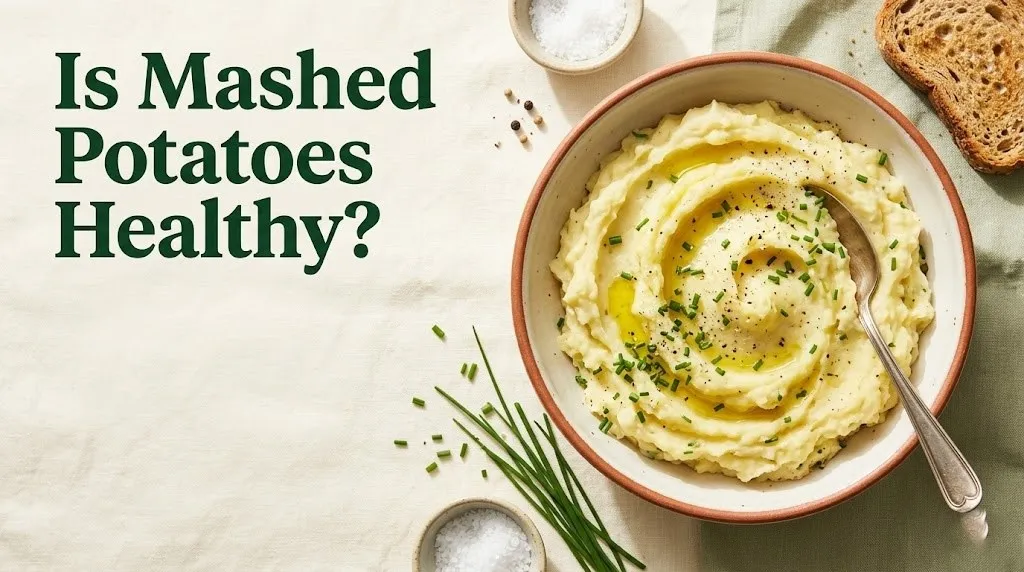
Mashed potatoes are genuinely healthy in their base form, but whether they stay that way depends entirely on what you add to them. A plain cup of mashed potatoes made from whole Solanum tuberosum (the common potato) delivers real nutrition: meaningful potassium, vitamin B6, vitamin C, and dietary fiber.
That said, the average restaurant or holiday serving bears almost no nutritional resemblance to a plain bowl. According to USDA FoodData Central, a one-cup serving of plain mashed potatoes contains roughly 214 calories and 35 grams of carbohydrates. Add two tablespoons of butter and a quarter cup of heavy cream, and you’re looking at closer to 340 calories with over 10 grams of saturated fat.
This article covers the full nutritional breakdown, the real health benefits, how preparation and add-ins transform the numbers, and who specifically should be paying attention to portion size and prep method.
Is Mashed Potatoes Healthy?
Mashed potatoes can absolutely be part of a healthy diet when made with minimal added fat and eaten in reasonable portions.
Plain potatoes are nutrient-dense whole foods. They’re not the nutritional villain they’re sometimes made out to be. The problem is rarely the potato. It’s the preparation.
A plain baked or boiled potato is actually listed as one of the most filling foods per calorie in satiety research. The issue arises when mashing is treated as a license to add unlimited butter, cream, and salt. That’s when a solid nutritional base becomes a high-fat, high-sodium side dish.
Here’s the honest answer: a well-made bowl of mashed potatoes, prepared with smart add-ins or a light hand with dairy, fits into most balanced eating patterns. The version smothered in gravy, loaded with cheese, and salted heavily does not belong in the “healthy” column as a daily staple.
Key factors that determine healthiness:
- Whether the skin is left on (adds fiber and nutrients)
- What fat and liquid are used (butter vs. olive oil vs. broth)
- Total serving size (one cup vs. a restaurant-sized pile)
- Sodium content from seasoning or instant mixes
- Frequency of eating and overall dietary context
Mashed Potato Nutrition Facts
One cup of plain mashed potatoes (approximately 210 grams, prepared with water and no added fat) contains the following, according to USDA FoodData Central:
| Nutrient | Amount per 1 Cup (Plain) | % Daily Value (approx.) |
|---|---|---|
| Calories | 214 kcal | 11% |
| Carbohydrates | 35g | 13% |
| Dietary Fiber | 2.4g | 9% |
| Protein | 4g | 8% |
| Total Fat | 0.5g | 1% |
| Potassium | 622mg | 18% |
| Vitamin C (Ascorbic Acid) | 13mg | 14% |
| Vitamin B6 (Pyridoxine) | 0.4mg | 24% |
| Magnesium | 38mg | 9% |
| Phosphorus | 120mg | 10% |
| Folate | 18mcg | 5% |
| Sodium (plain) | 25mg | 1% |
These numbers describe plain potatoes with no dairy, no fat added, no salt beyond what’s naturally present. Real-world mashed potatoes almost always have more calories, more sodium, and more fat.
Vitamin B6 deserves specific attention here. A single cup delivers roughly 24% of the daily recommended intake. B6 supports protein metabolism, red blood cell production, and neurological function.
People on low-potassium diets (those with certain kidney conditions) should take note of the 622mg potassium per serving. While potassium is beneficial for most people, those with impaired kidney function should discuss potato intake with their managing clinician specifically because potassium excretion can be compromised.
Calories in Mashed Potatoes
Plain mashed potatoes contain approximately 214 calories per cup, but that number climbs fast once real-world add-ins enter the picture.
This is where most people get surprised. Two tablespoons of butter add about 200 calories and 14 grams of saturated fat. A quarter cup of heavy cream adds roughly 200 calories and 13 grams of fat. The potato itself is not the caloric issue in a traditional mashed potato recipe.
| Version | Calories per Cup | Total Fat | Saturated Fat | Sodium |
|---|---|---|---|---|
| Plain (no add-ins) | 214 | 0.5g | 0g | 25mg |
| With 1 tbsp butter | 314 | 12g | 7g | 115mg |
| With butter + cream | 380 | 18g | 11g | 200mg |
| With butter + cream + cheese | 450+ | 24g+ | 14g+ | 400mg+ |
| Instant (prepared per box) | 150-230 | 2-5g | 1-3g | 350-600mg |
The caloric gap between a clean homemade bowl and a restaurant serving can be enormous. Cracker Barrel’s mashed potatoes contain approximately 280 calories per side-dish portion with notable added sodium, but restaurant portions are typically larger than a standard one-cup measure.
If calorie control matters to you, plain potatoes give you the most room to work with. Every tablespoon of butter or cream narrows that room considerably.
Are Mashed Potatoes High in Carbs?
Mashed potatoes are a high-carbohydrate food, with roughly 35 grams of carbohydrates per cup in their plain form.
That places them firmly in the high-carb category for anyone tracking macros or following a low-carbohydrate eating plan. For context, the USDA Dietary Guidelines for Americans 2020-2025 recommend that carbohydrates make up 45 to 65% of total daily calories. For someone eating 2,000 calories per day, that’s roughly 225 to 325 grams of carbs daily. One cup of mashed potatoes represents about 11 to 15% of that daily carb budget.
Think of carbohydrates like a fuel budget. Mashed potatoes are premium fuel, not junk fuel. But they do cost a meaningful portion of that budget in one sitting.
The carb content matters differently depending on your health goals. For someone following a ketogenic diet (generally under 20 to 50 grams of carbs per day), a single cup of mashed potatoes essentially fills their entire carb allowance. For an active person with no blood sugar concerns, the same cup is a moderate, filling side dish.
Fiber plays a moderating role here. The 2.4 grams of dietary fiber in a plain cup slows glucose absorption somewhat. Leaving the potato skin on (in mash made from skin-on varieties) can push that fiber content closer to 4 grams, which has a more meaningful effect on the glycemic response.
Key Takeaway: Plain mashed potatoes are nutritious and not inherently unhealthy, but the add-ins are where the real nutritional damage happens. Butter and cream can more than double the calorie count, and sodium can skyrocket in restaurant and instant versions.
Mashed Potato Health Benefits
Potatoes deliver several genuine, research-backed nutritional benefits that most people overlook when they categorize them as simple comfort food.
Potassium for blood pressure management is one of the strongest cases. According to the American Heart Association, adequate potassium intake helps counteract the blood pressure-raising effects of dietary sodium. A single cup of mashed potatoes provides about 622mg of potassium, which is roughly 18% of the daily recommended intake. Most Americans fall well short of the recommended 4,700mg per day, making potassium-rich foods like potatoes genuinely useful in the diet.
Vitamin B6 (pyridoxine) supports more functions than most people realize. It’s involved in over 100 enzymatic reactions, including protein metabolism, neurotransmitter synthesis (serotonin and dopamine production), and immune function, according to the National Institutes of Health.
Additional benefits from whole potato include:
- Vitamin C (ascorbic acid): Supports immune function and collagen synthesis. One cup provides about 14% of the daily recommended intake.
- Chlorogenic acid: An antioxidant compound found in potatoes, associated in laboratory studies with reduced oxidative stress.
- Dietary fiber: Supports regular digestion and contributes to satiety.
- Naturally gluten-free: Plain potatoes contain no gluten, making them safe for people with celiac disease or non-celiac gluten sensitivity, as long as add-ins are also gluten-free.
- Phosphorus and magnesium: Support bone health and energy metabolism.
People with kidney disease who require potassium restriction should discuss potato portion sizes with their nephrologist, since potassium content is meaningful per serving.
Resistant Starch in Potatoes
When you cool cooked potatoes, a portion of their digestible starch converts into resistant starch, a type of starch that behaves more like dietary fiber in the body.
This is one of the most underreported nutrition facts about potatoes. Research published in the American Journal of Clinical Nutrition has shown that resistant starch slows glucose absorption, promotes satiety, and acts as a prebiotic by feeding beneficial bacteria in the large intestine.
When mashed potatoes are served hot immediately after cooking, they have relatively low resistant starch content. But if you refrigerate them for 12 to 24 hours and then reheat gently, the resistant starch content increases meaningfully. Studies in the Journal of Nutrition have found that this cooling and reheating process can reduce the glycemic response to potatoes compared to eating them freshly cooked.
This doesn’t transform leftovers into a superfood. The effect is real but modest. It does mean that reheated mashed potatoes from yesterday may produce a slightly lower blood sugar spike than a freshly made batch.
Quick Tip:
- Cool mashed potatoes in the refrigerator for at least 12 hours before reheating to increase resistant starch content.
- Gentle reheating (stovetop with a splash of liquid, low heat) preserves more of the resistant starch than high-heat microwave blasting.
- This effect applies to leftover mashed potatoes, not just whole potatoes.
Mashed Potato Glycemic Index and Blood Sugar
Freshly made mashed potatoes have a high glycemic index (GI), generally measured between 70 and 85, which classifies them as a high-GI food.
Glycemic index measures how quickly a food raises blood glucose compared to pure glucose (GI of 100). A GI above 70 is considered high. However, GI alone doesn’t tell the whole story. Glycemic load (GL), which accounts for actual serving size, gives a more practical picture. According to researchers at the Harvard T.H. Chan School of Public Health, glycemic load is a better predictor of blood glucose response than GI alone.
A one-cup serving of mashed potatoes has a glycemic load of approximately 17 to 20, depending on preparation. That places it in the medium-to-high glycemic load range.
Several factors reduce the glycemic impact of mashed potatoes:
- Eating them with protein (chicken, fish, eggs) slows glucose absorption.
- Eating them with fat (even a small amount of olive oil) also moderates the response.
- Cooling and reheating increases resistant starch, as covered in the previous section.
- Leaving the skin on adds fiber, which tempers the glucose spike.
For people without blood sugar management concerns, a moderate serving of mashed potatoes alongside a protein and vegetable-rich meal poses no particular glycemic concern. For those managing insulin sensitivity or type 2 diabetes, preparation method and pairing become much more important, as covered in a later section.
Key Takeaway: The glycemic index of mashed potatoes is high, but glycemic load at a reasonable serving size is medium-to-high, and pairing with protein and fat, cooling and reheating, and leaving the skin on all bring that blood sugar response down meaningfully.
Mashed Potato Add-Ins and How They Change the Nutrition
The add-ins are where mashed potatoes go from nutritious to problematic, and the shift can happen surprisingly fast.
Plain potatoes are low in fat. Every traditional add-in introduces fat, sodium, or both in significant quantities. Here’s a realistic comparison of what common mashed potato additions cost you nutritionally:
| Add-In | Typical Amount | Added Calories | Added Fat | Added Saturated Fat | Added Sodium |
|---|---|---|---|---|---|
| Butter | 2 tbsp | 200 kcal | 23g | 14g | 160mg |
| Heavy cream | 1/4 cup | 200 kcal | 22g | 14g | 25mg |
| Whole milk | 1/4 cup | 37 kcal | 2g | 1g | 30mg |
| Sour cream | 2 tbsp | 60 kcal | 5g | 3g | 15mg |
| Cheddar cheese | 1 oz (28g) | 113 kcal | 9g | 6g | 174mg |
| Gravy (canned) | 1/4 cup | 30-60 kcal | 1-3g | 0.5g | 300-500mg |
| Salt | 1/4 tsp | 0 kcal | 0g | 0g | 580mg |
The American Heart Association recommends no more than 2,300mg of sodium per day for most adults, and ideally under 1,500mg for those managing blood pressure. A single serving of heavily seasoned, cream-and-butter mashed potatoes can put a meaningful dent in that budget before you’ve eaten anything else.
People managing lactose intolerance should be aware that butter, cream, milk, and sour cream all contain dairy. Lower-lactose substitutions include olive oil, plant-based milk, or unsweetened oat milk blended in with warm broth.
How to Make Mashed Potatoes Healthier
Making mashed potatoes healthier doesn’t require sacrificing their comforting texture. It requires smarter swaps and a lighter hand with the fatty add-ins.
The most impactful single change is replacing part or all of the butter with extra-virgin olive oil. Olive oil provides unsaturated fat rather than saturated fat, and research from the American Journal of Clinical Nutrition has consistently associated higher olive oil intake with better cardiovascular outcomes in the context of a Mediterranean-style dietary pattern.
Other effective strategies:
- Use warm low-sodium broth (chicken or vegetable) instead of cream. It adds richness without the saturated fat load.
- Swap sour cream for plain Greek yogurt. You get creaminess, a protein boost, and roughly half the fat per tablespoon.
- Leave the skin on. Yukon Gold and red potatoes mash beautifully with the skin intact. You preserve fiber and micronutrients that concentrate near the skin.
- Reduce salt; add flavor with roasted garlic, chives, or white pepper. Roasted garlic adds genuine depth with essentially no caloric cost.
- Control the portion. A three-quarter cup serving instead of a heaping cup reduces the calorie and carb load without eliminating the dish.
- Add cauliflower. Replacing 30 to 40% of the potato volume with steamed cauliflower cuts carbs and calories while maintaining a creamy texture most people won’t notice.
People following a vegan or dairy-free eating pattern can make excellent mashed potatoes with olive oil, unsweetened plant-based milk (oat or cashew work best for texture), and roasted garlic. The result is creamy, savory, and genuinely satisfying without any animal products.
Healthy Mashed Potato Recipe
This lighter mashed potato recipe delivers genuine creaminess without relying on butter and heavy cream.
Yield: 4 servings | Prep: 10 minutes | Cook: 20 minutes | Calories: approximately 155 to 175 per serving
Ingredients:
- 900g (2 lbs) Yukon Gold potatoes, scrubbed (skin on)
- 3 tablespoons extra-virgin olive oil
- 1/2 cup warm low-sodium vegetable or chicken broth (heated, not cold)
- 2 tablespoons plain Greek yogurt (full-fat or 2%)
- 2 cloves roasted garlic (or 1/2 teaspoon garlic powder)
- 1/4 teaspoon white pepper
- 1/4 teaspoon fine sea salt (adjust to taste)
- 2 tablespoons fresh chives, thinly sliced (for finishing)
Instructions:
- Cut potatoes into even 5cm (2-inch) chunks. Even size ensures they cook at the same rate.
- Place in a large pot and cover with cold water by at least 5cm (2 inches). Starting in cold water helps the potatoes cook through evenly.
- Bring to a boil over high heat, then reduce to a steady simmer. Cook for 15 to 18 minutes, until a fork slides through the largest piece with no resistance.
- Drain thoroughly and return the pot to low heat for 60 seconds, shaking gently. This evaporates residual surface moisture and prevents a watery mash.
- Remove from heat. Add olive oil, warm broth, roasted garlic, salt, and white pepper.
- Mash with a potato masher (not a hand mixer or food processor). Stop when smooth but still slightly textured. Over-mashing releases too much starch and creates a gluey, paste-like result.
- Fold in Greek yogurt gently with a rubber spatula. Taste and adjust seasoning.
- Serve immediately, topped with fresh chives. For increased resistant starch, cool completely, refrigerate overnight, and reheat gently on the stovetop with a splash of broth.
Critical note: Always add warm liquid, not cold. Cold milk or broth dropped into hot potatoes shocks the starch, contributing to a gummy texture.
Dairy-free version: Omit Greek yogurt. Substitute warmed unsweetened oat milk (1/4 cup) for additional creaminess.
Key Takeaway: Making mashed potatoes healthier is straightforward: olive oil over butter, warm broth over cream, skin on for fiber, and a potato masher instead of a food processor to avoid turning it into paste.
Are Instant Mashed Potatoes Healthy?
Instant mashed potatoes are significantly less nutritious than homemade, primarily due to their higher sodium content, added preservatives, and lower fiber and potassium levels from the dehydration and processing involved.
Brands like Idahoan and Betty Crocker (Bob Evans Mashed Potatoes refrigerated variety falls into a slightly different category as a fully prepared product) typically contain 350 to 600mg of sodium per prepared serving, compared to roughly 25mg in plain homemade mashed potatoes. That’s a meaningful difference for anyone watching sodium intake.
| Feature | Homemade (Plain) | Instant (Prepared per Box) |
|---|---|---|
| Calories per cup | 214 | 150-230 |
| Sodium per cup | 25mg | 350-600mg |
| Potassium per cup | 622mg | 200-350mg |
| Fiber per cup | 2.4g | 0.5-1.5g |
| Added fat (typical) | Depends on add-ins | Often includes dried dairy |
| Processing level | Whole food | Ultra-processed |
The dehydration and processing involved in making instant potatoes reduces vitamin C and potassium content compared to fresh potatoes. The USDA classifies instant mashed potato flakes as a processed food, and most fall into the ultra-processed category when you account for flavor additives, emulsifiers, and dried dairy ingredients.
This doesn’t mean instant mashed potatoes are forbidden. They’re convenient, shelf-stable, and better than not eating at all. But if you’re eating them regularly, the sodium accumulation and lower nutrient density are worth taking seriously. People managing blood pressure or on sodium-restricted diets should treat instant versions as an occasional convenience, not a dietary staple.
Are Restaurant Mashed Potatoes Healthy?
Restaurant mashed potatoes are almost universally higher in calories, fat, and sodium than homemade versions, and portion sizes at chain restaurants often exceed a standard one-cup measure.
KFC’s mashed potatoes (without gravy) contain approximately 120 calories per individual cup, but most people order them with gravy, which adds sodium and additional fat. Bob Evans restaurant mashed potatoes are made from a prepared product with higher sodium content than homemade. Cracker Barrel mashed potatoes have been listed at approximately 280 calories per serving with notable butter and cream content.
The challenge at restaurants is that you have no visibility into how much butter, cream, or salt was added during preparation. Restaurant kitchens routinely use two to four tablespoons of butter per serving to achieve the smooth, rich texture that gets people coming back.
A few strategies that actually help when eating mashed potatoes out:
- Ask if a half-portion is available.
- Choose a protein and vegetable-forward main to balance the carb load.
- Skip or limit the gravy, which adds sodium most people aren’t accounting for.
- Treat the mashed potatoes as part of the meal, not a standalone dish.
Menus, preparation methods, and nutritional data change by location and season. Readers should verify current nutritional information directly with the restaurant chain before making specific dietary decisions based on published figures.
Key Takeaway: Restaurant mashed potatoes are a dramatically different food from plain homemade mashed potatoes. Higher butter loads, cream, and sodium are standard in most kitchens, and portion sizes are typically larger than a measured one-cup serving.
Mashed Potato vs Sweet Potato Nutrition
Sweet potatoes and white potatoes are often compared, with sweet potatoes frequently cast as the automatic “healthier” option. The reality is more nuanced.
| Nutrient (per 1 cup, plain mashed) | White Potato | Sweet Potato |
|---|---|---|
| Calories | 214 | 249 |
| Carbohydrates | 35g | 58g |
| Dietary Fiber | 2.4g | 3.8g |
| Protein | 4g | 4g |
| Total Fat | 0.5g | 0.5g |
| Potassium | 622mg | 754mg |
| Vitamin C | 13mg | 39mg |
| Vitamin A (as beta-carotene) | Minimal | 2,585mcg |
| Vitamin B6 | 0.4mg | 0.57mg |
| Glycemic Index | 70-85 | 63-70 |
Sweet potatoes win clearly on vitamin A (as beta-carotene) and vitamin C content. Their fiber content is modestly higher, and their glycemic index is somewhat lower. The American Diabetes Association has noted that sweet potatoes tend to produce a slightly more moderate glucose response than white potatoes, though both are high-carbohydrate foods.
White potatoes are not nutritionally inferior across the board, however. They deliver more potassium per calorie and stronger vitamin B6 content relative to their caloric density. They’re also lower in total calories per cup.
The practical answer: both are nutritious whole food vegetables. Choosing one over the other is unlikely to make a meaningful difference to your overall health. Choosing either over ultra-processed, nutrient-poor side dishes is what actually matters.
Are Mashed Potatoes Good for Weight Loss?
Mashed potatoes can fit into a weight-loss eating plan, but the standard restaurant or holiday preparation style makes that difficult.
Plain potatoes are one of the highest-scoring foods on the Satiety Index, a measure developed by researchers at the University of Sydney to rate how filling different foods are per calorie. Boiled potatoes scored 323 on the index, making them the most filling food tested. Mashing changes the texture and alters satiety somewhat, but the underlying fiber and water content still contribute to fullness.
The weight-management challenge is caloric density once add-ins enter the picture. A plain cup of mashed potatoes at 214 calories is a reasonable, filling side dish. A loaded restaurant version at 400 to 500 calories is harder to fit into a calorie-conscious plan without adjustments elsewhere.
Practical weight management strategies with mashed potatoes:
- Prepare them plain or with broth and olive oil at home where you control every ingredient.
- Use a three-quarter cup measured serving rather than an eyeballed portion.
- Pair with a substantial protein source (baked fish, chicken breast, legumes) to slow digestion and extend satiety.
- Cool leftovers and reheat to increase resistant starch content, which modestly reduces caloric availability.
- Avoid eating mashed potatoes alongside other high-calorie, high-fat side dishes in the same meal.
People following a very low-calorie or medically supervised weight-loss program should discuss starchy vegetable intake with their supervising clinician, as individual calorie targets vary considerably.
Mashed Potatoes for Diabetics and Blood Sugar Management
People managing type 2 diabetes or insulin resistance can eat mashed potatoes, but preparation method, serving size, and meal composition all matter considerably.
The American Diabetes Association does not categorically exclude potatoes from a diabetes-friendly diet. They note that all carbohydrate-containing foods affect blood glucose, and the relevant factors are total carbohydrate intake, glycemic load, and the overall dietary pattern, not the presence of any single food.
Strategies that make mashed potatoes more compatible with blood sugar management:
- Reduce serving size to half a cup (roughly 17g of carbohydrates) rather than a full cup.
- Use cooling and reheating to increase resistant starch content, which produces a lower glucose response than freshly made mashed potatoes.
- Pair with protein and healthy fat at the same meal. Protein and fat both slow gastric emptying and reduce the rate of glucose absorption.
- Choose Yukon Gold or red potatoes over russets. Lower-starch varieties tend to have a modestly lower glycemic impact.
- Leave the skin on for additional fiber, which tempers the blood glucose rise.
- Avoid instant mashed potatoes, which have a higher glycemic index and higher sodium content without the resistant starch benefit of whole potatoes.
People using insulin or other glucose-lowering medications should track how mashed potatoes specifically affect their individual blood glucose response, as the glycemic impact varies significantly based on preparation, portion, and individual metabolism. Working with a registered dietitian who specializes in diabetes management provides the most tailored guidance for incorporating starchy foods without disrupting glucose control.
Key Takeaway: People managing blood sugar can include mashed potatoes in a thoughtful meal plan. Cooling and reheating, pairing with protein, keeping the skin on, and controlling portion size are the practical levers that matter most.
Frequently Asked Questions About Mashed Potatoes
Are mashed potatoes healthy for you?
Mashed potatoes made from whole potatoes with minimal added fat and sodium are a nutritious food.
They provide potassium, vitamin B6, vitamin C, and dietary fiber in a filling, affordable package.
The healthiness changes significantly once you add substantial amounts of butter, cream, cheese, or salt.
How many calories are in a cup of mashed potatoes?
A plain cup of mashed potatoes contains approximately 214 calories per cup, according to USDA FoodData Central.
That number rises to roughly 380 to 450 calories once typical butter and cream additions are included.
Restaurant versions can exceed 500 calories depending on portion size and preparation.
Are mashed potatoes high in carbs?
Yes, mashed potatoes are a high-carbohydrate food, with approximately 35 grams of carbohydrates per cup in their plain form.
This places them at the higher end of starchy vegetable carb content, comparable to white rice or pasta per serving.
People following low-carbohydrate or ketogenic eating plans will find this amount significant within their daily carb budget.
Can diabetics eat mashed potatoes?
The American Diabetes Association does not categorically exclude potatoes from a diabetes-friendly diet.
Portion control, cooling and reheating to increase resistant starch, pairing with protein, and choosing lower-starch potato varieties all reduce the glycemic impact.
Individual blood glucose responses vary; tracking personal response and working with a registered dietitian offers the most accurate guidance.
Are instant mashed potatoes as healthy as homemade?
No, instant mashed potatoes are nutritionally inferior to homemade on several measures.
They typically contain 350 to 600mg of sodium per serving compared to roughly 25mg in plain homemade mashed potatoes, and deliver less potassium and fiber due to processing.
They’re a convenient option, but regular use, particularly for people managing blood pressure, is worth reconsidering given the sodium load.
Closing
Mashed potatoes are not a food to feel guilty about. The base ingredient, a whole potato, is genuinely nutritious: potassium-rich, vitamin B6-dense, naturally gluten-free, and more filling per calorie than most people expect.
The preparation is what determines whether you end up with a smart side dish or an indulgent one. Use olive oil instead of a heavy butter load. Warm your liquid. Leave the skin on. Keep an eye on portion size.
Make them at home when it matters most, order them thoughtfully when eating out, and don’t let the restaurant version become your mental model for what mashed potatoes have to be.