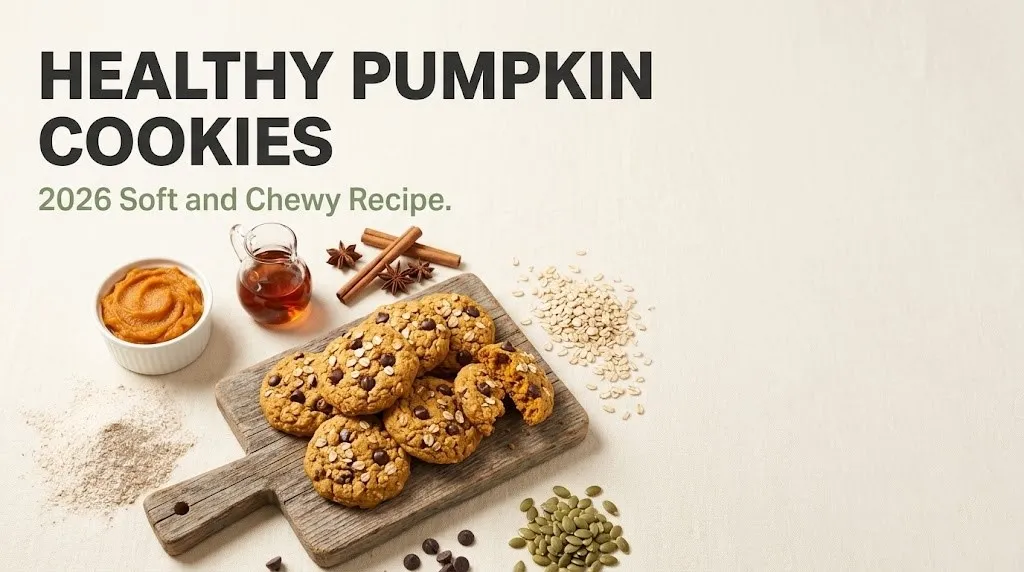
Healthy pumpkin cookies replace the refined white flour, butter, and cup of granulated sugar in traditional recipes with whole wheat flour and oats for fiber, pumpkin puree for moisture and vitamin A, and natural sweeteners like maple syrup used in modest amounts, producing a soft, chewy cookie at 90 to 105 calories with more fiber, more nutrients, and half the sugar of standard versions.
Pumpkin cookies are the baked good that announces fall has arrived. They smell like cinnamon and nutmeg. They come out of the oven soft and almost cake-like. The traditional version is a sugar cookie with pumpkin spice added. A cup of sugar. A stick of butter. White flour. The pumpkin is there for flavor, not for any meaningful nutritional contribution.
A healthy pumpkin cookie is a different proposition. The pumpkin does real work: providing moisture that replaces some of the butter, natural sweetness that reduces the need for added sugar, and fiber and vitamin A that make the cookie worth eating. This article gives you the master recipe, the nutritional science behind the swaps, and every variation you need to bake pumpkin cookies that earn their place in a healthy eating pattern.
What Makes Traditional Pumpkin Cookies Unhealthy
Traditional pumpkin cookies are unhealthy because they are built on refined white flour, a full stick of butter or cup of oil, and a cup of granulated sugar, making them a sugar-delivery vehicle with about 150 to 200 calories and 12 to 18 grams of sugar per cookie.
A classic pumpkin cookie recipe from a standard cookbook reads like a sugar cookie with pumpkin spice added. Two cups of all-purpose flour. One cup of granulated sugar. One half cup of butter. One egg. Half a cup of pumpkin puree. The pumpkin is the smallest major ingredient by volume. It provides flavor and a bit of moisture, but it is swimming in sugar and butter.
Here is the nutritional profile of a single traditional pumpkin cookie:
| Nutrient | Traditional Pumpkin Cookie (1) |
|---|---|
| Calories | 150-180 |
| Total Fat | 7-9g |
| Saturated Fat | 4-5g |
| Carbohydrates | 22-26g |
| Dietary Fiber | 0.5-1g |
| Total Sugars | 12-16g |
| Added Sugars | 10-14g |
| Protein | 2g |
| Vitamin A | 300-500 IU (6-10% DV) |
The American Heart Association recommends limiting added sugars to 25 grams per day for women and 36 grams for men. Three traditional pumpkin cookies can use an entire day’s added sugar allowance. The fiber is negligible. The vitamin A from the pumpkin is modest because there is so little pumpkin relative to the other ingredients.
The healthy version flips the ratios. More pumpkin. Whole grain flour. A fraction of the sugar. The result is a cookie that contributes fiber and vitamin A while satisfying the craving for a spiced autumn treat.
Key Takeaway: Traditional pumpkin cookies are sugar cookies with a small amount of pumpkin added for flavor. The healthy version makes pumpkin a primary ingredient and reduces the sugar and refined flour proportionally.
Key Ingredient Swaps for Healthy Pumpkin Cookies
The three ingredient swaps that make pumpkin cookies healthier are replacing all-purpose flour with whole wheat flour or oat flour, replacing most of the butter with additional pumpkin or applesauce, and replacing refined sugar with a smaller amount of maple syrup or coconut sugar.
Each swap addresses a different nutritional weakness.
Whole wheat flour or oat flour for all-purpose flour. White flour is stripped of bran and germ, removing fiber, B vitamins, and iron. White whole wheat flour provides the same fiber and nutrients with a milder flavor. Oat flour adds soluble fiber (beta-glucan) that supports heart health. Both increase the fiber content of the cookies from less than 1 gram to 2 to 3 grams per cookie.
Extra pumpkin or applesauce for butter. Pumpkin puree is mostly water with fiber and natural sugars. It provides moisture and tenderness without saturated fat. Replacing half the butter with an equal amount of pumpkin puree cuts the saturated fat by roughly 40 percent. Applesauce works similarly. The result is a softer, more cake-like cookie.
Maple syrup or coconut sugar for refined sugar. A quarter-cup of maple syrup contains approximately 50 grams of sugar and provides minerals including manganese and zinc. A cup of granulated sugar contains 200 grams of pure sucrose. Using one-quarter cup of maple syrup plus the natural sweetness of pumpkin reduces added sugar by 60 to 70 percent.
Here is a comparison of the ingredient swaps for a batch of 24 cookies:
| Traditional Ingredient | Healthy Swap | Nutritional Impact |
|---|---|---|
| 2 cups all-purpose flour | 1.5 cups whole wheat flour plus 1/2 cup oats | Plus 15-20g fiber per batch |
| 1/2 cup butter | 1/4 cup coconut oil plus 1/4 cup pumpkin puree | Minus 30g saturated fat |
| 1 cup granulated sugar | 1/4 cup maple syrup | Minus 150g added sugar |
| 1/2 cup pumpkin puree | 1 cup pumpkin puree | Double vitamin A per cookie |
Dietary Sensitivity Note: Whole wheat flour contains gluten. For gluten-free cookies, use certified gluten-free oat flour or a gluten-free flour blend. Coconut oil is dairy-free. Maple syrup is vegan.
Healthy Pumpkin Cookies Recipe
This healthy pumpkin cookies recipe uses whole wheat flour, oats, pumpkin puree, maple syrup, coconut oil, and pumpkin pie spices to produce 24 soft, chewy cookies at approximately 95 calories each, ready in under 30 minutes.
This is the master recipe. It makes cookies that are soft, moist, and fragrant with cinnamon, ginger, and nutmeg.
Ingredients:
- 1 cup pumpkin puree (not pumpkin pie filling)
- 1/4 cup melted coconut oil or olive oil
- 1/4 cup maple syrup
- 1 large egg, at room temperature
- 1 teaspoon vanilla extract
- 1 and 1/2 cups white whole wheat flour
- 1/2 cup rolled oats
- 1 teaspoon baking soda
- 1/2 teaspoon baking powder
- 1/4 teaspoon salt
- 2 teaspoons pumpkin pie spice (or 1 tsp cinnamon, 1/2 tsp ginger, 1/4 tsp nutmeg, 1/4 tsp cloves)
- 1/3 cup dark chocolate chips or chopped walnuts (optional)
Instructions:
- Preheat oven to 350 degrees Fahrenheit. Line two baking sheets with parchment paper.
- In a large bowl, whisk together the pumpkin puree, melted coconut oil, maple syrup, egg, and vanilla extract until smooth.
- In a separate bowl, whisk together the whole wheat flour, oats, baking soda, baking powder, salt, and pumpkin pie spice.
- Pour the dry ingredients into the wet ingredients. Stir with a spatula just until no dry flour is visible. The dough will be soft and slightly sticky. Do not overmix. Overmixing develops gluten and produces tough cookies.
- Fold in chocolate chips or walnuts if using.
- Drop the dough by level tablespoons onto the prepared baking sheets, spacing cookies about 2 inches apart. The cookies will spread slightly.
- Bake for 12 to 14 minutes, until the edges are set and the tops spring back when lightly touched.
- Let the cookies cool on the baking sheet for 5 minutes, then transfer to a wire rack to cool completely.
Nutrition per cookie (1 of 24, without add-ins): Approximately 90 calories, 2g protein, 3.5g fat, 1.5g saturated fat, 13g carbohydrates, 2g fiber, 4g sugar, 2g added sugar.
Quick Tip:
- The dough will be stickier than traditional cookie dough. This is normal. The pumpkin adds moisture. If the dough is too sticky to handle, chill it for 20 minutes before scooping.
Healthy Pumpkin Cookies Nutrition Facts and Comparison
One healthy pumpkin cookie contains approximately 90 to 105 calories, 2 to 3 grams of protein, 2 to 3 grams of fiber, and 2 to 4 grams of added sugar, compared to 150 to 180 calories, 2 grams of protein, less than 1 gram of fiber, and 10 to 14 grams of added sugar in a traditional pumpkin cookie.
Here is how the healthy version compares to traditional and store-bought pumpkin cookies:
| Nutrient (per cookie) | Traditional Homemade | Store-Bought (Pepperidge Farm) | Healthy Version |
|---|---|---|---|
| Calories | 160 | 140 | 95 |
| Protein | 2g | 1g | 2g |
| Total Fat | 8g | 6g | 3.5g |
| Saturated Fat | 5g | 2.5g | 1.5g |
| Carbohydrates | 24g | 20g | 13g |
| Dietary Fiber | 0.5g | 0g | 2g |
| Total Sugars | 14g | 10g | 4g |
| Added Sugars | 12g | 8g | 2g |
| Vitamin A | 400 IU (8% DV) | 200 IU (4% DV) | 1,200 IU (24% DV) |
The vitamin A content is the most dramatic difference. The healthy recipe uses a full cup of pumpkin puree, which provides approximately 1,900 percent of the daily value per cup as beta-carotene. Distributed across 24 cookies, each cookie delivers about 24 percent of the daily vitamin A recommendation. Vitamin A supports vision, immune function, and skin health.
The fiber content triples from less than 1 gram to 2 grams per cookie. Three healthy cookies provide 6 grams of fiber, about a quarter of the daily recommendation for women. The whole wheat flour and oats contribute insoluble and soluble fiber. The pumpkin adds additional fiber.
The added sugar drops from 10 to 14 grams per cookie to 2 to 4 grams. The American Heart Association’s limits of 25 grams for women and 36 grams for men become achievable even with a few cookies.
Key Takeaway: The healthy pumpkin cookie has roughly half the calories, triple the fiber, six times the vitamin A, and a fraction of the added sugar of a traditional version.
Nutritional Benefits of Pumpkin in Cookies
Pumpkin puree in cookies adds moisture, dietary fiber, potassium, and a significant amount of vitamin A as beta-carotene, with a single cup of pumpkin puree providing over 1,900 percent of the daily value for vitamin A, along with antioxidants that support immune function and eye health.
Pumpkin is not a superfood. It is a squash. But it is a squash with an exceptional nutrient profile, particularly for a baking ingredient.
The nutritional contribution of pumpkin to a batch of 24 healthy cookies:
| Nutrient | Per Cup Pumpkin | Per Cookie (1/24 batch) | % Daily Value per Cookie |
|---|---|---|---|
| Calories | 80 | 3 | — |
| Vitamin A | 38,000 IU | 1,600 IU | 32% |
| Dietary Fiber | 7g | 0.3g | — |
| Potassium | 500mg | 21mg | <1% |
| Vitamin C | 10mg | 0.4mg | <1% |
| Iron | 3mg | 0.1mg | <1% |
Beta-carotene is the orange pigment in pumpkin that the body converts to vitamin A. It is a fat-soluble vitamin, which means the small amount of oil or butter in cookies helps with absorption. Vitamin A is required for the formation of rhodopsin, the light-sensitive protein in the retina that enables night vision. The National Institutes of Health identifies vitamin A as also being necessary for immune function, cell growth, and reproduction.
Pumpkin also contributes moisture without fat. The water content of pumpkin puree is about 90 percent. This moisture replaces some of the butter or oil in traditional cookie recipes, reducing saturated fat while keeping the cookies soft. The water turns to steam during baking, creating the tender, cake-like crumb that makes pumpkin cookies distinctive.
The fiber in pumpkin is a mix of soluble and insoluble types. Soluble fiber dissolves in water and forms a gel that can modestly lower cholesterol. Insoluble fiber adds bulk to stool and supports regular digestion. The amount per cookie is small but contributes to the daily total.
Dietary Sensitivity Note: Canned pumpkin puree is a single-ingredient product: cooked, pureed pumpkin. Pumpkin pie filling contains added sugar, spices, and sometimes dairy. The two are not interchangeable. Verify the label says “100 percent pumpkin” or “pumpkin puree.”
Whole Wheat Flour vs White Flour in Pumpkin Cookies
Whole wheat flour makes pumpkin cookies healthier than white flour because it retains the bran and germ of the wheat kernel, providing fiber, B vitamins, iron, magnesium, and zinc that are removed during the refining of white flour.
The flour swap is the second most impactful change after reducing sugar. Whole wheat flour contains approximately 13 grams of fiber per cup compared to 3 grams in all-purpose flour. Across a batch of cookies, this adds 10 to 12 grams of fiber that is entirely absent from white flour versions.
Here is the nutritional comparison per cup:
| Nutrient (per cup) | All-Purpose Flour | White Whole Wheat Flour |
|---|---|---|
| Calories | 455 | 408 |
| Protein | 13g | 16g |
| Dietary Fiber | 3g | 13g |
| Iron | 0.5mg | 3.5mg |
| Magnesium | 22mg | 136mg |
| Vitamin B6 | 0.05mg | 0.4mg |
White whole wheat flour is the best choice for pumpkin cookies. It is milled from a lighter-colored wheat variety and has a milder flavor than traditional red whole wheat. The cookies will be slightly darker and have a subtle nuttiness, but they will not taste heavy or bitter.
Oat flour is an alternative for gluten-free baking. It has a naturally sweet flavor that complements pumpkin. Oat flour contains beta-glucan, a soluble fiber that the FDA recognizes as helping to lower cholesterol when consumed in adequate amounts. Oat flour absorbs more liquid than wheat flour, so recipes may need slight adjustments.
The USDA Dietary Guidelines recommend that at least half of grain intake come from whole grains. Using whole wheat flour in cookies is a practical way to work toward that goal, even in a dessert.
Quick Tip:
- If you are new to whole grain baking, start by replacing half the all-purpose flour with white whole wheat flour. Once you are comfortable with the flavor and texture, move to 100 percent whole wheat.
Best Natural Sweeteners for Healthy Pumpkin Cookies
The best natural sweeteners for healthy pumpkin cookies are maple syrup for flavor compatibility, coconut sugar for a granulated sugar substitute, and very ripe mashed banana or additional pumpkin for reducing added sweetener entirely.
The sweetener strategy in healthy pumpkin cookies is to use less sweetener overall and to choose sweeteners that contribute flavor or nutrients beyond pure sucrose.
| Sweetener | Calories per Tbsp | Sweetness vs Sugar | Best For |
|---|---|---|---|
| Maple syrup | 52 | Similar | Classic fall flavor, moisture |
| Honey | 64 | Slightly sweeter | Floral sweetness, moisture |
| Coconut sugar | 45 | Similar | Granulated, 1:1 substitute |
| Mashed banana | 25 | Less sweet | Replacing sweetener and fat |
| Additional pumpkin | 5 | Mild | Reducing added sugar |
| Stevia (liquid) | 0 | 200-300x sweeter | Zero-calorie, no sugar |
Maple syrup is the best all-around choice for pumpkin cookies. Its caramel and vanilla notes complement the pumpkin spices. It adds moisture, which works well in soft cookies. Grade A Dark Color or Grade B maple syrup has a stronger flavor that comes through in baked goods.
Coconut sugar is the best granulated substitute. It looks and measures like brown sugar and has a similar caramel flavor. It is slightly less sweet than granulated sugar. The glycemic index is approximately 35 to 54, lower than table sugar at 60 to 65, but it is still sugar and should be used in moderation.
Mashed ripe banana can replace some or all of the added sweetener and some of the fat. One medium mashed banana replaces approximately 1/4 cup of sugar and 2 tablespoons of oil. The banana flavor is mild and pairs well with pumpkin. The cookies will be slightly denser and more muffin-like.
The American Heart Association recommends limiting added sugars regardless of the source. Maple syrup, honey, and coconut sugar are still added sugars. They are better choices than refined white sugar because they contain trace minerals and have a lower glycemic impact, but they are not free foods.
Dietary Sensitivity Note: Maple syrup and coconut sugar are vegan. Honey is not vegan. Stevia is calorie-free and does not affect blood sugar, making it suitable for diabetic-friendly baking.
Healthy Fats for Pumpkin Cookies
The best fats for healthy pumpkin cookies are coconut oil for a neutral, plant-based option, olive oil for heart-healthy monounsaturated fat, and applesauce or additional pumpkin for replacing some or all of the added fat to reduce calories.
Fat makes cookies tender by coating flour proteins and preventing gluten development. The type and amount of fat determine the texture and nutritional profile.
| Fat (per 1/4 cup) | Calories | Saturated Fat | Best For |
|---|---|---|---|
| Butter | 400 | 28g | Traditional flavor |
| Coconut oil | 390 | 36g | Plant-based, neutral flavor |
| Olive oil | 480 | 8g | Heart-healthy, subtle flavor |
| Applesauce | 50 | 0g | Fat replacement, moisture |
| Pumpkin puree | 20 | 0g | Fat replacement, moisture, vitamin A |
| Greek yogurt | 35 | 1g | Protein, tang, moisture |
Coconut oil is the most common butter replacement in healthy baking. It is solid at room temperature, like butter, and creates a similar texture. The saturated fat content is higher than butter, but the fat is primarily medium-chain triglycerides (MCTs), which are metabolized differently than long-chain saturated fats. The coconut flavor is mild and disappears behind the pumpkin spices.
Olive oil is the heart-healthiest option. It is predominantly monounsaturated fat, which the American Heart Association identifies as beneficial for cardiovascular health when it replaces saturated fat. Use a mild or light olive oil. Extra-virgin olive oil has a strong flavor that may compete with the pumpkin spices.
Applesauce and additional pumpkin puree replace fat at a 1:1 ratio. The result is a lower-calorie, lower-fat cookie with a softer, more cake-like texture. Replacing all the fat with fruit puree produces cookies that are tender when fresh but dry out faster.
Dietary Sensitivity Note: Coconut oil is dairy-free and plant-based. Butter contains dairy. Olive oil is plant-based. Greek yogurt contains dairy. For vegan and dairy-free cookies, use coconut oil or olive oil.
Key Takeaway: Coconut oil is the most versatile healthy fat for pumpkin cookies. Olive oil is the heart-healthiest. Applesauce or extra pumpkin reduces calories but changes texture.
Healthy Pumpkin Oatmeal Cookies Recipe
Healthy pumpkin oatmeal cookies add rolled oats to the master recipe for chewier texture and additional soluble fiber, with raisins or dark chocolate chips for bursts of sweetness, at approximately 100 calories per cookie.
Oats and pumpkin are a natural pairing. The earthy sweetness of oats complements the pumpkin. The chew of the oats contrasts with the soft cake-like crumb.
Ingredients (makes 24 cookies):
- 1 cup pumpkin puree
- 1/4 cup melted coconut oil
- 1/4 cup maple syrup
- 1 large egg
- 1 teaspoon vanilla extract
- 1 cup white whole wheat flour
- 1 cup rolled oats (not instant)
- 1 teaspoon baking soda
- 1/2 teaspoon baking powder
- 1/4 teaspoon salt
- 2 teaspoons pumpkin pie spice
- 1/2 cup raisins or dark chocolate chips
Instructions:
- Preheat oven to 350 degrees Fahrenheit. Line baking sheets with parchment.
- Whisk pumpkin, coconut oil, maple syrup, egg, and vanilla.
- In a separate bowl, mix flour, oats, baking soda, baking powder, salt, and spice.
- Combine wet and dry ingredients. Stir until just mixed. Fold in raisins or chocolate chips.
- Drop by level tablespoons onto baking sheets. Flatten slightly with the back of a spoon. These cookies spread less than the master recipe because the oats absorb moisture.
- Bake for 12 to 14 minutes until edges are golden.
- Cool on the baking sheet for 5 minutes, then transfer to a wire rack.
Nutrition per cookie (with raisins): Approximately 100 calories, 2.5g protein, 3.5g fat, 16g carbohydrates, 2.5g fiber, 5g sugar.
Dietary Sensitivity Note: For gluten-free oatmeal cookies, use certified gluten-free oat flour and certified gluten-free rolled oats. Oats are naturally gluten-free but often cross-contaminated with wheat.
Gluten Free Healthy Pumpkin Cookies
Gluten free healthy pumpkin cookies use a blend of oat flour and almond flour instead of wheat flour, producing a tender, moist cookie with more protein and healthy fats than the wheat-based version.
Pumpkin cookies are forgiving for gluten-free adaptation. The pumpkin puree provides enough moisture and binding that the absence of gluten is less noticeable than in other baked goods.
Gluten free healthy pumpkin cookies recipe (makes 24):
Ingredients:
- 1 cup pumpkin puree
- 1/4 cup melted coconut oil
- 1/4 cup maple syrup
- 1 large egg (or flax egg for vegan)
- 1 teaspoon vanilla extract
- 1 and 1/2 cups certified gluten-free oat flour
- 1/2 cup almond flour
- 1 teaspoon baking soda
- 1/2 teaspoon baking powder
- 1/4 teaspoon salt
- 2 teaspoons pumpkin pie spice
- 1/3 cup dark chocolate chips (optional)
Instructions: Same as the master recipe. The dough will be slightly thicker due to the almond flour. Bake at 350 degrees Fahrenheit for 12 to 14 minutes.
Nutrition per cookie: Approximately 100 calories, 3g protein, 5g fat, 12g carbohydrates, 2g fiber.
The almond flour adds vitamin E, magnesium, and healthy monounsaturated fats. The oat flour adds soluble fiber. The protein content is slightly higher than the wheat version because almond flour is higher in protein than wheat flour.
Dietary Sensitivity Note: Oats must be certified gluten-free to avoid cross-contamination. Almond flour is tree nut-based and not suitable for nut allergies. For nut-free gluten-free, use all oat flour and add 1 extra tablespoon of pumpkin puree for moisture.
Vegan Healthy Pumpkin Cookies
Vegan healthy pumpkin cookies replace the egg with a flax egg, use coconut oil instead of butter, and are sweetened with maple syrup, producing a plant-based cookie that is just as soft and spiced as the original.
The egg in pumpkin cookies provides structure and moisture. A flax egg (ground flaxseed mixed with water) replicates both functions. The result is a cookie that is slightly denser but still tender.
Vegan healthy pumpkin cookies (makes 24):
Ingredients:
- 1 flax egg (1 tablespoon ground flaxseed plus 2.5 tablespoons water, set for 5 minutes)
- 1 cup pumpkin puree
- 1/4 cup melted coconut oil
- 1/4 cup maple syrup
- 1 teaspoon vanilla extract
- 1 and 1/2 cups white whole wheat flour (or gluten-free flour blend)
- 1/2 cup rolled oats
- 1 teaspoon baking soda
- 1/2 teaspoon baking powder
- 1/4 teaspoon salt
- 2 teaspoons pumpkin pie spice
Instructions: Prepare the flax egg and let it gel for 5 minutes. Proceed with the master recipe, using the flax egg in place of the chicken egg. Bake at 350 degrees Fahrenheit for 13 to 15 minutes, slightly longer than the egg version.
Nutrition per cookie: Approximately 85 calories, 2g protein, 3.5g fat, 13g carbohydrates, 2g fiber.
The flax egg adds omega-3 fatty acids and a small amount of fiber. The cookies are slightly darker in color from the flax and have a subtle nutty flavor.
Dietary Sensitivity Note: This recipe is vegan when made with maple syrup. Honey is not vegan. All other ingredients are plant-based. For gluten-free vegan cookies, use certified gluten-free oat flour and almond flour as in the gluten-free recipe.
Healthy Pumpkin Cookies With No Added Sugar
Healthy pumpkin cookies with no added sugar rely on the natural sweetness of pumpkin, very ripe mashed banana, and cinnamon and vanilla to enhance sweetness perception, producing a cookie with approximately 75 calories and zero grams of added sugar.
A no-added-sugar cookie is the nutritional ideal of this recipe category. All the sweetness comes from the pumpkin, banana, and spices.
Ingredients (makes 24):
- 1 cup pumpkin puree
- 1/2 cup mashed very ripe banana (about 1 large banana, heavily spotted)
- 3 tablespoons melted coconut oil
- 1 large egg
- 2 teaspoons vanilla extract
- 1 and 1/2 cups white whole wheat flour
- 1/2 cup rolled oats
- 1 teaspoon baking soda
- 1/2 teaspoon baking powder
- 1/4 teaspoon salt
- 2 teaspoons pumpkin pie spice (heavy on the cinnamon)
Instructions: The banana replaces all of the maple syrup. The mashed banana should be heavily spotted or nearly black for maximum natural sweetness. Follow the master recipe instructions. Bake at 350 degrees Fahrenheit for 12 to 14 minutes.
Nutrition per cookie: Approximately 75 calories, 2g protein, 3g fat, 12g carbohydrates, 2g fiber, 3g sugar, 0g added sugar.
The cookies are less sweet than the maple syrup version. They are closer to a lightly sweetened breakfast biscuit than a dessert cookie. The pumpkin and banana provide natural sweetness. The cinnamon enhances sweetness perception.
Dietary Sensitivity Note: These cookies contain natural sugars from pumpkin and banana but no added sugars. They are suitable for people avoiding added sugar. People with diabetes should count approximately 12 grams of carbohydrate per cookie.
Key Takeaway: Very ripe banana and extra pumpkin can replace all added sweetener in pumpkin cookies, producing a lightly sweet, spiced cookie with zero grams of added sugar.
High Protein Healthy Pumpkin Cookies
High protein healthy pumpkin cookies add a scoop of unflavored or vanilla protein powder or collagen peptides to the dry ingredients, boosting the protein content from 2 grams to 5 to 7 grams per cookie for a more satiating snack.
Standard pumpkin cookies are low in protein. Adding protein powder makes them more filling and suitable as a post-workout snack or more substantial breakfast cookie.
Ingredients (modify the master recipe):
- Reduce flour to 1 and 1/4 cups
- Add 1 scoop (25g) unflavored or vanilla protein powder or collagen peptides
- Add 1 to 2 tablespoons additional pumpkin puree to compensate for the moisture-absorbing protein powder
- All other ingredients remain the same
Nutrition per cookie (with whey protein): Approximately 100 calories, 6g protein, 3.5g fat, 13g carbohydrates, 2g fiber.
Protein powder options:
- Whey protein: Complete protein, blends invisibly, produces tender cookies
- Plant protein blend: Works well, may be slightly drier. Add extra pumpkin.
- Collagen peptides: Dissolves completely, adds protein but is not complete (lacks tryptophan)
Dietary Sensitivity Note: Whey protein contains dairy. Plant protein blends are dairy-free and vegan. Collagen peptides are bovine or marine-derived and not vegetarian or vegan.
How to Store and Freeze Healthy Pumpkin Cookies
Healthy pumpkin cookies stay fresh at room temperature for 3 to 4 days in an airtight container, in the refrigerator for up to 1 week, and in the freezer for up to 3 months when individually wrapped, making them an ideal make-ahead fall snack.
The high moisture content from the pumpkin keeps these cookies soft longer than traditional cookies. It also means they can mold faster if not stored properly.
Storage methods:
| Method | Duration | Best Practice |
|---|---|---|
| Room temperature | 3-4 days | Airtight container, layer with parchment |
| Refrigerator | 1 week | Airtight container, bring to room temp before eating |
| Freezer (baked cookies) | 3 months | Wrap individually, bag together |
| Freezer (raw dough) | 3 months | Scoop dough balls, freeze on sheet, then bag |
To freeze baked cookies: Cool completely. Wrap each cookie individually in plastic wrap. Place wrapped cookies in a freezer-safe zip-top bag. Thaw at room temperature for 30 minutes or microwave from frozen for 15 to 20 seconds.
To freeze dough for future baking: Scoop dough into level tablespoons onto a parchment-lined baking sheet. Freeze until solid, about 1 hour. Transfer frozen dough balls to a freezer bag. Bake from frozen, adding 2 to 3 minutes to the bake time. No need to thaw.
The softness of these cookies can be restored by microwaving a room-temperature cookie for 8 to 10 seconds. The heat re-moistens the crumb. This works for cookies that have been stored for a day or two.
Quick Tip:
- Place a small piece of bread in the storage container with the cookies. The bread releases moisture that keeps the cookies soft. Replace the bread every day.
Healthy Pumpkin Cookie Add-Ins and Variations
Healthy pumpkin cookie variations include dark chocolate chip, cranberry walnut, spiced chai, and orange zest versions, each adding flavor and texture without significantly changing the nutritional profile when added in moderation.
Add-ins make pumpkin cookies feel like a new recipe each time. Choose add-ins that add nutrition rather than just sugar.
Nutrition-positive add-ins:
- Dark chocolate chips (1/3 cup, 70 percent cacao): Antioxidants, satisfaction. 10 calories per cookie.
- Chopped walnuts or pecans (1/3 cup): Omega-3 fatty acids, magnesium, crunch. 15 calories per cookie.
- Dried cranberries (1/3 cup, reduced sugar): Fiber, vitamin C, tartness. 10 calories per cookie.
- Pumpkin seeds (1/4 cup): Magnesium, zinc, iron, crunch. 8 calories per cookie.
- Shredded unsweetened coconut (1/4 cup): Healthy fats, natural sweetness. 8 calories per cookie.
Flavor variations:
- Orange cranberry: Add zest of 1 orange to wet ingredients. Fold in dried cranberries.
- Spiced chai: Replace pumpkin pie spice with 1 teaspoon cardamom, 1/2 teaspoon cinnamon, 1/4 teaspoon ginger, 1/8 teaspoon black pepper.
- Maple pecan: Add 1 extra tablespoon maple syrup to wet ingredients. Fold in chopped pecans.
- Double pumpkin: Fold in 1/4 cup pumpkin seeds. Add 1/2 teaspoon extra pumpkin pie spice.
- Gingerbread pumpkin: Add 1 teaspoon ground ginger, 1/4 teaspoon cloves, and 1 tablespoon molasses.
Total add-ins should be no more than 3/4 cup per batch. More than that interferes with the cookie structure.
Dietary Sensitivity Note: Nuts and dairy-based chocolate are common allergens. Sunflower seeds replace nuts for nut-free crunch. Dairy-free dark chocolate chips are widely available.
Key Takeaway: Add-ins personalize pumpkin cookies without undoing their healthy profile. Dark chocolate, walnuts, cranberries, and pumpkin seeds add nutrition alongside flavor.
Frequently Asked Questions About Healthy Pumpkin Cookies
Are pumpkin cookies healthy for weight loss?
Healthy pumpkin cookies can fit into a weight loss plan as a 90 to 100 calorie snack that provides 2 grams of fiber for satiety.
Portion control matters. One or two cookies as a snack is reasonable. Six cookies as a meal replacement is not.
The fiber and moderate calories make these cookies more filling than traditional versions.
Can I use pumpkin pie filling instead of pumpkin puree?
No, pumpkin pie filling is not a substitute for pumpkin puree in healthy cookies.
Pumpkin pie filling contains added sugar, corn syrup, and spices that will make the cookies too sweet and alter the liquid-to-dry ratio.
Always use 100 percent pumpkin puree with the only ingredient being pumpkin.
How do I make pumpkin cookies gluten free?
Replace the whole wheat flour with 1 and 1/2 cups certified gluten-free oat flour plus 1/2 cup almond flour.
The almond flour adds moisture and protein. The oat flour provides structure.
All other ingredients in the recipe are naturally gluten-free. Verify that baking powder and spices are certified gluten-free.
How many calories are in a healthy pumpkin cookie?
One healthy pumpkin cookie made with the master recipe contains approximately 90 to 105 calories.
Cookies with chocolate chips or nuts add 10 to 15 calories per cookie.
The no-added-sugar version is approximately 75 calories per cookie.
Can healthy pumpkin cookies be frozen?
Yes, healthy pumpkin cookies freeze well for up to 3 months.
Wrap each cookie individually in plastic wrap and store in a freezer-safe bag.
Thaw at room temperature for 30 minutes or microwave from frozen for 15 to 20 seconds.
Pumpkin cookies are the baked good that makes fall feel official. The healthy version in this article is not a compromise. It is a genuinely good cookie that uses whole grains, real pumpkin, and a fraction of the sugar of traditional recipes. It is soft, chewy, spiced, and worth baking.
Make a batch on a Sunday afternoon. Freeze half the dough for later. Keep the baked cookies in an airtight container on the counter. Eat one with coffee in the morning or as an afternoon snack. That is a cookie that earns its place in a healthy eating pattern.
The pumpkin does the heavy lifting. The whole wheat flour adds fiber. The maple syrup is measured in tablespoons, not cups. The cookies taste like fall because of the spices, not because of the sugar. Bake them. Share them. They are the kind of healthy that does not need to announce itself.