The master formula for any healthy juicing recipe is 60 percent vegetables, 30 percent fruits, and 10 percent aromatics like ginger, turmeric, or fresh herbs. This ratio produces a juice that delivers micronutrients and phytochemicals without the blood sugar spike of an all-fruit juice.
The USDA Dietary Guidelines for Americans recommend that adults consume 2 to 3 cups of vegetables daily. A 16-ounce green juice made with kale, cucumber, celery, and a small apple can deliver the micronutrient equivalent of roughly 2 cups of vegetables in a single glass. The trade-off is the fiber. Juicing removes the insoluble fiber that slows sugar absorption.
We will walk you through the exact formula, three specific 2026 recipes, the juicing versus blending debate, the food safety rule that is missing from most recipe blogs, and the specific populations who should not drink raw juice.
Healthy Juicing Recipes
The master healthy juicing formula is a ratio, not a fixed recipe. Build every juice with 60 percent vegetables, 30 percent fruits, and 10 percent aromatics. The vegetables provide the micronutrient density. The fruits provide the palatability. The aromatics provide the functional health boost.
The vegetable base should be primarily green and watery: kale, spinach, cucumber, celery, romaine lettuce. These vegetables juice well, produce a high yield, and are low in sugar. The fruit component should be a single apple, a pear, or a handful of pineapple.
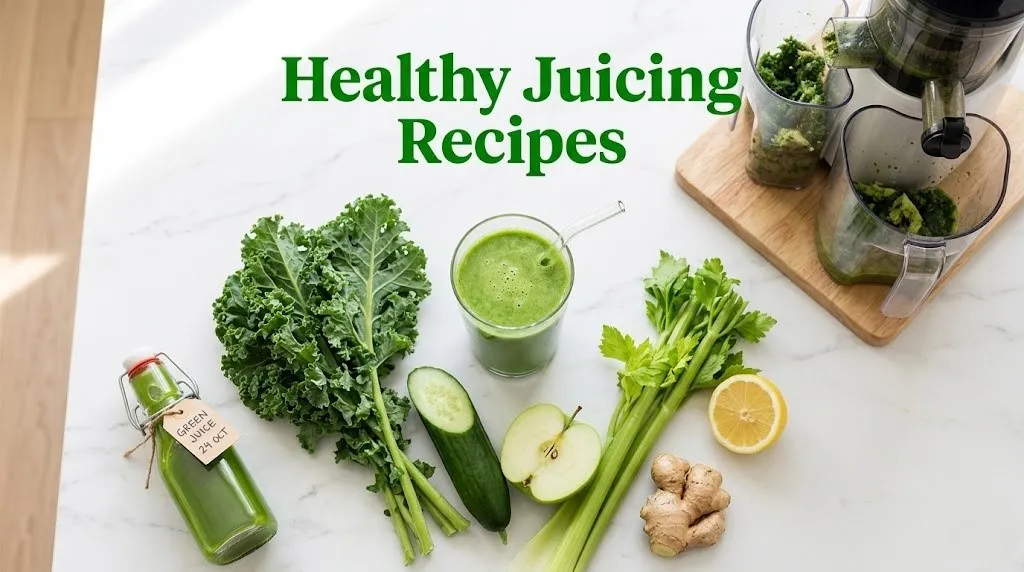
The aromatic component is where the health benefits concentrate. A 1-inch knob of ginger adds anti-inflammatory gingerol. A 1-inch knob of turmeric adds curcumin, which requires black pepper for absorption. A handful of fresh mint or basil adds phytonutrients and a refreshing finish.
Healthy Juicing Recipe
This is the master recipe that follows the 60/30/10 formula. It is balanced, palatable, and nutrient-dense.
To make the 2026 master healthy green juice:
- Wash all produce thoroughly under cold running water.
- Feed 4 leaves of kale, 1 cucumber, 3 celery stalks, and 1 green apple through the juicer.
- Add 1 inch of fresh ginger and 1/2 lemon, peeled if waxed.
- Stir the finished juice gently to combine.
- Pour over ice and drink immediately, or store in an airtight glass jar.
This juice provides roughly 140 calories, 3 grams of protein, 28 grams of carbohydrate, 2 grams of fiber, and significant amounts of vitamin C, vitamin K, and potassium. The flavor is green, bright, and slightly spicy from the ginger.
Healthy Juicer Recipe
A healthy juicer recipe is the same as a juicing recipe. The juicer is the tool. The term “juicer recipe” refers to the specific machine you are using.
Centrifugal juicers work best with hard produce like carrots, beets, and apples. Masticating or cold-press juicers handle leafy greens more efficiently and produce a higher yield from kale and spinach. The recipe does not change with the machine, but the order of ingredients might.
If you are using a centrifugal juicer, feed the soft ingredients first, like leafy greens, and the hard ingredients last, like apples and ginger. The hard ingredients push the soft pulp through the machine and improve the yield.
Healthy Juicer Recipes
The plural “juicer recipes” refers to the collection of recipes you build over time. The formula is the foundation. The variations are endless.
A carrot, orange, and turmeric juice follows the same 60/30/10 ratio with carrots as the vegetable, oranges as the fruit, and turmeric as the aromatic. A beet, apple, and ginger juice uses beets as the vegetable base.
The formula prevents the most common juicing mistake: making a fruit-heavy juice that is essentially a sugary drink with vitamins. A juice that is 80 percent fruit and 20 percent vegetables is a fruit punch. It tastes delicious. It is not a healthy daily habit.
Key Takeaway: The 60/30/10 formula, 60 percent vegetables, 30 percent fruit, 10 percent aromatics, is the single most important concept in healthy juicing; it keeps the sugar low and the nutrients high.
Healthy Juicing
Healthy juicing is the practice of extracting the liquid from fresh vegetables and fruits to create a concentrated source of vitamins, minerals, and phytonutrients. It is a supplement to a whole-food diet, not a replacement for eating vegetables.
The 2026 consensus from the Academy of Nutrition and Dietetics is that juicing can be part of a healthy diet when used to increase vegetable intake, not to replace meals or to “detox.” The liver and kidneys detox the body. Juice does not.
Healthy juicing prioritizes vegetables over fruits, drinks juice immediately or within 24 hours, and does not use juice as a meal replacement for more than one meal per day. A juice is a snack or a beverage accompaniment to a meal.
Healthy Green Juice Recipe
The healthiest green juice is low in sugar and high in dark leafy greens. The master recipe is kale, cucumber, celery, green apple, lemon, and ginger.
To modify the green juice for specific goals:
- Lower sugar: Replace the apple with an extra half-cucumber and a squeeze of lemon.
- Higher protein: This is not possible with juicing. The protein stays in the pulp. Eat a hard-boiled egg alongside the juice.
- Anti-inflammatory boost: Add a 1-inch knob of fresh turmeric and a pinch of black pepper.
The green juice is not a meal. It contains roughly 120 to 150 calories and minimal protein. It is a nutrient-dense beverage to accompany a meal or serve as a snack.
Juicing for Weight Loss
Juicing can support weight loss when it replaces a higher-calorie beverage or snack. A 16-ounce green juice is 140 calories of vegetables and a small amount of fruit. A 16-ounce latte with whole milk is 250 calories of milk and sugar.
Juicing is not a weight-loss meal replacement strategy in 2026. The research on juice cleanses and weight loss shows that any weight lost during a juice fast is primarily water and glycogen, regained within days of resuming normal eating. The 2026 dietetic consensus is against juice cleanses for sustainable weight loss.
A single green juice per day, used as a snack replacement, can contribute to a calorie deficit. A juice with a balanced meal of protein, fat, and fiber creates a filling, nutrient-dense plate.
Best Vegetables for Juicing
The best vegetables for juicing are those with high water content and a mild flavor. Cucumber, celery, and romaine lettuce are the hydration base. They produce a high volume of juice with a neutral flavor.
Kale, spinach, and chard are the nutrient powerhouses. They provide vitamin K, vitamin C, folate, and flavonoids. They have a stronger, more bitter flavor. The fruit and aromatics balance this bitterness.
Beets and carrots are the sweet vegetables. They add natural sweetness and a vibrant color. They are higher in sugar than green vegetables but still significantly lower than fruit. A beet adds roughly 9 grams of sugar per beet compared to an apple’s 19 grams.
| Vegetable | Flavor Profile | Key Nutrient | Juice Yield |
|---|---|---|---|
| Cucumber | Mild, refreshing | Hydration, vitamin K | Very High |
| Celery | Salty, green | Potassium, vitamin K | High |
| Kale | Bitter, earthy | Vitamin K, vitamin C, flavonoids | Medium |
| Spinach | Mild, green | Iron, vitamin K | Medium |
| Beetroot | Sweet, earthy | Folate, manganese, nitrates | Medium |
| Carrot | Sweet, mild | Beta-carotene | Medium |
Juicing vs Blending
Juicing removes the insoluble fiber. Blending retains it. A juice is a concentrated liquid of micronutrients. A smoothie is a whole food, fiber intact, blended into a drinkable form.
The fiber removal is the primary nutritional difference. A 16-ounce juice contains 2 grams of fiber. A 16-ounce smoothie with the same ingredients contains 8 to 10 grams of fiber. The fiber slows gastric emptying, reduces the glycemic response, and feeds gut bacteria.
The 2026 evidence favors blending over juicing for daily use. The fiber is too valuable to discard. Juicing is useful for individuals who struggle to consume enough vegetables or who need a rapidly absorbed micronutrient boost. Blending is the better daily habit.
Is Juicing Healthy
Juicing is healthy when it is used to increase vegetable intake in a diet that already contains whole vegetables, whole fruits, lean proteins, and whole grains. Juicing is not healthy when it replaces meals, is used as a detox, or consists primarily of fruit juice.
A green vegetable juice is a nutrient-dense beverage. A fruit juice made from 5 oranges and 2 apples is a sugary drink with vitamins. The sugar content, roughly 40 to 50 grams per 16-ounce glass, approaches that of a soda.
The 2026 nutrition community views juicing as a useful tool for specific populations: cancer patients with low appetite, individuals recovering from surgery, and those who genuinely struggle to eat vegetables. For the general healthy population, eating vegetables and occasionally juicing them is the recommendation.
Celery Juice Recipe Healthy
Celery juice is made from pure celery, juiced and consumed immediately, usually on an empty stomach. The 2026 scientific evidence for celery juice as a specific health tonic is limited.
A 16-ounce glass of straight celery juice contains roughly 80 calories, 4 grams of sugar, and significant amounts of potassium and vitamin K. It is a hydrating, low-calorie beverage.
To make celery juice palatable and more nutritious, add 1/2 a cucumber, 1/2 a lemon, and a small piece of ginger. This dilutes the intense salty flavor and adds vitamin C and gingerol.
Immune Boosting Juice Recipe
An immune-boosting juice is rich in vitamin C, zinc-supportive compounds, and anti-inflammatory phytonutrients.
To make the 2026 immune-boosting juice:
- Juice 2 carrots, 1 orange, 1/2 lemon, 1-inch knob of ginger, and 1-inch knob of turmeric.
- Add a pinch of black pepper to the finished juice to enhance the absorption of curcumin from the turmeric.
- Drink immediately.
This juice provides roughly 180 calories and significant amounts of vitamin A, vitamin C, and anti-inflammatory compounds. The black pepper is the detail that makes the turmeric bioavailable.
Healthy Juice Cleanse Recipe 2026
A 2026 healthy juice cleanse is a misnomer. The body cleanses itself through the liver and kidneys. A juice cleanse is a short-term caloric restriction protocol using vegetable juices.
If you choose to do a 1-day juice reset, the juices should be predominantly green vegetables with small amounts of fruit for palatability. The day might include three 16-ounce juices and plenty of water.
A 2026 healthy 1-day juice plan includes a green juice for breakfast, a carrot, beet, and ginger juice for lunch, and a cucumber, celery, and herb juice for dinner. This provides roughly 400 to 500 calories. It is a low-calorie day, not a detox.
How to Make Healthy Juice
To make healthy juice at home, follow this specific sequence. Wash all produce. Prepare the ingredients by cutting them to fit the juicer chute. Juice the soft ingredients first, then the hard ones.
To make any healthy juice:
- Wash all produce thoroughly. Scrub root vegetables. Rinse leafy greens.
- Cut produce to fit the juicer feed chute.
- Juice soft leafy greens first, followed by cucumber and celery, then hard items like apples, beets, and ginger.
- Stir the finished juice. Drink immediately or store in an airtight glass container in the refrigerator.
Drink the juice within 24 hours. The micronutrients oxidize and degrade over time. The flavor changes. A juice that tastes bright and fresh at 8 a.m. will taste flat and slightly metallic by the next morning.
Juicing Food Safety
Raw juice is a potentially hazardous food. The FDA warns that unpasteurized juice can harbor Salmonella, E. coli, and Listeria. These pathogens are present on the surface of raw produce and can be transferred into the juice during the extraction process.
The FDA recommends that pregnant women, children under 12, the elderly, and immunocompromised individuals avoid unpasteurized juice entirely. This includes homemade juice and juice from a juice bar.
For healthy adults, the 2026 food safety rule for raw juice is the 24-hour rule. Consume the juice within 24 hours of juicing. Store it at 41 degrees Fahrenheit or below in an airtight glass container. Discard any juice that has been at room temperature for more than 2 hours.
Key Takeaway: Raw juice is a potentially hazardous food. The 24-hour rule and the cold storage rule are non-negotiable. Pregnant women and immunocompromised individuals should not drink unpasteurized juice.
Frequently Asked Questions About Healthy Juicing
Is juicing actually healthy?
Juicing is healthy as a supplement to a whole-food diet, not a replacement.
It provides concentrated micronutrients but removes the fiber.
A green vegetable juice is nutrient-dense. An all-fruit juice is a sugary drink with vitamins.
What is the healthiest juice to drink?
A green juice made with kale, cucumber, celery, a small apple, lemon, and ginger is the healthiest.
It follows the 60/30/10 ratio: 60 percent vegetables, 30 percent fruit, 10 percent aromatics.
It is low in sugar and high in vitamin C, vitamin K, and potassium.
Can I juice every day?
A healthy adult can drink one green juice per day as part of a balanced diet.
The juice should be predominantly vegetables.
Daily juicing should not replace eating whole vegetables and fruits.
Is juicing good for weight loss?
A green juice can support weight loss as a low-calorie snack replacement.
Juice cleanses are not recommended for sustainable weight loss.
The weight lost during a juice fast is primarily water and is regained quickly.
How long does fresh juice last?
Fresh raw juice lasts 24 hours in the refrigerator at 41 degrees Fahrenheit or below.
After 24 hours, the micronutrients degrade and the risk of pathogen growth increases.
Store juice in an airtight glass container, not plastic.
The juicer on your counter is a tool for extracting micronutrients, not a magic weight-loss machine or a detox device. The 60/30/10 formula, mostly vegetables, some fruit, a punch of ginger or turmeric, is the difference between a healthy habit and a sugary drink.
Drink it within 24 hours. Store it cold. Do not give raw juice to someone who is pregnant or immunocompromised. The FDA safety rule is not a suggestion.
The green juice is a supplement to the vegetables on your plate, not a replacement. Eat the kale. Drink the kale. Both are good. The whole kale is better.