Prime Hydration is a zero-sugar functional beverage that provides electrolytes and vitamins, but calling it universally healthy to drink depends entirely on who is drinking it and why.
The short answer: Prime Hydration is not unhealthy in moderation for active adults, but it is not a daily water replacement, and it is not recommended by major health organizations as a routine drink for children.
Prime landed in the beverage market like a thunderclap. Launched by YouTubers Logan Paul and KSI in 2022, it generated scarcity-driven demand that sent resale prices soaring and made it one of the most talked-about drinks in recent memory. Three years later, the frenzy has cooled. The question now is whether the product behind the hype holds up to nutrition scrutiny or whether it is best left on the shelf.
This article breaks down exactly what is inside a bottle of Prime Hydration, what research says about its key ingredients, when it might be useful, who should definitely avoid it, and what you can drink instead. No marketing claims. No influencer allegiance. Just the nutritional facts and the practical guidance you need to decide whether this drink belongs in your refrigerator.
What Is Prime Drink
Prime Hydration is a functional beverage marketed as a sports hydration drink that contains electrolytes, B vitamins, branched-chain amino acids, and coconut water concentrate with zero added sugar.
It comes in a 16.9 fluid ounce (500 milliliter) plastic bottle and is sold in over a dozen flavors including Blue Raspberry, Ice Pop, Lemon Lime, and Meta Moon.
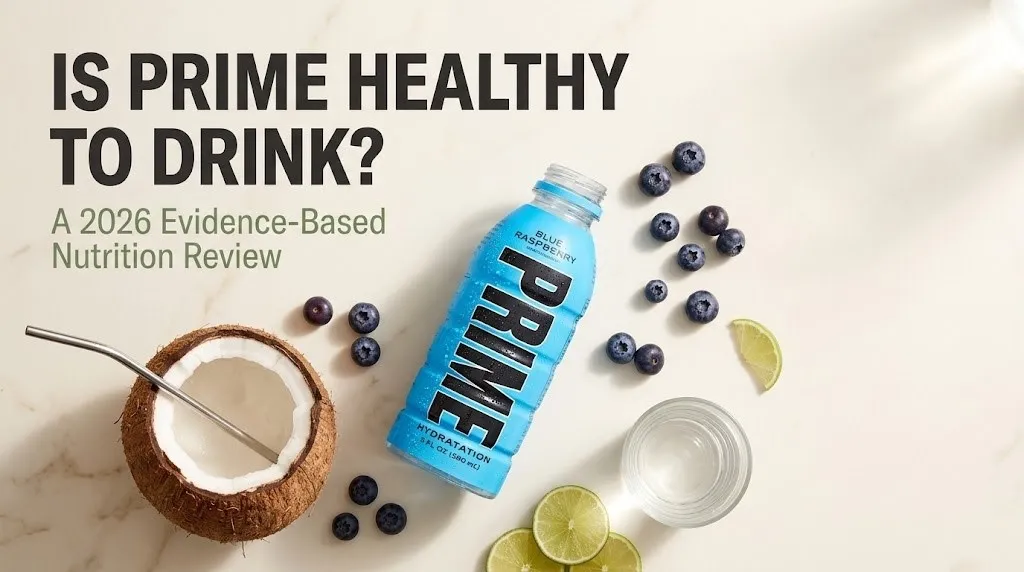
Prime is manufactured by Congo Brands and was co-founded by social media personalities Logan Paul and Olajide Olatunji, known as KSI. The brand also produces Prime Energy, a separate product line that contains 200 milligrams of caffeine per 12-ounce can. Confusing the two is common and potentially dangerous. Prime Hydration contains no caffeine at all. Prime Energy is a high-caffeine energy drink not intended for anyone under 18. Every reference in this article concerns only Prime Hydration, the caffeine-free sports-style drink in the bottle.
The product entered a sports drink market long dominated by Gatorade and Powerade but positioned itself differently. Instead of relying on sugar for palatability and quick energy, Prime uses artificial sweeteners and leans into the “functional beverage” category with added vitamins, minerals, and amino acids.
Key Takeaway: Prime Hydration is a zero-sugar sports-style drink with vitamins and electrolytes, but it is not a health food and it is fundamentally different from the caffeinated Prime Energy can.
Prime Drink Nutrition Facts
A standard 16.9-ounce bottle of Prime Hydration contains 20 to 25 calories, 4 to 5 grams of carbohydrates, 0 grams of sugar, and 0 grams of protein and fat, with a substantial vitamin and mineral profile.
The calorie count is negligible for most adults. What stands out is the micronutrient content. Here is the full nutrition breakdown for one bottle based on current label data:
| Nutrient | Amount per 16.9 oz bottle | % Daily Value |
|---|---|---|
| Calories | 20-25 | — |
| Total Fat | 0g | 0% |
| Sodium | 10mg | <1% |
| Total Carbohydrates | 4-5g | 1-2% |
| Sugars | 0g | — |
| Protein | 0g | 0% |
| Potassium | 700mg | 15% |
| Magnesium | 124mg | 30% |
| Vitamin A | 900mcg | 100% |
| Vitamin E | 15mg | 100% |
| Vitamin B6 | 1.7mg | 100% |
| Vitamin B12 | 2.4mcg | 100% |
| Zinc | 11mg | 100% |
The 100 percent daily value figures for multiple vitamins deserve scrutiny. Most people eating a reasonably balanced diet do not need supplemental vitamin A, E, B6, B12, or zinc at 100 percent DV from a beverage. The Academy of Nutrition and Dietetics notes that water-soluble B vitamins in excess are typically excreted in urine, which makes the high dosing mostly unnecessary for well-nourished individuals. Fat-soluble vitamins A and E can accumulate in body tissues over time, though a single bottle does not exceed safe upper limits.
One notable absence is sodium. At just 10 milligrams per bottle, Prime contains far less sodium than traditional sports drinks designed to replace sweat losses. For a drink positioned as a hydration product, this is a meaningful detail that affects how useful it is for actual rehydration after heavy sweating.
The carbohydrate content at 4 to 5 grams is also notably low. Traditional sports drinks contain 14 to 21 grams of carbohydrates per 16-ounce serving to support sustained exercise performance. Prime was not designed for that purpose.
Quick Tip:
- Check the label on your specific Prime flavor. Formulations shift slightly between flavors, and the potassium content can vary.
- If you are counting carbohydrates strictly, note the 4 to 5 grams come from the coconut water concentrate and are not added sugars.
Is Prime Healthy to Drink
Prime Hydration is healthy to drink in specific situations but is not a health-promoting beverage for daily casual consumption by most people.
The word “healthy” needs context. No single food or drink is healthy in isolation. A beverage is healthy relative to what it replaces, who is drinking it, and how often they consume it.
For an adult who just finished a 45-minute workout and wants something flavored with electrolytes and no sugar, a bottle of Prime is a reasonable choice. It provides potassium and magnesium, which support muscle function and fluid balance, without the 34 to 48 grams of sugar found in a standard Gatorade.
For a sedentary adult sitting at a desk, drinking Prime instead of water adds artificial sweeteners, unnecessary supplemental vitamins, and about 20 calories that provide no meaningful nutritional benefit. It is not unhealthy in a toxic sense. It is simply unnecessary.
The American Academy of Pediatrics takes a clear position on sports drinks: they are generally unnecessary for children and adolescents outside of prolonged, vigorous physical activity. Prime Hydration falls into a gray area because it lacks the sugar of traditional sports drinks, but it still contains artificial sweeteners and high-dose vitamins that pediatric organizations have not endorsed for routine consumption by kids.
Think of Prime Hydration like a specialty tool in your kitchen. A cherry pitter is brilliant when you are making a cherry pie. You do not need it to eat breakfast every morning. Prime is useful when you need targeted electrolyte replenishment with zero sugar. The rest of the time, water does the job better.
Key Takeaway: Prime is a situational hydration tool for active people who need electrolytes without sugar, not a daily wellness drink for everyone.
Prime Hydration Ingredients Breakdown
Prime Hydration contains filtered water, coconut water from concentrate, a vitamin and mineral blend, branched-chain amino acids, and artificial sweeteners, along with natural and artificial flavors and preservatives.
The full ingredient list typically reads: filtered water, coconut water from concentrate, citric acid, dipotassium phosphate, trimagnesium citrate, natural flavors, sucralose, acesulfame potassium, vitamin A palmitate, vitamin E acetate, pyridoxine hydrochloride (vitamin B6), cyanocobalamin (vitamin B12), zinc aspartate, L-leucine, L-isoleucine, L-valine, and preservatives.
Coconut water from concentrate is the marquee ingredient. Whole coconut water naturally contains potassium, magnesium, and small amounts of sodium and carbohydrates. When coconut water is concentrated and reconstituted, some heat-sensitive compounds diminish, but the mineral content largely remains. A 2022 study in the Journal of the International Society of Sports Nutrition found that coconut water was comparable to commercial sports drinks for rehydration after exercise, though whole coconut water contains natural sugars that Prime removes and replaces with artificial sweeteners.
The branched-chain amino acids (BCAAs), specifically leucine, isoleucine, and valine, appear in the ingredient list but the exact amounts per bottle are not disclosed. BCAAs are building blocks of protein that play roles in muscle protein synthesis and exercise recovery. The research on BCAA supplementation for people who already eat adequate protein is mixed. A 2017 meta-analysis in the journal Nutrients found that isolated BCAA supplementation does not meaningfully improve muscle recovery or performance in individuals with sufficient dietary protein intake.
The vitamin and mineral blend delivers 100 percent of the daily value for several micronutrients in a single bottle. While none of these levels exceed established tolerable upper intake levels for healthy adults, they are unnecessarily high for a beverage meant to be consumed recreationally. The National Institutes of Health Office of Dietary Supplements notes that most Americans already meet or exceed vitamin A, B6, B12, and zinc needs through diet alone.
Dietary Sensitivity Note: People following a vegan diet should note that while most Prime ingredients are plant-based, the vitamin D source in some formulations may derive from lanolin (sheep’s wool). Check the specific flavor label. Those with coconut allergies must avoid Prime entirely due to the coconut water concentrate.
Is Prime Drink Good for Everyday Consumption
Drinking Prime Hydration every day is not recommended for children and is unnecessary for most adults who eat a balanced diet and get adequate hydration from water.
The question of everyday consumption comes up frequently because Prime is marketed and flavored like a casual beverage, not a medicinal product. The bright packaging and kid-friendly flavors like Ice Pop and Tropical Punch make it easy to treat like a daily juice box or soft drink alternative.
The primary concern with daily consumption is not acute toxicity. It is the normalization of artificially sweetened, highly flavored beverages as daily hydration staples. Research published in the journal Appetite in 2023 found that regular consumption of intensely sweet beverages, even those with zero calories, may perpetuate a preference for sweet tastes that displaces plain water consumption over time. This is particularly relevant for children and adolescents whose taste preferences and hydration habits are still forming.
The secondary concern is the cumulative vitamin intake. One bottle of Prime delivers 100 percent of the daily value for vitamins A, E, B6, B12, and zinc. Drinking one bottle daily while also eating a standard diet and possibly taking a multivitamin pushes intake well above what any nutrition authority recommends. The National Institutes of Health sets tolerable upper intake levels for these nutrients, and while a single bottle alone does not exceed them, daily consumption on top of food and supplements becomes harder to track safely.
Here is what daily consumption means for different groups:
| Consumer Group | Daily Prime Consumption | Recommendation |
|---|---|---|
| Sedentary adults with balanced diet | One bottle daily | Unnecessary; no health benefit |
| Very active adults exercising 60+ min daily | One bottle post-workout | Reasonable situational use |
| Children and adolescents | One bottle daily | Not recommended by AAP guidelines |
| Pregnant or breastfeeding individuals | One bottle daily | Discuss with OB-GYN; unnecessary |
| Individuals with kidney conditions | Any amount | Avoid unless cleared by nephrologist |
The preservatives in Prime, including potassium sorbate and sodium benzoate, are generally recognized as safe by the FDA at regulated levels. However, daily consumption of multiple preserved beverages contributes to cumulative intake that has not been well-studied over decades.
Quick Tip:
- If you genuinely enjoy Prime and want it regularly, limit it to 3 or 4 bottles per week and treat it as a flavored electrolyte supplement rather than a primary hydration source.
- Track your total daily vitamin intake from all sources if you drink Prime daily to avoid exceeding upper limits on fat-soluble vitamins.
Prime Drink Artificial Sweeteners and Health
Prime Hydration uses sucralose and acesulfame potassium, two FDA-approved artificial sweeteners that make the drink sugar-free but introduce questions about long-term metabolic and gut health effects.
Sucralose, sold under the brand name Splenda, is approximately 600 times sweeter than table sugar. Acesulfame potassium, often called Ace-K, is about 200 times sweeter than sugar. Both are classified as generally recognized as safe (GRAS) by the FDA and have been approved for use in beverages for decades.
The benefit is clear. These sweeteners allow Prime to taste like a sweet fruit punch or citrus drink without adding sugar. A standard 20-ounce Gatorade contains 34 grams of added sugar. Prime contains zero. For someone managing blood sugar, reducing calorie intake, or avoiding the established health risks of added sugars, this is a genuine advantage.
The concern is less settled. Research on non-nutritive sweeteners has produced mixed and evolving findings. A 2022 study published in the journal Cell found that sucralose and saccharin altered the gut microbiome in some human participants and modestly impaired glycemic responses, though the effects varied significantly between individuals. A 2023 World Health Organization systematic review noted an association between long-term non-nutritive sweetener consumption and slightly increased risk of type 2 diabetes and cardiovascular disease in observational studies, while acknowledging that confounding factors make causation difficult to establish.
What does this mean for a person drinking Prime? The WHO’s 2023 conditional recommendation specifically stated that non-sugar sweeteners should not be used for weight control and that people should reduce dietary sweetness overall. This does not mean one bottle of Prime is dangerous. It means that relying on artificially sweetened drinks as a daily habit may not deliver the metabolic benefits people assume they are getting.
The sweetness intensity also matters for habit formation. Acesulfame potassium and sucralose together create a sweetness level that far exceeds natural fruit juice. This high sweetness threshold can make less-sweet whole foods like fresh fruit or plain yogurt taste less satisfying in comparison, particularly for children whose palates are still developing.
Dietary Sensitivity Note: Some individuals report headaches, bloating, or digestive discomfort after consuming sucralose or acesulfame potassium. These reactions are individual and not universal. If you notice gastrointestinal symptoms after drinking Prime, the artificial sweeteners are the most likely culprit.
Can Kids Drink Prime Hydration
Children can physically drink Prime Hydration without immediate harm, but major pediatric health organizations do not recommend sports drinks or artificially sweetened functional beverages for routine consumption by kids.
The American Academy of Pediatrics states clearly that water should be the primary beverage for children and that sports drinks are only appropriate during prolonged, vigorous physical activity lasting more than an hour. Prime is not a traditional sugary sports drink, but it still falls into the category the AAP is addressing. The vitamins, electrolytes, and sweeteners in Prime are designed for adult bodies and adult activity levels.
A child’s electrolyte needs are proportionally different from an adult’s. The 700 milligrams of potassium in one Prime bottle represents a much larger percentage of a child’s daily requirement. For a child aged 4 to 8, the adequate intake for potassium is 2,300 milligrams per day. One Prime bottle supplies 30 percent of that in a form the child’s kidneys must process. For a child who is also eating potassium-rich foods like bananas, potatoes, and milk, the cumulative intake becomes unnecessarily high.
The vitamin dosing is more concerning. One bottle delivers 100 percent of the adult daily value for vitamin A, vitamin E, B6, B12, and zinc. These values were calculated for adults and adolescents over age 14. The tolerable upper intake levels for children under 9 are substantially lower for several of these nutrients. Vitamin A at 900 micrograms is near the tolerable upper intake level of 900 micrograms for children aged 4 to 8 set by the National Institutes of Health. A child drinking a full bottle who also eats a standard diet with fortified foods approaches or exceeds safe limits.
The artificial sweetener question is different for children than adults. A 2021 American Academy of Pediatrics policy statement on food additives noted that children’s smaller body mass, developing organ systems, and higher relative exposure levels mean that additives considered safe for adults may warrant more caution for children. The AAP specifically highlighted that research gaps exist for long-term non-nutritive sweetener consumption in pediatric populations.
Here is what parents need to know:
- An occasional Prime as a treat after a long sports tournament is unlikely to cause harm.
- Daily Prime consumption by children is not supported by any pediatric nutrition guidelines.
- The flavored, sweet taste profile normalizes the expectation that hydration should taste sweet, which can undermine water consumption habits.
- Children with kidney conditions, diabetes, or seizure disorders should not consume Prime without explicit approval from their treating pediatrician.
- The Prime Energy can contains 200 milligrams of caffeine and should never be consumed by children or adolescents.
Key Takeaway: Prime Hydration is an adult product marketed in child-friendly packaging and flavors. The occasional bottle after intense sports is one thing. Stocking it in the lunchbox every day is not supported by pediatric nutrition evidence.
Is Prime Good for Working Out
Prime Hydration works reasonably well for light to moderate post-workout rehydration when sugar is not needed, but it lacks the sodium and carbohydrate content required for optimal recovery after intense or prolonged exercise.
The purpose of a workout drink depends on the workout. For a 30-minute jog, a yoga class, or a standard weightlifting session, your body mostly needs water. Prime provides water plus electrolytes and flavor, which is fine but not superior to water and a post-workout meal.
For high-intensity exercise lasting more than 60 minutes, especially in heat, your body loses significant sodium through sweat. The American College of Sports Medicine recommends that sports drinks for prolonged exercise contain 110 to 170 milligrams of sodium per 8 ounces. Prime contains 10 milligrams of sodium per 16.9 ounces. It is functionally sodium-free.
Here is how Prime compares to actual sports rehydration needs:
| Workout Type | Duration | Primary Needs | Does Prime Work? |
|---|---|---|---|
| Light (walking, yoga) | Under 45 min | Water | Unnecessary; water is fine |
| Moderate (jogging, lifting) | 45-60 min | Water, some electrolytes | Acceptable but not superior to water |
| Intense (running, HIIT) | 60-90 min | Water, sodium, carbs | Insufficient sodium; add salt or choose different drink |
| Endurance (marathon, triathlon) | 90+ min | Water, sodium, carbs, glucose | Not formulated for this use |
The BCAAs in Prime are another workout-related selling point. Leucine, isoleucine, and valine support muscle protein synthesis, but the research is clear that BCAA supplementation only matters when total protein intake is inadequate. A 2017 review in the Journal of the International Society of Sports Nutrition concluded that BCAAs do not provide a measurable performance or recovery benefit in individuals who consume sufficient dietary protein. If you eat eggs, chicken, fish, beans, dairy, or protein supplements, the BCAAs in Prime are redundant.
The potassium and magnesium in Prime do serve a purpose after exercise. Potassium supports muscle contraction and fluid balance. Magnesium plays a role in muscle relaxation and energy metabolism. However, a single banana contains 422 milligrams of potassium, and a handful of almonds provides 80 milligrams of magnesium. Whole food sources of these minerals come with fiber, antioxidants, and other beneficial compounds that a bottled drink cannot offer.
Quick Tip:
- If you are using Prime after a sweaty workout, add a pinch of salt (about 200 milligrams of sodium) to the bottle to improve its rehydration capability.
- Pair Prime with a post-workout meal containing protein and carbohydrates for actual recovery support.
Prime Hydration vs Gatorade and Sports Drinks
Prime Hydration and Gatorade serve fundamentally different purposes despite both being called sports drinks, and the healthier choice depends on what your body actually needs in the moment.
Gatorade was formulated in 1965 to replace fluid, sodium, and carbohydrates lost during intense athletic performance. Prime was formulated in 2022 to sell a lifestyle brand while providing vitamins, electrolytes, and a sugar-free sweet taste.
Here is a direct nutritional comparison:
| Nutrient (per 16.9 oz) | Prime Hydration | Gatorade Thirst Quencher | BodyArmor Sports Drink |
|---|---|---|---|
| Calories | 20-25 | 140 | 140 |
| Sugar | 0g | 34g | 28g |
| Sodium | 10mg | 270mg | 40mg |
| Potassium | 700mg | 75mg | 500mg |
| Magnesium | 124mg | 0mg | 0mg |
| B Vitamins | B6, B12 (100% DV each) | None added | B3, B5, B6 (various) |
| Antioxidant Vitamins | A, E (100% DV each) | None | None |
| Artificial Sweeteners | Sucralose, Ace-K | None | None |
| Carbohydrates | 4-5g | 36g | 28g |
Gatorade contains what sweat contains, sugar, sodium, and water in proportions that research shows optimize fluid absorption during prolonged exercise. The sugar in Gatorade is not just for taste. Glucose facilitates sodium and water uptake in the small intestine through the sodium-glucose cotransport mechanism. A 2020 review in the journal Nutrients confirmed that carbohydrate-electrolyte solutions enhance fluid absorption compared to water alone during prolonged endurance exercise.
Prime cannot match this because it lacks both sodium and glucose. It is not a weakness of the product. It is a design choice. Prime was never intended to compete with Gatorade on exercise physiology grounds.
For a parent watching their child play a Saturday morning soccer game, Gatorade’s sugar load is probably unnecessary and Prime’s zero-sugar profile looks appealing. But neither drink is needed. Water and orange slices handle a one-hour youth soccer game perfectly well. The American Academy of Pediatrics has been clear on this for years.
For an adult finishing a 90-minute run on a hot day, Gatorade’s sodium and sugar support recovery in a way Prime cannot. Prime would leave that runner under-replenished on sodium and in need of separate carbohydrate intake.
The smart choice is using each product for its actual purpose. Prime when you want flavored, sugar-free electrolyte water. Gatorade when you need real sports rehydration. Water the vast majority of the time.
Is Prime Better Than Water for Hydration
Water is superior to Prime Hydration for daily hydration needs, and Prime offers no meaningful hydration advantage over water for anyone who is not actively losing electrolytes through prolonged sweating.
This is the most important comparison in the entire article. Prime markets itself as a hydration drink. The name Prime Hydration implies that it hydrates you better than other options. The reality is that for a person going about their normal day, drinking water, eating food, water hydrates you completely and Prime adds nothing you need.
The human body has an exquisitely tuned system for maintaining fluid and electrolyte balance. The kidneys adjust urine concentration. Thirst triggers drinking behavior. Dietary intake provides sodium, potassium, and magnesium. For a healthy person with normal kidney function, plain water is the perfect hydration solution.
When does Prime offer an advantage over water? In two specific scenarios. First, if someone struggles to drink enough fluids because they dislike the taste of water, Prime’s flavor might encourage higher fluid intake. Staying hydrated matters more than the minor downsides of artificial sweeteners. Second, after heavy sweating during prolonged exercise or heat exposure, the electrolytes in Prime provide a modest replenishment benefit, though the sodium content is too low to make it a complete rehydration solution.
Studies consistently show that for hydration under normal conditions, water is equivalent or superior to all commercial beverages. A 2016 study in the American Journal of Clinical Nutrition established a beverage hydration index and found that still water and sparkling water both provided excellent hydration. Sports drinks did not outperform water in sustaining hydration over time.
Here is a practical hydration decision guide:
- Sitting at a desk: Water
- Running errands: Water
- Light workout under 45 minutes: Water
- Eating meals with normal sodium intake: Water
- You dislike water and chronically under-drink: Prime as a water alternative, with awareness of sweetener and vitamin content
- Heavy sweating for 60-plus minutes: Water plus food, or an actual sodium-containing sports drink
- Recovering from vomiting or diarrhea: Oral rehydration solution, not Prime
Quick Tip:
- If plain water bores you, add fresh lemon juice, cucumber slices, or a splash of 100% coconut water. You will get flavor and electrolytes without artificial sweeteners or synthetic vitamins.
Prime Drink Side Effects and Stomach Problems
Reported side effects of Prime Hydration include bloating, gas, stomach discomfort, and loose stools, most likely caused by the artificial sweeteners, the high magnesium and potassium load, or the combination of these ingredients consumed on an empty stomach.
Anecdotal reports of gastrointestinal distress after drinking Prime are common across social media, product reviews, and forums. The pattern is consistent enough that it warrants explanation. Several ingredients in Prime are known GI irritants in susceptible individuals.
Sucralose and acesulfame potassium are non-nutritive sweeteners that pass through the digestive tract largely unabsorbed. In the large intestine, they can draw water into the bowel through osmotic effects and interact with gut bacteria. A 2018 study in the journal Advances in Nutrition found that non-nutritive sweeteners can alter gut microbiota composition and may cause bloating and diarrhea in sensitive individuals, particularly at higher doses. Prime contains two such sweeteners combined.
Magnesium in certain forms acts as an osmotic laxative. The trimagnesium citrate in Prime is a magnesium salt of citric acid. Magnesium citrate is sold over the counter as a bowel preparation agent at high doses. The 124 milligrams in a Prime bottle is well below a laxative dose, but in someone who is sensitive, already consuming magnesium from other sources, or drinks Prime quickly on an empty stomach, it can trigger loose stools or cramping.
The potassium load of 700 milligrams is safe for healthy kidneys but can cause stomach upset in some people when consumed rapidly in liquid form. Potassium supplements are generally recommended to be taken with food for this reason.
Here is a breakdown of side effect likelihood by ingredient:
| Ingredient | Potential Side Effect | Risk Level |
|---|---|---|
| Sucralose | Bloating, gas, diarrhea | Moderate in sensitive individuals |
| Acesulfame K | Bloating, possible headache | Low to moderate |
| Trimagnesium citrate | Loose stools, cramping | Moderate if consumed on empty stomach |
| Potassium (700mg) | Stomach discomfort if chugged | Low to moderate |
| BCAAs | Generally well-tolerated | Very low |
| Citric acid | Acid reflux in prone individuals | Low |
The combination effect matters. Drinking a full bottle of cold Prime quickly on an empty stomach delivers artificial sweeteners, magnesium, potassium, and citric acid to the GI tract simultaneously. The result for some people is predictable distress.
To reduce the chance of stomach issues:
- Do not drink Prime on a completely empty stomach
- Sip it slowly rather than finishing a bottle in a few minutes
- If you are already taking magnesium supplements, skip Prime that day
- If you have irritable bowel syndrome (IBS) or are sensitive to FODMAPs or sugar alcohols, approach with caution
Who Should Avoid Prime Drink
Several groups should avoid or strictly limit Prime Hydration, including children, pregnant individuals, people with kidney conditions, and anyone sensitive to artificial sweeteners or coconut allergens.
The coconut water concentrate makes Prime unsuitable for anyone with a coconut allergy. While coconut is classified as a tree nut by the FDA for labeling purposes, true coconut allergies are rare. However, they do exist, and the reaction can be severe. The American College of Allergy, Asthma and Immunology recognizes coconut as a potential allergen. Anyone with a confirmed coconut allergy should not consume Prime.
People with chronic kidney disease or impaired kidney function must be careful with any high-potassium beverage. The 700 milligrams of potassium per bottle is a significant load that compromised kidneys may not clear effectively. Hyperkalemia, or elevated blood potassium, can cause dangerous cardiac arrhythmias. The National Kidney Foundation advises patients with kidney disease to monitor potassium intake and avoid potassium-fortified beverages unless cleared by their nephrologist.
Individuals with IBS or functional gastrointestinal disorders may react to the combination of artificial sweeteners, magnesium citrate, and citric acid. The FODMAP content of coconut water concentrate has not been formally tested, but coconut water can be high in sorbitol in some forms, which triggers symptoms in some people with IBS.
Pregnant individuals should approach Prime with the same caution applied to any highly supplemented beverage. The high vitamin A dose of 900 micrograms RAE deserves particular attention. While this amount is below the tolerable upper intake level of 3,000 micrograms for adults, pregnant women are advised to avoid excessive vitamin A intake due to teratogenic risk at very high doses. A single Prime bottle does not pose this risk, but daily consumption on top of prenatal vitamins and a varied diet creates unnecessary cumulative exposure.
Who should avoid Prime:
- People with confirmed coconut allergy
- Individuals with chronic kidney disease or reduced kidney function (due to potassium)
- Children under 12 (routine consumption not recommended by AAP)
- Pregnant individuals with any concern about cumulative vitamin A intake
- People with IBS or functional bowel disorders sensitive to artificial sweeteners
- Anyone with a history of adverse reactions to sucralose or acesulfame potassium
- Individuals taking potassium-sparing diuretics or ACE inhibitors without doctor clearance
- People with hypermagnesemia or on magnesium supplementation without doctor awareness
Key Takeaway: Prime is not a high-risk product for healthy adults in moderation, but the list of groups who should be cautious is long enough that it is not a universal beverage like water.
Is Prime Hydration Keto Friendly and Diabetic Safe
Prime Hydration is generally compatible with a ketogenic diet and does not cause an acute blood sugar spike, though the artificial sweeteners raise questions about long-term metabolic effects in people with diabetes.
At 4 to 5 grams of total carbohydrates and 0 grams of sugar per bottle, Prime fits easily within the standard ketogenic diet limit of 20 to 50 grams of net carbohydrates per day. The carbohydrate source is coconut water concentrate, not added sugar or starch. For someone counting carbs on keto, a bottle of Prime is negligible.
For people with diabetes, the immediate blood glucose impact is minimal. Sucralose and acesulfame potassium do not raise blood sugar because the body does not metabolize them as carbohydrates. The American Diabetes Association recognizes non-nutritive sweeteners as tools that can help reduce sugar and calorie intake when used appropriately.
The nuance is in the long-term picture. The 2023 WHO review linking long-term non-nutritive sweetener consumption to a modest increase in type 2 diabetes risk complicates the simple “zero sugar equals good for diabetes” narrative. The mechanism is not fully understood, but some researchers hypothesize that artificial sweeteners may alter gut microbiota, affect insulin sensitivity through cephalic phase responses, or lead to compensatory eating behaviors.
What this means practically is that an occasional Prime is not going to harm someone with well-managed diabetes. Using Prime as a daily multiple-bottle habit to avoid sugar is less clearly beneficial and may introduce risks that are not yet fully characterized.
The electrolyte profile has relevance for diabetes management. People with diabetes are at increased risk for electrolyte imbalances, particularly magnesium deficiency. The 124 milligrams of magnesium in Prime could modestly support magnesium status, though whole food sources like nuts, seeds, and leafy greens are more effective and come without artificial sweeteners.
Dietary Sensitivity Note: People with diabetes who also have kidney concerns, which is a common comorbidity, need to be doubly cautious about the potassium and magnesium content. The kidney safety concern overrides the sugar-free benefit in that population.
When to Drink Prime Hydration
The most appropriate time to drink Prime Hydration is after moderate to vigorous physical activity lasting 45 minutes or more, when you want electrolyte replenishment and flavored hydration without sugar or caffeine.
This is the situational sweet spot for Prime. Post-workout, your body has lost fluid and electrolytes through sweat. You do not want caffeine late in the day. You do not want sugar because you will eat a meal soon. You want something flavored and refreshing. Prime fits this specific scenario.
Morning is not an ideal time for Prime. There is no physiological reason to consume BCAAs, 100 percent DV of multiple vitamins, and artificial sweeteners first thing in the morning. Water, tea, or coffee is simpler and just as hydrating. If you take a multivitamin with breakfast, adding a bottle of Prime on top of it pushes vitamin intake unnecessarily high.
Before bed is another questionable time. The B vitamins in Prime, particularly B6 and B12, are involved in energy metabolism and neurotransmitter synthesis. While the evidence that B vitamins cause insomnia is limited, some people report feeling more alert after consuming highly fortified beverages close to bedtime. The magnesium in Prime may help with sleep onset, but you can get magnesium from a small handful of almonds without the sweeteners.
During a meal, Prime is simply unnecessary. Food naturally contains electrolytes. A balanced meal provides potassium, magnesium, sodium, and all the vitamins Prime delivers. The artificial sweeteners with a meal serve no nutritional purpose.
Here are the scenarios where Prime makes the most sense:
| Scenario | Is Prime Appropriate? |
|---|---|
| Post-workout (45+ minutes) | Yes, reasonable choice |
| Mid-afternoon work break | Water is better; Prime if you need flavor to hydrate |
| With breakfast | Unnecessary; conflicts with multivitamins |
| Before bed | Not ideal due to B vitamins and sweeteners |
| During prolonged outdoor activity in heat | Acceptable but lacking sodium; add salt |
| As a mixer for alcoholic drinks | Not recommended; sweeteners may accelerate absorption |
| Replacing soda or sugary juice | Yes, as a harm-reduction swap |
Quick Tip:
- Treat Prime like a post-exercise recovery supplement, not a casual beverage. Your kidneys, gut, and vitamin status will all benefit from this framing.
Prime Drink Alternatives and Healthier Swaps
The best alternatives to Prime Hydration depend on what you are using it for, but whole coconut water, homemade electrolyte water, and unsweetened flavored seltzer all provide hydration without artificial sweeteners or excessive vitamin fortification.
For the person who drinks Prime because they like the taste and want something flavored: unsweetened sparkling water with a splash of 100% juice provides natural flavor without sweeteners. Brands like Spindrift use real fruit juice for flavoring with only a few grams of sugar. Polar and LaCroix offer naturally flavored seltzers with no sweeteners at all. Herbal iced tea, like hibiscus or mint, steeped and chilled, delivers complex flavor without anything synthetic.
For the person who drinks Prime for post-workout recovery: whole coconut water is the most direct swap. Harvested from young green coconuts and minimally processed, it naturally contains potassium, magnesium, and a small amount of sodium and sugar. Eight ounces of plain coconut water contains approximately 45 calories, 10 grams of natural sugar, 400 milligrams of potassium, and 30 milligrams of sodium. It is a genuine whole food with a centuries-long history of safe consumption. No fortification. No sweeteners.
For the person who wants the absolute simplest, cheapest alternative: homemade electrolyte water costs pennies. Here is a basic recipe:
- Fill a 16-ounce water bottle with cold filtered water
- Add a pinch of salt (about 1/16 teaspoon or 200 milligrams of sodium)
- Squeeze the juice of a lemon or lime wedge into the water
- Optional: add 2 ounces of 100% coconut water for flavor and natural potassium
- Shake and drink
This gives you real electrolytes, no sweeteners, no excessive vitamins, and no plastic bottle waste.
Here is a comparison of Prime and its closest alternatives:
| Beverage (16 oz) | Calories | Sugar | Sodium | Potassium | Sweetener Type |
|---|---|---|---|---|---|
| Prime Hydration | 20-25 | 0g | 10mg | 700mg | Artificial |
| Whole coconut water | 90 | 20g | 60mg | 800mg | Natural sugar |
| Homemade electrolyte water | 5-10 | 0g | 200mg | 100mg | None or natural |
| Unsweetened seltzer | 0 | 0g | 0mg | 0mg | None |
| Gatorade Zero | 5-10 | 0g | 270mg | 75mg | Artificial |
| Water with lemon | 5 | 0g | Trace | Trace | None |
For parents who want a healthier option for kids who ask for Prime: water infused with fresh fruit (strawberries, orange slices, pineapple) in a fun bottle with a straw often satisfies the desire for something special without introducing artificial sweeteners or excessive vitamins. Letting kids help make the infused water increases buy-in.
Key Takeaway: The healthiest alternative to Prime depends on your goal. For taste, go with fruit-infused water or seltzer. For electrolytes, whole coconut water or homemade electrolyte water. For everyday hydration, nothing beats plain water.
Frequently Asked Questions About Prime Hydration
Does Prime Hydration have caffeine?
Prime Hydration contains zero caffeine. It is a caffeine-free beverage.
Prime Energy is a separate product in a can that contains 200 milligrams of caffeine per 12-ounce serving.
Confusing the two products is dangerous, especially for children and adolescents. Always check the label to confirm which Prime product you have.
How much sugar is in Prime drink?
Prime Hydration contains zero grams of added sugar and zero grams of total sugar per 16.9-ounce bottle.
The 4 to 5 grams of carbohydrates come from coconut water concentrate, not from added sugars.
The sweet taste comes from sucralose and acesulfame potassium, two FDA-approved artificial sweeteners.
Can drinking Prime cause stomach problems?
Yes, some people report bloating, gas, cramping, and loose stools after drinking Prime.
The artificial sweeteners sucralose and acesulfame potassium can draw water into the bowel and interact with gut bacteria in sensitive individuals.
The magnesium citrate and high potassium content may also contribute to gastrointestinal distress, especially when the drink is consumed quickly on an empty stomach.
Is Prime drink safe for children under 12?
The American Academy of Pediatrics does not recommend routine sports drink consumption by children, and Prime’s high vitamin dosing raises additional concern for young children.
One bottle delivers 100 percent of the adult daily value for vitamins A, E, B6, B12, and zinc, which can approach or exceed safe upper intake levels for children under 12 when combined with a standard diet.
An occasional bottle after prolonged, intense sports activity is unlikely to cause harm, but daily consumption is not supported by pediatric nutrition guidance.
Can I drink Prime Hydration while pregnant?
Pregnant individuals can drink Prime Hydration occasionally, but daily consumption is not recommended due to the high vitamin A content and lack of safety data for artificial sweeteners in pregnancy.
One bottle contains 900 micrograms of vitamin A. While this is below the tolerable upper intake level for adults, pregnant women are advised to avoid excessive vitamin A intake.
Discuss any regular consumption of highly fortified beverages with your OB-GYN, particularly if you are also taking prenatal vitamins.
Prime Hydration is not a health villain. It is also not a health hero. It is a carefully marketed, sweet-tasting bottled beverage that supplies electrolytes and vitamins to people who mostly do not need them from a bottle, while avoiding the sugar that makes traditional sports drinks problematic.
If you are an active adult who genuinely enjoys Prime after a workout a few times a week and you tolerate the sweeteners well, there is no strong reason to stop. If you are a parent whose child is asking for Prime because the packaging looks cool and their friends drink it, water remains the answer. If you are someone who drinks Prime every day believing you are doing something actively beneficial for your health, it is time to reevaluate.
The healthiest hydration strategy is boring. Drink water. Eat whole foods that contain potassium and magnesium, like bananas, potatoes, beans, nuts, and leafy greens. Use actual sports drinks only when you are doing actual sports that deplete sweat and glycogen. Save the flashy bottles for the moments when they actually fit.