
Cornbread can be a reasonable side dish when made with whole-grain cornmeal, minimal added sugar, and healthy fats, but most traditional and boxed versions lean closer to a refined-carb indulgence than a nutritious staple.
A warm slice of cornbread fresh from a cast iron skillet is one of the most honest pleasures in American cooking. It shows up next to chili, beside collard greens, under a ladle of beans, and crumbled into a glass of buttermilk. The question is whether this beloved quick bread, so tied to comfort and tradition, belongs in a health-conscious eating pattern or on the occasional treat list.
The answer depends almost entirely on how it is made. A slice from a boxed mix loaded with sugar and baked with a half-stick of butter tells a different nutritional story than a whole-grain skillet cornbread made with olive oil and no added sugar. The USDA Dietary Guidelines for Americans recommend that at least half of grain intake come from whole grains, and most cornbread misses that mark by a wide margin. This article breaks down exactly what is in your cornbread, what the research says about its ingredients, and how to make a version that earns its place on your plate.
What Is Cornbread
Cornbread is a quick bread made primarily from cornmeal, a liquid ingredient, a fat source, and chemical leavening agents, baked until golden and traditionally associated with Southern American and Native American cooking.
Cornbread has deep roots in North American food history. Indigenous peoples ground dried corn (Zea mays) into meal long before European colonization, using it to make flatbreads, porridges, and baked goods cooked over open fires. Enslaved African Americans refined and expanded cornbread traditions in the American South, creating the skillet-baked versions that define much of what we recognize today.
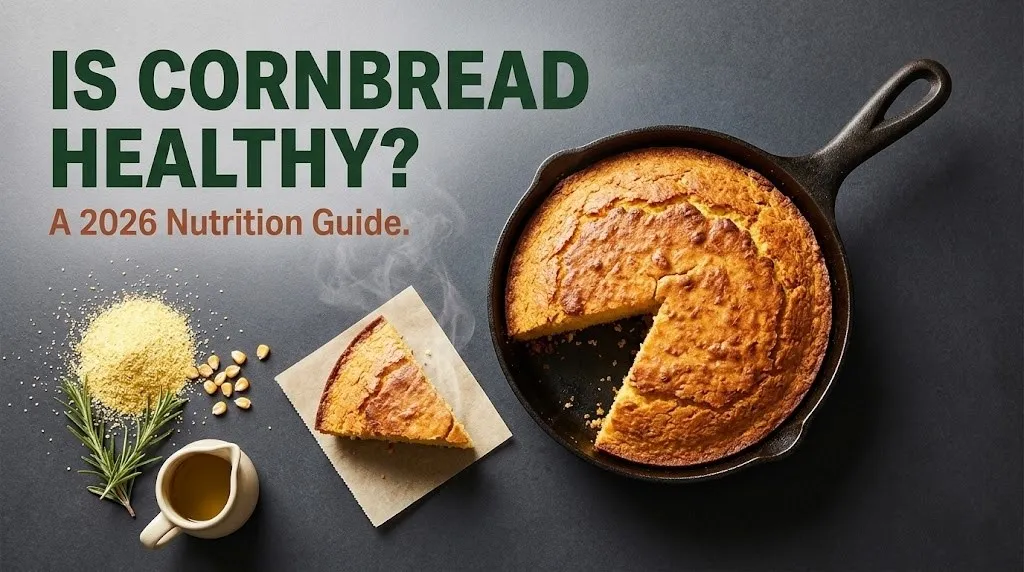
The defining ingredient is cornmeal, dried corn ground to a fine, medium, or coarse texture. Stone-ground cornmeal retains the germ and bran, making it a whole-grain product with more fiber, healthy fats, and nutrients. Most commercial cornmeal is degerminated, meaning the germ and bran are removed during milling. This extends shelf life but strips away fiber, healthy oils, and a significant portion of the B vitamins, iron, and carotenoids present in whole corn.
The other ingredients vary by region and tradition. Liquid typically comes from buttermilk, milk, or water. Fat sources range from butter and lard to vegetable oil and bacon drippings. Many recipes include wheat flour for structure, sugar for sweetness, eggs for binding, and baking powder or baking soda for lift. A true Southern cornbread often contains no sugar at all. Northern versions frequently add enough sugar that the result tastes closer to a quick cake than a savory bread.
Key Takeaway: Cornbread is a culturally significant quick bread whose nutritional value depends entirely on whether it starts with whole-grain or refined cornmeal and what fats and sugars are added.
Cornbread Nutrition Facts and Calories
A standard 60-gram slice of traditional cornbread made from a typical recipe with refined cornmeal, all-purpose flour, butter, buttermilk, sugar, and egg contains approximately 190 to 220 calories, 9 to 12 grams of fat, 25 to 30 grams of carbohydrates, and 3 to 4 grams of protein.
The numbers shift meaningfully based on the recipe. Here is the nutritional breakdown of three common types of cornbread per one-slice serving:
| Nutrient | Traditional Homemade (60g slice) | Jiffy Box Mix (45g piece) | Whole-Grain Skillet (60g slice) |
|---|---|---|---|
| Calories | 200 | 170 | 165 |
| Total Fat | 10g | 7g | 7g |
| Saturated Fat | 5g | 2g | 1g |
| Carbohydrates | 27g | 27g | 24g |
| Dietary Fiber | 1g | 1g | 3g |
| Sugars | 8g | 9g | 1g |
| Protein | 4g | 2g | 4g |
| Sodium | 350mg | 340mg | 240mg |
| Iron | 1.2mg (7% DV) | 0.9mg (5% DV) | 1.5mg (8% DV) |
| Calcium | 60mg (5% DV) | 40mg (3% DV) | 50mg (4% DV) |
The micronutrient profile of cornbread reflects its cornmeal base. Cornmeal naturally contains phosphorus, which supports bone mineralization and energy metabolism. A single slice provides roughly 150 to 200 milligrams of phosphorus, about 12 to 16 percent of the daily value. Selenium, a mineral that functions as an antioxidant cofactor, appears in measurable amounts. Yellow cornmeal also supplies lutein and zeaxanthin, carotenoid compounds concentrated in the macula of the human eye that research links to reduced risk of age-related macular degeneration. A 2022 study in the journal Nutrients confirmed that lutein and zeaxanthin from corn remain bioavailable after cooking.
The sodium content deserves attention. One slice of traditional cornbread can deliver 300 to 400 milligrams of sodium, about 13 to 17 percent of the American Heart Association’s recommended 2,300-milligram daily limit. Restaurant and box-mix versions frequently push sodium higher. Eating cornbread alongside other sodium-heavy foods like chili, barbecue, or collard greens cooked with ham hock multiplies the salt load of the entire meal.
Is Cornbread Healthy to Eat
Cornbread is healthy to eat in moderation when it is made with whole-grain cornmeal, contains minimal added sugar, uses an unsaturated fat source, and is served as part of a balanced plate with protein and vegetables.
The honest answer is that most cornbread eaten in the United States today does not meet that description. The typical cornbread, whether from a boxed mix, a restaurant basket, or a traditional family recipe, is made with degerminated cornmeal stripped of its fiber and germ, a significant amount of saturated fat from butter or lard, and enough added sugar to push it into the category of a grain-based dessert by some nutritional standards.
Degerminated cornmeal is a refined grain. The USDA Dietary Guidelines for Americans classify refined grains as those missing the bran and germ, which removes dietary fiber, iron, and many B vitamins. Americans already exceed recommendations for refined grain intake while falling short on whole grains. Swapping cornbread made with degerminated cornmeal for one made with whole-grain cornmeal is a meaningful nutritional upgrade.
The fat source matters enormously. A traditional Southern cornbread baked with bacon drippings or a quarter-cup of butter per skillet brings a significant load of saturated fat. The American Heart Association recommends limiting saturated fat to no more than 5 to 6 percent of total daily calories. For someone eating 2,000 calories per day, that is about 13 grams of saturated fat. Two slices of butter-heavy cornbread can use up half that budget before any other food is accounted for.
Here is who cornbread works for and who should be more careful:
| Good Candidate for Occasional Cornbread | Should Limit or Modify Cornbread |
|---|---|
| Active individuals with healthy body weight | People managing type 2 diabetes |
| Those who choose whole-grain, low-sugar versions | Individuals with elevated LDL cholesterol |
| People without wheat sensitivity (if recipe contains wheat) | Anyone with celiac disease (unless certified gluten-free) |
| Those pairing it with lean protein and vegetables | People with corn allergy (rare but real) |
Quick Tip:
- A slice of cornbread is not a vegetable serving, no matter how much corn is in the name. Treat it as a grain portion, keep it to one slice, and fill the rest of your plate with non-starchy vegetables and a lean protein.
Cornbread Ingredients and What They Do
Cornbread typically contains cornmeal, wheat flour, buttermilk or milk, eggs, a fat source, sugar, salt, and chemical leavening agents, and each ingredient shapes both the texture and the nutritional profile of the finished bread.
Cornmeal forms the backbone. Whole-grain cornmeal, sometimes labeled stone-ground, retains the bran and germ. It has a coarser texture and a shorter shelf life, but it provides fiber, healthy fats, and the carotenoids that give yellow corn its color. Degerminated cornmeal is shelf-stable and finer-textured but nutritionally diminished. Most standard grocery store cornmeal, unless explicitly labeled whole-grain or stone-ground, is degerminated.
Wheat flour appears in most cornbread recipes, usually all-purpose flour, to provide gluten structure that keeps the bread from crumbling. This is the ingredient that makes most cornbread unsafe for anyone with celiac disease or gluten sensitivity. Some recipes use only cornmeal, which produces a more crumbly, rustic texture. Those versions are naturally gluten-free if prepared without cross-contamination.
Buttermilk adds tang and tenderness. The acid in buttermilk reacts with baking soda to produce carbon dioxide, which helps the bread rise. Nutritionally, buttermilk contributes small amounts of protein and calcium along with a modest calorie load. Whole milk or plain yogurt can substitute.
The fat source varies more than any other ingredient. Butter, lard, bacon drippings, vegetable shortening, canola oil, olive oil, and coconut oil all appear in different recipes. Butter and lard bring saturated fat and flavor. Vegetable oils provide unsaturated fats with a more neutral taste. The choice of fat is the single biggest lever for changing cornbread’s health profile.
Sugar is the most debated ingredient in cornbread culture. Southern traditionalists often reject sugar entirely. Northern recipes can include a quarter-cup or more per batch. Sugar in cornbread functions as a flavoring and a tenderizer, not a structural necessity. It is entirely possible to make excellent cornbread without any added sugar at all.
Dietary Sensitivity Note: Most cornbread contains wheat flour, milk, and eggs, making it unsuitable for people with celiac disease, dairy allergy, or egg allergy without specific modifications. Cornbread made solely from cornmeal, water or plant milk, and oil can be free of all three allergens.
Key Takeaway: The health profile of any cornbread is predictable from its ingredient list. Whole-grain cornmeal, minimal sugar, and liquid oil make it a reasonable grain side. Refined cornmeal, high sugar, and saturated fat push it toward a dessert.
Is Cornbread Better Than White Bread
Cornbread made with whole-grain cornmeal is generally better than white bread made from refined wheat flour because it contains more fiber, more carotenoids, and a wider range of minerals, but cornbread made with degerminated cornmeal and significant added sugar is nutritionally comparable to or worse than white bread.
This is the comparison that most directly helps someone decide whether to reach for cornbread over a dinner roll. White sandwich bread and traditional cornbread are both refined-grain products that spike blood sugar, deliver limited fiber, and serve primarily as calorie-dense vehicles for butter or sauce. The differences at the margins determine which one gets the edge.
Here is a direct nutritional comparison of one slice of each:
| Nutrient | Whole-Grain Cornbread (60g) | White Sandwich Bread (28g slice) | Enriched White Bread (28g slice) |
|---|---|---|---|
| Calories | 165 | 75 | 75 |
| Carbohydrates | 24g | 14g | 14g |
| Dietary Fiber | 3g | 0.5g | 0.5g |
| Sugars | 1g | 1.5g | 1.5g |
| Protein | 4g | 2g | 3g |
| Iron | 1.5mg | 0.4mg | 0.9mg |
| Folate | 15mcg | 10mcg | 25mcg |
| Lutein + Zeaxanthin | 300-400mcg | 0mcg | 0mcg |
| Sodium | 240mg | 140mg | 140mg |
The carotenoid content is the most distinctive nutritional advantage of yellow cornbread over white bread. Lutein and zeaxanthin are not present in wheat flour. These compounds accumulate in the retina and research published in the American Journal of Clinical Nutrition has associated higher dietary intake with lower risk of age-related macular degeneration. A slice of whole-grain yellow cornbread delivers a measurable amount. White bread delivers none.
Enriched white bread is fortified with iron and B vitamins, including folic acid, which is mandated by FDA regulations to reduce neural tube defects in pregnancy. Cornmeal is not subject to the same enrichment requirements, so cornbread made from unenriched cornmeal provides less folate and iron than enriched white bread. This is a genuine nutritional disadvantage, particularly for pregnant individuals who need adequate folate intake.
The serving size difference matters. A typical slice of cornbread is thicker and heavier than a slice of sandwich bread. The direct comparison per slice favors the smaller portion of white bread on calories, but per gram, the nutritional differences narrow. If portion sizes are equalized, the whole-grain cornbread offers more nutrition per calorie.
Cornbread and Blood Sugar
Cornbread, especially when made from refined cornmeal and with added sugar, can cause a rapid rise in blood glucose due to its high carbohydrate content and low fiber, making it a food that people with diabetes or insulin resistance need to approach with clear portion awareness.
A single slice of traditional cornbread delivers 25 to 30 grams of carbohydrates with only 1 gram of fiber. That is roughly equivalent to two slices of white sandwich bread in carbohydrate load, concentrated into a denser, more calorie-packed form. For someone with type 2 diabetes counting carbohydrates to manage blood glucose, one slice of cornbread represents about two carbohydrate servings.
The glycemic index of cornbread varies by recipe but generally falls in the moderate to high range. A study in the Journal of the American College of Nutrition found that corn-based products made from degerminated cornmeal produced a glycemic response similar to white bread. Whole-grain cornmeal, with its intact fiber and slightly coarser grind, slows digestion modestly and produces a somewhat lower glucose peak.
Sugar content amplifies the problem. Northern-style cornbread recipes can contain a quarter-cup or more of sugar per batch, adding about 50 grams of sugar to an eight-slice pan. That is roughly 6 grams of added sugar per slice on top of the carbohydrate load from the cornmeal and flour. The American Heart Association recommends limiting added sugars to no more than 25 grams per day for women and 36 grams for men.
For people with diabetes who want to eat cornbread, the strategy is not necessarily avoidance. It is accounting and pairing. The American Diabetes Association emphasizes that total carbohydrate intake and the overall quality of the eating pattern matter more than the elimination of any single food. Here is what that looks like in practice:
- Count one slice as two carbohydrate servings (approximately 30 grams)
- Pair cornbread with a source of lean protein and non-starchy vegetables to slow gastric emptying
- Skip the honey butter or jam on top, which adds another 10 to 15 grams of simple sugar
- Choose whole-grain cornbread with no added sugar to reduce the glycemic impact
- Consider eating cornbread as part of a meal rather than on an empty stomach
The concept of resistant starch offers an additional wrinkle. When starchy foods like cornbread cool after baking, some of the starch retrogrades into a form that resists digestion in the small intestine and ferments in the colon instead. This effectively lowers the usable carbohydrate content slightly. A 2021 study in the journal Foods found that cooled and reheated corn-based products contained measurably more resistant starch than freshly baked versions. The effect is modest, but it is real. Leftover cornbread, reheated or eaten at room temperature, may produce a slightly lower glucose response than a hot slice straight from the oven.
Is Cornbread Good for Weight Loss
Cornbread is not a food that actively supports weight loss, and most traditional versions work against a calorie deficit because they are energy-dense, easy to overeat, and often paired with high-calorie additions like butter and honey.
The math is straightforward. Weight loss requires a sustained calorie deficit. Foods that help achieve that deficit tend to be high in water, high in fiber, high in protein, and low in calorie density. A slice of cornbread at 200 calories, with 10 grams of fat, 1 gram of fiber, and 4 grams of protein, scores poorly on all four criteria. It takes up little space in the stomach relative to the calories it delivers.
Compare a 200-calorie slice of cornbread to 200 calories of roasted broccoli. The broccoli is over a pound of food by weight. It fills the stomach, triggers satiety signals, and takes time to eat. The cornbread is four or five bites. It is gone before the brain registers that food has arrived. This is not a moral failing of cornbread. It is simply the reality of calorie density.
The way cornbread is typically eaten makes weight management harder. Cornbread is a side dish, rarely the main event. The calories it adds to a meal are supplementary, not replacement. A bowl of chili with a slice of cornbread on the side is chili calories plus 200 cornbread calories. That same bowl of chili with a side salad instead adds volume, fiber, and micronutrients for a fraction of the calorie load.
For someone actively working on weight loss who genuinely loves cornbread, the approach is harm reduction rather than elimination:
- Cut the portion. Make cornbread in a smaller pan or slice the standard pan into 10 pieces instead of 8. A 130-calorie small slice scratches the itch.
- Do not add butter. The cornbread already contains fat. Buttering it adds another 50 to 100 calories.
- Pair it with high-volume, low-calorie foods. Cornbread next to a pile of roasted vegetables and lean protein is a better weight-loss meal than cornbread next to macaroni and cheese.
- Make it with whole-grain cornmeal and applesauce replacing half the fat. The fiber bump and calorie reduction are small on paper but meaningful over weeks and months.
Quick Tip:
- If you are tracking macros, log one slice of standard cornbread as approximately 200 calories, 27g carbs, 10g fat, and 4g protein. Adjust upward for larger slices or added butter.
Key Takeaway: Cornbread is not a weight-loss food, but an occasional small slice of a healthier version does not undo an otherwise sound eating pattern. The problem is how easy it is to eat too much of it too often.
Is Cornbread Gluten Free
Cornbread is gluten free only when it is made with 100 percent cornmeal and no wheat flour, which rules out most traditional recipes and nearly all boxed mixes.
Corn itself does not contain gluten. The proteins in corn (Zea mays) are structurally different from the gluten-forming proteins in wheat, barley, and rye. Pure cornmeal is safe for someone with celiac disease. The problem is that cornbread recipes almost always include wheat flour.
All-purpose flour provides the gluten network that gives cornbread its structure and prevents it from crumbling into a dry heap. Recipes that omit flour entirely produce a more rustic, crumbly bread that some people love and others find unpalatably fragile. The flour is there for a reason, not just as filler.
Cross-contamination is an additional concern. Cornmeal processed in facilities that also handle wheat may contain trace gluten. The Academy of Nutrition and Dietetics advises people with celiac disease to choose cornmeal labeled or certified gluten-free to ensure it contains less than 20 parts per million of gluten, the FDA standard for a gluten-free claim.
Here is a breakdown of gluten status across common cornbread products:
| Product Type | Contains Gluten? | Safe for Celiac? |
|---|---|---|
| Jiffy Corn Muffin Mix | Yes (wheat flour listed) | No |
| Krusteaz Cornbread Mix | Yes (wheat flour listed) | No |
| Martha White Cornbread Mix | Yes (wheat flour listed) | No |
| Most restaurant cornbread | Almost certainly yes | No |
| Traditional Southern skillet cornbread | Often yes | Verify recipe |
| Homemade 100% cornmeal cornbread | Can be made gluten-free | Yes, if certified cornmeal |
| Bob’s Red Mill Gluten-Free Cornbread Mix | No (certified gluten-free) | Yes |
Making gluten-free cornbread at home is straightforward. Use a certified gluten-free cornmeal, replace the wheat flour with a gluten-free all-purpose blend or additional cornmeal, and verify that the baking powder and other minor ingredients are gluten-free. The texture will be more crumbly. Some recipes add a tablespoon of ground flaxseed or chia seed as a binder. Others increase the egg by one. These small adjustments compensate for the missing gluten structure.
Dietary Sensitivity Note: People with celiac disease ordering cornbread at a restaurant should ask specifically whether the recipe contains wheat flour. Do not assume cornbread is safe because corn is gluten-free. The answer is almost always that it contains flour.
Is Cornbread Inflammatory
Cornbread is not inherently inflammatory, and whole-grain cornbread made with unsaturated fats may actually provide anti-inflammatory compounds, but versions made with refined cornmeal, high sugar, and pro-inflammatory fats can contribute to dietary patterns linked to chronic inflammation.
The concept of an “inflammatory food” is widely misunderstood. No single food triggers inflammation in isolation outside of a specific allergy or intolerance. Chronic low-grade inflammation is driven by the overall dietary pattern, excess body fat, inadequate sleep, stress, and physical inactivity. A slice of cornbread eaten as part of a Mediterranean-style diet does not have the same effect as that same slice eaten daily as part of a fast-food-heavy, low-vegetable pattern.
Whole-grain cornmeal contains several compounds with known anti-inflammatory properties. The carotenoids lutein and zeaxanthin function as antioxidants that reduce oxidative stress. A 2023 review in the journal Antioxidants confirmed that dietary lutein and zeaxanthin lower circulating inflammatory markers, particularly C-reactive protein, in observational studies. Ferulic acid, a phenolic compound abundant in corn bran, demonstrates anti-inflammatory activity in cell and animal models.
The fat source in cornbread determines whether the fat profile skews pro-inflammatory or anti-inflammatory. Butter, lard, and bacon drippings are high in saturated fat and, in the case of bacon drippings, contain compounds formed during curing and high-heat cooking that may promote inflammation. The Academy of Nutrition and Dietetics notes that diets high in saturated fat are associated with elevated inflammatory markers.
Omega-6 fatty acids from vegetable oils used in many cornbread recipes present a more nuanced picture. Corn oil and soybean oil are high in linoleic acid, an omega-6 polyunsaturated fat. The American Heart Association’s 2021 scientific statement concluded that higher intake of linoleic acid is not associated with increased inflammation and may modestly lower cardiovascular risk. The old concern that omega-6 fats are broadly inflammatory is not supported by current evidence.
Sugar is the ingredient most clearly linked to inflammation in cornbread. Added sugars promote the formation of advanced glycation end products (AGEs) and contribute to oxidative stress. Northern-style sweet cornbread with a quarter-cup of sugar per batch delivers enough added sugar per slice to contribute to the chronic low-grade inflammation associated with high-sugar dietary patterns.
Dietary Sensitivity Note: People with corn allergy experience a genuine inflammatory immune response to cornbread. This is a true food allergy, distinct from the vague “inflammatory food” concept. Corn allergy is rare but confirmed by IgE blood testing and oral food challenge.
Boxed Cornbread Mix vs Homemade Cornbread
Homemade cornbread is almost always healthier than boxed cornbread mix because boxed mixes contain more added sugar, more sodium, preservatives, and refined fats, while homemade versions give the cook full control over every ingredient.
The convenience of boxed cornbread mix is real. A box of Jiffy Corn Muffin Mix requires adding only milk and an egg. It costs under a dollar. It produces a consistent, sweet, tender cornbread in 20 minutes. The nutritional tradeoff is significant.
Here is a direct comparison of Jiffy Corn Muffin Mix versus a standard homemade recipe, both prepared according to package and standard recipe directions:
| Nutrient per Slice | Jiffy Box Mix (45g prepared) | Homemade (60g) | Homemade Healthier (60g) |
|---|---|---|---|
| Calories | 170 | 200 | 160 |
| Total Fat | 7g | 10g | 6g |
| Saturated Fat | 2g | 5g | 1g |
| Carbohydrates | 27g | 27g | 23g |
| Added Sugars | 9g | 7g | 0g |
| Fiber | 1g | 1g | 3g |
| Sodium | 340mg | 350mg | 200mg |
| Protein | 2g | 4g | 4g |
Jiffy’s ingredient list reads: wheat flour, degerminated yellow cornmeal, sugar, lard, baking soda, sodium acid pyrophosphate, monocalcium phosphate, salt, wheat starch, and less than 2 percent of niacin, reduced iron, tricalcium phosphate, BHT, and artificial color. The sugar appears third on the ingredient list, ahead of the lard. The cornmeal is degerminated. The preservative BHT and artificial color are included.
A homemade recipe lets the cook choose whole-grain stone-ground cornmeal instead of degerminated, olive oil or avocado oil instead of lard, and zero sugar instead of the two-plus tablespoons that boxed mixes include as standard. The sodium can be cut by half simply by reducing the added salt. These three changes, whole-grain cornmeal, unsaturated oil, and no sugar, transform cornbread from a refined-carb indulgence into a legitimate whole-grain side dish.
The cost difference is minimal. Stone-ground cornmeal, flour, baking powder, salt, milk, egg, and oil cost roughly the same per batch as a box of mix once staples are in the pantry. The hands-on time difference is approximately three minutes of measuring.
Quick Tip:
- If you rely on boxed mix for speed, pre-mix the dry ingredients for your healthier cornbread recipe in a jar and store it in the pantry. When you want cornbread, dump the jar, add the wet ingredients, and bake. Same speed, healthier result.
Southern Cornbread vs Sweet Cornbread
Southern-style cornbread, made without sugar and often baked in bacon drippings or lard, is lower in sugar than Northern sweet cornbread but typically higher in saturated fat, making neither version a clear nutritional winner without specific ingredient choices.
The cultural divide over sugar in cornbread is one of the most enduring food debates in American cooking. Southern traditionalists argue that sugar has no place in cornbread. The bread should be savory, crumbly, and function as a vehicle for potlikker, beans, or barbecue sauce. Northern cornbread, sometimes called Yankee cornbread, is sweeter, cakier, and often eaten with butter and honey or jam.
Southern cornbread’s nutritional advantage is obvious. No added sugar means fewer calories and no fructose load. A true Southern cornbread made with white cornmeal, buttermilk, egg, and a small amount of fat is essentially just corn, cultured milk, and egg baked together. The carbohydrate content comes almost entirely from the cornmeal, without the 6 to 10 grams of sugar per slice that sweet cornbread delivers.
The disadvantage is the fat. Traditional Southern cornbread recipes call for bacon drippings, lard, or a generous amount of butter melted in the skillet before the batter is poured in. The result is a crisp, deeply savory crust that is undeniably delicious and also high in saturated fat. A skillet cornbread made with a quarter-cup of bacon drippings carries 5 to 7 grams of saturated fat per slice before any butter is added at the table.
Sweet Northern cornbread often uses less fat overall and sometimes replaces some fat with milk or buttermilk for tenderness. The sugar is the nutritional problem, not the fat content. Sugar adds calories without satiety and contributes to the sweet-palatability feedback loop that makes it hard to stop at one slice.
Here is how the two styles compare nutritionally:
| Nutrient per Slice | Southern (no sugar, bacon fat) | Northern (sweet, butter) | Hybrid Healthier (no sugar, olive oil) |
|---|---|---|---|
| Calories | 190 | 210 | 160 |
| Sugars | 0g | 9g | 0g |
| Saturated Fat | 6g | 5g | 1g |
| Sodium | 380mg | 320mg | 200mg |
| Fiber | 1g | 1g | 3g |
The hybrid approach takes the best of both traditions. It omits sugar entirely, honoring the Southern savory preference. It replaces bacon drippings or butter with olive oil or avocado oil, reducing saturated fat. It uses whole-grain cornmeal for fiber and nutrients. The result is a savory, tender cornbread with a crisp crust that earns its place on the plate without the nutritional baggage of either extreme.
Dietary Sensitivity Note: Traditional Southern cornbread made with bacon drippings is not vegetarian or kosher. Vegetable oil or butter substitutes cleanly for those restrictions.
Key Takeaway: Neither Southern nor sweet cornbread is inherently healthier. The sugar in Northern cornbread and the saturated fat in Southern cornbread both need attention. The healthiest version drops the sugar and swaps the saturated fat for an unsaturated oil.
Fat Types in Cornbread
The type of fat used in cornbread determines its saturated fat content, its fatty acid profile, and a significant portion of its overall health impact, with unsaturated oils like olive oil and avocado oil producing the healthiest result.
Fat is the second most abundant ingredient in cornbread by calorie contribution. In a standard recipe, fat represents 40 to 50 percent of total calories. The choice of fat is not a minor detail. It shapes the entire nutritional profile.
Here is a comparison of common cornbread fats per one tablespoon, which is roughly the amount per slice in a recipe using a half-cup of fat for an eight-slice pan:
| Fat Type (1 tbsp) | Calories | Saturated Fat | Monounsaturated Fat | Polyunsaturated Fat |
|---|---|---|---|---|
| Butter | 100 | 7g | 3g | 0.4g |
| Lard | 115 | 5g | 5g | 1.5g |
| Bacon drippings | 110 | 4g | 5g | 1.5g |
| Vegetable shortening | 110 | 3g | 5g | 3g |
| Canola oil | 120 | 1g | 8g | 4g |
| Olive oil | 120 | 2g | 10g | 1.5g |
| Avocado oil | 120 | 1.5g | 10g | 2g |
| Coconut oil | 120 | 11g | 1g | 0.2g |
Butter and lard are traditional for a reason. They taste unmistakably rich and produce a tender crumb. Butter also contains butyric acid, a short-chain fatty acid that some research suggests supports colon health, though the amount in a slice of cornbread is small.
Vegetable oils like canola, olive, and avocado oil are predominantly unsaturated. The American Heart Association states that replacing saturated fat with unsaturated fat reduces LDL cholesterol and cardiovascular risk. The 2021 AHA scientific statement on dietary fats reinforced this guidance with updated evidence from prospective cohort studies and randomized controlled trials.
Coconut oil is an outlier. It is more saturated than butter or lard by a significant margin and raises LDL cholesterol more than unsaturated oils. A 2020 meta-analysis in the journal Circulation found that coconut oil increased LDL cholesterol compared to non-tropical vegetable oils. For cornbread, coconut oil offers no health advantage and a measurable disadvantage.
The flavor difference is real. Olive oil has a distinct taste that some people find intrusive in cornbread. Avocado oil and canola oil are neutral and do not compete with the corn flavor. A blend of mostly neutral oil with a small amount of butter for flavor is a reasonable compromise.
Is Cornbread Bad for Cholesterol
Cornbread made with butter, lard, or bacon drippings can raise LDL cholesterol when eaten regularly because of its high saturated fat content, but cornbread made with unsaturated oils and whole-grain cornmeal is neutral to beneficial for cholesterol profiles.
Saturated fat is the primary dietary driver of elevated LDL cholesterol. The American Heart Association’s position, based on decades of randomized controlled trials and epidemiological research, is that reducing saturated fat intake and replacing it with unsaturated fat lowers cardiovascular risk.
A single slice of butter-based cornbread contains 5 to 7 grams of saturated fat. That is roughly one-third to one-half of the AHA’s recommended daily limit of 13 grams for someone eating 2,000 calories. Two slices with butter on top can push 15 grams of saturated fat in one meal side dish. The cumulative effect over weeks and months of regular cornbread consumption is a saturated fat load that works against healthy cholesterol levels.
The type of cornmeal matters less for cholesterol directly but matters for overall cardiovascular risk. Whole-grain cornmeal provides fiber that modestly lowers LDL cholesterol by binding bile acids in the intestine. A 2019 meta-analysis in The Lancet found that higher intake of dietary fiber was associated with lower total cholesterol and LDL cholesterol across 185 prospective studies and 58 clinical trials. The fiber in one slice of whole-grain cornbread, about 3 grams, contributes to that effect.
Sodium is the other cardiovascular concern in cornbread. High sodium intake is linked to elevated blood pressure, which is a major risk factor for heart disease and stroke. Cornbread at 300 to 400 milligrams of sodium per slice, paired with other salty foods at the same meal, contributes to the excess sodium that characterizes the standard American diet. The AHA recommends no more than 2,300 milligrams of sodium per day, with an ideal target of 1,500 milligrams for most adults.
Here is what cornbread’s cholesterol impact looks like by fat type over time:
- Butter-heavy cornbread eaten weekly: Contributes to higher LDL cholesterol through consistent saturated fat intake
- Lard or bacon fat cornbread eaten weekly: Similar saturated fat concern, plus dietary cholesterol from animal fats
- Olive oil cornbread eaten weekly: Neutral or slightly beneficial due to monounsaturated fat and polyphenols
- Whole-grain olive oil cornbread eaten weekly: Potentially beneficial due to fiber, unsaturated fat, and carotenoid antioxidants
Quick Tip:
- Switching from butter to olive oil in cornbread saves approximately 5 grams of saturated fat per slice. That single change, multiplied across all the cornbread eaten in a year, is a meaningful cardiovascular risk reduction.
How to Make Cornbread Healthier
Making cornbread healthier requires changing the grain, the fat, and the sugar while keeping the texture and flavor that make cornbread worth eating, and the right combination of swaps produces a genuinely nutritious whole-grain side dish.
The goal is not to turn cornbread into a health food that tastes like cardboard. It is to make a version that tastes excellent and earns its place in a balanced eating pattern. Here are the evidence-backed swaps ranked by impact:
- Use whole-grain stone-ground cornmeal instead of degerminated cornmeal. This single change adds fiber, healthy fats from the germ, carotenoids, and minerals. The flavor is nuttier and more distinctly corny. The texture is slightly coarser but still tender if not overmixed.
- Replace the saturated fat with an unsaturated oil. Olive oil, avocado oil, and canola oil all work. Use the same amount the recipe calls for. Olive oil adds a subtle savory note. Avocado and canola oil are neutral. If butter flavor is non-negotiable, replace half the butter with oil.
- Remove the added sugar entirely. Cornmeal has a natural sweetness, especially when fresh. Sugar in cornbread is a cultural habit, not a functional necessity. If you must have sweetness, a tablespoon of honey or maple syrup for the entire batch adds only about 3 grams of sugar per slice.
- Swap a portion of the flour or cornmeal for a fiber-rich addition. Ground flaxseed (2 tablespoons), oat bran (1/4 cup), or almond flour (1/4 cup) all boost fiber and nutrients. Flaxseed adds omega-3 fatty acids and a slightly nutty taste.
- Reduce the sodium. Cut the added salt by half. The other flavors will still come through, especially if you use whole-grain cornmeal, which has more natural flavor than degerminated.
Here is a direct comparison of a standard recipe and the healthier version:
| Ingredient | Standard Recipe | Healthier Swap | Impact |
|---|---|---|---|
| 1 cup cornmeal | Degerminated | Stone-ground whole-grain | Plus 2g fiber, carotenoids |
| 1 cup flour | All-purpose white | 3/4 cup white whole wheat | Plus 2g fiber |
| 1/2 cup fat | Butter | 1/3 cup olive oil | Minus 5g saturated fat |
| 1/4 cup sugar | White sugar | None or 1 tbsp honey | Minus 6g sugar per slice |
| 1 tsp salt | Table salt | 1/2 tsp salt | Minus 150mg sodium |
| 1 cup buttermilk | Buttermilk | Buttermilk (keep) | Tenderness without added fat |
The texture will differ slightly. Whole-grain cornbread is more rustic, less cake-like, with a nuttier flavor. It still crisps beautifully in a preheated cast iron skillet. It still soaks up chili. It just does it with more nutrition behind it.
Healthiest Cornbread Recipe and Swaps
The healthiest cornbread recipe uses whole-grain cornmeal, a modest amount of unsaturated oil, no added sugar, and a hot cast iron skillet for a crisp crust without excess fat.
This recipe produces eight slices of tender, savory cornbread with approximately 160 calories, 6 grams of fat, 1 gram of saturated fat, 23 grams of carbohydrates, 3 grams of fiber, and 4 grams of protein per slice. It requires about 10 minutes of active time and bakes in 20 to 25 minutes.
Ingredients:
- 1 cup stone-ground whole-grain yellow cornmeal
- 3/4 cup white whole wheat flour or all-purpose flour
- 2 tablespoons ground flaxseed (optional, adds fiber and omega-3s)
- 1 and 1/2 teaspoons baking powder
- 1/2 teaspoon baking soda
- 1/4 teaspoon salt
- 1 cup buttermilk
- 1 large egg
- 3 tablespoons avocado oil or olive oil
- 1 tablespoon honey (optional, omit for savory)
To make the cornbread:
- Place a 9-inch cast iron skillet in the oven and preheat to 425 degrees Fahrenheit. The hot skillet creates the crisp crust without needing a pool of melted fat.
- In a large bowl, whisk together the cornmeal, flour, flaxseed if using, baking powder, baking soda, and salt until combined.
- In a separate bowl, whisk the buttermilk, egg, and oil until smooth. If using honey, whisk it in here.
- Pour the wet ingredients into the dry ingredients. Stir with a spatula just until no dry flour is visible. Small lumps are fine. Overmixing produces tough cornbread.
- Carefully remove the hot skillet from the oven. Add 1 teaspoon of oil and swirl to coat. Pour the batter into the hot skillet. It should sizzle.
- Return the skillet to the oven and bake for 20 to 25 minutes, until the top is golden and a toothpick inserted in the center comes out clean.
- Let the cornbread cool in the skillet for 10 minutes before slicing.
Successful substitutions for dietary needs:
| Dietary Need | Substitution |
|---|---|
| Gluten-free | Replace white whole wheat flour with 3/4 cup certified gluten-free cornmeal plus 1 extra egg |
| Dairy-free | Replace buttermilk with 1 cup unsweetened oat milk plus 1 tablespoon lemon juice |
| Egg-free | Replace egg with 1/4 cup unsweetened applesauce |
| Vegan | Combine dairy-free and egg-free swaps above |
| Lower sodium | Omit added salt entirely; baking powder and baking soda provide enough sodium for leavening |
| Nut-free | No nuts in recipe; ensure cornmeal is processed in nut-free facility if allergy is severe |
The finished cornbread keeps at room temperature for two days wrapped tightly. For longer storage, slice and freeze for up to three months. Reheat frozen slices in a toaster oven or hot skillet. The resistant starch content increases after cooling and reheating, modestly lowering the usable carbohydrate content.
Key Takeaway: The healthiest cornbread starts with whole-grain cornmeal, skips the sugar, uses olive or avocado oil instead of butter or lard, and relies on a hot cast iron skillet for crust instead of a pool of fat. It tastes like real cornbread and earns its place as a whole-grain side dish.
Frequently Asked Questions About Cornbread
How many calories are in a slice of cornbread?
A standard 60-gram slice of traditional homemade cornbread contains 190 to 220 calories.
Jiffy box mix cornbread prepared according to package directions contains about 170 calories per 45-gram piece.
Whole-grain cornbread made with olive oil and no added sugar contains about 155 to 165 calories per 60-gram slice.
Can people with diabetes eat cornbread?
People with diabetes can eat cornbread if they account for the 25 to 30 grams of carbohydrate per slice in their meal planning and choose versions made with whole-grain cornmeal and no added sugar.
Pairing cornbread with lean protein and non-starchy vegetables helps slow the blood glucose rise.
Portion control matters more than avoidance. One small slice paired with a balanced meal is a reasonable choice for most people managing diabetes.
Is Jiffy cornbread mix healthy?
Jiffy cornbread mix is less healthy than homemade cornbread made with whole-grain cornmeal and unsaturated oil because it contains degerminated cornmeal, 9 grams of added sugar per serving, lard, and preservatives like BHT.
It is convenient and inexpensive, but it prioritizes shelf stability and sweet flavor over nutritional quality.
A homemade batch with whole-grain cornmeal, olive oil, and no sugar is a healthier option.
Does cornbread have gluten?
Most cornbread contains gluten because traditional recipes include wheat flour for structure.
Cornmeal itself is naturally gluten-free, but boxed mixes and restaurant cornbread almost always contain wheat flour.
Cornbread can be made gluten-free by replacing wheat flour with certified gluten-free cornmeal, a gluten-free flour blend, or an extra egg for binding.
Is cornbread healthier with or without sugar?
Cornbread is healthier without added sugar because omitting sugar reduces the calorie content by 30 to 50 calories per slice and removes a source of added sugar that the American Heart Association recommends limiting.
Sugar is not structurally necessary in cornbread. The cornmeal provides natural sweetness, and savory cornbread pairs better with chili, beans, and vegetables.
A small amount of honey or maple syrup is a reasonable compromise if unsweetened cornbread tastes incomplete to you.
Cornbread is not a health food in its traditional form. It is also not something most people need to eliminate. The difference between a cornbread that works against your health and one that supports it comes down to three decisions: the grain, the fat, and the sugar.
Make it with whole-grain cornmeal. Use olive oil or avocado oil instead of butter or bacon fat. Skip the sugar entirely or use a bare minimum. Serve one slice alongside protein and vegetables, not two slices with butter and honey. These are small changes in the kitchen that add up to a meaningful difference on the plate.
The goal is not perfection. It is making a food you love in a way that loves you back. Cornbread with chili on a cold evening is worth keeping. A smarter recipe makes it worth keeping more often.