Goat cheese is a healthy cheese choice that delivers high-quality protein, calcium, and beneficial fatty acids in a form that many people find easier to digest than cow cheese, though its saturated fat and sodium content mean it is healthiest when enjoyed in moderate portions as part of a balanced eating pattern.
A log of fresh chevre on a cheese board looks and tastes indulgent. It is tangy, creamy, and spreadable in a way that feels luxurious. The nutritional reality is more favorable than most people assume. Goat cheese is not a health food in the way kale is a health food, but among cheeses, it holds its own and then some.
The Academy of Nutrition and Dietetics recognizes cheese as a nutrient-dense food that provides protein, calcium, and phosphorus within a balanced diet. The USDA Dietary Guidelines include dairy as a core food group. The question is not whether cheese can be part of healthy eating. It is which cheese, how much, and for whom. Goat cheese answers those questions better than most.
What Is Goat Cheese and How Is It Made
Goat cheese, known as chevre in French, is cheese made from goat milk that is coagulated with rennet or acid, drained, and often formed into logs or rounds, with varieties ranging from fresh and spreadable soft cheese to aged, firm wheels with developed rinds.
The basic process mirrors other cheese production. Goat milk is warmed, combined with a starter culture of lactic acid bacteria and rennet, and left to coagulate into curds. The curds are drained, salted, and shaped. For fresh goat cheese, the process stops here. The cheese is soft, white, and tangy with a characteristic goat milk flavor that is earthy and slightly tart.
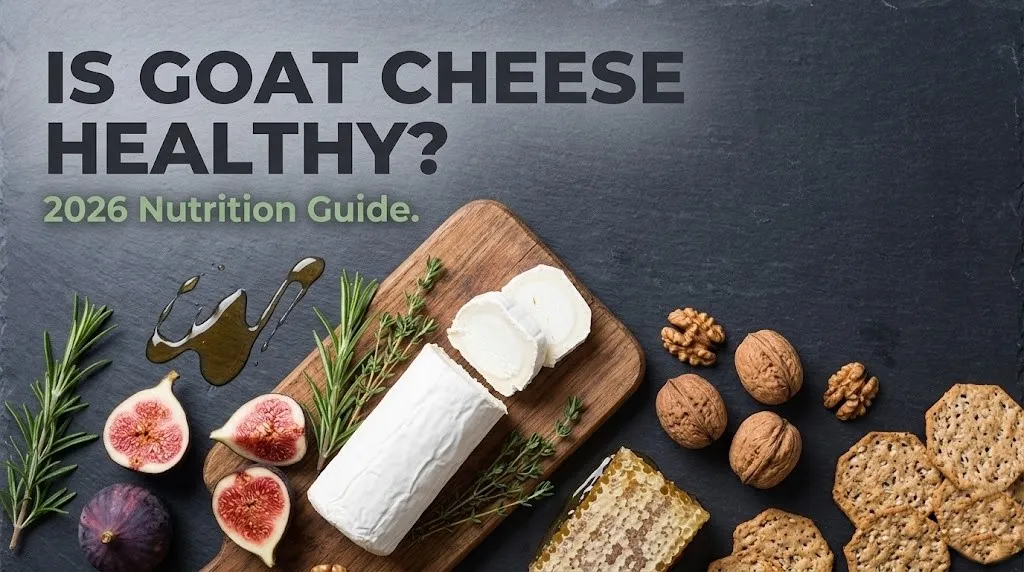
Aged goat cheese spends additional weeks or months maturing. The wheels develop a natural rind, sometimes coated with ash or vegetable charcoal, and the interior becomes firmer and more complex. Aged goat cheeses like Humboldt Fog, Crottin de Chavignol, and Garrotxa are firm enough to slice and have deeper, nuttier flavors.
The milk source determines the nutritional baseline. Goat milk differs from cow milk in several ways that matter for health. The fat globules are smaller. The protein structure is different. The lactose content is slightly lower. These differences, explored in the sections below, are why goat cheese has a reputation for being more digestible and better tolerated than cow cheese.
Fresh goat cheese is the most common form in American grocery stores. It comes in logs, tubs, or vacuum-sealed packages. It is the type crumbled on salads, spread on sandwiches, and melted into pasta. Most of the nutritional data in this article refers to this soft, fresh goat cheese unless otherwise noted.
Key Takeaway: Goat cheese is made from goat milk and ranges from fresh and spreadable to aged and firm. The nutritional properties of goat milk, including smaller fat globules and A2 casein, distinguish it from cow milk cheese.
Goat Cheese Nutrition Facts and Calories
One ounce of soft fresh goat cheese contains approximately 70 to 80 calories, 5 to 6 grams of fat, 4 to 5 grams of protein, and less than 1 gram of carbohydrate, making it a low-carb, moderate-protein, moderate-fat food that is nutrient-dense for its calorie count.
Here is the full nutritional breakdown for a standard 1-ounce (28-gram) serving of fresh goat cheese:
| Nutrient | Amount per 1 oz | % Daily Value |
|---|---|---|
| Calories | 75 | — |
| Total Fat | 6g | 8% |
| Saturated Fat | 4g | 20% |
| Cholesterol | 13mg | 4% |
| Sodium | 130mg | 6% |
| Total Carbohydrates | 0.5g | <1% |
| Dietary Fiber | 0g | 0% |
| Sugars | 0.5g | — |
| Protein | 5g | 10% |
| Calcium | 40mg | 3% |
| Phosphorus | 90mg | 7% |
| Vitamin A | 290 IU | 6% |
| Riboflavin (B2) | 0.1mg | 8% |
The protein-to-calorie ratio is favorable. Five grams of protein for 75 calories is comparable to an egg, which provides 6 grams for 70 calories. The Academy of Nutrition and Dietetics notes that protein supports muscle maintenance, immune function, and satiety.
The calcium content is notable but not exceptional. An ounce of goat cheese provides about 3 to 5 percent of the daily calcium recommendation. Hard aged cow cheeses like Parmesan deliver more calcium per ounce because they are more concentrated. Goat cheese is a calcium contributor, not a calcium powerhouse.
The fat profile is predominantly saturated fat. Four grams of saturated fat per ounce represents about 20 percent of the American Heart Association’s daily limit of 13 grams for a 2,000-calorie diet. This is typical for cheese and is the primary reason cheese is recommended in moderation.
The vitamin and mineral content includes phosphorus, which partners with calcium for bone health, and riboflavin (vitamin B2), which supports energy metabolism. Goat cheese also contains small amounts of vitamin A, zinc, and niacin.
Dietary Sensitivity Note: Goat cheese is naturally very low in carbohydrates, making it suitable for low-carb and ketogenic diets. It contains milk protein and is not suitable for milk protein allergy.
Is Goat Cheese Healthy
Goat cheese is a healthy food when eaten in appropriate portions because it provides complete protein, calcium, phosphorus, and beneficial fatty acids, and its A2 casein structure and lower lactose content make it more digestible for many people than cow cheese.
The word “healthy” requires context. No single food is healthy in isolation. A food is healthy when it contributes valuable nutrients within the overall dietary pattern. By that standard, goat cheese qualifies. It is a whole food made from milk, cultures, rennet, and salt. It provides nutrients that support bone health, muscle maintenance, and metabolic function.
What makes goat cheese a healthy cheese choice:
- Complete protein with all essential amino acids
- Calcium and phosphorus for bone health
- A2 beta-casein protein that may be easier to digest than the A1 beta-casein in most cow milk
- Lower lactose content than cow cheese, making it better tolerated by those with lactose sensitivity
- Live probiotic cultures in fresh and unpasteurized varieties
- Medium-chain fatty acids that are metabolized differently than long-chain saturated fats
- No carbohydrates, making it compatible with low-carb and diabetic eating patterns
What keeps goat cheese from being an unqualified health food:
- Saturated fat at 4 grams per ounce uses a meaningful portion of daily saturated fat limits
- Sodium at 100 to 150 milligrams per ounce contributes to daily sodium intake
- Calorie density means portions matter; it is easy to overeat
- Pasteurized commercial varieties may have fewer live probiotics than raw, artisanal versions
Think of goat cheese like a good olive oil. It is a real food with genuine nutritional value. It makes vegetables taste better. It belongs in a healthy kitchen. But it is not a free food, and the amount matters.
Dietary Sensitivity Note: Goat cheese is not vegan. It is suitable for vegetarian diets (most use microbial or vegetable rennet, though some traditional varieties use animal rennet). It is naturally gluten free. It is kosher when produced under supervision. Halal certification varies by producer.
Goat Cheese vs Cow Cheese Nutrition Comparison
Goat cheese is nutritionally comparable to most cow cheeses in calories and protein but has slightly less lactose, a different protein structure (A2 casein), and smaller fat globules that some research suggests may contribute to easier digestibility.
Here is how one ounce of soft goat cheese compares to common cow cheeses:
| Nutrient (per 1 oz) | Goat Cheese (soft) | Cheddar | Mozzarella (part-skim) | Cream Cheese |
|---|---|---|---|---|
| Calories | 75 | 115 | 72 | 100 |
| Protein | 5g | 7g | 7g | 2g |
| Total Fat | 6g | 9g | 4.5g | 10g |
| Saturated Fat | 4g | 6g | 3g | 6g |
| Carbohydrates | 0.5g | 0.5g | 1g | 1g |
| Calcium | 40mg (3% DV) | 200mg (15% DV) | 220mg (17% DV) | 20mg (2% DV) |
| Sodium | 130mg | 180mg | 175mg | 100mg |
Goat cheese is lower in calories and fat than cheddar and cream cheese. It has less protein than cheddar and mozzarella because these are firmer, more concentrated cheeses. It has less calcium than aged cow cheeses but comparable amounts to other soft cheeses.
The sodium comparison is favorable. Goat cheese at 130 milligrams per ounce is lower in sodium than cheddar (180 milligrams) and comparable to mozzarella (175 milligrams). For someone monitoring sodium intake, this is a modest advantage.
The most meaningful differences are not in the macronutrient numbers. They are in the protein and fat structures that affect how the body processes the cheese. The A2 casein in goat milk forms a different curd in the stomach than the A1 casein in most cow milk. The smaller fat globules in goat milk are more accessible to digestive enzymes. These differences, while not reflected in the nutrition facts panel, are why many people report that goat cheese feels easier to digest.
Key Takeaway: Goat cheese is not dramatically lower in calories or fat than cow cheese. Its health advantages are primarily in its different protein structure, lower lactose, and the way its fats are structured, not in major macronutrient differences.
A2 Casein and Why Goat Cheese May Be Easier to Digest
Goat milk contains only A2 beta-casein protein, while most cow milk contains a mix of A1 and A2 beta-casein, and emerging research suggests that A1 beta-casein produces a peptide during digestion (BCM-7) that may cause digestive discomfort and inflammation in some people.
This is the science behind the anecdotal observation that goat cheese is easier on the stomach. It is not folklore. It is a specific protein difference with a plausible physiological mechanism.
Cow milk contains several types of casein protein. The beta-casein fraction comes in two main genetic variants: A1 and A2. Most cow milk in the United States and Europe contains A1 beta-casein. During digestion, A1 beta-casein releases a peptide called beta-casomorphin-7 (BCM-7) . BCM-7 has been shown in laboratory studies to slow gastrointestinal transit and trigger inflammatory markers in some individuals.
Goat milk contains only A2 beta-casein. When A2 beta-casein is digested, it does not release BCM-7 in the same way. The digestion is cleaner. For people who are sensitive to BCM-7, goat cheese may cause less bloating, less gastrointestinal discomfort, and less of the inflammatory response associated with A1 casein.
A 2021 systematic review in the journal Nutrients examined clinical trials comparing A1 and A2 milk and found that A2 milk was associated with less digestive discomfort, less bloating, and faster gastrointestinal transit compared to A1-containing milk. The research is still developing. The effect is not universal. But the mechanism is biologically plausible and the clinical evidence is growing.
This does not mean goat cheese is digestible for everyone. It still contains milk proteins that can trigger allergic reactions. It still contains lactose. The A2 advantage applies primarily to people who have trouble digesting cow milk but are not fully allergic to milk protein.
Dietary Sensitivity Note: People with diagnosed cow milk protein allergy should not assume goat milk is safe. The proteins in goat and cow milk are similar enough that cross-reactivity is common. Consult an allergist before trying goat cheese if you have a confirmed milk allergy.
Is Goat Cheese Good for Lactose Intolerance
Goat cheese is often well-tolerated by people with lactose intolerance because it contains slightly less lactose than cow cheese, the fermentation process further reduces lactose content, and the smaller fat globules and different protein structure may slow gastric emptying and reduce symptoms.
Lactose intolerance is the reduced ability to digest lactose, the sugar in milk, due to low levels of the enzyme lactase. It affects approximately 65 percent of the global adult population, with higher rates in people of East Asian, West African, and Mediterranean descent.
Goat cheese has several factors working in its favor for lactose tolerance:
- Goat milk contains approximately 4.1 grams of lactose per 100 grams, compared to 4.7 grams in cow milk. The difference is small but real.
- The cheese-making process removes additional lactose. When milk coagulates into curds, the whey that drains away carries most of the lactose with it. Fresh goat cheese contains very little lactose, typically less than 1 gram per ounce.
- Fermentation by lactic acid bacteria further breaks down any remaining lactose into lactic acid.
- Aged goat cheeses contain essentially zero lactose because the bacteria consume all available sugars during the aging process.
A person with lactose intolerance may still react to fresh goat cheese if they are highly sensitive. But many people who cannot tolerate a glass of cow milk or a slice of fresh mozzarella find that goat cheese causes no symptoms.
Here is a comparison of approximate lactose content per ounce:
| Cheese | Lactose (approx per oz) | Tolerance Likelihood |
|---|---|---|
| Fresh cow milk | 12g per cup | Low |
| Fresh mozzarella | 0.5-1g | Moderate |
| Soft goat cheese | 0.1-0.5g | Good |
| Aged goat cheese | 0g | Very good |
| Aged cheddar | 0g | Very good |
The rule of thumb: the harder and more aged the cheese, the less lactose it contains, regardless of animal source. Soft fresh goat cheese has slightly less lactose than soft fresh cow cheese. Aged goat cheese is lactose-free.
Dietary Sensitivity Note: Lactose intolerance is different from milk protein allergy. Goat cheese may help with lactose intolerance. It does not help with milk protein allergy.
Goat Cheese and Probiotics
Fresh and artisanal goat cheese contains live probiotic bacteria from the starter cultures used in fermentation, including Lactobacillus and Bifidobacterium species, which may support digestive health when the cheese is consumed raw or unpasteurized.
Probiotics are live microorganisms that confer health benefits when consumed in adequate amounts. Fermented dairy products, including cheese, can be vehicles for delivering probiotics to the gut.
The probiotic content of goat cheese depends on several factors:
- Pasteurization: Pasteurized goat cheese is heated to kill pathogens, which also kills the live cultures. Some manufacturers add cultures back after pasteurization. These cheeses may contain live probiotics. Others do not.
- Raw milk cheese: Unpasteurized goat cheese retains the natural microbiota from the milk and the starter cultures. These cheeses are more likely to contain live probiotics. They are also subject to stricter FDA regulations in the United States. Raw milk cheeses must be aged at least 60 days before sale.
- Aging: Fresh goat cheese consumed soon after production has the highest probiotic count. As cheese ages, moisture decreases and some bacteria die off, though others survive in the cheese matrix.
A 2020 study in the journal Foods found that soft cheeses, including goat cheese, can deliver viable probiotic bacteria to the gastrointestinal tract when the cheese matrix protects the bacteria from stomach acid.
The probiotic content of commercial goat cheese is not standardized or labeled. There is no guarantee that any particular goat cheese contains live active cultures. Artisanal, raw milk, or small-batch goat cheeses from local producers are more likely to contain probiotics than mass-produced, pasteurized supermarket varieties.
Dietary Sensitivity Note: Raw milk cheese carries a small risk of foodborne illness from Listeria, E. coli, and other pathogens. The FDA advises pregnant individuals, young children, older adults, and immunocompromised people to avoid raw milk cheeses.
Goat Cheese Saturated Fat and Cholesterol
Goat cheese contains 4 grams of saturated fat per ounce, which represents about 20 percent of the American Heart Association’s daily saturated fat limit, and while its medium-chain fatty acids may be metabolized differently than the long-chain saturated fats in butter and beef, the quantity still requires moderation.
Saturated fat is the most debated topic in dairy nutrition. The American Heart Association maintains that saturated fat raises LDL cholesterol and should be limited to 5 to 6 percent of daily calories, roughly 13 grams for a 2,000-calorie diet. An ounce of goat cheese uses nearly a third of that budget.
The counterargument from dairy researchers is that not all saturated fats are equal. The saturated fat in goat cheese includes a higher proportion of medium-chain triglycerides (MCTs) than cow cheese. MCTs are absorbed differently from long-chain saturated fats. They travel directly from the intestine to the liver via the portal vein and are oxidized for energy rather than packaged into cholesterol particles.
Goat milk fat contains approximately 15 to 20 percent MCTs (caproic, caprylic, and capric acids), compared to 5 to 10 percent in cow milk fat. Caproic and caprylic acids are named for “capra,” the Latin word for goat, because they are characteristic of goat milk.
What this means practically: The saturated fat in goat cheese may be slightly less atherogenic than the same amount of saturated fat from butter or fatty beef. But the difference is modest. A 2019 review in Advances in Nutrition concluded that dairy fat, regardless of source, has a neutral to slightly beneficial effect on cardiovascular risk when consumed as part of a balanced diet. The key phrase is “as part of a balanced diet.”
The practical guidance is unchanged: enjoy goat cheese in sensible portions, one to two ounces at a time, as part of a dietary pattern rich in vegetables, whole grains, and unsaturated fats. Do not eat an entire log of goat cheese and assume the MCTs will save you.
Key Takeaway: Goat cheese contains saturated fat that should be consumed in moderation. Its medium-chain fatty acid profile is a modest advantage over other saturated fat sources, not a license for unlimited consumption.
Is Goat Cheese Healthy for Weight Loss
Goat cheese can support weight loss because its protein and fat content promote satiety, helping you feel full on fewer calories, but its calorie density at 75 calories per ounce means strict portion control is necessary to fit it into a calorie deficit.
Weight loss requires a sustained calorie deficit. Foods that help are those that provide satiety for relatively few calories. Goat cheese scores well on satiety because of its protein and fat content. Both protein and fat slow gastric emptying and trigger satiety hormones.
A one-ounce serving of goat cheese provides 5 grams of protein and 6 grams of fat for 75 calories. Spread that ounce on a slice of whole-grain toast with sliced tomato, and you have a satisfying snack or light meal for approximately 200 calories.
The risk is overconsumption. Goat cheese is soft, creamy, and easy to eat. Two ounces disappear from a cheese board without thinking. Four ounces crumbled on a salad seems generous rather than excessive. At four ounces, you have consumed 300 calories and 16 grams of saturated fat from cheese alone.
Strategies for fitting goat cheese into a weight loss eating plan:
- Measure one ounce (about the size of two dice or a golf ball)
- Use it as a flavor accent on vegetables, salads, and grain bowls
- Pair it with high-volume, low-calorie foods like roasted vegetables and leafy greens
- Track it in your calorie log; do not guess
- Choose fresh goat cheese over triple-cream or honey-flavored varieties
Goat cheese compared to other cheese choices for weight loss:
| Cheese (1 oz) | Calories | Protein | Best Use for Weight Loss |
|---|---|---|---|
| Goat cheese (soft) | 75 | 5g | Spread thin on toast, crumble on salads |
| Part-skim mozzarella | 72 | 7g | Highest protein per calorie |
| Feta | 75 | 4g | Strong flavor, small amount needed |
| Cheddar | 115 | 7g | Calorie-dense, easy to overeat |
| Cream cheese | 100 | 2g | Low protein, high fat, least satiating |
Part-skim mozzarella is technically the best weight loss cheese based on protein-to-calorie ratio. Goat cheese is a close second with the added benefits of stronger flavor, which may lead to using less, and better digestibility for some people.
Dietary Sensitivity Note: Flavored and honey goat cheeses contain added sugars. Plain goat cheese is the better choice for weight loss.
Goat Cheese on Keto and Low Carb Diets
Goat cheese is an ideal food for ketogenic and low-carbohydrate diets because it contains less than 1 gram of carbohydrate per ounce, provides fat and protein in favorable ratios, and is versatile in both savory and sweet keto recipes.
The macronutrient profile of goat cheese aligns with ketogenic diet requirements. An ounce contains approximately 6 grams of fat, 5 grams of protein, and less than 1 gram of carbohydrate. The fat-to-protein-and-carb ratio is favorable for maintaining ketosis.
For someone tracking net carbohydrates, goat cheese is effectively zero-carb. The trace carbohydrates from residual milk sugars are negligible.
Goat cheese fits keto eating in multiple formats:
- Spread on keto crackers or cucumber slices
- Stuffed into chicken breast or pork loin
- Crumbled over roasted low-carb vegetables
- Mixed into cauliflower rice or zucchini noodles
- Combined with herbs as a fat bomb filling
- Melted into sauces for keto casseroles
Goat cheese is also lower in lactose than cream cheese, which is a common keto staple. For keto dieters who are lactose-sensitive, goat cheese may be the better choice.
The calorie density is both an advantage and a caution on keto. Keto dieters need fat calories, and goat cheese provides them efficiently. But if weight loss is a goal on keto, calories still matter. An ounce of goat cheese at 75 calories can become several ounces quickly when added to multiple meals.
Dietary Sensitivity Note: Keto dieters with dairy sensitivity often tolerate goat cheese better than cow cheese due to the A2 casein and lower lactose content.
Is Goat Cheese Safe During Pregnancy
Pasteurized goat cheese is safe during pregnancy and provides protein, calcium, and phosphorus that support fetal development, but unpasteurized (raw) goat cheese should be avoided due to the risk of Listeria monocytogenes infection.
The FDA and the American College of Obstetricians and Gynecologists recommend that pregnant individuals avoid raw milk and raw milk cheeses because of the risk of listeriosis. Listeria infection during pregnancy can cause miscarriage, stillbirth, preterm labor, and severe illness in newborns.
The safety rule is simple:
- Pasteurized goat cheese: Safe
- Raw or unpasteurized goat cheese: Avoid during pregnancy
- Fresh chevre in most US grocery stores: Pasteurized (safe)
- Artisanal goat cheese at farmers markets: Verify pasteurization status
Most commercially available goat cheese in the United States is pasteurized. The label must state if the cheese is made from raw milk. If the label does not say “raw milk,” the cheese is pasteurized.
Soft pasteurized goat cheese is safe for pregnant individuals because pasteurization kills Listeria. Hard aged goat cheeses are also safe and typically pasteurized. The concern is specifically with soft, raw milk cheeses.
Pregnant individuals who crave goat cheese can eat it safely as long as they verify pasteurization. The nutritional benefits, protein, calcium, phosphorus, are valuable during pregnancy.
Dietary Sensitivity Note: When dining out, ask whether the goat cheese on a salad or pizza is pasteurized. Restaurants may use raw milk artisanal cheeses without noting it on the menu.
Goat Cheese vs Feta Cheese Nutrition
Goat cheese and feta are nutritionally similar in calories and protein, but feta is significantly higher in sodium and traditionally made from sheep milk or a sheep and goat milk blend, while goat cheese is made entirely from goat milk and has a creamier texture.
Feta and goat cheese are often confused. Both are white, crumbly, and tangy. Both appear in Mediterranean cooking. The differences matter for nutrition and recipe planning.
| Nutrient (per 1 oz) | Goat Cheese (soft) | Feta (sheep or blend) |
|---|---|---|
| Calories | 75 | 75 |
| Protein | 5g | 4g |
| Total Fat | 6g | 6g |
| Saturated Fat | 4g | 4g |
| Carbohydrates | 0.5g | 1g |
| Calcium | 40mg (3% DV) | 140mg (11% DV) |
| Sodium | 130mg | 320mg |
The sodium difference is the most significant finding. Feta is brined, which gives it a characteristic salty flavor and a sodium content of approximately 320 milligrams per ounce, more than double that of goat cheese at 130 milligrams. For someone monitoring sodium for blood pressure management, goat cheese is the better choice.
Calcium is higher in feta. Sheep milk contains more calcium than goat milk. Feta also retains more calcium because of how the curds are processed. If calcium is a dietary priority, feta delivers more per ounce.
The flavor and texture differences matter for cooking. Goat cheese is creamy and spreadable. Feta is crumbly and does not melt. Goat cheese works on sandwiches and melted into sauces. Feta works on salads and grain bowls. Both are healthy choices with different strengths.
Dietary Sensitivity Note: Both goat cheese and feta are lower in lactose than fresh cow cheeses. Feta made from sheep milk is also A2-dominant. Both are well-tolerated by many people with lactose sensitivity.
Goat Cheese Sodium Content
Soft goat cheese contains approximately 100 to 150 milligrams of sodium per ounce, which is lower than many aged cow cheeses, making it a moderate-sodium cheese choice that fits within the American Heart Association’s daily sodium recommendations when portions are controlled.
Sodium in cheese serves functional purposes. It controls moisture, inhibits pathogen growth, develops flavor, and affects texture. Salt is not optional in cheese making, but the amount varies widely by cheese type.
Here is how goat cheese compares to other cheeses on sodium:
| Cheese (per 1 oz) | Sodium |
|---|---|
| Fresh goat cheese | 130mg |
| Swiss | 55mg |
| Mozzarella (part-skim) | 175mg |
| Cheddar | 180mg |
| Feta | 320mg |
| Parmesan | 335mg |
| Processed American | 400mg |
Goat cheese sits in the moderate range. It is not as low as Swiss cheese, but it is significantly lower than feta, Parmesan, and processed cheese. A one-ounce serving provides about 6 percent of the daily value for sodium.
The American Heart Association recommends limiting sodium to 2,300 milligrams per day, with an ideal target of 1,500 milligrams. An ounce of goat cheese uses 6 to 9 percent of the ideal daily limit. That is manageable for most people.
For someone on a low-sodium diet, goat cheese is a better choice than feta or Parmesan. Pair it with low-sodium foods, fresh vegetables, unsalted whole grains, to keep the meal’s total sodium in a reasonable range.
Dietary Sensitivity Note: Some flavored goat cheeses contain added salt from herbs, spices, or brined ingredients. Check the label. Plain goat cheese has the most predictable sodium content.
How to Choose and Store Goat Cheese
Choose goat cheese based on how you plan to use it: fresh soft logs for spreading and salads, aged wheels for cheese boards and grating, and flavored varieties for specific recipes, and store all goat cheese wrapped tightly in the refrigerator at 40 degrees Fahrenheit or below.
Types of goat cheese and their best uses:
- Fresh chevre (log or tub): Spreadable, tangy. Use on toast, in salads, on pizza, in pasta. Best within 1 to 2 weeks of opening.
- Aged goat cheese (wheel or wedge): Firm, nutty, sliceable. Use on cheese boards, grated over dishes. Lasts 3 to 4 weeks properly stored.
- Ash-ripened goat cheese: Bloomy rind with a distinctive gray-black line of vegetable ash. Soft-ripened interior. Serve at room temperature.
- Flavored goat cheese: Mixed with herbs, garlic, honey, or fruit. Use for specific recipes. Often higher in sodium or sugar.
Storage guidelines:
- Keep goat cheese in its original wrapper or rewrap tightly in wax paper or parchment, then place in a sealed container.
- Do not store goat cheese in plastic wrap alone. Cheese needs to breathe slightly.
- Fresh goat cheese should be consumed within 1 to 2 weeks of opening. Discard if mold develops (on fresh cheese) or if it develops a sour smell beyond the normal tang.
- Aged goat cheese with rind can be stored longer. Small spots of surface mold can be cut away (cut 1 inch around the mold).
- Freeze goat cheese only for cooking applications. Freezing changes the texture, making it crumbly. Frozen goat cheese works in baked dishes but not on a cheese board.
Quick Tip:
- Bring goat cheese to room temperature before serving. The flavor is muted when cold. Thirty minutes on the counter transforms the taste and texture.
Healthy Goat Cheese Recipes and Serving Ideas
Healthy ways to eat goat cheese include spreading it on whole-grain toast with roasted vegetables, crumbling it over salads with a light vinaigrette, stuffing it into chicken breast with herbs, and blending it into warm grain bowls for creaminess and protein.
Goat cheese shines when it is used as a flavor accent rather than the main ingredient. A small amount adds tang, creaminess, and protein without overwhelming a dish with calories or saturated fat.
Five healthy serving ideas with approximate calories:
Roasted beet and goat cheese salad: Layer roasted beets, arugula, toasted walnuts, and 1 ounce crumbled goat cheese with balsamic vinaigrette. Approximately 280 calories, 10g protein.
Goat cheese and roasted vegetable toast: Spread 1 ounce goat cheese on a slice of toasted whole-grain bread. Top with roasted red peppers, zucchini, and a drizzle of olive oil. Approximately 250 calories, 12g protein.
Herb goat cheese stuffed chicken: Cut a pocket into a chicken breast. Fill with 1 ounce goat cheese mixed with fresh thyme and chives. Bake at 375 degrees Fahrenheit until the chicken reaches 165 degrees Fahrenheit internal temperature. Approximately 280 calories, 35g protein.
Warm quinoa bowl with goat cheese and roasted vegetables: Toss warm cooked quinoa with roasted broccoli, cherry tomatoes, and 1 ounce crumbled goat cheese. The cheese melts slightly into the quinoa. Approximately 320 calories, 14g protein.
Cucumber goat cheese bites: Top thick cucumber rounds with a small smear of goat cheese, a piece of smoked salmon or roasted red pepper, and fresh dill. Approximately 45 calories per piece, 3g protein.
Dietary Sensitivity Note: These recipes can be adapted for gluten-free, low-carb, and Mediterranean diet patterns. Omit bread for low-carb. Use gluten-free bread or crackers as needed. All recipes work with dairy-free goat cheese alternatives for those with milk allergy.
Key Takeaway: Goat cheese is a flavor accent, not a main ingredient. One ounce distributed across a salad, grain bowl, or vegetable dish adds protein and creaminess for 75 calories.
Frequently Asked Questions About Goat Cheese
Is goat cheese healthier than cow cheese?
Goat cheese is moderately healthier than many cow cheeses because it contains A2 casein, which may be easier to digest, slightly less lactose, and a fat profile with more medium-chain triglycerides.
It is not dramatically lower in calories or saturated fat. The advantages are primarily in digestibility for people sensitive to cow dairy.
For someone without dairy sensitivity, goat cheese and part-skim mozzarella are both healthy choices with similar nutritional profiles.
Can lactose intolerant people eat goat cheese?
Many lactose intolerant people can eat goat cheese because it contains less lactose than fresh cow cheese and the fermentation process further reduces lactose content.
Fresh goat cheese contains approximately 0.1 to 0.5 grams of lactose per ounce, compared to 12 grams in a glass of cow milk.
Aged goat cheese is essentially lactose-free. Individual tolerance varies, so start with a small amount.
How many calories are in a serving of goat cheese?
One ounce of soft goat cheese contains approximately 70 to 80 calories.
A standard serving is 1 ounce, about the size of two dice or a golf ball.
Crumbled goat cheese on a salad or spread on toast typically uses about 1 ounce per person.
Is goat cheese good for weight loss?
Goat cheese can support weight loss because its protein and fat promote satiety, helping you feel full on moderate calories.
At 75 calories per ounce with 5 grams of protein, it is a reasonable addition to a calorie-controlled eating plan.
Portion control matters. Measure 1 ounce rather than eating directly from the log.
Can you eat goat cheese while pregnant?
Pasteurized goat cheese is safe during pregnancy and provides beneficial protein and calcium.
Unpasteurized or raw goat cheese should be avoided due to the risk of Listeria infection.
Most commercial goat cheese in the United States is pasteurized. Check the label or ask the server to confirm.
Goat cheese is one of the better choices in the cheese aisle. It delivers complete protein, calcium, and phosphorus in a form that many people tolerate better than cow cheese. The A2 casein, the smaller fat globules, the lower lactose, and the medium-chain fatty acids are real advantages, not marketing inventions.
The saturated fat and sodium are real too. Goat cheese is healthy in the way all cheese is healthy: in sensible portions as part of a pattern that includes plenty of vegetables, whole grains, and unsaturated fats. An ounce crumbled on a salad is a good decision. Four ounces eaten from the log while standing at the kitchen counter is not.
Buy good goat cheese. Keep it cold. Bring it to room temperature before serving. Crumble it over roasted vegetables, spread it on whole-grain toast, stuff it into chicken, or melt it into warm grain bowls. Eat it the way it was meant to be eaten: as an accent that makes everything around it taste better.