
Healthy chocolate milk replaces the 20 to 30 grams of added sugar, high fructose corn syrup, artificial flavors, and carrageenan in commercial brands with unsweetened cocoa powder, real milk, and a teaspoon or two of maple syrup or honey, delivering a rich, satisfying drink at 150 to 180 calories with 9 to 10 grams of protein and a fraction of the added sugar.
Chocolate milk is the drink that defined childhood for generations of kids who poured brown powder into a glass of cold milk and stirred until their arm hurt. The commercial version in the dairy aisle is a different product: a sugar-sweetened beverage with 20 to 30 grams of added sugar per cup, often made with high fructose corn syrup, artificial flavors, and stabilizers like carrageenan. The American Heart Association recommends limiting added sugars to 25 grams per day for women and 36 grams for men. A single cup of store-bought chocolate milk can use an entire day’s allowance.
The homemade version takes two minutes to make. It costs less. It tastes richer because you are using real cocoa, not artificial chocolate flavor. This article covers the problems with commercial chocolate milk, the recipe for a genuinely healthy version, and every variation you need for dairy-free, high-protein, and kid-friendly options.
What Makes Store-Bought Chocolate Milk Unhealthy
Store-bought chocolate milk is unhealthy primarily because it contains 20 to 30 grams of added sugar per cup from high fructose corn syrup or cane sugar, along with artificial flavors, and carrageenan or other stabilizers, making it a sugar-sweetened beverage that uses nearly an entire day’s added sugar allowance in a single serving.
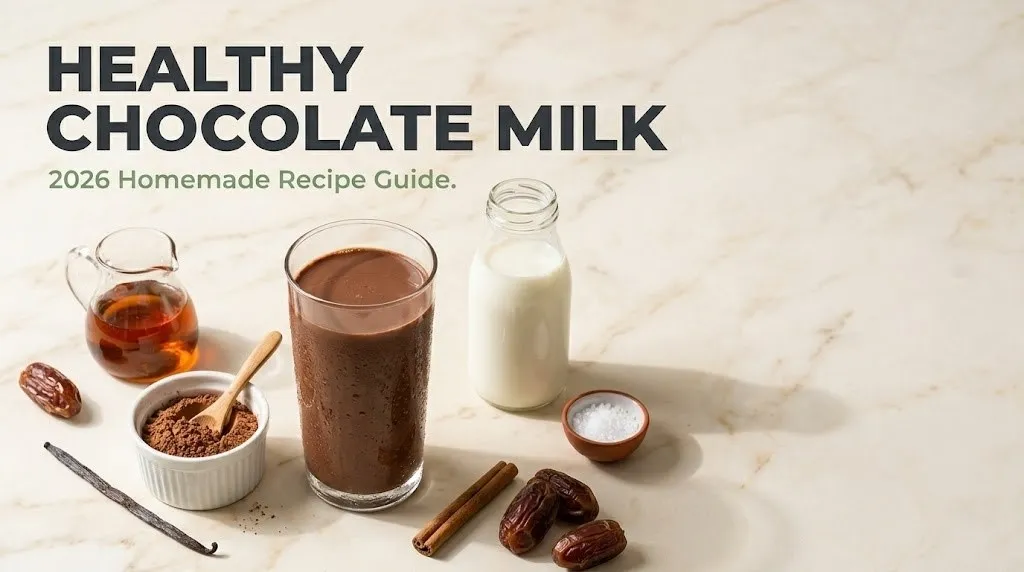
Here is how a cup of commercial chocolate milk compares to plain milk:
| Nutrient (1 cup) | Plain 2% Milk | Commercial Chocolate Milk |
|---|---|---|
| Calories | 120 | 190 |
| Protein | 8g | 8g |
| Total Fat | 5g | 5g |
| Added Sugars | 0g | 20-24g |
| Calcium | 300mg (23% DV) | 300mg (23% DV) |
| Vitamin D | 3mcg (15% DV) | 3mcg (15% DV) |
The milk itself is identical. The protein, calcium, and vitamin D are the same. The difference is entirely in the added sugar, artificial flavoring, and stabilizers. The chocolate milk does not provide additional nutrition. It provides additional sugar and processing.
The American Heart Association’s daily added sugar limit is 25 grams for women and 36 grams for men. A cup of commercial chocolate milk at 24 grams of added sugar leaves almost no room for any other added sugar that day. For a child, whose daily limit is 12 to 25 grams depending on age, one cup of chocolate milk exceeds or approaches the entire allowance.
Carrageenan, a seaweed-derived thickener used in many commercial chocolate milks, has been the subject of debate. Some research suggests it may cause gastrointestinal inflammation in susceptible individuals. The FDA considers it safe at regulated levels. It is not present in homemade chocolate milk.
Key Takeaway: Commercial chocolate milk is plain milk with 20 to 24 grams of added sugar and artificial ingredients. The milk nutrition is identical. The sugar is the problem.
Key Swaps for Healthy Chocolate Milk
Healthy chocolate milk swaps the sugary syrup, artificial flavors, and stabilizers of commercial brands for unsweetened cocoa powder as the chocolate source, real milk as the base, and a small amount of maple syrup, honey, or dates as the sweetener.
Three ingredients produce a healthier chocolate milk than anything in the dairy aisle:
Unsweetened cocoa powder instead of chocolate syrup or artificial flavor. Cocoa powder is pure ground cocoa solids with most of the cocoa butter removed. It contains flavonoids, antioxidant compounds that research links to improved vascular function. It contains magnesium and iron. It has no sugar. It has no artificial ingredients. A tablespoon of unsweetened cocoa powder contains approximately 12 calories and 2 grams of fiber.
A small amount of natural sweetener instead of high fructose corn syrup. One to two teaspoons of maple syrup or honey adds 4 to 8 grams of sugar to the entire cup. The commercial version adds 20 to 24 grams. You control the sweetness. You can start with less and add more only if needed.
Real milk, no additives. The milk is the same in both versions. The homemade version simply skips the carrageenan, artificial flavors, and stabilizers.
Dietary Sensitivity Note: For dairy-free chocolate milk, use soy milk for the closest protein content, oat milk for the creamiest texture, or almond milk for the lowest calories.
Health Benefits of Cocoa Powder in Chocolate Milk
Unsweetened cocoa powder is rich in flavanol antioxidants, particularly epicatechin, which research suggests supports blood vessel function and may lower blood pressure, along with providing magnesium, iron, and theobromine, a mild stimulant related to caffeine.
Cocoa powder is not just a flavoring. It is a plant product with measurable health-promoting compounds. The processing of cocoa beans determines how many of these compounds survive.
Flavanols are the primary beneficial compounds in cocoa. Epicatechin and catechin are flavanols that stimulate nitric oxide production in the lining of blood vessels. Nitric oxide relaxes blood vessels, improving blood flow and modestly lowering blood pressure. A 2017 meta-analysis in the Journal of the American Heart Association found that cocoa flavanol intake was associated with a small but statistically significant reduction in blood pressure.
The flavanol content depends on processing. Natural unsweetened cocoa powder retains more flavanols than Dutch-processed cocoa, which is treated with alkali to neutralize acidity. Dutch-processed cocoa has a milder flavor and darker color but loses a significant portion of its flavanols. For maximum health benefit, choose natural cocoa powder.
Other beneficial compounds in cocoa:
- Magnesium: 27mg per tablespoon (6% DV). Magnesium supports muscle function, nerve transmission, and bone health.
- Iron: 1mg per tablespoon (6% DV). Non-heme iron from plants.
- Theobromine: A mild stimulant related to caffeine. It produces a gentle, longer-lasting energy lift without the jitters of caffeine. It is the compound that makes chocolate toxic to dogs. It is safe for humans.
- Fiber: 2 grams per tablespoon.
Dietary Sensitivity Note: Cocoa contains theobromine and small amounts of caffeine. People sensitive to stimulants should avoid chocolate milk before bed.
Protein and Calcium in Chocolate Milk
Chocolate milk made with dairy milk provides 8 to 10 grams of high-quality protein per cup from casein and whey, along with 300 milligrams of calcium (23 percent of the daily value), making it a nutrient-dense beverage that supports bone health and muscle maintenance.
The protein and calcium in chocolate milk come from the milk, not the chocolate. Commercial and homemade versions are identical in these nutrients. The difference is that homemade chocolate milk delivers them without the sugar load.
Milk protein is approximately 80 percent casein and 20 percent whey. Casein digests slowly, providing a sustained release of amino acids. Whey digests quickly and is rich in leucine, the branched-chain amino acid that directly stimulates muscle protein synthesis. This combination makes milk an effective protein source for muscle repair and growth.
The calcium content is significant. One cup of milk provides approximately 300 milligrams of calcium, about 23 percent of the daily value for adults. Calcium is required for bone mineralization, muscle contraction, nerve transmission, and blood clotting. The National Institutes of Health identifies dairy products as the primary dietary source of calcium in the American diet.
Vitamin D is added to most commercial milk. One cup provides approximately 15 percent of the daily value. Vitamin D enables calcium absorption in the intestine. Without adequate vitamin D, calcium cannot be absorbed regardless of intake.
Dietary Sensitivity Note: Lactose-free milk provides the same protein and calcium as regular milk. Plant milks vary. Soy milk has comparable protein. Almond and oat milk have less protein unless fortified.
Key Takeaway: The protein and calcium in chocolate milk are identical in commercial and homemade versions. The homemade version delivers them without the sugar penalty.
Healthy Chocolate Milk Recipe
This healthy chocolate milk recipe uses 1 tablespoon of unsweetened cocoa powder, 1 to 2 teaspoons of maple syrup or honey, and 1 cup of cold milk, whisked into a smooth paste with hot water first, producing a rich, satisfying drink in 2 minutes.
Ingredients (per serving):
- 1 cup cold milk (2 percent, whole, or plant-based)
- 1 tablespoon unsweetened cocoa powder (natural or Dutch-processed)
- 1 to 2 teaspoons maple syrup, honey, or 1 to 2 softened Medjool dates
- 1/2 teaspoon vanilla extract (optional)
- Tiny pinch of salt (enhances chocolate flavor)
Instructions:
- In a small bowl or the bottom of a drinking glass, combine the cocoa powder, sweetener, vanilla, and salt.
- Add 1 to 2 tablespoons of very hot water. Whisk vigorously with a fork or small whisk until a smooth, glossy paste forms. This step is the key to lump-free chocolate milk.
- Add a splash of cold milk to the paste and whisk to combine. This tempers the paste.
- Pour in the remaining milk while whisking or stirring.
- Taste and adjust sweetness. Add an extra half teaspoon of sweetener if desired.
- Pour over ice or drink as is.
Nutrition per serving (with 2% milk and 1.5 tsp maple syrup): Approximately 165 calories, 9g protein, 5g fat, 2.5g saturated fat, 22g carbohydrates, 10g added sugar, 2g fiber.
Quick Tip:
- For a smoother, richer texture, blend all ingredients in a blender for 10 seconds. The blender incorporates the cocoa more thoroughly and creates a slight froth.
Healthy Chocolate Milk Nutrition Comparison
Homemade healthy chocolate milk contains approximately 150 to 180 calories and 4 to 10 grams of added sugar per cup, compared to 190 to 210 calories and 20 to 24 grams of added sugar in commercial chocolate milk.
Here is how the versions compare:
| Nutrient (1 cup) | Commercial Chocolate Milk | Healthy Homemade | Plain 2% Milk |
|---|---|---|---|
| Calories | 190 | 165 | 120 |
| Protein | 8g | 9g | 8g |
| Total Fat | 5g | 5g | 5g |
| Added Sugars | 20-24g | 4-10g | 0g |
| Calcium | 300mg | 300mg | 300mg |
| Vitamin D | 3mcg | 3mcg | 3mcg |
| Fiber | 0g | 2g | 0g |
| Flavonoids | 0 | Present | 0 |
The homemade version saves 14 to 16 grams of added sugar per cup. Over a week of daily chocolate milk, that is roughly 100 grams of added sugar avoided, the equivalent of 25 teaspoons.
The fiber from the cocoa powder is a small but genuine addition. Two grams of fiber from a beverage is unusual. It contributes to the daily fiber target of 25 to 38 grams.
Dietary Sensitivity Note: The homemade version has no carrageenan, no artificial flavors, and no high fructose corn syrup. The ingredient list is cocoa, milk, and maple syrup.
Best Natural Sweeteners for Healthy Chocolate Milk
The best natural sweeteners for healthy chocolate milk are maple syrup for flavor compatibility, honey for a slightly sweeter result, softened Medjool dates for zero added sugar, and very ripe banana for a creamy, no-sugar-added version.
The sweetener strategy is to use less sweetener overall and to choose sweeteners that contribute flavor beyond just sweetness.
| Sweetener (per 1-2 tsp) | Calories | Sugar | Best For |
|---|---|---|---|
| Maple syrup | 17-34 | 4-8g | Classic flavor, minerals |
| Honey | 21-42 | 6-11g | Slightly sweeter, floral |
| Medjool date (1-2) | 66-132 | 16-32g (natural) | No added sugar, fiber |
| Mashed banana (1/2) | 50 | 7g (natural) | Creamy, no added sugar |
| Stevia (few drops) | 0 | 0g | Zero calorie, diabetic friendly |
| Monk fruit (few drops) | 0 | 0g | Zero calorie, no aftertaste |
Medjool dates are the best option for a no-added-sugar version. Dates contain natural sugars and fiber. When blended into milk, they create a thick, creamy, naturally sweet chocolate milk. Two dates add approximately 130 calories and 6 grams of fiber. The fiber offsets the sugar absorption.
Maple syrup is the best all-around choice for flavor. Its caramel notes complement cocoa. Grade A Dark Color maple syrup has a stronger flavor that comes through in the finished drink.
Dietary Sensitivity Note: Maple syrup, dates, and stevia are vegan. Honey is not vegan. Stevia and monk fruit are calorie-free and suitable for diabetic diets.
Best Milk for Healthy Chocolate Milk
The best milk for healthy chocolate milk depends on your nutritional priorities: 2 percent dairy milk for the best balance of creaminess and protein, whole milk for the richest texture, soy milk for the closest plant-based protein match, and oat milk for the creamiest dairy-free option.
Different milks produce different chocolate milks. The protein, fat, and sugar content vary significantly.
| Milk (1 cup) | Calories | Protein | Fat | Carbs | Best For |
|---|---|---|---|---|---|
| 2% dairy milk | 120 | 8g | 5g | 12g | Balanced creaminess and protein |
| Whole dairy milk | 150 | 8g | 8g | 12g | Richest, most satisfying |
| Skim milk | 80 | 8g | 0g | 12g | Lowest calorie |
| Soy milk | 100 | 7g | 4g | 8g | Best dairy-free protein |
| Oat milk | 120 | 3g | 5g | 16g | Creamiest dairy-free |
| Almond milk | 30 | 1g | 2.5g | 1g | Lowest calorie |
Whole milk produces the richest, most satisfying chocolate milk. The fat carries the cocoa flavor and creates a smooth mouthfeel. 2 percent milk is the best everyday balance of creaminess, protein, and moderate calories.
For dairy-free versions, soy milk is the nutritional closest match to dairy milk with 7 grams of protein. Oat milk is the creamiest and has a natural sweetness that reduces the need for added sweetener. Almond milk is the lowest calorie but provides minimal protein.
Dietary Sensitivity Note: All dairy milk contains lactose. Lactose-free dairy milk has identical nutrition. Soy milk is the best protein match for dairy-free. Oat milk contains gluten unless certified gluten-free.
Key Takeaway: 2 percent dairy milk is the best all-around choice. Soy milk is the best dairy-free match for protein. Oat milk is the creamiest dairy-free.
Healthy Chocolate Milk With No Added Sugar
Healthy chocolate milk with no added sugar uses a ripe banana or soft Medjool dates blended with milk and cocoa powder to provide natural sweetness without any added sugar, producing a drink with zero grams of added sugar and approximately 180 to 220 calories.
A no-added-sugar chocolate milk relies entirely on the natural sugars in fruit for sweetness. The result is less sweet than commercial chocolate milk but deeply satisfying in a different way.
Banana chocolate milk (no added sugar):
- 1 cup milk
- 1/2 very ripe banana (heavily spotted)
- 1 tablespoon cocoa powder
- 1/2 teaspoon vanilla
- Pinch of salt
Blend until smooth. 180 calories, 8g sugar (all from banana and milk), 0g added sugar.
Date chocolate milk (no added sugar):
- 1 cup milk
- 1 to 2 Medjool dates, pitted and softened in hot water
- 1 tablespoon cocoa powder
- 1/2 teaspoon vanilla
- Pinch of salt
Blend until the dates are fully incorporated and the milk is smooth. 200 to 260 calories, 32 to 48g sugar (all natural from dates and milk), 0g added sugar, 3 to 6g fiber.
The dates version is sweeter and thicker. The banana version is lighter and has a subtle banana undertone. Both contain zero grams of added sugar. The sugars are intrinsic to the whole fruits and milk.
Dietary Sensitivity Note: Dates and bananas contain natural sugars. People with diabetes should count the total carbohydrate content. The fiber in dates moderates the blood sugar response modestly.
Dairy-Free and Vegan Healthy Chocolate Milk
Dairy-free healthy chocolate milk uses soy milk or oat milk as the base, cocoa powder for chocolate flavor, maple syrup or dates for sweetness, and is naturally vegan when made with plant-based sweeteners.
The technique is identical to the dairy version. The milk choice determines the nutritional profile.
Dairy-free chocolate milk (serves 1):
- 1 cup unsweetened soy milk or oat milk
- 1 tablespoon unsweetened cocoa powder
- 1 to 2 teaspoons maple syrup or 1 to 2 softened dates
- 1/2 teaspoon vanilla extract
- Pinch of salt
Instructions: Make a paste with cocoa powder and hot water. Whisk in the plant milk and sweetener. For dates, blend everything together.
Nutrition with soy milk and maple syrup: 140 calories, 8g protein, 5g fat, 16g carbohydrates, 4g added sugar.
Nutrition with oat milk and maple syrup: 160 calories, 3g protein, 5g fat, 26g carbohydrates, 4g added sugar.
Soy milk is the nutritional winner for dairy-free chocolate milk because of its protein content. Oat milk is the texture winner because of its creaminess. Almond milk is the calorie winner at approximately 70 calories per cup.
Dietary Sensitivity Note: Soy milk is free of dairy, lactose, nuts, and gluten (verify brand). Oat milk is nut-free but may contain gluten. Choose certified gluten-free oat milk if needed.
High Protein Healthy Chocolate Milk
High protein healthy chocolate milk uses ultra-filtered dairy milk (such as Fairlife) or adds a half-scoop of unflavored or chocolate protein powder, boosting the protein content from 8 grams to 18 to 25 grams per cup for a more satiating drink or post-workout recovery beverage.
Standard chocolate milk has about 8 grams of protein. For someone wanting more protein, two strategies boost the content without changing the flavor significantly.
Ultra-filtered milk: Brands like Fairlife filter milk to concentrate the protein and reduce the sugar. A cup contains 13 grams of protein and 6 grams of sugar (naturally occurring, no added). Using ultra-filtered milk as the base for homemade chocolate milk produces roughly 14 to 15 grams of protein per cup with no recipe changes.
Added protein powder: Add half a scoop (12 to 15 grams of protein) of unflavored, vanilla, or chocolate protein powder. Whisk the protein powder with the cocoa powder and hot water to prevent clumping. This boosts the protein to 20 to 25 grams per cup.
| Version | Calories | Protein |
|---|---|---|
| Standard homemade | 165 | 9g |
| With ultra-filtered milk | 175 | 14g |
| With half-scoop protein powder | 225 | 22g |
| With ultra-filtered milk plus protein | 235 | 27g |
Dietary Sensitivity Note: Whey protein contains dairy. Plant protein powders are dairy-free. Collagen peptides add protein but are not complete (lack tryptophan).
Healthy Chocolate Milk for Kids and Toddlers
Healthy chocolate milk for kids uses the same recipe with attention to age-appropriate sweetness levels and portion sizes: 1/2 cup for toddlers, 3/4 cup for young children, and no more than 1 teaspoon of added sweetener per serving.
The American Academy of Pediatrics recommends that children drink primarily water and milk. Flavored milk with controlled sugar can be an occasional treat rather than a daily beverage.
Age-specific guidance:
| Age | Serving Size | Max Added Sugar | Notes |
|---|---|---|---|
| 1-2 years | 1/4-1/2 cup | 0g | Use banana or date for sweetness |
| 2-5 years | 1/2 cup | 2-4g (1 tsp maple syrup) | Occasional treat |
| 6-12 years | 3/4-1 cup | 4-8g (1-2 tsp maple syrup) | Not daily |
| 13-plus years | 1 cup | 4-10g | Same as adult version |
For toddlers, the banana-based no-added-sugar version is the best choice. A quarter-cup of milk blended with a small piece of banana and a teaspoon of cocoa powder creates a lightly chocolatey milk with natural sweetness and no added sugar.
The American Heart Association recommends that children aged 2 to 18 consume less than 25 grams (6 teaspoons) of added sugar per day, with children under 2 consuming none. A half-cup of homemade chocolate milk with 4 grams of added sugar fits within these limits. A full cup of commercial chocolate milk with 24 grams does not.
Dietary Sensitivity Note: Introduce cocoa to toddlers after common allergens have been introduced and tolerated. Cocoa is not a common allergen but contains theobromine, which children metabolize slowly.
Chocolate Milk as a Post-Workout Recovery Drink
Chocolate milk is an effective post-workout recovery drink because its 3:1 to 4:1 carbohydrate-to-protein ratio matches the recommended range for glycogen replenishment and muscle protein synthesis, making it a convenient, whole-food alternative to commercial recovery shakes.
The research on chocolate milk as a recovery drink is substantial. A 2018 review in the European Journal of Clinical Nutrition concluded that chocolate milk is at least as effective as commercial carbohydrate-electrolyte sports drinks for post-exercise recovery.
The ideal post-workout recovery nutrition provides:
- Carbohydrates to replenish muscle glycogen
- Protein to stimulate muscle protein synthesis
- Fluid and electrolytes to rehydrate
Chocolate milk provides all three. A cup of 2 percent chocolate milk contains approximately 22 grams of carbohydrates and 9 grams of protein, a ratio of approximately 3:1. The Academy of Nutrition and Dietetics recommends a 3:1 to 4:1 carbohydrate-to-protein ratio for post-workout recovery.
For a more protein-heavy recovery drink, use ultra-filtered milk or add protein powder. For a lighter recovery option after moderate exercise, the standard homemade version is sufficient.
Dietary Sensitivity Note: Chocolate milk is not suitable for athletes with lactose intolerance unless made with lactose-free milk. Dairy-free versions with soy milk provide a similar protein-to-carb ratio.
Healthy Chocolate Milk Flavor Variations
Healthy chocolate milk flavor variations include Mexican spiced, orange chocolate, mint chocolate, peanut butter chocolate, and cherry chocolate, each adding flavor through whole food ingredients without significant additional sugar or calories.
The base recipe is a canvas. A few additions create distinct flavor experiences.
Mexican spiced chocolate milk: Add 1/8 teaspoon cinnamon and a tiny pinch of cayenne pepper to the cocoa paste. The warmth complements the chocolate.
Orange chocolate milk: Add 1/2 teaspoon orange zest to the cocoa paste. The citrus brightens the cocoa flavor.
Mint chocolate milk: Add 1/8 teaspoon peppermint extract (not mint extract) to the finished drink. Start with a very small amount. Peppermint extract is potent.
Peanut butter chocolate milk: Blend in 1 teaspoon natural peanut butter. The peanut butter adds creaminess, healthy fat, and 2 grams of protein.
Cherry chocolate milk: Blend 2 tablespoons frozen dark sweet cherries with the milk and cocoa. The cherries add natural sweetness, fiber, and vitamin C.
Dietary Sensitivity Note: Peanut butter adds tree nut and legume allergens. Mint extract is generally allergen-free. Cherries are not common allergens.
How to Store and Prep Healthy Chocolate Milk
Healthy chocolate milk is best made fresh and consumed immediately, but it can be stored in the refrigerator for up to 2 days in an airtight container or jar, shaken well before serving, or prepped as a dry mix for on-the-go convenience.
Chocolate milk is a fresh beverage. The cocoa particles settle over time. The milk can separate slightly. These are cosmetic issues, not safety concerns. A good shake before drinking restores the consistency.
Storage methods:
| Method | Duration | Best Practice |
|---|---|---|
| Refrigerator (prepared) | 2 days | Airtight jar, shake before drinking |
| Freezer | Not recommended | Texture changes upon thawing |
| Dry mix (cocoa powder plus dry sweetener) | Months | Store in airtight container |
| Blended date version | 3 days | Dates stay suspended better |
For meal prep, make a dry mix by combining cocoa powder with granulated sweetener (coconut sugar or powdered maple sugar). Store in a jar. To make chocolate milk, whisk 1 to 2 tablespoons of the mix with hot water, then add cold milk.
For grab-and-go, blend the chocolate milk with dates or banana in the morning, pour into an insulated bottle, and keep cold. The blended version stays emulsified longer than the whisked version.
Quick Tip:
- A blender bottle with a wire whisk ball is the best tool for mixing chocolate milk on the go. Add milk, cocoa paste, and sweetener. Shake vigorously. The wire ball breaks up cocoa clumps.
Key Takeaway: Homemade chocolate milk keeps for 2 days refrigerated. Shake before serving. A dry mix of cocoa and sweetener prepped in advance makes morning chocolate milk faster.
Frequently Asked Questions About Healthy Chocolate Milk
Is chocolate milk healthy after a workout?
Yes, chocolate milk is an effective post-workout recovery drink because its 3:1 carbohydrate-to-protein ratio supports glycogen replenishment and muscle protein synthesis.
The homemade version with controlled sugar is preferable to commercial versions with high fructose corn syrup.
It provides fluid, electrolytes, carbohydrates, and protein in a single convenient drink.
How much sugar is in healthy chocolate milk?
Homemade healthy chocolate milk with 1 to 2 teaspoons of maple syrup contains 4 to 10 grams of added sugar per cup.
This compares to 20 to 24 grams of added sugar in commercial chocolate milk.
The no-added-sugar version made with banana or dates contains zero grams of added sugar.
Can I make chocolate milk without any sugar?
Yes, chocolate milk can be made without any added sugar by using 1/2 a ripe banana or 1 to 2 softened Medjool dates blended with milk and cocoa powder.
The banana and dates provide natural sweetness from intrinsic fruit sugars.
The result is less sweet than commercial chocolate milk but satisfying.
What is the best milk for chocolate milk?
2 percent dairy milk is the best all-around choice for balanced creaminess and protein.
Soy milk is the best dairy-free option for matching dairy milk’s protein content.
Oat milk is the creamiest dairy-free option. Whole milk produces the richest, most satisfying chocolate milk.
Is store-bought chocolate milk bad for you?
Store-bought chocolate milk is not inherently bad, but its 20 to 24 grams of added sugar per cup uses nearly all of the American Heart Association’s daily limit.
The milk itself provides the same protein and calcium as plain milk. The problem is the added sugar and artificial ingredients.
Occasional consumption is fine. Daily consumption of commercial chocolate milk contributes to exceeding added sugar recommendations.
Chocolate milk does not need to be a sugar delivery system disguised as a childhood staple. It can be exactly what it looks like: milk with a little cocoa and just enough sweetness to make it taste like a treat. The homemade version takes two minutes, costs less than the carton, and has an ingredient list you can count on one hand.
Make it with real cocoa. Sweeten it lightly with maple syrup, a date, or a piece of banana. Drink it after a workout, serve it to your kids in a small glass, or just enjoy it because chocolate milk is delicious and you are an adult who can make your own decisions.
The best chocolate milk is the one you make yourself. It tastes richer. It has less sugar. It has no ingredients you cannot pronounce. It is the version that earns its place in a healthy kitchen.