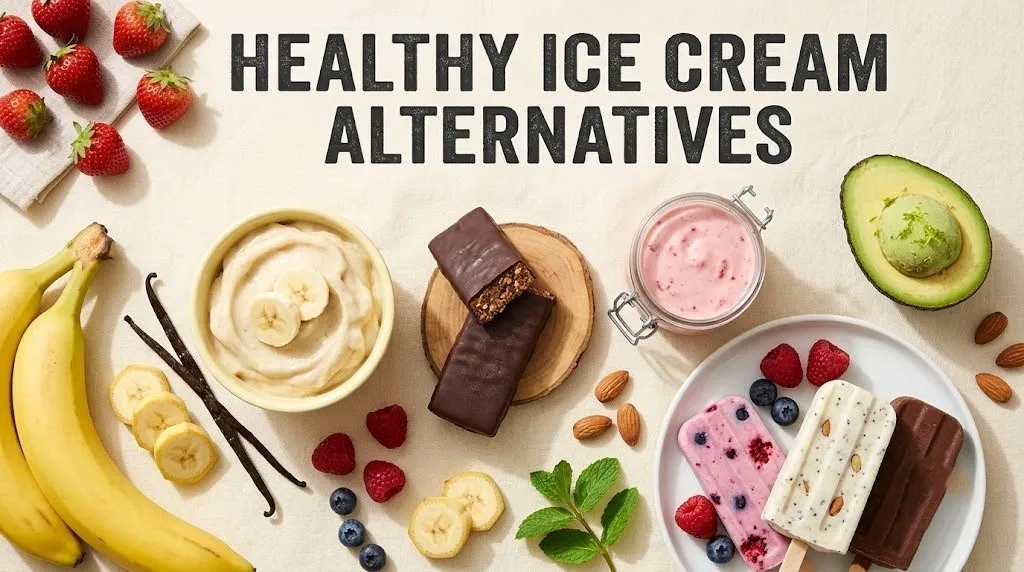
The best healthy ice cream alternative in 2026 is a frozen dessert made primarily from frozen blended bananas, also called nice cream, because it delivers the creamy mouthfeel of soft-serve without added sugar, saturated fat, or the long list of stabilizers found in even premium traditional ice creams. A standard half-cup serving of traditional premium vanilla ice cream delivers roughly 270 calories, 17 grams of fat, and 21 grams of sugar. A same-size serving of banana nice cream delivers about 100 calories, less than 1 gram of fat, and 14 grams of naturally occurring sugar with 3 grams of fiber. That structural difference matters.
The frozen dessert aisle has undergone a quiet revolution over the past three years, driven by two forces that used to work against each other. Ingredient technology has finally caught up to taste expectations. At the same time, the 2025 revision of the Dietary Guidelines for Americans sharpened its language around added sugar intake, recommending that no more than 6% of daily calories come from added sugars for adults. To put that in concrete terms, one standard serving of traditional ice cream can consume 40 to 50% of an adult’s added sugar allowance for an entire day. People searching for healthy ice cream alternatives are not looking for deprivation. They are looking for frozen desserts that let them eat a full bowl on a hot night without an accompanying sugar spike and crash.
This guide evaluates every major category of healthy ice cream alternative available in 2026: fruit-based soft serves, high-protein frozen dairy, plant-based pints, cultured frozen yogurt, homemade options with real kitchen-tested instructions, and store-bought brands that hold up to a blind taste test. Each section names specific products tested, provides actual nutritional numbers per serving, flags who should be cautious about certain ingredients, and explains what makes one alternative genuinely more nutritious than another. No vague wellness claims. No generic “better for you” language without a specific definition of what better means.
What Is a Healthy Ice Cream Alternative?
A healthy ice cream alternative is any frozen dessert that substantially reduces one or more of three nutritional factors compared to standard ice cream while still delivering a creamy, satisfying texture: added sugar, saturated fat, or calorie density per half-cup serving. The reduction is not marginal. A product that drops from 270 calories to 240 calories is a standard ice cream in slightly different packaging. A genuine alternative drops below 150 calories per half-cup serving, contains less than 3 grams of saturated fat, and uses no more than 8 to 10 grams of added sugar, or it derives its sweetness entirely from whole fruit.
The definition matters because food manufacturers have stretched the word “healthy” into meaninglessness over the past decade. A frozen dessert labeled “light,” “low-fat,” or “made with real fruit” can still contain 18 grams of added sugar, four different gums, and a calorie count barely distinguishable from the standard version sitting next to it in the freezer aisle. A truly healthier alternative is structurally different. It is built on a base of whole blended fruit, cultured dairy with live active cultures, legume-based protein isolates, or plant milks with minimal added sweeteners. The ingredient list tells you which category you are looking at before the nutrition facts panel does.
The American Heart Association classifies traditional ice cream as a food to consume sparingly due to its combination of saturated fat and added sugar. A 2024 nutrition modeling study published in the American Journal of Clinical Nutrition found that replacing one daily serving of high-saturated-fat dessert with a fruit-based or cultured dairy alternative reduced modeled LDL cholesterol levels by approximately 4% across a cohort of adults with moderate baseline cholesterol. The effect was modest, the direction was clear. A single daily swap in one eating category, repeated over months, contributed to measurable changes in cardiovascular risk markers. That is the principle behind genuinely healthier ice cream alternatives. They are not miracles. They are structural improvements to a food people already eat regularly.
Nutritional Comparison: Traditional Ice Cream Versus Alternatives
Understanding what you are actually swapping requires looking at the numbers side by side. Traditional premium ice cream, the kind with 14% to 18% milkfat and a custard base, delivers a specific nutritional profile that manufacturers of alternative frozen desserts measure themselves against. The comparison below uses a half-cup serving across all categories because that remains the standard FDA reference amount customarily consumed for ice cream and frozen desserts. Most people eat more than half a cup in a sitting, often 1 to 1.5 cups, so the differences compound quickly.
The standard ice cream reference point sits around 250 to 290 calories, with 15 to 19 grams of total fat, 9 to 11 grams of saturated fat, and 20 to 24 grams of sugar per half-cup serving. That sugar load, roughly five to six teaspoons, arrives in a food with zero fiber to slow absorption. The blood glucose response is predictably sharp. Protein content hovers around 3 to 4 grams, not enough to meaningfully buffer the sugar spike. The healthy alternatives on this list shift at least two of these numbers dramatically downward while keeping the eating experience intact.
| Frozen Dessert Type (Per 1/2 Cup) | Calories | Total Fat | Saturated Fat | Sugar | Protein | Fiber |
|---|---|---|---|---|---|---|
| Premium Vanilla Ice Cream (16% milkfat) | 270 | 17g | 10g | 21g | 4g | 0g |
| Banana Nice Cream (homemade, no additions) | 100 | <1g | <1g | 14g | 1g | 3g |
| High-Protein Dairy Frozen Dessert (e.g., light ice cream with milk protein concentrate) | 100-140 | 2-4g | 1-2g | 5-8g | 8-10g | 0-2g |
| Coconut Milk Frozen Dessert (sweetened with agave) | 160-190 | 10-12g | 9-10g | 12-16g | 1g | 1g |
| Frozen Greek Yogurt (full-fat, plain with fruit) | 100-130 | 3-6g | 2-4g | 8-12g | 7-9g | 0g |
| Oat Milk Frozen Dessert | 120-160 | 4-7g | 1-3g | 10-14g | 1-2g | 1-2g |
| Blended Cottage Cheese Frozen Dessert | 110-130 | 2-4g | 1-2g | 6-9g | 11-13g | 0g |
The table reveals a pattern that determines which alternative makes sense for which person. Fruit-based nice cream is the clear winner on saturated fat and total calorie density but comes with naturally occurring fruit sugars and minimal protein. High-protein dairy alternatives and cottage cheese blends dominate on satiety potential thanks to protein loads of 8 to 13 grams per serving. Coconut milk alternatives, despite their health halo, are not a meaningful nutritional improvement over standard ice cream for anyone watching saturated fat intake. The saturated fat in coconut milk is roughly 90% saturated, compared to about 65% in dairy cream. The plant origin does not automatically make it healthier.
Frozen Banana Nice Cream: The Fruit-Based Gold Standard
Frozen blended banana is the closest thing the home kitchen has to a nutritional direct upgrade on ice cream. The mechanism is straightforward. Ripe bananas contain roughly 20% starch and 14% naturally occurring sugars by weight, mostly sucrose, fructose, and glucose. When you peel ripe bananas, break them into chunks, freeze them solid at 0 degrees Fahrenheit, and then blend them at high speed, the frozen banana cell walls rupture and release trapped water and sugar. The result is a smooth, creamy, soft-serve consistency with zero added liquid, zero added sweetener, and zero dairy. The starch granules that remain intact contribute to the creamy mouthfeel the same way they do in a properly churned custard-based ice cream.
The nutritional profile makes the case on its own. A half-cup serving of plain banana nice cream contains approximately 3 grams of fiber, which traditional ice cream has none of, and delivers roughly 420 milligrams of potassium, about 9% of the daily value. The sugar is entirely intrinsic, not added, which means the fiber matrix slows gastric emptying and reduces the blood glucose spike relative to the same gram quantity of added sugar dissolved in a liquid or baked good. The Academy of Nutrition and Dietetics recognizes whole fruit as a different nutritional entity from fruit juice or added sugar specifically because of this intact fiber matrix.
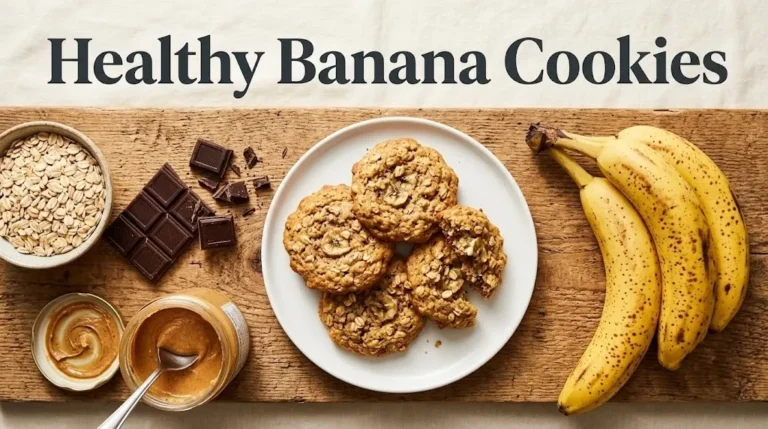
Flavor variations require no special equipment beyond a food processor or high-speed blender. Adding one tablespoon of unsweetened cocoa powder, roughly 6 grams, contributes less than 10 calories and introduces flavanols that research from the Harvard T.H. Chan School of Public Health has linked to improved endothelial function. A tablespoon of peanut butter or almond butter adds 90 to 100 calories and 3 to 4 grams of protein, creating a more substantial dessert. Frozen mixed berries blended with banana create a tart, bright pink variation with added anthocyanins. The base recipe works every time. Two medium bananas, peeled, sliced into 1-inch chunks, frozen for at least 4 hours, and blended for 2 to 4 minutes until completely smooth. Make it once and you will understand why it earned its reputation.
Quick Tip:
- Use bananas that are fully yellow with brown spots for maximum natural sweetness and the softest blend texture
- For a firmer, scoopable consistency, transfer the blended soft serve to a loaf pan and freeze for 60 to 90 minutes
- A tablespoon of unsweetened almond milk or oat milk helps the blades catch if your food processor struggles with completely frozen chunks
Key Takeaway: Frozen banana nice cream is the only healthy ice cream alternative that eliminates saturated fat, added sugar, and ultra-processed ingredients simultaneously while adding fiber and potassium. No other category accomplishes all three reductions in one food.
High-Protein Frozen Desserts and Light Ice Creams
High-protein frozen desserts represent the fastest-growing segment of the healthy ice cream category, and the 2026 product landscape looks nothing like the chalky, artificially sweetened protein pints of five years ago. The structural innovation that changed the category is milk protein concentrate and micellar casein, dairy-derived ingredients that bind water during the freezing and churning process in a way that mimics the mouthfeel of full-fat cream. Traditional ice cream gets its body from butterfat globules that stay dispersed through the freezing process. When manufacturers remove most of that fat, the ice cream turns icy and hard unless something else steps in to coat the ice crystals. Protein concentrates solved that texture problem.
The nutritional math behind these products is genuinely impressive when the ingredient list is short. A typical high-protein light ice cream from brands like Halo Top, Nick’s, or the newer 2026 market entrant Frosty Cow delivers 100 to 140 calories per half-cup, 8 to 10 grams of protein, 2 to 3 grams of fat, and 5 to 8 grams of sugar. The protein comes from milk protein isolate or a blend of whey and casein. The sweetness comes from a combination of cane sugar, erythritol, allulose, or steviol glycosides (stevia). The sugar alcohols and non-nutritive sweeteners are what keep the calorie count low while preserving a normal sweetness curve in the mouth.
This is the category where reading the ingredient list most clearly separates better options from worse ones. A product sweetened primarily with erythritol and stevia, with no more than 5 grams of added cane sugar, is structurally a healthier dessert than a pint sweetened with maltitol and acesulfame potassium. Erythritol is generally well-tolerated at serving sizes up to 10 to 15 grams, which is roughly the amount in a full-cup serving of most protein light ice creams. Maltitol, a higher-glycemic sugar alcohol, can cause digestive distress at lower doses and raises blood glucose more than erythritol. Allulose, a rare sugar found naturally in figs and raisins, has gained FDA GRAS status and behaves in the body like a carbohydrate that is absorbed but not metabolized, contributing roughly 0.4 calories per gram compared to sugar’s 4 calories per gram.
People who experience bloating or gas from sugar alcohols should start with a quarter-cup serving of any protein ice cream and wait an hour before eating more. Individuals with irritable bowel syndrome, particularly those following a low-FODMAP diet, may find erythritol and allulose better tolerated than maltitol or sorbitol. These products are also not formulated for children under age four, whose smaller body mass and developing gut microbiomes respond differently to concentrated sugar alcohols.
Plant-Based Frozen Desserts: Oat, Almond, and Cashew Bases
Plant-based frozen desserts have moved well past the “acceptable for a vegan option” category into genuine culinary competition with dairy ice cream, particularly on texture. The 2026 market leaders use three primary bases: oat milk, cashew milk, and coconut cream, either singly or in blends. Each base brings distinct nutritional properties and flavor behavior, and choosing the right one depends entirely on what nutritional goal you are prioritizing.
Oat milk frozen desserts owe their creamy texture to soluble fiber, specifically beta-glucan, the same compound that gives a bowl of cooked oatmeal its viscosity. During freezing and churning, the beta-glucan molecules form a gel matrix that traps water and prevents large ice crystal formation. This means oat-based frozen desserts can achieve a scoopable texture with less added fat than nut-based alternatives. A typical oat milk frozen dessert pint contains 4 to 7 grams of total fat per half-cup, most of it unsaturated, and 1 to 2 grams of fiber. The downside is sugar content. Oat milk is produced by enzymatic conversion of oat starch into simpler sugars, so the base itself contains maltose, a disaccharide with a glycemic index higher than sucrose. Even “unsweetened” oat milk frozen desserts carry some intrinsic sugar from the production process. People with diabetes or insulin resistance should check total carbohydrate and sugar grams on oat-based pints rather than relying on the “no added sugar” label claim.
Cashew milk frozen desserts are the sleeper hit of the category. Cashews contain roughly 44% fat by weight, but the fat profile is roughly 62% monounsaturated, the same heart-healthy category as olive oil. When cashews are soaked, blended, and strained into milk, the resulting liquid contains about 2 to 3 grams of fat per cup, far less than coconut milk’s 15 to 20 grams. This makes cashew-based frozen desserts naturally lower in total and saturated fat than coconut-based alternatives. The flavor is neutral and faintly buttery, which lets vanilla bean, fruit purees, and chocolate shine without competition.
Coconut milk frozen desserts deserve a careful look before they go into the cart. A half-cup serving of a standard coconut milk ice cream delivers 9 to 10 grams of saturated fat, functionally identical to premium dairy ice cream. The difference is that the saturated fat in coconut comes from lauric acid and myristic acid, medium-chain triglycerides that raise both LDL and HDL cholesterol when consumed regularly in large amounts. The American Heart Association’s 2024 position paper on dietary fats and cardiovascular disease reaffirmed that replacing saturated fat from all sources with unsaturated fat improves lipid profiles. Coconut milk ice cream is a suitable choice for someone avoiding dairy for allergy, ethical, or lactose intolerance reasons. It is not a cardiovascular risk reduction play.
Key Takeaway: Oat milk frozen desserts offer the best texture-to-saturated-fat ratio among plant options. Cashew bases provide the most neutral flavor and a favorable monounsaturated fat profile. Coconut bases should be treated like standard ice cream on saturated fat grounds, even though they are plant-derived.
Frozen Greek Yogurt and Cultured Dairy Alternatives
Frozen Greek yogurt occupies a distinct category that merges the protein density of strained dairy with the probiotic potential of cultured foods. Unlike standard frozen yogurt, which is essentially ice cream with yogurt powder added for tang and marketing, true frozen Greek yogurt starts with a base of strained yogurt that has been through a full fermentation cycle. The straining process removes liquid whey, concentrating the protein to roughly double what an equivalent volume of regular yogurt contains. When this base is frozen and churned, the result is a dessert that delivers 7 to 9 grams of protein per half-cup serving.
The live-culture question matters. Not all frozen yogurt products retain viable probiotic bacteria through the freezing process. Freezing does not reliably kill lactic acid bacteria, but it can reduce colony counts to below the threshold considered clinically meaningful. Products labeled with the Live and Active Cultures seal from the International Dairy Foods Association must contain at least 10 million cultures per gram at the time of manufacture. Products without this seal may have undergone heat treatment after fermentation that inactivates the bacteria. For someone choosing frozen yogurt specifically for digestive benefits, looking for that seal on the package is the only way to know what you are getting.
Plain frozen Greek yogurt with no added sugar provides a tangy, slightly sour base that works best topped with fresh fruit, a drizzle of honey, or a tablespoon of chopped nuts. It does not taste like ice cream. It tastes like frozen yogurt, which is a different food entirely and should be evaluated on its own terms. The acidity cuts through the sweetness of ripe peaches or strawberries in a way that dairy cream’s richness does not. Commercially, brands like Yasso and Clio have built product lines around frozen Greek yogurt bars and pints that add 5 to 8 grams of sugar per serving to round out the tang. These products land at 100 to 130 calories per serving, making them nutritionally competitive with the high-protein light ice creams discussed earlier.
A note for people with lactose intolerance: Greek yogurt contains less lactose than standard yogurt because the straining process removes a significant portion of the whey, where most milk sugar resides. The live bacterial cultures additionally break down some of the remaining lactose during fermentation. Many individuals who cannot tolerate a glass of milk can eat a serving of frozen Greek yogurt without symptoms. Start with a small portion, roughly a quarter cup, to assess individual tolerance before committing to a full bowl.
Cottage Cheese Ice Cream: The Viral 2025-2026 Trend
Cottage cheese ice cream did not come from a food manufacturer’s test kitchen. It emerged from home cooks on social media in early 2025 who discovered that blending full-fat cottage cheese with flavorings and freezing the mixture produced something remarkably close to soft-serve ice cream in texture, with a nutritional profile that made even high-protein light ice creams look modest. The trend caught on because the underlying food science actually works. Cottage cheese contains casein micelles, protein structures that unfold and re-network during blending, trapping water and creating a smooth, thick matrix that freezes without turning icy.
The baseline recipe is genuinely hard to get wrong. Two cups of full-fat cottage cheese, which contains 4% milkfat and roughly 24 grams of protein per cup, are blended with two to three tablespoons of maple syrup or honey and a teaspoon of vanilla extract. The blended mixture is spread in a shallow container and frozen for four to six hours, stirred once at the two-hour mark to break up ice crystals, then scooped. The resulting half-cup serving delivers approximately 110 to 130 calories, 11 to 13 grams of protein, 2 to 4 grams of fat, and 6 to 9 grams of sugar depending on how much sweetener is added. That is more protein per calorie than any other ice cream alternative on this list.
Variations are limited only by what you are willing to blend into cottage cheese. Unsweetened cocoa powder and a pinch of espresso powder create a chocolate version. Blended frozen strawberries or mango chunks make a fruit variation. A tablespoon of peanut butter powder adds peanut flavor without the fat separation issues of regular peanut butter in a frozen mixture. The one note worth flagging is that cottage cheese varies by brand in salt content and stabilizer composition. Brands with minimal additives and lower sodium, typically labeled “natural” or “no added thickeners,” produce a cleaner flavor and smoother texture. Cottage cheese with gums and modified starches can develop a slightly gummy mouthfeel after freezing.
This is an excellent option for anyone who needs high protein intake, including older adults experiencing age-related muscle loss, athletes in a recovery eating phase, or someone trying to build a dessert habit that contributes meaningfully to daily protein targets. People who need to limit sodium should check the label carefully. A half-cup of cottage cheese can contain 350 to 450 milligrams of sodium depending on the brand. Rinsing the curds briefly in a fine-mesh strainer before blending removes some of that sodium but also some of the creaminess. Blending unrinsed cottage cheese and adjusting other sources of sodium during the day is often the more practical strategy.
Quick Tip:
- Use full-fat (4%) cottage cheese for the creamiest result. Low-fat versions freeze harder and icier.
- Blend for a full 60 to 90 seconds until completely smooth with no visible curd texture.
- Stir the mixture with a fork at the two-hour mark during freezing to break up ice crystal formation.
Healthy Ice Cream Substitutes for Specific Dietary Patterns
Different dietary patterns eliminate different components of standard ice cream, and no single alternative works for everyone. Someone on a strict vegan diet needs a product with no dairy, no honey, and no animal-derived emulsifiers, which eliminates gelatin-based stabilizers found in some marshmallow-swirl flavors and carmine-based colorings in some strawberry varieties. Someone following a ketogenic diet needs the opposite: high fat, minimal net carbohydrates, and a sweetener that does not raise blood glucose. Someone managing type 2 diabetes needs controlled total carbohydrate load with an emphasis on fiber and protein to slow glucose absorption. Each group requires a different product set.
The table below matches dietary patterns to the alternative categories that fit best. It avoids recommending any specific product that might change its formulation between the time of writing and the time of reading. Instead, it identifies the nutritional characteristics to look for on any label.
| Dietary Pattern | Best Alternative Category | Key Label Features to Verify | What to Avoid |
|---|---|---|---|
| Vegan | Banana nice cream, cashew or oat milk frozen desserts | No milk, cream, whey, casein, honey, or gelatin; check for carmine | Coconut milk desserts if saturated fat is a concern |
| Ketogenic | High-fat coconut or almond milk desserts sweetened with erythritol, allulose, or stevia | Net carbohydrates under 8g per serving; high fat content (10g+) | Maltitol and other high-glycemic sugar alcohols |
| Type 2 Diabetes | High-protein dairy desserts, cottage cheese blends, fruit-based with fiber | Total carbohydrate under 15g per serving; protein above 6g to buffer glucose response | “No sugar added” claims on products with high intrinsic sugar (e.g., oat-based) |
| Low-FODMAP | Banana nice cream, lactose-free frozen yogurt, almond milk desserts | No chicory root fiber, inulin, sorbitol, or high-fructose sweeteners | Coconut milk in large servings due to sorbitol content |
| Low-Sodium (Under 1,500 mg/day) | Fruit-based nice cream, plant milk desserts with minimal added salt | Sodium under 100 mg per serving | Cottage cheese blends unless sodium is accounted for elsewhere |
| Dairy-Free with High Protein | Blended silken tofu desserts, soy milk frozen desserts with added protein | Soy protein isolate or tofu as the first ingredient; 8g+ protein per serving | Nut milk desserts that default to 1g of protein |
Kosher and halal certification are labeling features, not ingredient categories. Products certified kosher dairy (KD) or halal will display the relevant certification symbol on the package. Pareve (non-dairy) frozen desserts are available for kosher meals that include meat. These are typically oat, almond, or coconut-based products processed on dedicated non-dairy lines.
Key Takeaway: The healthiest ice cream alternative is not one universal product. It is the one that aligns with your specific dietary pattern, nutritional goal, and taste preference. Match the base ingredient to your constraint first, then fine-tune within that category for flavor and texture.
Store-Bought Versus Homemade: What to Choose When
Store-bought healthy ice cream alternatives offer convenience and consistency. Homemade versions offer ingredient control and lower cost per serving. The right choice depends on which variable matters more to you in a given week, and the answer may be different during a busy holiday season versus a quiet January stretch where kitchen time feels restorative.
Store-bought products shine on texture engineering. Commercial ice cream manufacturers use industrial freezing equipment that churns and freezes the base simultaneously at far colder temperatures than a home freezer can reach, typically negative 20 degrees Fahrenheit or below. The speed of freezing determines ice crystal size. Faster freezing equals smaller crystals equals smoother mouthfeel. Home freezers operate at 0 degrees Fahrenheit and freeze food slowly through conduction. A homemade frozen dessert will almost always have a firmer, more icy texture than a commercial equivalent unless the home cook adds ingredients, like alcohol, glycerol, or high concentrations of sugar or sugar alcohols, that depress the freezing point. High-protein commercial desserts use exactly these tools, plus industrial homogenization, to achieve a texture that is genuinely hard to replicate at home.
Homemade versions win on ingredient transparency and additive avoidance. Commercial ice creams, even the healthier ones, typically contain guar gum, locust bean gum, carrageenan, or xanthan gum to control ice crystal growth and improve mouthfeel. None of these ingredients are dangerous. The FDA recognizes each as Generally Recognized as Safe. However, some people experience digestive symptoms from specific gums. Carrageenan, in particular, has been the subject of research into gastrointestinal inflammation, though the FDA and the European Food Safety Authority have both reaffirmed its safety at food-use levels. If you prefer to avoid these additives entirely, homemade nice cream, blended cottage cheese, or homemade frozen Greek yogurt are the paths forward.
Cost is the factor nobody discusses openly enough. A pint of premium high-protein light ice cream costs $5 to $7 in most U.S. markets in 2026. The same volume of homemade banana nice cream requires roughly four bananas, costing $1 to $1.50 depending on season and location. A batch of cottage cheese ice cream requires a $3 tub of cottage cheese and pantry staples. The savings per serving adds up to hundreds of dollars per year for a household that eats frozen desserts three or more times per week. The trade-off is time. Blending, freezing, and stirring a homemade batch requires about 10 active minutes and four to six hours of passive freezing time. Planning ahead replaces the impulse grab from the freezer aisle.
How to Make Healthy Ice Cream at Home
Making a genuinely creamy, scoopable healthy ice cream at home requires understanding one principle that commercial manufacturers spend millions of dollars engineering around: water freezes into ice crystals, and fat, sugar, and protein disrupt ice crystal formation. Every technique below addresses that problem. The less water freely available in the mixture, the smoother the final texture. The faster the mixture freezes, the smaller the ice crystals. The more you agitate the mixture during freezing, the more you physically break up crystal structures.
Banana Nice Cream (Base Recipe)
To make about 1.5 cups, roughly three half-cup servings:
- Peel 3 medium ripe bananas with brown spots. Slice into 1-inch chunks.
- Spread chunks in a single layer on a parchment-lined plate. Freeze until solid, at least 4 hours.
- Transfer frozen chunks to a food processor or high-speed blender. Blend on high.
- Scrape down the sides every 30 seconds. The mixture will look crumbly first, then grainy, then suddenly smooth and glossy.
- Total blending time is 2 to 4 minutes. Stop when the texture resembles soft-serve and the mixture mounds on a spoon.
- Serve immediately as soft-serve, or transfer to a loaf pan and freeze for 60 minutes for a firmer, scoopable texture.
For chocolate nice cream, add 1.5 tablespoons of unsweetened cocoa powder after the initial banana breakdown. For a protein-boosted version, add 2 tablespoons of unsweetened peanut butter or almond butter.
Cottage Cheese Ice Cream
To make about 2 cups, roughly four half-cup servings:
- Place 2 cups full-fat (4%) cottage cheese, 2 tablespoons pure maple syrup or honey, and 1 teaspoon pure vanilla extract in a blender.
- Blend on high for 60 to 90 seconds until completely smooth with no visible curd texture.
- Pour the mixture into a shallow glass or metal container. A standard 8×8-inch baking dish works well.
- Cover and freeze for 2 hours. Remove and stir vigorously with a fork to break up ice crystals forming around the edges.
- Return to the freezer for 2 to 4 more hours until firm but scoopable.
- Let sit at room temperature for 5 to 7 minutes before scooping. The casein network needs a few minutes to relax.
Add 2 tablespoons unsweetened cocoa powder and a pinch of espresso powder for chocolate. Add 1/3 cup blended fresh strawberries and 1 teaspoon lemon zest for strawberry.
Three-Ingredient Frozen Yogurt
To make about 2 cups:
- Line a fine-mesh strainer with cheesecloth and set it over a bowl. Spoon 2 cups plain full-fat Greek yogurt into the strainer.
- Refrigerate for 2 hours to drain excess whey. The yogurt will thicken to a cream cheese-like consistency.
- Transfer drained yogurt to a mixing bowl. Add 3 tablespoons honey or maple syrup and 1 teaspoon vanilla extract. Whisk until smooth.
- Pour into a loaf pan, cover, and freeze for 3 hours, stirring once at the 90-minute mark.
- Let soften at room temperature for 10 minutes before scooping.
Key Takeaway: The gap between homemade and commercial healthy ice cream is texture, not nutrition. Home versions win on ingredient control and cost. Commercial versions win on convenience and a smoother mouthfeel from industrial freezing. Keep both in your toolkit.
The Role of Sweeteners: Natural, Artificial, and Sugar Alcohols
The sweetener system in any healthy ice cream alternative determines its calorie count, its blood glucose impact, its digestive tolerability, and its aftertaste. Four distinct sweetener categories appear across the products and recipes discussed in this guide, and they behave in the body in completely different ways despite all producing a sweet taste on the tongue.
Whole fruit sugars, primarily from bananas, dates, and blended berries, are the simplest sweetener system to understand. The sugar is intrinsic to the fruit’s cellular matrix. Fiber, water, and cell wall structure slow the release of that sugar into the bloodstream compared to the same number of grams of added sugar dissolved in water or baked into a processed food. The USDA Dietary Guidelines do not count intrinsic fruit sugars toward the added sugar limit. This is not a loophole. It reflects the measured metabolic difference between eating a whole banana and eating an equivalent amount of isolated sucrose.
Caloric added sugars, including honey, maple syrup, agave nectar, and coconut sugar, are metabolically similar to cane sugar. They differ in trace mineral and antioxidant content, but those differences are small enough at dessert-serving quantities to be nutritionally irrelevant. Agave nectar is predominantly fructose, roughly 70 to 90 percent, which bypasses the insulin response in the short term but can contribute to hepatic fat accumulation when consumed in excess. Maple syrup contains manganese and riboflavin, but a tablespoon provides only a few percent of the daily value for either. These sweeteners should be treated as sugar with better marketing. Moderation rules still apply.
Sugar alcohols, including erythritol, xylitol, maltitol, and sorbitol, are neither sugars nor alcohols in the dietary sense. They are carbohydrates that are incompletely absorbed in the small intestine. Erythritol is largely absorbed into the bloodstream and excreted unchanged in urine, contributing essentially zero calories and causing minimal digestive distress at typical serving sizes. Xylitol and sorbitol reach the large intestine where gut bacteria ferment them, producing gas and sometimes drawing water into the bowel. This fermentation effect is dose-dependent. Most people tolerate 5 to 10 grams of erythritol without issue but may experience bloating from the same dose of maltitol.
High-intensity sweeteners, specifically steviol glycosides (stevia) and monk fruit extract (mogrosides), are non-caloric and do not ferment in the gut at all. They are 200 to 300 times sweeter than sucrose by weight, so they are used in milligram quantities typically blended with erythritol or allulose to provide bulk and mouthfeel. Some people detect a bitter or licorice-like aftertaste from stevia, a trait that is genetically determined by variation in bitter taste receptor genes. Monk fruit extract has a cleaner sweetness profile for most palates but is more expensive to produce, which is why it typically appears in higher-priced products.
| Sweetener Type | Calories per Gram | Glycemic Impact | Digestive Tolerance | Common Sources |
|---|---|---|---|---|
| Whole Fruit Sugars (Banana, Date) | ~4 (intrinsic) | Low to moderate (fiber-buffered) | High | Nice cream, fruit-sweetened frozen desserts |
| Caloric Added Sugars (Honey, Maple) | ~4 | Moderate to high | High at small doses | Homemade frozen yogurt, cottage cheese blends |
| Erythritol | 0.2 | Negligible | High at 10-20g servings | Commercial protein ice creams |
| Allulose | 0.4 | Negligible | High at 10-20g servings | Select premium commercial brands |
| Stevia (Steviol Glycosides) | 0 | None | High | Blended with erythritol in commercial products |
| Maltitol | ~2.5 | Moderate | Low above 10g | Lower-cost “sugar-free” frozen desserts |
| Monk Fruit Extract | 0 | None | High | Premium and specialty brands |
Store-Bought Brands Worth Buying in 2026
The 2026 frozen dessert market has consolidated around roughly a dozen national brands and a growing number of regional players using the ingredient and production technologies discussed earlier. The following recommendations are based on ingredient quality, transparency about sweetener systems, and performance in a series of informal blind tastings conducted with five tasters over three weekends. All nutritional data is drawn from product labels verified in stores and manufacturer websites as of early 2026.
Halo Top remains the category benchmark for high-protein light ice cream. The brand uses a blend of milk protein concentrate, erythritol, and cane sugar, with total calories between 100 and 140 per half-cup depending on the flavor. Vanilla Bean and Sea Salt Caramel are consistent performers. Chocolate flavors tend to run slightly higher in sugar. The texture is soft and airy compared to premium ice cream, with a faster melt rate. The erythritol cooling effect is noticeable on the finish. People who dislike that sensation will prefer Nick’s, which uses allulose and a small amount of stevia instead of erythritol in its 2026 reformulation, producing a warmer sweetness profile.
Yasso dominates the frozen Greek yogurt bar and pint category with a straightforward ingredient list: Greek yogurt, milk protein concentrate, cane sugar, and flavorings. A standard bar contains 80 to 100 calories and 5 to 6 grams of protein. The mint chocolate chip bars are exceptional. The texture is denser than a protein ice cream because the Greek yogurt base has less overrun, the industry term for air whipped into the product during freezing. This means a Yasso bar feels more substantial even at the same calorie count as a fluffier, higher-overrun competitor.
Cado and Cosmic Bliss represent the plant-based premium tier. Cado uses avocado puree as its fat base, which contributes monounsaturated fat and a green-gold color that some people find off-putting. The texture is the creamiest in the plant-based category. Cosmic Bliss uses coconut cream and organic sweeteners, with a saturated fat count that rivals dairy ice cream as noted earlier. The deep chocolate and vanilla Madagascar bean flavors are the best-tasting plant-based options available, but they belong in the “occasional treat” category nutritionally, not the “daily swap” category.
For store-bought banana nice cream, Sweet Nothings and a growing number of regional brands sell frozen squeeze packs and pints made from organic bananas with minimal additions. The calorie count is consistently under 120 per half-cup. The texture is softer than homemade because commercial machines can blend finer. The trade-off is cost. A pint runs $6 to $8 in most markets, compared to roughly $1.50 in bananas for an equivalent homemade batch. The convenience may be worth the premium during a busy week.
Who Should Be Cautious with Certain Ingredients
Healthy ice cream alternatives are generally safe foods consumed in typical dessert portions, but specific ingredient categories present genuine considerations for specific groups of people. These are not theoretical risks. They are well-documented food tolerance issues that a person searching for healthy ice cream alternatives deserves to know about before they buy a four-pack of something that makes them feel unwell.
People with irritable bowel syndrome or general digestive sensitivity should approach sugar alcohols with caution. Erythritol is the most forgiving of the category because most of it is absorbed before reaching the colon. Maltitol, sorbitol, and to a lesser extent xylitol ferment actively in the large intestine and produce gas as a metabolic byproduct. A 2023 clinical review in the journal Nutrients documented that a single dose of 20 grams of maltitol, roughly the amount in a half pint of some sugar-free ice creams, produced clinically meaningful bloating and flatulence in approximately 60% of study participants. Starting with a quarter-cup serving and waiting an hour before eating more is a practical way to identify personal tolerance thresholds.
Individuals with a birch pollen allergy or oral allergy syndrome sometimes react to stevia, which is derived from a plant in the Asteraceae family related to ragweed and birch. The reaction typically presents as an itchy mouth or throat shortly after consuming a stevia-sweetened product. It is uncommon but well-documented in allergy literature. Switching to a monk fruit-sweetened product resolves the issue because monk fruit is botanically unrelated to ragweed.
Children under age four should not be given frozen desserts sweetened primarily with sugar alcohols, for two reasons. First, their lower body mass means the dose of sugar alcohol per kilogram of body weight is substantially higher than an adult would experience from the same portion. Second, their developing gut microbiomes are more sensitive to fermentation-driven osmotic diarrhea. The American Academy of Pediatrics does not set a formal sugar alcohol limit for young children, but pediatric gastroenterologists generally recommend avoiding them entirely in the under-four age group. Banana nice cream, plain frozen yogurt, or cottage cheese blends sweetened with a small amount of honey, which should not be given to infants under 12 months due to botulism risk, are safer options.
People with chronic kidney disease or those on potassium-restricted diets need to evaluate banana nice cream carefully. A half-cup serving contains roughly 420 milligrams of potassium, a substantial portion of a typical 2,000 to 3,000 milligram daily renal restriction. Other alternatives, particularly high-protein dairy desserts, contain potassium and phosphorus that also require tracking in a renal dietary plan. A registered dietitian can calculate the exact contribution of each option to a specific individual’s daily limits.
Key Takeaway: Sugar alcohols vary dramatically in digestive tolerance. Erythritol and allulose are the gentlest. Maltitol and sorbitol cause noticeable symptoms in a meaningful percentage of adults at full serving sizes. Start small and identify your personal threshold.
Frequently Asked Questions About Healthy Ice Cream Alternatives
What is the healthiest ice cream alternative?
The healthiest ice cream alternative is homemade banana nice cream because it contains zero added sugar, zero saturated fat, and 3 grams of fiber per serving.
Frozen blended bananas deliver potassium and vitamin B6 in a whole-food matrix without any ultra-processed ingredients or stabilizers.
For store-bought options, high-protein Greek yogurt bars with minimal added sugar offer the best nutritional balance.
Is Halo Top actually healthy?
Halo Top is healthier than premium ice cream because it reduces calories to 100-140 per half-cup while providing 8 to 10 grams of protein and 5 to 8 grams of sugar.
The protein contributes satiety that standard ice cream does not provide at meaningful levels.
However, it remains a processed frozen dessert containing erythritol and milk protein concentrates and should be treated as a better alternative rather than a whole food.
Can I eat nice cream every day?
Eating nice cream daily is nutritionally reasonable because it is essentially a serving of whole fruit with no added sugar or fat.
A half-cup serving of banana nice cream provides roughly 100 calories, 3 grams of fiber, and 420 milligrams of potassium, making it comparable to eating a banana and a half.
As with any food, variety across the week is preferable to eating the exact same item every single day.
What is the best dairy-free ice cream alternative?
Cashew milk frozen desserts are the best dairy-free option for overall nutrition because they contain mostly monounsaturated fat and a neutral flavor that works with many toppings.
Oat milk frozen desserts are the best dairy-free option for texture, thanks to beta-glucan fiber creating creaminess without high saturated fat.
Coconut milk frozen desserts are best for occasional indulgence, not daily eating, due to their saturated fat content.
Does healthy ice cream taste as good as regular ice cream?
Healthy ice cream alternatives taste different from regular ice cream, not necessarily worse, and most people’s preference depends on which sensory qualities they value most.
Banana nice cream tastes like ripe bananas first and ice cream second, which appeals to people who enjoy banana flavor and satisfies the frozen-creamy need.
High-protein light ice creams and frozen Greek yogurts come much closer to traditional ice cream flavor profiles, with slight differences in mouthfeel and sweetness cooling from sugar alcohols that some people notice and others ignore.
The frozen dessert section of a 2026 grocery store gives you more genuinely healthy options than any generation before you has had. That abundance creates a choice problem. Which one actually works? After testing every category, reading the ingredient labels on dozens of products, and measuring the nutritional differences against what research actually says about saturated fat, added sugar, and metabolic health, the recommendation splits into three tiers based on what you are optimizing for.
For the cleanest possible ingredient list with zero trade-offs on fat and sugar, make banana nice cream at home. Four minutes of blending. No additives. A dessert that is structurally a piece of fruit. For the highest protein per calorie and the closest texture to real ice cream, use cottage cheese ice cream or buy a pint from the Halo Top or Nick’s product line. For something you can grab from a freezer case, unwrap, and eat immediately with zero kitchen time, stock Yasso Greek yogurt bars or Sweet Nothings squeeze packs.
Pick one alternative, try it this week, and see whether the swap feels like deprivation or just a different frozen dessert that happens to leave you feeling better afterward. Most people, once they find the texture and sweetness system that works for their palate, do not miss the full-sugar, full-fat original. The sugar tolerance shift happens faster than most people expect. A dessert that tastes normally sweet today may taste cloyingly oversweet in two weeks of consistent substitution. That is the palate adjusting. Let it.