Some Bolthouse Farms products are genuinely healthy, nutrient-dense options that outperform most grab-and-go competitors. Others are fruit juice concentrate blends with a sugar load that rivals soda, dressed in a label that says “100% fruit” and “no added sugar.” The answer to whether Bolthouse Farms is healthy depends entirely on which bottle you pick up and whether you are treating it as a meal replacement, a snack, or a beverage alongside a full meal. The brand is not one thing. It is a portfolio of products with nutritional profiles that range from excellent to problematic.
According to the American Heart Association, women should limit added sugar to no more than 25 grams (6 teaspoons) per day and men to 36 grams (9 teaspoons) . A single bottle of some Bolthouse Farms smoothies delivers more than 50 grams of total sugar. The brand’s defense, and it is a factually correct one, is that the sugar in most of their smoothies and juices comes from fruit and fruit juice concentrates, not from added cane sugar or high-fructose corn syrup. The human body processes a gram of sugar from apple juice concentrate almost identically to a gram of sugar from added sucrose. The liver does not read the marketing. The pancreas does not care about the “no added sugar” claim. A 60-gram sugar load triggers a substantial insulin response regardless of its source.
We broke down every major Bolthouse Farms product line, from the green juices that genuinely earn their health halo to the creamy protein drinks that blur the line between smoothie and milkshake. You will find specific product names, exact sugar and calorie figures per bottle, and clear guidance on which ones belong in your shopping cart and which ones belong in the “once in a while” category. This is not a blanket endorsement or condemnation. It is a product-by-product nutrition audit.
Are Bolthouse Farms drinks healthy?
Some Bolthouse Farms drinks are healthy, particularly the cold-pressed vegetable-forward juices and the lower-sugar green smoothies that deliver meaningful micronutrition without excessive sugar. The fruit-heavy smoothies and coffee-flavored protein drinks are less healthy because their sugar content, even when naturally occurring from fruit concentrates, exceeds what health organizations recommend in a single beverage.
The healthfulness of any Bolthouse Farms drink turns on three factors: total sugar per bottle, protein content, and whether the drink contains intact fiber from whole fruit and vegetable purees or is a strained juice with the fiber removed. The smoothies retain some fruit pulp and puree, which means they contain more fiber than the juices. The cold-pressed juices contain essentially zero fiber because the pressing process removes the insoluble pulp and skin. The protein drinks are an entirely different category, formulated as meal replacements with 15 to 30 grams of protein and a mix of added nutrients.
The Academy of Nutrition and Dietetics recommends that beverages contribute nutrients without displacing whole foods, and the concern with sweet-tasting liquid calories is that they do not trigger the same satiety response as solid food with identical calorie and sugar content. A 280-calorie Bolthouse Farms Mighty Mango smoothie does not fill the stomach the way a 280-calorie plate of eggs, toast, and fruit does. Liquid calories are easier to overconsume, and they leave you hungry sooner. This is not specific to Bolthouse Farms. It is a feature of all beverage calories. The question is whether the nutritional benefits of a particular bottle justify the sugar load and the low satiety.
Bolthouse Farms smoothie nutrition
Bolthouse Farms smoothies are the brand’s core product line, and their nutrition profiles follow a consistent pattern: moderate to high calories, very high sugar from fruit and fruit concentrates, low protein, and low to moderate fiber. The standard bottle size is 15.2 fluid ounces (450 milliliters) , and the entire bottle is designed to be consumed as a single serving. The nutrition facts panel applies to the whole bottle unless stated otherwise.
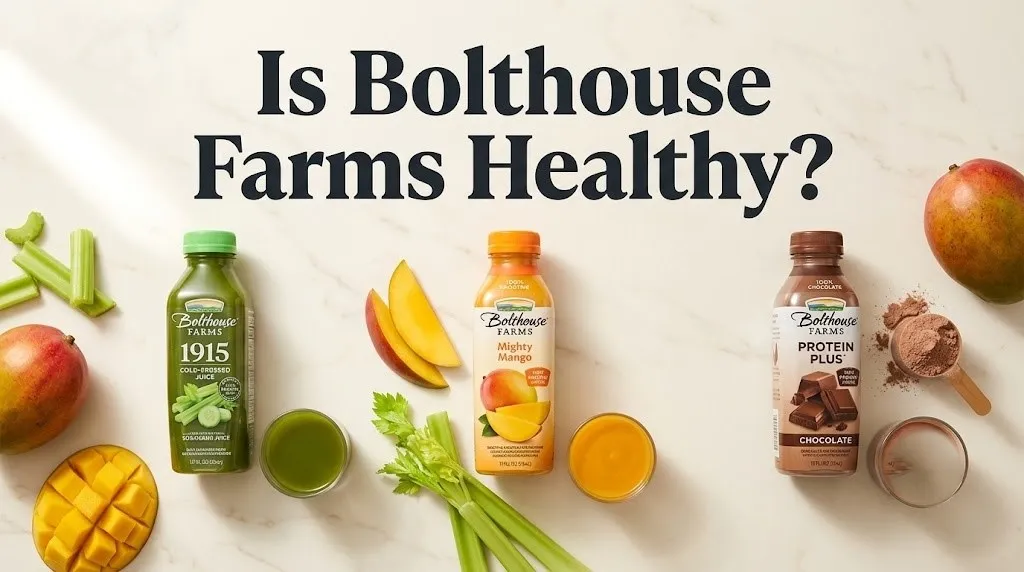
Bolthouse Farms Mighty Mango is one of the most popular flavors. The entire 15.2-ounce bottle contains 280 calories, 64 grams of carbohydrate, 57 grams of sugar, and 2 grams of protein. The ingredient list is short: mango puree from concentrate, apple juice from concentrate, pineapple juice from concentrate, natural flavors, beta-carotene, and ascorbic acid. There is zero added sugar in the sense of cane sugar or high-fructose corn syrup. The 57 grams of sugar come entirely from the fruit concentrates and purees, which the FDA does not classify as added sugar on the label under the current regulatory definition because the sugar is intrinsic to the fruit ingredient, even though the fruit has been processed into concentrate.
Bolthouse Farms Green Goodness is the better choice within the smoothie line. The same 15.2-ounce bottle contains 260 calories, 58 grams of carbohydrate, 50 grams of sugar, and 2 grams of protein. The ingredient list includes apple juice from concentrate, pineapple juice from concentrate, mango puree from concentrate, banana puree, kiwi juice from concentrate, and spirulina powder for the green color. The sugar is high, but the product delivers a serving of fruit and a small amount of greens-derived phytonutrients. It is not a green juice in the celery-and-kale sense. It is a fruit smoothie with a green tint. That distinction matters for someone buying it expecting a low-sugar vegetable drink.
Bolthouse Farms Strawberry Banana contains 270 calories, 62 grams of carbohydrate, 54 grams of sugar, and 2 grams of protein per bottle. The ingredient list leads with apple juice concentrate and strawberry puree. All three of these popular smoothies deliver more sugar than a 12-ounce can of Coca-Cola, which contains 39 grams of added sugar. The smoothies have more micronutrients, more fiber, and no added cane sugar. The metabolic effect of 57 grams of rapidly absorbed liquid fructose and glucose is the relevant health concern, not the technical classification of the sugar source.
| Product (15.2 fl oz bottle) | Calories | Sugar (g) | Fiber (g) | Protein (g) |
|---|---|---|---|---|
| Mighty Mango | 280 | 57 | 0 | 2 |
| Green Goodness | 260 | 50 | 2 | 2 |
| Strawberry Banana | 270 | 54 | 2 | 2 |
| Blue Goodness | 260 | 47 | 3 | 1 |
| Vanilla Chai Protein | 300 | 43 | 2 | 16 |
| Mocha Cappuccino Protein | 310 | 46 | 2 | 16 |
Key Takeaway: The standard Bolthouse Farms fruit smoothie is a 260 to 280-calorie beverage with 47 to 57 grams of sugar per bottle—less bad than soda because of the micronutrients and fiber, but still a sugar load that should be treated as a once-in-a-while food, not a daily health drink.
Are Bolthouse Farms protein drinks healthy?
Bolthouse Farms protein drinks are healthier than the standard fruit smoothies for people using them as intentional meal replacements or post-workout recovery fuel because the protein content, 15 to 30 grams per bottle, offsets the sugar’s metabolic impact and provides genuine satiety that the fruit-only smoothies lack. The protein drinks are not universally healthy. They contain added sugar in some formulations, carrageenan as a texture stabilizer, and enough calories to count as a small meal.
Bolthouse Farms Protein Plus is the highest-protein line, with 30 grams of protein per 15.2-ounce bottle from a blend of milk protein concentrate and whey protein concentrate. The chocolate and vanilla flavors contain approximately 300 to 320 calories, 36 to 40 grams of sugar, and 5 to 6 grams of saturated fat. The sugar comes from a combination of fruit juice concentrates and added cane sugar, which does appear on the ingredient list here unlike in the smoothies. The protein blend is high-quality, providing all essential amino acids including a strong leucine content for muscle protein synthesis. This is a legitimate post-workout recovery drink that competes with products like Core Power and muscle milk rather than with the fruit smoothies.
Bolthouse Farms Coffee Protein Drinks, including the Mocha Cappuccino and Vanilla Chai flavors, contain 15 to 16 grams of protein per bottle from milk protein concentrate and soy protein isolate. They are positioned as breakfast replacements with caffeine from coffee. The sugar content runs 43 to 46 grams per bottle, a combination of fruit concentrates and added sugar. The calorie count is 300 to 310. As a grab-and-go breakfast replacement for someone who would otherwise skip the meal or eat a pastry, the protein coffee drink is a reasonable functional choice. As a beverage consumed alongside a full breakfast, it adds 300 calories and 45 grams of sugar to a meal that already provides sufficient energy.
The common additive concern in the protein drinks is carrageenan, a seaweed-derived thickener that creates the creamy mouthfeel. The FDA considers food-grade carrageenan safe based on available evidence. Some animal and in vitro studies have suggested that degraded carrageenan may cause intestinal inflammation, but food-grade carrageenan differs from the degraded form and the evidence of harm in humans at dietary exposure levels is not established. Consumers who prefer to avoid carrageenan can find it listed on the ingredient panel and choose alternative products accordingly.
| Protein Drink (15.2 fl oz) | Calories | Protein | Sugar | Carrageenan | Best Use |
|---|---|---|---|---|---|
| Protein Plus Chocolate | 310 | 30g | 38g | Yes | Post-workout recovery |
| Protein Plus Vanilla | 300 | 30g | 36g | Yes | Meal replacement |
| Mocha Cappuccino | 310 | 16g | 46g | Yes | Breakfast replacement |
| Vanilla Chai | 300 | 16g | 43g | Yes | Breakfast replacement |
Bolthouse Farms juice nutrition
Bolthouse Farms juices fall into two categories: the traditional pasteurized juices and the 1915 Cold-Pressed line. The cold-pressed juices are the healthier option because they are predominantly vegetable-based, lower in sugar, and higher in specific micronutrients. The traditional fruit juices are nutritionally similar to the smoothies but lack the fiber from the fruit purees.
Bolthouse Farms 1915 Cold-Pressed Green Juice is a 12-ounce bottle containing 90 calories, 20 grams of carbohydrate, 14 grams of sugar, and 3 grams of protein. The ingredient list leads with celery juice, cucumber juice, spinach juice, kale juice, and romaine lettuce juice, with a small amount of lemon juice and ginger for flavor. This is a genuinely healthy product. The sugar content is low because vegetables, not fruits, dominate the blend. The micronutrient profile delivers potassium, vitamin K, vitamin C, and the phytonutrients associated with leafy greens. The protein content of 3 grams is modest but notable for a juice.
Bolthouse Farms 1915 Cold-Pressed Golden Juice blends carrot juice, orange juice, pineapple juice, and turmeric. A 12-ounce bottle contains 160 calories, 36 grams of carbohydrate, 28 grams of sugar, and 2 grams of protein. The sugar is higher because carrot and orange are sweeter vegetables and fruits, but the beta-carotene content is substantial, delivering well over the daily vitamin A requirement. This is a reasonable product for someone seeking a high-vitamin-A juice who is comfortable with the sugar content.
Bolthouse Farms C-Boost is a traditional pasteurized juice blend of orange, apple, and carrot. A 15.2-ounce bottle contains 240 calories and 52 grams of sugar. This is fruit juice with a carrot accent, not a vegetable juice. The vitamin C content is high, as the name suggests, but the sugar load places it in the same category as the fruit smoothies. You are getting vitamins, but you are also getting a large sugar dose that a multivitamin would provide without the calories.
Bolthouse Farms sugar content
The sugar content in Bolthouse Farms products ranges from 14 grams in the cold-pressed green juice to 57 grams in the fruit smoothies, a fourfold difference within the same brand. The primary driver of the high sugar numbers is the use of fruit juice concentrates, which are reduced, concentrated forms of fruit juice that provide sweetness and flavor without requiring the label to list “added sugar” because the FDA’s current added sugar labeling rule treats concentrate-derived sugar differently than cane sugar or high-fructose corn syrup when the concentrate is used to formulate a fruit or vegetable juice blend.
A fruit juice concentrate is made by heating fruit juice under vacuum to remove water, leaving a thick syrup that is roughly four to five times as sweet and calorie-dense as the original juice. When Bolthouse Farms uses “apple juice from concentrate” as the first ingredient in a smoothie, that ingredient is functionally a sugar syrup with apple flavor compounds still intact. The FDA does not classify this as added sugar because the sugar originated in the fruit, not in a sugar refinery. The FDA’s position is that the sugar in juice concentrates used in juice and smoothie products is part of the fruit ingredient and should not be counted as added sugar in the same way that table sugar or syrup would be.
The nutritional reality is that the human body absorbs and metabolizes the fructose and glucose from apple juice concentrate identically to the fructose and glucose from any other liquid sugar source. The American Heart Association’s added sugar limit of 25 to 36 grams per day is based on the cardiovascular and metabolic effects of excess sugar intake, not on the source classification of the sugar. A 57-gram sugar bolus from a Mighty Mango smoothie exceeds the daily limit by a factor of two regardless of whether the FDA calls it added sugar or intrinsic sugar. The label is not lying. It is following the rules. But the rules do not always align with the metabolic reality.
Bolthouse Farms added sugar
The “no added sugar” claim on many Bolthouse Farms smoothie and juice bottles is technically accurate under FDA labeling regulations because the sugar comes from fruit juice concentrates rather than from added sweeteners. The claim is also misleading if the consumer interprets it to mean the product is low in sugar or that the sugar is fundamentally different from added sugar in its metabolic effects. This is the central nutritional tension in the Bolthouse Farms brand identity.
The FDA defines added sugar as sugars that are added during the processing of foods, including cane sugar, brown sugar, corn syrup, honey, and fruit juice concentrates when they are added to a product that would not normally contain them. The regulatory nuance is that when a manufacturer uses apple juice concentrate to sweeten a fruit smoothie, the concentrate is considered a fruit ingredient used in a fruit product, not an added sweetener. The FDA’s updated Nutrition Facts label, which began requiring a separate line for added sugar in 2020, shows “0g Added Sugars” on products like the Mighty Mango smoothie because the 57 grams of sugar are classified as intrinsic to the fruit ingredients.
A consumer who reads “0g Added Sugars” and does not check the total sugar line might reasonably conclude that the product is low in sugar. The total sugar line reads 57 grams. Both numbers are on the same panel, often a few millimeters apart. The gap between “no added sugar” and “57 grams of sugar” is where the health halo forms and where the informed consumer needs to look past the front-label claims to the back-label numbers. The Academy of Nutrition and Dietetics recommends that consumers focus on total sugar per serving, not the added sugar number alone, when evaluating sweet beverages.
Bolthouse Farms ingredients
Bolthouse Farms ingredients are generally recognizable whole food components at the start of the list, followed by the stabilizers, emulsifiers, and fortifying nutrients that keep the product shelf-stable in the refrigerated case for several weeks. The ingredient philosophy is cleaner than many competitors, with no artificial colors, no artificial preservatives, and no high-fructose corn syrup. The ingredients that raise consumer questions are the food gums, natural flavors, and the specific nutrient fortification compounds.
Fruit juice concentrates dominate the ingredient lists of the fruit smoothies and juices. Apple juice concentrate, pineapple juice concentrate, and white grape juice concentrate appear across the product line as the primary sweeteners and flavor bases. These are not inherently harmful, but they are processed ingredients that concentrate sugar and reduce the water, fiber, and heat-sensitive vitamins present in the original whole fruit. A smoothie made from concentrate is nutritionally superior to a soda but inferior to a smoothie blended from whole frozen fruit at home.
Natural flavors appear in nearly every Bolthouse Farms product. The FDA defines natural flavor as a substance extracted from plant or animal sources whose primary function is flavoring rather than nutrition. The specific compounds in a natural flavor are proprietary. They can include dozens of individual chemical constituents. For consumers who prefer to know exactly what is in their food, natural flavors are a black box. For consumers primarily concerned with calorie and sugar content, natural flavors are a low-priority concern.
Food gums including gellan gum, xanthan gum, and carrageenan appear in the protein drinks and some smoothie varieties. These are carbohydrate-based thickeners that create the creamy, non-separating texture consumers expect from a bottled beverage. They are generally recognized as safe by the FDA. Carrageenan is the most studied and the most contested of the three, with some advocacy groups calling for its removal from food products based on animal studies linking it to intestinal inflammation. The FDA and the Joint FAO/WHO Expert Committee on Food Additives have reviewed carrageenan multiple times and affirmed its safety at the levels used in food.
Bolthouse Farms carrageenan
Carrageenan in Bolthouse Farms protein drinks functions as a stabilizer and texturizer that prevents the protein and liquid from separating during storage and gives the drink its smooth, creamy mouthfeel. Carrageenan is extracted from red seaweed and has been used in food production for decades. The protein drinks that rely on milk proteins and soy proteins require a stabilizer to remain palatable over the weeks between production and consumption.
The health concern around carrageenan centers on a distinction between food-grade carrageenan and degraded carrageenan. Food-grade carrageenan is a high-molecular-weight polysaccharide approved for food use. Degraded carrageenan, also called poligeenan, is a low-molecular-weight form that is not approved for food use and has been shown in laboratory studies to cause intestinal lesions and inflammation in animals. The concern raised by some researchers and advocacy groups is that food-grade carrageenan may partially degrade in the acidic environment of the human stomach, producing small amounts of the harmful degraded form. The FDA and the European Food Safety Authority have reviewed this concern and maintained that food-grade carrageenan is safe at current exposure levels.
Consumers who prefer to avoid carrageenan can identify it on the ingredient list of Bolthouse Farms products, where it is clearly labeled, and choose the smoothies and juices that do not contain it. The fruit smoothies and cold-pressed juices are carrageenan-free. The protein drinks contain carrageenan. Alternative protein drinks on the market from brands like Orgain and OWYN use gellan gum or no gums at all and may be preferable for consumers with specific carrageenan concerns.
Key Takeaway: Carrageenan is an FDA-approved food additive that keeps protein drinks from separating into a watery layer and a gritty protein layer; the scientific consensus is that it is safe at dietary levels, but consumers who prefer to avoid it have clear alternatives both within and outside the Bolthouse Farms lineup.
Bolthouse Farms vs Naked Juice
Bolthouse Farms and Naked Juice occupy nearly identical positions in the refrigerated smoothie and juice market, and a side-by-side comparison of their most similar products reveals that the nutritional differences are modest while the ingredient philosophy and product range differ in important ways. Neither brand is uniformly healthier than the other. Specific products within each lineup outperform their direct competitors.
Bolthouse Farms Green Goodness versus Naked Juice Green Machine is the most direct comparison. Bolthouse Farms Green Goodness contains 260 calories and 50 grams of sugar per 15.2-ounce bottle. Naked Juice Green Machine contains 270 calories and 53 grams of sugar per 15.2-ounce bottle. The ingredient lists are similar: fruit juice concentrates and fruit purees with a small amount of spirulina or other greens for color and phytonutrients. The nutritional differences are too small to matter. The choice between them is taste preference and price.
Bolthouse Farms Protein Plus versus Naked Juice Protein reveals a more meaningful difference. Bolthouse Farms Protein Plus delivers 30 grams of protein from milk proteins and contains carrageenan. Naked Juice Protein delivers 30 grams of protein from a blend of soy protein isolate and whey protein and does not use carrageenan, relying instead on pectin and gellan gum. The sugar content is comparable. For a consumer specifically seeking carrageenan-free protein, Naked Juice has the edge. For a consumer who prefers milk-based protein to soy-based protein, Bolthouse Farms wins.
Bolthouse Farms Cold-Pressed versus Naked Juice Cold-Pressed is where Bolthouse Farms pulls ahead on ingredient simplicity. The Bolthouse Farms 1915 line uses recognizable whole vegetable and fruit ingredients with no added flavors or gums. Naked Juice’s cold-pressed line is comparable but uses some flavor additions. The Bolthouse Farms green juice, at 90 calories and 14 grams of sugar per 12-ounce bottle, is a lower-sugar, lower-calorie option than any Naked Juice green product.
| Comparison | Bolthouse Farms | Naked Juice | Winner |
|---|---|---|---|
| Green smoothie | Green Goodness: 260 cal, 50g sugar | Green Machine: 270 cal, 53g sugar | Tie (taste decides) |
| Protein drink (carrageenan) | Contains carrageenan | No carrageenan | Naked (if avoiding carrageenan) |
| Cold-pressed green | 90 cal, 14g sugar | 120 cal, 20g sugar | Bolthouse |
| Product variety | Smoothies, protein, juices, dressings | Smoothies, juices, protein | Bolthouse (wider range) |
Healthiest Bolthouse Farms drink
The healthiest Bolthouse Farms drink is the 1915 Cold-Pressed Green Juice in the 12-ounce bottle, which delivers 90 calories, 14 grams of sugar, 3 grams of protein, and a substantial dose of vitamin K, vitamin C, potassium, and leafy green phytonutrients from celery, cucumber, spinach, kale, and romaine. This is the Bolthouse Farms product that most closely aligns with what a health-conscious consumer expects from a vegetable juice.
The second-healthiest options are the other vegetable-forward cold-pressed juices in the 1915 line, including the Ginger Turmeric Carrot and Golden varieties. These contain more sugar than the green juice because carrot and orange are sweeter ingredients, but they deliver correspondingly higher beta-carotene and vitamin A content. The 160 calories and 28 grams of sugar in the Golden juice are reasonable for a nutrient-dense beverage that provides genuine micronutrition beyond what a multivitamin would deliver.
Among the full-size 15.2-ounce smoothies, Blue Goodness is the strongest option with 260 calories, 47 grams of sugar, and 3 grams of fiber. It contains blueberry puree, blackberry puree, and elderberry juice concentrate, fruits with documented anthocyanin and antioxidant content. The sugar is still high at 47 grams, but the berry-based phytonutrient profile adds value that the mango and banana smoothies offer in lesser amounts.
The key principle for selecting the healthiest Bolthouse Farms product is straightforward: look for vegetables and berries at the front of the ingredient list rather than apple juice concentrate and mango puree. Check the total sugar line. A product with under 20 grams of sugar per serving is a health drink. A product with 40 to 60 grams of sugar per serving is a treat with nutritional benefits, not a daily health beverage.
Bolthouse Farms dressing nutrition
Bolthouse Farms salad dressings are a separate product category from the beverages, and they are among the brand’s genuinely healthier innovations. The dressings are yogurt-based rather than oil-based, which means they deliver the creamy texture of a ranch or Caesar dressing for a fraction of the fat and calorie content. A two-tablespoon serving of Bolthouse Farms Classic Ranch contains 45 calories and 3 grams of fat, compared to 120 to 140 calories and 12 to 14 grams of fat in a standard ranch dressing.
The calorie and fat savings come from replacing most of the oil in traditional dressing with a base of nonfat yogurt and buttermilk. The texture and flavor are adjusted with modified food starch, natural flavors, and salt. The ingredient list is longer than a homemade vinaigrette, but the nutritional trade-off is meaningful for someone who uses dressing daily and wants to reduce calorie and fat intake without switching to a vinegar-only option.
The sodium content is still notable. A two-tablespoon serving of Bolthouse Farms Ranch contains 180 milligrams of sodium, about 8 percent of the American Heart Association’s ideal daily limit of 2,300 milligrams. This is lower than many conventional dressings but not low enough to ignore for someone on a sodium-restricted diet. The dressings are perishable and must be refrigerated, which limits their shelf life relative to shelf-stable conventional dressings.
Bolthouse Farms for weight loss
Bolthouse Farms products can fit into a weight loss eating plan if they are used as intentional meal replacements or portion-controlled snacks, not as beverages consumed alongside a full meal. A 300-calorie Protein Plus drink with 30 grams of protein is a reasonable meal replacement that provides enough satiety to carry you to the next eating occasion. A 280-calorie Mighty Mango smoothie drunk alongside a breakfast sandwich is an additional calorie load that works against a deficit.
Liquid calories are the primary weight loss concern with any sweetened beverage, and the Bolthouse Farms smoothies are liquid calories with a fruit puree texture. A 2019 systematic review published in the journal Obesity Reviews found that liquid calories produce weaker satiety signals and less compensatory reduction in subsequent food intake than solid calories of equivalent energy content. This is not specific to Bolthouse Farms. It applies to smoothies, juices, lattes, and soda alike. The advice from weight management research is to eat your calories, not drink them, unless the drink is specifically formulated as a protein-rich meal replacement.
A reasonable weight loss approach to Bolthouse Farms products would limit consumption to the Protein Plus line for meal replacement and the 1915 Cold-Pressed Green Juice as a low-calorie micronutrient boost, while treating the fruit smoothies as an occasional treat comparable to ice cream or a pastry rather than a daily health habit. A person who currently drinks a daily soda would improve their nutritional intake by switching to a Bolthouse Farms smoothie. A person who currently drinks water and eats whole fruit would not.
Key Takeaway: Bolthouse Farms can be part of a weight loss plan if you treat the protein drinks as meal replacements and the green juices as low-calorie nutrition boosts, but the fruit smoothies are liquid calories that work against a deficit when consumed habitually alongside meals.
Bolthouse Farms for diabetics
Bolthouse Farms products present a significant carbohydrate management challenge for people with type 1 or type 2 diabetes because the sugar content in a single bottle, 40 to 57 grams for the fruit smoothies, represents a carbohydrate load that requires careful insulin dosing or medication adjustment. The “no added sugar” label does not change the fact that 57 grams of sugar will raise blood glucose substantially.
A person with diabetes who drinks a 15.2-ounce Mighty Mango smoothie consumes roughly the same carbohydrate load as eating four slices of white bread. The rapid absorption of liquid sugars means the blood glucose rise will be faster and higher than the same carbohydrate from a whole food source with intact fiber and a slower digestion rate. The standard clinical guidance from the American Diabetes Association is that sugar-sweetened beverages, even those sweetened with fruit juice concentrates, should be limited or avoided in diabetes management.
The 1915 Cold-Pressed Green Juice is the safest Bolthouse Farms option for someone with diabetes, with 20 grams of carbohydrate and 14 grams of sugar per 12-ounce bottle. This carbohydrate load is similar to a small piece of fruit and can be managed with standard medication or insulin adjustments. The Protein Plus drinks, at 36 to 40 grams of sugar plus 30 grams of protein, have a more complex metabolic effect because the protein slows the absorption of the sugar and stimulates an insulin response independently of the carbohydrate. A person with diabetes should work with their healthcare provider to determine whether and how to incorporate these products into their eating plan based on their individual blood glucose response.
Bolthouse Farms best and worst products
The best and worst Bolthouse Farms products can be ranked by total sugar per serving, fiber content, protein content, and the presence of whole vegetable and fruit ingredients versus fruit juice concentrates. The ranking is not a judgment of taste, and a product in the “worst” category can still be an occasional treat. The ranking is a nutritional audit for the person who wants to know which bottles deliver the most value for their health goals.
The best Bolthouse Farms products deliver meaningful nutrition without excessive sugar. The 1915 Cold-Pressed Green Juice leads the list at 90 calories and 14 grams of sugar. The Protein Plus Chocolate at 310 calories with 30 grams of protein earns a spot for its functional use as a post-workout meal replacement. The Blue Goodness smoothie, at 47 grams of sugar with berry-derived phytonutrients, is the best of the fruit-forward smoothies. The yogurt dressings are the strongest non-beverage product, delivering creamy texture for a fraction of conventional dressing calories.
The worst Bolthouse Farms products for health-conscious consumption are not bad foods. They are products where the sugar-to-nutrition ratio tilts heavily toward sugar. The Mighty Mango and Strawberry Banana smoothies at 57 and 54 grams of sugar respectively offer more sugar than nutrition relative to the green or berry alternatives. The Vanilla Chai Protein at 300 calories and 43 grams of sugar with only 16 grams of protein is a sugar delivery vehicle with a protein sidecar rather than a protein drink with added sugar.
- Best: 1915 Cold-Pressed Green Juice (90 cal, 14g sugar, vegetables first)
- Best: Protein Plus Chocolate (310 cal, 30g protein, functional meal replacement)
- Best: Blue Goodness smoothie (260 cal, 47g sugar, berry phytonutrients)
- Worst (for sugar): Mighty Mango (280 cal, 57g sugar, fruit concentrates)
- Worst (for sugar): Strawberry Banana (270 cal, 54g sugar, fruit concentrates)
- Worst (ratio): Vanilla Chai Protein (300 cal, 43g sugar, only 16g protein)
Bolthouse Farms during pregnancy
Bolthouse Farms products are generally safe during pregnancy because they are pasteurized, which eliminates the listeria and toxoplasma risks associated with unpasteurized juices. The cold-pressed line is pasteurized using high-pressure processing rather than heat, which preserves more flavor compounds but achieves the same pathogen reduction. Pregnant women should not consume unpasteurized juice of any kind, and Bolthouse Farms meets the pasteurization safety standard.
The sugar content is the relevant prenatal health consideration. Gestational diabetes affects approximately 6 to 10 percent of pregnancies in the United States according to the CDC. A Bolthouse Farms fruit smoothie with 50 to 60 grams of sugar represents a carbohydrate load that exceeds the typical pregnancy glucose tolerance test dose. For a pregnant woman without gestational diabetes, an occasional smoothie as a treat is not a concern. For a pregnant woman managing blood glucose or with diagnosed gestational diabetes, the fruit smoothies are inappropriate and the green juices or protein drinks should only be consumed within a meal plan developed with the treating obstetrician or registered dietitian.
The caffeine content in the coffee-flavored protein drinks is a separate consideration. The Mocha Cappuccino and Vanilla Chai drinks contain coffee and therefore caffeine. The American College of Obstetricians and Gynecologists recommends limiting caffeine during pregnancy to under 200 milligrams per day. A single Bolthouse Farms coffee protein drink contains an estimated 80 to 120 milligrams of caffeine, which fits within the daily limit if other caffeine sources are limited.
Frequently Asked Questions About Bolthouse Farms
Is Bolthouse Farms actually healthy or just good marketing?
Bolthouse Farms is a mix of genuinely healthy products and cleverly marketed sugar beverages.
The cold-pressed vegetable juices and protein drinks with 30 grams of protein earn their health claims through real nutritional content.
The fruit smoothies with 50 to 57 grams of sugar per bottle, labeled “no added sugar,” are better than soda but are still high-sugar treats, not health foods.
Which Bolthouse Farms drink has the least sugar?
The 1915 Cold-Pressed Green Juice has the least sugar at 14 grams per 12-ounce bottle.
It is made primarily from celery, cucumber, spinach, and kale juice rather than fruit concentrates.
All the fruit smoothies contain 47 grams of sugar or more per 15.2-ounce bottle.
Are Bolthouse Farms protein drinks good for you?
The Protein Plus drinks with 30 grams of protein are good meal replacements or post-workout recovery drinks for people who tolerate dairy and soy proteins.
They contain added sugar and carrageenan, which some consumers prefer to avoid.
The coffee protein drinks with 15 to 16 grams of protein are less protein-dense relative to their sugar content.
Can I drink Bolthouse Farms smoothies and still lose weight?
You can drink Bolthouse Farms smoothies and still lose weight if you treat them as a meal, not a beverage alongside a meal, and if the rest of your day’s calorie intake accounts for the 260 to 280 calories per bottle.
Drinking a Mighty Mango with breakfast adds 280 liquid calories that do not produce satiety equivalent to 280 calories of solid food.
The protein drinks are better weight loss tools than the fruit smoothies because protein is more satiating.
Is Bolthouse Farms healthier than Naked Juice?
Bolthouse Farms and Naked Juice are nutritionally similar across most comparable products, and neither is uniformly healthier.
Bolthouse Farms has a better cold-pressed green juice and a wider product range including dressings.
Naked Juice offers carrageenan-free protein drinks, which is an advantage for consumers who avoid that additive.
The bottom line is printed on the back of every bottle, not the front. Bolthouse Farms makes some genuinely excellent products. The cold-pressed green juices are as healthy as bottled juice gets. The yogurt dressings are a real improvement over standard ranch. The protein drinks work as meal replacements when you are in a genuine time crunch. The fruit smoothies taste good and deliver vitamins, but they are sweet treats with a health halo, not health foods.
Pick up the bottle. Turn it around. Look at the total sugar line, not just the “no added sugar” claim. If the number is under 20 grams per serving, that is a healthy drink. If it is over 40 grams, that is dessert. Both can have a place in your life. Only one belongs in your daily rotation.