Healthy carbonated drinks are beverages that deliver the satisfying fizz of soda without the sugar, artificial ingredients, and health concerns that make traditional soft drinks a problem. The healthiest options are plain sparkling water, unsweetened naturally flavored seltzer, and mineral water, all of which provide hydration and carbonation with zero calories, zero sugar, and zero artificial anything. Beyond those basics, the category expands into kombucha, prebiotic sodas, and functional sparkling drinks that offer varying degrees of nutritional benefit and marketing hype.
The American Heart Association recommends limiting added sugar to 25 grams per day for women and 36 grams for men. A single 12-ounce can of regular soda contains 35 to 45 grams of added sugar, exceeding the entire daily limit in one drink. The shift to healthy carbonated drinks is not a wellness trend. It is a direct response to the documented health consequences of sugar-sweetened beverage consumption, which the CDC links to weight gain, type 2 diabetes, heart disease, and dental decay.
This guide walks you through the healthy carbonated drink landscape in 2026. You will learn how to evaluate any fizzy drink by its ingredient list, which brands deliver on their health claims, what carbonation itself does to your body, and how to make your own healthy sparkling drinks at home for a fraction of the cost of the packaged versions.
Healthy carbonated drink
A healthy carbonated drink is one that provides the sensory experience of carbonation without adding sugar, artificial sweeteners, or unnecessary calories to your diet. The baseline healthy carbonated drink is water that has been infused with carbon dioxide under pressure, plain sparkling water, seltzer, or club soda without added sugar or sodium. From that baseline, drinks can add flavors, functional ingredients, or small amounts of sugar while remaining within a healthy framework.
The definition of “healthy” for a carbonated drink depends on what you are comparing it to. Compared to a 12-ounce can of cola at 140 calories and 39 grams of sugar, a 12-ounce Olipop at 35 calories and 2 grams of sugar is a radically healthier choice. Compared to plain still water, it is a processed beverage with added ingredients that your body does not need. The healthiest carbonated drink is plain sparkling water. Every other option is a concession to taste, habit, or the desire for something more interesting than water.
The Academy of Nutrition and Dietetics recommends water as the primary beverage in a healthy dietary pattern. Carbonated water counts toward that recommendation because it is water. The carbonation does not cancel the hydration. The question is not whether the drink is as healthy as water. It is whether the drink is healthy enough to justify its place in your overall beverage intake, given its ingredients and your health goals.
Key Takeaway: A healthy carbonated drink starts with plain sparkling water. Drinks with added flavors, sweeteners, or functional ingredients can still be healthy depending on what those additions are and how they fit into your total diet.
Are carbonated drinks bad for you
Carbonated drinks are not inherently bad for you. The carbonation itself, dissolved carbon dioxide that creates bubbles and a mild carbonic acid solution, is generally safe for healthy individuals. What makes a carbonated drink bad for you is what is added to it. The health concerns associated with carbonated beverages are overwhelmingly attributable to sugar, phosphoric acid in colas, and the displacement of more nutritious beverages, not to the bubbles.
The dental health concern with carbonated drinks is real but often overstated for unsweetened sparkling water. Carbonated water has a pH of approximately 4 to 5, which is acidic enough to erode tooth enamel with prolonged, frequent exposure. However, still water has a neutral pH of 7. The difference in enamel erosion between sparkling water and still water is measurable in laboratory conditions but small in real-world consumption patterns. A 2023 study in the Journal of Dentistry found that plain sparkling water caused minimal enamel erosion comparable to still water, while flavored sparkling waters containing citric acid were more erosive, and sugar-sweetened sodas were significantly more damaging.
The digestive effects of carbonation vary by individual. Some people experience bloating, belching, or abdominal discomfort from carbonated beverages. Others notice no effects. People with gastroesophageal reflux disease (GERD) or irritable bowel syndrome (IBS) may find that carbonation worsens their symptoms. The carbonation itself is the trigger, not the specific drink ingredients. For individuals without these conditions, moderate consumption of carbonated water is well tolerated.
Key Takeaway: Carbonation itself is not harmful for most people. The health concerns with carbonated drinks come from sugar, phosphoric acid, and citric acid in flavored versions, not from the bubbles.
Is carbonated water healthy
Carbonated water is healthy. It hydrates exactly as effectively as still water, contains zero calories, zero sugar, and zero artificial ingredients, and provides the sensory satisfaction of carbonation that helps some people drink more water overall. The National Academies of Sciences, Engineering, and Medicine includes carbonated water in the total water intake recommendations, making no distinction between still and sparkling for hydration purposes.
The mineral content of carbonated water depends on the source. Club soda has added minerals, typically sodium bicarbonate, sodium citrate, and potassium sulfate, that give it a slightly salty, mineral taste. The sodium content is modest, approximately 50 to 75 milligrams per 12 ounces, which is negligible for most people but worth noting for those on strict sodium restrictions. Mineral water, particularly imported brands like San Pellegrino and Perrier, contains naturally occurring calcium, magnesium, and bicarbonate from the spring source. A liter of mineral water can provide 10% to 15% of the Daily Value for calcium and 5% to 10% for magnesium.
Tonic water is the exception to the “all carbonated water is healthy” rule. Tonic water contains added sugar, typically 20 to 30 grams per 12-ounce serving, comparable to regular soda. The quinine that gives tonic water its distinctive bitter flavor was historically used as a malaria treatment. The amount in modern tonic water is far below therapeutic levels and serves only as a flavoring. A gin and tonic is a mixed drink with the sugar content of a soda. The tonic is the problem, not the gin.
Key Takeaway: Plain carbonated water is as hydrating and healthy as still water. Mineral water adds calcium and magnesium. Tonic water is a sugary drink, not a healthy choice.
Healthy soda alternatives
Healthy soda alternatives are beverages that replace the sugar, artificial sweeteners, and phosphoric acid of traditional soda with sparkling water, natural flavors, and sometimes functional ingredients like prebiotic fiber, probiotics, or botanical extracts. The category has expanded dramatically since 2020, and the 2026 market offers dozens of options across multiple subcategories.
Unsweetened flavored seltzers are the simplest and healthiest soda alternatives. Brands like LaCroix, Bubly, Waterloo, and Polar use carbonated water and natural flavors with no sweeteners of any kind. They provide the fizz and a hint of fruit essence with nothing else. For a former soda drinker transitioning away from sweetness, these can taste thin at first. The palate adjusts over a few weeks as sweetness expectations recalibrate.
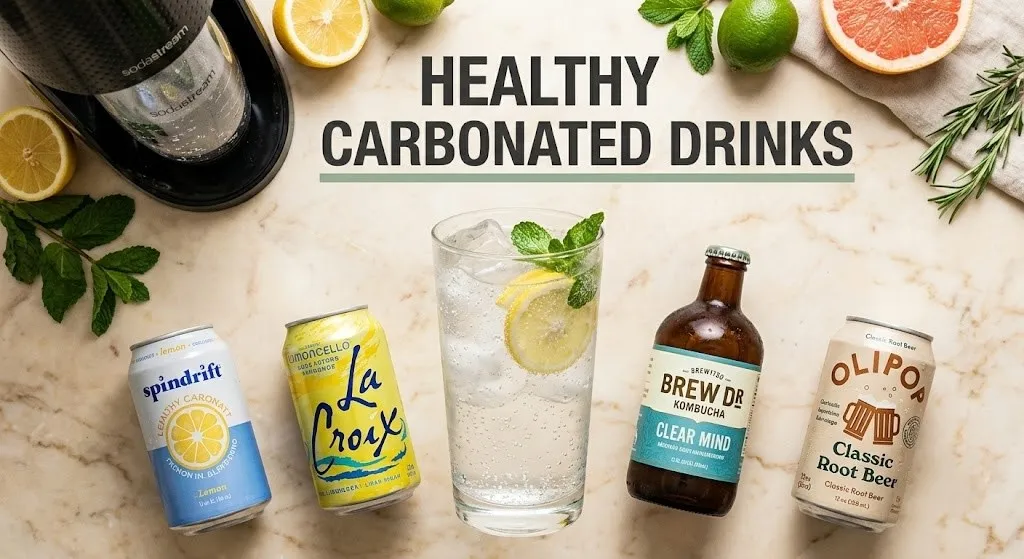
Prebiotic and functional sodas occupy the middle ground between seltzer and traditional soda. Olipop, Poppi, and Culture Pop use small amounts of sugar, typically 2 to 5 grams per can, combined with prebiotic fibers like inulin, chicory root, or cassava root to support digestive health. These drinks taste closer to soda than seltzer does and have the marketing claims to match. The fiber content is modest, 2 to 9 grams per can, and the evidence for digestive health benefits from this amount is limited.
Sparkling waters with real juice, like Spindrift, bridge the gap between seltzer and soda. Spindrift uses carbonated water and real fruit juice, resulting in a drink with 3 to 15 calories and 1 to 3 grams of sugar per can from the juice. The ingredient list is the shortest in the category: carbonated water and fruit juice. For someone who wants flavor that tastes like real fruit rather than “natural flavors,” Spindrift is the closest option to homemade.
Key Takeaway: Unsweetened seltzer is the healthiest soda alternative. Spindrift adds real juice for minimal calories. Prebiotic sodas offer fiber and better taste for a small sugar tradeoff.
Best healthy soda
The best healthy soda is the one that satisfies your craving for a fizzy, flavorful drink without undermining your health goals, and the right choice depends on what you are optimizing for. For zero calories and zero ingredients beyond water and bubbles, plain sparkling water is the best. For flavor without sweeteners, unsweetened naturally flavored seltzers like LaCroix, Waterloo, or Bubly are the best. For a soda-like experience with functional benefits, Olipop or Poppi are the best.
For real fruit flavor with the simplest ingredient list, Spindrift is the best. It contains carbonated water and real fruit juice or puree. A Spindrift grapefruit contains carbonated water, grapefruit juice, and lemon juice. That is the entire ingredient list. The tradeoff is a small amount of natural sugar from the juice, 1 to 3 grams per can, which is nutritionally trivial but distinguishes it from zero-calorie seltzers.
For gut health claims, kombucha is the best-studied option with the longest history of traditional use. Brands like GT’s and Health-Ade use fermented tea with live probiotic cultures. A 12-ounce serving contains 30 to 60 calories and 4 to 12 grams of sugar, which is the residual sugar from the fermentation process. The probiotic content varies by brand and batch, and the specific strains present are not always listed on the label.
Key Takeaway: The best healthy soda depends on your goal. Plain seltzer for zero everything. Spindrift for real fruit. Olipop for fiber. Kombucha for probiotics.
Sparkling water vs soda
Sparkling water beats soda on every nutritional metric that matters. A 12-ounce can of sparkling water contains 0 calories, 0 grams of sugar, and 0 grams of anything else beyond water and dissolved carbon dioxide. A 12-ounce can of cola contains 140 calories, 39 grams of sugar, phosphoric acid, caramel color, and caffeine. The comparison is not close.
The reason sparkling water can replace soda for many people is that the carbonation itself provides a significant portion of the sensory experience of drinking soda. The bubbles, the cold temperature, the act of opening a can, these cues are part of the habit. Swapping the liquid inside the can from cola to seltzer preserves the ritual while eliminating the sugar.
The transition from soda to sparkling water takes time for palates accustomed to sweetness. The first seltzer tastes like disappointment. The tenth tastes like a refreshing beverage. The brain recalibrates its sweetness baseline over two to three weeks of reduced sugar exposure. Adding a squeeze of fresh lemon, lime, or a splash of unsweetened cranberry juice helps bridge the gap during the transition period.
Key Takeaway: Sparkling water is nutritionally superior to soda in every way. The transition requires a palate adjustment period of two to three weeks.
Healthiest sparkling water
The healthiest sparkling water is plain, unflavored seltzer or mineral water with no added ingredients of any kind. It hydrates identically to still water, contains zero calories, zero sugar, and zero artificial or natural flavors, and has a pH close enough to neutral that dental concerns are minimal. The ingredient list is one item: carbonated water.
Among flavored sparkling waters, Spindrift is the healthiest because it uses real fruit juice instead of “natural flavors.” The ingredient list for Spindrift lemon is carbonated water and lemon juice. The ingredient list for LaCroix lemon is carbonated water and natural flavors. Both are healthy. Spindrift is more transparent and contains a trace amount of real fruit nutrition. LaCroix is zero calories. The difference is small, and both belong in the top tier of healthy carbonated drinks.
Mineral waters like San Pellegrino, Perrier, and Topo Chico add naturally occurring minerals from their spring sources. The mineral content provides a small nutritional bonus, 5% to 15% of the Daily Value for calcium and magnesium per liter, but the primary reason to choose them is taste. Mineral water has a distinctive mouthfeel that some people prefer over standard seltzer.
Key Takeaway: Plain seltzer is the healthiest. Spindrift is the healthiest flavored option. Mineral water adds calcium and magnesium for a nutritional bonus.
Is seltzer water healthy
Seltzer water is healthy. It is water with added carbon dioxide. Nothing else. It hydrates as effectively as still water, contributes zero calories and zero sugar, and has not been associated with negative health outcomes in the scientific literature at typical consumption levels. The American Dental Association notes that plain seltzer water poses minimal risk to tooth enamel, with erosive potential similar to still water.
The confusion about seltzer’s healthfulness comes from conflating it with other carbonated beverages. Club soda contains added sodium. Tonic water contains added sugar and quinine. Flavored seltzers contain citric acid and natural flavors. Cola contains phosphoric acid. Each of these additions carries its own health considerations. Seltzer itself, plain carbonated water, is not implicated in any of them.
Seltzer can be a useful tool for increasing total water intake. People who find still water boring drink more total fluid when carbonated options are available. A 2023 study in the journal Appetite found that participants offered both still and sparkling water drank more total water than those offered still water alone. If seltzer helps you stay hydrated, it is not just healthy. It is helpful.
Key Takeaway: Plain seltzer water is as healthy as still water. It hydrates identically and contains nothing but water and carbon dioxide.
Carbonated drinks without sugar
Carbonated drinks without sugar include plain seltzer, unsweetened flavored sparkling water, club soda, and most mineral waters. These drinks provide carbonation without the calories and metabolic effects of sugar. They are the baseline healthy carbonated beverages against which everything else in the category is compared.
The term “sugar-free” on a carbonated drink label requires careful reading. It can mean the drink is sweetened with artificial sweeteners like aspartame, sucralose, or acesulfame potassium. It can mean it is sweetened with natural non-nutritive sweeteners like stevia, monk fruit, or erythritol. Or it can mean it is unsweetened. These are different products with different health profiles. Unsweetened seltzer is the healthiest. Stevia-sweetened drinks are a reasonable middle ground for those who want sweetness without calories. Artificially sweetened drinks are a subject of ongoing debate.
The World Health Organization’s 2023 guidance on non-sugar sweeteners advised against using them for weight control, citing a lack of evidence for long-term benefit and possible increased risk of type 2 diabetes and cardiovascular disease with long-term consumption. The guidance is controversial and not universally accepted by national health agencies. The FDA maintains that approved non-sugar sweeteners are safe at typical intake levels.
Key Takeaway: Unsweetened seltzer is the healthiest sugar-free carbonated drink. Stevia and monk fruit are middle-ground options. Artificial sweeteners are safe per the FDA but remain debated.
Sugar free carbonated drinks healthy
Sugar-free carbonated drinks occupy a spectrum of healthfulness from plain seltzer at the top to artificially sweetened diet sodas at the bottom. The “sugar-free” label does not automatically make a drink healthy. The ingredients that replace sugar matter.
Diet sodas sweetened with aspartame, sucralose, or acesulfame potassium are sugar-free and calorie-free. They are also acidic, often containing phosphoric acid, and have been associated in observational studies with increased risk of metabolic syndrome, though the causal direction is unclear. The American Heart Association acknowledges that diet sodas may be a useful transitional tool for people reducing sugar-sweetened beverage intake but does not recommend them as a long-term replacement for water.
Stevia-sweetened sodas like Zevia and monk fruit-sweetened sparkling waters are a newer category that avoids both sugar and artificial sweeteners. The sweetness comes from plant extracts that do not raise blood glucose. The long-term health effects of these sweeteners are less studied than artificial sweeteners, simply because they have been in widespread use for less time. The existing evidence does not raise concerns at typical intake levels.
Key Takeaway: Sugar-free does not mean healthy. Unsweetened seltzer is best. Stevia-sweetened drinks are a reasonable choice. Diet sodas are acceptable as a transition tool.
What to look for in healthy sparkling drinks
What to look for in healthy sparkling drinks is a short ingredient list, zero added sugar, and no artificial sweeteners, with functional ingredients like prebiotic fiber or probiotics being optional bonuses if the base drink is sound. The ingredient list should read like something you could theoretically make in your own kitchen.
The first check is the sugar line on the Nutrition Facts panel. A healthy sparkling drink should have 5 grams or less of sugar per 12-ounce serving. Zero is ideal. Two to 5 grams from real fruit juice or the residual sugar in kombucha is acceptable. Anything above 10 grams is soda territory, regardless of what the front of the package says.
The second check is the ingredient list. A healthy sparkling drink has carbonated water as the first ingredient. The flavoring should come from fruit juice, natural flavors, or botanical extracts. Avoid drinks with phosphoric acid, artificial colors, and long lists of preservatives. The ingredient list for a healthy sparkling drink should be short enough to read in five seconds.
The third check is the functional claims. “Prebiotic,” “probiotic,” “adaptogenic,” and “nootropic” are marketing terms that suggest a health benefit. Some of these claims have evidence behind them. Most have more marketing than science. A prebiotic soda with 2 grams of fiber is not a meaningful fiber source. A probiotic drink that does not list the specific strains and colony-forming units is not a reliable probiotic source.
Key Takeaway: Look for 5 grams or less of sugar, a short ingredient list starting with carbonated water, and functional claims backed by specific, quantified ingredients.
Is kombucha healthy
Kombucha can be a healthy beverage choice within the context of an overall balanced diet, but it is not the health panacea that some marketing suggests. Kombucha is fermented tea that contains live probiotic cultures, organic acids, and residual sugar from the fermentation process. A 12-ounce serving typically contains 30 to 60 calories and 4 to 12 grams of sugar.
The probiotic content of kombucha is its most credible health claim. The fermentation process produces bacteria and yeast that can survive the acidic environment of the stomach and reach the colon, where they may contribute to gut microbiome diversity. The specific strains present vary by brand and batch. A 2024 review in the journal Foods found that kombucha contains predominantly Acetobacter, Lactobacillus, and Saccharomyces species, all of which are recognized as potentially beneficial.
The sugar content of kombucha is the most significant nutritional downside. The sugar is necessary for the fermentation process, and some remains after fermentation is complete. Brands vary widely. GT’s Classic contains 4 grams of sugar per 8 ounces. Some flavored kombuchas contain 12 grams per 12 ounces, which is comparable to a light soda. Check the label. If sugar is one of the first few ingredients, choose a different brand.
Key Takeaway: Kombucha provides probiotics and antioxidants with moderate sugar. Choose brands with lower sugar content and verify that the probiotics are live cultures.
Prebiotic soda healthy
Prebiotic sodas like Olipop, Poppi, and Culture Pop occupy a middle ground between seltzer and traditional soda. They use a small amount of sugar, typically 2 to 5 grams per can, combined with prebiotic fibers such as inulin, chicory root fiber, cassava root fiber, or Jerusalem artichoke fiber. The prebiotic fiber serves as food for beneficial gut bacteria.
The fiber content of prebiotic sodas ranges from 2 to 9 grams per can. This is a meaningful contribution to the daily fiber target of 25 to 30 grams, particularly for people who struggle to meet that target through food. The prebiotic effect, the stimulation of beneficial bacteria growth, is well established for inulin and similar fibers at doses of 5 to 10 grams per day. A can of Olipop with 9 grams of fiber is within this effective range.
The digestive tolerance of prebiotic fibers varies by individual. Inulin and chicory root fiber are FODMAPs, fermentable carbohydrates that can cause gas, bloating, and abdominal discomfort in people with sensitive digestion, particularly those with IBS. Starting with a half-can and assessing tolerance before drinking a full can is a practical approach.
Key Takeaway: Prebiotic sodas provide 2 to 9 grams of fiber per can, a meaningful contribution. Digestive tolerance varies. Start slowly if you have a sensitive gut.
Healthy fizzy drinks
Healthy fizzy drinks as a category includes any carbonated beverage that is low in sugar, free of artificial sweeteners, and made with recognizable ingredients. The category spans sparkling water, seltzer, mineral water, kombucha, prebiotic sodas, and homemade sparkling drinks. The common thread is that the bubbles come from carbon dioxide, not from fermentation that produces alcohol, and the flavorings come from fruit, botanicals, or natural extracts.
The ranking of healthy fizzy drinks from most to least healthy is: plain sparkling water, mineral water, unsweetened flavored seltzer, sparkling water with real juice like Spindrift, kombucha with low sugar, prebiotic sodas, and stevia-sweetened sodas. Diet sodas and regular sodas fall below the healthy threshold. This ranking is based on ingredient quality, sugar content, and the presence or absence of functional nutrients.
Homemade fizzy drinks are the healthiest option because you control everything. A soda maker like a SodaStream or DrinkMate carbonates tap or filtered water in seconds. Adding a squeeze of fresh citrus, a splash of unsweetened cranberry or pomegranate juice, a few fresh mint leaves, or a small amount of liquid stevia creates a custom drink with no mystery ingredients.
Key Takeaway: Healthy fizzy drinks range from plain seltzer at the top to stevia-sweetened sodas in the middle. Homemade versions give you full control.
Sparkling ice healthy
Sparkling Ice is healthier than regular soda because it contains zero sugar and zero calories. It is less healthy than unsweetened seltzer because it contains artificial sweeteners, primarily sucralose, and artificial colors. It occupies the middle tier of healthy carbonated drinks, above diet soda but below naturally flavored seltzer.
A 17-ounce bottle of Sparkling Ice contains 0 calories, 0 grams of sugar, sucralose as the sweetener, and a blend of fruit juice concentrates for color and flavor. The ingredient list also includes malic acid and citric acid, which give the drink its tartness and contribute to its acidity. The pH of Sparkling Ice is approximately 3.5, which is acidic enough to contribute to dental erosion with frequent consumption.
Sparkling Ice markets itself with the tagline “naturally flavored sparkling water,” which is misleading. It is a zero-calorie artificially sweetened beverage that contains carbonated water as a base. It is not in the same category as LaCroix or Bubly. It is a diet soda in everything but name.
Key Takeaway: Sparkling Ice is a zero-calorie artificially sweetened drink. It is better than regular soda but not as healthy as unsweetened or naturally flavored seltzer.
Healthy carbonated beverages
Healthy carbonated beverages are the subset of fizzy drinks that contribute hydration without adding problematic levels of sugar, artificial sweeteners, or chemical additives. The category is defined by what it excludes as much as by what it includes. A healthy carbonated beverage excludes added sugar above 5 grams per serving, excludes artificial sweeteners like aspartame and sucralose, excludes phosphoric acid, and excludes artificial colors.
The best healthy carbonated beverages by brand include Spindrift (carbonated water and real fruit juice), Waterloo (carbonated water and natural flavors), LaCroix (carbonated water and natural flavors), Bubly (carbonated water and natural flavors), San Pellegrino (natural mineral water), GT’s Kombucha (fermented tea, choose low-sugar varieties), Olipop (prebiotic soda with 2 to 5 grams of sugar), and Zevia (stevia-sweetened soda, zero sugar).
The beverage aisle is full of products that appear healthy but are not. “Sparkling water beverage” on the label often indicates added sweeteners. “Zero sugar” may mean artificial sweeteners. “Made with real fruit” may mean a splash of juice concentrate plus artificial flavors. The ingredient list is the only reliable guide.
Key Takeaway: The healthiest carbonated beverages are Spindrift, unsweetened seltzers, mineral water, low-sugar kombucha, and prebiotic sodas with fiber.
How to make healthy carbonated drinks
How to make healthy carbonated drinks at home requires a soda maker, cold water, and fresh flavoring ingredients. The process takes less than a minute and produces a drink that is fresher, cheaper, and healthier than anything in a can or bottle.
To make healthy carbonated drinks at home:
- Fill a SodaStream or similar carbonating bottle with cold filtered water to the fill line. Cold water absorbs carbonation better than room temperature water.
- Carbonate according to the machine instructions. More presses of the carbonation button produce smaller, finer bubbles.
- Add flavoring after carbonation. Options include a squeeze of fresh lemon, lime, or orange, a splash of unsweetened pomegranate or tart cherry juice, a few drops of liquid stevia or monk fruit if sweetness is desired, fresh mint, basil, or rosemary for herbal notes, or sliced cucumber and ginger for a spa-water effect.
- Pour over ice and drink immediately. Homemade sparkling drinks do not hold their carbonation as long as commercially sealed products.
The cost savings of homemade sparkling water are substantial. A SodaStream CO2 canister carbonates approximately 60 liters of water and costs $15 to $30 to exchange. The cost per liter is approximately $0.25 to $0.50, compared to $1.50 to $3.00 for a liter of packaged sparkling water.
Key Takeaway: A home soda maker produces healthy sparkling water for a fraction of the cost of packaged options. Add fresh citrus, herbs, or a splash of juice for flavor.
Frequently Asked Questions About Healthy Carbonated Drinks
Is sparkling water as healthy as still water?
Sparkling water is as hydrating as still water and counts toward daily fluid intake.
Plain sparkling water with no additives is nutritionally identical to still water.
The carbonation does not reduce the hydration your body receives.
Does carbonation damage your teeth?
Plain carbonated water has a minimal effect on tooth enamel, similar to still water.
Flavored seltzers containing citric acid are more erosive but still far less damaging than sugary sodas.
Drinking through a straw and rinsing with plain water afterward reduces acid exposure to teeth.
Is kombucha actually good for you?
Kombucha contains live probiotics that may support gut microbiome diversity, and organic acids with antioxidant properties.
The sugar content varies by brand from 4 to 12 grams per serving. Choose lower-sugar options.
Kombucha is a healthy beverage choice. It is not a necessary health food or a cure for specific conditions.
What is the healthiest flavored sparkling water?
Spindrift is the healthiest flavored sparkling water because it uses real fruit juice instead of natural flavors.
Unsweetened seltzers like LaCroix, Waterloo, and Bubly are also healthy choices with zero calories and no sweeteners.
Avoid flavored sparkling waters with added sugar or artificial sweeteners.
Are prebiotic sodas worth the hype?
Prebiotic sodas like Olipop and Poppi provide 2 to 9 grams of fiber per can, which is a meaningful contribution to the daily fiber target.
The prebiotic effect on gut bacteria is supported by research on inulin and similar fibers at these doses.
They are healthier than regular soda. They are more processed and more expensive than water with a fiber supplement.
The healthy carbonated drink landscape in 2026 is better than it has ever been. You can walk into any grocery store and leave with a fizzy drink that has zero sugar, zero artificial sweeteners, and an ingredient list short enough to memorize. The bubbles are the same as they have always been. What has changed is everything else.
The most practical thing you can do is find your replacement. If you drink soda, find the seltzer or prebiotic soda that scratches the same itch. If you already drink seltzer, try Spindrift or make your own with fresh citrus. The goal is not to eliminate carbonation. It is to eliminate the sugar and the artificial ingredients that have been hitching a ride on the bubbles for decades. The bubbles themselves are fine. They are just water with attitude.