Grits are healthy as a base food when made from whole-grain stone-ground corn (Zea mays), providing dietary fiber, carotenoids including lutein and zeaxanthin, and several B vitamins. Whether a specific bowl of grits is healthy depends heavily on which type of grits you use and what you cook them with, because the preparation can easily triple the calorie count.
The type distinction matters more than most people realize. Stone-ground grits retain the germ and bran of the corn kernel, preserving fiber, antioxidants, and naturally occurring micronutrients. Instant grits are degerminated and precooked, stripping most of those properties before fortification adds some back. According to the USDA Dietary Guidelines for Americans (2020 to 2025), whole grains should make up at least half of total grain intake, and stone-ground grits qualify while instant varieties do not.
This guide covers the full nutritional picture across grits varieties, how grits compare to oatmeal, what people with diabetes need to know, whether grits support weight loss, and the specific preparation choices that determine whether your bowl is a genuinely nutritious meal or a calorie-dense side dish.
Are Grits Healthy?
Grits are a healthy food when they come from whole-grain stone-ground corn and are prepared without excessive added fat. They provide complex carbohydrates, dietary fiber, iron, B vitamins, and carotenoids that contribute meaningfully to a balanced diet.
The answer changes depending on which grits you buy and how you cook them. That’s not hedging. It’s a nutritionally meaningful distinction that competitors in this space consistently overlook.
Plain enriched regular grits (the most common grocery store variety) are degerminated, meaning the germ and bran have been removed during processing. They’re then fortified with iron, niacin (vitamin B3), thiamine (vitamin B1), and folate (vitamin B9) to replace some of what processing stripped. This makes them a reasonable grain option but not a particularly nutritious one. Stone-ground whole-grain grits are a different product with a noticeably stronger nutritional profile.
Grits nutritional snapshot by variety (per 1/4 cup dry, approximately 35 to 40 grams):
| Type | Calories | Fiber | Protein | Iron | Lutein/Zeaxanthin |
|---|---|---|---|---|---|
| Instant grits | 100 to 120 | 0.5g | 2.5g | 4 to 6mg (fortified) | Negligible |
| Quick grits (enriched) | 120 to 130 | 0.5g | 3g | 4 to 6mg (fortified) | Negligible |
| Regular grits (enriched) | 130 to 140 | 0.5 to 1g | 3g | 8 to 10mg (fortified) | Low |
| Stone-ground grits (whole-grain) | 130 to 145 | 2 to 3g | 3 to 4g | 1 to 2mg (natural) | Present |
Data reflects general USDA FoodData Central values; specific figures vary by brand and processing method.
People managing sodium intake should note that instant grits packets often contain 300 to 480 milligrams of sodium per packet from added salt, while plain unpackaged grits of any variety contain essentially no sodium before cooking. The sodium difference between plain and packaged versions is entirely within the cook’s control.
Is Grits Healthy for You?
Grits are healthy for you as a regular part of a balanced diet when chosen and prepared thoughtfully. They provide complex carbohydrates for sustained energy, B vitamins for metabolic function, and iron for oxygen transport in the blood.
The nutritional case for grits is more nuanced than either the criticism (they’re just empty carbs) or the defense (they’re a traditional comfort food, so they must be fine) that dominate the conversation. Both positions miss the meaningful variation between grits types.
The iron figure in enriched grits deserves specific context. Enriched degerminated grits can contain 8 to 10 milligrams of iron per cooked cup due to fortification, which represents a substantial portion of the 8-milligram daily requirement for adult men and approximately 44% of the 18-milligram daily requirement for premenopausal women, per National Institutes of Health (NIH) recommendations. This iron is the non-heme form (iron from plant-based and fortified sources), which is less bioavailable than heme iron from animal sources. Consuming grits alongside vitamin C (ascorbic acid)-rich foods like tomatoes or citrus enhances non-heme iron absorption.
Stone-ground grits provide less fortification iron but more naturally occurring minerals including magnesium (supporting muscle and nerve function) and phosphorus (supporting bone mineralization), along with the carotenoids absent from degerminated varieties.
People following a plant-based diet can rely on fortified grits as a meaningful iron source, particularly when paired with vitamin C-rich toppings or sides to enhance absorption.
Are Grits a Healthy Food?
Grits are a healthy food in the same category as other whole or enriched grains: they provide energy, carbohydrates, and several important micronutrients, making them a reasonable staple when portioned appropriately and not overloaded with added fat.
The comparison to other grains is useful. Grits occupy a nutritional tier between refined white rice (lower fiber, fewer micronutrients) and whole-grain oats (higher fiber, more protein). They’re not a nutritionally dense food the way legumes or leafy vegetables are, but they’re also not nutritionally empty the way refined pastries are.
Think of grits like the base coat of paint on a wall. What you put on top determines the final result. Plain stone-ground grits with eggs and vegetables is a nutritionally complete breakfast. The same grits with four tablespoons of butter, a cup of shredded cheddar, and heavy cream is a 500 to 600-calorie side dish that’s primarily fat and refined starch.
According to the USDA Dietary Guidelines for Americans (2020 to 2025), whole grains should constitute at least half of total daily grain consumption. Stone-ground whole-grain grits qualify as a whole grain. Quick, instant, and regular enriched grits do not qualify as whole grains and should be counted toward refined grain intake.
People with a corn sensitivity or corn allergy (distinct from celiac disease and separate from gluten intolerance) should avoid all grits varieties regardless of processing method, as all are derived from Zea mays.
Key Takeaway: Stone-ground grits are a whole grain with genuine nutritional value. Instant and quick grits are refined grains that have been fortified. Knowing which one is in your pantry is the most important first step to understanding whether your grits habit is helping or hurting your nutrition goals.
Grits Healthy or Not?
Grits are healthy or not primarily based on the type you choose and what you add during cooking. The base food is nutritionally neutral to positive; the additions often determine the actual health outcome.
The “or not” part of this question reflects real skepticism from people who have read that grits are high on the glycemic index or are “just corn starch.” Both concerns have some validity for instant grits but apply much less to stone-ground varieties.
Glycemic index (GI) measures how quickly a food raises blood glucose compared to pure glucose. Instant grits have an estimated GI of approximately 69 to 85, placing them in the high-GI category. Stone-ground whole-grain grits have a lower estimated GI of approximately 40 to 50 because their retained fiber slows glucose absorption. This difference is the mechanism behind why the type of grits matters specifically for blood glucose management.
The resistant starch angle is also worth noting. Cooked and then cooled grits develop resistant starch, a form of carbohydrate that passes through the small intestine undigested and acts as a prebiotic in the colon, supporting the growth of beneficial bacteria in the large intestine. This is the same mechanism documented in cooled cooked potatoes and cooked-then-cooled rice. Eating grits as leftovers the next day, or cooling them before eating, modestly improves their glycemic profile.
People with irritable bowel syndrome (IBS) should be aware that increased resistant starch from cooled grits may cause bloating or gas, as fermentation in the colon produces gas as a byproduct. Individual tolerance varies.
Are Grits Healthy for Weight Loss?
Grits can support weight loss when eaten in controlled portions from a whole-grain stone-ground source, without calorie-dense additions like butter, cheese, and cream. A plain half-cup cooked serving of stone-ground grits contains approximately 70 to 80 calories with 1.5 grams of fiber, making it a reasonable low-calorie base for a filling meal.
The weight loss case for grits depends entirely on what surrounds them. A cup of cooked plain grits at breakfast paired with two poached eggs and sliced tomatoes delivers roughly 300 to 350 calories with 18 to 20 grams of protein and a balanced macronutrient profile. That same cup of grits prepared as restaurant-style cheese grits with butter and cream can deliver 450 to 650 calories before any protein is added.
Portion control is the primary management tool for anyone using grits in a weight-loss eating plan. Dry grits expand significantly when cooked: a quarter-cup of dry grits yields approximately three-quarters to one cup of cooked grits, which is a generous portion. Understanding this expansion prevents over-serving.
Calorie comparison by preparation method (per 1 cup cooked grits):
| Preparation | Calories | Fat | Protein |
|---|---|---|---|
| Plain (water only) | 130 to 150 | 0.5g | 3g |
| With 1 tsp unsalted butter | 160 to 175 | 4g | 3g |
| With 1 tbsp olive oil | 175 to 190 | 7g | 3g |
| With 1/4 cup shredded cheddar | 240 to 280 | 13 to 16g | 10g |
| Restaurant cheese grits (full) | 400 to 600 | 22 to 35g | 10 to 15g |
People following a calorie-controlled eating plan for weight management should treat restaurant-style cheese grits as an occasional choice rather than a regular breakfast option, given the calorie range.
Is Grits Healthy for Weight Loss?
Grits support weight loss when the whole-grain version is chosen, portions are controlled, and preparation keeps added fat minimal. They are not a weight-loss food in isolation, but they function well as a low-calorie, moderately filling base in a structured eating plan.
The fiber content in stone-ground grits supports satiety more effectively than instant varieties. Dietary fiber slows gastric emptying, meaning food stays in the stomach longer and the return of hunger is delayed. A breakfast built around stone-ground grits with adequate protein from eggs or lean protein can maintain satiety for 3 to 4 hours, reducing the likelihood of mid-morning snacking.
Research published in the American Journal of Clinical Nutrition consistently shows that dietary fiber intake is inversely associated with body weight over time in large population studies. Each additional 14 grams of fiber per 1,000 calories is associated with a 10% reduction in calorie intake and measurable weight reduction over time. Stone-ground grits at 2 to 3 grams of fiber per quarter-cup dry serving contribute to that total, though they are not a high-fiber food on their own.
People following a low-carbohydrate or ketogenic dietary pattern for weight loss should note that grits of any type are not compatible with very low carbohydrate targets, as even a half-cup dry serving contains 28 to 31 grams of carbohydrates. Cauliflower-based grits alternatives (made from riced cauliflower, Brassica oleracea var. botrytis) are the common low-carbohydrate substitute, with approximately 3 to 5 grams of carbohydrates per cup compared to 28 to 31 grams in grain grits.
Are Corn Grits Healthy?
Corn grits (made from dried ground Zea mays) are a healthy grain option that provides complex carbohydrates, B vitamins, and iron from the corn kernel, with nutritional quality varying based on how much of the kernel is retained during processing.
All grits are corn grits. The term “corn grits” distinguishes them from hominy grits (which use nixtamalized corn, treated with an alkaline solution) and from products like cream of wheat (Triticum aestivum). In most American contexts, “grits” and “corn grits” refer to the same product.
Yellow corn grits contain more carotenoids (lutein and zeaxanthin) than white corn grits because the yellow pigment in corn comes directly from these compounds. White corn grits are lower in carotenoids but have a similar carbohydrate and protein profile. The color difference is visually obvious but not necessarily a major health distinction unless carotenoid intake for eye health is a specific priority.
Lutein and zeaxanthin are the two carotenoids most associated with eye health, specifically with a reduced risk of age-related macular degeneration (AMD) and cataracts, per research published in the American Journal of Clinical Nutrition. These compounds are found in the germ of yellow corn and are preserved in stone-ground whole-grain yellow grits. Degerminated varieties (instant, quick, regular enriched) lose most of these carotenoids during processing.
People following a gluten-free diet for reasons other than celiac disease (such as non-celiac gluten sensitivity) can generally eat plain corn grits without issue, as corn does not contain gluten proteins.
Key Takeaway: Yellow stone-ground grits are nutritionally superior to white instant grits because they retain the corn germ’s carotenoids, fiber, and naturally occurring minerals. If you’re buying grits for health reasons, the color and the processing level both matter.
Are Stone Ground Grits Healthy?
Stone-ground grits are the healthiest variety of grits available, retaining the whole corn kernel’s germ and bran during milling, which preserves 2 to 3 grams of fiber, meaningful amounts of lutein and zeaxanthin, and naturally occurring minerals that degerminated varieties lack.
The stone-ground milling process uses millstones that grind dried whole corn kernels without separating the germ and bran from the starchy endosperm. This contrasts with roller-milling, which strips the germ and bran efficiently for longer shelf life and faster cooking time. Stone-ground grits take 20 to 30 minutes to cook on the stovetop. They have a shorter shelf life, typically 3 to 6 months, because the fats in the germ can turn rancid. Store them in the refrigerator or freezer after opening.
The nutritional argument for stone-ground grits is the same argument that supports whole wheat bread over white bread, or brown rice over white rice. The outer layers of the grain contain the most nutritionally active components. Removing them to improve shelf life and convenience also removes the fiber, carotenoids, and micronutrients that make the whole food genuinely nutritious.
According to Harvard T.H. Chan School of Public Health research on whole grain consumption, replacing refined grain servings with whole grain equivalents in the diet is associated with reduced risk of type 2 diabetes, cardiovascular disease, and certain cancers over long-term dietary patterns. Stone-ground grits are a practical entry point into that whole grain recommendation for people who already enjoy grits culturally.
People following a vegan diet will find stone-ground grits naturally vegan and a useful vehicle for plant-based toppings including avocado, sautéed vegetables, nutritional yeast, and plant-based protein sources.
How Healthy Are Grits?
The health value of grits falls on a spectrum from modestly nutritious (instant, enriched) to genuinely whole-grain nutritious (stone-ground), making them a better choice than refined white bread at the low end and competitive with other whole grains at the high end.
Measuring grits against other common breakfast grains helps calibrate where they fit:
Grits vs. common breakfast grains (per 1 cup cooked):
| Food | Calories | Fiber | Protein | Whole Grain? |
|---|---|---|---|---|
| Stone-ground grits | 130 to 150 | 2 to 3g | 3 to 4g | Yes |
| Instant grits | 100 to 120 | 0.5g | 2.5g | No |
| Rolled oats (Avena sativa) | 150 to 170 | 4g | 6g | Yes |
| Cream of wheat (Triticum aestivum) | 130 | 1g | 4g | No |
| Quinoa (Chenopodium quinoa) | 220 | 5g | 8g | Yes |
| White rice (Oryza sativa) | 200 | 0.5g | 4g | No |
Stone-ground grits sit in the middle of this table. They’re not as fiber-rich as oats and not as protein-dense as quinoa, but they’re a genuine whole grain with a lower calorie count per cooked cup than most alternatives.
The honest answer to “how healthy” is: healthy enough to eat regularly as part of a varied diet that includes other high-fiber and high-protein foods alongside them. They’re not a complete nutritional solution on their own. They work best as a base food rather than the entire nutritional strategy for a meal.
Older adults over 65 who are managing weight and muscle mass should pair grits with high-protein additions (eggs, beans, lean meat) to address the relatively low protein content of grits as a standalone grain.
Are Grits Good for Diabetics?
People with type 2 diabetes can eat grits, but the type of grits matters considerably. Stone-ground whole-grain grits have a substantially lower estimated glycemic index (approximately 40 to 50) than instant grits (approximately 69 to 85), making the whole-grain variety the more appropriate choice for blood glucose management.
The glycemic index difference between stone-ground and instant grits is driven by fiber content. The 2 to 3 grams of fiber per quarter-cup dry serving in stone-ground grits slows the digestion of starch and the absorption of glucose into the bloodstream, flattening the blood glucose curve after eating. Instant grits with 0.5 grams of fiber per serving produce a faster, higher blood glucose spike because there is minimal fiber to slow absorption.
Glycemic load (GL) accounts for both the glycemic index and the portion size, which gives a more practical picture than GI alone. A half-cup dry serving of stone-ground grits cooked in water has an estimated glycemic load of approximately 16 to 20, which falls in the medium range. Reducing the portion size to a quarter-cup dry and pairing with protein and fat further reduces the glycemic load of the meal.
The American Diabetes Association recognizes whole grains as appropriate foods within a diabetes management eating plan. Stone-ground grits qualify as a whole grain. Instant grits do not, and they carry a glycemic profile that is generally less appropriate for consistent daily consumption when managing blood glucose.
People with type 2 diabetes who are managing their carbohydrate intake should discuss specific grain portion targets with a registered dietitian or certified diabetes care and education specialist rather than relying on general guidelines alone, as individual blood glucose responses vary.
Key Takeaway: For people managing blood glucose, the choice between stone-ground and instant grits is not a minor preference. It’s a meaningful glycemic distinction, and choosing the whole-grain type and pairing with protein is the most practical blood-sugar-conscious approach.
Are Grits Healthier Than Oatmeal?
Oatmeal (rolled oats, Avena sativa) is generally more nutritious per serving than grits, providing more protein, more fiber, and a lower glycemic index in both its whole-grain and regular forms, though stone-ground grits are a competitive whole-grain alternative for people who prefer them.
The comparison is most useful when contrasting like with like: stone-ground grits versus rolled oats, both prepared plain.
Head-to-head: stone-ground grits vs. rolled oats (per 1 cup cooked):
| Nutrient | Stone-Ground Grits | Rolled Oats (Avena sativa) |
|---|---|---|
| Calories | 130 to 150 | 150 to 170 |
| Fiber | 2 to 3g | 4g |
| Protein | 3 to 4g | 6g |
| Fat | 1.5g | 3g |
| Iron | 1 to 2mg | 2mg |
| Glycemic Index (est.) | 40 to 50 | 42 to 55 |
| Whole grain? | Yes (stone-ground) | Yes |
Oats win on fiber and protein in every direct comparison. The fiber advantage is particularly meaningful because oats contain beta-glucan, a soluble fiber with an FDA-authorized health claim for reducing the risk of coronary heart disease when consumed at 3 grams or more per day. Grits do not contain beta-glucan.
That said, the practical question isn’t “which is theoretically superior” but “which will you actually eat regularly.” Stone-ground grits with a protein-rich topping is a better breakfast than instant oatmeal with added sugar. Food preference and preparation habits matter as much as raw nutritional comparison for long-term dietary quality.
People who are gluten intolerant but not celiac-affected can eat either food safely in certified gluten-free forms, as both corn and oats are naturally gluten-free but both carry cross-contamination risk in standard commercial processing.
Are Cheese Grits Healthy?
Cheese grits are significantly less healthy than plain grits because added cheese, butter, and cream substantially increase the calorie, saturated fat, and sodium content while providing only modest additional protein.
A standard restaurant portion of cheese grits typically contains 4 to 6 tablespoons of butter, 1/2 to 1 cup of shredded cheddar cheese, and sometimes heavy cream or half-and-half. These additions push the calorie count from approximately 130 to 150 calories for a cup of plain cooked grits to 400 to 600 calories with 20 to 35 grams of fat, a significant portion of which is saturated fat.
Cheddar cheese (from Bos taurus milk) contains approximately 9 grams of saturated fat per 1-ounce serving. The American Heart Association recommends limiting saturated fat to 5 to 6% of total daily calories, approximately 11 to 13 grams per day on a 2,000-calorie diet. A single restaurant portion of cheese grits can deliver 15 to 25 grams of saturated fat, exceeding that daily guideline in one side dish.
Homemade cheese grits can be made with healthier modifications. Using sharp cheddar in small amounts (1 ounce per serving provides strong flavor with only a fraction of a full-portion cheese addition), replacing butter with olive oil (Olea europaea), and using low-sodium chicken broth instead of cream reduces fat and sodium while preserving flavor.
People managing cardiovascular risk or following the DASH diet (Dietary Approaches to Stop Hypertension), which limits saturated fat and sodium, should treat restaurant cheese grits as an occasional choice rather than a weekly staple, and should prepare modified versions at home when they want cheese grits regularly.
Are Grits Gluten Free?
Grits are naturally gluten-free because they are made from corn (Zea mays), which does not contain the gluten proteins found in wheat (Triticum aestivum), barley (Hordeum vulgare), or rye (Secale cereale). However, most commercial grits carry a risk of gluten cross-contamination from shared processing facilities.
People with celiac disease, an autoimmune condition triggered by gluten ingestion, must use grits that are explicitly certified gluten-free, meaning they have been tested to contain less than 20 parts per million (ppm) of gluten, the FDA’s threshold for gluten-free labeling. Standard grocery store grits brands, including most instant varieties, are processed in facilities that also handle wheat products and cannot guarantee the absence of cross-contamination.
Certified gluten-free grits brands are available at natural food stores and online. Brands such as Bob’s Red Mill offer grits specifically labeled gluten-free with third-party testing documentation. Plain stone-ground grits from specialty mills like Anson Mills are generally lower-risk but should still be verified for celiac-safe certification if gluten-free status is medically necessary.
People with non-celiac gluten sensitivity (NCGS) have a less clear clinical picture. The research on NCGS is still evolving, and the threshold for symptom-triggering cross-contamination varies by individual. If you have NCGS and experience symptoms after eating standard grits, switching to certified gluten-free versions is the practical next step.
Quick Tip:
- Look for “certified gluten-free” on the label rather than just “made from corn”
- Check whether the facility processes wheat alongside corn products if celiac disease is a concern
- Plain, unpackaged stone-ground grits from dedicated corn mills carry lower cross-contamination risk than bulk bin or large-facility products
- Flavored instant grits packets sometimes contain wheat-derived ingredients as additives; always check the full ingredient list
How to Make Grits Healthier
The most impactful ways to make grits healthier are choosing stone-ground whole-grain varieties, cooking them with broth instead of cream, limiting added butter and cheese, and building protein and fiber into the same bowl through toppings.
These changes work together to shift grits from a refined-carbohydrate side dish into a balanced, whole-food meal base. The recipe below is straightforward for anyone comfortable with stovetop cooking, though cook times for stone-ground grits require patience that quick and instant varieties don’t demand.
To make healthier stone-ground grits (2 servings):
- Combine 1/2 cup stone-ground grits (whole-grain, Zea mays) with 2 cups of low-sodium chicken broth or vegetable broth and 1/2 cup water in a medium saucepan. Add cold: do not bring liquid to a boil before adding grits.
- Bring to a low simmer over medium heat, stirring frequently. Reduce heat to the lowest setting once simmering begins.
- Cook for 20 to 25 minutes, stirring every 3 to 4 minutes. Grits are done when they thicken to a creamy porridge consistency and the starch granules are fully hydrated. They should not be watery or gritty in texture.
- Season with 1/2 teaspoon of black pepper and a small pinch of salt (keep sodium minimal if using salted broth).
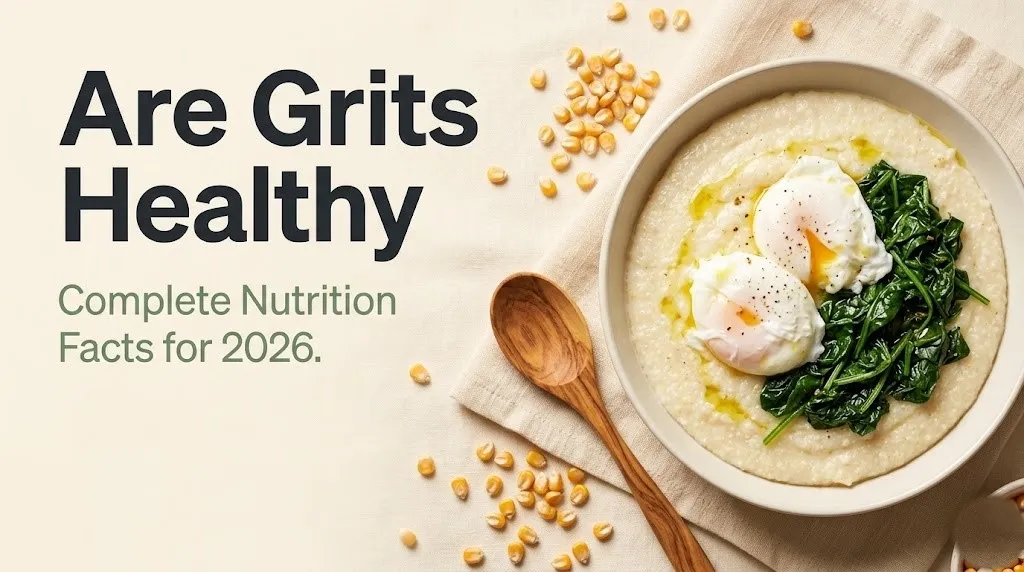
- Serve topped with: 2 poached or soft-scrambled eggs (Gallus gallus domesticus), 1/2 cup sautéed spinach (Spinacia oleracea) or cherry tomatoes, and 1 teaspoon of olive oil (Olea europaea) drizzled over the top.
Each serving provides approximately 280 to 320 calories, 16 to 18 grams of protein, 3 to 4 grams of fiber, and a complete amino acid profile from the egg and grain combination.
For a dairy-free version, replace any butter with olive oil and use nutritional yeast (approximately 1 tablespoon per serving) for a savory, cheese-like flavor without dairy. Nutritional yeast also contributes vitamin B12, making it a useful addition for vegan eaters.
Frequently Asked Questions About Are Grits Healthy
Are grits healthy to eat every day?
Grits are appropriate to eat daily when choosing stone-ground whole-grain varieties and keeping portions and added fat controlled.
Eating instant or enriched grits every day as a primary breakfast food without varying the diet provides less fiber and fewer naturally occurring micronutrients than including a broader range of whole grains throughout the week.
The USDA Dietary Guidelines recommend variety across all food groups, and rotating grits with other whole grains like rolled oats, quinoa, or whole-grain bread builds a more nutritionally complete eating pattern.
Are grits better for you than oatmeal?
Oatmeal (rolled oats, Avena sativa) is generally more nutritious than grits, providing more fiber (approximately 4 grams per cup cooked) and more protein (6 grams per cup) than stone-ground grits.
Oats also contain beta-glucan, a soluble fiber with an FDA-authorized health claim for reducing cardiovascular disease risk when consumed at 3 grams per day, which corn grits do not contain.
Stone-ground grits are a genuinely nutritious whole grain, but oatmeal’s stronger fiber and protein profile gives it the nutritional edge in a direct comparison.
Can people with diabetes eat grits?
People with type 2 diabetes can eat grits, but stone-ground whole-grain grits (estimated glycemic index of 40 to 50) are a considerably better choice than instant grits (estimated GI of 69 to 85).
Pairing any grits with protein and healthy fat further reduces the glycemic load of the meal and moderates blood glucose response.
A registered dietitian or certified diabetes care and education specialist is the appropriate resource for personalized carbohydrate targets, as individual blood glucose responses to grains vary.
Are stone-ground grits healthier than instant grits?
Stone-ground grits are meaningfully healthier than instant grits because they retain the corn kernel’s germ and bran, preserving 2 to 3 grams of fiber, lutein, zeaxanthin, and naturally occurring minerals.
Instant grits are degerminated and precooked, stripping most of these components before fortification adds back iron and B vitamins.
For whole-grain nutrition, eye health carotenoids, and lower glycemic impact, stone-ground is the better choice across every meaningful nutritional measure.
Are grits gluten-free?
Grits are naturally gluten-free because they are made from corn (Zea mays), which contains no gluten proteins.
People with celiac disease must choose certified gluten-free grits, as standard commercial grits are frequently processed in facilities that also handle wheat and carry cross-contamination risk.
Flavored instant grits packets sometimes contain wheat-derived additives, so checking the full ingredient list is required for anyone avoiding gluten for medical reasons.
Closing
Stone-ground grits belong in a healthy diet. They’re a genuine whole grain with fiber, carotenoids, and a favorable calorie profile when prepared simply. The problem is almost never the grits themselves. It’s the butter, cream, and cheese that transform a nutritious base into a high-fat side dish.
Choose stone-ground whole-grain grits over instant whenever possible. Cook them in broth for flavor without added fat. Build protein into the bowl through eggs, beans, or lean meat. That approach takes what is already a reasonable food and makes it a genuinely well-rounded meal.
If you love grits but haven’t tried the stone-ground variety, start there. The texture and flavor are noticeably better, and the nutritional upgrade is real.