A heart healthy grocery list is built around foods that lower LDL cholesterol, reduce blood pressure, decrease inflammation, and support the flexible function of your arteries. The list is not a diet. It is a shopping framework grounded in the DASH diet (Dietary Approaches to Stop Hypertension) and the Mediterranean diet, the two eating patterns with the strongest evidence for cardiovascular protection. You fill your cart with vegetables, fruits, whole grains, legumes, nuts, seeds, fatty fish, lean proteins, and healthy oils. You leave behind the foods high in sodium, saturated fat, added sugar, and refined carbohydrates.
The American Heart Association recommends that adults consume no more than 2,300 milligrams of sodium per day, with an ideal limit of 1,500 milligrams, and limit saturated fat to less than 6 percent of daily calories. For a 2,000-calorie diet, that is 13 grams of saturated fat. The average American adult consumes 3,400 milligrams of sodium and 12 percent of calories from saturated fat daily. The gap between the recommendation and the reality is wide. A structured grocery list closes it. You stop making decisions in the aisle and start executing a plan.
This guide provides a categorized list of specific foods to buy, organized by grocery store section. It includes the nutritional rationale for each category, a “swap this for that” table showing the sodium and saturated fat savings, condition-specific modifications for high cholesterol, high blood pressure, and heart failure, and budget-conscious and pantry-stable options. Each section names the specific nutrients that matter for heart health: soluble fiber, potassium, omega-3 fatty acids, monounsaturated fat, magnesium, and plant sterols, with the foods that deliver them.
Heart Healthy Grocery List
The core heart healthy grocery list is organized by grocery store section so you can walk the store in order. Produce first, then proteins, then grains, then dairy, then pantry items. The frozen and canned sections have their own heart healthy picks. The list assumes no food allergies. Modify for allergies, religious dietary practices, and personal preferences using the substitution notes throughout.
The produce section is the most important part of the store for heart health. Vegetables and fruits deliver potassium, which helps the kidneys excrete sodium and relaxes blood vessel walls. The USDA Dietary Guidelines for Americans recommend that adults consume 4,700 milligrams of potassium per day. A medium banana contains approximately 420 milligrams. A cup of cooked spinach contains 840 milligrams. A medium sweet potato contains 540 milligrams. The potassium-sodium balance in the body is one of the primary dietary mechanisms affecting blood pressure. More potassium, less sodium, lower pressure.
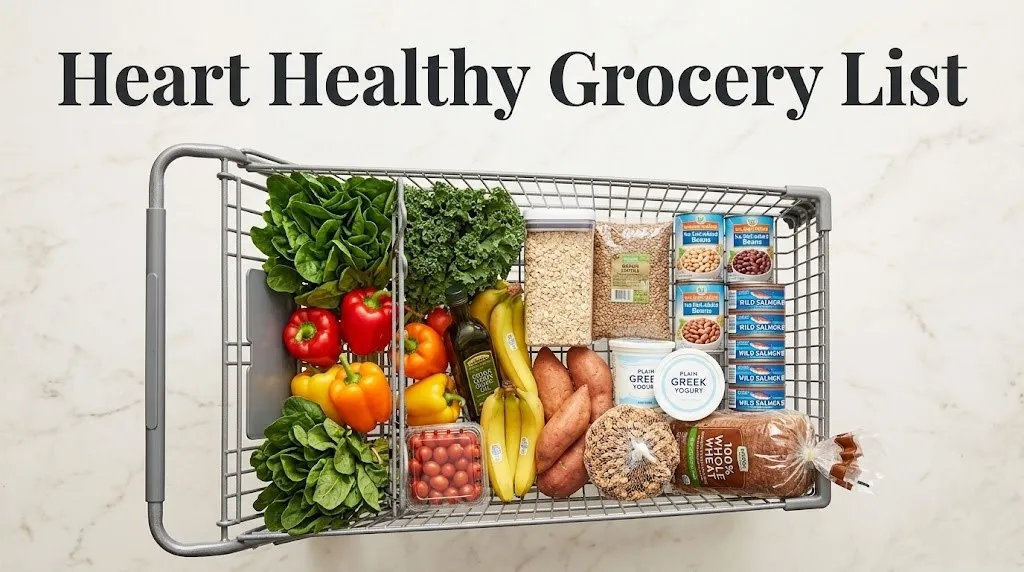
The protein section divides into two paths: fatty fish for omega-3 fatty acids and lean animal and plant proteins for satiety without saturated fat. Omega-3 fatty acids (EPA and DHA) from fish reduce triglycerides, modestly lower blood pressure, and reduce the risk of arrhythmias according to multiple randomized controlled trials. The AHA recommends two servings of fatty fish per week. A serving is 3.5 ounces cooked, roughly the size of a deck of cards. Salmon, mackerel, sardines, herring, and trout are the highest omega-3 choices. Canned versions count. Plant proteins including lentils, chickpeas, black beans, and tofu provide protein and soluble fiber without saturated fat.
| Grocery Section | Key Items | Key Heart Nutrient |
|---|---|---|
| Produce | Spinach, kale, broccoli, bell peppers, tomatoes, bananas, sweet potatoes, avocados, berries, citrus | Potassium, fiber, magnesium, antioxidants |
| Proteins (fish) | Salmon, mackerel, sardines, herring, trout (fresh, frozen, or canned) | Omega-3 fatty acids (EPA/DHA) |
| Proteins (plant) | Lentils, chickpeas, black beans, kidney beans, tofu, edamame | Soluble fiber, plant protein, zero saturated fat |
| Proteins (animal) | Skinless chicken breast, turkey breast, lean ground turkey (93/7) | Lean protein, lower saturated fat than red meat |
| Grains | Steel-cut oats, rolled oats, barley, quinoa, brown rice, 100% whole wheat bread | Soluble fiber (beta-glucan in oats and barley) |
| Healthy Fats | Extra virgin olive oil, avocado oil, walnuts, almonds, flaxseed, chia seed | Monounsaturated fat, ALA omega-3, plant sterols |
| Dairy | Plain nonfat Greek yogurt, low-fat cottage cheese, skim or 1% milk | Calcium, protein, lower saturated fat |
| Canned/Frozen | No-salt-added canned beans, canned tomatoes, frozen vegetables, frozen berries, canned salmon | Convenience without sodium |
Key Takeaway: The heart healthy grocery list is built around produce, fatty fish, legumes, whole grains, and healthy oils. These five categories deliver potassium, soluble fiber, omega-3s, and monounsaturated fat. The specific items within each category are listed above.
Healthy Eating Grocery List
The healthy eating grocery list overlaps heavily with the heart healthy list because cardiovascular health is the leading cause of death in the United States and most dietary guidance is designed with heart health as a primary outcome. The key differences are that a general healthy eating list may include more flexibility on sodium and saturated fat than a strict heart healthy list, and it may emphasize weight management goals more prominently.
The Academy of Nutrition and Dietetics defines a healthy eating pattern as one that includes a variety of vegetables, fruits, whole grains, lean proteins, and healthy fats while limiting added sugars, saturated fat, and sodium. The heart healthy version of this pattern is more specific: it prioritizes potassium-rich produce, soluble fiber sources, and omega-3-rich fish, and it enforces stricter sodium and saturated fat limits. If you are shopping for general health without a specific cardiovascular diagnosis, the heart healthy list will serve you well. It is the stricter standard. There is no downside to following it.
The healthy eating grocery list adds some flexibility for items like whole eggs, which contain dietary cholesterol but are low in saturated fat and high in protein. The AHA’s 2021 dietary guidance acknowledges that dietary cholesterol has a smaller effect on blood cholesterol than saturated fat for most people. One egg per day can fit into a heart healthy eating pattern. Hard cheeses like Parmesan, in small quantities for flavor, can also fit. The strictness of the saturated fat and sodium limits is what distinguishes a heart healthy list from a general healthy eating list.
| Category | Heart Healthy List | General Healthy Eating List |
|---|---|---|
| Sodium target | Less than 2,300mg (ideal 1,500mg) | Less than 2,300mg |
| Saturated fat target | Less than 6% of calories | Less than 10% of calories |
| Eggs | Up to 1 per day | Up to 2 per day |
| Red meat | Limited, lean cuts only | Moderate, lean preferred |
| Full-fat dairy | Minimal | Moderate |
| Added sugar | Minimal (less than 6% of calories) | Less than 10% of calories |
People with a history of eating disorders should approach any structured food list with flexibility. The list is a guide, not a set of rigid rules. An occasional deviation does not negate the overall pattern. Dietary perfection is not required for cardiovascular benefit.
Healthy Food to Buy at Grocery Store
The specific healthy foods to buy at a grocery store for heart health are listed below by category with the nutritional rationale for each item. These are the items that deliver the highest density of heart-relevant nutrients per dollar and per serving. The list prioritizes items available at standard grocery stores, not specialty health food markets.
Leafy greens lead the produce list. Spinach, kale, Swiss chard, and collard greens deliver potassium, magnesium, and dietary nitrates. Dietary nitrates convert to nitric oxide in the body, a molecule that relaxes blood vessels and lowers blood pressure. A 2015 study in the journal Hypertension found that daily consumption of nitrate-rich vegetables reduced blood pressure by 4 to 5 mmHg in hypertensive adults. The effect is modest but cumulative with other dietary changes. One cup of cooked spinach provides 840 milligrams of potassium and approximately 80 milligrams of magnesium.
Berries lead the fruit list. Blueberries, strawberries, raspberries, and blackberries deliver anthocyanins, flavonoid compounds that have been associated with reduced cardiovascular risk in prospective cohort studies. A 2013 study in the journal Circulation found that women who consumed three or more servings of blueberries and strawberries per week had a 32 percent lower risk of heart attack compared to those who consumed less than one serving per month. The association is observational, not causal, but the consistency across studies supports berries as a heart healthy choice. Berries are also a good source of soluble fiber, with one cup of raspberries providing 8 grams of fiber.
Oats and barley are the most important grains for heart health due to their beta-glucan content. Beta-glucan is a soluble fiber that binds bile acids in the intestine, forcing the liver to pull LDL cholesterol from the bloodstream to make more bile acids. The FDA permits a health claim on foods containing at least 0.75 grams of beta-glucan per serving: “may reduce the risk of heart disease.” A half cup of dry rolled oats contains approximately 2 grams of beta-glucan. A half cup of cooked pearl barley contains approximately 1.5 grams.
| Heart Healthy Food | Key Nutrient | Serving Size | Heart Benefit |
|---|---|---|---|
| Spinach (cooked) | Potassium, magnesium, nitrates | 1 cup | Blood pressure reduction |
| Blueberries | Anthocyanins, fiber | 1 cup | Antioxidant, LDL protection |
| Oats (rolled) | Beta-glucan soluble fiber | 1/2 cup dry | LDL cholesterol reduction |
| Salmon (wild) | EPA/DHA omega-3 | 3.5 oz cooked | Triglyceride reduction, anti-inflammatory |
| Walnuts | ALA omega-3, plant sterols | 1 oz (14 halves) | LDL reduction, endothelial function |
| Lentils | Soluble fiber, potassium | 1/2 cup cooked | LDL reduction, blood pressure |
| Extra virgin olive oil | Monounsaturated fat, polyphenols | 1 tbsp | Endothelial function, anti-inflammatory |
| Avocado | Monounsaturated fat, potassium | 1/2 medium | LDL reduction, blood pressure |
Quick Tip:
- Shop the perimeter of the grocery store first. Produce, proteins, dairy, and whole grains are typically on the outer walls. The center aisles contain the processed foods. The perimeter-first strategy fills the cart with heart healthy whole foods before you encounter the center aisle temptations.
Heart Healthy Foods List
The heart healthy foods list below is organized by the specific cardiovascular benefit each food provides. Some foods lower LDL cholesterol. Some lower blood pressure. Some reduce triglycerides. Some improve endothelial function. Many do more than one. The list allows you to prioritize foods based on your specific cardiovascular risk profile.
Foods that lower LDL cholesterol work primarily through soluble fiber, plant sterols, and monounsaturated fat. Oats and barley provide beta-glucan. Legumes (lentils, chickpeas, beans) provide soluble fiber and plant protein. Walnuts and almonds provide plant sterols and monounsaturated fat. Avocado provides monounsaturated fat and fiber. Extra virgin olive oil provides monounsaturated fat and polyphenols. A 2017 study in the American Journal of Clinical Nutrition found that consuming 30 grams of mixed nuts daily reduced LDL cholesterol by 5 to 7 percent.
Foods that lower blood pressure work primarily through potassium, magnesium, and nitrates. Spinach, kale, and Swiss chard deliver all three. Bananas deliver potassium. Sweet potatoes deliver potassium and fiber. Beets deliver nitrates. Low-fat dairy delivers calcium and potassium. The DASH-Sodium trial, published in the New England Journal of Medicine in 2001, found that a diet rich in these foods reduced systolic blood pressure by 8 to 14 mmHg compared to a standard American diet, with the effect stronger in people with hypertension.
Foods that reduce triglycerides work primarily through omega-3 fatty acids. Salmon, mackerel, sardines, and herring deliver EPA and DHA. The AHA recommends 1 gram of combined EPA and DHA per day for people with elevated triglycerides, which typically requires a prescription dose rather than dietary intake alone. Dietary omega-3s contribute to triglyceride management but may not be sufficient as monotherapy for significantly elevated triglycerides.
| Cardiovascular Goal | Top Food Choices |
|---|---|
| Lower LDL cholesterol | Oats, barley, lentils, walnuts, almonds, avocado, olive oil |
| Lower blood pressure | Spinach, kale, bananas, sweet potatoes, beets, low-fat yogurt |
| Reduce triglycerides | Salmon, mackerel, sardines, herring, trout |
| Improve endothelial function | Olive oil, dark chocolate (70%+ cocoa), green tea, beets |
| Reduce inflammation | Berries, turmeric, fatty fish, walnuts, leafy greens |
Key Takeaway: Different heart healthy foods target different cardiovascular risk factors. Oats and legumes lower LDL. Leafy greens and bananas lower blood pressure. Fatty fish reduces triglycerides. A combination covers all pathways.
Heart Healthy Shopping List
The heart healthy shopping list below is the consolidated version intended for actual use in the store. It is organized by grocery section for efficient shopping. Print this section or copy it to your phone. The quantities are for a one-week shop for one to two adults. Adjust quantities for household size.
Produce (fresh):
- Leafy greens: 1 bag or bunch spinach, 1 bunch kale or Swiss chard
- Cruciferous: 1 head broccoli, 1 head cauliflower
- Colorful vegetables: 3 bell peppers (red, yellow, orange), 1 pint cherry tomatoes
- Roots: 3 sweet potatoes, 1 bunch beets
- Alliums: 1 head garlic, 1 onion, 2 shallots
- Avocados: 2 to 3
- Berries: 1 pint blueberries, 1 pint strawberries (fresh or frozen)
- Citrus: 2 lemons, 2 oranges
- Bananas: 4 to 6
Proteins:
- Fatty fish: 1 pound salmon fillet (or frozen), 2 cans sardines in water, 1 can wild salmon
- Lean poultry: 1 pound skinless chicken breast or lean ground turkey (93/7)
- Plant protein: 1 block firm tofu, 1 bag dried lentils (or 2 cans no-salt-added), 1 can chickpeas (no-salt-added), 1 can black beans (no-salt-added)
Grains:
- Oats: 1 container steel-cut or rolled oats (not instant packets with added sugar)
- Other whole grains: 1 box quinoa, 1 bag brown rice, 1 bag barley
- Bread: 1 loaf 100% whole wheat or whole grain (3 to 5g fiber per slice, less than 150mg sodium per slice)
Healthy Fats:
- Oils: Extra virgin olive oil, avocado oil
- Nuts: Walnuts (raw, unsalted), almonds (raw, unsalted)
- Seeds: Flaxseed (ground) or chia seeds
Dairy and Alternatives:
- Plain nonfat Greek yogurt (large tub)
- Low-fat cottage cheese
- Unsweetened almond milk or skim milk
Canned and Frozen (staples):
- No-salt-added canned tomatoes (diced, crushed)
- No-salt-added canned beans (chickpeas, black beans, kidney beans)
- Frozen vegetables (broccoli, spinach, mixed vegetables, no sauce)
- Frozen berries (blueberries, mixed berries)
- Canned salmon and sardines in water
Herbs, Spices, Condiments:
- Fresh herbs: parsley, cilantro, basil
- Spices: turmeric, cinnamon, black pepper, smoked paprika, cumin
- Mustard, balsamic vinegar, apple cider vinegar
- Low-sodium soy sauce or tamari
Foods to leave at the store: Sugary cereals, packaged cookies and cakes, chips, processed meats (bacon, sausage, deli meats with high sodium), sugary beverages including soda and sweetened teas, canned soups with high sodium, frozen meals with high sodium and saturated fat, butter and stick margarine, and anything with partially hydrogenated oil (trans fat).
Healthy Foods Grocery List
This section addresses the search intent behind “healthy foods grocery list” which often comes from people starting their health journey without a specific cardiovascular diagnosis. The list is the same core items with slightly more flexibility. The emphasis is on building a pantry that supports cooking at home and reduces reliance on ultra-processed foods.
The most important shift for a general healthy foods grocery list is replacing ultra-processed foods with whole foods. Ultra-processed foods are industrial formulations typically containing five or more ingredients, including substances not commonly used in home cooking such as high-fructose corn syrup, hydrogenated oils, modified starches, and artificial flavors. A 2019 study in Cell Metabolism found that people consuming an ultra-processed diet ate approximately 500 more calories per day and gained weight compared to the same people consuming a whole-food diet of equal presented calories. The mechanism is not fully understood. The effect is documented.
Your healthy foods grocery list should prioritize foods that have one ingredient: the food itself. An apple. A chicken breast. A bag of lentils. A sweet potato. These foods do not need nutrition labels to tell you they are healthy. They form the base of the cart. The packaged foods you add, oats, yogurt, canned beans, whole grain bread, should have short ingredient lists with recognizable components. A jar of marinara sauce with tomatoes, olive oil, basil, and garlic is fine. A jar with high-fructose corn syrup, soybean oil, and natural flavor is not.
Quick Tip:
- When buying packaged foods, read the ingredient list before the nutrition facts panel. Look for short lists with whole-food ingredients. If the first ingredient is a whole grain, the second is not sugar, and the sodium per serving is under 200 milligrams, the food is probably a reasonable choice.
Healthy Grocery List Ideas
Healthy grocery list ideas for heart health extend beyond the standard produce-and-protein framework. This section covers breakfast staples, snack items, and condiment upgrades that support cardiovascular health without requiring a complete kitchen overhaul.
Breakfast staples: Steel-cut oats with ground flaxseed and blueberries. Plain nonfat Greek yogurt with walnuts and strawberries. 100% whole wheat toast with avocado and a poached egg. These three breakfasts cover soluble fiber (oats), omega-3s (flaxseed, walnuts), potassium (avocado, banana), and protein (yogurt, egg). They take under 10 minutes to prepare.
Snack items: Raw almonds and walnuts in pre-portioned bags. Apple slices with a tablespoon of natural peanut butter. Plain popcorn air-popped with a light sprinkle of nutritional yeast. Baby carrots with hummus made from canned chickpeas, tahini, lemon, and garlic. Greek yogurt with cinnamon. These snacks replace chips, cookies, and granola bars. The pre-portioning matters. A quarter cup of walnuts is 160 calories. Eaten from the bag, it is easy to consume three times that amount.
Condiment upgrades: Replace butter with extra virgin olive oil for low-heat cooking and finishing. Replace creamy salad dressings with vinaigrette made from olive oil, balsamic vinegar, mustard, and herbs. Replace salt with spice blends (cumin, smoked paprika, garlic powder, onion powder) for flavor without sodium. Replace mayonnaise with mashed avocado or hummus on sandwiches. These swaps reduce saturated fat and sodium while adding the flavors that make heart healthy eating sustainable.
| Meal/Occasion | Heart Healthy Idea |
|---|---|
| Breakfast | Oatmeal with flaxseed, walnuts, and berries; Greek yogurt with fruit and nuts; avocado toast on whole grain |
| Lunch | Lentil soup with spinach; quinoa bowl with chickpeas and roasted vegetables; sardines on whole grain crackers |
| Dinner | Grilled salmon with roasted broccoli and sweet potato; bean and vegetable stir-fry with brown rice; lentil bolognese over whole wheat pasta |
| Snacks | Apple with peanut butter; raw almonds (1/4 cup); Greek yogurt with cinnamon; air-popped popcorn |
| Dessert | Dark chocolate (70%+ cocoa, 1 oz); berries with a dollop of Greek yogurt; baked apple with cinnamon |
Key Takeaway: Heart healthy grocery list ideas extend to breakfast, snacks, and condiments. Steel-cut oats, pre-portioned nuts, and olive oil-based dressings make heart healthy eating practical across the full day, not just at dinner.
Heart Healthy Proteins
Heart healthy proteins are those that deliver high biological value protein with minimal saturated fat and sodium. The hierarchy of heart healthy proteins puts fatty fish at the top, followed by plant proteins, then lean poultry, then lean red meat in limited quantities. Processed meats, including bacon, sausage, hot dogs, and most deli meats, are at the bottom and should be minimized or eliminated.
Fatty fish earns the top position because it delivers protein alongside EPA and DHA omega-3 fatty acids. A 3.5-ounce serving of wild salmon provides 20 to 22 grams of protein and 1,500 to 2,000 milligrams of combined EPA and DHA. The AHA recommends two servings of fatty fish per week. Canned salmon and sardines count and are more affordable and shelf-stable than fresh. Sardines deliver comparable omega-3s to salmon with the added benefit of edible bones that provide calcium.
Plant proteins earn the second position because they deliver protein alongside soluble fiber, potassium, and phytonutrients without any saturated fat. One cup of cooked lentils provides 18 grams of protein, 15 grams of fiber, and 730 milligrams of potassium. One cup of cooked chickpeas provides 15 grams of protein, 12 grams of fiber, and 470 milligrams of potassium. Soy products including tofu, tempeh, and edamame provide complete plant protein with a fat profile that is primarily unsaturated.
| Protein Source | Protein (g per serving) | Saturated Fat (g) | Sodium (mg, plain) | Heart Benefit Beyond Protein |
|---|---|---|---|---|
| Salmon (wild, 3.5 oz) | 20 to 22 | 1 | 50 to 60 | EPA/DHA omega-3s |
| Sardines (1 can, in water) | 22 | 1.5 | 200 to 300 | EPA/DHA, calcium |
| Lentils (1 cup cooked) | 18 | 0 | 5 (no salt added) | Soluble fiber, potassium |
| Chickpeas (1 cup cooked) | 15 | 0 | 10 (no salt added) | Soluble fiber, potassium |
| Tofu (firm, 3.5 oz) | 10 | 0.5 | 10 | Unsaturated fat, isoflavones |
| Chicken breast (skinless, 3.5 oz) | 31 | 1 | 65 | Lean protein |
| Lean ground turkey (93/7, 3.5 oz) | 23 | 2 | 85 | Lean protein |
| Beef sirloin (trimmed, 3.5 oz) | 26 | 3 | 60 | Iron, B12 |
People with a history of gout should moderate animal protein intake, including fatty fish, because purines can trigger flares. Plant proteins do not raise uric acid levels the way animal proteins can and are the preferred protein source for gout-prone individuals. People with kidney stones should discuss protein choices with a nephrologist or urologist.
Heart Healthy Snacks to Buy
Heart healthy snacks are whole foods or minimally processed foods that deliver fiber, healthy fats, or protein without excessive sodium, added sugar, or saturated fat. The snack aisle is the most dangerous part of the grocery store for heart health. Most packaged snacks are ultra-processed combinations of refined flour, added sugar, and sodium. The heart healthy snack list bypasses that aisle almost entirely.
Fresh fruit is the original heart healthy snack. An apple with its skin provides 4 grams of fiber including pectin, a soluble fiber that lowers LDL cholesterol. A banana provides 420 milligrams of potassium. A cup of berries provides anthocyanins and fiber. The convenience of fruit requires no preparation beyond washing.
Nuts and seeds are the second category. A quarter cup of raw walnuts provides 2.5 grams of ALA omega-3 and 2 grams of fiber. A quarter cup of raw almonds provides 4 grams of fiber and 100 milligrams of magnesium. Pre-portioning is essential. Nuts are calorie-dense at 160 to 200 calories per quarter cup. Pre-portion them into small containers or bags when you return from the store so the correct serving size is the easiest one to grab.
| Heart Healthy Snack | Serving Size | Calories | Key Heart Nutrient |
|---|---|---|---|
| Apple with 1 tbsp natural peanut butter | 1 medium apple + 1 tbsp PB | 195 | Fiber, monounsaturated fat |
| Raw walnuts | 1/4 cup (14 halves) | 185 | ALA omega-3, fiber |
| Plain nonfat Greek yogurt with cinnamon | 1 cup | 130 | Protein, calcium |
| Baby carrots with 3 tbsp hummus | 1 cup carrots + 3 tbsp hummus | 120 | Fiber, plant protein |
| Air-popped popcorn | 3 cups | 95 | Whole grain fiber |
| Dark chocolate (70%+ cocoa) | 1 oz (approx. 28g) | 160 | Flavonoids |
| Edamame (steamed, no salt) | 1/2 cup shelled | 120 | Plant protein, fiber |
Quick Tip:
- Portion snacks immediately after returning from the grocery store. Transfer nuts, seeds, and popcorn from bulk containers into individual serving bags or containers. The 30 minutes spent prepping on shopping day prevents the entire bag from disappearing during a single movie.
Low Sodium Grocery List
A low-sodium grocery list is the foundation of a heart healthy diet for anyone with hypertension, heart failure, or a history of stroke. The AHA recommends an ideal limit of 1,500 milligrams of sodium per day. The average American consumes 3,400 milligrams. The difference is approximately 1,900 milligrams, which is the equivalent of slightly less than one teaspoon of salt. Most of the excess sodium does not come from the salt shaker. It comes from processed and restaurant foods. An estimated 70 percent of dietary sodium in the American diet comes from processed foods and restaurant meals.
The low-sodium grocery list prioritizes fresh whole foods that contain naturally low sodium and canned or frozen items labeled “no salt added” or “low sodium.” The FDA defines “low sodium” as 140 milligrams or less per serving. “Very low sodium” is 35 milligrams or less. “No salt added” means no salt was added during processing but the food may contain naturally occurring sodium. These label terms are regulated. They can be trusted when they appear on the packaging.
The foods to avoid on a low-sodium list include canned soups (700 to 1,200 milligrams per cup), frozen meals (600 to 2,000 milligrams per serving), processed meats (bacon at 400 milligrams per 3 slices, deli turkey at 400 to 600 milligrams per 2 ounces), cheese (200 to 400 milligrams per ounce for most types), and condiments including soy sauce (900 to 1,000 milligrams per tablespoon), ketchup (150 milligrams per tablespoon), and salad dressings (250 to 400 milligrams per 2 tablespoons). These items deliver a full day’s sodium in a single serving.
| High-Sodium Food | Sodium (approx.) | Low-Sodium Swap | Sodium (approx.) |
|---|---|---|---|
| Canned soup (1 cup) | 700 to 1,200mg | Homemade lentil soup with no-salt broth | 50 to 100mg |
| Deli turkey (2 oz) | 400 to 600mg | Home-roasted turkey breast, sliced | 40 to 60mg |
| Regular soy sauce (1 tbsp) | 900 to 1,000mg | Low-sodium soy sauce or tamari (1 tbsp) | 500 to 600mg |
| Frozen pizza (1 slice) | 700 to 900mg | Homemade whole wheat pita pizza with vegetables | 150 to 250mg |
| Salted mixed nuts (1/4 cup) | 150 to 200mg | Raw unsalted almonds or walnuts (1/4 cup) | 0 to 5mg |
| Bottled salad dressing (2 tbsp) | 250 to 400mg | Olive oil and vinegar with herbs | 0 to 10mg |
People with heart failure who have a fluid restriction should be aware that sodium drives thirst and fluid retention. A low-sodium diet is the primary dietary intervention for heart failure management. The recommended sodium limit for heart failure is typically 1,500 to 2,000 milligrams per day. A registered dietitian can provide individualized guidance based on the specific heart failure stage and medication regimen.
Key Takeaway: A low-sodium grocery list prioritizes fresh whole foods, no-salt-added canned goods, and homemade versions of typically high-sodium items. The target is less than 1,500 to 2,300 milligrams of sodium per day depending on cardiovascular risk.
Foods to Lower Cholesterol Grocery List
Foods to lower cholesterol work through four primary mechanisms: soluble fiber that binds bile acids, plant sterols that block cholesterol absorption, monounsaturated fats that replace saturated fat, and polyphenols that protect LDL from oxidation. The grocery list for cholesterol management emphasizes the foods that deliver these compounds in effective amounts.
Soluble fiber sources for cholesterol lowering include oats, barley, legumes, apples, citrus fruits, Brussels sprouts, and flaxseed. The target is 5 to 10 grams of soluble fiber per day, per the National Lipid Association. A half cup of dry oats provides 2 grams of soluble fiber from beta-glucan. A half cup of cooked lentils provides 1 to 2 grams. A medium apple with the skin provides 1 gram. An ounce of ground flaxseed provides 1 gram. Combining these foods across the day achieves the target.
Plant sterols and stanols are compounds found in plants that structurally resemble cholesterol and compete with it for absorption in the intestine. They are present naturally in vegetable oils, nuts, seeds, and legumes. A typical diet provides 200 to 400 milligrams of plant sterols per day. A cholesterol-lowering dose is 2,000 milligrams per day, which typically requires fortified foods such as plant sterol-fortified margarines or supplements. The natural sources contribute to the daily total but are unlikely to achieve the therapeutic dose without fortified products.
| Cholesterol-Lowering Food | Active Compound | Serving | Effect |
|---|---|---|---|
| Rolled oats | Beta-glucan | 1/2 cup dry (40g) | 2g soluble fiber |
| Cooked lentils | Soluble fiber | 1/2 cup | 1 to 2g soluble fiber |
| Almonds | Plant sterols, monounsaturated fat | 1 oz (23 nuts) | ~30mg plant sterols |
| Extra virgin olive oil | Monounsaturated fat, polyphenols | 1 tbsp | Replaces saturated fat |
| Avocado | Monounsaturated fat, fiber | 1/2 medium | ~4g fiber, 10g MUFA |
| Ground flaxseed | Soluble fiber, ALA | 1 tbsp (ground) | 1g soluble fiber |
| Walnuts | ALA, plant sterols | 1 oz (14 halves) | 2.5g ALA |
People taking statins should note that grapefruit and grapefruit juice interact with certain statins (atorvastatin, simvastatin, lovastatin) by inhibiting the CYP3A4 enzyme that metabolizes these drugs. The interaction increases the statin concentration in the blood and the risk of side effects including muscle pain. Grapefruit should be avoided or consumed only in small amounts with medical guidance for those on interacting statins. The information on the medication label and the prescribing physician’s guidance are the authoritative sources.
Foods to Lower Blood Pressure Shopping List
The blood pressure lowering shopping list is essentially the DASH diet shopping list. The Dietary Approaches to Stop Hypertension (DASH) eating plan was tested in randomized controlled trials and found to reduce systolic blood pressure by 8 to 14 mmHg. The DASH diet emphasizes potassium, magnesium, calcium, fiber, and protein while limiting sodium, saturated fat, and added sugar. The foods that lower blood pressure are the foods that deliver the DASH nutrients.
Potassium-rich produce leads the list. Bananas (420 milligrams per medium), sweet potatoes (540 milligrams per medium with skin), spinach (840 milligrams per cup cooked), avocado (485 milligrams per half), and tomatoes (290 milligrams per medium) are the top sources. Potassium helps the kidneys excrete sodium and relaxes blood vessel walls. The USDA recommends 4,700 milligrams per day. The average American consumes 2,500 to 3,000 milligrams. The deficit is meaningful.
Low-fat dairy provides calcium and potassium. Plain nonfat Greek yogurt, skim milk, and low-fat cottage cheese are the best sources. The DASH trials included three servings of low-fat dairy per day. The calcium in dairy supports vascular smooth muscle function. The potassium adds to the daily total. People with lactose intolerance can use lactose-free dairy or fortified unsweetened plant milks, though the potassium content of plant milks is lower unless fortified.
| Blood Pressure Nutrient | Target per Day | Top Food Sources |
|---|---|---|
| Potassium | 4,700mg | Spinach, sweet potatoes, bananas, avocado, tomatoes |
| Magnesium | 310 to 420mg | Almonds, spinach, black beans, brown rice |
| Calcium | 1,000 to 1,200mg | Low-fat yogurt, skim milk, fortified almond milk |
| Fiber | 25 to 38g | Oats, legumes, berries, whole grains |
| Protein | 50 to 60g (varies by weight) | Fish, legumes, lean poultry, low-fat dairy |
People on blood pressure medications should not use potassium-based salt substitutes (potassium chloride) without medical guidance. Certain blood pressure medications, including ACE inhibitors (lisinopril, enalapril) and ARBs (losartan, valsartan), reduce potassium excretion. Adding a potassium-based salt substitute can cause hyperkalemia, a dangerous elevation in blood potassium. A healthcare provider or pharmacist should be consulted before using these products.
Key Takeaway: The blood pressure shopping list is the DASH diet: potassium-rich produce, low-fat dairy, whole grains, legumes, and lean proteins. The potassium target of 4,700 milligrams per day is the most important number.
Heart Healthy Canned Foods
Canned foods are convenient, affordable, and shelf-stable. They can be heart healthy when chosen correctly. The primary concern with canned foods is sodium. A can of standard vegetable soup can contain 1,500 to 2,000 milligrams of sodium. A can of no-salt-added diced tomatoes contains 40 to 100 milligrams. The difference is entirely in the processing choices, not the food itself.
Canned beans are a heart healthy staple when purchased with “no salt added” labeling. Canned chickpeas, black beans, kidney beans, and cannellini beans provide soluble fiber, plant protein, and potassium. Rinsing regular canned beans in a colander under running water removes approximately 40 percent of the added sodium. The no-salt-added versions are better, but rinsed regular beans are an acceptable alternative when no-salt-added is unavailable.
Canned fish is a heart healthy convenience food. Canned salmon (wild, in water) provides the same omega-3 fatty acids as fresh salmon at a fraction of the cost. Canned sardines in water provide omega-3s and calcium from the edible bones. Canned light tuna provides protein with less omega-3 than salmon or sardines but is a lean protein option. Choose fish canned in water rather than oil. Oil-packed fish absorbs the packing oil, which is often soybean oil, increasing the total fat without adding heart-healthy omega-3s.
| Canned Food | Heart Healthy Choice | Avoid |
|---|---|---|
| Beans | No-salt-added or rinsed regular | Baked beans with added sugar and pork |
| Tomatoes | No-salt-added diced, crushed, or whole | Canned tomato sauce with added salt and sugar |
| Fish | Salmon in water, sardines in water, light tuna in water | Fish packed in soybean oil, smoked fish with high sodium |
| Vegetables | No-salt-added green beans, corn, peas | Canned vegetables with added salt |
| Soups | Low-sodium or homemade (batch-cooked and frozen) | Standard canned soups (700 to 1,200mg sodium per cup) |
Canned fruits should be chosen in water or their own juice, not in syrup. “Light syrup” is still added sugar. A can of peaches in heavy syrup can contain 30 to 40 grams of added sugar. The same peaches in water contain the natural fruit sugar without the added load. Frozen fruit is often a better choice than canned because it is frozen at peak ripeness without added sugar or liquid.
Budget Heart Healthy Grocery List
A heart healthy diet does not require a high grocery budget. The most important heart healthy foods, oats, lentils, beans, frozen vegetables, canned fish, bananas, and seasonal produce, are among the least expensive items in the grocery store. The perception that heart healthy eating is expensive comes from the premium placed on fresh fish, organic produce, and specialty health foods. Those items are optional. The core heart healthy foods are staples that have sustained populations for centuries.
The budget protein hierarchy places dried lentils and beans at the top. One pound of dried lentils costs $1 to $2 and provides 10 to 12 servings of cooked lentils. One pound of dried chickpeas costs $1.50 to $2.50 and provides 8 to 10 servings. Compare this to salmon at $10 to $15 per pound providing 3 to 4 servings. The lentils deliver protein, soluble fiber, and potassium for roughly $0.15 per serving. The salmon is a heart healthy protein but not the only heart healthy protein.
Canned fish is the budget omega-3 source. A can of wild salmon costs $3 to $5 and provides 3 to 4 servings. A can of sardines costs $1.50 to $3 and provides 2 servings. These are significantly less expensive than fresh or frozen salmon fillets and have a shelf life of months to years. A heart healthy weekly menu might include two meals with canned fish, two meals with lentils or beans, and one meal with fresh or frozen fish, keeping the protein budget manageable.
| Budget Heart Healthy Food | Approx. Cost per Serving | Heart Benefit |
|---|---|---|
| Dried lentils (1/2 cup cooked) | $0.15 | Soluble fiber, potassium, protein |
| Dried chickpeas (1/2 cup cooked) | $0.20 | Soluble fiber, potassium, protein |
| Rolled oats (1/2 cup dry) | $0.15 | Beta-glucan soluble fiber |
| Canned sardines in water (1 can) | $0.75 to $1.50 | EPA/DHA omega-3s, calcium |
| Canned wild salmon (3 oz) | $1.00 to $1.75 | EPA/DHA omega-3s, protein |
| Frozen spinach (1 cup) | $0.25 to $0.50 | Potassium, magnesium, nitrates |
| Bananas (1 medium) | $0.20 to $0.30 | Potassium |
| Sweet potatoes (1 medium) | $0.50 to $0.80 | Potassium, fiber |
| No-salt-added canned beans (1/2 cup) | $0.25 to $0.40 | Soluble fiber, potassium |
Quick Tip:
- Buy oats, lentils, brown rice, and nuts from bulk bins. The per-pound price is usually lower than pre-packaged versions. You buy exactly the amount you need. Store in airtight containers at home. Bulk bins reduce packaging waste and grocery costs simultaneously.
Key Takeaway: Lentils, oats, dried beans, canned fish, frozen vegetables, and seasonal produce are the budget heart healthy staples. The cost per serving is under $0.50 for most items. Heart healthy eating is not expensive when built around these core foods.
Printable Healthy Grocery List
The printable heart healthy grocery list below is organized for efficient store navigation. Copy this section to a notes app, take a screenshot, or write it on paper. The quantities are for a one-week shop for one to two adults. Adjust quantities for household size.
Produce:
- Spinach (1 bag or bunch)
- Kale (1 bunch)
- Broccoli (1 head)
- Bell peppers (3, mixed colors)
- Cherry tomatoes (1 pint)
- Avocados (2 to 3)
- Bananas (4 to 6)
- Sweet potatoes (3 medium)
- Beets (1 bunch)
- Onion (1 medium)
- Garlic (1 head)
- Lemons (2)
- Blueberries (1 pint or frozen)
- Strawberries (1 pint or frozen)
Proteins:
- Salmon fillet (1 lb) or frozen salmon
- Canned sardines in water (2 cans)
- Canned wild salmon (1 can)
- Chicken breast (1 lb) or lean ground turkey (93/7)
- Firm tofu (1 block)
- Dried lentils (1 bag) or 2 cans no-salt-added
- Canned chickpeas (2, no-salt-added)
- Canned black beans (2, no-salt-added)
Grains:
- Steel-cut or rolled oats (1 container)
- Quinoa (1 box)
- Brown rice (1 bag)
- Barley (1 bag)
- 100% whole wheat bread (1 loaf)
Healthy Fats:
- Extra virgin olive oil
- Avocado oil
- Raw walnuts (bulk or bag)
- Raw almonds (bulk or bag)
- Ground flaxseed or chia seeds
Dairy and Alternatives:
- Plain nonfat Greek yogurt (large tub)
- Low-fat cottage cheese
- Unsweetened almond milk or skim milk
Canned and Frozen:
- No-salt-added diced tomatoes (2 cans)
- No-salt-added canned beans (chickpeas, black beans, kidney beans)
- Frozen broccoli (1 bag)
- Frozen spinach (1 bag)
- Frozen mixed berries (1 bag)
Herbs, Spices, Condiments:
- Fresh parsley, cilantro, basil
- Turmeric, cinnamon, cumin, smoked paprika, black pepper
- Balsamic vinegar, apple cider vinegar
- Low-sodium soy sauce or tamari
- Dijon mustard
Foods to NOT put in the cart: Soda, sugary cereals, packaged cookies and cakes, chips, bacon, sausage, processed deli meats, canned soups with more than 400 milligrams of sodium per serving, frozen meals with more than 600 milligrams of sodium, stick margarine, and anything with partially hydrogenated oil.
This list is your grocery store map. It sends you to the produce section, the protein counter, the bulk bins, and the dairy case. It steers you away from the center aisles where the ultra-processed foods live. It is built on the DASH diet and the Mediterranean diet, the two eating patterns with the strongest evidence for preventing and managing cardiovascular disease. The food on this list is what those diets are made of.
Take this list to the store this week. Buy the items on it. Cook with olive oil instead of butter. Salt your food at the stove, not from the shaker at the table, using half of what the recipe calls for. Eat fish twice. Fill half your plate with vegetables at dinner. That is the heart healthy diet. Not a supplement. Not a detox. Just food, chosen intentionally, eaten consistently. Your arteries respond to what you eat today. Give them something that helps.