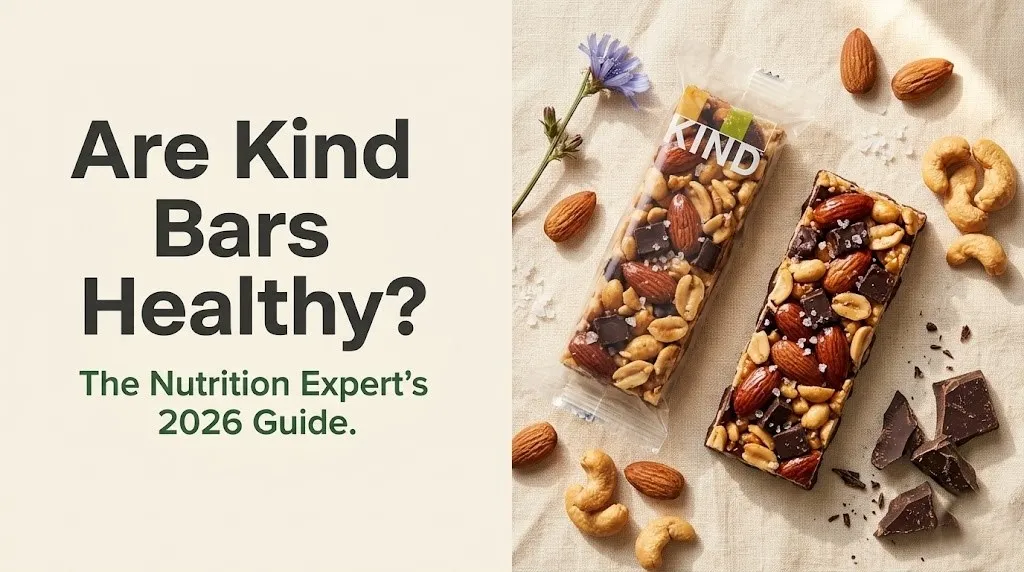
Kind Bars are a genuinely healthy snack for many people, but the answer shifts considerably depending on which bar from the lineup you pick and what your dietary goals actually are. Most Classic KIND bars sit in a nutritional middle ground: better than a candy bar, not a substitute for whole food, and very much worth understanding before you commit to eating one daily.
The difference between a bar you should eat every day and one you should treat as an occasional snack can come down to a single ingredient swap or a 10-gram swing in sugar. According to the National Institutes of Health, most adults consume too little dietary fiber and too much added sugar, and KIND bars can simultaneously help and hurt those targets depending on the specific flavor.
This guide covers the full nutritional picture across all major KIND product lines: what’s actually in them, how the fat and sugar debate really breaks down, what the 2015 FDA “healthy” label controversy actually means in 2026, and which flavors are worth buying for each specific goal.
Are Kind Bars Healthy?
When it comes to typical convenience store offerings, a KIND bar is a more nutritious choice than a typical candy bar. That’s the most honest starting point, but the full answer is more layered than that.
KIND bars aren’t always as nutrient-dense as popular sweet protein bars. The Classic nut-based line delivers real-food ingredients like almonds and peanuts, modest protein, meaningful fiber, and heart-healthy fats. But some flavors carry more added sugar than the serving size would suggest, and the palm kernel oil used in the chocolate coating adds saturated fat that the AHA would prefer you limit.
The nuanced verdict: KIND bars are a solid snack for adults eating a varied diet who need something portable and more nutritious than chips or candy. They are less ideal as a daily dietary staple for sedentary people managing blood sugar or following a calorie-controlled plan. KIND bars make a formidable snack, but don’t match the nutritional profiles of balanced meals or whole foods.
That gap between marketing and nutrition is worth understanding in detail, which is exactly what the sections below address.
Key Fact:
- KIND bars are nut-forward bars designed as portable snacks, not meal replacements.
- The specific product line and flavor matter more than the brand name when evaluating health value.
- Always read the nutrition label on your specific flavor rather than relying on brand reputation.
What Is a Kind Bar, and What Is It Made Of?
KIND bars are snack bars made primarily from whole nuts, seeds, and natural sweeteners, bound together with a chocolate or honey-based coating and sold in dozens of flavors across multiple product lines.
This frustration led Daniel Lubetzky to found KIND in 2004. KIND bars aim to fill the gap between nutrition and flavor, providing snacks made with ingredients that are easy to recognize, pronounce, and enjoy. The brand’s transparent packaging showing visible whole nuts was a deliberate design choice to reinforce that philosophy.
These bars are inspired by Mediterranean diets, often featuring nuts, seeds, fruits, and minimal processed ingredients. That Mediterranean inspiration is more than marketing. The Mediterranean dietary pattern is consistently associated with reduced cardiovascular risk in research from the Harvard T.H. Chan School of Public Health and documented in the Dietary Guidelines for Americans.
Kind bars use basic ingredients like nuts, oil, whole grains, and sugar and a variety of add-ins like chocolate, dried fruit, and other flavorings to create a bar that’s often high in fiber and protein.
Core ingredient categories across the Classic line:
- Whole nuts: almonds (Prunus dulcis), peanuts (Arachis hypogaea), cashews (Anacardium occidentale), pecans, walnuts
- Sweeteners: honey, glucose syrup, cane sugar, allulose (in ZERO line)
- Binding agents: rice flour, palm kernel oil, chicory root fiber (inulin)
- Flavorings: unsweetened chocolate, alkalized cocoa, dark chocolate, sea salt, natural flavor, spices
- Emulsifier: soy lecithin
- Allergen note: Most Classic bars contain tree nuts and peanuts (both FDA major allergens) and soy lecithin (soy allergen). Sesame may be present due to shared manufacturing. Check each label.
Kind Bar Nutrition Facts: Calories, Fat, Carbs, Protein, and Fiber Per Bar
A standard Classic KIND bar (approximately 40g) contains roughly 180 calories, 12 to 15 grams of total fat, 15 to 22 grams of carbohydrates, 5 to 7 grams of fiber, and 4 to 7 grams of protein per bar.
The nutritional content of KIND bars varies widely depending on the variety you choose. The Dark Chocolate Nuts and Sea Salt bar is frequently cited as a benchmark example because it represents the better end of the Classic line’s nutritional profile.
Nutrition per Dark Chocolate Nuts and Sea Salt bar: Calories: 180, Fat: 15g (Saturated fat: 3g), Sodium: 140mg, Carbs: 16g (Fiber: 7g, Sugar: 5g), Protein: 6g.
Think of a KIND bar’s nutritional footprint the way you’d think of a small handful of mixed nuts with a drizzle of dark chocolate. The calorie density comes from fat, not from sugar. That’s a fundamentally different energy source than a granola bar built on oats, syrup, and refined flour.
| Nutrient | Per Classic Bar (40g) | % of 2,000-Cal Daily Diet |
|---|---|---|
| Calories | 180 | ~9% |
| Total Fat | 12 to 15g | ~17 to 21% |
| Saturated Fat | 2 to 5g | ~10 to 25% |
| Total Carbohydrates | 15 to 22g | ~5 to 8% |
| Dietary Fiber | 5 to 7g | ~18 to 25% |
| Added Sugar | 4 to 13g | ~16 to 52% of AHA women’s limit |
| Protein | 4 to 7g | ~8 to 14% |
| Vitamin E | Varies by nut content | Up to 15% DV in nut-heavy flavors |
| Magnesium | Present from almonds | ~8 to 12% DV |
People with tree nut allergies cannot safely eat any Classic KIND bar. Even the Minis and Nut Butter lines contain almonds, peanuts, cashews, or pecans. The KIND Kids line is specifically nut-free and peanut-free, making it the only sub-line appropriate for individuals with tree nut or peanut allergies.
Kind Bar Sugar Content: How Much Is in Each Bar and Where It Comes From
Kind bars contain between 4 and 13 grams of sugar per Classic bar depending on the flavor, with most standard flavors landing between 5 and 8 grams.
The American Heart Association recommends limiting added sugar to 25 grams per day for women and 36 grams per day for men. A single moderate-sugar Classic KIND bar uses roughly 16 to 24% of a woman’s daily added sugar budget, which is manageable. The issue arises when people eat two bars per day or choose higher-sugar fruit-based flavors.
While a single bar is relatively low in sugar, contributing only 10% of your daily recommended limit of added sugar set by the Dietary Guidelines for Americans, be mindful that the added sugar content can add up if you eat more than one bar daily.
Where the sugar comes from in a standard Classic bar:
- Honey: a primary sweetener in most nut-based Classic flavors; not vegan
- Glucose syrup: a refined liquid sweetener that is the same metabolically as table sugar; used for binding and sweetness
- Cane sugar: appears in some flavors as an additional sweetener
- Dried fruit: flavors containing cranberries, raisins, dates, or blueberries carry natural sugars in addition to added sugars; some “no sugar added” fruit bars still contain 21 grams of total sugar from the dried fruit itself
The “no sugar added” claim on the label is slightly misleading. Yes, technically, no sugars were added while manufacturing this food. But that doesn’t mean it’s free from sugars. This distinction matters particularly for people monitoring total sugar intake rather than just added sugar.
Kind Bar Fat Content: Healthy Fats vs. Palm Kernel Oil
The fat in KIND bars comes from two distinct sources with very different nutritional implications: heart-healthy monounsaturated and polyunsaturated fats from whole nuts, and saturated fat from palm kernel oil used in the chocolate binding coating.
Almonds are frequently used as a main ingredient in KIND bars, while peanuts, cashews and pecans are other popular additions. These nuts are particularly high in monounsaturated fats, which qualify as a “healthy fat.” Monounsaturated fats help reduce blood pressure and protect against heart disease.
A comprehensive review published in Nutrients in 2024 by researchers at Florida State University found that almonds are rich in monounsaturated fats, fiber, vitamins, minerals, and polyphenols. Regular intake of almonds has been shown to improve lipid profiles by reducing LDL cholesterol and enhancing HDL functionality.
The concern lies in the binding chocolate coating. In addition to its healthy fats, KIND bars also contain palm kernel oil. About 50% of the fat in palm kernel oil is saturated fat. According to the American Heart Association, eating too much saturated fat can increase your risk of heart disease.
The Dietary Guidelines for Americans recommend keeping saturated fat below 10% of total daily calories. The American Heart Association takes a stricter position, recommending no more than 5 to 6% of daily calories from saturated fat for cardiovascular risk reduction.
| Fat Source in KIND Bar | Fat Type | Cardiovascular Research Direction |
|---|---|---|
| Almonds, peanuts, cashews, pecans | Monounsaturated + polyunsaturated | Associated with reduced LDL, lower heart disease risk |
| Dark chocolate coating | Stearic acid (neutral saturated fat) | Considered metabolically neutral by current research |
| Palm kernel oil (binding) | Lauric + myristic saturated fat | Associated with raised LDL per AHA guidance |
| Soybean oil (some flavors) | Polyunsaturated | Associated with reduced cardiovascular risk |
For people with existing cardiovascular disease or high LDL cholesterol, choosing KIND flavors without palm kernel oil in the ingredient list, such as many savory or uncoated nut bar varieties, is the more prudent choice.
Key Takeaway: The fat story in KIND bars is genuinely split. The nut-based fat is some of the best you can get in a packaged snack. The palm kernel oil in the chocolate coating is the legitimate concern, and choosing uncoated or dark-chocolate flavors with less visible coating reduces that exposure.
Kind Bar Ingredients: Almonds, Chicory Fiber, Honey, and Glucose Syrup Breakdown
The ingredient list of a Classic KIND bar is shorter and more recognizable than most packaged snack bars, but a few components deserve specific attention before you assume everything on the label is equally beneficial.
Almonds (Prunus dulcis): The first ingredient in the flagship Dark Chocolate Nuts and Sea Salt bar. Almonds deliver monounsaturated oleic acid, vitamin E (tocopherol), magnesium, phosphorus, and naturally occurring fiber. They are among the most research-supported nuts for cardiovascular and metabolic health.
Chicory root fiber (inulin, from Cichorium intybus): A prebiotic dietary fiber extracted from chicory root. The fiber in KIND bars comes from almonds, peanuts, and chicory root fiber. Chicory root fiber is a prebiotic fiber that promotes the growth of beneficial gut bacteria. Specifically, inulin stimulates the growth of Bifidobacterium and Lactobacillus species, which are associated with colon health and immune function. The trade-off is that inulin is a high-FODMAP fermentable fiber. People with irritable bowel syndrome (IBS) or FODMAP sensitivity may experience bloating, gas, or cramping from bars containing meaningful amounts of inulin.
Honey: A natural sweetener that adds flavor and helps bind the bar. Honey is not vegan. Most Classic KIND bar flavors use honey as a primary sweetener, making them unsuitable for people following a strict vegan diet.
Glucose syrup: A refined simple sugar used for binding and sweetness. It behaves metabolically the same as glucose from table sugar or corn syrup. Its presence alongside honey means most Classic bars have at least two sweetener sources contributing to added sugar totals.
Soy lecithin: An emulsifier derived from soybeans, used to stabilize the chocolate coating. Soy lecithin is listed as a soy allergen on FDA-compliant food labels. People with soy sensitivity should be aware of its presence, though the amount used as an emulsifier is typically small.
Are Dark Chocolate Kind Bars Healthy?
Dark chocolate KIND bars are among the better nutritional choices within the Classic line due to their combination of whole nuts, relatively low sugar, and flavanol-containing dark chocolate.
The Dark Chocolate Nuts and Sea Salt bar contains: Calories 180, Fat 15g (Saturated fat 3g), Sodium 140mg, Carbs 16g (Fiber 7g, Sugar 5g), Protein 6g. With 7 grams of fiber and only 5 grams of sugar, this is one of the most nutritionally balanced options in the entire KIND range.
Dark chocolate itself contains flavanols, a class of polyphenols associated with modest improvements in blood vessel function, blood pressure, and LDL oxidation resistance in clinical research. The cocoa content in KIND’s dark chocolate coating, while not as high as an 85% dark chocolate bar, still contributes some flavanol benefit.
The “alkalized cocoa” listed on the ingredients panel does require a note. Alkalization (also known as Dutch processing) reduces the bitterness of cocoa by treating it with potassium carbonate, but this process also reduces flavanol content by up to 60% compared to natural cocoa. The unsweetened chocolate listed alongside alkalized cocoa in most KIND dark chocolate varieties partially preserves the flavanol benefit.
According to the Mayo Clinic, research has found that frequently eating nuts lowers levels of swelling, called inflammation, related to heart disease and diabetes. Regularly eating a healthy diet that includes nuts may: Improve artery health. The dark chocolate and nut combination in these bars is one of the few processed snack formats where two heart-friendly ingredients genuinely coexist.
For people with soy allergy: soy lecithin is present in most dark chocolate KIND flavors. People with moderate to severe soy allergy should check with an allergist before consuming bars containing soy lecithin.
Are Kind Bars Good for Weight Loss?
KIND bars can support a weight loss eating plan when chosen carefully and eaten in the right context, but they are calorie-dense snacks that require portion awareness.
A standard Classic bar delivers 180 calories, largely from fat. That calorie load is not excessive for a snack. The combination of 5 to 7 grams of fiber and 4 to 7 grams of protein per bar contributes to satiety. Research published in the Nutrients journal indicates that nut-based snacks, due to their fat and protein content, tend to produce greater and longer-lasting satiety than carbohydrate-dominant snacks of equivalent calorie counts.
The weight loss challenge with KIND bars is specific to flavors. Fruit-based flavors or higher-sugar Classic varieties with 10 to 13 grams of sugar provide less satiety per calorie than nut-dominant, low-sugar varieties. Most of its bars are low in sugar, with fewer than 6 grams (about one and a half teaspoons) per bar. This makes them a better choice for people monitoring their added sugar intake.
For weight management specifically, the KIND Protein Max bars are the strongest fit within the product line. With 20 grams of protein, 10 grams of fiber, and just 1 gram of sugar, this bar is a substantial snack that will keep you satisfied for hours without overloading on sugar.
Quick Tip:
- Choose Classic flavors with 5 grams of sugar or fewer and at least 5 grams of protein for better satiety.
- Pair a KIND bar with a source of additional protein (Greek yogurt, a boiled egg, cottage cheese) if it’s replacing a meal rather than bridging the gap between meals.
- KIND Minis are snack-sized at 90 to 100 calories, making them a smart portion-control option when you want the flavor without the full bar calorie load.
Key Takeaway: KIND bars are not a diet food, but the right varieties (low-sugar, high-fiber, high-protein sub-lines) can fit naturally into a calorie-controlled eating plan without compromising satiety or contributing meaningfully to added sugar targets.
Are Kind Bars Good for Diabetics and Blood Sugar Management?
KIND bars can be appropriate for people managing blood sugar when the right product is chosen, but several Classic flavors present real glycemic concerns that make blanket recommendations impossible.
The nut-dominant Classic bars have a relatively low glycemic index compared to grain-based snack bars. Fat, fiber, and protein all slow the rate of glucose absorption after eating. A bar with 12 to 15 grams of fat, 5 to 7 grams of fiber, and 4 to 7 grams of protein will produce a gentler blood glucose response than a pretzel, rice cake, or standard granola bar of similar calorie count.
The concern lies in specific sweeteners. Glucose syrup, present in most Classic bars, has a glycemic index comparable to pure glucose. Bars containing both glucose syrup and honey, alongside dried fruit in fruit-flavored varieties, can deliver a meaningful glucose spike depending on an individual’s insulin sensitivity.
They also offer zero-sugar-added bars, perfect for those who want even less sugar, such as those following the keto diet. The KIND ZERO line, sweetened with allulose rather than honey or glucose syrup, is the most appropriate choice within the KIND range for people actively managing blood glucose. Zero-added sugar bars are sweetened with allulose, a naturally occurring sugar found in foods like figs and maple syrup with just 0.4 calories per gram, unlike regular sugar (sucrose), which has 4 calories per gram.
Allulose is not metabolized like conventional sugar. It does not raise blood glucose or insulin in the same way, making it a meaningfully different sweetener choice for blood sugar management. People with type 1 or type 2 diabetes who are managing their carbohydrate intake with insulin or other medications should work with a registered dietitian specializing in diabetes management to evaluate how a specific KIND bar fits within their individual carbohydrate budget.
Are Kind Protein Bars Healthy?
KIND protein bars are a genuinely strong option within the KIND range, particularly the Protein Max line, which delivers 20 grams of protein and 1 gram of total sugar per bar.
Kind offers a range of protein-forward snack bars designed to meet consumer demand for convenient, better-for-you options with low sugar and high protein content. The Kind Protein Max bars are available in two varieties: Crispy Chocolate Peanut Butter and Sweet and Salty Caramel Peanut Crisp. Each bar contains 20g of protein and just 1g of total sugar. Made with real peanuts as the first ingredient, the bars offer a keto-friendly balance of net carbs, protein, and sugar, with zero grams of added sugar.
The Dark Chocolate Nut Protein Bar, a lower-protein sub-option within the protein line, features 12 grams of plant-based protein. Made with dark chocolate and whole nuts, the bar is formulated to help support satiety between meals.
Protein source matters for evaluating quality. The Protein Max bars use peanuts as the primary protein source, which provides a complete amino acid spectrum when combined with other plant proteins in the diet. Bars in the mid-tier protein range (12g) may also include soy protein isolate, a highly processed protein derived from soybeans that is effective but less whole-food in nature than whole nut protein.
| KIND Protein Product | Protein | Sugar | Added Sugar | Key Protein Source |
|---|---|---|---|---|
| Protein Max (both flavors) | 20g | 1g | 0g | Peanuts |
| Dark Chocolate Nut Protein Bar | 12g | Varies | Low | Whole nuts + possible soy protein |
| Almond Butter Protein Breakfast Bar | 8g | Varies | Moderate | Oats + almond butter |
People with peanut allergies cannot safely consume the Protein Max line due to peanuts as the primary ingredient. People with soy allergy should check whether soy protein isolate is listed in the specific flavor they are considering.
Are Kind Breakfast Bars Healthy?
KIND breakfast bars are oat-based whole grain bars that provide a moderate source of fiber and carbohydrates, but they are lower in protein than most nutrition experts recommend for a standalone breakfast.
KIND Breakfast Bars contain a good source of complex carbohydrates and fiber coming from oats, which are important nutrients to include at breakfast. However, they are lower in protein than what most people would be aiming for to start their day. These bars would be most suitable as a snack or paired with something high in protein, such as boiled eggs or Greek yogurt, for a more balanced breakfast.
The Peanut Butter flavor, one of the most protein-forward options in the Breakfast line, delivers 27 grams of carbohydrates from oats, brown rice flour, and sugar; 5 grams of fiber from oats and brown rice flour; 8 grams of sugar from cane sugar, raisin paste, and honey; and 5 grams of protein from oats and peanut butter.
That protein count is well below the 15 to 30 grams of protein at breakfast that research from the American Journal of Clinical Nutrition associates with improved appetite control through the morning. A KIND Breakfast Bar is a reasonable on-the-go convenience, but calling it a complete breakfast is a stretch.
The breakfast bars are made with a combination of whole grains, including oats, buckwheat, millet, amaranth, and quinoa, with various ingredients like peanut butter, chocolate, honey, caramel, chocolate chips, or dried fruit. That whole grain variety is a genuine nutritional positive. Oats, buckwheat, and quinoa together provide a broader spectrum of B vitamins and minerals than oats alone.
These bars are not appropriate for people with gluten intolerance or celiac disease unless the label specifically confirms gluten-free oat certification, as some oat sources may be cross-contaminated with wheat.
Key Takeaway: KIND Breakfast Bars are a better option than a pastry or fast-food sandwich on a rushed morning, but their protein content is too low to carry breakfast on their own. Pair with a protein source for a meal that holds you through the morning.
Kind Bar Product Line Comparison: Classic, ZERO, Protein Max, Breakfast, Minis, and Kids
Not all KIND bars are built for the same purpose, and choosing without comparing the lines is the most common mistake people make when buying them.
They’ve evolved over the years from their original classic nut bar to now offering 11 different varieties of bars and snacks. Each sub-line occupies a distinct nutritional niche, and the differences between them are substantial enough to matter for daily eating decisions.
| Product Line | Calories | Protein | Added Sugar | Fiber | Best For |
|---|---|---|---|---|---|
| Classic Nut Bar (40g) | 180 to 200 | 4 to 7g | 4 to 13g | 5 to 7g | General everyday snacking, whole food quality |
| KIND ZERO Bar | ~180 | ~5g | 0g | ~7g | Blood sugar management, keto diet |
| Protein Max Bar | ~220 | 20g | 0g | 10g | High-protein goal, post-workout, satiety |
| Nut Butter Bar (42g) | 200 to 210 | 6 to 7g | 4 to 6g | 4 to 6g | Moderate snacking, lower sugar Classic option |
| Breakfast Bar (35g) | 180 to 200 | 5 to 8g | 6 to 10g | 4 to 5g | On-the-go morning paired with protein |
| Minis (snack-size) | 90 to 100 | 2 to 4g | 3 to 5g | 2 to 3g | Portion control, light snack |
| KIND Kids Bar | ~110 | 3 to 5g | 7 to 9g | 2 to 3g | Children (nut-free, peanut-free) |
The school-friendly KIND Kids bars are gluten, peanut, and tree nut free. However, with 9 grams of added sugar and a mere 5 grams of protein, these bars aren’t the most nutrient-dense choice. They are appropriate as an occasional treat for children with nut allergies but should not be framed as a high-nutrition snack given their sugar-to-protein ratio.
For the lowest sugar, the brand’s ZERO line is best. These bars contain only 1 gram of sugar and 3 net carbs, making them keto-friendly and ideal for those avoiding sweets.
Are Kind Bars Processed Food, and Is That a Concern?
KIND bars are processed food by definition, but they fall toward the lower end of the processing spectrum compared to most packaged snacks.
The NOVA food classification system, developed by nutrition researchers at the University of São Paulo, categorizes foods into four groups based on degree and purpose of processing. Classic KIND bars containing whole nuts, honey, and minimal additives fall in the NOVA Group 3 category (processed foods), rather than NOVA Group 4 (ultra-processed foods). The bar is assembled from recognizable ingredients with a limited number of additives. That distinction matters.
Overall, the ingredients lists for KIND bars are shorter and more recognizable than your average nutrition bar. Soy lecithin, rice flour, and glucose syrup are the main processing-adjacent ingredients. While their inclusion might seem to run counter to the aforementioned trademark, research has found them to be generally safe and they’re quite common in many pre-packaged foods.
The regulatory history adds context. In March 2015, the U.S. Food and Drug Administration sent the snack company KIND a warning letter saying some of its bars couldn’t be called “healthy” because they contained too much saturated fat to be in line with FDA requirements. KIND challenged this ruling as based on outdated science. In March 2015, the FDA sparked a national conversation when it sent a warning letter to KIND, requesting the removal of the word “healthy” from four KIND product labels.
The FDA’s original rule was based on a 1994 regulation stating that foods must contain 1 gram or less of saturated fat per serving to use the word “healthy,” a rule that had not been updated to reflect decades of subsequent nut research. In examining the regulation, which was established more than two decades ago, KIND also learned that it precludes foods generally considered to be good for you, like nuts, avocados and salmon, from being labeled as healthy. However, it allows items like fat-free chocolate pudding, some sugary cereals and low-fat toaster pastries to carry the healthy designation.
The FDA proposed a revised definition of “healthy” in September 2022 that accounts for fat quality rather than simply fat quantity, partially vindicating KIND’s position.
Who Should Avoid Kind Bars?
Several groups of people should approach KIND bars with caution or avoid specific product lines entirely.
People who should be cautious or avoid:
- People with tree nut allergy: Almonds, cashews, pecans, and walnuts appear across the Classic, Nut Butter, Protein, and Mini lines. Tree nuts are an FDA major allergen. Anyone with a confirmed tree nut allergy should not eat any standard KIND bar.
- People with peanut allergy: Peanuts are a primary ingredient in most Classic bars and the primary ingredient in Protein Max bars. Peanuts are among the most severe food allergens, with reactions ranging from hives to anaphylaxis.
- People with soy allergy: Soy lecithin appears in the ingredient list of most Classic bars. Soy protein isolate appears in some protein-line bars. Soy is an FDA major allergen.
- People with sesame allergy: As of January 2023, sesame became the ninth FDA major allergen. Many KIND bars are produced in shared facilities handling sesame. Check current packaging for “may contain sesame” statements.
- People with celiac disease: Most Classic KIND bars are labeled gluten-free. KIND Breakfast Bars containing oats require a specifically certified gluten-free oat label; some oat sources are cross-contaminated with wheat. Verify each product’s gluten-free status on current packaging.
- People with IBS or FODMAP sensitivity: Chicory root fiber (inulin) is a high-FODMAP prebiotic that ferments in the colon and can cause significant bloating, cramping, and gas in people with IBS. A registered dietitian experienced in the low-FODMAP dietary protocol can help identify which KIND varieties, if any, fall within tolerable inulin thresholds.
- People following a strict vegan diet: Most Classic bars use honey as a sweetener. Honey is not vegan. The KIND Protein Max bars and ZERO line use alternative sweeteners; verify individual flavor labels.
Healthiest Kind Bar Flavor and the Best Alternatives
The healthiest KIND bar flavor depends on your specific nutritional goal, but a few consistent principles apply across all situations.
Criteria for choosing a better KIND bar:
- Sugar: Target 6 grams of total sugar or fewer. The Dark Chocolate Nuts and Sea Salt bar (5g sugar) and Honey Roasted Nuts and Sea Salt (5g sugar) consistently rank among the lowest-sugar Classic flavors.
- Fiber: Target 5 grams or more. Flavors with almonds as the primary ingredient tend to deliver more fiber than cashew-dominant varieties.
- Protein: Standard Classic bars max out at 6 to 7 grams. If you need more protein from a snack, step up to the Protein Max line (20g).
- Saturated fat: Uncoated or lightly-coated nut varieties have less palm kernel oil exposure than thick-chocolate-coated bars.
| Goal | Best KIND Option | Why |
|---|---|---|
| Everyday low-sugar snack | Dark Chocolate Nuts and Sea Salt | 5g sugar, 7g fiber, 6g protein |
| High protein, low sugar | Protein Max (any flavor) | 20g protein, 1g sugar, 0g added sugar |
| Blood sugar management | KIND ZERO Added Sugar Bars | 0g added sugar, allulose sweetener |
| Nut allergy/school-safe | KIND Kids Bars | Peanut-free, tree nut-free |
| Portion control | KIND Minis | 90 to 100 calories, same whole nut base |
| Savory preference | Rosemary Nuts and Sea Salt | Simple ingredients, no chocolate coating |
When KIND bars aren’t the best fit, real alternatives include:
- RXBAR: Whole food protein bar, 12g protein, dates and egg whites as primary ingredients, minimal processing.
- Larabar: Date-and-nut base, typically 5 to 7 ingredients, no added sugars beyond dates.
- Raw almonds + dark chocolate square: Whole food equivalent of a Classic KIND bar, lower cost, higher fiber per gram, no glucose syrup.
- Greek yogurt + mixed nuts + berries: Higher protein, real prebiotic benefit from yogurt cultures, zero added sugar.
KIND bars occupy a middle ground: cleaner than most processed bars, but not as macro-efficient as protein bars. They’re excellent if your priority is whole food ingredients over optimized macros.
Key Takeaway: The Dark Chocolate Nuts and Sea Salt bar is the single best everyday KIND bar for most adults: low sugar, high fiber, meaningful protein, and whole-nut ingredients that decades of cardiovascular research consistently support.
Frequently Asked Questions About Kind Bars
Are Kind Bars actually healthy for you?
When it comes to typical convenience store offerings, a Kind Bar is a more nutritious choice than a typical candy bar.
For most adults eating a varied diet, Classic Kind Bars with low sugar and whole nut ingredients are a reasonable, portable snack.
The answer depends heavily on which specific bar and flavor you choose, since the product line ranges from 5 to 20 grams of added sugar per bar.
How much sugar is in a Kind Bar?
Classic KIND bars contain between 5 and 13 grams of sugar per bar, with most standard flavors landing between 5 and 8 grams.
The KIND ZERO line contains 0 grams of added sugar, sweetened instead with allulose, a low-calorie naturally occurring sugar.
Fruit-based flavors can contain significantly more total sugar due to dried fruit, even when labeled “no sugar added.”
Are Kind Bars good for weight loss?
Most of its bars are low in sugar, with fewer than 6 grams per bar, and their fiber and fat content can support satiety.
For weight loss, the Protein Max bars (20g protein, 1g sugar) are the strongest KIND option for managing hunger between meals.
Eating more than one bar daily adds meaningful calories and can push added sugar above recommended limits without providing enough protein to justify the intake.
Are Kind Bars gluten free and vegan?
All of our snacks are gluten free and do not contain genetically engineered ingredients, according to KIND’s official brand communications, though individual flavors should always be verified.
Most Classic Kind Bars are not vegan because they contain honey; the Protein Max line and ZERO line use alternative sweeteners and are more likely to be vegan-friendly depending on the flavor.
People with celiac disease should check that Breakfast Bar flavors use certified gluten-free oats, as oat cross-contamination with wheat is a known processing risk.
What is the healthiest Kind Bar you can buy?
For the best everyday nutritional balance, the Dark Chocolate Nuts and Sea Salt bar delivers 180 calories, 7 grams of fiber, 6 grams of protein, and just 5 grams of sugar from a whole nut base.
For highest protein and lowest sugar, the Protein Max Sweet and Salty Caramel Peanut Crisp provides 20 grams of protein and 1 gram of sugar per bar.
For zero added sugar with keto-friendly macros, the KIND ZERO line uses allulose and delivers 1 gram of sugar and 3 net carbs per bar.
The Bottom Line
KIND bars earn their reputation as a better snack choice more often than not. The whole nut base, the restrained sugar in most Classic flavors, and the fiber content from both almonds and chicory root give them a real nutritional edge over most packaged convenience foods. The FDA label controversy, when understood in full context, actually strengthens rather than undermines that case.
The smart move is to pick your bar based on your actual goal. Low-sugar Classic flavors for general snacking, Protein Max for a post-workout hit, ZERO for blood sugar management, and Minis when portion control is the priority.
Read the label on your specific flavor every time. The same brand name can mean 5 grams of sugar or 13 grams depending on the variety. That gap is the whole story.