Are pancakes healthy? The honest answer is: it depends on the flour, the toppings, the portion size, and how often you eat them. A plain stack of white-flour pancakes and a stack of oat-flour pancakes with berries are nutritionally very different meals, even if they look the same on the plate.
Breakfast choices matter more than most people realize. The USDA Dietary Guidelines for Americans recommend that at least half of all grain servings come from whole grains, and that breakfasts include adequate protein and fiber to support satiety throughout the morning. Standard pancakes, made with refined all-purpose flour and topped with maple syrup, often fall short of those targets.
This article covers the full nutritional profile of pancakes, how preparation method and flour type change the picture, which toppings help or hurt, and who specifically needs to approach pancakes with more care. You’ll leave with a clear answer and practical steps you can use at your next breakfast.
Are Pancakes Healthy?
Pancakes can be part of a healthy diet, but standard white-flour pancakes with syrup are not a nutritionally strong breakfast on their own. The base recipe is low in fiber, moderate in protein, and high in refined carbohydrates, which creates a meal that digests quickly and can leave you hungry within a few hours.
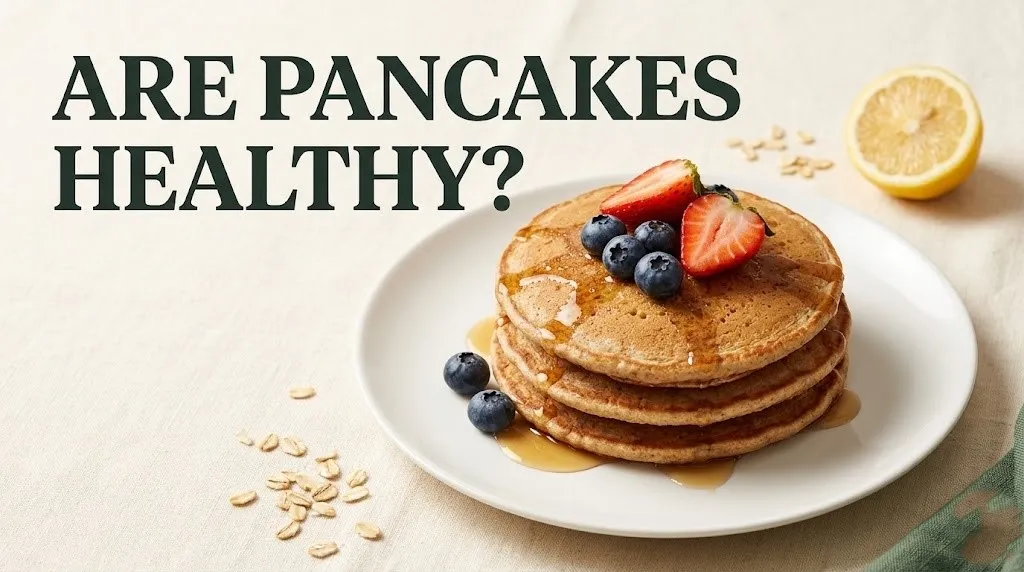
That said, “healthy” is not a binary category for any food. Context determines everything. Three medium pancakes made with whole wheat flour, topped with Greek yogurt and fresh strawberries, deliver a genuinely balanced macronutrient profile. The same three pancakes made with all-purpose flour and drowned in syrup are a different meal entirely.
The ingredient list is where the health picture starts or falls apart. Flour type, fat source, liquid choice, and toppings collectively determine whether you’re eating a nutrient-adequate breakfast or a high-sugar, low-fiber one. The pancake itself is a vehicle. What you load it with is the real nutritional story.
| Pancake Version | Approx. Calories | Fiber (g) | Protein (g) | Key Feature |
|---|---|---|---|---|
| Standard white flour (3 medium, plain) | 250-280 | 1g | 7-8g | Low fiber, moderate protein |
| Whole wheat flour (3 medium, plain) | 240-270 | 4-5g | 8-9g | Higher fiber, better satiety |
| Oat flour (3 medium, plain) | 230-260 | 3-4g | 7-8g | Beta-glucan fiber, lower GI |
| Protein pancakes (3 medium, plain) | 220-260 | 2-3g | 15-20g | High protein, meal-sustaining |
| Restaurant stack (3 large, plain) | 400-600+ | 1-2g | 10-14g | Large portions, often high in sodium |
Calorie ranges are approximate and vary by recipe and serving size. Restaurant figures may vary by location and chain.
Are Pancakes Healthy for You?
Whether pancakes are healthy for you specifically depends on your dietary needs, health status, and what the rest of your diet looks like. For a healthy adult eating a varied diet, pancakes a few times a week are unlikely to cause problems. For someone managing blood sugar, cholesterol, or weight, the details matter significantly.
Think of your daily diet like a bank account. One pancake breakfast does not bankrupt your nutrition any more than one salad makes you immune to diet-related illness. What matters is the overall pattern, not the individual meal.
The Harvard T.H. Chan School of Public Health notes that the quality of carbohydrates consumed regularly, not carbohydrates per se, is what drives long-term metabolic health. White-flour pancakes consumed daily contribute a steady stream of low-fiber, fast-digesting starch. Swapping to whole grain versions immediately changes that equation.
People with celiac disease or non-celiac gluten sensitivity need to avoid standard wheat-flour pancakes entirely. Almond flour, buckwheat flour (Fagopyrum esculentum), or certified gluten-free oat flour are appropriate alternatives. Individuals with dairy allergies can substitute plant-based milk without significantly changing the texture of the final product.
Key points for different groups:
- Healthy adults: pancakes 2 to 3 times per week are unlikely to affect overall diet quality if balanced with vegetables, lean proteins, and fiber elsewhere.
- People managing weight: portion size and toppings are the main variables to monitor.
- Children: pancakes provide energy but low micronutrient density unless fortified or made with whole grain flour and fruit.
- Pregnant individuals: enriched flour provides folate (vitamin B9), relevant during pregnancy, but whole grain flour is a superior source overall.
Are Pancakes Healthy for Breakfast?
Pancakes can be a reasonable breakfast when the recipe includes adequate protein, fiber, and controlled added sugar. On their own, white-flour pancakes do not tick those boxes. The fix is straightforward and does not require a different recipe, just smarter ingredients and toppings.
A nutritionally sound breakfast, according to the Academy of Nutrition and Dietetics, should include protein for satiety, fiber for blood sugar stability, and moderate amounts of healthy fat. Standard pancakes typically deliver carbohydrates and fat but underdeliver on protein and fiber.
Here’s what makes a pancake breakfast genuinely work:
- Adding two eggs on the side brings total meal protein to approximately 20 to 22g.
- Using whole wheat or oat flour in the batter increases fiber to 4 to 5g per serving.
- Topping with fresh berries instead of syrup cuts added sugar dramatically while adding antioxidants and vitamin C (ascorbic acid).
- Including a dollop of Greek yogurt adds calcium, probiotics, and 8 to 10g of additional protein.
The problem with most restaurant pancake breakfasts is portion size. A standard stack at chains like IHOP or Denny’s can exceed 500 to 700 calories before any toppings or sides. That is a significant portion of a typical adult’s daily energy needs in one sitting. At home, you control the portion.
Quick Tip:
- Make pancakes smaller than a standard diner size. Four silver-dollar pancakes at home give you the same satisfaction with better portion control.
- Adding 1 tablespoon of ground flaxseed (Linum usitatissimum) per cup of batter boosts fiber and omega-3 fatty acid content without changing flavor.
- Avoid flavored syrup products with high-fructose corn syrup. Pure maple syrup has a lower glycemic response per serving, though portion still matters.
Key Takeaway: Pancakes are not inherently a poor breakfast choice, but the standard white-flour, syrup-topped version underdelivers on fiber and protein. Switching the flour and choosing fruit-based toppings makes the same meal nutritionally adequate.
How Many Calories Are in Pancakes?
Three medium homemade pancakes made from standard all-purpose flour contain approximately 250 to 280 calories per serving, without toppings. That number shifts considerably once you add butter and maple syrup.
A single tablespoon of butter adds approximately 100 calories and 7g of saturated fat. Two tablespoons of maple syrup add roughly 100 to 110 calories and 24g of sugar. A typical “pancakes with butter and syrup” breakfast as most people eat it lands between 450 and 550 calories from toppings alone on top of the base.
Restaurant portions amplify this further. A short stack at a major breakfast chain typically runs 400 to 600 calories before toppings. A full-size stack with standard additions can hit 900 to 1,100 calories, approaching half or more of many adults’ daily energy needs.
| Pancake Meal Build | Approx. Total Calories |
|---|---|
| 3 medium homemade (plain) | 250-280 |
| + 1 tbsp butter | 350-380 |
| + 2 tbsp maple syrup | 450-490 |
| + fresh strawberries (1/2 cup) | 465-505 |
| + 2 tbsp whipped cream | 500-540 |
| Restaurant short stack (plain) | 400-600 |
| Restaurant short stack + standard toppings | 700-1,100 |
Values are approximate. Restaurant figures vary by location, portion size, and preparation method.
Calorie context matters here. The USDA recommends that adults consume 1,600 to 2,400 calories per day depending on age, sex, and activity level. A 550-calorie pancake breakfast is within range for most adults, especially when the rest of the day’s meals are balanced and include vegetables, lean proteins, and whole grains.
Are Pancakes High in Carbs?
Pancakes are high in carbohydrates, with three medium plain pancakes made from all-purpose flour delivering approximately 45 to 50 grams of carbohydrates per serving. Most of those carbohydrates come from refined starch, not fiber.
Refined starch from white flour digests quickly. Think of it like dry kindling in a fireplace. It burns fast, gives a burst of energy, and is gone. Whole grain flour is closer to a slow-burning log. The fiber and bran layers slow digestion, moderate the glucose rise after eating, and sustain energy for longer.
The glycemic index (GI) of standard white-flour pancakes is estimated at approximately 67 to 75, placing them in the medium-to-high GI category. Whole wheat pancakes have a lower estimated GI, roughly 45 to 55, depending on preparation. A study published in the American Journal of Clinical Nutrition found that substituting whole grain flours for refined flours in breakfast foods consistently reduced postprandial (after-meal) blood glucose response across multiple trials.
For people following a low-carbohydrate dietary pattern (such as ketogenic or low-carb diets), standard pancakes do not fit easily into daily carbohydrate targets. Almond flour or coconut flour alternatives can reduce total carbohydrates to 8 to 15g per serving, making them compatible with low-carb eating styles.
Are Pancakes High in Sugar?
Plain pancakes made at home contain very little added sugar, typically 1 to 2 grams per serving from small amounts of sugar in the batter. The sugar problem with pancakes is almost entirely a topping problem.
Two tablespoons of standard maple syrup contain approximately 24 grams of sugar, most of it sucrose. Many commercial pancake syrups use high-fructose corn syrup and contain similar or higher amounts. Combined with a plain pancake’s natural starch content, a typical topped serving delivers a rapid and substantial glucose load.
The American Heart Association recommends no more than 25g of added sugar per day for women and 36g per day for men. Two tablespoons of syrup on your pancakes gets you close to or over the daily limit for women before the rest of the day has even started.
Healthy toppings that add flavor without high sugar loads include:
- Fresh blueberries (per 1/2 cup): approximately 7g natural sugar, plus fiber and anthocyanins
- Sliced banana (per 1/2 medium): approximately 7g natural sugar, plus potassium and vitamin B6
- Unsweetened almond butter (1 tbsp): 1g natural sugar, plus healthy monounsaturated fats
- Plain Greek yogurt (2 tbsp): 1 to 2g natural sugar, plus protein and calcium
- A light drizzle of pure maple syrup (1 tsp): approximately 4g sugar, used as accent rather than sauce
Are Pancakes a Good Source of Protein?
Standard pancakes are a modest protein source, delivering approximately 7 to 8 grams of protein per three medium pancakes. That falls short of what nutrition researchers consider a protein-adequate breakfast, which most evidence places at 20 to 30 grams for satiety and muscle protein synthesis support.
Protein matters at breakfast more than most people appreciate. Research published in the Journal of Nutrition found that higher-protein breakfasts reduced appetite and total calorie intake later in the day compared to lower-protein breakfasts of equivalent calories. A pancake breakfast that doesn’t hit the 20g protein threshold may leave you significantly hungrier by mid-morning.
The practical fix is adding protein to the plate, not necessarily the batter. Two whole eggs alongside a pancake serving adds approximately 12g of protein. One cup of Greek yogurt adds another 15 to 17g. Alternatively, adding a scoop of unflavored or vanilla whey protein powder (or a plant-based protein powder for vegan versions) directly to the batter can bring the protein content of the pancakes themselves to 15 to 20g per serving without substantially altering texture.
| Protein Boost Strategy | Protein Added (approx.) | Notes |
|---|---|---|
| 2 whole eggs (on the side) | +12g | Also adds vitamin D and choline |
| 1 cup plain Greek yogurt (topping) | +15-17g | Adds calcium and probiotics |
| 1 scoop whey protein in batter | +20-25g | Slightly denser texture |
| 2 tbsp almond butter (topping) | +4g | Adds healthy fat, lower protein boost |
| Cottage cheese (1/4 cup in batter) | +7g | Adds creaminess; blends smoothly |
Protein values are approximate and vary by brand and serving size.
Key Takeaway: The protein gap is the most fixable nutritional weakness in a standard pancake breakfast. Adding eggs, Greek yogurt, or protein powder to the meal or batter closes it without changing the enjoyment of the meal.
What Are the Benefits of Eating Pancakes?
Pancakes, particularly those made with enriched or whole grain flour, provide genuine nutritional benefits that go beyond empty calories. The B vitamin content alone makes them worth acknowledging.
All-purpose enriched flour is fortified with thiamine (vitamin B1), riboflavin (vitamin B2), niacin (vitamin B3), and folic acid (the synthetic form of folate, vitamin B9). These vitamins play roles in energy metabolism, red blood cell formation, and nervous system function. The USDA reports that enriched grain products are one of the primary sources of folate in the American diet, which is particularly relevant for individuals of reproductive age.
Eggs in the batter add choline, a nutrient the National Institutes of Health (NIH) classifies as essential for brain and liver function, and one that many Americans are chronically under-consuming. One large egg provides approximately 147mg of choline, about 27% of the daily adequate intake for adult women.
Milk or buttermilk in the batter contributes calcium and phosphorus, both of which support bone density. Using buttermilk specifically introduces a mild lactic acid content that slightly improves the digestibility of the batter and creates the characteristic tender, fluffy crumb most people associate with a well-made pancake.
Benefits summary:
- B vitamins from enriched or whole grain flour support energy metabolism.
- Choline from eggs supports brain and liver function.
- Calcium and phosphorus from dairy support bone health.
- Whole grain and oat flour versions provide dietary fiber for digestive regularity.
- Carbohydrate content provides readily available energy for active individuals and children.
Are Whole Wheat Pancakes Healthier?
Whole wheat pancakes are nutritionally superior to standard white-flour pancakes in several measurable ways. The primary advantage is fiber: three medium whole wheat pancakes provide approximately 4 to 5 grams of dietary fiber, compared to roughly 1 gram in an equivalent serving of white-flour pancakes.
Whole wheat flour retains the bran and germ layers of the wheat kernel, which are stripped during the milling of refined all-purpose flour. Those layers contain fiber, magnesium, zinc, and B vitamins beyond what fortification adds back. The fiber content slows the digestion of carbohydrates, which moderates blood glucose response after eating.
Texture is the main objection most home cooks raise about whole wheat pancakes. Whole wheat flour produces a denser, slightly nuttier result. The fix is straightforward: a 50/50 blend of whole wheat and all-purpose flour gives you a fiber boost without sacrificing the light texture most people prefer. Alternatively, white whole wheat flour (still a 100% whole grain product, milled from a lighter wheat variety) is nearly indistinguishable from all-purpose flour in texture.
For people with wheat allergies or celiac disease, whole wheat flour is not an option. Buckwheat flour (Fagopyrum esculentum), despite its name, contains no wheat and is naturally gluten-free, while also providing a high-fiber, high-protein flour alternative with a distinctly earthy flavor.
Quick Tip:
- Start with a 50/50 blend if you’re new to whole wheat baking.
- Let batter rest 5 minutes before cooking. Whole wheat flour absorbs liquid more slowly.
- Add 1 extra tablespoon of milk or buttermilk per cup of flour to maintain a pourable batter consistency.
Are Oat Flour Pancakes Healthy?
Oat flour pancakes are among the most nutritionally favorable versions you can make at home. Three medium oat flour pancakes deliver approximately 3 to 4 grams of dietary fiber, including beta-glucan, a soluble fiber specific to oats (Avena sativa) with well-documented effects on cholesterol and blood sugar management.
The U.S. Food and Drug Administration (FDA) permits oat products to carry a health claim for beta-glucan and reduced risk of heart disease, based on evidence that at least 3g of beta-glucan daily can lower LDL cholesterol. Oat flour pancakes won’t deliver the full 3g in a single serving, but as part of a regular diet, they contribute meaningfully.
Oat flour is also naturally gluten-free, though cross-contamination is common during processing. People with celiac disease need to look for certified gluten-free oat flour specifically, as standard oat flour may be processed on shared equipment with wheat. The label matters here.
The texture of oat flour pancakes is slightly denser than all-purpose versions but lighter and more delicate than whole wheat. Many people find them to be the most approachable flour swap without any noticeable compromise in taste. You can make oat flour at home by blending rolled oats (Avena sativa) in a food processor until fine, approximately 30 to 45 seconds on high speed.
Key Takeaway: Oat flour is the most versatile and health-supportive flour swap for pancakes, bringing fiber, beta-glucan, and a pleasant texture without requiring a dramatic recipe change.
Are Banana Pancakes Healthy?
Banana pancakes, particularly the two-ingredient version made from eggs and ripe bananas, are a low-flour, naturally sweetened alternative that provides meaningful nutritional advantages over standard recipes. Two medium bananas and two eggs yield approximately three to four small pancakes with roughly 200 to 220 calories, 4 to 5g of protein, and 3g of fiber.
Bananas contribute potassium, with one medium banana providing approximately 422mg, or about 9% of the daily adequate intake for adults. Potassium plays a role in blood pressure regulation, muscle function, and fluid balance. Ripe bananas also contain vitamin B6 (pyridoxine), which supports neurotransmitter synthesis and immune function.
The natural sugar content of two-ingredient banana pancakes is higher than plain flour-based versions, approximately 14 to 18g per serving from the fruit’s fructose and glucose. This is natural sugar from whole fruit, not added sugar, and comes packaged with fiber, vitamins, and minerals. The American Diabetes Association draws a meaningful distinction between naturally occurring sugars in whole foods and added sugars, noting that the former carry fiber and micronutrients that modify the metabolic response.
For people who avoid flour entirely (grain-free or paleo dietary patterns), banana pancakes offer a practical and genuinely satisfying alternative. The texture is softer and more custardy than traditional pancakes. Adding a tablespoon of almond butter to the batter improves structural integrity and adds healthy fat for better satiety.
Are Protein Pancakes Healthy?
Protein pancakes are a genuinely healthy option when the protein source is clean and the added ingredients are reasonable. A well-made protein pancake serving delivers 15 to 25 grams of protein, enough to make a pancake breakfast nutritionally competitive with a traditional egg-based meal.
The protein source matters. Whey protein (derived from dairy) and casein protein both incorporate well into batter. Plant-based options including pea protein, brown rice protein, and hemp protein (Cannabis sativa) work for vegan eaters, though they can produce a denser, slightly grainier texture. Flavored protein powders often contain added sugar or artificial sweeteners; unflavored or vanilla varieties with minimal added ingredients are the better choice for a clean recipe.
Some commercial protein pancake mixes use a high proportion of protein powder relative to flour, which creates a rubbery texture at high cooking temperatures. The fix is cooking on medium-low heat and flipping only once. High protein content means more moisture-binding, so the interior sets more slowly than a standard pancake.
People with dairy allergies should confirm whether their protein powder is whey-based (dairy-derived) or plant-based before use. People managing kidney disease should consult a registered dietitian or their treating provider before significantly increasing dietary protein, as high protein intake requires careful management in the presence of reduced kidney function.
| Protein Pancake Comparison | Protein per Serving | Calories | Primary Protein Source |
|---|---|---|---|
| Standard recipe (3 medium) | 7-8g | 250-280 | Eggs, milk |
| + 1 scoop whey protein in batter | 22-28g | 270-310 | Whey, eggs |
| + 1 scoop pea protein in batter | 20-25g | 265-305 | Pea protein, eggs |
| Commercial protein pancake mix | 12-18g | 200-260 | Varies by brand |
| Two-ingredient banana + egg | 8-10g | 200-220 | Eggs, banana |
Are Homemade Pancakes Healthy?
Homemade pancakes are almost always nutritionally superior to boxed mixes or restaurant versions, because you control every ingredient. The main variables are flour type, fat type, amount of added sugar, and toppings.
A basic homemade pancake recipe uses flour, eggs, milk, a small amount of fat, and a leavening agent (baking powder or baking soda). At that point, you have a roughly 250-calorie, 7g-protein, 1g-fiber serving. That is your starting point, and every ingredient decision from there moves the nutritional profile in one direction or the other.
Boxed pancake mixes frequently contain added sodium (some mixes deliver over 500mg of sodium per serving, before any cooking additions), added sugar, and preservatives. Sodium is relevant for individuals managing hypertension; the American Heart Association recommends no more than 2,300mg of sodium per day for most adults, and ideally 1,500mg for those with high blood pressure. A high-sodium boxed mix breakfast can use up a quarter of the daily sodium budget before you’ve had a glass of water.
Making pancakes from scratch takes approximately 10 minutes of total prep and cooking time. It requires no special equipment beyond a mixing bowl, a whisk, and a non-stick pan or griddle. For anyone with the time and ingredients, the homemade version gives you more nutritional control than any commercial alternative.
Key Takeaway: Homemade pancakes give you complete control over flour quality, sodium content, fat type, and sugar levels. Boxed mixes are a convenient shortcut but often trade nutritional quality for shelf life.
Are Pancakes Healthy with Fruit?
Pancakes topped with fresh fruit are a meaningfully healthier meal than the same pancakes topped with syrup or whipped cream. Fruit adds fiber, vitamins, antioxidants, and natural sweetness that reduces or eliminates the need for added sugar.
Fresh blueberries are one of the most nutritionally dense fruit toppings. A half-cup serving provides approximately 42 calories, 2g of fiber, and a significant concentration of anthocyanins, polyphenol compounds that research in the American Journal of Clinical Nutrition associates with reduced oxidative stress and improved cardiovascular markers. Strawberries deliver similar antioxidant value with slightly fewer calories, plus a high concentration of vitamin C (ascorbic acid).
Bananas, while higher in natural sugar than berries, add potassium and vitamin B6, and their natural sweetness can replace syrup entirely when mashed or sliced over warm pancakes. The combination of fruit’s fructose with the fiber in the fruit itself creates a slower glucose rise than the equivalent amount of added syrup sugar would.
The one note of caution: fruit toppings are not appropriate for everyone without consideration. People on low-potassium diets (often prescribed for chronic kidney disease) need to moderate banana and high-potassium fruit intake. People with fructose malabsorption may find that large amounts of certain fruits cause digestive discomfort. These are manageable considerations for specific groups, not a reason to avoid fruit broadly.
Fruit-based topping comparison:
- Blueberries (1/2 cup): 42 calories, 2g fiber, high anthocyanin content
- Strawberries (1/2 cup sliced): 27 calories, 1.5g fiber, high vitamin C
- Raspberries (1/2 cup): 32 calories, 4g fiber, highest fiber of common berries
- Banana (1/2 medium): 53 calories, 1.5g fiber, high potassium
- Peach slices (1/2 cup): 30 calories, 1g fiber, vitamin A and C
Are Pancakes Good for Weight Loss?
Pancakes can fit into a weight-loss eating approach, but they require intentional choices around portion size, flour type, and toppings. The default restaurant or boxed pancake breakfast is not structured for weight management. A thoughtfully built homemade version can be.
Weight management fundamentally comes down to total calorie balance over time. A 350 to 400-calorie homemade pancake breakfast (three small whole wheat pancakes, a half-cup of berries, and two egg whites on the side) is entirely compatible with a calorie-controlled day for most adults. The same plate at a diner, three large white-flour pancakes with butter and syrup, can easily reach 700 to 900 calories before you account for orange juice or bacon.
Satiety is the other key variable. Meals that don’t satisfy tend to lead to more eating later. Fiber and protein are the two macronutrients most strongly linked to satiety. Adding both to a pancake meal (via whole grain flour and a protein addition) makes the breakfast hold longer, which reduces mid-morning snacking.
People following specific calorie-tracked or medically supervised weight loss programs should account for pancakes as a carbohydrate-dense meal and balance the rest of the day accordingly. No single food causes or prevents weight change in isolation. A registered dietitian is the appropriate professional to consult for individualized guidance, particularly for people with underlying metabolic conditions or specific weight loss targets under medical supervision.
Are Pancakes Bad for Diabetics?
Pancakes made with standard white flour are a high-glycemic food that people with type 2 diabetes or prediabetes need to approach with careful attention to portion size and flour choice. Standard pancakes are not inherently off-limits, but the default preparation is not well-suited to blood sugar management.
The American Diabetes Association recommends that people with diabetes prioritize foods with a lower glycemic response, higher fiber content, and controlled carbohydrate portions. White-flour pancakes have an estimated glycemic index of 67 to 75, meaning they raise blood glucose relatively quickly. In a person without diabetes, the resulting insulin response handles this efficiently. In a person with insulin resistance or impaired insulin secretion, the same meal can cause a more pronounced and prolonged blood glucose spike.
Practical adjustments for people with diabetes:
- Choose oat flour or whole wheat flour, both of which have lower glycemic index values.
- Limit serving size to two small pancakes (approximately 100 to 120g) rather than a full stack.
- Avoid syrup entirely. Top with berries, a small amount of nut butter, or plain Greek yogurt.
- Pair with a protein source (eggs, cottage cheese) to slow carbohydrate absorption.
- Monitor individual blood glucose response, as glycemic reaction to any food varies person to person.
Individual blood sugar management is highly specific to medication regimen, activity level, and metabolic status. Someone managing diabetes with insulin or oral medications should work with their endocrinologist or a registered dietitian specializing in diabetes care to determine appropriate serving sizes and frequency for higher-carbohydrate breakfast foods.
Key Takeaway: People with diabetes are not categorically barred from eating pancakes, but flour type, portion size, and toppings are non-negotiable variables. Oat flour or whole wheat versions with fruit and protein on the side are the most practical approach.
Frequently Asked Questions About Pancakes and Health
Are pancakes healthy to eat every day?
Eating standard white-flour pancakes with syrup every day would create a pattern high in refined carbohydrates and added sugar that most nutrition guidelines advise against.
Daily pancake eating becomes nutritionally reasonable if you use whole grain or oat flour, keep portions to two to three small cakes, and pair them with protein and fruit instead of syrup.
The USDA Dietary Guidelines for Americans emphasize variety and whole grain intake, both of which make a high-frequency pancake rotation worth managing carefully.
What is the healthiest type of pancake you can make?
Oat flour pancakes made with eggs and topped with fresh berries and Greek yogurt represent one of the most nutritionally balanced versions you can make at home.
Oat flour contributes beta-glucan fiber, which supports cholesterol management, while eggs add protein and choline, and berries add antioxidants and vitamin C.
Keeping the serving size to three small pancakes and skipping syrup keeps the total calorie and sugar content in a reasonable range for most adults.
Are pancakes healthier than eggs for breakfast?
Eggs are a more nutrient-dense breakfast food than standard pancakes, providing approximately 12 to 14 grams of high-quality protein, healthy fat, choline, and vitamin D in a 200-calorie serving.
Standard pancakes in the same calorie range deliver mostly refined carbohydrates with significantly less protein and micronutrient density.
The best comparison is not either-or. Pancakes made with whole grain flour alongside eggs as a topping or side combines the best of both.
Can you eat pancakes and still lose weight?
Yes, pancakes can fit into a weight-loss plan when made with whole grain flour, kept to a controlled portion size, and paired with protein and fiber-rich toppings.
The challenge is that standard restaurant or boxed pancake breakfasts often exceed 600 to 900 calories before accounting for sides or drinks.
Homemade versions allow full control over calorie density, and a 350 to 400-calorie pancake breakfast can work comfortably within most calorie targets for weight management.
Are pancakes OK for someone with diabetes?
Standard white-flour pancakes are not ideal for blood sugar management due to their moderate-to-high glycemic index and low fiber content.
Switching to oat flour or whole wheat flour, limiting portion size, and topping with berries rather than syrup significantly reduces the glycemic impact of the meal.
Anyone managing diabetes should account for the carbohydrate load of any pancake serving within their total daily carbohydrate target, in coordination with their medical team if using insulin or glucose-lowering medications.
Closing
Pancakes are not a health problem. The way most people eat them can be.
The flour choice, the portion size, and especially the toppings do more work than the pancake itself. A batch made with oat or whole wheat flour, topped with berries and served with a protein source, holds up well against almost any other breakfast in terms of nutrition. The same batter with a lake of syrup and three pats of butter is a different meal entirely.
Make one change at a time if a full recipe overhaul feels like too much. Start with the flour. Then revisit the toppings. The pancake will taste just as good, and you’ll stay satisfied longer.