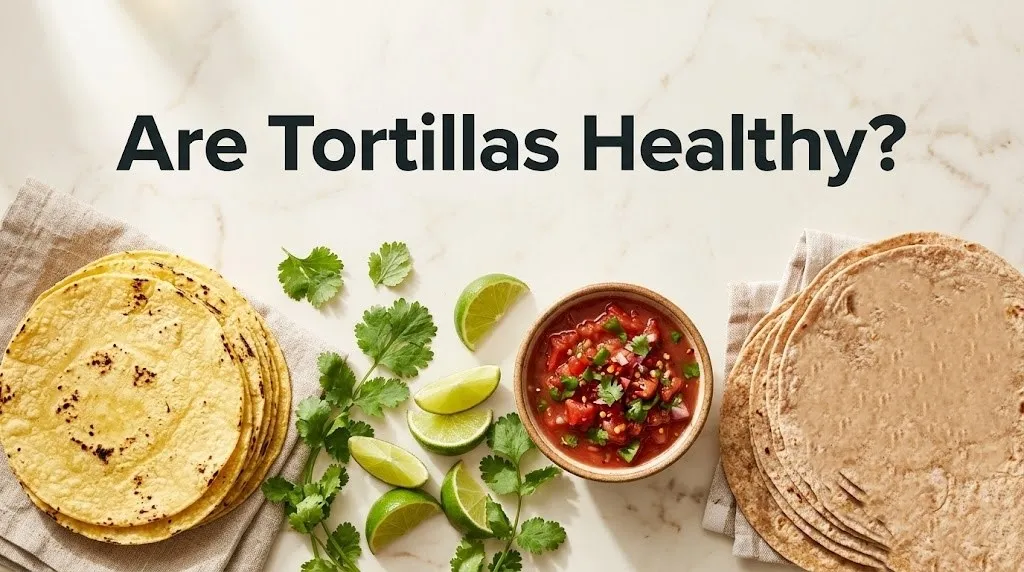
Tortillas are a perfectly healthy foundation for a meal, provided you match the type to your specific health goals. Corn tortillas in particular stand out as a fiber-rich, whole-grain option that supports blood sugar stability. Their nutritional value shifts dramatically based on what they are made from, how they are processed, and how many you eat in one sitting.
The global tortilla market is projected to keep climbing through 2026, driven by demand for both traditional and better-for-you flatbreads. Yet most people still do not know that a single corn tortilla delivers about 10 percent of your daily fiber target in under 60 calories. That is a nutrition fact worth remembering the next time you are standing in the bread aisle comparing package labels.
This guide walks you through exactly what is in corn and flour tortillas. You will learn how they affect blood sugar, what to look for on an ingredient label, how to choose a healthy tortilla for weight loss, and how to safely include tortillas if you have diabetes, gluten sensitivity, or heart health concerns. Every recommendation is grounded in current nutrition science and tested in real kitchens.
What Are Tortillas? A Nutritional Breakdown of Corn and Flour Tortillas
A tortilla is a thin, round unleavened flatbread made from either nixtamalized corn or wheat flour. The corn version is the original, dating back thousands of years in Mesoamerica. Corn tortillas typically list just three ingredients: whole-grain corn masa flour, water, and a trace of lime (calcium hydroxide). Flour tortillas start with refined wheat flour, water, fat, salt, and leavening agents.
The nutritional gap between the two is wide. According to the USDA, one six-inch corn tortilla provides roughly 52 calories, 1.4 grams of fiber, and 1 gram of fat. A comparable flour tortilla delivers about 94 calories, 0.4 grams of fiber, and 2.3 grams of fat. The numbers tell a clear story before you even look at micronutrients.
Corn tortillas contain calcium from the nixtamalization process, a traditional method that treats dried corn with an alkaline solution. This step unlocks bound niacin (vitamin B3) and adds bioavailable calcium. Flour tortillas, unless enriched, offer less naturally occurring calcium but may carry added iron and B vitamins. Whole-wheat flour tortillas narrow the fiber gap somewhat but still land with a higher calorie density per gram than corn tortillas.
| Nutrient (per 1 tortilla, 6-inch) | Corn Tortilla | Flour Tortilla | Whole-Wheat Tortilla |
|---|---|---|---|
| Calories | 52 kcal | 94 kcal | 87 kcal |
| Total Fat | 1.0 g | 2.3 g | 2.0 g |
| Carbohydrates | 10.7 g | 15.4 g | 15.0 g |
| Dietary Fiber | 1.4 g | 0.4 g | 1.5 g |
| Protein | 1.4 g | 2.4 g | 2.6 g |
| Calcium | 21 mg | 41 mg | 52 mg |
Source: USDA FoodData Central, standard reference values
Are Corn Tortillas Healthy for Diabetics?
Corn tortillas are an excellent carbohydrate choice for people managing diabetes because they rank lower on the glycemic index than flour tortillas. A typical corn tortilla has a glycemic index (GI) in the moderate range, roughly 52, compared to white flour tortillas which can register a high GI above 70. The difference comes down to fiber, particle size, and the unique structure of masa dough.
Whole-grain corn masa retains more of the corn kernel’s natural fiber and resistant starch. Resistant starch does not break down into glucose in the small intestine. Instead it ferments in the colon, which means a gentler blood sugar curve after eating. One practical way to think about it is the sponge analogy: a corn tortilla acts more like a dense cellulose sponge releasing water slowly, while a refined flour tortilla behaves like an open-pore foam that dumps its contents all at once.
Portion control still matters. Two corn tortillas provide about 20 grams of total carbohydrate, which fits neatly into a standard 30- to 45-gram carb budget per meal that many diabetes educators recommend. Three flour tortillas could push past 45 grams before any fillings are added. Pairing corn tortillas with lean protein and a source of unsaturated fat, like sliced avocado or grilled fish, further blunts any post-meal blood sugar spike.
Research from the American Diabetes Association supports choosing whole grains and fiber-rich carbohydrates as part of a diabetes eating pattern. A 2024 study in the journal Nutrients reinforced that traditional nixtamalized corn products exhibit a more favorable postprandial glycemic response compared to refined wheat counterparts. If you are counting carbohydrates with a care team, corn tortillas are a food worth keeping on your list.
Key Takeaway: Corn tortillas offer moderate glycemic impact, built-in fiber, and a whole-grain structure that supports steadier blood sugar than flour tortillas, making them a smart pick for diabetes meal planning.
Are Flour Tortillas Healthy?
Flour tortillas can fit into a healthy eating pattern but they require more careful label scanning. The standard supermarket flour tortilla is made from refined white wheat flour stripped of its bran and germ. That process removes nearly all the fiber and a large portion of the magnesium, zinc, and B vitamins native to the wheat kernel.
Enriched flour tortillas have some B vitamins and iron added back, a practice mandated by FDA enrichment standards. But enrichment does not restore the missing fiber or phytonutrients. A typical six-inch flour tortilla delivers less than half a gram of dietary fiber. For someone aiming to meet the Academy of Nutrition and Dietetics adult fiber target of 25 to 38 grams daily, flour tortillas contribute essentially nothing to that goal.
The fat source matters too. Traditional flour tortillas often contain lard or hydrogenated vegetable shortening. Lard provides saturated fat, which the American Heart Association recommends limiting to less than 10 percent of daily calories. Many modern brands have switched to liquid vegetable oils, but you have to check the ingredient list. Look for non-hydrogenated oils and zero grams of trans fat on the nutrition facts panel.
Whole-wheat flour tortillas are the better flour-based choice. They pack roughly triple the fiber of white flour versions and contain the full spectrum of grain nutrients. Still, calorie for calorie, corn tortillas edge them out in fiber density and mineral content. The best approach for most people is to treat white flour tortillas as an occasional choice and reach for corn or 100 percent whole-wheat tortillas the rest of the time.
Key Fact: The USDA reports that less than 5 percent of Americans meet the daily recommended fiber intake. Substituting corn tortillas for refined flour tortillas is one small, evidence-backed swap that moves that number up.
What Is the Glycemic Index of Tortillas?
The glycemic index of a tortilla depends entirely on the grain and processing method. Corn tortillas have a GI of approximately 52, placing them in the low-moderate category. Flour tortillas made from refined white wheat have a GI ranging from 70 to 85, squarely in the high range. Whole-wheat flour tortillas generally test in the 55 to 65 range.
Glycemic index is not the only number that matters. Glycemic load accounts for serving size. One corn tortilla has a glycemic load of about 5.5, which is low. A flour tortilla has a glycemic load around 11, which is moderate. Eat three flour tortillas and the load climbs to 33, a high impact level that demands a strong insulin response.
The way tortillas are made influences the GI. Nixtamalization, the alkali treatment used for corn masa, alters the starch granule structure and may increase resistant starch formation. Frying tortillas into chips or hard taco shells also changes the GI somewhat, though the added fat from frying introduces other nutritional considerations.
For practical eating, GI numbers translate into simple choices. Breakfast tacos on corn tortillas will sustain energy more evenly than the same fillings on white flour tortillas. An afternoon quesadilla made with a whole-grain tortilla beats the 3 p.m. energy crash that can follow a refined-flour version. These are not marginal differences, they are patterns that add up across years of meals.
Tortillas and Weight Loss: How to Choose a Healthy Tortilla
Tortillas can absolutely support a weight-loss plan when you choose lower-calorie, higher-fiber options and watch the fillings. The tortilla itself is rarely the calorie problem. What you wrap inside it usually matters more. But starting with the right base puts you on better ground from the first bite.
A strategic swap from large flour tortillas to standard corn tortillas cuts significant calories over time. Replacing one 10-inch flour tortilla at about 210 calories with two corn tortillas at roughly 105 calories total saves over 100 calories per meal. Across a week of lunches, that adds up. Fiber and satiety improve at the same time.
The chart below breaks down common tortilla choices for a calorie-conscious eater.
| Tortilla Type (6-inch unless noted) | Calories | Fiber (g) | Satiety Potential |
|---|---|---|---|
| Corn tortilla | 52 | 1.4 | High (fiber + chewiness) |
| Flour tortilla | 94 | 0.4 | Low (soft, fast eating rate) |
| Whole-wheat flour tortilla | 87 | 1.5 | Medium-high |
| 10-inch burrito flour tortilla | 210 | 1.0 | Low (dense calories, low fiber) |
| Low-carb high-fiber wrap | 60 to 80 | 10+ | High (added fiber, protein) |
Quick Tip:
- Measure tortillas by weight if you can. Package counts of “medium” or “large” are not standardized.
- Build tacos with two corn tortillas per serving for built-in portion control.
- Avoid tortillas fried in oil before filling. The pre-fried step adds 50 to 80 calories without increasing fullness.
Portion creep is the real enemy. Restaurant tortilla baskets with chips, oversized burrito wrappers, and double-wrapped tacos all inflate what counts as a normal serving. Cooking at home gives you back control over the numbers.
Which Tortillas Are Best for Diabetics?
For diabetes, the best tortillas are those with the lowest net carbohydrate impact per serving and the most intact grain structure. Corn tortillas top the list because of their moderate glycemic index, built-in portion size, and lack of added sugar. Low-carb tortillas made with added fiber or alternative flours can also be useful tools, though you need to read the ingredient panel closely.
Some brands now market “carb balance” or “keto-friendly” tortillas that use resistant wheat starch, modified corn starch, or added cellulose fiber to keep net carbs low. The American Diabetes Association notes that products high in dietary fiber can help with glucose management, but they recommend getting fiber from whole foods when possible. A tortilla made primarily of added fibers and starches is a processed solution, not a whole-food one. That does not mean it is bad, just that the context matters.
Nopales tortillas, made with ground nopal cactus blended into corn masa, have gained popularity in Mexico and parts of the U.S. Southwest. Nopal is known for its soluble fiber and potential blood sugar-lowering properties, and small studies suggest it may blunt post-meal glucose when included with meals. These are a strong option for 2026 if you can find them fresh or frozen.
Cassava flour tortillas and almond flour tortillas present different pros and cons for diabetes. Cassava tortillas are grain-free but high in rapidly digestible starch, with a GI profile closer to white flour than to corn. Almond flour tortillas deliver healthy fats and protein but are calorie-dense and often crumbly without binders. Each deserves testing with your own glucose monitor to see how your body responds.
Key Takeaway: Stick with traditional corn tortillas as your default diabetes-friendly flatbread, and treat specialty low-carb options as occasional additions after checking ingredient quality and personal glucose response.
How to Read a Tortilla Label: Ingredients to Look For and Avoid
Reading a tortilla label takes less than 30 seconds once you know what to look for. Start with the ingredient list, not the nutrition facts panel. A good tortilla has five ingredients or fewer. Corn tortillas should list whole-grain corn masa flour, water, and lime (calcium hydroxide) as the main components. Maybe a trace of a preservative like propionic acid if they are shelf-stable.
Flour tortillas are trickier. The first ingredient should be whole wheat flour if you want fiber. “Wheat flour” without the word “whole” means refined white flour. That is the single most important word to spot on any wheat-based product. Next, scan the fat source. Look for non-hydrogenated vegetable oils like avocado oil, olive oil, or sunflower oil. Avoid any product that says “partially hydrogenated,” which indicates trans fat, though most brands have reformulated away from this by 2026.
Ingredients that should give you pause include interesterified soybean oil, which is sometimes used as a trans-fat replacement, and excessive added sugar. A surprising number of flour tortillas contain sugar or high-fructose corn syrup for browning and pliability. A tortilla is a savory food. It should not contain more than 1 gram of sugar per serving.
Preservatives and dough conditioners like sodium metabisulfite, L-cysteine, and potassium bromate appear more often in mass-market flour tortillas. Potassium bromate is banned in the European Union and several other countries, though FDA regulations still permit it in the U.S. with certain processing conditions. It is a marker of highly processed dough and best avoided. The ingredient label is the one place where you hold the power. Use it.
| Label Claim | What It Actually Means | Verdict |
|---|---|---|
| “Made with Whole Grains” | May contain mostly refined flour with a sprinkle of whole grain flour | Check the first ingredient |
| “Multigrain” | Multiple grains used, none necessarily whole | Look for “whole” before the grain name |
| “Stone Ground” | Refers to milling method, not fiber content | Neutral; does not guarantee whole grain |
| “100% Whole Wheat” | The entire wheat kernel is used | Strong choice |
| “Carb Balance” or “Low Carb” | Added fibers or modified starches likely present | Check ingredient list for whole-food sources |
Nixtamalization: The Ancient Process That Makes Corn Tortillas Healthier
Nixtamalization is the process of cooking dried field corn kernels in an alkaline solution, traditionally limewater made from limestone or wood ash, before grinding them into masa dough. This step unlocks nutrients that are otherwise unavailable. More practically, it turns corn from a starchy grain into a food with dramatically better mineral bioavailability.
Untreated corn has bound niacin (vitamin B3) that the human digestive system cannot access. Populations that relied on un-nixtamalized corn as a staple historically suffered from pellagra, a niacin-deficiency disease. Nixtamalization frees the niacin and simultaneously infuses the corn with calcium from the lime. A single corn tortilla made from nixtamalized masa can provide more than 20 milligrams of calcium from a grain that started with almost none.
The process also reduces mycotoxins, specifically fumonisin B1, a fungal toxin found in field corn. The World Health Organization has documented nixtamalization as a traditional food processing method that lowers mycotoxin levels in maize-based diets. For home cooks working with masa harina like Maseca or fresh masa from a tortillería, this safety benefit is already baked in.
You cannot get these benefits from tortillas made with raw corn flour that has not undergone the lime treatment. Read the ingredient label. If you see “corn flour” without the word “masa” or “lime-treated,” the product skipped the most nutritionally important step in corn tortilla production. That detail alone separates a genuinely health-promoting food from a simple starch delivery vehicle.
Key Takeaway: Nixtamalization is the single biggest nutritional differentiator between a traditional corn tortilla and a generic corn flatbread. It boosts calcium, unlocks niacin, and reduces natural toxins, all through a technique that dates back millennia.
Are Tortillas Gluten-Free? A Complete Safety Guide
Corn tortillas are naturally gluten-free because corn is a grain entirely unrelated to wheat, barley, or rye. Flour tortillas contain gluten from wheat flour and are not safe for anyone with celiac disease or gluten sensitivity. The distinction sounds simple, but cross-contamination risk and label-reading habits matter a great deal.
Corn tortillas made in a dedicated gluten-free facility are safe for a strict gluten-free diet. Corn tortillas produced on shared equipment with flour tortillas may contain trace gluten. The Celiac Disease Foundation advises that people with celiac disease look for a certified gluten-free label on corn tortilla packaging. The certification threshold is less than 10 parts per million of gluten, stricter than the FDA standard of less than 20 parts per million.
Restaurant corn tortillas present a bigger question mark. Many taquerías and Mexican restaurants use a single tortilla press or a shared griddle for corn and flour tortillas. Cross-contact is likely unless the kitchen maintains separate work surfaces and cooking areas. A direct conversation with the staff is the only way to know. Simply asking “are your corn tortillas gluten-free?” is a reasonable and expected question in 2026.
For people with non-celiac gluten sensitivity, corn tortillas are an excellent bread replacement. They offer a structural role on the plate, a vehicle for fillings, and a satisfying chew, all without the gluten proteins that trigger symptoms. Chickpea flour tortillas and lentil-based wraps have also entered the gluten-free tortilla space, each with distinct flavor profiles and higher protein counts.
Quick Tip:
- Certified gluten-free corn tortillas: look for the black and white GF certification mark.
- Restaurant strategy: ask specifically about shared cooking surfaces, not just ingredients.
- Home kitchens: if you cook both corn and flour tortillas, use separate skillets or thoroughly wash the griddle between batches.
Can You Eat Tortillas Every Day? Serving Sizes and Frequency
Yes, you can eat tortillas every day. The question is which tortillas, how many, and what accompanies them. A daily intake of two to four corn tortillas fits easily within the grain recommendations in the USDA Dietary Guidelines for Americans, which suggests three to five servings of whole grains per day for most adults. Two corn tortillas represent one ounce-equivalent of whole grains.
Fiber intake matters if tortillas are a daily staple. Someone eating six corn tortillas a day gets roughly 8.4 grams of dietary fiber from that choice alone. Swap in six white flour tortillas and the fiber drops below 3 grams. That difference, maintained over months and years, has a measurable impact on digestive health and cholesterol regulation. The National Institutes of Health cites dietary fiber as a nutrient of public health concern because intake remains low across all age groups.
Sodium deserves attention too. Shelf-stable tortillas often contain sodium propionate or other preservatives that raise the sodium tally. A single packaged corn tortilla may contain 10 to 40 milligrams of sodium, but some flour tortillas push beyond 200 milligrams. Homemade tortillas or those from a local tortillería typically contain little to no added sodium. If you eat tortillas daily, sourcing fresh or low-sodium packaged versions keeps your total salt budget under control.
Rotate your tortilla choices like you would rotate any other grain. One day corn, one day whole-wheat, one day a high-protein lentil wrap. Variety in the grain rotation increases the range of phytonutrients and amino acids in your diet. It also keeps the taco situation interesting, which matters for long-term eating pattern sustainability.
The Best Healthy Tortillas You Can Buy in 2026
The best healthy tortilla for you depends on your specific goal, but some clear category winners exist across the 2026 market. This is not a sponsored list. It reflects ingredient quality, nutritional data, and accessibility in major U.S. grocery stores.
The table below breaks down top picks by dietary priority.
| Dietary Goal | Top Pick Type | Brand Examples | Key Stat (per tortilla) |
|---|---|---|---|
| Lowest Calorie | Thin corn tortillas | Local tortillería, Mi Rancho | 40 to 50 calories, 1.5 g fiber |
| Highest Fiber | Whole-wheat or flax tortillas | Ezekiel 4:9, Angelic Bakehouse | 4 to 6 g fiber |
| Diabetes-Friendly | Traditional corn, nopal tortillas | Masienda, La Tortilla Factory | ~52 GI, 10 to 12 g net carbs |
| Gluten-Free and High Protein | Almond or chickpea flour tortillas | Siete, Banza | 5 to 8 g protein, grain-free |
| Keto and Low-Carb | High-fiber modified starch wraps | Mission Carb Balance, La Banderita | 4 to 8 g net carbs, 10+ g fiber |
A tortillería-made corn tortilla that contains only masa, water, and lime and is sold fresh from the comal is the gold standard. These are getting easier to find in the U.S. as regional Mexican food cultures keep growing. If you have a local tortillería within driving distance, their product will nearly always beat the supermarket shelf for flavor and ingredient simplicity.
Siete Foods has expanded its grain-free tortilla line significantly by 2026, and their almond flour tortillas are widely available at Whole Foods and Sprouts. For fiber, Ezekiel 4:9 sprouted whole-grain tortillas remain a nutritionist-favorite because the sprouting process reduces phytic acid and may improve mineral absorption. Angelic Bakehouse produces a sprouted grain wrap with a soft texture that actually holds up to folding.
Key Takeaway: The healthiest tortilla is the one you enjoy eating that has the shortest ingredient list and the most whole-food structure. For most people, that means a fresh corn tortilla from a tortillería or a sprouted whole-grain wrap from a trusted brand.
Corn Tortillas vs. Flour Tortillas: An Honest Health Comparison
Corn tortillas beat flour tortillas on nearly every nutritional metric that matters for long-term health. They deliver more fiber, less fat, fewer calories, a lower glycemic index, and a mineral profile enhanced by nixtamalization. Flour tortillas offer more protein and calcium in some enriched varieties, but those advantages do not outweigh the fiber deficit for the majority of eaters.
The protein difference is modest. A flour tortilla has about 2.4 grams of protein compared to 1.4 grams in a corn tortilla. That gram of difference disappears once you add beans, chicken, or eggs to your taco. The fiber difference persists regardless of fillings, and fiber is the nutrient that most Americans chronically under-consume.
The table below puts the numbers side by side for a full meal scenario.
| Meal: 3 Tortillas + Fillings | Corn Tortilla Base | Flour Tortilla Base |
|---|---|---|
| Tortilla calories | 156 | 282 |
| Tortilla fiber | 4.2 g | 1.2 g |
| Total meal calories (with 4 oz chicken, lettuce, salsa) | ~350 | ~475 |
| Total meal fiber | ~7 g | ~4 g |
| Glycemic load (estimated) | Moderate | High |
| Calcium | 63 mg | 123 mg |
When flour tortillas win, it is in specific use cases. A burrito that must hold together without tearing demands the stretchy gluten structure of a flour tortilla. A large, thin Sonoran-style flour tortilla is a cultural staple and a joy to eat, and food is not just a spreadsheet of nutrients. But if you are asking a straightforward health question, the answer is clear. Corn tortillas are the nutritionally superior daily driver.
Are Low-Carb and Keto Tortillas Actually Healthy?
Low-carb and keto tortillas solve a specific macronutrient problem but introduce ingredient quality trade-offs. Most achieve their low net-carb count by adding purified fibers like inulin, chicory root fiber, or modified wheat starch that the FDA allows to be subtracted from total carbohydrates for labeling purposes. The resulting product keeps insulin response low, which is the goal for a keto or very-low-carb eater.
The ingredient list tells a story of food technology. A Mission Carb Balance tortilla, for example, lists modified wheat starch, cellulose powder, wheat gluten, and cottonseed oil among its primary components. Compare that to a corn tortilla’s three ingredients. The keto tortilla is a processed food product engineered for a metabolic purpose. It is not a whole grain. It is not a traditional food. That does not make it unhealthy, but it makes it a tool rather than a staple.
Digestive tolerance varies widely. Added fiber ingredients like inulin and chicory root are FODMAPs that can trigger bloating, gas, and discomfort in people with irritable bowel syndrome. Monash University research on FODMAP sensitivity notes that inulin is a fructan that many people with IBS malabsorb. If you eat a low-carb tortilla and feel digestive distress within a few hours, the added fiber is the likely culprit.
For a person with insulin resistance who needs to keep carbohydrate intake very low, a keto tortilla may be a useful bridge food. For the general population trying to eat healthier, a corn tortilla is the better choice. The rule is the same as always: know your health goal, know your ingredient list, and pick the food that supports both.
Quick Tip:
- Test a single low-carb tortilla before committing to a whole package.
- If bloating occurs, try a brand that uses resistant starch instead of inulin.
- Do not mistake “keto-certified” for “nutrient-dense.” The two concepts are not the same.
How to Cook With Tortillas: Healthy Preparation Methods That Preserve Nutrients
How you cook a tortilla matters almost as much as which one you buy. Heating a tortilla on a hot, dry surface is the healthiest preparation method because it adds zero fat and the quick heat preserves the grain’s structure. A cast-iron comal or a heavy skillet preheated over medium-high heat delivers the best results for both corn and flour tortillas.
To heat a corn tortilla properly:
- Preheat a dry comal, cast-iron skillet, or nonstick pan over medium-high heat for 2 minutes.
- Place the tortilla directly on the hot surface for 30 to 45 seconds.
- Flip when small brown spots appear and the edges begin to lift slightly.
- Heat the second side for 20 to 30 seconds.
- Stack heated tortillas in a clean kitchen towel or a tortilla warmer to steam and soften.
Steaming tortillas in a microwave wrapped in a damp paper towel also works, though the texture will be softer with less of the toasted corn flavor that a dry skillet produces. The microwave method adds no fat and is faster. Both methods beat frying.
Frying tortillas in oil for tacos dorados or tostadas triples the calorie count per tortilla. A fried corn tortilla absorbs roughly 3 to 5 grams of oil, adding 25 to 45 calories. Frying also oxidizes some of the unsaturated fats in the oil at high heat, a process that generates compounds that are not ideal for cardiovascular health. An air fryer offers a middle ground, crisping tortillas with a fraction of the oil.
Baking tortilla strips or chips at 375 degrees Fahrenheit with a light spray of avocado oil produces a crunchy topping or snack that controls fat quantity without sacrificing texture. Homemade baked chips from corn tortillas deliver roughly 70 calories per ounce compared to 140 calories for traditional fried tortilla chips. The difference is real and measurable.
Are Tortilla Chips Healthy? When a Tortilla Becomes a Snack Food
Tortilla chips are a processed snack food that starts with a whole-food ingredient but loses a great deal of its nutritional integrity during frying. A one-ounce serving of standard restaurant-style tortilla chips contains about 140 calories, 7 grams of fat, and less than 2 grams of fiber. That is nearly triple the calories and seven times the fat of a plain corn tortilla.
The problem is not the corn. It is the oil quantity, the salt concentration, and the way people eat chips. Very few people stop at one ounce, which is roughly 10 to 12 chips. A typical restaurant basket of chips with salsa can deliver 400 to 600 calories before the main course arrives. The Academy of Nutrition and Dietetics has identified mindless snacking on calorie-dense foods as a common barrier to maintaining a healthy eating pattern.
Baked tortilla chips reduce the fat content to about 3 grams per serving and cut calories by roughly 30 percent. The fiber content stays similar because the corn base does not change. The texture is denser and less flaky than fried chips, but they hold salsa and guacamole just as well. Grain-free tortilla chips made from cassava, plantains, or lentils offer different nutrient profiles, with lentil chips often delivering 4 to 5 grams of protein per serving.
If tortilla chips are a regular part of your eating pattern, portion them into a small bowl instead of eating directly from the bag. Pair them with a fresh tomato salsa or a modest serving of guacamole, both of which bring fiber and phytonutrients to a snack that otherwise skews heavily toward refined fat and salt. The chip is the vehicle. The salsa is the upgrade.
| Tortilla Chip Type (1 oz serving) | Calories | Total Fat | Fiber | Sodium |
|---|---|---|---|---|
| Traditional fried corn chips | 140 | 7 g | 1.5 g | 115 mg |
| Baked corn chips | 110 | 3 g | 1.5 g | 135 mg |
| Grain-free cassava chips | 130 | 6 g | 2 g | 125 mg |
| Lentil tortilla chips | 120 | 4.5 g | 2.5 g | 170 mg |
Key Takeaway: Tortilla chips are a calorie-dense, easy-to-overeat snack food, not a nutritionally equivalent substitute for soft tortillas. Treat them as an occasional food with intentional portioning rather than a daily grain serving.
Healthy Tortilla Fillings: What You Pair Matters Most
A healthy tortilla can turn into an unhealthy meal fast if the fillings work against you. The tortilla is rarely the nutritional weak point in a taco. What goes inside it almost always carries the larger calorie, fat, and sodium load. Building a balanced filling strategy is where real food expertise pays off.
The most reliable formula for a nutritionally sound taco or wrap matches one lean protein, one high-fiber vegetable component, and one source of healthy fat. Grilled fish provides omega-3 fatty acids. Black beans deliver soluble fiber and resistant starch. Sliced avocado contributes monounsaturated fat and potassium. Shredded cabbage adds crunch and vitamin C. This is the taco equivalent of a balanced plate.
Fillings to moderate include carnitas, which are traditionally slow-cooked in lard and carry higher saturated fat. Chorizo is high in saturated fat and sodium. Queso fundido and crema add saturated fat and calories without much nutritional return beyond calcium. These are delicious foods with real cultural roots. They are also best enjoyed in smaller quantities rather than as the primary protein in a daily lunch.
Salsas deserve their own paragraph. A fresh pico de gallo made from tomato, onion, cilantro, lime juice, and jalapeño delivers flavor, vitamin C, and lycopene for roughly 10 calories per two-tablespoon serving. Green salsa verde made with tomatillos brings acidity and brightness that cuts through richer fillings. Salsas are the most underrated nutritional powerhouse in Mexican cuisine. Use them generously.
Quick Tip:
- Rotate proteins across the week: fish, beans, chicken, shrimp, lentils.
- Add shredded greens to every taco for an automatic fiber and nutrient upgrade.
- Use salsa as a primary flavor source instead of cream-based sauces.
Can You Freeze Tortillas? Storage Tips for Maximum Freshness
You can freeze tortillas. Both corn and flour tortillas freeze well for up to three months if packaged correctly. Proper storage maintains texture and prevents the freezer burn that turns tortillas dry and brittle.
The method matters. Stack tortillas with a small piece of parchment paper or wax paper between each one. This step, often skipped, is the difference between pulling out one tortilla for a quick meal and chiseling apart a frozen block of ten. Slide the stack into a freezer-grade zip-top bag, press out all the air, and seal tightly. Label the bag with the date. Tortilla amnesia is real once they disappear under a bag of frozen peas.
Thawing is simple. Move the stack to the refrigerator overnight for a gradual thaw. For immediate use, place frozen tortillas directly on a hot, dry skillet for 60 to 90 seconds per side. The direct heat thaws and chars them simultaneously. A microwave wrapped in a barely damp paper towel also works, but the skillet method produces far better texture.
Fresh tortillas from a tortillería have a shorter counter life than shelf-stable packaged tortillas. Use fresh corn tortillas within three days if kept at room temperature in a sealed bag. Refrigerated, they last about a week before the masa starts to stale and crack. Flour tortillas, fresh or packaged, tend to last a few days longer due to the fat content and added preservatives. Trust your nose. Sour or funky smells from any grain product mean fermentation has started and the tortillas are done.
Frequently Asked Questions About Tortilla Health
Are corn tortillas always healthier than flour tortillas?
Corn tortillas are healthier for most people because they deliver more fiber, fewer calories, and a lower glycemic impact.
Flour tortillas have more protein and calcium in some enriched versions but fall short on fiber.
The healthiest choice also depends on what you fill them with and how many you eat.
How many tortillas can a diabetic eat per day?
Most diabetes educators suggest one to three corn tortillas per meal as part of a 30- to 45-gram carbohydrate budget.
The exact number depends on your personal carbohydrate tolerance, medication timing, and activity level.
Tracking blood glucose before and two hours after a tortilla-based meal provides the most useful individual data.
Do tortillas cause inflammation?
Corn tortillas made from nixtamalized masa are not generally inflammatory and whole grains are linked to lower markers of systemic inflammation.
Refined flour tortillas eaten in large quantities may contribute to blood sugar swings that can promote low-grade inflammatory pathways.
People with a specific corn allergy or sensitivity should avoid corn tortillas entirely.
Which tortillas have the most fiber?
Traditional corn tortillas made from whole-grain masa deliver about 1.4 grams of fiber each.
Sprouted whole-grain tortillas and flaxseed wraps can pack 4 to 6 grams of fiber per serving.
Low-carb tortillas with added purified fibers can claim 10 or more grams, though the digestive tolerance of those fibers varies.
Are uncooked tortillas safe to eat?
Raw masa dough and uncooked tortillas should not be eaten because the corn masa has not been heated enough to eliminate potential bacterial contamination.
Flour tortilla dough also contains raw flour, which the CDC warns can carry pathogens like E. coli and Salmonella.
Always heat tortillas to at least 165 degrees Fahrenheit internal temperature before eating.
Your tortilla choice is a daily decision that adds up. The simplest approach that aligns with the best available nutrition evidence is this: reach for corn tortillas as your everyday flatbread, check ingredient labels for flour tortillas and low-carb alternatives, and pay more attention to your fillings than the wrapper. The tortilla itself is rarely the nutritional problem on the plate.
Small shifts produce real results over time. A person who swaps three flour tortillas per meal for three corn tortillas saves roughly 125 calories and gains about 3 grams of fiber. Across a year of weekly taco nights, that single behavior change eliminates more than 6,000 calories from the diet while adding over 150 grams of fiber. Those are the kinds of numbers that move health markers without requiring anyone to give up the foods they love.
Cook your tortillas on a hot dry skillet until they blister. Fill them with colorful vegetables and a lean protein. Eat them with salsa, not cream. Do that most days, and you have built a tortilla habit that actually supports your health. The best food traditions make room for both pleasure and evidence. Tortillas, handled right, do exactly that.