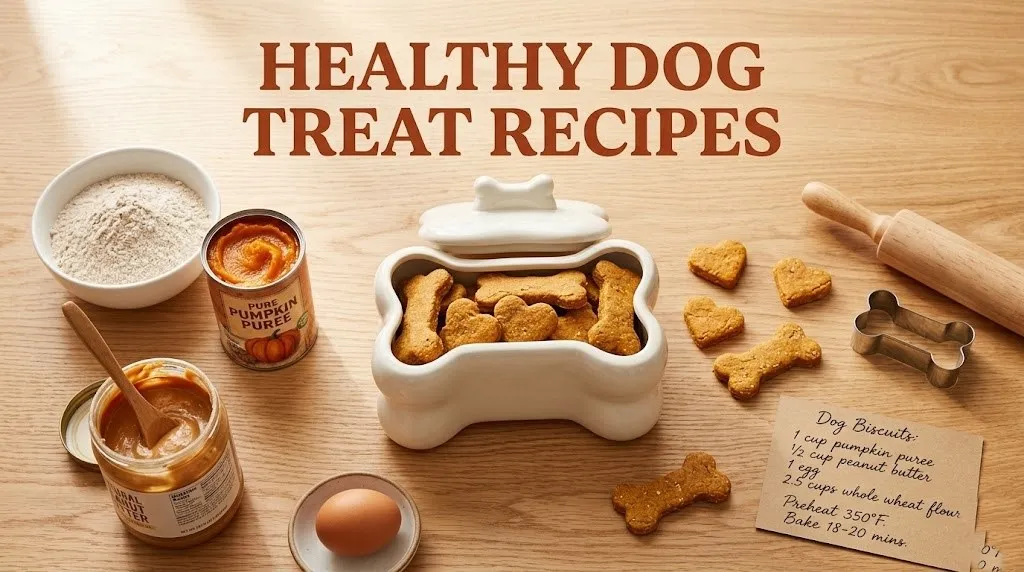
The healthiest homemade dog treat is a simple, baked biscuit made from a short list of whole-food ingredients like pumpkin puree, natural peanut butter, and whole wheat flour. It contains no preservatives, no added sugar, and zero risk of the hidden xylitol that makes some commercial peanut butters lethal to dogs.
The World Small Animal Veterinary Association states that treats should make up no more than 10 percent of a dog’s daily calorie intake to prevent nutritional dilution of the core diet. A 50-pound dog eating 1,000 calories per day should receive a maximum of 100 treat calories. This guide will help you hit that target exactly.
We will walk you through the master recipe, the specific dog-safe ingredient swaps for common allergies, the exhaustive list of kitchen ingredients that can kill your dog, and the storage rules that prevent moldy treats.
Healthy Dog Treat Recipes
The master 2026 healthy dog treat recipe is a formula of 2 cups of whole grain flour, 1 cup of wet binder, and 1 to 2 tablespoons of fat or flavor. This ratio produces a dough that rolls out smoothly, holds its shape during baking, and creates a crunchy biscuit that cleans teeth.
The flour provides the structure. The wet binder, typically unsweetened pumpkin puree, mashed banana, or unsweetened applesauce, provides the moisture and the natural sweetness dogs crave. The fat, usually a dog-safe peanut butter or a single beaten egg, adds richness and helps the biscuit brown.
The recipe is endlessly customizable within this framework. Swap the pumpkin for sweet potato. Swap the peanut butter for tahini. Add ground flaxseed for omega-3 fatty acids that support a glossy coat. Add finely chopped parsley for a breath-freshening treat that also provides vitamin K.
Recipe for Healthy Dog Treats
This is the foundational recipe that has been tested for texture, bake time, and dog approval across multiple breeds and taste preferences.
To make healthy homemade dog treats:
- Preheat the oven to 350 degrees Fahrenheit. Line a rimmed baking sheet with parchment paper.
- In a large mixing bowl, combine 2 cups of whole wheat flour, 1 cup of unsweetened pumpkin puree, 1/4 cup of smooth natural peanut butter, and 1 large egg.
- Stir with a wooden spoon until a stiff dough forms. Use your hands to knead the dough in the bowl for 1 minute until it comes together in a smooth ball.
- Lightly flour a clean work surface and roll the dough to 1/4-inch thickness. Cut shapes with a cookie cutter or slice into small squares with a knife.
- Place the treats on the prepared baking sheet, spacing them 1/2 inch apart. Bake for 22 to 25 minutes until the edges are golden and the treats are firm to the touch.
Cool the treats completely on a wire rack before storing. A warm treat in a sealed container creates condensation, which promotes mold growth.
Homemade Dog Treats Healthy
Homemade treats are healthier than commercial treats because you control the ingredient quality and the absence of chemical preservatives. A commercial dog biscuit typically contains BHA, BHT, or ethoxyquin, synthetic antioxidants that extend shelf life but are banned in human food in several countries.
Homemade treats also avoid the propylene glycol, propylene glycol alginate, and carrageenan that appear in many semi-moist commercial treats. These additives create the soft, chewy texture dogs enjoy but contribute nothing to the dog’s nutritional health.
The homemade advantage is particularly relevant for dogs with food sensitivities. A 2022 study in the Journal of Animal Physiology and Animal Nutrition found that elimination diet trials using home-prepared diets resulted in higher owner compliance and clearer identification of food triggers than trials using commercial hydrolyzed protein diets.
Key Takeaway: Homemade treats eliminate the preservatives and texturizers of commercial treats and allow for precise ingredient control for allergic dogs.
Healthy Diy Dog Treats
A DIY approach to healthy dog treats means you can respond to your dog’s specific preferences and health needs in real time. If your dog has a chicken allergy, you use egg-free recipes. If your dog is a senior with dental issues, you bake softer treats with a shorter cook time.
The DIY method also allows for seasonal ingredient rotation. Fresh blueberries folded into the dough in July provide antioxidants. Canned pumpkin, which is actually higher in fiber and vitamin A than fresh pumpkin, provides digestive support in the winter months. Your dog’s treat jar can reflect the rhythm of the seasons.
The upfront equipment cost is zero. You already own a mixing bowl, a baking sheet, and an oven. A rolling pin and a small bone-shaped cookie cutter cost less than $10 total and elevate the experience from utilitarian to celebratory. The dog does not care about the shape. The owner does.
Healthy Home Made Dog Treats
Home made, spelled as two words, is the practical reality of this kitchen task. The ingredients are in your pantry right now. The active work time is under 15 minutes. The oven does the rest.
The cost comparison favors the homemade version. A 16-ounce bag of premium commercial dog treats costs $8 to $14 and contains roughly 40 small treats. A batch of 24 homemade treats costs $2 to $4 in ingredients. The homemade treats are larger, fresher, and free of the ingredient list that requires a chemistry degree to decode.
The labor is a feature, not a bug. Making treats for your dog is an act of care that the dog does not understand but the owner feels. The smell of peanut butter and pumpkin filling the kitchen signals to the dog that something good is happening. The anticipation is part of the enrichment.
Homemade Healthy Treats for Dogs
Homemade healthy treats allow you to use ingredients that actively support canine health rather than simply fill a calorie budget. Ground turmeric with a pinch of black pepper can be added to the dough for dogs with arthritis. The piperine in the black pepper increases the bioavailability of the curcumin in the turmeric.
Shredded carrot folded into the dough adds beta-carotene and a subtle sweetness. Canned sardines packed in water, mashed with a fork, replace the egg as a binder and add omega-3 fatty acids, calcium, and vitamin D. The treats will smell fishy to you. Your dog will consider them the pinnacle of human achievement.
Brewer’s yeast is a controversial but common addition. It contains B vitamins and is marketed as a flea deterrent, though the evidence for the latter claim is anecdotal. If your dog has a yeast sensitivity or is prone to ear infections, skip the brewer’s yeast.
Best Healthy Dog Treat Recipe
The single best recipe balances nutrition, palatability, shelf stability, and ease of preparation. The pumpkin and peanut butter recipe in the section above meets all four criteria. It is the one recipe that works for the broadest range of dogs.
For a close second, the sweet potato and oat recipe replaces the pumpkin with mashed cooked sweet potato and the whole wheat flour with oat flour. This version is gluten-free and slightly lower in calories. It is the better choice for dogs with grain sensitivities or wheat allergies.
The recipe for sweet potato oat treats is identical in method. 2 cups of oat flour, 1 cup of mashed sweet potato, 1 egg, and 1 tablespoon of coconut oil. The dough is slightly stickier than the wheat flour version. Refrigerate it for 15 minutes before rolling to make it easier to handle.
Dog Treats With Pumpkin
Pumpkin is the ideal base for healthy dog treats. 100 percent pure pumpkin puree, not pumpkin pie filling, is low in calories, high in fiber, and rich in vitamin A. The fiber content helps regulate digestion. A small amount of pumpkin firms up loose stools and softens hard stools.
The mechanism is the soluble fiber in the pumpkin, which absorbs water in the colon and forms a gel. This gel slows transit time in dogs with diarrhea and softens the stool in dogs with constipation. It is a natural, gentle regulator.
Pumpkin pie filling is dangerous. It contains xylitol or sugar, nutmeg, and clove. Nutmeg contains myristicin, a compound that causes hallucinations, seizures, and tachycardia in dogs. The can of pumpkin in your pantry for dog treats must say exactly one ingredient: pumpkin.
Key Takeaway: Pure pumpkin puree is a fiber-rich, low-calorie treat base; pumpkin pie filling is a potential toxin due to xylitol and nutmeg.
Healthy Dog Treats No Peanut Butter
Peanut butter is a common allergen for dogs, and some dogs simply dislike it. A no-peanut-butter treat relies on alternative binders and fat sources that provide the same moisture and richness.
Canned pumpkin or mashed banana can carry the entire moisture load without any added fat. The result is a lower-calorie, slightly less rich treat. Tahini, a paste made from sesame seeds, replaces peanut butter with a nut-free, creamy fat source. Use tahini with no added salt or oil.
Sunflower seed butter is the closest textural match to peanut butter and is safe for dogs. It is rich in vitamin E and magnesium. Check the ingredient label for xylitol, which has appeared in a small number of sunflower butter brands as a low-calorie sweetener. The label check is the same for any nut or seed butter.
How to Make Healthy Dog Treats
The technique for making healthy dog treats is forgiving and flexible. The only firm rules are the oven temperature, 350 degrees Fahrenheit, and the uniform dough thickness, 1/4 inch. Thinner treats bake faster and become crispier. Thicker treats remain chewy in the center.
Rolling the dough between two sheets of parchment paper eliminates the need for additional flour on the work surface. The parchment prevents sticking, and the dough absorbs no extra dry flour, which can make the treats tough.
Use a pizza cutter or a knife to cut the dough into a grid of small squares. This is faster than a cookie cutter and produces treats that are easy to portion. A 1-inch square is the correct size for a medium to large dog. A 1/2-inch square is correct for a small dog or a training treat.
Healthy Dog Treats for Small Dogs
Small dogs need smaller, lower-calorie treats because their daily caloric allowance is so low. A 10-pound dog eating 250 calories per day has a treat allowance of only 25 calories. A single large biscuit can consume the entire budget.
To make small-dog treats, roll the dough to 1/8-inch thickness and cut the shapes to 1/2-inch squares. Bake for a shorter time, roughly 15 to 18 minutes, to prevent burning. The thinner, smaller treats are crisp, low-calorie, and easy to break into even smaller pieces for training.
Small-breed dogs are also at higher risk for dental disease. A crisp, thin biscuit helps scrape plaque off the teeth. A soft, chewy treat sticks to the teeth and contributes to tartar buildup. The baking time controls the texture. Bake longer for a harder, more tooth-scraping treat.
Dog Treats for Sensitive Stomachs
A dog with a sensitive stomach benefits from a treat recipe with a limited ingredient list and a novel or hydrolyzed protein source. The fewer the ingredients, the easier it is to identify a trigger.
A sensitive-stomach formula uses oat flour instead of wheat flour, pumpkin puree as the binder, and a single protein source that the dog has tolerated in the past. If chicken is a known trigger, use a single beaten quail egg or omit the egg entirely and add an extra tablespoon of pumpkin.
Avoid rich additions like peanut butter, cheese, or bacon fat in treats for sensitive dogs. The fat content can trigger a pancreatitis flare-up in predisposed breeds like Miniature Schnauzers. A bland, low-fat biscuit is the goal.
How Long Do Homemade Dog Treats Last
Homemade dog treats last 1 week at room temperature, 3 weeks in the refrigerator, and up to 3 months in the freezer. The shelf life is shorter than commercial treats precisely because they lack preservatives.
The treats must be cooled completely before storage. A warm treat in a sealed container creates steam, which condenses into water droplets, which grow mold. Spread the baked treats on a wire rack for at least 2 hours before transferring them to a container.
A glass jar with a tight-fitting lid is the best storage container. Plastic bags allow air exchange and absorb odors. If the treats show any sign of white, green, or black mold, discard the entire batch. Do not attempt to salvage the non-moldy treats. The mold hyphae spread invisibly through the entire container.
Ingredients to Avoid in Dog Treats
The list of ingredients to avoid in homemade dog treats includes several items common in human baking that are lethal or harmful to dogs. Xylitol is the most dangerous. Even a small amount causes rapid insulin release, leading to fatal hypoglycemia and liver failure within hours. It is found in some peanut butters, sugar-free products, and chewing gums.
Chocolate, specifically the theobromine and caffeine compounds, is toxic to dogs. Dark chocolate and baking chocolate contain the highest concentrations. A 10-pound dog can experience toxicity from as little as 2 ounces of milk chocolate or 0.2 ounces of baking chocolate.
Onions, garlic, chives, and leeks contain thiosulfate, which causes oxidative damage to canine red blood cells, leading to hemolytic anemia. Grapes and raisins cause acute kidney failure through an unknown mechanism. Macadamia nuts cause weakness, vomiting, and hyperthermia.
- Xylitol: Hypoglycemia, liver failure. Found in peanut butter and sugar-free products.
- Chocolate: Theobromine toxicity. Darker chocolate is more dangerous.
- Grapes and Raisins: Acute kidney failure. Mechanism unknown.
- Onions and Garlic: Hemolytic anemia from thiosulfate.
- Macadamia Nuts: Weakness, vomiting, hyperthermia.
Key Takeaway: Xylitol, chocolate, grapes, and onions are the four most common kitchen ingredients that can kill a dog; check every peanut butter label for xylitol.
Homemade Dog Treat Portion Size
The portion size for homemade dog treats follows the 10 percent rule. Treats, including these biscuits, training rewards, dental chews, and any human food scraps, should collectively contribute no more than 10 percent of the dog’s total daily calorie intake.
A 10-pound dog needs roughly 200 to 250 calories per day. Treats: 20 to 25 calories. A 50-pound dog needs 1,000 to 1,200 calories. Treats: 100 to 120 calories. A 90-pound dog needs 1,600 to 1,800 calories. Treats: 160 to 180 calories.
These pumpkin oat treats are roughly 30 calories each for a 1-inch square. A 50-pound dog can have 3 to 4 per day. A 10-pound dog can have a maximum of 1, cut into smaller pieces for training. The portion math is simple. The discipline to stop at the limit is the hard part.
| Dog Weight | Daily Calorie Need | Max Treat Calories | Max Treats (30 cal each) |
|---|---|---|---|
| 10 lbs | 200 to 250 | 20 to 25 | 1 small piece |
| 25 lbs | 500 to 600 | 50 to 60 | 1 to 2 |
| 50 lbs | 1,000 to 1,200 | 100 to 120 | 3 to 4 |
| 75 lbs | 1,400 to 1,600 | 140 to 160 | 4 to 5 |
| 100 lbs | 1,800 to 2,000 | 180 to 200 | 5 to 6 |
Frequently Asked Questions About Healthy Dog Treat Recipes
What is the healthiest homemade dog treat?
A pumpkin and oat biscuit made with whole-food ingredients is the healthiest general-purpose treat.
It provides fiber, vitamin A, and complex carbohydrates without preservatives or added sugar.
The recipe can be customized for allergies by swapping the flour or the fat source.
What ingredients should I avoid in homemade dog treats?
Avoid xylitol, chocolate, grapes, raisins, onions, garlic, and macadamia nuts.
Xylitol is the most immediate danger and is hidden in some peanut butters and sugar-free products.
Always check the ingredient label on any human food before adding it to a dog treat recipe.
How long do healthy homemade dog treats last?
Homemade dog treats last 1 week at room temperature in an airtight container.
They last 3 weeks refrigerated and up to 3 months frozen.
Cool the treats completely before storage to prevent mold growth from condensation.
Can I use coconut flour instead of wheat flour in dog treats?
Yes, coconut flour can replace wheat flour, but the quantity must be reduced.
Coconut flour absorbs four times more moisture than wheat flour. Use 1/2 cup of coconut flour for every 2 cups of wheat flour.
Add extra pumpkin or egg to compensate for the additional absorption.
How many homemade treats can I give my dog per day?
Treats should make up no more than 10 percent of your dog’s daily calorie intake.
A 50-pound dog can have roughly 100 treat calories, or 3 to 4 of these 30-calorie biscuits.
Smaller dogs get fewer treats. A 10-pound dog maxes out at a single small biscuit cut into pieces.
The jar of homemade dog treats on your counter is safer, cheaper, and healthier than anything in the pet store aisle. You know every ingredient in it. You checked the peanut butter for xylitol. You measured the treats to match your dog’s size and daily calorie budget.
The 10 percent rule is the guardrail. The core diet remains the primary nutrition source. Treats are the bonus. The tail wags, the happy crunch, the dog waiting by the oven while the biscuits bake. That is the real payoff.
Make a batch on Sunday. Freeze half. Your dog does not know the treats are healthy. Your dog knows they taste like peanut butter and love.