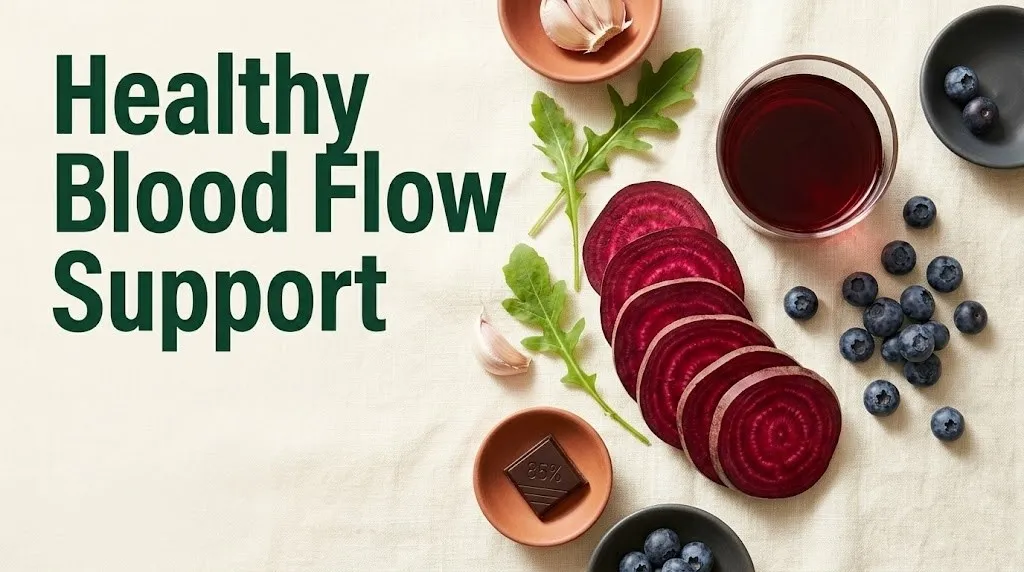
Healthy blood flow support starts with what you eat every single day. The right foods supply specific compounds that help blood vessels relax, reduce inflammation, and keep blood moving efficiently through your arteries and capillaries.
The American Heart Association (AHA) consistently points to diet as one of the most modifiable factors in cardiovascular health. Research published in the American Journal of Clinical Nutrition links regular consumption of nitrate-rich and flavonoid-rich foods with measurably improved vascular function in adults.
This guide covers the 10 best individual foods for circulation, the specific nutrients behind them, which dietary patterns offer the strongest overall evidence, and what to avoid. You’ll also find a practical one-day meal plan and a clear breakdown of when food outperforms supplements.
What Is Healthy Blood Flow Support Through Diet?
Healthy blood flow support through diet means eating in a way that helps your blood vessels dilate, stay flexible, and transport oxygen and nutrients efficiently to every tissue in your body.
Your cardiovascular system depends on a thin layer of cells lining your blood vessels called the endothelium. When the endothelium functions well, it produces nitric oxide, a molecule that signals blood vessels to relax and widen. When it’s impaired, vessels stiffen, blood pressure rises, and circulation becomes sluggish.
Diet directly affects endothelial function. Certain foods supply raw materials for nitric oxide production. Others deliver antioxidants that protect the endothelium from oxidative damage. The distinction matters: you’re not just “eating healthy,” you’re feeding a specific biological system.
This is different from treating a medical condition. Food-based circulation support is a preventive and maintenance strategy. People with diagnosed cardiovascular disease, peripheral artery disease, or hypertension should work with their healthcare provider to integrate dietary changes alongside any medical treatment.
| What “Blood Flow Support” Covers | What It Does Not Cover |
|---|---|
| Endothelial function and vessel flexibility | Treatment of diagnosed heart disease |
| Nitric oxide production support | Replacement of prescribed medications |
| Reduction of arterial stiffness over time | Immediate reversal of circulatory problems |
| Inflammation reduction in vessel walls | Clot prevention in high-risk individuals without medical guidance |
Key Nutrients That Support Healthy Blood Flow
The nutrients most strongly linked to healthy circulation include dietary nitrates, omega-3 fatty acids (eicosapentaenoic acid/EPA and docosahexaenoic acid/DHA), flavonoids, vitamin K2 (menaquinone), L-arginine, and magnesium.
Each one works through a different pathway. Dietary inorganic nitrate converts to nitric oxide, which relaxes smooth muscle in vessel walls. Omega-3 fatty acids (EPA and DHA) reduce platelet aggregation and lower triglycerides, both of which affect blood viscosity. Flavonoids act as antioxidants, protecting the endothelium from free radical damage.
L-arginine is an amino acid the body uses to synthesize nitric oxide directly. Magnesium helps regulate vascular tone and blood pressure. Vitamin K2 (specifically the MK-7 form of menaquinone) activates proteins that prevent calcium from depositing in arterial walls, supporting arterial flexibility.
No single nutrient works in isolation. The evidence consistently favors whole dietary patterns that deliver multiple compounds together. The AHA recommends a varied diet rich in fruits, vegetables, whole grains, legumes, and oily fish as the most evidence-backed strategy for cardiovascular health.
| Nutrient | Primary Function for Blood Flow | Key Food Sources |
|---|---|---|
| Dietary nitrates | Converts to nitric oxide, dilates vessels | Beetroot, spinach, arugula, celery |
| EPA and DHA (omega-3s) | Reduces platelet aggregation, lowers triglycerides | Salmon, mackerel, sardines, anchovies |
| Flavonoids | Antioxidant protection of endothelium | Berries, dark chocolate, citrus, onions |
| Vitamin K2 (menaquinone) | Prevents arterial calcification | Natto, fermented cheese, egg yolks |
| L-arginine | Precursor for nitric oxide synthesis | Pumpkin seeds, lentils, turkey, peanuts |
| Magnesium | Regulates vascular tone and blood pressure | Leafy greens, nuts, seeds, dark chocolate |
Best Foods for Blood Circulation and Vascular Health
The best foods for blood circulation are those with the strongest clinical evidence linking their specific compounds to measurable improvements in endothelial function, blood pressure, or blood viscosity.
Think of your daily diet as a maintenance contract for your blood vessels. Every meal is either adding to their flexibility and health or gradually increasing the friction in the system. Foods high in nitrates, polyphenols, omega-3s, and magnesium consistently earn the best research support.
The top tier of evidence-backed foods for vascular health includes:
- Beetroot (Beta vulgaris): highest dietary nitrate density of any commonly eaten vegetable
- Leafy greens (spinach, arugula, kale, Swiss chard): second-highest nitrate sources, plus folate and magnesium
- Berries (blueberries, strawberries, raspberries): rich in anthocyanins and quercetin
- Oily fish (salmon, mackerel, sardines, herring): primary food source of EPA and DHA
- Garlic (Allium sativum): contains allicin, which supports blood pressure regulation
- Dark chocolate (minimum 70% cacao, Theobroma cacao): flavanols including epicatechin
- Pomegranate (Punica granatum): punicalagins and ellagic acid, studied for arterial stiffness
- Walnuts: plant-based omega-3 fatty acid (alpha-linolenic acid/ALA) plus L-arginine
- Citrus fruits: vitamin C (ascorbic acid) plus hesperidin, a flavonoid with vasodilatory effects
- Extra virgin olive oil: oleocanthal and oleic acid with anti-inflammatory properties
Anyone managing a cardiovascular condition should note that adding these foods works alongside, not instead of, medical guidance.
Key Takeaway: Healthy blood flow support is primarily about feeding your endothelium: the specific nutrients that produce nitric oxide, protect vessel walls from oxidative damage, and keep blood moving smoothly are the ones your daily food choices should prioritize.
Beetroot and Dietary Nitrates for Blood Flow
Beetroot (Beta vulgaris) is the most clinically studied single food for blood flow support, and its active mechanism is dietary inorganic nitrate, which the body converts to nitric oxide through the nitrate-nitrite-nitric oxide pathway.
A 2022 review in the American Journal of Clinical Nutrition found that high-nitrate diets, particularly those including beetroot juice (containing approximately 400mg of inorganic nitrate per 500ml serving), produced a mean reduction of 4 to 10 mmHg in systolic blood pressure in adults with elevated baseline readings. That’s a range comparable to some first-line antihypertensive interventions, though the studies were conducted over weeks, not years.
Raw beetroot contains approximately 250 to 500mg of inorganic nitrate per 100 grams, making it the densest dietary nitrate source available. Beetroot juice concentrates this further. A single 70ml shot of beetroot concentrate (often called a “nitrate shot”) delivers a clinically relevant dose in a convenient form.
One detail most articles miss: the conversion of nitrate to nitrite begins in the mouth, aided by bacteria on the tongue. Using antibacterial mouthwash within two hours of eating nitrate-rich foods can disrupt this conversion and significantly blunt the benefit. This is a genuinely practical point for anyone taking this approach seriously.
People with kidney disease or a history of calcium oxalate kidney stones should moderate beetroot intake, since it’s also high in oxalic acid. Beyond that, the main side effect is beeturia, a harmless pink or red discoloration of urine that alarms some people but poses no health risk.
| Beetroot Form | Approximate Nitrate Content | Practical Notes |
|---|---|---|
| Raw beetroot (100g) | 250-500mg nitrate | Best preserved raw or lightly roasted |
| Beetroot juice (250ml) | 350-600mg nitrate | Convenient, slightly sweet |
| Beetroot concentrate/shot (70ml) | 300-400mg nitrate | Clinically studied dose format |
| Cooked beetroot (100g, boiled) | 100-200mg nitrate | Loses up to 50% nitrate during boiling |
| Pickled beetroot (100g) | 80-150mg nitrate | Lower nitrate, higher sodium |
Leafy Greens and Their Role in Circulation
Leafy greens, particularly spinach (Spinacia oleracea), arugula (Eruca vesicaria), kale (Brassica oleracea), and Swiss chard (Beta vulgaris subsp. cicla), are the second-highest dietary source of inorganic nitrates after beetroot and deliver three additional circulation-relevant nutrients simultaneously: folate, magnesium, and vitamin C (ascorbic acid).
Folate (vitamin B9) supports red blood cell production and DNA repair in endothelial cells. Magnesium helps regulate vascular smooth muscle tone. Vitamin C (ascorbic acid) is essential for collagen synthesis in blood vessel walls and functions as an antioxidant that regenerates other protective compounds.
The USDA Dietary Guidelines for Americans 2020-2025 recommend at least 2.5 cups of vegetables daily, with dark-green vegetables named as a priority subgroup. Most adults fall significantly below this target, which partially explains why population-level circulation metrics are poor.
Arugula is particularly worth highlighting because it contains among the highest nitrate levels of any leafy green: approximately 480mg per 100g raw weight. It’s also easy to eat raw in salads, which preserves its nitrate content better than cooking.
People on the anticoagulant warfarin should know that leafy greens are high in vitamin K1 (phylloquinone), which affects warfarin’s mechanism. This doesn’t mean avoiding greens; it means keeping intake consistent week to week. Abrupt changes in green vegetable consumption can affect INR levels, and anyone on warfarin should discuss a stable dietary approach with the clinician managing their anticoagulation.
- Best raw choices (highest preserved nitrate): arugula, baby spinach, watercress
- Best cooked choices (nitrate partially lost but magnesium and folate retained): wilted spinach, steamed Swiss chard, sauteed kale
- Practical portion: 2 large handfuls (approximately 60-80g) of raw leafy greens per day covers a meaningful nitrate contribution
Berries, Flavonoids, and Vascular Health
Berries support healthy blood flow through their dense concentration of flavonoids, specifically anthocyanins and quercetin, which protect endothelial cells from oxidative stress and improve nitric oxide availability.
Blueberries (Vaccinium corymbosum) are the most extensively studied berry for cardiovascular benefit. A 2019 study published in the American Journal of Clinical Nutrition found that consuming 150g (approximately one cup) of blueberries daily for eight weeks improved endothelial function by 2.5% in adults with metabolic syndrome. The researchers identified the anthocyanin content as the primary driver.
Strawberries deliver ellagic acid and vitamin C (ascorbic acid) alongside anthocyanins. Raspberries contribute ellagitannins, precursors to urolithins, which emerging research links to mitochondrial health in muscle tissue including cardiac muscle. Blackcurrants have some of the highest anthocyanin density of any commonly eaten fruit.
Fresh and frozen berries perform similarly for antioxidant content. Freezing does not meaningfully degrade polyphenol content, which makes frozen berries a practical and cost-effective choice year-round.
People managing type 2 diabetes should note that berries are among the lower-glycemic fruit options. Their fiber content (approximately 3-4g per 100g for most berries) slows glucose absorption. A standard 150g serving typically raises blood glucose more gently than the same calorie count from juice. Whole fruit consistently outperforms berry juice for this reason.
| Berry (100g raw) | Anthocyanin Content | Vitamin C (ascorbic acid) | Dietary Fiber |
|---|---|---|---|
| Blueberries | ~163mg | 9.7mg | 2.4g |
| Blackcurrants | ~250mg | 181mg | 3.6g |
| Strawberries | ~35mg | 58.8mg | 2g |
| Raspberries | ~39mg | 26.2mg | 6.5g |
| Blackberries | ~100mg | 21mg | 5.3g |
Key Takeaway: The three strongest individual food categories for blood flow support are nitrate-rich vegetables (led by beetroot and leafy greens) and flavonoid-rich fruits (led by berries), each working through distinct but complementary mechanisms on your blood vessel walls.
Oily Fish, Omega-3s, and Blood Flow
Oily fish (salmon, mackerel, sardines, herring, and anchovies) supply eicosapentaenoic acid (EPA) and docosahexaenoic acid (DHA), the two long-chain omega-3 fatty acids with the strongest clinical evidence for cardiovascular benefit.
EPA and DHA reduce platelet aggregation, which makes blood less likely to clump unnecessarily. They also lower serum triglyceride levels; the NIH Office of Dietary Supplements notes that prescription-dose omega-3 supplements can reduce triglycerides by 20 to 50 percent. At dietary levels, the effect is more modest but consistent.
The AHA recommends eating two servings of oily fish per week (approximately 227g total cooked weight) as part of a heart-healthy eating pattern. A single serving of cooked Atlantic salmon (approximately 85g) provides roughly 1.8g of combined EPA and DHA, which covers most adults’ daily estimated requirement.
DHA also supports red blood cell membrane flexibility. More flexible red blood cells can pass through the smallest capillaries more easily. This is one mechanistic reason researchers associate regular oily fish consumption with better peripheral circulation, though the research at the capillary level specifically is still developing.
Concerns about mercury are real but manageable. Smaller, shorter-lived oily fish like sardines, anchovies, and herring accumulate significantly less mercury than larger fish like tuna. Pregnant individuals should follow FDA and EPA guidance on fish choices specifically, which recommends 8 to 12 oz per week of lower-mercury choices.
People following a plant-based diet can access ALA (alpha-linolenic acid) from flaxseed, chia seed, and walnuts, though the body’s conversion of ALA to EPA and DHA is inefficient (typically under 15%). Algae-based EPA and DHA supplements are the most direct plant-based alternative, since algae is where fish obtain their omega-3 content originally.
Garlic, Allicin, and Cardiovascular Circulation
Garlic (Allium sativum) supports cardiovascular circulation primarily through allicin, a sulfur compound formed when raw garlic is crushed or chopped and its cell walls are broken, allowing alliin and the enzyme alliinase to react.
A 2016 meta-analysis published in the Journal of Nutrition examined 20 randomized controlled trials and found that garlic supplementation reduced systolic blood pressure by an average of 3.75 mmHg and diastolic by 3.39 mmHg in participants with elevated baseline readings. The effect was consistent across both raw garlic and aged garlic extract, though allicin content varies significantly by preparation method.
For allicin to form properly, crushed or chopped garlic needs approximately 10 minutes at room temperature before it’s exposed to heat. Cooking garlic immediately after cutting deactivates the alliinase enzyme before it can produce allicin. The practical rule: crush or chop, wait 10 minutes, then add to heat. This simple timing step preserves substantially more of the active compound.
Garlic also shows anti-platelet effects at higher intake levels, meaning it can mildly reduce platelet clumping in a similar manner to aspirin. This is worth noting for people already taking anticoagulant or antiplatelet medications; adding significant amounts of garlic to the diet while on blood-thinning therapy should be discussed with the clinician managing that treatment.
Odorless garlic supplements and aged garlic extract (AGE) are widely available. However, the standardization of allicin content in supplements varies considerably between brands. Whole food garlic remains the most reliable source when properly prepared.
Dark Chocolate, Flavanols, and Heart Health
Dark chocolate (Theobroma cacao at minimum 70% cacao content) contains flavanols, primarily epicatechin and catechin, which stimulate nitric oxide production in the endothelium and exert antioxidant effects on vessel walls.
The AHA has referenced evidence that moderate consumption of high-flavanol dark chocolate (1 to 2 oz, or approximately 28 to 56 grams, per day of 70%+ cacao) is associated with improved endothelial function. The key phrase is “high cacao content.” Milk chocolate and most commercial chocolate bars contain so little flavanol content that they provide no meaningful cardiovascular benefit.
One ounce (28g) of 85% dark chocolate provides approximately 170 calories, 64mg of magnesium, 3.4mg of iron, and 200 to 400mg of flavanols depending on the specific cacao source and processing method. The Dutch process alkalization used in many cocoa powders significantly reduces flavanol content. Natural (non-alkalized) cocoa powder retains substantially more.
This is not a license to eat unlimited chocolate. A 28g serving daily fits comfortably into most adult calorie budgets. Going beyond 56g daily adds meaningful saturated fat and calories without proportionally more benefit. People managing type 2 diabetes should monitor blood glucose responses, as dark chocolate still contains carbohydrates. Those with migraine should note that cacao is a documented trigger for some individuals.
| Chocolate Type | Approximate Flavanol Content (per 28g) | Calories | Saturated Fat |
|---|---|---|---|
| 85% dark chocolate | 200-400mg | 170 | 7g |
| 70% dark chocolate | 100-200mg | 170 | 8g |
| Milk chocolate | 15-30mg | 150 | 5g |
| White chocolate | 0mg | 160 | 6g |
| Natural cocoa powder (1 tbsp) | 100-200mg | 12 | 0.5g |
Key Takeaway: For oily fish, garlic, and dark chocolate to deliver their circulation benefits, preparation matters as much as the food itself: fish needs to stay in rotation twice weekly, garlic needs that 10-minute pre-heat wait, and dark chocolate must be 70% cacao or higher to contain meaningful flavanol levels.
Pomegranate and Arterial Stiffness
Pomegranate (Punica granatum) stands out for its specific evidence on arterial stiffness rather than just blood pressure, making it valuable for a different aspect of circulatory health.
The key compounds are punicalagins and ellagic acid, which are polyphenols concentrated in both the juice and the edible seeds (arils). In the body, gut bacteria convert punicalagins into urolithins, which appear to have anti-inflammatory effects in arterial tissue. Research published in the American Journal of Clinical Nutrition found that 150ml of pomegranate juice daily for two weeks reduced pulse wave velocity (a clinical marker of arterial stiffness) in adults with hypertension.
Pomegranate juice is widely available but comes with a caveat: commercially prepared juices vary enormously in polyphenol content depending on processing and dilution. 100% pomegranate juice with no added sugar is the form used in clinical research. Pomegranate “juice drinks” or blends are diluted and should not be assumed equivalent.
The fresh arils (seeds) are a lower-sugar alternative to juice. A 100g serving of fresh pomegranate arils provides approximately 83 calories, 4g of fiber, 10% of daily vitamin C (ascorbic acid) needs, and meaningful quantities of punicalagins without the concentrated sugar load of juice.
Like berries, whole pomegranate arils are a better choice than juice for people managing blood glucose levels. For anyone who finds fresh pomegranate time-consuming to prepare, pre-packaged arils are now widely available in refrigerated sections and retain their polyphenol content well.
Mediterranean and DASH Diet for Healthy Circulation
The Mediterranean diet and the DASH diet (Dietary Approaches to Stop Hypertension) are the two most evidence-supported overall dietary patterns for healthy blood flow and cardiovascular wellness.
The Mediterranean diet emphasizes extra virgin olive oil as the primary fat source, daily vegetables and legumes, regular fish consumption, moderate amounts of whole grains, and limited red meat. A landmark 2013 study known as the PREDIMED trial (published in the New England Journal of Medicine and later corrected and reconfirmed) found that a Mediterranean diet supplemented with extra virgin olive oil or mixed nuts reduced major cardiovascular events by approximately 30% compared to a low-fat diet control group.
The DASH diet was specifically designed to lower blood pressure through food. According to the National Institutes of Health, DASH emphasizes fruits, vegetables, whole grains, low-fat dairy, poultry, fish, and nuts while limiting sodium to 2,300mg per day (with an enhanced version targeting 1,500mg). Studies show the DASH diet can reduce systolic blood pressure by 8 to 14 mmHg in adults with hypertension, which is a meaningful clinical range.
Both patterns share a core framework: high vegetable and fruit intake, regular oily fish, minimal ultra-processed food, and plant-based fats. The difference is that DASH places more emphasis on sodium restriction and dairy while Mediterranean emphasizes olive oil and wine (in moderation) as traditional cultural elements. Most adults will benefit from either pattern or a practical hybrid.
| Feature | Mediterranean Diet | DASH Diet |
|---|---|---|
| Primary fat source | Extra virgin olive oil | Limited fat, focus on low-fat dairy |
| Sodium emphasis | Not strictly limited | Core feature: under 2,300mg/day |
| Dairy | Moderate (mostly fermented) | Low-fat dairy recommended |
| Fish | 2+ servings per week | 2+ servings per week |
| Red meat | Rare (a few times monthly) | Limited |
| Alcohol | Moderate red wine | Not emphasized |
| Best evidence for | Cardiovascular event reduction | Blood pressure reduction |
Foods and Ingredients to Limit for Better Blood Flow
Certain foods consistently appear in research as working against the same circulatory mechanisms that the foods above support.
Excess sodium is the most documented. The AHA recommends no more than 2,300mg of sodium per day for most adults, and ideally under 1,500mg for those managing hypertension. High sodium intake causes the body to retain water, increasing blood volume and the pressure placed on artery walls. Most excess sodium in Western diets comes not from table salt but from processed and ultra-processed foods: bread, deli meats, canned soups, and fast food are the biggest contributors.
Trans fats (partially hydrogenated oils), while largely removed from commercial food production in the U.S. after FDA action in 2018, still appear in small amounts in some imported products and restaurant foods. They directly impair endothelial function. Checking labels for “partially hydrogenated oil” remains worthwhile.
Excess added sugar promotes systemic inflammation and raises triglyceride levels, both of which negatively affect vascular health. The USDA Dietary Guidelines recommend limiting added sugars to less than 10% of total daily calories. For a 2,000-calorie diet, that’s under 200 calories (50g) from added sugar.
- Ultra-processed snack foods: high in sodium, refined carbohydrates, and often trans fats
- Sugar-sweetened beverages: liquid added sugar with no offsetting fiber or micronutrient benefit
- Heavily cured and processed meats: high sodium, often high in saturated fat and nitrite preservatives
- Commercially fried foods: frequently cooked in oils with degraded fatty acid profiles at high heat
- Refined grain products as dietary staples: minimal fiber, rapid blood glucose impact
Key Takeaway: Building a blood-flow-supportive diet is as much about reducing processed food, excess sodium, and added sugar as it is about adding specific beneficial foods. Both sides of that equation matter in the research.
How Cooking Methods Affect Blood Flow Nutrients
The way you prepare food significantly affects how much of the circulation-relevant compounds survive to your plate.
Dietary nitrates are water-soluble and heat-sensitive. Boiling beetroot or spinach in water can reduce nitrate content by 40 to 55%, as nitrates leach into the cooking water. Roasting, steaming, or eating these foods raw preserves substantially more. If you’re boiling nitrate-rich vegetables, using the cooking water in soups or sauces recovers some of what was lost.
Flavanols in dark chocolate and berries are relatively heat-stable at normal cooking temperatures but are degraded by prolonged high heat and alkalization. Natural (non-Dutch-process) cocoa powder in baked goods retains more flavanol content than alkalized versions. Berries added to a smoothie or eaten raw retain their full anthocyanin profile.
Allicin in garlic requires the 10-minute pre-heat window after chopping or crushing. Once allicin forms, it can withstand moderate heat reasonably well. Microwave cooking garlic whole without crushing first produces almost no allicin. Roasting whole garlic bulbs produces different sulfur compounds with their own mild benefits but is not the same as consuming active allicin.
Omega-3 fatty acids in oily fish are stable at normal cooking temperatures (below 180°C/350°F) but can oxidize with very high-heat methods like pan-frying at high temperature for long periods. Baking, steaming, and poaching are the most gentle methods. The research does not show meaningfully reduced omega-3 content in normally grilled or baked fish.
| Food | Best Cooking Method for Nutrient Retention | Methods That Reduce Benefit |
|---|---|---|
| Beetroot | Raw, roasted, steamed | Boiling in water without using the water |
| Spinach/arugula | Raw, briefly wilted | Prolonged boiling |
| Garlic | Crush, wait 10 min, then cook gently | Microwaving whole; adding to oil directly |
| Oily fish | Baking, steaming, poaching | High-heat deep frying for extended time |
| Berries | Raw; frozen (not cooked) | Prolonged heat in baked goods |
| Dark chocolate | Raw consumption; natural cocoa in baking | Alkalization; Dutch-process treatment |
Sample Daily Meal Plan for Blood Flow Support
A practical single day of eating built around blood flow support does not require unusual ingredients or time-intensive preparation. The goal is to hit multiple circulation-relevant compound categories across the day.
This plan is approximately 1,800 to 2,000 calories, adjustable by portion size. It is not a calorie-restriction plan; it’s a nutrient-delivery framework. People with specific caloric targets, diabetes, kidney disease, or food allergies should adjust accordingly.
Breakfast (approx. 400-450 calories):
- Blend 80g raw beetroot, 60g baby spinach, 150g frozen blueberries, 1 tbsp natural (non-alkalized) cocoa powder, and 250ml unsweetened almond milk for 90 seconds.
- Serve immediately without added sugar. The beetroot and spinach provide dietary nitrates, blueberries provide anthocyanins, cocoa provides flavanols.
- Optional: add 1 tbsp ground flaxseed for plant-based ALA omega-3.
Lunch (approx. 500-550 calories):
- Build a large salad with 80g arugula, 100g pomegranate arils, 30g walnuts, 30g crumbled feta cheese, and half a sliced orange.
- Dress with 1 tbsp extra virgin olive oil and fresh lemon juice.
- This combination provides nitrates (arugula), punicalagins (pomegranate), hesperidin (orange), vitamin C (ascorbic acid), and oleocanthal (olive oil).
Dinner (approx. 550-600 calories):
- Bake a 120g fillet of salmon or mackerel at 180°C (350°F) for 15 to 18 minutes.
- Serve with 150g steamed or roasted asparagus and 80g cooked lentils dressed with crushed garlic (prepared 10 minutes before cooking) and olive oil.
- This covers EPA and DHA (fish), L-arginine (lentils), and allicin (garlic).
Snack (approx. 150-180 calories):
- 28g (1 oz) of 85% dark chocolate with a small handful (approximately 20g) of mixed berries.
Blood Flow Support Supplements Versus Whole Foods
Supplements marketed for blood flow support, including L-arginine, L-citrulline, beetroot extract, and fish oil capsules, can provide specific compounds in controlled doses. But the case for whole foods remains stronger for most people.
Whole foods deliver multiple compounds simultaneously in proportions and combinations that have been tested across centuries of human dietary patterns. A piece of salmon provides EPA, DHA, vitamin D, selenium, and protein in a single serving. A fish oil capsule provides EPA and DHA in isolation. Research consistently shows better health outcomes from dietary patterns than from isolated supplement use.
According to the NIH Office of Dietary Supplements, omega-3 supplements are one of the most commonly used supplements in the U.S. Despite this, population-level cardiovascular outcomes have not improved proportionally, suggesting that supplementing against a poor background diet has limited impact.
That said, supplements have a legitimate place in specific situations. People with fish allergies, vegans, people with clinical deficiencies, and those who cannot reliably meet dietary targets due to health conditions may benefit from targeted supplementation. L-citrulline has garnered more recent research attention than L-arginine for nitric oxide support, as it converts to L-arginine more reliably in the body and has better oral bioavailability.
Anyone considering supplements specifically for cardiovascular support should discuss their situation with a registered dietitian or the clinician managing their cardiovascular health, since supplement-drug interactions (particularly with blood pressure medications and anticoagulants) are a real consideration.
| Supplement | Best Available Evidence | Whole Food Equivalent |
|---|---|---|
| Fish oil (EPA/DHA) | Reduces triglycerides at 2-4g/day | 2 servings oily fish/week |
| Beetroot extract/shots | Lowers systolic BP 4-10 mmHg | 100-200g raw beetroot daily |
| L-citrulline (3-6g/day) | Modest nitric oxide support | Watermelon, lentils, pumpkin seeds |
| Aged garlic extract | Reduces BP ~3-4 mmHg | 1-2 fresh garlic cloves daily |
| Flavanol supplements | Less consistent than food-based | 28g dark chocolate (85% cacao) |
Key Takeaway: Whole foods outperform isolated supplements for blood flow support in the majority of research because they deliver multiple active compounds simultaneously. Supplements fill specific gaps when food-based options are genuinely inaccessible.
Who Should Be Cautious About Blood-Supporting Foods
Most of the foods in this article are safe and beneficial for healthy adults. Specific groups need to approach some of them with additional care.
People on anticoagulant medications (warfarin/Coumadin): Leafy greens are high in vitamin K1 (phylloquinone), which counteracts warfarin’s mechanism. This doesn’t mean avoiding greens, but maintaining a consistent weekly intake is important. Sudden large increases in leafy green consumption can lower INR into a sub-therapeutic range. Anyone on warfarin should discuss a stable dietary pattern with the clinician monitoring their anticoagulation therapy.
People with calcium oxalate kidney stones: Beetroot, spinach, and Swiss chard are all high in oxalic acid. High oxalate intake can promote stone formation in susceptible individuals. These are excellent foods for most people but worth moderating for anyone with a confirmed history of calcium oxalate kidney stones. A registered dietitian specializing in renal nutrition can help calibrate appropriate intake.
People managing type 2 diabetes: Pomegranate juice and fruit juices in general carry a concentrated sugar load without the fiber of whole fruit. Choosing whole pomegranate arils over juice, and whole berries over berry juices, keeps the glycemic impact lower and the fiber benefit intact.
Pregnant individuals: The FDA and EPA recommend 8 to 12 oz per week of lower-mercury oily fish (sardines, salmon, anchovies, herring) for pregnant adults to obtain EPA and DHA. Large fish high in mercury (shark, swordfish, king mackerel, bigeye tuna) should be avoided during pregnancy. Folate-rich leafy greens are actively recommended throughout pregnancy.
| Group | Food to Monitor | Why | Practical Approach |
|---|---|---|---|
| Warfarin users | Leafy greens (vitamin K1) | Affects INR levels | Consistent weekly intake; discuss with prescriber |
| Calcium oxalate kidney stone history | Beetroot, spinach, Swiss chard | High oxalic acid content | Discuss portion limits with renal dietitian |
| Type 2 diabetes | Pomegranate juice, berry juices | Concentrated sugar, no fiber buffer | Whole fruit over juice |
| Pregnant individuals | High-mercury fish | Mercury risk to fetal development | FDA-approved lower-mercury fish only |
| People on antiplatelet drugs | High-dose garlic, high-dose fish oil | Additive anti-platelet effects | Discuss supplement doses with prescriber |
Frequently Asked Questions About Healthy Blood Flow Support
What foods improve blood flow the fastest?
Beetroot juice provides the most rapid documented effect on nitric oxide production, with measurable changes in blood pressure observed within 2 to 3 hours of consuming a high-nitrate dose.
Other fast-acting options include arugula, spinach, and dark chocolate (85% cacao), all of which deliver bioactive compounds that affect endothelial function within hours.
For lasting improvement, consistent daily intake over weeks matters far more than any single high-dose serving.
Can eating beetroot really lower blood pressure?
Yes, within a specific range: research published in the American Journal of Clinical Nutrition found that dietary nitrate from beetroot consistently reduced systolic blood pressure by 4 to 10 mmHg in adults with elevated readings.
This effect occurs through the conversion of dietary nitrates to nitric oxide, which relaxes the smooth muscle in arterial walls.
The reduction is meaningful but not equivalent to antihypertensive medication for people with significantly elevated blood pressure; dietary intervention and medical management work better together than either alone.
How long does it take for diet to improve blood circulation?
Some measurements of endothelial function improve within 2 to 4 weeks of consistently following a Mediterranean or DASH-style dietary pattern.
Studies on nitrate-rich diets typically show blood pressure changes within one to two weeks of daily consumption.
Meaningful arterial flexibility improvements, reflected in measures like pulse wave velocity, generally require 8 to 12 weeks of sustained dietary changes.
Is dark chocolate actually good for blood flow?
Dark chocolate with a minimum of 70% cacao content contains flavanols (primarily epicatechin) that stimulate nitric oxide production and improve endothelial function.
Controlled studies referenced by the AHA support 1 to 2 oz daily of high-cacao chocolate for modest cardiovascular benefit.
Milk chocolate and standard commercial chocolate bars contain too little flavanol to produce this effect, so cacao percentage matters significantly.
What should I avoid eating if I have poor circulation?
The dietary patterns most consistently associated with impaired circulation include high sodium intake (over 2,300mg daily), regular consumption of ultra-processed foods, high added sugar intake, and trans fats (partially hydrogenated oils).
Excess sodium increases blood pressure by raising blood volume, while added sugar raises triglycerides and promotes systemic inflammation in vessel walls.
Reducing processed meats, sugar-sweetened beverages, commercially fried foods, and refined-grain staples removes the primary drivers of diet-related circulatory impairment.
Putting It Into Practice
The research on healthy blood flow support through diet points in a consistent direction: eat more nitrate-rich vegetables, flavonoid-rich fruits, oily fish, and foods that support nitric oxide production. Reduce sodium, added sugar, and ultra-processed food. Build these habits around a Mediterranean or DASH framework and the individual food benefits compound into a pattern the research can actually measure.
Start with one meal a day. A smoothie with beetroot and spinach in the morning, or a salmon dinner with arugula salad twice a week, gives your body the specific compounds it needs before you overhaul everything at once.
If you’re managing a cardiovascular condition, hypertension, diabetes, or taking anticoagulant medications, bring these food choices into a conversation with the clinician who knows your full health picture. Diet-based circulation support is most effective when it’s part of a coordinated approach, not a solo experiment.