Chinese food is neither universally healthy nor universally unhealthy. Whether a Chinese meal works for your body depends on three variables: what you order, how it’s prepared, and how much of it you eat.
There are two main styles of Chinese cuisine in the United States: Americanized Chinese food, popular in many chain, fast-food, and takeout restaurants, and traditional Chinese food. These are nutritionally different enough that treating them as the same thing is the root of most of the confusion around this topic. More than one-fifth of the world’s population eats Chinese food regularly, which makes getting the answer right genuinely matter.
This article breaks down the full nutritional picture: the sodium problem, the calorie question, the MSG debate, which dishes are worth ordering, and which ones to leave alone. You’ll also find specific guidance for people managing diabetes, blood pressure, or gluten intolerance, plus a practical home-cooking section for anyone who wants to control what goes in the wok.
Is Chinese Food Healthy?
Chinese food can absolutely be healthy, but that answer requires context. Chinese food is more or less healthy depending on the cooking method and ingredients used.
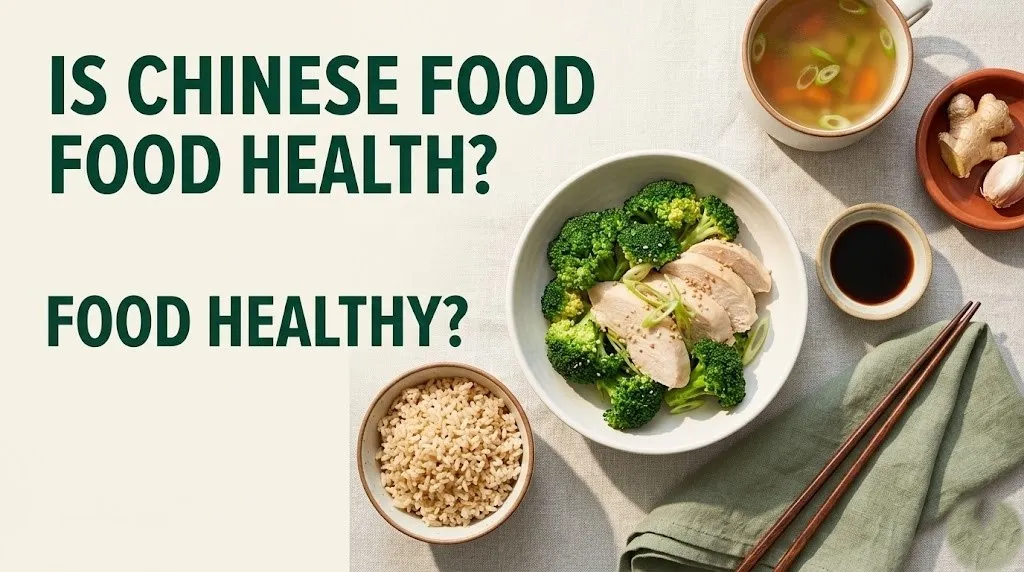
By sticking with the traditional Chinese diet of steamed vegetables, minimal fried foods, and occasional red meat, it’s easy to enjoy Chinese food that’s healthy. The trouble is that what most people in the United States order under the name “Chinese food” often doesn’t look much like that traditional diet at all.
Nutritionally, Chinese meals can provide a broad range of nutrients, including protein, fiber, and micronutrients like vitamin C (ascorbic acid), potassium, and iron, depending on the ingredients and preparation methods. The problem arises when cooking methods shift from steaming and light stir-frying to deep-frying, and when sauces loaded with sodium and added sugar dominate the flavor.
Think of it like this: a grilled chicken breast and a battered, deep-fried chicken nugget are both “chicken dishes.” The cuisine label doesn’t determine the nutrition. The preparation does.
Key Finding: The Academy of Nutrition and Dietetics notes there is no such thing as “good” or “bad” foods. An occasional serving of egg rolls or fried rice is unlikely to affect your health, but it’s one thing to enjoy these foods once or twice a year, and another to include them in your daily menu.
Traditional Chinese Food vs. American Chinese Food: What’s the Difference Nutritionally?
Traditional Chinese cuisine and American-Chinese restaurant food are two genuinely different eating patterns with different nutritional profiles.
Unlike the meat-heavy plates featured in many Chinese restaurants in the U.S., the traditional Chinese diet consists mainly of plant foods, small amounts of fish and poultry, and only occasionally red meat. According to research by Cornell University nutritional biochemist T. Colin Campbell, the traditional Chinese diet is comprised of only 20% animal foods, far less than the typical American diet.
After moving to North America, the adapted Chinese food emphasizes dishes that are sweeter, saltier, and less spicy than their authentic counterparts. In North American-style Chinese food, deep-frying and heavy sautéing have become more common, leading to heavier, greasier dishes that differ from traditional Chinese cuisine.
Chinese food has a long history in America, beginning in earnest during the mid-19th century. Over time, traditional Chinese dishes have been adapted due to the scarcity of certain ingredients, changing public tastes, and evolving views on food. The result is a distinct new cuisine coined American Chinese.
| Feature | Traditional Chinese Cuisine | American-Chinese Restaurant Style |
|---|---|---|
| Protein emphasis | Plant proteins, small fish, occasional poultry | Larger meat portions, battered/fried proteins |
| Vegetable use | Central to most dishes | Supporting role; often smaller volume |
| Sauce style | Lighter, broth-based, fermented | Heavier, sweeter, often thickened with cornstarch |
| Sugar content | Minimal in savory dishes | Higher; sweet-and-sour, hoisin, General Tso’s sauces |
| Sodium sources | Soy sauce, fermented pastes in smaller quantities | Large volumes of soy sauce, oyster sauce, MSG |
| Cooking methods | Steaming, braising, boiling, light stir-frying | Deep-frying, heavy pan-frying, frying before stir-frying |
| Portion size | Shared, smaller individual servings | Large individual portions |
| Dessert | Fresh fruit or none | Often available; added sugar |
Why Is Chinese Food Sometimes Considered Unhealthy?
The main reason Chinese meals are often considered unhealthy is that the most popular examples are typically served as fast food. That framing shapes the whole perception.
One significant factor is the tradition of serving very large food portions. In Chinese restaurant settings, a single portion can be difficult to eat even for two people. Calorie intake from a single restaurant dish can easily exceed what most people would eat across an entire day’s worth of meals.
Stir-fried dishes are often made with refined oils like soybean and sesame oils and are paired with white rice. Stripped of its fiber-rich outer layers, white rice is a refined grain that can send blood sugar soaring. Noodles, dumplings, and buns (called bao) are made with refined flour, so they present similar metabolic challenges.
People with soy allergies should be aware that soy sauce, tofu, edamame, bean pastes, and many stir-fry sauces all derive from soy (Glycine max). Cross-contamination is common in Chinese kitchens. People with a diagnosed soy allergy should ask explicitly about soy-free preparation options before ordering.
Key reasons Chinese restaurant food earns a problematic reputation:
- High sodium from soy sauce, oyster sauce, and fermented bean pastes
- Added sugar in sauces like hoisin, sweet-and-sour, and General Tso’s glaze
- Refined carbohydrates from white rice, wheat noodles, and fried dough items
- Large portion sizes that far exceed standard serving recommendations
- Deep-frying as a dominant cooking method in many popular dishes
Key Takeaway: Whether Chinese food is healthy comes down to the style of cuisine (traditional vs. American-Chinese), the cooking method, and the portion size. Traditional Chinese eating patterns are plant-forward and relatively low in added sugar. What most people order at takeout restaurants is a distinct adaptation with higher sodium, more added sugar, and larger portions.
Is Chinese Food High in Sodium?
Sodium is the most documented nutritional concern in Chinese restaurant food, and the numbers are stark.
High-sodium diets may increase the risk of stroke, heart failure, kidney stones, and stomach cancer, warns the American Heart Association (AHA). Excess sodium also raises blood pressure. The AHA recommends no more than 1,500 milligrams per day for optimal heart health.
A single tablespoon of soy sauce provides 880 milligrams of sodium, more than half the AHA’s maximum daily sodium recommendation. Now consider that a typical Chinese stir-fry or noodle dish uses multiple tablespoons of soy sauce, often combined with oyster sauce, bean paste, and seasoning salts.
According to a cross-sectional survey published by researchers at the National Institute for Nutrition and Health, Chinese Center for Disease Control and Prevention, median sodium content in Chinese restaurant dishes was 2,543.7 mg per serving. For a single serving, 74.9% of dishes exceeded the Chinese daily adequate intake for sodium of 1,500 mg per day.
People managing hypertension, heart failure, or chronic kidney disease should treat this data as directly relevant to their ordering decisions. The USDA Dietary Guidelines for Americans recommend less than 2,300 mg of sodium per day for the general adult population. A single restaurant entrée can exceed that figure before a side dish is added.
Sodium comparison in common Chinese restaurant condiments and sauces (per tablespoon):
| Condiment / Sauce | Approx. Sodium per Tablespoon |
|---|---|
| Regular soy sauce | ~880 mg |
| Low-sodium soy sauce | ~530 mg |
| Oyster sauce | ~490 mg |
| Hoisin sauce | ~250 mg |
| Sweet and sour sauce | ~80 mg |
| Tamari (wheat-free, low-sodium) | ~320 to 700 mg (varies by brand) |
| Sesame oil | ~0 mg (no sodium) |
Is Chinese Food Fattening?
Take fatty beef, fry it in oil, then douse it with a sugary sauce. That’s the recipe for a dish that has more calories than 7 fast-food hamburgers. That’s one end of the Chinese restaurant spectrum. The other end looks quite different.
Whether Chinese food is fattening depends entirely on the combination of cooking fat, sauce sugar, protein type, and portion size in the specific dish you eat. A steamed bowl of tofu with bok choy and garlic sauce is not fattening. A plate of General Tso’s chicken with fried rice is a different calculation entirely.
Swapping fried dumplings for steamed ones can save over 100 calories per serving. That single swap, replicated across a meal, makes a measurable difference without sacrificing the cuisine.
| Dish | Approx. Calories per Standard Serving | Fat Level | Sodium Risk |
|---|---|---|---|
| Steamed chicken with broccoli | 280 to 350 cal | Low | Moderate |
| Kung Pao chicken (half order) | ~300 to 400 cal | Moderate | High |
| Beef and broccoli (stir-fried) | ~350 to 450 cal | Moderate | High |
| General Tso’s chicken (full order) | ~600 to 800 cal | High | Very High |
| Steamed vegetable dumplings (4 pieces) | ~160 cal | Low | Low to moderate |
| Fried rice (1 cup) | ~300 to 400 cal | Moderate | High |
| Egg drop soup (1 cup) | ~65 to 90 cal | Low | Moderate |
| Spring rolls (fried, 2 pieces) | ~200 to 300 cal | High | Moderate |
Calorie figures are approximate based on USDA FoodData Central data and standard restaurant serving sizes. Actual values vary by restaurant, chef, and portion size. Verify current data with your specific restaurant.
How Many Calories Are in Chinese Food?
Chinese food does not have a single calorie count. The range is genuinely wide, and preparation method is the biggest lever.
A healthy portion size for Chinese food typically includes 1 cup of an entrée (around 200 to 300 calories depending on the dish) and 1/2 cup of rice (around 100 calories). Most restaurant servings are considerably larger than that.
The proper portion size for rice and noodles is generally about a half cup cooked or a quarter cup measured dry. This is one serving and is approximately the size of half of a tennis ball. Restaurants routinely serve two to three times that amount per bowl or plate.
The calorie math of a standard Chinese takeout meal:
- 1 cup steamed chicken with broccoli: ~300 calories
- 1 cup white rice: ~200 calories
- 1 egg roll: ~200 to 225 calories
- 2 tablespoons soy sauce for dipping: ~30 calories, ~1,760 mg sodium
- Total estimated meal calories: ~730 to 755 calories
That is a perfectly reasonable calorie range for a full meal. The sodium total, however, approaches or exceeds the full daily AHA recommendation for people with high blood pressure before accounting for any other food consumed that day.
Key Takeaway: Chinese restaurant food is not inherently high in calories if you order steamed or lightly stir-fried dishes at reasonable portions. The calorie problem emerges with deep-fried proteins, heavy sauces, oversized rice portions, and appetizer add-ons that can double the total count of a single meal.
Is Chinese Food Good for Weight Loss?
Chinese food can fit into a weight-management eating pattern, but not all of it will work equally well.
Ordering chicken or shrimp with brown rice is a good strategy. Bonus: cabbage, a staple in many Chinese dishes, has antioxidants that may help protect against cancer. That is the kind of Chinese meal that supports weight management rather than working against it.
The key principle is protein and fiber density relative to calorie load. Dishes built around lean proteins (chicken, shrimp, tofu) with high-volume, low-calorie vegetables (bok choy, broccoli, water chestnuts, bamboo shoots) and a modest starch portion give you satiety without excessive calorie density.
Research shows that swapping brown for white rice may help protect against type 2 diabetes, and the same substitution lowers the glycemic response of a meal, helping to moderate hunger signals and energy crashes after eating.
What helps:
- Choosing steamed or braised proteins over battered and fried
- Asking for sauce on the side and using it sparingly
- Ordering brown rice instead of white rice where available
- Starting with broth-based soup (egg drop soup, hot and sour soup) to reduce overall meal intake
- Sharing entrées rather than ordering one per person
What works against weight goals:
- Fried rice as a base (adds approximately 300 to 400 calories before entrée)
- Multiple fried appetizers
- Sweet, thickened sauces poured over dishes rather than served alongside
- Oversized single-serving entrees common at American-Chinese restaurants
Is MSG in Chinese Food Bad for You?
Monosodium glutamate (MSG) is not the health danger it was long rumored to be, and the science is clear on this point.
MSG is the sodium salt of the common amino acid glutamic acid. Glutamic acid is naturally present in the human body and in many foods and food additives. MSG occurs naturally in many foods, including tomatoes and cheeses.
The FDA has not found any evidence that MSG causes the adverse effects reported by some consumers. The Joint FAO/WHO Expert Committee on Food Additives and the Scientific Committee on Food of the European Commission established an acceptable daily intake (ADI) as “not specified,” indicating the substance offers no health risk when used as a food additive. The United States Food and Drug Administration and the Federation of American Societies for Experimental Biology classified MSG as a Generally Recognized as Safe (GRAS) substance.
The International Headache Society removed MSG from its list of causative factors for headaches in January 2018 due to lack of evidence.
One genuinely relevant point: MSG has two-thirds less sodium than table salt and can be used in place of some salt in certain dishes to reduce overall sodium by up to 61% without compromising flavor. That makes it potentially useful for sodium reduction, not a compound to fear.
While the FDA categorizes MSG as GRAS, emerging evidence suggests that specific vulnerable populations may warrant more individualized consideration. People who have self-reported sensitivity to MSG should pay attention to how they feel after eating foods containing it, while recognizing that the symptom reports in the research literature have not been consistently confirmed under controlled conditions.
What Are the Healthiest Chinese Food Dishes to Order?
The healthiest Chinese dishes share three characteristics: a lean protein base, high vegetable volume, and a lighter sauce or preparation method.
According to USDA FoodData Central and restaurant nutrition data, healthy Chinese takeout options include steamed chicken with broccoli (approximately 280 to 350 calories), shrimp with mixed vegetables, and tofu stir-fries.
Both egg drop soup and hot and sour soup are low in calories, only 65 to 90 calories per 1-cup (240 mL) serving. Starting a meal with broth-based soup has a practical satiety benefit that tends to reduce overall meal intake.
Healthier sauce options include garlic sauce, ginger-scallion, black bean sauce, and light soy sauce. These tend to be lower in sugar and sodium compared to hoisin or sweet-and-sour sauce.
Healthiest Chinese dishes, ranked by nutritional profile:
| Dish | Why It Works | Watch For |
|---|---|---|
| Steamed chicken with broccoli | High protein, low fat, fiber from broccoli | Sodium in sauce; request sauce on side |
| Shrimp and broccoli | Lean protein, low calorie, high zinc | Sodium in sauce; shellfish allergen |
| Egg drop soup (no added salt) | 65 to 90 cal per cup, filling starter | Sodium; skip fried noodle topping |
| Hot and sour soup | Low calorie, includes mushrooms, bamboo shoots | Sodium; vinegar base can be acidic for some |
| Steamed dumplings (jiaozi) | ~40 cal each; lower fat than fried | Wheat/gluten; soy in dipping sauce |
| Beef and broccoli (light sauce) | Protein and iron from beef; vitamin C from broccoli | Sodium; request less sauce |
| Buddha’s delight (steamed or light stir-fry) | High fiber, vegan, low calorie | Confirm preparation method with restaurant |
| Moo goo gai pan | Chicken and mushrooms in light broth-style sauce | Sodium varies by restaurant |
Key Takeaway: Sodium in sauces is the consistent risk factor across even the healthiest Chinese dishes. Asking for sauce on the side is the single most practical step toward controlling sodium and calorie intake without changing the dish you order.
Can Chinese Food Be Healthy When Eating Out?
Yes, Chinese food can be a genuinely healthy restaurant choice with intentional ordering.
Choosing dishes that are steamed, sautéed with minimal oil, or boiled, and requesting sauces on the side to control added calories and sodium, is the most reliable approach.
At Chinese restaurants, sauces and seasonings can be made with sugar, starches, refined oils, and artificial flavorings. For example, at Panda Express, the vegetable side contains starches, soybean oil, and flavor enhancers. If possible, look up the ingredients list. If one isn’t available, as is the case at many family-owned Chinese restaurants, ask questions about ingredients and cooking methods before ordering.
Practical ordering strategy for a balanced Chinese restaurant meal:
- Start with one cup of egg drop soup or hot and sour soup as an appetizer, skipping the fried wonton topping.
- Choose one main dish built around steamed or lightly stir-fried lean protein with vegetables.
- Order 1/2 cup of brown rice if available, or a small serving of white rice on the side rather than as the base.
- Request all sauces on the side and use a fork or chopstick to lightly coat each bite rather than drowning the dish.
- Skip the fried appetizers (egg rolls, crab rangoon, fried wontons) or share one as a group.
- Drink water or unsweetened tea rather than soda, which adds 150 to 200 calories of pure added sugar.
Menus and nutritional content vary by location, kitchen, and chef. Restaurant recipes change seasonally. Always verify current nutrition data directly with the restaurant you’re ordering from, especially if you’re managing a specific health condition.
Is Chinese Food Good for People With Diabetes?
Chinese food requires careful selection for people managing type 2 diabetes or prediabetes, but it is workable with the right approach.
The primary concern is blood glucose impact. With a carb-heavy menu featuring white rice, noodles, and fried fare, a Chinese meal can easily spike blood sugar. White rice is a refined grain that can send blood sugar soaring due to the removal of its fiber-rich outer layers.
The strategy is to replace high-glycemic carbohydrates with fiber-dense vegetables or smaller rice portions. Research shows that swapping brown for white rice may help protect against type 2 diabetes, and the same swap lowers the glycemic index of the whole meal. Requesting extra vegetables instead of rice is another option at many restaurants.
Sauces present a secondary blood sugar concern. Sweet-and-sour sauce, hoisin, and General Tso’s glaze contain significant amounts of added sugar. Because many Chinese sauces are sweetened with sugar, asking for sauce on the side and using it sparingly is a practical step for metabolic management.
Diabetes-friendly ordering choices:
- Steamed chicken, shrimp, or tofu with vegetables (sauce on the side)
- Egg drop soup or hot and sour soup without fried noodle toppings
- Brown rice in a small portion if available
- Stir-fried vegetables in garlic or ginger-scallion sauce (lighter sugar content)
- Moo goo gai pan (light sauce, high vegetable volume)
People managing diabetes should work with a registered dietitian to understand how specific Chinese dishes affect their individual blood glucose response, as personal factors including medication, activity level, and overall dietary pattern all influence outcomes.
Is Chinese Food Gluten-Free?
Traditional Chinese food uses ingredients that contain gluten more frequently than many people realize.
Wheat (Triticum aestivum) appears in:
- Standard soy sauce (most soy sauce is brewed with wheat)
- Hoisin sauce
- Oyster sauce (some brands)
- Dumpling wrappers (jiaozi)
- Bao buns
- Wheat noodles (lo mein, chow mein, hand-pulled noodles)
- Spring roll wrappers (varies; rice paper is gluten-free, wheat-based wrappers are not)
- Thickening agents (some modified starches may contain wheat derivatives)
People with celiac disease (an autoimmune condition triggered by gluten) or non-celiac gluten sensitivity face real cross-contamination risks in Chinese restaurant kitchens, where wheat-containing ingredients are used widely and woks are shared across dishes.
Safer gluten-free options in Chinese cuisine:
- Dishes made with tamari (a naturally wheat-free soy sauce alternative) upon specific request
- Rice-based dishes with verified gluten-free sauces
- Steamed fish or protein with verified sauces
- Plain steamed vegetables
- Rice paper-wrapped spring rolls (fresh, not fried, if wrappers confirmed gluten-free)
If you have celiac disease, cross-contamination in a shared kitchen environment remains a risk even when gluten-containing ingredients are avoided in a specific dish. This warrants direct conversation with the kitchen staff before ordering, not just a menu scan.
Key Takeaway: Chinese food at restaurants is not inherently gluten-free. Soy sauce, dumpling wrappers, wheat noodles, and many sauce thickeners all contain gluten. Asking specifically about tamari substitutions and cross-contamination protocols is necessary for anyone with celiac disease or gluten sensitivity.
How to Make Chinese Food Healthier at Home
Home cooking is where you get the most control over every element of a Chinese meal, and the results are genuinely better for you than most restaurant versions.
Instead of frying food with cooking oil, try steaming, boiling, roasting, or stewing. For example, instead of cooking oil, use rice wine, tomato juice, ginger, garlic, pepper, or other low- or non-fat seasonings.
The wok itself is not the problem. The use of a wok in Chinese kitchens allows for rapid, high-heat cooking, which helps to preserve the natural flavors and textures of ingredients. The issue at restaurants is the volume of oil and sauce. At home, you control both.
How to build a healthier Chinese stir-fry at home:
- Heat a wok or large skillet over high heat. Add 1 teaspoon of sesame oil or avocado oil (not the 3 to 4 tablespoons used in restaurant kitchens).
- Add 1/2 pound of thinly sliced chicken breast, shrimp, or firm tofu.
- Cook protein for 3 to 4 minutes, stirring constantly, until cooked through. Remove from pan.
- Add 2 cups of mixed vegetables (broccoli florets, sliced bok choy, snap peas, sliced water chestnuts). Stir-fry for 2 to 3 minutes.
- Return protein to pan. Add sauce: 1 tablespoon low-sodium soy sauce or tamari, 1 teaspoon rice vinegar, 1 teaspoon freshly grated ginger, 2 cloves minced garlic, and 1/2 teaspoon cornstarch dissolved in 2 tablespoons cold water.
- Toss everything for 1 to 2 minutes until sauce thickens and coats evenly.
- Serve over 1/2 cup cooked brown rice per person.
This method delivers a satisfying Chinese-style stir-fry at roughly 320 to 380 calories per serving with sodium in the 600 to 700 mg range per serving, compared to 1,200 to 2,500+ mg in many restaurant versions.
Ingredient substitutions for specific dietary needs:
- Gluten-free: Use tamari instead of standard soy sauce
- Lower sodium: Use coconut aminos (lower sodium than soy sauce) or low-sodium tamari
- Vegan: Use firm tofu or tempeh; replace oyster sauce with mushroom-based stir-fry sauce
- Lower carbohydrate: Serve over cauliflower rice instead of white or brown rice
What to Watch Out For When Ordering Chinese Food
Knowing the red flags lets you enjoy the cuisine without being caught off guard.
Swapping rice and noodles for vegetables is a wise option, but you still need to proceed with caution. At Chinese restaurants, sauces and seasonings can be made with sugar, starches, refined oils, and artificial flavorings.
Avoid instant noodles such as Cup of Noodles or Top Ramen, as they have extremely high levels of sodium and fat. These are a separate product category from restaurant Chinese food, but worth noting for anyone who eats them at home while thinking they’re eating “Chinese food.”
Red flags to watch for when ordering:
- “Crispy” in the dish name: Almost always means deep-fried. Crispy beef, crispy chicken, crispy tofu.
- Sweet-and-sour sauce: Typically 10 to 15 grams of added sugar per two-tablespoon serving.
- “Double-cooked” or “twice-cooked”: Traditional method that often involves an initial deep-fry step.
- General Tso’s chicken: American-Chinese invention. Breaded, fried, and glazed with sweetened sauce. Often 600 to 800+ calories and 1,300+ mg sodium per restaurant serving.
- Wonton soup with fried noodles on top: The soup itself is reasonable. Those fried noodles add roughly 130 to 150 calories and significant sodium per small handful.
- All-you-can-eat Chinese buffets: Portion size becomes the primary risk. Dishes sit under heat lamps, which can affect both quality and safety of held food.
- Sauces poured over the entire dish: The difference between sauce poured over and sauce on the side can represent 200 to 400 mg of sodium and 50 to 100 calories per meal.
A 2022 study published with findings covered by the American Heart Association found that a modified Chinese diet modeled after the DASH diet lowered blood pressure in participants with hypertension. Eating the heart-healthy diets lowered participants’ calories from fat by 11%, increased calorie intake from carbohydrates by 8%, and increased calories from protein by 4%. Fiber, potassium, magnesium, and calcium intake increased in the group eating the modified cuisines, while sodium decreased by half, from nearly 6,000 milligrams daily to about 3,000.
That finding reinforces what most of this article points toward: the issue is not Chinese food as a cuisine. The issue is specific preparation and portioning choices that can be adjusted.
Key Takeaway: The biggest landmines in Chinese restaurant ordering are not hidden. Deep-fried dish names, sweet glossy sauces, oversized rice portions, and fried appetizers account for the majority of excess calories and sodium. Swapping or skipping any two of those per meal makes a measurable nutritional difference.
Frequently Asked Questions About Chinese Food and Health
Is Chinese takeout healthy?
Chinese takeout can be a reasonable meal choice when ordered thoughtfully.
Steamed or lightly stir-fried dishes with lean protein and vegetables are the best choices, with sauce on the side to control sodium.
The main risks with most takeout orders are high sodium from soy-based sauces and large portion sizes. Sharing dishes or saving half for another meal helps manage both.
Is Chinese food good or bad for weight loss?
Chinese food is neither inherently good nor bad for weight loss. It depends on what you order.
Steamed proteins with vegetables, broth-based soups, and small rice portions support a lower-calorie meal. Fried dishes, heavy sauces, and oversized portions work against weight management goals.
Choosing dishes by preparation method rather than by dish name is the most reliable strategy.
Is MSG in Chinese food dangerous?
No. The FDA classifies MSG as Generally Recognized as Safe (GRAS).
The FDA, WHO, European Food Safety Authority (EFSA), and the Federation of American Societies for Experimental Biology have all concluded that MSG is safe at customary food levels.
Some individuals self-report sensitivity, but controlled research has not consistently confirmed MSG as the cause of those symptoms.
What is the healthiest Chinese food dish you can order?
Steamed chicken with broccoli is consistently one of the best options, providing roughly 280 to 350 calories with high protein and fiber from broccoli (Brassica oleracea var. italica).
Egg drop soup at 65 to 90 calories per cup makes an excellent low-calorie starter that supports satiety without heavy calorie load.
Shrimp with mixed vegetables is another strong choice: high in protein, low in fat, and rich in zinc and potassium depending on the vegetable mix.
Can people with diabetes eat Chinese food?
Yes, with deliberate ordering. The key is managing refined carbohydrate intake and sugar in sauces.
Choosing brown rice over white rice, requesting sauces on the side, and prioritizing vegetable-forward dishes with lean protein reduces the blood glucose impact of the meal.
People managing diabetes or prediabetes should consider discussing specific meal planning around restaurant eating with a registered dietitian who can account for individual medication, activity, and health status.
Closing
Chinese food is not a monolith. The question of whether it’s healthy has a direct answer: it depends on which version of Chinese food you’re eating and how it’s prepared. Traditional Chinese cuisine, built on plants, lean proteins, and light preparation methods, aligns well with research-backed dietary patterns. The American-Chinese restaurant version, engineered for flavor intensity and large portions, requires more careful navigation.
Order with your eyes open. Ask for sauce on the side. Choose steamed over fried when the option is there. Keep the rice portion to half a cup. Those four steps alone make Chinese food a genuinely good restaurant choice rather than a dietary compromise.
The cuisine has centuries of real culinary intelligence behind it. You just need to order closer to what that original intelligence actually looks like.