A genuinely healthy fast food breakfast is built around adequate protein, controlled sodium, limited added sugar, and at least some dietary fiber, and that combination exists at nearly every major chain if you know which items actually deliver it. The challenge isn’t that the options don’t exist. It’s that the drive-thru menu isn’t organized by nutritional value.
The stakes are real. The American Heart Association (AHA) recommends no more than 1,500 milligrams of sodium per day for people managing blood pressure, yet a single fast food breakfast sandwich routinely contains 700 to 1,200 milligrams of sodium in one item. Meanwhile, a high-protein, lower-sodium order at the same chain can keep you under 400 milligrams before 9 a.m.
This guide covers the best specific items across the most accessible chains, organized by what actually matters: protein content, heart health criteria, drive-thru convenience, and dietary needs including dairy-free, gluten-cautious, and low-sodium options. All nutritional figures reflect standard US menu formulations as of 2025 to 2026 and should be verified directly with the restaurant before ordering, as menus and formulations change by location and season.
Healthy Fast Food Breakfast
A healthy fast food breakfast is one that meets at least three of the following four criteria: at least 15 grams of protein, no more than 700 milligrams of sodium, no more than 5 grams of saturated fat, and at least 3 grams of dietary fiber.
Those numbers aren’t arbitrary. The USDA Dietary Guidelines for Americans (2020 to 2025) recommend that adults consume 50 grams of protein daily (based on a 2,000-calorie diet), and breakfast is the most skipped opportunity to meet that target. The AHA’s sodium ceiling of 1,500 milligrams per day for those managing cardiovascular risk means a 1,000-milligram breakfast sandwich alone blows past two-thirds of the day’s budget before lunch.
Think of your fast food breakfast order like a highway on-ramp. The right choice sets your metabolic pace for the morning. Protein and fiber slow gastric emptying, extending the feeling of fullness. A high-sugar, low-protein order accelerates you briefly and drops you off at a crash before 10 a.m.
Nutritional criteria for evaluating a fast food breakfast:
| Criterion | Target | Why It Matters |
|---|---|---|
| Protein | 15g or more | Satiety, muscle maintenance, sustained energy |
| Sodium | 700mg or less | Blood pressure management, AHA recommendation |
| Saturated fat | 5g or less | Cardiovascular health, AHA dietary guidance |
| Dietary fiber | 3g or more | Slows glucose absorption, supports fullness |
| Added sugar | Under 10g | Prevents blood sugar spike and subsequent crash |
People managing type 2 diabetes should pay particular attention to added sugar and refined carbohydrate content in fast food breakfast items, including sweetened oatmeal, flavored yogurt parfaits, and pastries marketed as lighter options.
Healthy Fast Food Breakfast Options
The best healthy fast food breakfast options across major US chains in 2026 are items that deliver protein from eggs or lean meat, fiber from whole grains or oats, and stay below 500 calories without relying on refined carbohydrates or excess sodium.
Across the major chains, these items consistently perform best against the nutritional criteria established above:
| Chain | Item | Calories | Protein | Sodium | Saturated Fat |
|---|---|---|---|---|---|
| McDonald’s | Egg McMuffin | 300 | 17g | 820mg | 6g |
| Starbucks | Spinach, Feta and Egg White Wrap | 290 | 20g | 830mg | 3.5g |
| Panera Bread | Steel Cut Oatmeal with Almonds | 290 | 8g | 130mg | 1g |
| Chick-fil-A | Egg White Grill | 300 | 26g | 970mg | 0g |
| Dunkin’ | Veggie Egg White Omelet on English Muffin | 320 | 19g | 610mg | 3g |
| Wendy’s | Breakfast Baconator (egg white version, customized) | 390 | 25g | 810mg | 9g |
| Subway | Black Forest Ham, Egg and Cheese on 9-Grain Wheat | 410 | 24g | 890mg | 5g |
Note that sodium figures are consistently above the 700-milligram single-meal target at most chains. Customization is the most effective tool for reducing sodium: asking for no cheese or no sauce can reduce sodium by 150 to 250 milligrams per item. All nutritional data reflects standard US formulations as of 2026 and should be confirmed directly with each restaurant, as formulations vary by location.
People following a halal diet should confirm with individual locations whether their egg and meat products meet halal certification standards, as this varies by franchise ownership and supply chain.
Best Healthy Fast Food Breakfast
The single best healthy fast food breakfast item available at a major US chain, based on protein content, calorie efficiency, and sodium control, is the Chick-fil-A Egg White Grill, which delivers 26 grams of protein at 300 calories with 0 grams of saturated fat.
For the broadest definition of “best” across all nutritional criteria combined, Panera Bread’s Steel Cut Oatmeal wins on sodium control at 130 milligrams per serving, fiber content, and cardiovascular health profile, though it falls short on protein compared to egg-based options.
The honest answer is that “best” depends on your specific nutritional priority. Here’s how the top contenders rank by goal:
- Best for protein: Chick-fil-A Egg White Grill (26g protein, 300 calories)
- Best for low sodium: Panera Bread Steel Cut Oatmeal (130mg sodium, 290 calories)
- Best for low saturated fat: Starbucks Spinach, Feta and Egg White Wrap (3.5g sat fat, 290 calories)
- Best for overall balance (protein + fiber + moderate sodium): Dunkin’ Veggie Egg White Omelet on English Muffin (19g protein, 610mg sodium, 3g fiber)
- Best for lowest calorie: Starbucks Spinach, Feta and Egg White Wrap (290 calories, 20g protein)
- Best for heart health criteria: Panera Bread Steel Cut Oatmeal (meets all AHA breakfast guidance criteria except for protein target)
Menus, formulations, and availability differ by location. Verifying current item availability and nutritional data through the chain’s app or website before visiting is the most reliable approach.
Key Takeaway: There is no single “best” fast food breakfast for everyone. The right choice depends on whether you’re prioritizing protein, sodium, saturated fat, or overall calorie balance, and the top items at Chick-fil-A, Panera, and Dunkin’ cover all four goals if you order strategically.
Healthy Drive Thru Breakfast
The most reliable healthy drive-thru breakfast strategy is to decide your order before you pull up to the speaker, because the menu board is designed to sell you the most profitable items, not the most nutritious ones.
Drive-thru ordering is a specific skill. You’re making a nutritional decision in under 30 seconds with a lit menu board full of images of pancake stacks and sausage biscuits. Research in consumer behavior, including studies published in the Journal of Consumer Psychology, consistently shows that visual food cues at point-of-decision increase calorie selection by an average of 10 to 15 percent compared to pre-planned orders.
Pre-planning your drive-thru breakfast order is the single most effective tool for consistently making better choices. Most chains have nutrition calculators in their apps. Spending two minutes the night before to select your order removes the in-the-moment pressure entirely.
Reliable drive-thru ordering principles:
- Choose egg-based items over grain-based ones for higher protein per calorie
- Skip the flavored coffee drink and order black coffee or unsweetened tea instead: a medium flavored latte can add 40 to 60 grams of added sugar to an otherwise reasonable order
- Request sauces and dressings on the side to control what you actually consume
- Ask for egg white substitution where available; most major chains offer it at no or low additional cost
- Avoid the combo meal upsell: hash browns at major chains add 300 to 400 calories and negligible protein
People managing cardiovascular risk should be aware that the fastest way to reduce sodium in a drive-thru order is to skip the cheese. A single American cheese slice adds approximately 250 to 300 milligrams of sodium to any sandwich.
Healthy Breakfast Fast Food Options
Healthy breakfast fast food options vary meaningfully by chain, and the same brand can have both the best and worst options on its menu within a few items of each other.
McDonald’s is the most accessible breakfast chain by location count in the United States. Its best options are the Egg McMuffin (300 calories, 17g protein, 820mg sodium) and the Fruit and Maple Oatmeal without the brown sugar packet (260 calories, 5g protein, 115mg sodium when customized). The Sausage, Egg, and Cheese McGriddle contains 550 calories, 22g protein, and 1,290mg sodium, making it one of the highest-sodium breakfast sandwiches in the category.
Starbucks breakfast items are frequently underestimated. The Spinach, Feta and Egg White Wrap and the Cage-Free Egg White Bites with Red Pepper (170 calories, 13g protein, 500mg sodium for 2 bites) are among the best protein-per-calorie options at any national chain.
Panera Bread offers the most heart health-friendly breakfast menu of the major chains, particularly for oat-based options. Their Steel Cut Oatmeal contains beta-glucan soluble fiber (from Avena sativa), which the FDA has authorized a health claim for in relation to reduced risk of heart disease when consumed as part of a diet low in saturated fat and cholesterol.
All nutritional data cited here reflects standard US formulations as of 2025 to 2026. Formulations, ingredients, and availability change by location, franchise, and season. Readers should verify current information through each chain’s official nutrition resources before ordering.
People with celiac disease should be aware that fast food kitchens present a high risk of cross-contamination even when a specific item does not contain gluten-containing ingredients in its standard formulation.
Healthy High Protein Fast Food Breakfast
The healthiest high protein fast food breakfast options deliver at least 20 grams of protein per order while staying below 500 calories and ideally below 800 milligrams of sodium.
Protein at breakfast matters more than most people realize. A 2020 study published in the American Journal of Clinical Nutrition found that breakfasts providing 35 grams or more of protein were associated with reduced total daily calorie intake compared to lower-protein morning meals, due to effects on satiety hormones including peptide YY (PYY) and ghrelin.
Top high-protein fast food breakfast options by protein content:
| Chain | Item | Calories | Protein | Sodium |
|---|---|---|---|---|
| Chick-fil-A | Egg White Grill | 300 | 26g | 970mg |
| Starbucks | Spinach, Feta and Egg White Wrap | 290 | 20g | 830mg |
| Subway | Black Forest Ham, Egg and Cheese (9-Grain Wheat, 6-inch) | 410 | 24g | 890mg |
| Dunkin’ | Veggie Egg White Omelet on English Muffin | 320 | 19g | 610mg |
| McDonald’s | Egg McMuffin | 300 | 17g | 820mg |
| Panera Bread | Chipotle Chicken, Scrambled Egg and Avocado on Sprouted Grain Bagel Flat | 500 | 27g | 870mg |
The sodium figures across this table show a consistent pattern: high-protein fast food breakfast items tend to carry significant sodium loads, largely from processed meat, cheese, and bread. Customizing by removing cheese or asking for light sauce reduces sodium without meaningfully reducing protein.
People following a plant-based diet will find very limited high-protein options at most traditional fast food chains. Panera Bread and Pret a Manger offer the most plant-forward breakfast menus, with options like oatmeal and avocado toast that can be topped with additional protein through nut butter packets at some locations.
Key Takeaway: Getting 20-plus grams of protein at a fast food breakfast is achievable at most major chains, but sodium almost always comes along for the ride. Skipping the cheese slice is the fastest way to cut 250 milligrams without touching your protein total.
Heart Healthy Fast Food Breakfast
A heart healthy fast food breakfast keeps saturated fat below 5 grams, sodium below 700 milligrams, and added sugar below 10 grams in a single meal, in line with the American Heart Association’s dietary recommendations.
Meeting all three of those criteria simultaneously at a fast food chain is genuinely difficult. Most egg-based sandwiches clear the protein bar but fail on sodium. Most oat-based options clear the sodium and saturated fat bars but fall short on protein.
The closest options to meeting all three AHA-aligned criteria:
- Panera Bread Steel Cut Oatmeal (no added toppings): 130mg sodium, 1g saturated fat, 5g added sugar, 290 calories. The weak point is protein at 8 grams.
- Dunkin’ Veggie Egg White Omelet on English Muffin: 610mg sodium, 3g saturated fat, 19g protein. Meets AHA sodium guidance for a single meal, though still meaningful.
- Starbucks Cage-Free Egg White Bites with Red Pepper (2 bites): 500mg sodium, 3.5g saturated fat, 13g protein, 170 calories. Best single heart health profile in the category.
The NIH notes that dietary patterns consistently high in saturated fat and sodium are associated with elevated LDL cholesterol and increased cardiovascular disease risk over time. No individual meal causes cardiovascular disease, but breakfast choices made five days a week add up across years.
People who have been told by a cardiologist or primary care physician to follow a low-sodium diet (under 1,500 milligrams daily per AHA guidance) should treat any single fast food breakfast item with more than 500 milligrams of sodium as a significant portion of their daily budget, requiring adjustment of other meals accordingly.
Healthy Breakfast Takeout
Healthy breakfast takeout differs from drive-thru orders in one practical way: you typically have more time to customize, and the staff at counter-service restaurants generally have more flexibility to accommodate modifications.
At sit-down fast-casual chains like Panera Bread, Pret a Manger, and Einstein Bros. Bagels, the counter-service model allows for more detailed customization than most drive-thrus. Requesting egg whites instead of whole eggs, swapping cream cheese for avocado, or asking for sauce on the side are all realistic requests that can meaningfully change the nutritional profile of your order.
Best takeout breakfast customizations by nutritional goal:
| Goal | Customization | Nutritional Effect |
|---|---|---|
| Reduce sodium | Remove cheese, skip sauces | Saves 250 to 400mg sodium |
| Increase protein | Add egg white, request double egg | Adds 6 to 7g protein per egg white |
| Reduce saturated fat | Swap sausage for turkey or skip meat | Saves 3 to 8g saturated fat |
| Add fiber | Request whole grain or sprouted bread | Adds 2 to 4g fiber |
| Reduce added sugar | Choose plain oatmeal, skip flavoring packets | Saves 10 to 15g added sugar |
| Dairy-free | Remove cheese, substitute oat or almond milk | Eliminates dairy allergen |
The dairy-free note is worth expanding. People with a dairy allergy or lactose intolerance (lactose malabsorption, which the NIH estimates affects approximately 36 percent of Americans) should confirm that plant-based milk substitutes are available and check whether the bread or English muffin used contains dairy derivatives, as many do.
Healthy Restaurant Breakfast
A healthy restaurant breakfast at a full-service sit-down establishment typically offers more customization than fast food, better ingredient quality in many cases, and larger portions, which requires more active portion management.
At sit-down chains like IHOP, Denny’s, and First Watch, the standard breakfast menu includes many options that appear healthy (egg white omelets, oatmeal, avocado toast) but arrive in portions substantially larger than fast food equivalents. A veggie omelet at a sit-down restaurant can contain three to four whole eggs and a full cup of shredded cheese, pushing a “healthy-sounding” meal past 700 calories and 1,500 milligrams of sodium before the toast arrives.
The ordering principle that works at sit-down restaurants is the same one that works at drive-thrus: decide what you want before you see the menu, and treat the menu board as a reference rather than a source of inspiration.
Most reliable healthy restaurant breakfast orders at sit-down chains:
- Egg white omelet with vegetables, no cheese: at most restaurants, approximately 200 to 280 calories, 20 to 24g protein, depending on egg count
- Steel-cut or rolled oatmeal with fresh fruit (no brown sugar): approximately 200 to 300 calories, 4 to 8g fiber, minimal added sugar
- Avocado toast on whole grain bread with a poached egg: approximately 350 to 420 calories, 12 to 15g protein, 6 to 8g monounsaturated fat from the avocado (Persea americana)
- Greek yogurt parfait with fresh berries (no granola or honey): approximately 150 to 200 calories, 12 to 15g protein, significant calcium and active Lactobacillus bulgaricus cultures
People following a low-FODMAP diet for irritable bowel syndrome management should note that avocado in large portions and certain fruit toppings can trigger symptoms in sensitive individuals, even in otherwise appropriate restaurant breakfast choices.
Key Takeaway: A restaurant breakfast can be just as nutritionally sound as eating at home if you treat the menu as a reference and not a recommendation, and you’re willing to customize your order at the counter or the table.
Places with Healthy Breakfast
The places most consistently offering genuinely healthy breakfast options in 2026 are Panera Bread, Chick-fil-A, Starbucks, Pret a Manger, and Dunkin’, ranked in order of their overall nutritional consistency across their breakfast menus.
Each chain has a different strength:
- Panera Bread: Best for heart health criteria. Lowest sodium among major chains. Strong oat and whole grain options.
- Chick-fil-A: Best for protein per calorie. The Egg White Grill has the highest protein-to-calorie ratio of any mainstream fast food breakfast sandwich.
- Starbucks: Best variety of genuinely nutritious options across price points. Egg White Bites, protein boxes, and the spinach wrap all perform well.
- Pret a Manger: Best for minimally processed ingredients and transparency. Strong avocado and egg options. Limited to urban locations.
- Dunkin’: Most accessible by location count after McDonald’s. The Veggie Egg White Omelet is the best-performing item for sodium balance relative to protein.
McDonald’s deserves a separate note. It is the most available breakfast chain in the United States by location. The Egg McMuffin remains one of the most researched fast food breakfast items and performs reasonably well on protein (17g) and calories (300), though its sodium (820mg) reflects the broader challenge of the fast food category.
All recommendations are based on standard US menu formulations as of 2025 to 2026. Menu items, ingredient formulations, and nutritional data vary by location and are subject to change. Verifying current data through each chain’s nutrition resources before visiting reflects the most accurate approach.
Healthy Fast Food Breakfast Items
The specific healthy fast food breakfast items worth knowing by name are the ones with consistent nutritional profiles across locations and a proven track record of being available on the standard menu, not seasonal or regional offerings.
The most reliable items by category:
Egg-based sandwiches:
- Chick-fil-A Egg White Grill: 300 calories, 26g protein, 970mg sodium, 0g saturated fat
- Starbucks Spinach, Feta and Egg White Wrap: 290 calories, 20g protein, 830mg sodium, 3.5g saturated fat
- Dunkin’ Veggie Egg White Omelet on English Muffin: 320 calories, 19g protein, 610mg sodium, 3g saturated fat
- McDonald’s Egg McMuffin: 300 calories, 17g protein, 820mg sodium, 6g saturated fat
Oat and grain-based:
- Panera Bread Steel Cut Oatmeal: 290 calories, 8g protein, 130mg sodium, 1g saturated fat, 5g fiber
- McDonald’s Fruit and Maple Oatmeal (no brown sugar): 260 calories, 5g protein, 115mg sodium, 0.5g saturated fat
Protein boxes and bites:
- Starbucks Cage-Free Egg White Bites with Red Pepper (2 bites): 170 calories, 13g protein, 500mg sodium, 3.5g saturated fat
- Starbucks Eggs and Cheese Protein Box: 470 calories, 25g protein, 720mg sodium, 7g saturated fat
People managing weight alongside a medical condition including type 2 diabetes or cardiovascular disease should discuss overall dietary patterns, including regular fast food breakfast consumption, with a registered dietitian who can account for their full nutritional picture. The Academy of Nutrition and Dietetics can assist with finding a credentialed practitioner.
Fast Food with Healthy Breakfast
Not every fast food chain is equally positioned to support a healthy breakfast routine. The gap between the best and worst options at some chains is wider than the gap between chains.
Taco Bell breakfast, for example, includes the Power Menu Bowl, which can be customized with no tortilla to deliver approximately 20 grams of protein at around 250 to 300 calories. However, their standard Breakfast Crunchwrap contains 670 calories, 37g fat, and 1,130mg sodium, illustrating how dramatically two items on the same menu can diverge.
Wendy’s breakfast offers the Honey Butter Chicken Biscuit (500 calories, 17g protein, 1,140mg sodium) as a popular item, while the English Muffin with a Fried Egg (250 calories, 11g protein, 520mg sodium) is one of the lowest-sodium options in the fast food breakfast category nationally.
Subway’s breakfast menu, available at participating locations (menus vary significantly by location), allows full control over bread, protein, and toppings. A 6-inch Egg White and Turkey Breast on 9-Grain Wheat delivers approximately 25 to 27 grams of protein with moderate sodium when skipping high-sodium condiments like mustard or pickles.
The core lesson from comparing menus this way is that the chain matters less than the specific item. Nearly every major fast food chain has at least one genuinely nutritious breakfast item and at least one item that would qualify as a nutritional outlier. The skill is knowing which is which before you arrive.
Key Takeaway: The fast food chain you’re near matters less than knowing which two or three items at that chain actually perform well nutritionally. Every major chain has both good and poor breakfast choices on the same menu.
Healthy Breakfast Eating Out
Eating a healthy breakfast out, whether at a fast food chain, a coffee shop, or a sit-down restaurant, follows the same set of consistent principles regardless of the venue.
The most effective framework is the protein-first approach: build your order around a protein source (eggs, egg whites, Greek yogurt, or lean meat) and treat everything else (bread, fruit, sides) as secondary. This mirrors the structure the Academy of Nutrition and Dietetics recommends for balanced breakfast composition, where protein anchors the meal and fiber-containing carbohydrates complement it.
Ordering strategy for eating a healthy breakfast out:
- Identify the highest-protein option on the menu that stays below 500 calories.
- Check the sodium count if the information is available in the app or on the menu. Request no cheese or sauce if sodium is above 800mg.
- Substitute a water or unsweetened black coffee for any flavored beverage. A medium flavored latte can add 200 to 350 calories before food.
- If a grain-based item (oatmeal, toast, English muffin) is on the menu, choose whole grain over refined and skip added sweeteners.
- Add a piece of whole fruit if available as a side. Fresh fruit from a fast food chain provides vitamin C (ascorbic acid) and potassium with minimal sodium.
People following a DASH diet for blood pressure management should treat every fast food breakfast as a high-sodium risk environment and prioritize the lowest-sodium items available, supplementing with potassium-rich whole foods (fresh fruit, avocado) where possible at the same meal.
Most Healthy Fast Food Breakfast
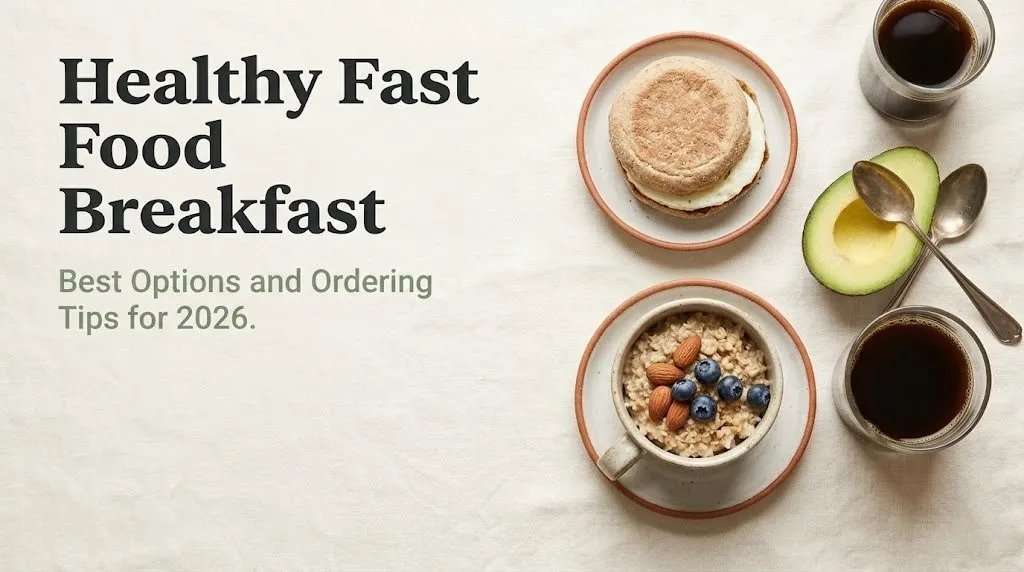
The most healthy fast food breakfast available at a US chain in 2026, evaluated across all five nutritional criteria simultaneously (protein, sodium, saturated fat, fiber, and calories), is the Panera Bread Steel Cut Oatmeal with Almonds, paired with a black coffee.
That combination delivers 290 calories, 8 grams of protein, 5 grams of fiber, 1 gram of saturated fat, and only 130 milligrams of sodium. The beta-glucan fiber from the oats (Avena sativa) is supported by an FDA-authorized health claim for reducing the risk of heart disease when consumed as part of a diet low in saturated fat and cholesterol.
The trade-off is protein. For people who need more than 8 grams of protein at breakfast, pairing the oatmeal with Starbucks Cage-Free Egg White Bites (available at many locations adjacent to Panera in mixed-use locations) adds 13 grams of protein and only 500 milligrams of sodium to the total.
If you are limited to a single-chain order, the Dunkin’ Veggie Egg White Omelet on English Muffin comes closest to meeting all five criteria in a single item: 320 calories, 19g protein, 610mg sodium, 3g saturated fat, and 3g fiber.
Quick Tip:
- Always check the chain’s app before you arrive. Most major chains update nutritional data in their apps more frequently than on printed menus.
- If your chain of choice has a build-your-own option, use it. Choosing egg whites, whole grain bread, and skipping cheese and sauce typically improves every nutritional criterion simultaneously.
- People with tree nut allergies should note that the Panera Steel Cut Oatmeal with Almonds contains tree nuts. The plain oatmeal without nut toppings is available and nut-free.
Healthy Breakfast Ideas Fast Food
Having three or four reliable healthy breakfast ideas you can execute at a fast food chain removes the decision fatigue that leads to poor choices when you’re running late on a Tuesday morning.
The most practical set of ideas works across multiple chains, so you’re not dependent on a single restaurant being on your route:
Idea 1: The Egg White Sandwich Order
At any chain offering egg white substitution (Starbucks, Chick-fil-A, Dunkin’, Subway): order an egg white sandwich on a whole grain English muffin or bread, no cheese, no sauce. This delivers 16 to 26 grams of protein depending on the chain, at 250 to 330 calories and reduced sodium compared to the standard version.
Idea 2: The Oatmeal Plus Coffee Order
At Panera Bread or McDonald’s: order plain steel-cut or rolled oatmeal without flavoring packets or sweeteners, paired with black coffee or an unsweetened flat white. This is the lowest-sodium, highest-fiber fast food breakfast combination available nationally.
Idea 3: The Protein Box Order
At Starbucks: the Eggs and Cheese Protein Box or the Egg White Bites pair with a single-origin black coffee. Between 170 and 470 calories depending on which you choose, with 13 to 25 grams of protein.
Idea 4: The Customized Drive-Thru Order
At any major chain: order the standard egg sandwich, remove the cheese and the sauce, ask for egg white if available, and skip any side item. This reliably reduces sodium by 300 to 500 milligrams compared to the standard menu version.
People following a kosher diet should note that most fast food breakfast sandwiches combine meat and dairy (cheese and sausage or ham) in a single item, which violates kosher dietary law. Egg-only or dairy-only items, where they exist, are the relevant options.
Frequently Asked Questions About Healthy Fast Food Breakfast
What is the healthiest breakfast you can get at a fast food restaurant?
The Chick-fil-A Egg White Grill delivers the highest protein (26g) at the lowest calorie count (300) of any mainstream fast food breakfast sandwich.
For the best heart health profile, the Panera Bread Steel Cut Oatmeal wins on sodium (130mg), saturated fat (1g), and fiber (5g).
The best single-item balance across all criteria is the Dunkin’ Veggie Egg White Omelet on English Muffin: 320 calories, 19g protein, 610mg sodium, 3g saturated fat.
Is McDonald’s breakfast healthy?
McDonald’s offers both one of the most nutritionally reasonable fast food breakfast items (the Egg McMuffin at 300 calories and 17g protein) and some of the highest-sodium options in the category (the Sausage, Egg and Cheese McGriddle at 1,290mg sodium).
The chain is not inherently healthy or unhealthy as a breakfast destination. The specific item chosen determines the nutritional outcome.
Customizing by removing cheese and skipping hash browns reduces the Egg McMuffin’s sodium by approximately 250mg and saves over 300 additional calories.
What fast food breakfast has the most protein?
The Chick-fil-A Egg White Grill contains 26 grams of protein at 300 calories, giving it the best protein-to-calorie ratio of any standard fast food breakfast item nationally.
The Panera Bread Chipotle Chicken, Scrambled Egg and Avocado on Sprouted Grain Bagel Flat delivers 27 grams of protein but at 500 calories, making it a higher-calorie option.
Building a custom sandwich with egg whites and lean meat at Subway can reach 25 to 28 grams of protein depending on the specific selections made.
Can I eat fast food breakfast every day and still be healthy?
Eating fast food breakfast daily can fit within a broadly healthy eating pattern if the specific items chosen consistently meet reasonable nutritional criteria for protein, sodium, and saturated fat.
The primary concern with daily fast food breakfast consumption is cumulative sodium intake: most fast food breakfast sandwiches contain 700 to 1,000 milligrams of sodium, which compounds quickly against the AHA’s recommended daily maximum of 1,500 milligrams for those managing blood pressure.
Choosing the lowest-sodium options (Panera oatmeal, Dunkin’ Veggie Egg White Omelet, Starbucks Egg White Bites) and avoiding high-sodium additions reduces this concern meaningfully.
What should I avoid ordering at the drive-thru for breakfast?
Avoid flavored coffee drinks, which can add 40 to 60 grams of added sugar to an otherwise reasonable breakfast order, far exceeding the AHA’s daily added sugar limit.
Skip any item with sausage as the primary protein: fast food sausage patties typically add 400 to 500 milligrams of sodium and 8 to 12 grams of saturated fat compared to egg white alternatives.
Croissants, biscuits, and flavored muffins as the bread component contribute refined carbohydrates and additional saturated fat without meaningful protein or fiber, making a whole grain English muffin or whole wheat wrap the consistently better choice.
Closing
The drive-thru doesn’t have to be a nutritional obstacle. Armed with three or four specific items you trust at the chains you actually visit, you can make a genuinely sound breakfast decision in under 60 seconds without overthinking it.
Start by saving your top two or three orders in the app of whatever chain is on your morning route. Know your protein target (15 grams at minimum), your sodium awareness (under 700 milligrams for a single meal if you’re managing blood pressure), and skip the flavored coffee drink. Those three rules eliminate most of the damage done by routine fast food breakfast choices.
The best fast food breakfast is always the one you’ve planned ahead of time.