Healthy mayo is not just a marketing phrase. Depending on the oil base, ingredient quality, and serving size, mayonnaise can be a genuinely reasonable part of a balanced diet.
The American Heart Association’s dietary fat guidelines confirm that replacing saturated fat with unsaturated fat supports healthier blood lipid profiles. Several mayo types on the market today are made primarily from unsaturated fats, which puts them on the right side of that guidance.
This guide covers the full nutritional picture of mayo, the real differences between avocado oil, olive oil, and canola-based versions, which brands hold up in 2026, and how to make a cleaner version at home. You’ll also find clear answers on who benefits most and who should pay closer attention to their intake.
Is Mayonnaise Healthy?
Mayonnaise can be a healthy condiment when it’s made from quality oils, used in reasonable portions, and chosen without unnecessary additives.
At its core, mayo is an emulsion: oil, egg yolk, and an acid like lemon juice or vinegar. The FDA standard of identity under 21 CFR 169.140 requires that commercial mayonnaise contain at least 65% vegetable oil by weight. That means the dominant ingredient is fat, which is why the type of oil matters enormously.
Not all fat is equal. A mayo made from avocado oil delivers mostly monounsaturated fat (oleic acid). A mayo made from soybean oil delivers mostly omega-6 polyunsaturated fat (linoleic acid). Both are better options than saturated fat, but they behave differently in the body and have different roles in your diet.
The short answer on whether mayo is healthy: yes, in moderate amounts, with the right oil, and without excessive sodium or added sugar. Calling all mayo unhealthy is the equivalent of calling all cooking oil unhealthy. Context matters.
People with egg allergies must avoid standard mayo entirely and opt for egg-free versions, which are widely available and covered later in this guide.
Key Fact: Standard mayonnaise contains zero carbohydrates and zero added sugar when made according to FDA standards. The added sugar concern applies primarily to some “salad dressing” style products marketed as mayo but not meeting the legal standard.
Mayo Nutrition Facts Per Tablespoon
One tablespoon (approximately 14 grams) of standard canola-based mayonnaise contains the following, according to USDA FoodData Central data:
| Nutrient | Amount per 1 tbsp (14g) | % Daily Value (based on 2,000 cal diet) |
|---|---|---|
| Calories | 90-100 kcal | 5% |
| Total Fat | 10-11g | 13-14% |
| Saturated Fat | 1-1.5g | 5-7% |
| Polyunsaturated Fat | 5-6g | n/a |
| Monounsaturated Fat | 2-3g | n/a |
| Trans Fat | 0g | 0% |
| Cholesterol | 5-10mg | 2-3% |
| Sodium | 70-90mg | 3-4% |
| Total Carbohydrate | 0g | 0% |
| Protein | 0g | 0% |
| Vitamin E (alpha-tocopherol) | ~0.4mg | ~3% |
| Vitamin K (phylloquinone) | ~5-6mcg | ~5% |
The tablespoon is the standard unit for a reason. Most people use two to three tablespoons in a single sandwich or salad application. That brings the realistic calorie count for one use to 180-300 calories from mayo alone. Serving size awareness is where the “mayo is bad” narrative actually has a legitimate point.
Vitamin E in mayo functions as a fat-soluble antioxidant. The NIH Office of Dietary Supplements notes that vitamin E protects cells from oxidative damage and supports immune function. Mayo is not a primary source of vitamin E, but it contributes modestly.
Vitamin K (phylloquinone) plays a role in blood coagulation. People taking warfarin or other anticoagulant medications should track their vitamin K intake across all food sources, including mayo used regularly in quantity.
What Makes a Mayo Healthy?
A healthy mayo is defined by three factors: the primary oil used, the absence of unnecessary additives, and a sodium level that fits within your daily target.
The oil base is the most important variable. Oils high in monounsaturated fat (oleic acid), like avocado oil and olive oil, or in balanced polyunsaturated fat profiles, are preferable to oils with very high omega-6 to omega-3 ratios. Standard soybean oil mayo has an omega-6 to omega-3 ratio of roughly 7:1. The Academy of Nutrition and Dietetics notes that Western diets already tend to be imbalanced toward omega-6 intake, so adding another high-omega-6 source regularly can shift that ratio further.
The ingredient list tells you the rest of the story. A cleaner mayo has a short list: oil, egg yolk, lemon juice or vinegar, salt, and sometimes mustard. Longer lists containing modified starch, added sugar, or artificial preservatives signal a more processed product.
Sodium content varies considerably by brand. Some commercial mayo products contain as much as 125mg sodium per tablespoon. If you’re watching sodium for blood pressure management, that adds up quickly. Choosing a lower-sodium version or making your own gives you direct control.
| Feature | What to Look For | What to Limit |
|---|---|---|
| Oil base | Avocado oil, olive oil, expeller-pressed canola | Soybean oil as primary fat, partially hydrogenated oil |
| Ingredient list | 5-7 ingredients, recognizable | Modified starch, added sugar, artificial flavors |
| Sodium per tbsp | Under 80mg | Over 110mg |
| Fat type | Mostly mono- or polyunsaturated | High saturated fat |
| Additives | Calcium disodium EDTA (preservative, generally recognized as safe) | Artificial colors, high-fructose corn syrup |
Think of the ingredient list like a guest list for a dinner party. The shorter and more recognizable the names, the better the gathering tends to go.
Key Takeaway: Healthy mayo comes down to the oil base, a clean ingredient list, and sensible sodium levels. Most standard commercial mayo is dominated by soybean oil with a high omega-6 load. Avocado oil and olive oil versions deliver a better fatty acid profile for most people’s existing diets.
Health Benefits of Mayo
Mayo’s health benefits come primarily from the nutrients in its egg yolk component and the fat-soluble vitamins carried by its oil base.
Egg yolk lecithin (phosphatidylcholine) is one of the more interesting components. Lecithin is an emulsifier that occurs naturally in egg yolk and plays a structural role in cell membranes. Research published in the journal Nutrients has examined choline intake (of which lecithin is a dietary source) in relation to liver function and cognitive health. A tablespoon of mayo won’t move the needle dramatically, but frequent egg-based food consumption does contribute to total choline intake.
The fat-soluble vitamins in mayo, specifically vitamin E (alpha-tocopherol) and vitamin K (phylloquinone), require dietary fat for absorption. Because mayo is itself a fat-rich food, it actually aids in absorbing these vitamins when consumed alongside other fat-soluble nutrient sources, such as leafy greens in a salad.
Dietary fat from mayo also supports satiety. Fat slows gastric emptying, meaning food moves more slowly from the stomach to the small intestine. According to research published in the American Journal of Clinical Nutrition, meals containing moderate fat are associated with longer-lasting feelings of fullness compared to very low-fat alternatives. This is one reason why swapping full-fat mayo for a very low-fat alternative sometimes leads people to eat more of other foods to compensate.
Key benefits supported by nutritional science:
- Provides fat-soluble vitamins E and K in small but consistent amounts
- Delivers lecithin from egg yolk, a natural source of choline
- Supports fat-soluble vitamin absorption from other foods eaten alongside
- Contributes to meal satiety through its fat content
- Contains zero carbohydrates, making it compatible with multiple dietary patterns
Is Mayo Bad for Your Heart?
Mayo is not inherently bad for heart health when chosen carefully, but the specific oil it’s made from affects how it interacts with cardiovascular risk factors.
The American Heart Association recommends replacing saturated and trans fats with unsaturated fats as a strategy for supporting healthy blood lipid levels. Standard canola oil mayo has a relatively low saturated fat content (around 1-1.5g per tablespoon) compared to butter (approximately 7g per tablespoon). On a per-tablespoon comparison of saturated fat alone, mayo is considerably lower.
The more nuanced heart-health conversation involves omega-6 to omega-3 balance. Soybean oil, the base for most standard commercial mayo, is high in linoleic acid (omega-6). When omega-6 intake is already elevated in the overall diet, adding another significant source isn’t ideal. Avocado oil and olive oil mayo largely sidestep this issue by delivering primarily oleic acid (monounsaturated fat), which research consistently associates with favorable effects on LDL and HDL cholesterol levels.
The dietary fat picture works like a balance beam. What you replace saturated fat with matters as much as reducing it. Replacing butter with soybean oil mayo shifts the balance. Replacing it with avocado oil mayo shifts it more favorably.
According to Harvard T.H. Chan School of Public Health’s Nutrition Source guidance on dietary fats, monounsaturated and polyunsaturated fats from whole food sources and minimally processed oils are the preferred replacements for saturated fat in a heart-conscious eating pattern.
People managing existing cardiovascular conditions, high LDL cholesterol, or triglyceride levels should work with a registered dietitian to assess their total fat intake in context, including condiment sources like mayo.
Avocado Oil Mayo vs Regular Mayo
Avocado oil mayo is nutritionally distinct from regular soybean oil mayo in ways that genuinely matter for most people’s daily fat intake.
The primary difference is the fatty acid profile. Avocado oil is approximately 70% oleic acid (monounsaturated fat, omega-9). Standard soybean oil is approximately 54% linoleic acid (polyunsaturated omega-6) and only 7% alpha-linolenic acid (omega-3). This gives avocado oil mayo a significantly better omega-6 to omega-3 balance and a higher monounsaturated fat percentage.
| Feature | Avocado Oil Mayo (1 tbsp) | Standard Soybean Oil Mayo (1 tbsp) |
|---|---|---|
| Calories | 90-100 kcal | 90-100 kcal |
| Total Fat | 10-11g | 10-11g |
| Monounsaturated Fat | ~7-8g | ~2-3g |
| Polyunsaturated Fat | ~1-2g | ~5-6g |
| Saturated Fat | ~1g | ~1-1.5g |
| Omega-6 to Omega-3 Ratio | Approximately 13:1 | Approximately 7:1 |
| Typical Price Premium | 30-60% higher | Baseline |
The calorie count is virtually identical. You are not saving calories by switching to avocado oil mayo. What you are doing is changing the type of fat your body receives.
Brands like Primal Kitchen and Chosen Foods popularized avocado oil mayo and are among the most widely available options. Both use avocado oil as the primary fat, though their full ingredient lists (and sodium content) differ, so checking the label on each specific product remains the right approach.
People following the Mediterranean dietary pattern, which prioritizes monounsaturated fats from sources like olive oil and avocados, will find avocado oil mayo a more consistent choice than soybean oil versions.
Key Takeaway: Avocado oil mayo and regular mayo have similar calories. The real difference is the fatty acid profile. Avocado oil delivers far more monounsaturated fat and a better omega balance, making it the stronger choice for most everyday users regardless of their specific dietary pattern.
Olive Oil Mayo vs Canola Oil Mayo
Olive oil mayo and canola oil mayo are both meaningfully better than soybean oil mayo for most people, but they differ in flavor profile, price, and specific fat composition.
Olive oil mayo gets its primary fat from oleic acid, like avocado oil, but it typically carries a stronger flavor that some people find distinct or slightly bitter, especially in versions made with extra-virgin olive oil. The monounsaturated fat content sits between 70-80% of total fat, which mirrors the fatty acid profile of avocado oil.
Canola oil mayo has a much milder flavor and a fat composition of approximately 61% monounsaturated fat (oleic acid), 21% omega-6 polyunsaturated fat (linoleic acid), and 11% omega-3 alpha-linolenic acid (ALA). That omega-3 content gives canola oil mayo a better omega-6 to omega-3 ratio (roughly 2:1 to 3:1) compared to both soybean oil and avocado oil mayo. That ratio is actually the closest to what nutrition researchers generally describe as a balanced intake target.
| Feature | Olive Oil Mayo | Canola Oil Mayo |
|---|---|---|
| Primary Fat | Oleic acid (monounsaturated) | Oleic acid + ALA |
| Omega-6:Omega-3 Ratio | Approximately 10:1 | Approximately 2:1 to 3:1 |
| Flavor | Distinctly olive-forward | Neutral |
| Availability | Moderate | Widely available |
| Price Range | Moderate to high | Lower to moderate |
Canola oil is sometimes viewed with suspicion in wellness circles because of its refining process, but expeller-pressed canola oil is widely available and avoids the high-heat chemical extraction that concerns some consumers. If that distinction matters to you, it appears clearly on the label.
People with tree nut or avocado allergies can use olive oil or canola oil mayo without concern. Neither contains tree nuts or avocado-derived ingredients.
Light Mayo vs Regular Mayo
Light mayo uses less oil to cut calories, but the trade-offs involve added water, modified starch, and sometimes sugar that aren’t present in the full-fat version.
Standard full-fat mayo contains 90-100 calories per tablespoon. Light mayo typically contains 35-50 calories per tablespoon. That reduction is real. But to maintain a spreadable, stable texture with less oil, manufacturers add water, modified food starch (usually corn or tapioca), and in some formulations, a small amount of added sugar.
The result is a product that satisfies the caloric goal but introduces more processing steps and a longer ingredient list. For someone whose primary goal is reducing overall calorie intake, light mayo is a legitimate tool. For someone more focused on ingredient quality or avoiding processed food additives, light mayo is a less clean option.
| Feature | Regular Mayo | Light Mayo |
|---|---|---|
| Calories per tablespoon | 90-100 kcal | 35-50 kcal |
| Fat per tablespoon | 10-11g | 3.5-5g |
| Ingredient list length | 5-8 ingredients | 10-15 ingredients |
| Added sugar | Usually none | Sometimes 0.5-1g |
| Modified starch | Absent | Often present |
| Texture | Rich, stable | Thinner, sometimes watery in recipes |
Light mayo performs differently in recipes that rely on fat for structure, such as creamy coleslaw dressing or deviled egg filling. The reduced fat content and higher water content can make dressings runnier and alter the final texture in cooked applications.
People managing calorie intake for weight goals may find light mayo useful when used consistently within a measured eating plan. People with corn or tapioca starch sensitivities should check the modified starch source on light mayo labels.
Key Takeaway: Light mayo cuts calories by swapping fat for water and starches. That works for calorie management but adds processing. Keto and Mediterranean-style eaters are generally better served by regular avocado oil or olive oil mayo used in a smaller, controlled portion.
Vegan and Egg-Free Mayo Options
Vegan mayo replaces egg yolk with plant-based emulsifiers to create a product that mimics the texture of traditional mayo without any animal-derived ingredients.
The most common emulsifier replacements in vegan mayo include aquafaba (the starchy liquid from cooked chickpeas), modified soy protein, sunflower lecithin, and in some products, pea protein. Follow Your Heart Vegenaise and JUST Mayo are two of the most widely distributed vegan mayo brands in the United States, both using non-egg emulsification systems.
From a nutritional standpoint, vegan mayo and traditional mayo are quite similar in calorie and fat content when made with the same oil base. The key difference is the absence of choline from egg yolk lecithin. Vegan eaters who consume vegan mayo regularly as their primary mayo source should be aware that choline is an important nutrient with its own dietary intake recommendations from the NIH Office of Dietary Supplements, and it requires attention across the full diet.
| Feature | Traditional Mayo | Vegan/Egg-Free Mayo |
|---|---|---|
| Emulsifier | Egg yolk (lecithin) | Aquafaba, soy or sunflower lecithin |
| Calories per tbsp | 90-100 kcal | 85-100 kcal |
| Egg allergen | Yes | No |
| Choline source | Yes (egg yolk) | Minimal |
| Soy allergen | Sometimes (oil) | Often (check label) |
| Flavor profile | Classic creamy | Slightly milder, brand-dependent |
People avoiding eggs due to allergy, ethical veganism, or personal preference will find vegan mayo a fully workable substitute in both cooking and condiment applications. Those with soy allergies should check the specific brand label carefully, as many vegan mayo products use soy-based emulsifiers.
Healthy Mayo Brands to Buy in 2026
The healthiest mayo brands in 2026 are those using avocado oil or olive oil as the primary fat, with short ingredient lists and no added sugar.
Evaluating a mayo brand means looking past the front-of-pack claims. “Made with avocado oil” on a label can sometimes mean avocado oil is only a small portion of the total oil blend, with soybean oil still the dominant fat. The ingredient list shows the oils in descending order by weight, so the first oil listed is the primary one.
Brands that consistently hold up in 2026 under that ingredient standard:
- Primal Kitchen Original Mayo with Avocado Oil: Avocado oil is listed first. Short ingredient list. No added sugar. Available in most major grocery chains and online.
- Chosen Foods Classic Mayo: 100% avocado oil. Clean ingredient list. Slightly higher price point.
- Sir Kensington’s Classic Mayonnaise: Uses expeller-pressed sunflower oil and cage-free eggs. No artificial additives. Good sodium level.
- Hellmann’s/Best Foods Carefully Crafted (Egg-Free): The mainstream accessible option for egg-free. Wider distribution makes it an accessible starting point.
- Thrive Market Organic Mayonnaise: Organic expeller-pressed canola oil base. Good budget-conscious option in the cleaner-ingredient category.
Note that product formulations can and do change. Verifying the current ingredient list directly on the product label or the brand’s official website before purchasing is the only way to confirm what you are actually buying.
People following halal or kosher dietary requirements should verify certification on each specific product, as it varies by brand and production facility.
Mayo for Weight Loss and Low-Calorie Diets
Mayo can fit into a weight-loss eating plan, but portion control is where the calorie math gets serious.
At 90-100 calories per tablespoon, mayo is calorie-dense relative to its volume. Two tablespoons on a sandwich adds 180-200 calories before you’ve accounted for any other ingredient. That doesn’t make mayo off-limits during weight loss. It makes accurate measuring more important than with lower-calorie condiments like mustard (approximately 3 calories per teaspoon) or hot sauce.
The satiety benefit of fat-containing condiments like mayo is genuinely relevant here. Research published in the American Journal of Clinical Nutrition has shown that moderate dietary fat intake supports fullness signals more effectively than very low-fat alternatives. Eliminating mayo entirely and replacing it with a sugar-laden low-fat dressing may actually lead to greater overall calorie intake over the course of a day if the lower satiety drives more eating.
Practical strategies for using mayo in a calorie-conscious eating plan:
- Measure with a tablespoon, not a knife spread. One level tablespoon is the reference unit.
- Use mayo as a flavoring base, not a volume ingredient. One tablespoon per serving in a tuna salad provides flavor without a large calorie load.
- Mix mayo with plain non-fat Greek yogurt in a 1:1 ratio to cut calories roughly in half while maintaining a creamy texture.
- Choose avocado oil mayo for a better fat profile without adding calories.
People with specific calorie targets set by a registered dietitian should account for mayo within their total daily intake rather than treating it as “free” or eliminating it entirely.
Key Takeaway: Mayo for weight loss works as long as it’s measured. Two tablespoons is a typical realistic portion. The satiety effect of fat actually supports calorie management when portions are tracked, making the “cut all fat” strategy less effective than simple portion awareness.
Keto Mayo and Low-Carb Diets
Mayo is one of the most keto-compatible condiments available because it contains essentially zero carbohydrates and is predominantly fat.
A standard serving of traditional full-fat mayo contains 0g net carbohydrates. For someone following a strict ketogenic dietary pattern, where total daily carbohydrate intake is typically limited to 20-50g, mayo adds flavor and fat without any glycemic impact.
The fat content in mayo also supports the high dietary fat requirement of ketogenic eating. Because ketogenic diets derive 60-75% of total calories from fat, calorie-dense fat sources like mayo can help hit fat targets without large volume eating. According to general ketogenic dietary protocols referenced in nutrition literature, fat quality matters as much as fat quantity. Avocado oil mayo is therefore the stronger choice for keto eaters compared to soybean oil versions.
One caution for keto mayo users: some commercial mayo products labeled as “light,” “reduced-fat,” or “salad dressing style” contain added starch or sugar that contributes carbohydrates. Always verify that the product you are using is genuine full-fat mayonnaise, not a mayonnaise-style dressing, by checking the label for carbohydrate content.
Keto-appropriate mayo uses in real cooking:
- Tuna, salmon, or egg salad mixed with avocado oil mayo
- Mayonnaise-based aioli for dipping grilled vegetables or proteins
- Coleslaw dressing base using mayo, apple cider vinegar, and celery seed (no sugar added)
- Chicken salad with celery and herbs as a high-fat, zero-carb meal component
People following medically supervised ketogenic diets for epilepsy management or specific metabolic conditions should confirm all dietary fat and condiment choices with their supervising medical team.
Healthy Mayo Ingredients to Look For
Reading a mayo label correctly takes about thirty seconds once you know what matters.
The first ingredient listed is the primary fat source. You want to see avocado oil, extra-virgin olive oil, expeller-pressed canola oil, or sunflower oil as the first item. If soybean oil or “vegetable oil” (a common umbrella term that usually means soybean oil) appears first, you have a standard-issue mayo with a high omega-6 fat load.
The egg component should read egg yolk or whole eggs. “Cage-free” and “organic” on the label indicate farming standards that some consumers prioritize, though they don’t change the macronutrient profile of the mayo itself.
Look for a short, recognizable acid component: lemon juice, apple cider vinegar, or distilled vinegar. These contribute flavor and act as mild preservatives naturally.
Ingredients to approach with awareness:
- Modified food starch: Found in light mayo. Not harmful, but signals a more processed product.
- Added sugars: Listed as sugar, cane sugar, or dextrose. Standard real mayo has none. Some “sandwich spread” or “salad dressing” style products do.
- Calcium disodium EDTA: A chelating preservative that is FDA-approved and generally recognized as safe. Present in many commercial mayo brands. Not a concern for most people.
- Natural flavors: FDA-regulated term. Not a red flag on its own, but does indicate some proprietary flavoring beyond the base ingredients.
For people managing sodium intake, the specific sodium content per tablespoon (listed on the Nutrition Facts panel) is the practical number to track. Variation between brands ranges from as low as 60mg to as high as 130mg per tablespoon.
How to Make Healthy Mayo at Home
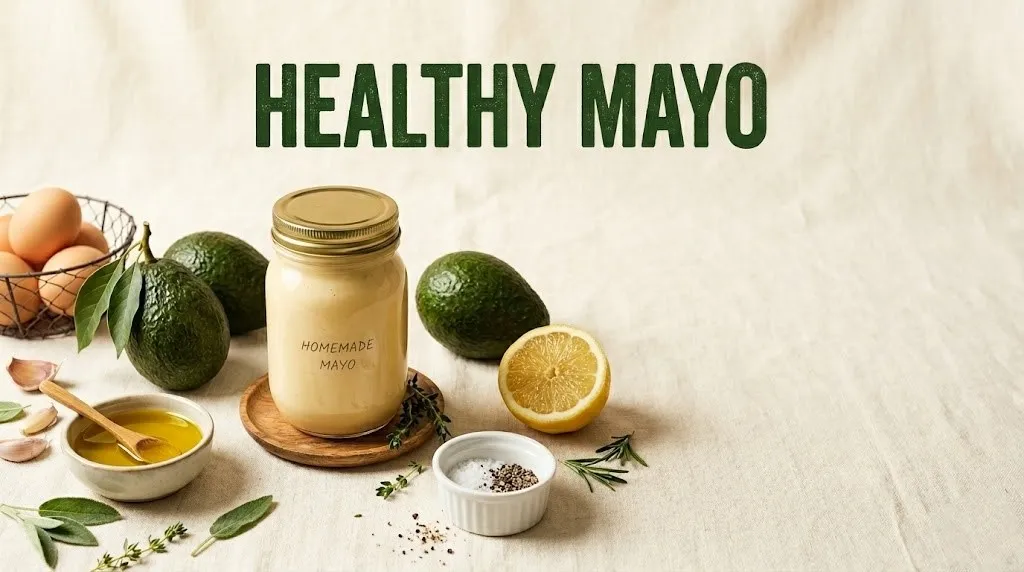
Homemade healthy mayo lets you control the oil, salt level, and every ingredient from start to finish.
The most reliable method uses an immersion blender, which emulsifies the ingredients in under one minute with a very low failure rate. Stand-mixer and hand-whisk methods work but require more technique to avoid the emulsion breaking.
Important: Homemade mayo made with raw (unpasteurized) eggs carries a risk of Salmonella enterica contamination. Using pasteurized eggs or pasteurized egg yolks, which are available in most grocery stores, eliminates this risk. Pregnant women, immunocompromised individuals, young children, and adults over 65 should use pasteurized eggs in any raw-egg preparation.
To make one cup of homemade avocado oil mayo:
- Place 1 pasteurized egg yolk and 1 tablespoon (15ml) fresh lemon juice into a tall narrow jar or immersion blender container. Let both reach room temperature (about 20 minutes out of the refrigerator).
- Add 1/4 teaspoon (1.5g) fine sea salt and 1/2 teaspoon (2g) Dijon mustard to the jar.
- Pour 1 cup (240ml) avocado oil directly over the other ingredients. Do not stir.
- Place the immersion blender at the very bottom of the jar, resting against the egg yolk. Turn it on at full speed without moving it for 10-15 seconds. You will see a white emulsion forming from the bottom.
- Once the bottom third has emulsified (roughly 10-15 seconds), begin slowly lifting the blender upward over the next 20-30 seconds to incorporate the remaining oil.
- Stop blending when the mayo reaches a thick, creamy consistency throughout. Taste and adjust salt or lemon juice as needed.
- Transfer to a clean, airtight glass jar. Refrigerate immediately. Use within 7 days.
The room temperature requirement is the single most critical step. Cold ingredients prevent proper emulsification and cause the mayo to break into an oily, separated mess.
Quick Tip:
- For a lighter flavor, replace 1/4 cup of avocado oil with light olive oil.
- For lower sodium, reduce salt to 1/8 teaspoon and adjust after tasting.
- If the mayo breaks, start with a fresh egg yolk in a clean bowl and slowly whisk the broken mixture in, drop by drop.
Key Takeaway: Homemade mayo is a genuinely different product from commercial versions: you control the oil quality, sodium level, and ingredient list completely. The immersion blender method makes it achievable in under two minutes with near-perfect reliability, as long as your ingredients are at room temperature.
Mayo Substitutes for Healthier Cooking
The best mayo substitute depends on what role mayo is playing in the recipe: binder, fat source, flavor base, or spreadable condiment.
No single substitute works equally well across all four roles. This is where a lot of “healthy swap” advice falls apart. Swapping mayo for plain yogurt in a tuna salad works perfectly. Swapping it in a baked chicken coating also works. Using yogurt as a spread on a sandwich changes the flavor profile noticeably and adds a tangy tartness that some people love and some find off-putting.
| Role of Mayo in Recipe | Best Substitute | Calorie Comparison (per tbsp) | Trade-Off |
|---|---|---|---|
| Creamy dressing/binder | Plain non-fat Greek yogurt | ~9 kcal vs ~95 kcal | Tangier flavor, lower fat |
| Sandwich spread | Mashed avocado | ~23 kcal per tbsp | Different flavor; short shelf life after spreading |
| Baking moisture (e.g., mayo cake) | Sour cream | ~25 kcal vs ~95 kcal | Similar texture; slightly higher saturated fat |
| Aioli/dipping sauce | Hummus | ~25 kcal per tbsp | Different flavor profile entirely |
| Egg salad binder | Silken tofu blend | ~10 kcal per tbsp | Works well; minimal flavor change with seasoning |
| Coleslaw dressing | Cashew cream | ~45 kcal per tbsp | Richer flavor; higher monounsaturated fat |
Plain non-fat Greek yogurt is the most versatile and widely available substitute. It binds, emulsifies to a degree, and has a compatible tangy flavor that works in most savory mayo applications. Per tablespoon, it delivers approximately 9 calories, 0g fat, and 1g protein, versus mayo’s 95 calories and 10g fat.
People with dairy allergies or lactose intolerance should note that Greek yogurt is not a suitable substitute. Cashew cream or silken tofu blend works better for those groups, depending on whether tree nut allergies are also present.
Who Should Be Cautious with Mayo
Most healthy adults can include mayo in a balanced diet without concern. Several specific groups benefit from paying closer attention.
People with egg allergies must avoid traditional mayo entirely. Egg is a top-9 allergen recognized by the FDA. Even small amounts of egg protein from mayo can trigger reactions ranging from hives to anaphylaxis in sensitized individuals. Vegan and egg-free mayo alternatives are the safe substitution.
People taking anticoagulant medications (warfarin, coumadin, or other vitamin K-sensitive blood thinners) should be aware that mayo contains vitamin K (phylloquinone). Consistent intake is less of a concern than sudden large changes in vitamin K-rich food consumption. A registered dietitian or pharmacist who specializes in medication-food interactions is the appropriate person to consult when managing a therapeutic anticoagulant regimen.
People managing cardiovascular risk factors, including elevated LDL cholesterol or high triglycerides, should pay close attention to the oil base in their chosen mayo. Soybean oil mayo at high daily intake contributes to an elevated omega-6 load. Shifting to avocado oil or olive oil versions is a practical adjustment that doesn’t require giving up mayo.
Pregnant women should avoid homemade mayo made from raw, unpasteurized eggs due to Salmonella risk. Pasteurized eggs or commercial mayo (which uses pasteurized eggs by law) are safe alternatives.
| Group | Specific Concern | Practical Guidance |
|---|---|---|
| Egg allergy | Anaphylaxis risk from egg protein | Use vegan/egg-free mayo only |
| Anticoagulant users | Vitamin K in mayo may interact with warfarin dosing | Keep intake consistent; consult pharmacist or dietitian |
| High cardiovascular risk | High omega-6 soybean oil load in standard mayo | Switch to avocado oil or olive oil mayo |
| Pregnant women | Raw egg Salmonella risk in homemade mayo | Use commercial or pasteurized-egg homemade versions |
| Low-sodium diets | Mayo can contribute 70-130mg sodium per tablespoon | Check labels; choose lower-sodium brands or homemade |
| Soy allergy | Some mayo uses soybean oil; vegan mayo often contains soy | Check label for oil source and emulsifier type |
Children under age 2 should not be given raw-egg preparations. Commercial mayo is safe for toddlers in typical condiment amounts, assuming no egg allergy is present.
Frequently Asked Questions About Healthy Mayo
Is mayo healthy to eat every day?
Mayo eaten daily in measured tablespoon-sized portions is unlikely to cause harm for most healthy adults without egg allergies or specific cardiovascular conditions.
The key variables are the oil type, total serving size, and overall dietary fat balance across the rest of your diet.
Choosing an avocado oil or olive oil mayo and keeping daily use to one to two tablespoons keeps it in a nutritionally reasonable range.
Which mayo is the healthiest to buy?
Avocado oil mayo with a short ingredient list and no added sugar is consistently the strongest choice nutritionally in 2026.
Brands like Primal Kitchen and Chosen Foods use avocado oil as the primary and often only fat source.
Always verify the current ingredient list on the product label, as formulations can change.
Is avocado oil mayo actually better for you?
Avocado oil mayo delivers significantly more monounsaturated fat (oleic acid) and a better omega-6 to omega-3 ratio than standard soybean oil mayo.
The calorie count is essentially identical, around 90-100 calories per tablespoon.
The difference is in fat quality, not calorie content.
How many calories are in a tablespoon of mayo?
One tablespoon (14 grams) of standard full-fat mayo contains approximately 90-100 calories, almost entirely from fat.
Light mayo contains 35-50 calories per tablespoon due to reduced oil content and added water.
Most people use two to three tablespoons per serving, making the realistic per-use calorie count closer to 180-300 calories for full-fat versions.
Can you eat mayo on a diet?
Mayo fits into most calorie-managed eating plans as long as portions are measured accurately.
A single tablespoon adds about 95 calories, which is trackable within a structured daily intake.
Mixing mayo with an equal amount of plain non-fat Greek yogurt cuts the calorie contribution roughly in half while preserving a creamy texture.
The Bottom Line on Healthy Mayo
Mayo earned its reputation as a guilty pleasure mostly because of how often people use it by the serving spoon rather than the tablespoon. The food itself, particularly when made from avocado oil or olive oil, is nutritionally reasonable in controlled amounts.
Read the ingredient list on any mayo you buy regularly. The first oil listed tells you the most important thing about the product. A short list of recognizable ingredients and a sodium count under 90mg per tablespoon separates the better options from the rest.
If you want full control over oil quality and sodium, homemade avocado oil mayo takes under two minutes with an immersion blender. Pasteurized eggs remove the raw egg safety concern entirely.