One pound of dry dog food holds approximately 4 cups, using a standard 8-ounce (240 ml) dry measuring cup. That figure is a reliable starting point, but it is not a fixed rule across every bag you’ll ever buy.
Kibble is not a uniform substance. According to the Association of American Feed Control Officials (AAFCO), dog food formulas differ widely in protein source, fat content, moisture level, and extrusion method. All of those variables affect how densely kibble packs into a cup, which means the same “1 cup” can represent meaningfully different weights across brands.
This guide covers the exact conversion math, bag-size reference charts, the science behind why cup counts shift between products, how to measure accurately with the tools most people already own, and how to connect those measurements to how much your dog actually needs each day. Whether you’re rationing a new 5 lb bag or portioning from a 40 lb bulk sack, the numbers here will give you a working reference.
How Many Cups in a Pound of Dog Food
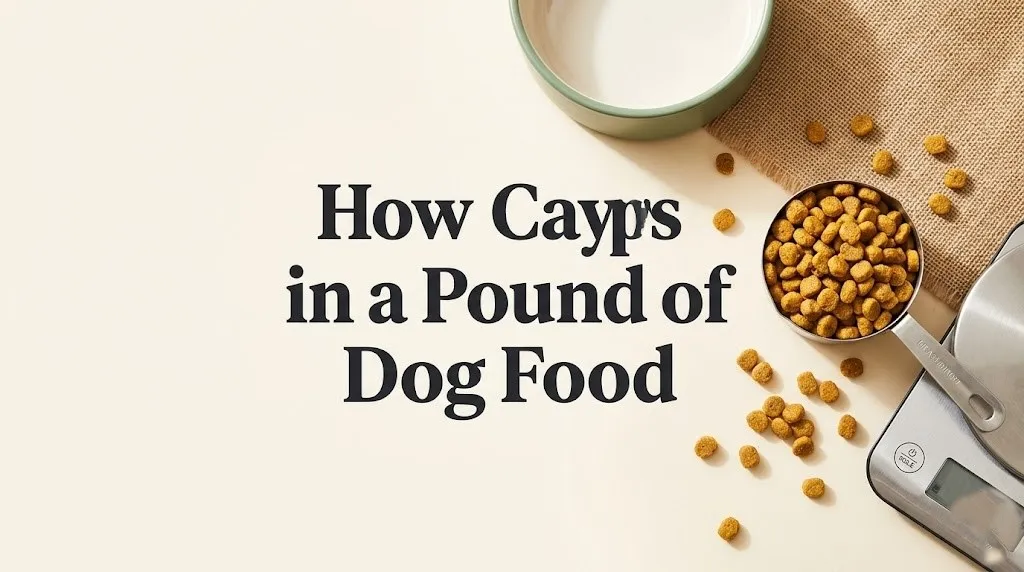
One pound of dry dog food equals approximately 4 cups when measured with a standard 8-ounce US dry measuring cup.
This figure is based on the widely accepted weight-to-volume relationship for average-density extruded kibble. A standard cup holds 8 fluid ounces by volume. Since there are 16 ounces in a pound, a simple division gives you 16 divided by 4, which works out to 4 cups per pound for mid-density kibble.
The word “approximately” is doing real work in that sentence. Kibble with larger pieces, lower moisture, or a puffed extrusion has more air between pieces, which means fewer grams fit per cup. Denser, smaller-piece formulas pack tighter and deliver more grams per cup.
| Kibble Density Type | Approximate Weight Per Cup | Cups Per Pound |
|---|---|---|
| Light/low-density kibble | 3 to 3.5 oz per cup | 4.5 to 5.3 cups |
| Average-density kibble | 4 oz per cup | 4 cups |
| Dense/small-breed kibble | 4.5 to 5 oz per cup | 3.2 to 3.5 cups |
For practical purposes, 4 cups per pound is the right number to use unless your food’s packaging states otherwise. Most major brands, including Purina, Hill’s Science Diet, and Royal Canin, print a cups-per-serving figure on the bag that accounts for their specific kibble density.
Dogs on calorie-controlled or therapeutic diets should have portions confirmed by weight on a kitchen scale rather than by cup, since even a half-cup discrepancy at each meal adds up to meaningful caloric differences over weeks.
How Many Cups of Dry Dog Food in a Pound
Dry dog food specifically yields about 4 cups per pound under standard measuring conditions, though “dry dog food” covers a wide formulation range.
Dry dog food (kibble) is manufactured through extrusion: a high-heat, high-pressure process that forces a wet dough through a shaped die, then bakes or dries the result to below 12% moisture. The resulting piece size, shape, and density vary by manufacturer design and recipe. That matters because the air gaps between differently shaped pieces change how much actual food fits into a measuring cup.
A round, large-breed kibble piece traps more air between pieces than a small, flat-edged piece designed for toy breeds. Think of it like filling a jar with golf balls versus marbles. The golf balls leave more empty space, so the jar holds fewer grams of product even though the volume is identical.
Key factors that affect cups per pound for dry dog food:
- Kibble piece size: larger pieces leave more air gaps
- Kibble shape: rounds and stars pack less efficiently than cylinders or flat discs
- Extrusion density: baked kibbles tend to be denser than steamed-extruded varieties
- Fat coating thickness: heavily fat-coated kibbles weigh slightly more per cup
- Moisture content: even within the “dry” category, moisture can range from 8% to 11.9%
The AAFCO does not set a standard cup-to-pound ratio. That number is a practical kitchen conversion, not a regulated feeding measure.
How Many Cups Per Pound of Dog Food
The general answer to cups per pound of dog food is 3.5 to 5 cups per pound, with 4 cups per pound as the average for standard-density adult kibble formulas.
That range is wide enough to matter practically. If you’re feeding a 30-pound dog two cups per day and your food runs on the lighter end at 3.5 oz per cup instead of the expected 4 oz, you’re delivering roughly 12.5% fewer calories per meal without knowing it.
The most reliable way to find your specific food’s cups-per-pound figure is to weigh one cup of your current food on a kitchen scale, then divide 16 (ounces per pound) by that per-cup weight.
Quick Tip:
- Weigh an empty cup on your kitchen scale, then zero the scale (tare function)
- Fill the cup to the brim without packing or shaking the kibble
- Record the gram or ounce weight of the kibble alone
- Divide 453.6 grams (1 pound) by your per-cup gram weight to get your food’s personal cups-per-pound figure
- Write that number on the bag with a marker for future reference
A dog food that weighs 110 grams per cup yields approximately 4.1 cups per pound. One that weighs 130 grams per cup yields approximately 3.5 cups per pound. Both are within the normal range for commercially produced adult kibble.
Key Takeaway: One pound of dry dog food equals roughly 4 cups under average kibble density, but that number shifts meaningfully by brand, formula, and kibble shape. Weighing one cup of your specific food on a kitchen scale is the fastest way to get an accurate conversion for your actual product.
How Many Pounds in a Cup of Dog Food
One cup of dry dog food weighs approximately 0.25 pounds (4 ounces or about 113 grams) for average-density kibble.
This is simply the inverse of the cups-per-pound figure. If 4 cups equals 1 pound, then 1 cup equals one-quarter pound. The practical reason someone searches this direction is usually because their dog’s feeding guide lists daily amounts by weight, and they need to convert back to cups for day-to-day use.
| Cups of Dog Food | Approximate Weight (Average Kibble) |
|---|---|
| 0.25 cup | 1 oz / 28 g |
| 0.5 cup | 2 oz / 57 g |
| 1 cup | 4 oz / 113 g |
| 1.5 cups | 6 oz / 170 g |
| 2 cups | 8 oz / 227 g |
| 3 cups | 12 oz / 340 g |
One important note for dogs managing weight or recovering from illness: the American Veterinary Medical Association (AVMA) recommends using a food scale for portion accuracy in dogs with conditions like hypothyroidism, diabetes, or post-surgical recovery. Volume measurements are not precise enough for therapeutic feeding plans.
If your dog is a senior, a toy breed with a fast metabolism, or a large breed prone to obesity-related joint issues, confirming gram-based portions with your veterinarian gives you a much more reliable feeding target than cups alone.
How Many Cups in a 5 lb Bag of Dog Food
A 5 lb bag of dog food contains approximately 20 cups, based on the standard conversion of 4 cups per pound.
This is one of the most searched bag sizes because it’s a common starter size, a travel pack, and the standard size for many prescription and specialty formulas. Five pounds times 4 cups per pound gives you 20 cups total.
| Bag Size | Pounds | Approximate Cups (4 cups/lb average) |
|---|---|---|
| Small bag | 4 lb | 16 cups |
| Standard small | 5 lb | 20 cups |
| Medium | 10 lb | 40 cups |
| Standard large | 20 lb | 80 cups |
| Bulk | 30 lb | 120 cups |
| Bulk large | 40 lb | 160 cups |
For a medium-sized dog eating 2 cups per day, a 5 lb bag lasts approximately 10 days. For a small dog eating 0.75 cup per day, the same bag stretches to about 26 days.
Food quality and storage matter here. Once opened, dry kibble should be stored in an airtight container and ideally used within 6 weeks, according to general guidelines from pet food manufacturers. Leaving kibble in the original bag without sealing it accelerates fat oxidation and flavor degradation, particularly in foods with high omega-3 content.
Dogs with sensitive digestive systems or food allergies should have their food stored with extra care. Rancid fat from improperly stored kibble can cause gastrointestinal upset even in otherwise healthy dogs.
How Many Cups in 10 lbs of Dog Food
A 10 lb bag of dog food contains approximately 40 cups at the standard 4-cup-per-pound average.
This size is popular for single-dog households with medium to large breeds, and it’s a common subscription delivery size from brands like Purina Pro Plan and Blue Buffalo. At 40 cups total, a dog eating 2 cups daily goes through this bag in 20 days. A dog eating 3 cups daily finishes it in roughly 13 days.
At the low end of the density range (3.5 cups per pound), a 10 lb bag yields about 35 cups. At the high end (4.5 cups per pound for a very light kibble), it could yield up to 45 cups. That is a 10-cup range on the same bag weight, which is why the label measurement always takes precedence over the general conversion.
Quick Tip:
- Check the feeding guide on your specific bag for a cups-per-serving figure
- Multiply that by daily meals to confirm daily cup intake
- Divide total bag cups (estimated at 40 for 10 lbs) by daily cups to estimate how long the bag will last
- Adjust for any treats, toppers, or wet food mixed into meals, since those add calories
The National Research Council (NRC) nutrient requirements for dogs do not specify cup measurements. They operate on metabolizable energy (ME) in kilocalories. The cup is a practical kitchen unit, not a nutritional unit, which is why cross-referencing cup counts with the kcal/cup figure on your bag gives the clearest picture.
Key Takeaway: Bag size estimates are easy to calculate at 4 cups per pound, but always check the actual cups-per-serving on your specific product’s label since kibble density alone can shift your total by up to 10 cups on a 10 lb bag.
How Many Cups in a 20 lb Bag of Dog Food
A 20 lb bag of dog food contains approximately 80 cups, making it one of the most cost-effective bag sizes for medium and large breed owners.
Twenty pounds multiplied by 4 cups per pound gives you the 80-cup figure. At a feeding rate of 2 cups per day, that bag lasts 40 days. At 3 cups per day for a larger dog, it covers about 26 to 27 days.
| Daily Feeding Amount | Days a 20 lb Bag Lasts (80 cups) |
|---|---|
| 1 cup/day | 80 days |
| 1.5 cups/day | 53 days |
| 2 cups/day | 40 days |
| 2.5 cups/day | 32 days |
| 3 cups/day | 27 days |
| 4 cups/day | 20 days |
One practical note: most manufacturers recommend not leaving dry food in a bag for more than 6 to 8 weeks after opening, regardless of how much remains. If a 20 lb bag lasts longer than that at your dog’s feeding rate, consider splitting purchases into two 10 lb bags to preserve freshness.
Large bags are cost-efficient but can be a false economy if food goes rancid before it’s finished. Grain-free and high-fat formulas tend to oxidize faster than grain-inclusive varieties due to their higher concentration of unsaturated fats.
How Many Cups in 4 Pounds of Dog Food
Four pounds of dog food equals approximately 16 cups at the standard 4-cup-per-pound conversion.
This is a practical calculation for owners managing a strict feeding budget, transitioning between foods, or measuring a partial bag. Four pounds is also a common weight for trial-size bags of premium or specialty brands.
At 16 cups total, a small dog eating half a cup twice daily (1 cup/day) goes through a 4 lb bag in 16 days. A medium dog eating 1.5 cups twice daily (3 cups/day) finishes the same bag in about 5 days.
Key points for 4 lb bag users:
- This size is common for prescription diets from brands like Hill’s Prescription Diet and Royal Canin Veterinary Diet
- Smaller bags are easier to keep fresh but cost more per pound
- If you’re transitioning your dog to a new food, a 4 lb bag is enough for a standard 7 to 10 day gradual transition protocol
- Always use the same measuring tool each time to maintain portion consistency during a food transition
A food transition that goes poorly, marked by loose stool, vomiting, or refusal to eat, may not be a brand problem. It may be a portion measurement problem if the new food has different caloric density than the old one.
Key Takeaway: Four pounds of dog food gives you roughly 16 cups, which is enough for about 5 to 16 days depending on dog size and daily portions. Smaller bags are ideal for transitions and prescription formulas where freshness and precision both matter.
How Many Cups in 16 Pounds of Dog Food
Sixteen pounds of dog food contains approximately 64 cups at 4 cups per pound.
This is not a standard commercial bag size, but it’s a frequently searched figure because many owners track food in rounds of 16: 16 lbs is one full pound times 16, and it’s the point at which 16 ounces per pound makes the math feel cleaner. Some club store bags and bulk subscriptions also hit near this weight.
At 64 cups, here are realistic feeding durations:
| Dog Size | Daily Cup Intake (General Starting Range) | Days 16 lbs Lasts |
|---|---|---|
| Toy breed (under 10 lbs) | 0.5 to 0.75 cup/day | 85 to 128 days |
| Small breed (10 to 20 lbs) | 0.75 to 1.5 cups/day | 43 to 85 days |
| Medium breed (20 to 50 lbs) | 1.5 to 2.5 cups/day | 26 to 43 days |
| Large breed (50 to 90 lbs) | 2.5 to 4 cups/day | 16 to 26 days |
| Giant breed (90+ lbs) | 4 to 6 cups/day | 11 to 16 days |
These daily intake ranges are general starting points only. Actual amounts depend on activity level, reproductive status, health status, and the specific caloric density of the food. A licensed veterinarian is the right resource for dogs with weight management needs, chronic conditions, or unusually high or low appetites.
The ranges above reflect general guidance from pet food manufacturers, not a universal standard. Always cross-reference with the specific feeding chart on your dog’s current food.
Why Does Cup Measurement Vary by Dog Food Brand
Cup measurements vary by brand because kibble density, piece size, shape, and ingredient composition differ across every formula.
When you fill a measuring cup with kibble, you’re measuring volume, not weight. The weight of that volume depends entirely on how much actual food matter is packed into the space, which varies based on the kibble’s physical characteristics.
A high-protein, small-breed formula with dense, tightly packed pieces might weigh 130 grams per cup. A large-breed, grain-free formula with puffed, irregular shapes might weigh only 90 to 100 grams per cup. Both are filled to the same line on the cup. But the dense formula delivers 30% more food by weight per scoop.
Factors that drive brand-to-brand variation:
- Protein source: meat-based kibbles (higher density) vs. plant-heavy formulas (lower density)
- Fat content: high-fat foods are denser than low-fat varieties
- Extrusion method: steam-extruded vs. baked vs. cold-pressed produces different densities
- Piece shape and size: small uniform pieces pack tighter than large irregular shapes
- Fiber content: high-fiber formulas often have larger, more fibrous pieces that trap air
According to a 2019 review in the Journal of Animal Science, even small differences in kibble density can lead to caloric intake variations of 15 to 25% when food is measured by volume alone. That’s the size of difference that accumulates into weight gain or weight loss over months.
Switching brands without recalibrating your cup measurement is one of the most common, least discussed causes of unintentional weight changes in dogs.
How Many Kcal Per Cup of Dog Food
The caloric content of dry dog food ranges from approximately 200 to 600 kcal per cup, with most adult maintenance formulas falling between 300 and 450 kcal per cup.
This figure, listed as metabolizable energy (ME) or kilocalories on the dog food label, is the actual nutritional number that determines how much energy your dog receives per meal. Cups are a volume proxy for this number. Kcal/cup is the real unit.
| Formula Type | Typical kcal/cup Range |
|---|---|
| Weight management / low-calorie | 200 to 300 kcal/cup |
| Standard adult maintenance | 320 to 420 kcal/cup |
| High-protein athletic formula | 400 to 500 kcal/cup |
| High-fat performance formula | 480 to 600 kcal/cup |
| Puppy formula | 380 to 480 kcal/cup |
Think of kcal/cup like octane ratings on fuel. Two cups that look identical can deliver very different energy depending on what’s formulated into them. A dog eating 2 cups of a 400 kcal/cup food receives 800 kcal daily. The same dog eating 2 cups of a 250 kcal/cup weight management food receives only 500 kcal daily. That 300-calorie daily difference represents a meaningful nutritional divergence over time.
The AAFCO requires all dog food manufacturers to list ME or kcal/kg on the label. Most brands also provide kcal/cup on the packaging or their website. Always check this number when switching formulas, even within the same brand, as product lines differ substantially.
For dogs with diabetes, pancreatitis, or conditions affecting caloric metabolism, a veterinarian with nutrition training (a board-certified veterinary nutritionist, recognized by the American College of Veterinary Nutrition) should be consulted before making feeding changes based on kcal/cup alone.
Key Takeaway: Kcal per cup, not the cup volume itself, is the number that determines whether your dog is being over or underfed. Checking this figure on your bag takes 30 seconds and prevents months of unintentional caloric drift.
How to Measure Dry Dog Food Accurately
The most accurate way to measure dry dog food is by weight on a kitchen scale, using grams as your unit. Cup-based measuring is a reasonable shortcut, but it introduces errors that compound over time.
That said, most dog owners measure by cup. If that’s you, here’s how to do it in a way that minimizes error:
To measure dry dog food by cup correctly:
- Use a standard US dry measuring cup, not a coffee mug, soup bowl, or the scoop that came in the bag
- Scoop kibble loosely into the cup without packing or pressing the pieces down
- Level the top with a straight edge (a butter knife works well)
- Do not shake or tap the cup to settle the food before leveling
- Use the same cup every time and never swap to a different size mid-bag
To measure by weight for greater precision:
- Place your dog’s bowl on the kitchen scale and press tare to zero it out
- Pour kibble directly into the bowl until the scale shows your target gram weight
- Remove the bowl from the scale and serve
- For reference, 100 grams of standard kibble equals roughly 0.88 to 1 cup
Common measuring mistakes that cause overfeeding:
- Using the bag’s included scoop without verifying its volume
- Packing kibble into the cup by tapping or pressing
- Eyeballing amounts after a few weeks of measuring
- Rounding up at each meal consistently
A 2020 study published in the Journal of Animal Science found that dog owners using volumetric measures overestimated daily feeding amounts by an average of 80% in some cases, largely due to inconsistent scooping technique and scoop size variation.
How Many Cups of Dog Food Per Day by Weight
Daily cup amounts for dogs range from roughly 0.5 cup per day for very small dogs to 6 or more cups per day for giant breeds, based on body weight, activity level, and the specific food’s caloric density.
These figures are starting ranges, not prescriptions. The right daily amount for any individual dog depends on age, neutered or intact status, activity level, metabolic health, and the kcal/cup of the specific food being fed.
| Dog Body Weight | Approximate Daily Cups (320 to 380 kcal/cup food) |
|---|---|
| 5 lbs | 0.25 to 0.5 cup |
| 10 lbs | 0.5 to 0.75 cup |
| 20 lbs | 1 to 1.5 cups |
| 30 lbs | 1.25 to 1.75 cups |
| 40 lbs | 1.5 to 2.25 cups |
| 50 lbs | 2 to 2.75 cups |
| 75 lbs | 2.5 to 3.5 cups |
| 100 lbs | 3.5 to 4.5 cups |
According to the AVMA, approximately 56% of dogs in the United States were classified as overweight or obese as of 2022. The most commonly identified contributing factor was overfeeding, specifically using cup measurements without accounting for caloric density differences between products.
Dogs eating a high-calorie athletic formula at the amounts listed above would be consuming more than they need for moderate activity. Always adjust cup amounts down when feeding a calorie-dense product, or cross-reference with the kcal/cup on the label.
Active working dogs, pregnant females, and nursing mothers have substantially higher caloric needs. Neutered adults with low activity are at the higher end of the obesity risk range. A licensed veterinarian can determine whether a specific dog’s body condition score (BCS) warrants increasing or decreasing the amounts listed here.
Key Takeaway: Daily cup amounts are a starting point built around average kibble caloric density. A dog’s actual needs shift with age, activity, and health status, and a quarterly weight check with a body condition score assessment is the most practical way to verify that your current cup amount is still right.
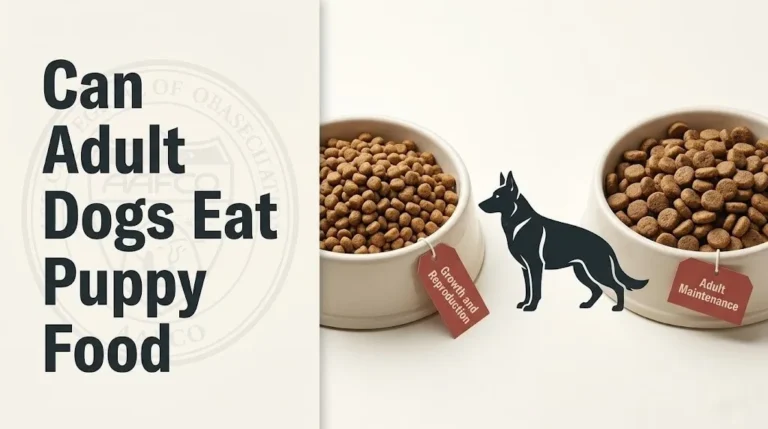
Puppy vs Adult Dry Dog Food Cup Measurements
Puppy food generally delivers more calories per cup than adult maintenance food, meaning puppies often eat similar or smaller cup volumes than you’d expect while still receiving more total energy.
This is counterintuitive for new dog owners. Puppies eat more meals per day (typically 3 to 4 meals daily for young puppies, dropping to 2 meals by 6 months), but not necessarily more food by volume per meal.
| Life Stage | Typical Meals Per Day | kcal/cup Range | Daily Cup Estimate (20 lb puppy/dog) |
|---|---|---|---|
| Puppy (2 to 6 months) | 3 to 4 | 380 to 480 | 1 to 1.5 cups total |
| Puppy (6 to 12 months) | 2 to 3 | 380 to 480 | 1.25 to 1.75 cups total |
| Adult maintenance | 2 | 320 to 420 | 1.25 to 1.75 cups total |
| Senior | 2 | 250 to 350 | 1 to 1.5 cups total |
Puppy formulas are nutrient-dense. They’re formulated to support rapid skeletal and muscle development. According to AAFCO nutritional profiles, puppy foods must meet higher minimums for crude protein (22% DM), calcium (1.2% DM), and phosphorus (1.0% DM) compared to adult maintenance formulas (18% protein, 0.5% calcium).
Feeding adult food to a puppy, or vice versa, is not recommended. The caloric density mismatch, combined with mineral ratio differences, can affect bone development in large breed puppies particularly.
Large breed puppy formulas are a distinct subcategory. They’re specifically formulated with lower calcium and phosphorus concentrations to prevent the rapid bone growth that contributes to developmental orthopedic disease (DOD) in breeds like Great Danes, Labrador Retrievers, and Rottweilers. If you own a large or giant breed puppy, the label distinction “large breed puppy” is not just marketing. It reflects AAFCO-recognized nutrient profile differences.
How to Read a Dog Food Feeding Guide Label
The feeding guide on a dog food bag tells you the manufacturer’s recommended daily amount by body weight, which you can convert directly to cups using the food’s listed serving size.
Reading this label correctly is the single most practical skill for accurate portion control.
Most dog food labels print the feeding guide in one of two formats. The first lists cups per day by weight range (“dogs 20 to 30 lbs: feed 1.5 to 2 cups per day”). The second lists grams per day by weight range, which requires converting to cups using the food’s known cup weight.
To read and apply a dog food feeding label:
- Find the “Feeding Guide” or “Suggested Daily Amount” table on the back or side of the bag
- Locate your dog’s current body weight in the left column
- Read the corresponding daily amount (in cups or grams) in the right column
- Divide the daily total by the number of meals you feed per day
- Check whether the guide assumes one daily feeding or two, as this affects the per-meal amount significantly
- Cross-reference with the “Caloric Content” line on the label (listed as kcal/kg and kcal/cup per AAFCO guidelines)
- Adjust downward if your dog is neutered, low-activity, or overweight; adjust upward only with veterinary guidance
The feeding guide reflects a starting point based on average metabolic rates for that weight class. It doesn’t account for your specific dog’s activity level, body condition score, or health status. A dog with hypothyroidism, for example, may need significantly less food than the label suggests.
One note on label comparisons: some brands list the kcal/cup figure only on their website rather than the bag. If you’re switching brands and can’t find this number on the packaging, it’s worth spending two minutes finding it online before assuming the same cup amount applies to both foods.
Key Takeaway: The feeding guide on your bag is the most reliable starting point for daily cup amounts, but it’s calibrated for an average dog. Using the kcal/cup figure alongside the feeding guide gives you a much sharper tool for managing your specific dog’s weight and health.
Frequently Asked Questions About Dog Food Cup Measurements
How many cups are in a standard pound of dry dog food?
One pound of dry dog food equals approximately 4 cups when measured with a standard 8-ounce US dry measuring cup.
This figure applies to average-density kibble and can range from 3.5 to 5 cups per pound depending on kibble size, shape, and density.
Weighing one cup of your specific food on a kitchen scale gives you the most accurate figure for your product.
Why does the number of cups per pound differ between brands?
Cup measurements vary between brands because kibble density, piece size, and ingredient composition all affect how much food fits into a fixed volume.
A denser, small-piece formula weighs more per cup than a large-breed, puffed kibble, even when both cups are filled to the same line.
According to a review in the Journal of Animal Science, volume-based measuring can lead to caloric intake differences of 15 to 25% compared to weight-based measuring.
Can I use a regular kitchen measuring cup for dog food?
Yes, a standard US 8-ounce dry measuring cup works well for portioning dog food at home.
Avoid using coffee mugs, soup bowls, or the plastic scoop that came with the bag, as these are not standardized volumes and will produce inconsistent portions.
For dogs on calorie-controlled diets, a kitchen scale measuring grams is more precise than any cup-based method.
How many cups a day should I feed my dog?
Daily cup amounts vary from roughly 0.5 cup per day for small dogs under 10 pounds to 4 or more cups per day for large breeds, depending on the food’s caloric density.
The feeding guide on your specific dog food bag is the best starting point, since it accounts for that food’s particular kcal/cup figure.
Age, activity level, neutered status, and health conditions all affect the right daily amount, and a veterinarian can refine this estimate if your dog has specific health or weight management needs.
Does cup count change for puppy food versus adult food?
Yes, puppy formulas typically contain more calories per cup than adult maintenance formulas, so puppies often eat similar or slightly smaller cup volumes than adult dogs of the same weight.
AAFCO nutritional profiles require puppy foods to meet higher minimums for protein, calcium, and phosphorus, making them nutrient-dense relative to their volume.
Large breed puppies specifically require a “large breed puppy” formula with controlled calcium and phosphorus levels, and the cup amounts for these formulas should be followed according to the label’s breed-size-specific feeding guide.
The Practical Bottom Line on Measuring Dog Food
Four cups per pound is your reliable working figure for most dry dog foods sold in the US today. Use it to estimate bag duration, set up a daily feeding routine, and cross-reference with the specific cup amounts on your bag’s feeding guide.
When you switch brands, weigh one cup of the new food before assuming the same volume applies. Caloric density varies enough between products to change your dog’s intake meaningfully if you don’t recalibrate.
For dogs with weight concerns, health conditions, or unusual appetite patterns, a kitchen scale takes the guesswork out entirely. A few grams of precision at each meal is a genuinely small effort relative to the long-term health difference it makes.