What a child eats between birth and three years old directly shapes their brain architecture, immune system, and lifelong relationship with food. Parents searching for “healthy steps pediatrics” want more than a milestone chart. They want to know exactly which nutrients build a stronger toddler, how to introduce solids without constant anxiety, and which foods at each stage give their child the best possible developmental foundation. This guide translates the latest 2026 pediatric nutrition research into clear, practical food actions for every stage from newborn feeding through a third birthday celebration meal.
The first 1,000 days of life, running from conception roughly through age two, represent the most intensive period of neurodevelopment a human will ever experience. By age three, a child’s brain has already reached nearly 80% of its adult volume. That physical growth is fueled by specific nutrients arriving at specific windows. Missing those windows does not mean a child fails to develop. It does mean opportunities for optimal myelination, synaptic pruning, and metabolic programming become narrower. Researchers at the National Institutes of Health have documented that iron sufficiency during the second six months of life correlates with cognitive performance scores measured years later. This is not about perfection. It is about equipping parents with clear nutritional targets they can actually hit in a real kitchen.
This article covers precise nutrition guidance for three distinct stages: the exclusively milk-fed newborn period, the transition to complementary foods around six months, and the full family-diet integration from twelve to thirty-six months. You will find specific nutrient priorities at each window, food introduction sequencing backed by 2025-2026 allergy prevention research, textures and self-feeding skill progressions matched to oral motor development, and common nutrient-gap scenarios pediatric dietitians see most often. Every section includes real food examples with serving sizes appropriate for tiny stomachs. This is not generic wellness advice. This is practical pediatric nutrition written for parents standing in the baby food aisle or staring down a picky toddler who has just launched scrambled eggs onto the floor.
What Is Healthy Steps Pediatrics?
Healthy Steps Pediatrics is a pediatric primary care framework that integrates developmental monitoring, nutritional guidance, and parenting support into every well-child visit from birth through age three. The model embeds child development specialists directly into pediatric practices. These specialists, often trained in child psychology, nutrition science, or social work, meet with families during routine checkups to discuss feeding, sleep, behavior, and caregiver mental health. It is not a separate appointment. It is part of the same visit, in the same office, immediately after the medical exam.
The program launched as a national initiative through the Commonwealth Fund and Boston Medical Center. By 2026, the model operates in pediatric clinics across the United States, with dedicated funding streams through state Medicaid programs and private insurance partnerships. Pediatricians refer families to the embedded Healthy Steps specialist for conversations that go well beyond what a 15-minute medical visit can cover. These specialists sit with parents for 20 to 40 minutes per visit, longer when needed, to problem-solve feeding refusals, create step-by-step solid-food introduction plans, and screen for food insecurity or formula shortages that undermine everything else.
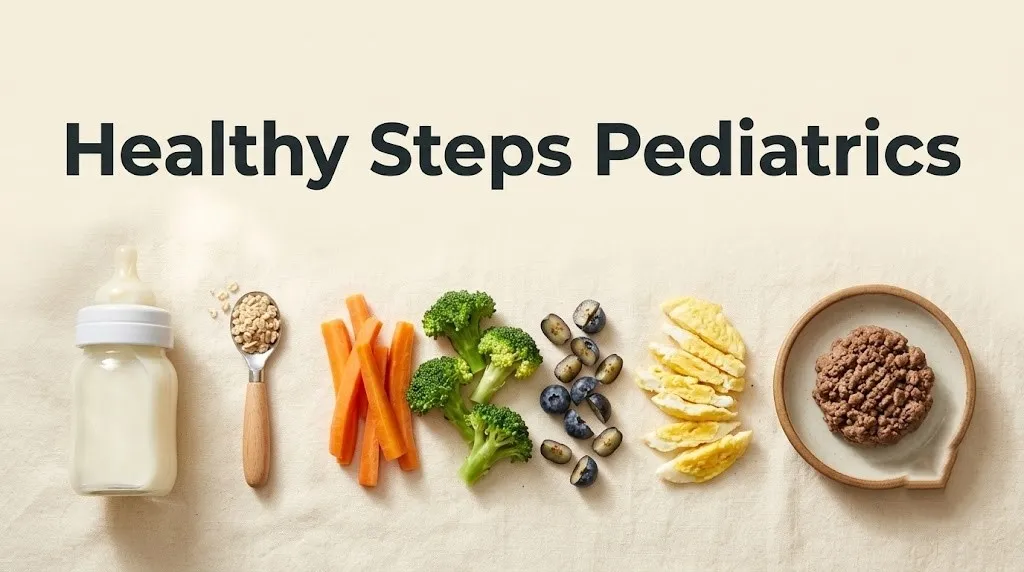
The nutritional component of Healthy Steps is built on the understanding that a child’s growth chart is not just a percentile. It is a real-time readout of whether dietary intake matches developmental demand. Specialists help parents interpret growth curves without panic. A child who dips from the 60th to the 40th percentile over six months might be perfectly healthy if head circumference and length remain on track. The same drop paired with stalled length and low energy warrants a closer look at iron, zinc, and total calorie intake. This nutrition-informed pediatric model catches feeding problems months before they become failure-to-thrive diagnoses.
Quick Tip:
- A Healthy Steps visit typically covers: feeding evaluation, developmental screening, parent-child interaction observation, maternal depression screening, and food access assessment
- Specialists do not replace the pediatrician; they extend the visit depth beyond what a medical exam can cover
- The model is preventive, not crisis-driven, aiming to normalize nutrition counseling as routine pediatric care
Nutritional Priorities for Zero to Three Healthy Steps
Nutritional priorities shift dramatically across the zero-to-three window. The exclusive milk phase, whether breastfeeding or formula feeding, focuses on one nutrient above all others during the first six months: fat. Human breastmilk derives approximately 50 to 55 percent of its calories from fat. Infant formula matches this profile. Fat supplies the raw material for myelination, the process of insulating nerve fibers so signals travel faster. Without adequate dietary fat during this period, brain development simply cannot proceed at its intended pace.
A 2026 review in the Journal of Nutrition tracked specific fatty acid requirements during the first year and highlighted docosahexaenoic acid (DHA) and arachidonic acid (ARA) as the two long-chain polyunsaturated fats most directly incorporated into infant brain tissue. Most infant formulas sold in the United States now include both DHA and ARA, but concentrations vary. The USDA does not regulate minimum DHA levels in formula, so parents choosing formula should look for products with at least 0.3% of total fatty acids as DHA. Breastfeeding mothers can support their own milk DHA content by consuming 200 to 300 milligrams of DHA per day, equivalent to about 8 to 12 ounces of low-mercury fatty fish per week.
Between six and twelve months, the priority shifts dramatically to iron and zinc. Full-term infants are born with roughly four to six months of stored iron. Those stores deplete right as complementary foods begin. Iron needs jump to 11 milligrams per day from 7 to 12 months, a target that breastmilk alone cannot meet because breastmilk contains approximately 0.3 to 0.4 milligrams of iron per liter. Formula is iron-fortified by regulation to 12 milligrams per liter, which covers the requirement at typical intake volumes. Exclusively breastfed infants who do not consume iron-rich complementary foods regularly slide into deficiency. Zinc follows an almost identical depletion curve and supports immune competence and linear growth.
| Nutrient | Priority Window | Key Food Sources (Age-Appropriate) | Daily Requirement |
|---|---|---|---|
| DHA and ARA | 0 to 12 months | Breastmilk from mother consuming fatty fish, DHA-fortified formula | No formal RDA; 0.3% of total fatty acids as DHA recommended |
| Iron | 6 to 18 months | Pureed meats (beef, lamb, chicken liver), iron-fortified infant cereals, pureed lentils | 11 mg/day from 7 to 12 months; 7 mg/day from 1 to 3 years |
| Zinc | 6 to 18 months | Pureed beef, lamb, turkey, full-fat yogurt, pureed chickpeas | 3 mg/day from 7 to 12 months; 3 mg/day from 1 to 3 years |
| Calcium | 12 to 36 months | Full-fat yogurt, whole milk, calcium-fortified soy milk, soft cheese | 700 mg/day from 1 to 3 years |
| Vitamin D | 0 to 36 months | Supplement (liquid drops), fortified whole milk, limited sun exposure | 400 IU/day from birth to 12 months; 600 IU/day from 1 to 3 years |
Pediatric Food Introduction Sequencing by Developmental Stage
Food introduction sequencing refers to the deliberate order in which complementary foods are introduced to an infant starting around six months of age. The sequence matters less for allergy prevention than was once believed, and the 2026 guidance reflects a major shift from the delayed-introduction model that dominated pediatric advice through the early 2000s. Current protocols, updated by the American Academy of Pediatrics and informed by landmark allergy prevention trials, prioritize early and repeated exposure to common allergens rather than avoidance.
The first foods introduced should be iron-rich and easy to modify to a safe texture. Pureed meats, poultry, and fish deliver heme iron, which is absorbed at roughly 25 to 30 percent efficiency compared with the 5 to 10 percent absorption of non-heme iron from plant sources. Pureed lentils, beans, and iron-fortified infant cereals provide complementary iron sources. Infant cereals remain a convenient vehicle for iron delivery, but they are not mandatory. A 2025 consensus statement from the Academy of Nutrition and Dietetics clarified that meat purees and legume purees are equally appropriate first foods, provided they are prepared to a smooth, thin consistency with no lumps.
Peanut and egg introduction deserves special attention. The Learning Early About Peanut Allergy (LEAP) study, first published in 2015 and reinforced by years of follow-up data through 2025, demonstrated that introducing peanut-containing foods between 4 and 11 months for high-risk infants reduces peanut allergy development by up to 80% compared with avoidance. A 2026 update to the National Institute of Allergy and Infectious Diseases guidelines now recommends that all infants, regardless of risk level, begin peanut-containing foods by 6 months of age, provided developmental readiness for solids is confirmed. Peanut butter thinned with warm water, breastmilk, or formula to a smooth consistency is the simplest home preparation.
To introduce solids according to 2026 evidence-based guidelines:
- Confirm readiness: infant sits with minimal support, demonstrates good head control, opens mouth when food is offered, and can move food from the front of the tongue to the back.
- Begin with a single-ingredient iron-rich food: smooth pureed beef, lamb, chicken, turkey, or iron-fortified infant cereal mixed with breastmilk or formula.
- Offer the same single-ingredient food once daily for 3 to 4 days before introducing a second new food, monitoring for any signs of allergic reaction.
- Introduce peanut and egg by 6 months, thinning peanut butter with warm water and offering well-cooked scrambled egg yolk finely mashed.
- Continue to offer previously tolerated foods with at least weekly frequency, especially allergens, as intermittent exposure does not maintain tolerance.
Key Takeaway: Brain-building fats dominate the first six months, iron and zinc become critical from six to eighteen months, and allergen introduction should begin by six months and continue weekly rather than being delayed or sporadic.
Vitamin D Supplementation from Birth Through Age Three
Vitamin D supplementation is the one nutritional intervention that pediatric guidelines recommend for virtually every infant in the United States starting within days of birth. Breastmilk contains only approximately 25 International Units (IU) of vitamin D per liter, well below the 400 IU daily requirement established by the American Academy of Pediatrics for infants under twelve months. Even formula-fed infants may not meet the target until their intake reaches approximately 32 ounces per day, a volume newborns and young infants rarely consume consistently. The recommendation spans all feeding methods.
The biochemical role of vitamin D in early childhood goes well beyond the bone mineralization most parents associate it with. Vitamin D functions as a secosteroid hormone that influences gene expression in immune cells. Randomized trials published between 2020 and 2025 have linked adequate vitamin D status in infancy to lower rates of respiratory tract infections. A 2024 meta-analysis in the journal Nutrients pooled data from 18 pediatric studies and found that vitamin D-supplemented infants experienced 22% fewer acute respiratory infections requiring medical attention than unsupplemented controls. This does not mean vitamin D prevents all illness. It does suggest immune function depends partly on vitamin D sufficiency.
The standard supplementation protocol remains simple and affordable. Liquid vitamin D drops formulated for infants deliver 400 IU per single drop. The dose is placed on the mother’s nipple before nursing, on a pacifier, or directly onto the infant’s tongue. Older infants and toddlers can take the drop mixed into a small spoonful of yogurt, applesauce, or milk. At twelve months, the recommended daily intake rises to 600 IU per day, which can be met through a combination of fortified whole milk and continued supplementation if total dietary intake falls short. Pediatricians do not recommend relying on sun exposure for infants under six months due to skin cancer prevention guidelines and inconsistent vitamin D synthesis across skin tones and latitudes.
Key Fact: The American Academy of Pediatrics recommends 400 IU of supplemental vitamin D daily beginning within the first few days of life and continuing through at least twelve months. At age one, the target rises to 600 IU daily.
Iron-Rich Foods for Toddlers One to Three Years
Iron deficiency remains the most common single-nutrient deficiency among toddlers in the United States and globally. The Centers for Disease Control and Prevention estimates that approximately 7 to 9 percent of children aged one to three years have iron deficiency, with rates significantly higher among children from food-insecure households. Toddlers face a convergence of iron-related challenges. Growth velocity remains high. Dietary iron needs sit at 7 milligrams per day. Many toddlers transition from iron-fortified infant formula to whole milk, which contains almost no iron and can inhibit absorption of whatever iron arrives in the meal if consumed in large volumes. Milk intake over 24 ounces per day has been repeatedly associated with iron deficiency in toddlers because it displaces iron-containing foods.
Heme iron sources offer the most efficient delivery system. Beef, lamb, dark-meat chicken, and turkey contain heme iron, which is absorbed at approximately 25 to 30 percent bioavailability regardless of other foods consumed in the same meal. Plant-based non-heme iron sources, including lentils, beans, tofu, spinach, and fortified cereals, offer 5 to 10 percent absorption that can be significantly enhanced by pairing the iron-rich food with a vitamin C source consumed simultaneously. This mechanistic difference is clinically meaningful. A toddler who eats 2 ounces of ground beef absorbs roughly the same amount of iron as a toddler who eats a full cup of lentils with a source of vitamin C.
Practical iron strategies for toddlers require attention to texture and choking risk. Ground or finely minced meats in sauces work well. Lentil-based pasta delivers iron in a familiar form. Tofu cubes, soft and uncooked, are generally well-tolerated and pose low choking risk. Creamed spinach blended into a smooth sauce or spread contributes iron without the leaf-texture refusal common at this age. Fortified infant oat cereals should not be abandoned at twelve months. They can serve as a base for toddler breakfast meals well into the second year, boosting iron intake at a meal that is often iron-poor in typical American diets.
| Iron-Rich Food (Toddler Serving) | Iron Content (mg) | Absorption Type | Vitamin C Pairing Suggestion |
|---|---|---|---|
| 2 oz ground beef, cooked | 1.5 mg | Heme (high absorption) | Not required for full absorption |
| 1/4 cup cooked lentils | 1.6 mg | Non-heme (low absorption) | Serve with chopped strawberries or bell pepper strips |
| 1/4 cup firm tofu, cubed | 1.8 mg | Non-heme | Serve with mandarin orange segments |
| 1/4 cup iron-fortified infant oat cereal, prepared | 5.0 to 6.0 mg | Fortified non-heme | Already paired in preparation if mixed with water or milk |
| 1/4 cup chopped dark-meat chicken thigh | 0.9 mg | Heme | Not required |
| 1/4 cup creamed spinach | 1.2 mg | Non-heme | Add a squeeze of lemon juice |
Introducing Common Allergens Safely and Early
Early allergen introduction represents one of the most significant pediatric nutrition and immunology shifts of the last decade. The previous standard, delaying peanuts until age three, eggs until age two, and fish until after age one, was officially retired by the American Academy of Pediatrics in 2019. By 2026, the protocol is clear and strongly supported by data: introduce peanut, egg, cow’s milk, tree nuts, soy, wheat, fish, and shellfish between 4 and 6 months for high-risk infants and by 6 months for all infants, then continue regular weekly exposure through at least age three.
The mechanism behind early oral tolerance induction is not fully mapped, but the clinical evidence is robust. When the infant immune system encounters food proteins through the gut in small, repeated doses, regulatory T cells develop that actively suppress allergic antibody production. Delaying introduction may allow sensitization to occur through environmental exposure, particularly through broken skin in infants with eczema, before the gut ever has the opportunity to build tolerance. A 2025 follow-up analysis from the LEAP trial confirmed that the protective effect of early peanut introduction persisted into adolescence regardless of whether participants continued eating peanuts regularly after age five.
Safe introduction protocols for each major allergen account for texture and choking hazards. Peanut butter must be thinned with warm water, breastmilk, or formula to a consistency that will not adhere to the roof of the mouth or form a sticky bolus. Whole peanuts and chunky peanut butter are choking hazards and should be avoided entirely until at least age four. Egg should be offered as well-cooked scrambled yolk initially, progressing to whole scrambled egg once tolerance to yolk is established. Yogurt and soft pasteurized cheeses introduce cow’s milk protein weeks before whole milk is offered as a beverage. Tree nut butters follow the same thinning protocol as peanut butter, with cashew and almond butters being the most common starter options.
To introduce allergens safely at home:
- Choose a day when the infant is well, without fever, respiratory symptoms, or new eczema flares, and when at least one parent can observe closely for two hours after the feeding.
- Prepare a very small quantity: roughly one-quarter teaspoon of thinned peanut butter, one-half teaspoon of well-cooked and finely mashed egg yolk, or one teaspoon of plain full-fat yogurt.
- Offer the food early in the day, ideally in the morning, so any delayed reaction is visible during waking hours.
- Watch for symptoms: hives developing within minutes to two hours, facial or lip swelling, repetitive vomiting, or any change in breathing or consciousness.
- If no reaction occurs, continue offering that allergen at least twice weekly, gradually increasing the portion to a full infant-sized serving over subsequent feedings.
Key Takeaway: Iron deficiency and food allergies are both preventable through deliberate feeding practices. Prioritize heme iron and vitamin C pairing for iron, and prioritize early, regular allergen exposure with safe textures.
Hydration Guidelines and Beverage Choices
Beverage choices during the first three years influence calorie intake, nutrient density, and dental health in ways many parents do not anticipate until a problem is already present. The 2026 consensus from the Academy of Nutrition and Dietetics, the American Academy of Pediatrics, and the American Heart Association defines a clear beverage hierarchy for young children. Breastmilk and infant formula are the only beverages recommended for infants under six months. No water is necessary at this stage, even in hot weather, because milk provides adequate hydration. Small sips of water, around 2 to 4 ounces per day, can be introduced alongside solid foods starting at six months.
Between twelve and thirty-six months, whole milk serves as the primary beverage beyond water, delivering essential fat for ongoing brain myelination and a concentrated source of calcium and vitamin D. The recommended intake of whole milk is 16 to 24 ounces per day. Intake above 24 ounces per day raises two problems: milk displacement of iron-rich solid foods and excessive calorie intake from a single source. Low-fat and skim milk are not recommended until age two due to the fat requirements of the developing brain. After age two, families with a strong family history of obesity or dyslipidemia may discuss a transition to reduced-fat milk with their pediatrician.
Juice is not recommended at any point during the first year. Even after twelve months, the American Academy of Pediatrics guidelines cap 100% fruit juice at 4 ounces per day for toddlers aged one to three years. Juice lacks fiber, concentrates fruit sugars, and contributes to early childhood caries when sipped from a bottle or sippy cup over extended periods. Whole fruit, whether fresh, frozen, or canned in water, always provides superior nutrition. Flavored milks, plant-based milks without pediatrician guidance, toddler formulas marketed for children over twelve months, and sugar-sweetened beverages should be avoided entirely. The toddler formula category, in particular, is unregulated by the FDA for nutritional adequacy and is not recommended by any major pediatric health organization.
| Beverage | Recommended Age of Introduction | Daily Limit | Notes |
|---|---|---|---|
| Breastmilk or Infant Formula | Birth | On demand | Exclusive for first 6 months; primary beverage through 12 months |
| Water | 6 months | 2 to 4 oz/day initially; 8 to 32 oz/day by age 2 to 3 | Offer in an open cup or straw cup, not a bottle |
| Whole Cow’s Milk | 12 months | 16 to 24 oz/day | Provides fat for brain development; do not exceed 24 oz |
| 100% Fruit Juice | 12 months (optional) | 0 to 4 oz/day | Whole fruit strongly preferred; juice increases caries risk |
| Plant-Based Milks | 12 months only with pediatrician guidance | Varies | Many lack adequate fat, protein, calcium, and vitamin D; not soy-free equivalents are not nutritionally complete |
| Flavored Milk, Toddler Formula, Soda, Sugary Drinks | Not recommended | None | No nutritional benefit; toddler formulas are unregulated |
Self-Feeding Progression and Oral Motor Development
Self-feeding skills follow a predictable developmental sequence that overlaps with fine motor milestones and oral motor maturation. The progression from being fed entirely by a caregiver to independently managing a variety of food textures takes roughly two years, unfolding between six months and roughly thirty months. Parents who understand this sequence can offer foods at textures that match the child’s current skill level, reducing choking risk and frustration while encouraging skill development.
The palmar grasp, where an infant rakes food into the palm and brings it toward the mouth, emerges around six to seven months. Foods suited to this stage are long, soft strips that extend beyond the closed fist so the infant can gnaw on the exposed end. Soft-cooked broccoli florets with long stems, avocado spears, and banana halves with a portion of peel left as a grip handle work well. The pincer grasp, where the infant uses the pad of the thumb and index finger to pick up small objects, refines between nine and twelve months. This opens the door to small, soft pieces of food: peas, quartered blueberries, finely diced soft-cooked carrots, and small pieces of well-cooked egg.
Oral motor progression moves from sucking to munching to rotary chewing. Purees support the earliest oral motor pattern. By eight to nine months, most infants can manage soft, lumpy textures and dissolvable solids like infant teething crackers. Between ten and twelve months, side-to-side tongue movement develops, allowing the infant to move food from the center of the tongue to the gums for mashing. True rotary chewing, with coordinated jaw rotation and tongue lateralization, usually emerges between eighteen and twenty-four months. Children who are kept on purees well past their developmental readiness often refuse textured foods later, a pattern pediatric feeding therapists see frequently.
Quick Tip:
- Signs of readiness for the next texture level include: tongue lateralization seen when the infant moves food side to side, munching jaw movements even without food, and reaching for family foods at mealtimes
- Gagging is a protective reflex and differs from choking: a gagging child is making noise, coughing, and has a forward tongue thrust; a choking child is silent and unable to cough
- Spoon-feeding and self-feeding can coexist: parents can offer loaded spoons while the child explores finger foods, neither approach must be exclusive
Building a Balanced Toddler Plate Without the Mealtime Battle
Toddler nutrition advice often ignores the central reality of feeding a one- to three-year-old: the child is entering a developmental phase defined by autonomy assertion, neophobia, and wildly variable appetite from meal to meal. A toddler who ate two full servings of salmon and broccoli on Tuesday may consume exactly three goldfish crackers and a single strawberry on Wednesday. This is not a nutritional crisis. It is normal toddler eating behavior, driven by fluctuating growth rate, teething discomfort, and the developmental drive to test boundaries.
The division of responsibility in feeding, a framework developed by dietitian and feeding specialist Ellyn Satter, remains the most widely endorsed parent feeding model among pediatric dietitians in 2026. The parent is responsible for what food is served, when it is served, and where it is served. The child is responsible for whether to eat and how much to eat from what is offered. This means the parent provides a balanced meal at predictable times, at a table, without distractions. The child decides what goes in their mouth. No cajoling. No airplane spoons. No “one more bite” bargaining. No praise for eating a certain amount. No punishment for eating nothing.
The balanced toddler plate does not need to be complicated. A practical template includes one iron- and protein-rich food, one fruit or vegetable, and one energy-dense food such as a whole grain or starch, plus whole milk served in an open cup. Portion sizes are small by adult standards: roughly one tablespoon per food per year of age. A two-year-old might receive two tablespoons of ground beef in soft tomato sauce, two tablespoons of steamed peas, and two tablespoons of orzo pasta, plus 4 ounces of whole milk. The child might eat everything. The child might eat only the orzo. Neither outcome defines a feeding success or failure. Consistency over time is what shapes nutritional status and, equally important, the child’s emotional relationship with eating.
Key Takeaway: The parent decides what, when, and where food is served. The child decides whether and how much to eat. Calm consistency over months builds both nutritional status and a healthy relationship with food.
Navigating Picky Eating and Food Neophobia
Food neophobia, the rejection of new or unfamiliar foods, emerges reliably around eighteen months and peaks between ages two and four. It is not a behavioral problem. It is an evolutionarily conserved survival mechanism that would have kept a mobile toddler from eating potentially toxic plants or spoiled foods in an ancestral environment. The modern challenge is that it often manifests as refusal of vegetables, meats, and mixed dishes while leaving processed carbohydrate foods relatively unaffected. Understanding the biology behind the refusal reduces parental frustration and helps shape a feeding strategy that works with the child’s developmental wiring rather than against it.
Repeated exposure without pressure is the most effective intervention supported by pediatric feeding research. A 2025 study published in the journal Appetite tracked vegetable acceptance across a cohort of 340 toddlers and found that an average of 8 to 15 neutral exposures was required before a previously rejected vegetable was accepted without resistance. Neutral exposure means the food is present on the plate or tray, the parent models eating it without comment, and no pressure is applied for the child to taste it. Even looking at the food, touching it, or smelling it counts as exposure that moves the child toward eventual acceptance.
Sensory sensitivity often underlies what looks like behavioral refusal. A child who gags on soft, slippery textures like avocado or steamed zucchini may have a hypersensitive gag reflex. A child who refuses all mixed dishes may struggle with visual processing of multiple components touching each other. Serving foods deconstructed, keeping components separate on a divided plate, and offering at least one reliably accepted “safe food” at every meal reduces the child’s anxiety to the point where exploration becomes possible. Pairing a new food with a familiar dip or sauce, like thinned yogurt or mild tomato sauce, bridges the familiarity gap.
Common strategies that do not work and may worsen the dynamic include:
- Hiding vegetables in other foods, which teaches nothing about vegetable acceptance and erodes trust when discovered
- Offering dessert as a reward for eating vegetables, which elevates the reward food and devalues the target food
- Short-order cooking separate meals for the child, which teaches that the family menu is negotiable and parents are personal chefs
- Refusing to offer previously rejected foods, which removes the exposure necessary for eventual acceptance
Healthy Snacking Patterns for Growing Toddlers
Snacks are not optional fillers in a toddler’s day. They are essential eating opportunities that, combined with three meals, typically account for five to six eating occasions daily. A toddler’s stomach capacity is roughly the size of their own clenched fist, approximately 200 to 300 milliliters. This small gastric volume means nutrient needs must be distributed across multiple eating occasions. A toddler cannot eat enough at three meals to meet their energy and micronutrient requirements. Snacks fill genuine nutritional gaps.
The problem arises when snack foods displace more nutrient-dense options at meals. Crackers, puffs, fruit snacks, sweetened yogurts, and flavored graham snacks dominate the American toddler snack market. These products are energy-dense and often iron- and zinc-poor. A toddler who grazes on refined carbohydrate snacks throughout the morning will arrive at lunch without hunger and without having consumed meaningful iron, zinc, or healthy fat since breakfast. This pattern contributes to the iron deficiency rates documented earlier.
Rebalancing snacks to mirror the nutritional priorities of meals fixes the displacement problem. A snack that contains protein, fat, and fiber provides satiety and micronutrients. Examples include half a hard-boiled egg with cucumber spears, full-fat plain Greek yogurt with thawed frozen blueberries, a thin layer of sunflower seed butter on a soft whole-grain teething cracker, or finely shredded chicken mixed with a spoonful of mashed avocado. These snacks look like miniature meals, not packaged snack foods, and they contribute to daily iron, zinc, calcium, and healthy fat targets.
| Snack Type | Examples | Nutrients Delivered | Avoid This Common Alternative |
|---|---|---|---|
| Protein-Fat Combo | Half hard-boiled egg, cheese cubes, shredded chicken with avocado | Iron, zinc, vitamin B12, choline, healthy fats | Fish-shaped crackers |
| Fruit-Vegetable with Dip | Apple slices with thin sunflower seed butter, cucumber spears with full-fat yogurt | Fiber, vitamin C, healthy fats, some calcium | Fruit snacks or fruit leather |
| Iron-Rich Mini-Meal | Soft meatball, lentil patty, tofu cubes | Iron, zinc, protein | Pretzels or plain crackers |
| Dairy with Produce | Plain full-fat Greek yogurt with mashed berries, cottage cheese with soft pear | Calcium, vitamin D, probiotics, fiber, vitamin C | Sweetened flavored yogurt |
Understanding Growth Charts and Nutritional Adequacy
Growth charts are screening tools, not report cards. A single percentile point is almost meaningless. The trajectory of weight, length, and head circumference over multiple data points tells the nutritional story pediatricians and dietitians are actually reading. Parents who understand this distinction experience less anxiety around well-child visits and can participate more effectively in conversations about their child’s growth pattern.
The World Health Organization growth charts are the standard for children from birth to 24 months. They describe the growth of healthy, exclusively breastfed infants in optimal conditions across six countries, representing a prescriptive standard of how children should grow given adequate nutrition and a supportive environment. The Centers for Disease Control and Prevention charts, used from 2 to 20 years, describe how a reference population of children in the United States actually grew. This is a critical distinction. The WHO charts show optimal growth. The CDC charts show typical growth, which in a population with high rates of childhood obesity may diverge significantly from optimal.
When a child’s weight-for-length or BMI percentile crosses two or more major percentile lines downward, pediatricians investigate for inadequate intake, malabsorption, or increased metabolic demand. Upward crossing triggers investigation for excessive calorie intake, particularly from sugar-sweetened beverages or excessive milk volume. Length and head circumference are less influenced by short-term dietary fluctuations. A child whose weight percentile drops but length and head circumference remain on their established curves is generally experiencing an energy deficit, not a global nutritional failure. This pattern often resolves when solid food intake catches up to growth demands.
Key Takeaway: Neophobia is biological, not behavioral. Repeated neutral exposure over 8 to 15 offerings, modeling eating the food without pressure, and always including a familiar safe food at meals moves toddlers toward acceptance over time.
Food Safety, Choking Prevention, and Kitchen Hygiene
Food safety for young children includes two distinct domains: choking prevention and foodborne illness prevention. The overlap between these categories is significant because the same food modifications that reduce choking risk often align with safer handling, but the distinctions matter for parents preparing multiple meals per day while managing an active toddler.
Choking prevention centers on food shape, texture, and developmental readiness. Foods that are round, firm, and roughly the diameter of a child’s airway present the highest risk. Whole grapes, cherry tomatoes, hot dogs, whole nuts, large seeds, popcorn, hard candies, and large chunks of raw vegetables or firm fruit are the most common culprits in pediatric choking incidents. Each of these can be modified: grapes and cherry tomatoes quartered lengthwise, hot dogs quartered lengthwise and then sliced thinly, nuts ground into a fine meal or butter, and firm fruits and vegetables steamed to soften. The modification takes seconds and eliminates the airway-shaped-object risk.
Kitchen hygiene for infant and toddler food preparation requires attention to the pathogens most dangerous to young children. Infants under twelve months are particularly vulnerable to botulism from honey, which should be strictly avoided due to the risk of Clostridium botulinum spores. Raw or undercooked eggs, unpasteurized dairy, raw sprouts, and cold deli meats and soft cheeses carry listeria and salmonella risks that young immune systems handle poorly. Raw flour in unbaked dough or batter is another under-recognized risk due to E. coli contamination. Hand washing before food preparation and after handling raw meat, poultry, or eggs is the single most effective intervention, and it should be modeled visibly for toddlers who are learning food-handling norms by observation.
Food storage practices round out the safety picture:
- Refrigerate opened jars of commercial baby food within 24 hours and discard any uneaten food that has come into contact with the feeding spoon
- Homemade purees stored in the refrigerator should be used within 48 hours or frozen immediately in ice cube trays for portioning
- Reheat solids to 165 degrees Fahrenheit throughout and allow to cool to a safe eating temperature before serving
- Never reheat food more than once, as each heating cycle provides a new opportunity for bacterial growth
Meal Planning and Batch Preparation for Busy Parents
Feeding a child from birth to age three coincides with a period of life when parental time, sleep, and mental bandwidth are stretched thinner than at almost any other stage. A nutrition plan that works only when a parent has two uninterrupted hours to cook is not a practical plan. The parents reading this article need systems that function on a Wednesday evening with a teething toddler on one hip and a work deadline looming.
Batch preparation of age-appropriate components rather than full meals is the most efficient approach. Instead of making “toddler meals” as complete dishes, prepare three to four components that can be mixed and matched across the week. A batch of soft-cooked ground beef or turkey, a batch of steamed and pureed or finely minced vegetables, a batch of cooked lentils, and a batch of soft-cooked whole grains like oatmeal or well-cooked pasta provide a flexible base. Meals are assembled from these components in combinations that vary by day. Monday’s ground beef might be mixed with pureed peas and pasta. Wednesday’s same ground beef might be combined with mashed sweet potato and a side of avocado spears. The parent cooked once. The child eats varied combinations.
Freezing in small portions designed for toddler serving sizes avoids the frustration of thawing a large container for two tablespoons of food. Silicone ice cube trays with one-ounce wells portion purees and soft-cooked minced foods into the standard one-tablespoon-per-year serving size. Frozen cubes pop out and store in labeled freezer bags. Thawing two or three cubes in a small saucepan over low heat or in a microwave-safe bowl takes minutes. This system works for meat mixtures, lentil purees, vegetable blends, and even thinned nut butters for allergen maintenance.
Quick Tip:
- Batch-prep three to four modular components weekly: one protein (ground meat, lentils, or tofu), two vegetables, one grain or starch
- Freeze in one-ounce portions for rapid, portion-appropriate meal assembly
- Label all frozen items with the date and contents; pureed chicken and pureed pear can look identical when frozen
When to Seek Pediatric Nutrition Support
Most feeding challenges resolve with time, consistency, and the neutral feeding strategies described in earlier sections. A smaller subset reflects underlying issues that benefit from professional evaluation. Knowing when a pattern crosses from normal variation to a concern warranting a referral to a pediatric dietitian, speech-language pathologist, or feeding therapist helps parents access support before a problem becomes entrenched.
Weight crossing two or more major percentile lines downward on the growth chart, regardless of the starting percentile, is a red flag that warrants evaluation. The same is true for weight stagnation while length continues to increase, suggesting an energy intake deficit. A child who consumes fewer than 15 different foods total, called severe selective eating, or who eliminates entire food groups and does not reincorporate them over months may be developing a pediatric feeding disorder. Children who gag, cough, or become tearful during most meals are not simply “picky.” These signs suggest a texture or oral motor issue that a feeding therapist can diagnose and treat.
Other concerning patterns include excessive mealtime duration, defined as meals regularly lasting longer than 30 minutes without productive intake, and reliance on distraction such as screens during every meal to achieve intake. Children who refuse all foods of a certain texture category, such as all soft or all lumpy foods, past the age where that texture is developmentally appropriate often have sensory processing differences that respond well to occupational therapy with a feeding focus. Early intervention produces better outcomes. Pediatricians embedded in Healthy Steps practices can connect families to these specialists directly. In other settings, parents may need to request a referral specifically.
Signs that a pediatric nutrition consultation may be warranted:
- Weight crossing two or more percentile lines downward on the WHO or CDC growth chart
- Consumption of fewer than 15 total foods, with no new foods accepted over months
- Gagging, coughing, choking, or vomiting at meals on a regular basis
- Meals regularly lasting longer than 30 minutes without adequate intake
- Complete avoidance of an entire texture category beyond the age when that texture is appropriate
- Reliance on distraction such as screens for every meal
Key Takeaway: Batch-prepping modular components and freezing them in one-ounce toddler portions creates a system that delivers varied, nutrient-dense meals on weeknights without a separate cooking session for the child.
Frequently Asked Questions About Healthy Steps Pediatrics
What does a Healthy Steps specialist do during a pediatric visit?
A Healthy Steps specialist meets with families immediately after the medical exam during a well-child visit to address feeding, sleep, behavior, and developmental questions in depth. They provide 20 to 40 minutes of focused conversation, not rushed medical advice. The specialist creates feeding plans, screens for food insecurity, and connects families to community resources when needed.
When should I start solid foods with my baby?
Solid foods should start around six months of age, when the infant demonstrates readiness signs including good head control, ability to sit with minimal support, and interest in food. The exact week varies by child. The American Academy of Pediatrics recommends exclusive breastfeeding or formula feeding for the first six months, then introducing complementary foods while continuing breastmilk or formula through at least twelve months.
How do I know if my toddler is getting enough iron?
Iron status is assessed through a combination of dietary history and, when indicated, a blood test measuring hemoglobin and ferritin levels. Dietary red flags include daily milk intake above 24 ounces, low intake of meat, poultry, fish, lentils, or iron-fortified cereals, and a diet heavy in processed snack foods. The CDC recommends universal anemia screening at twelve months for all children, regardless of dietary history.
Is it safe to raise my child on a vegetarian or vegan diet?
A well-planned vegetarian diet that includes dairy and eggs can meet all nutritional requirements for a growing toddler. A vegan diet for children under three requires professional nutritional guidance, specific supplementation of vitamin B12, and careful attention to iron, zinc, calcium, vitamin D, DHA, and total calorie intake. Parents raising children on vegan diets should work with a pediatric dietitian to ensure adequacy.
What should I do if my toddler refuses to eat vegetables?
Continue offering vegetables at least once per meal without pressure or commentary. Research published in Appetite demonstrates that it takes an average of 8 to 15 neutral exposures to a previously rejected food before acceptance occurs. Model eating vegetables yourself. Serve at least one food at every meal that the child reliably eats, alongside the vegetables, to keep mealtimes calm.
Feeding a child from birth to age three is the single most influential nutritional work most parents will ever do. The decisions made during this window, which foods are prioritized, which habits are modeled, and how mealtimes are structured, ripple forward into a child’s growth trajectory, immune competence, and lifelong food relationship. The science is clear on what children need: brain-building fats in the first year, consistent iron and zinc from six months forward, early and sustained allergen introduction, and a feeding environment that respects the child’s autonomy within a parent-structured framework. Everything else is noise.
What matters most is not perfection at any single meal but consistency across months. A child who eats a varied, iron-rich diet 80 percent of the time and who sits down to calm, pressure-free family meals is on the right nutritional path. The other 20 percent, the goldfish-cracker-only day, the skipped dinner, the entire week where the only accepted vegetable is ketchup, does not undo good patterns. If something about your child’s growth or eating patterns concerns you, ask your pediatrician directly about a referral to a pediatric dietitian or feeding therapist. Early support changes trajectories.
Make one change this week. Add an iron-rich food to your toddler’s breakfast if it is currently iron-poor. Introduce peanut butter if you have been waiting. Batch-cook one protein, one vegetable, and one grain on Sunday. Put the screens away at mealtimes. Pick the single step that feels most doable and start there. Good pediatric nutrition is built incrementally, meal by meal, with a long view and a calm kitchen.