Burritos can absolutely be healthy, but the honest answer depends entirely on what goes inside them and how they’re prepared. A well-built burrito with lean protein, black beans, vegetables, and a reasonable tortilla delivers a balanced meal with real nutritional value.
The average American eats out multiple times per week, and Mexican food consistently ranks among the most popular cuisine choices in the United States, according to data from the National Restaurant Association. What that burrito actually contains, though, varies enormously between a homemade version and a fully loaded restaurant order.
This guide covers the complete nutritional picture of burritos: calories, protein, sodium, carbohydrates, the differences between chicken, beef, and veggie versions, and how the biggest chain restaurants actually stack up. You’ll also find a step-by-step recipe for building a healthier version at home, plus clear guidance for people managing diabetes, hypertension, or other dietary concerns.
Are Burritos Healthy?
Burritos are healthy when they’re built with nutrient-dense ingredients and kept to a reasonable size. The problem isn’t the burrito concept itself. It’s the combination of oversized flour tortillas, refined white rice, heavy cheese, and sour cream that can push a single meal past 1,000 calories and 1,500 milligrams of sodium.
A standard burrito with grilled chicken, black beans, salsa, and vegetables gives you a protein-rich, fiber-forward meal. That version can deliver 30 to 40 grams of protein, 8 to 12 grams of dietary fiber, and meaningful amounts of iron, folate (vitamin B9), and potassium. All of that from one dish.
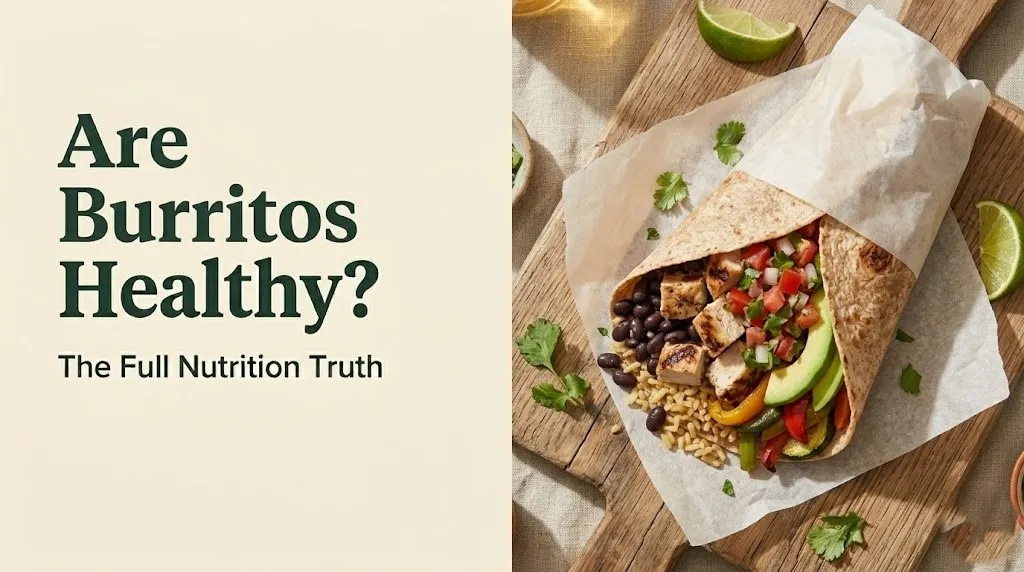
The Academy of Nutrition and Dietetics notes that meals combining lean protein and dietary fiber support sustained satiety and help moderate post-meal blood sugar response. Burritos, when built right, fit that description. The challenge is that most restaurant versions don’t.
Think of a burrito like a taco that grew up. The shell got bigger, the fillings multiplied, and the portion size tripled. The underlying ingredients can be excellent. The execution is where it often goes sideways.
Key facts about burrito health:
- Beans are one of the most nutrient-dense protein sources in the human diet
- Grilled chicken provides lean protein with minimal saturated fat
- Avocado adds monounsaturated fat, which the American Heart Association associates with heart health
- White rice and oversized flour tortillas contribute the highest refined carbohydrate load
- Cheese and sour cream add significant saturated fat and sodium
Is a Burrito Healthy?
Whether a specific burrito is healthy depends on three things: the ingredients chosen, the portion size, and how it was prepared. A single burrito is not inherently one thing nutritionally. It’s a delivery mechanism for a combination of foods, and those foods determine everything.
A burrito made with a 10-inch whole wheat tortilla, half a cup of black beans, four ounces of grilled chicken, salsa, lettuce, and a small amount of guacamole comes to roughly 450 to 520 calories. That’s a reasonable lunch or dinner for most adults.
The same burrito made with a 12-inch flour tortilla, white rice, carnitas cooked in lard, shredded cheddar, full sour cream, and guacamole lands between 900 and 1,200 calories. Same dish name. Radically different nutritional reality.
The USDA Dietary Guidelines for Americans recommend that adults eat a variety of protein foods, prioritize fiber-rich carbohydrates, and limit saturated fat to less than 10% of daily calories. A well-constructed burrito can fit within all three of those guidelines. An oversized restaurant version often breaks all three in one sitting.
| Burrito Version | Approx. Calories | Protein | Fiber | Sat. Fat |
|---|---|---|---|---|
| Homemade (lean, smaller) | 450-520 kcal | 32-38g | 9-12g | 4-6g |
| Restaurant standard | 700-900 kcal | 30-40g | 6-10g | 10-18g |
| Fully loaded restaurant | 950-1,200 kcal | 35-45g | 6-10g | 18-28g |
Burrito Calories
A typical burrito contains between 450 and 1,000 calories, with most restaurant versions landing in the 700 to 900 calorie range for a standard build. The flour tortilla alone accounts for 200 to 300 calories before you add a single filling.
This is the part that surprises most people. When you picture the caloric breakdown, you might focus on the meat or the cheese. But the tortilla is often the single largest caloric component in the entire dish.
A standard 10-inch flour tortilla contains approximately 200 to 220 calories and around 35 grams of carbohydrates. A 12-inch restaurant-grade flour tortilla can reach 290 to 320 calories. Switching to a corn tortilla drops that to roughly 60 to 90 calories per piece, though corn tortillas are smaller and you’d typically need two to three for the same filling volume.
According to USDA FoodData Central, a large flour tortilla (approximately 45 grams) provides 140 calories, 3 grams of protein, 1 gram of fat, and 26 grams of carbohydrates. Restaurant tortillas are typically larger than this standard reference weight.
| Tortilla Type | Calories | Carbs | Protein | Fiber |
|---|---|---|---|---|
| 10-inch flour tortilla | 200-220 kcal | 35g | 6g | 1-2g |
| 12-inch flour tortilla | 290-320 kcal | 52g | 8g | 2g |
| Whole wheat tortilla (10-inch) | 190-210 kcal | 34g | 6g | 3-4g |
| Corn tortilla (6-inch, 1 piece) | 60-70 kcal | 12g | 2g | 1-2g |
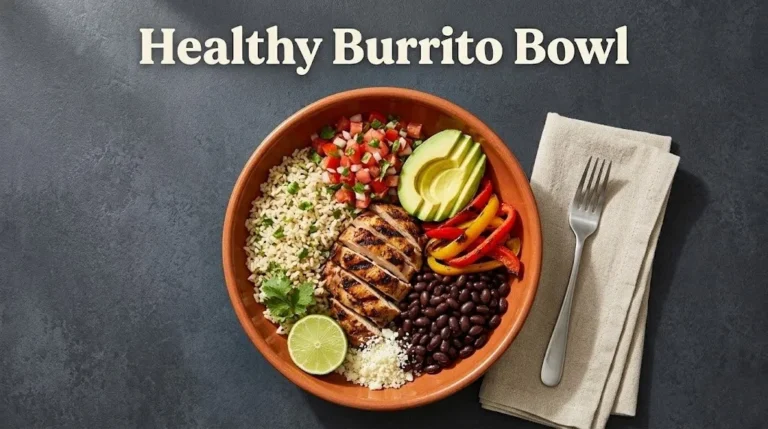
People watching their calorie intake should note that choosing a burrito bowl instead of a wrapped burrito saves 200 to 320 calories from the tortilla alone, while keeping all the fillings.
Key Takeaway: The tortilla is often the single biggest caloric contributor in a burrito. Choosing a smaller or whole wheat version, or skipping it for a bowl, is the highest-impact change you can make to the calorie count.
Burrito Nutrition Facts
A standard homemade chicken and bean burrito (10-inch whole wheat tortilla, 3 oz grilled chicken, 1/2 cup black beans, 1/4 cup brown rice, salsa, lettuce) delivers a genuinely well-rounded nutritional profile. Here’s what that looks like in real numbers.
Per serving, this version provides approximately 480 calories, 35 grams of protein, 58 grams of carbohydrates (with 10 grams from dietary fiber), and 10 grams of total fat. You’re also getting meaningful amounts of iron at roughly 20% of the Daily Value, folate (vitamin B9) at around 25% DV from the beans, and potassium from beans and avocado if included.
Black beans (Phaseolus vulgaris) deserve particular attention. They’re one of the best sources of plant-based protein and dietary fiber available at any price point. A half-cup of cooked black beans provides approximately 8 grams of protein, 8 grams of fiber, 128 micrograms of folate, and 305 milligrams of potassium, according to USDA FoodData Central.
Avocado (Persea americana), when used as guacamole or sliced, adds oleic acid, a monounsaturated fatty acid the American Heart Association identifies as beneficial for cardiovascular health when it replaces saturated fat in the diet.
Full nutritional snapshot of a balanced homemade burrito:
| Nutrient | Amount Per Burrito | % Daily Value (approx.) |
|---|---|---|
| Calories | 480-520 kcal | 24-26% (2,000 cal diet) |
| Protein | 33-38g | 66-76% |
| Total Carbs | 55-62g | 18-21% |
| Dietary Fiber | 9-12g | 32-43% |
| Total Fat | 10-14g | 13-18% |
| Saturated Fat | 3-5g | 15-25% |
| Sodium | 620-850mg | 27-37% |
| Iron | 3.5-4.5mg | 19-25% |
| Folate (B9) | 100-150mcg | 25-38% |
| Potassium | 580-720mg | 12-15% |
Burrito Protein Content
Burritos are a genuinely strong source of protein, often delivering 30 to 45 grams per serving depending on the protein filling and portion size. For context, Harvard T.H. Chan School of Public Health recommends that protein make up roughly 10 to 35% of total daily calories for most healthy adults.
A four-ounce serving of grilled chicken breast in a burrito contributes approximately 26 grams of protein on its own. Add a half-cup of black beans, and you’re gaining another 8 grams. That’s 34 grams of protein from just two ingredients.
Ground beef provides similar protein levels but comes with a higher saturated fat content. A four-ounce serving of 85% lean ground beef delivers about 22 grams of protein and 10 grams of fat, compared to grilled chicken breast at roughly 26 grams of protein and 3 grams of fat for the same weight.
Combining animal and plant proteins in the same meal, as a chicken-and-bean burrito does, increases the amino acid completeness of the meal. Beans are rich in lysine but lower in methionine. Chicken provides both in abundance. Together, they form a complete and well-distributed amino acid profile.
People following a vegan or plant-based diet can achieve comparable protein levels by using a combination of black beans, pinto beans, and hemp seeds or tofu-based filling, though this requires intentional planning.
Quick Tip:
- Grilled chicken and black beans together in one burrito deliver 30 to 36 grams of protein
- Choose double beans instead of rice for an extra 6 to 8 grams of protein with fewer refined carbs
- Tempeh (fermented soybeans) is a high-protein vegan filling option with a firm texture similar to ground meat
Burrito Sodium Content
Sodium is the biggest legitimate health concern with burritos, especially restaurant versions. A fully loaded restaurant burrito can contain 1,200 to 2,000 milligrams of sodium in a single serving.
The American Heart Association recommends that most adults consume no more than 2,300 milligrams of sodium per day, with an ideal target of 1,500 milligrams for people managing high blood pressure. A single restaurant burrito can cover your entire daily target in one meal.
The sodium comes from multiple sources simultaneously: the tortilla itself (200 to 400mg), seasoned meat (300 to 600mg), canned or pre-seasoned beans (200 to 400mg), cheese (200 to 300mg per ounce), and sour cream. Restaurant cooking also involves liberal salting at every stage of preparation.
Homemade burritos allow real control over sodium. Using dried beans cooked from scratch rather than canned reduces sodium dramatically. If using canned beans, rinsing them thoroughly reduces sodium content by approximately 40%, according to research published in the Journal of Food Science.
| Ingredient | Approximate Sodium |
|---|---|
| 10-inch flour tortilla | 350-420mg |
| 1/4 cup shredded cheddar | 180-220mg |
| 2 tbsp sour cream | 30-40mg |
| 1/2 cup canned beans (unrinsed) | 200-400mg |
| 1/2 cup canned beans (rinsed) | 100-180mg |
| 3 oz grilled chicken (seasoned) | 250-450mg |
| 2 tbsp salsa | 100-180mg |
People managing hypertension or heart disease should pay particular attention to burrito sodium levels and consider a registered dietitian’s guidance when planning meals that include restaurant food. Individual sodium tolerance varies based on kidney function, blood pressure medication, and overall dietary pattern.
Key Takeaway: Sodium is the biggest nutritional risk in restaurant burritos, with a single fully loaded order potentially delivering your entire daily recommended intake. Rinsing canned beans and making burritos at home cuts sodium by 40 to 60%.
Are Burritos High in Carbs?
Burritos are moderately to very high in carbohydrates, with most versions delivering 55 to 90 grams per serving. Whether that’s a problem depends entirely on your dietary goals and health context.
For reference, the USDA Dietary Guidelines for Americans suggest that carbohydrates make up 45 to 65% of total daily calories for most adults, which translates to roughly 225 to 325 grams of carbohydrates per day on a 2,000-calorie diet. A burrito with 70 grams of carbohydrates would represent 22 to 31% of that daily total.
The type of carbohydrates matters as much as the quantity. Black beans and whole wheat tortillas deliver complex carbohydrates and dietary fiber, which digest slowly and have a lower glycemic impact. White rice and standard flour tortillas deliver mostly refined carbohydrates, which digest quickly and produce a faster blood glucose spike.
Think of the difference like this: complex carbohydrates from beans behave like a slow-burning log in a fire, releasing energy steadily over hours. Refined carbohydrates from white rice and white flour tortillas are more like crumpled newspaper, burning fast and leaving you hungry again sooner.
People following a ketogenic diet or strict low-carbohydrate diet will find standard burritos difficult to accommodate. A burrito bowl without tortilla or rice, built with beans, grilled protein, salsa, and vegetables, can be reduced to approximately 25 to 35 grams of net carbohydrates, making it workable within lower-carb frameworks.
| Carb Source in Burrito | Approx. Carbs | Fiber | Net Carbs |
|---|---|---|---|
| 10-inch flour tortilla | 35g | 1-2g | 33-34g |
| 1/2 cup white rice | 22g | 0.3g | 21.7g |
| 1/2 cup black beans | 20g | 8g | 12g |
| 1/2 cup brown rice | 22g | 1.8g | 20.2g |
| 2 tbsp salsa | 2g | 0.5g | 1.5g |
Is a Burrito Healthy for Weight Loss?
A burrito can be part of a weight-loss eating plan when it’s built to control total calories and includes enough protein and fiber to keep you full. The key is portion control and ingredient selection.
A burrito delivering 450 to 550 calories with 30 to 40 grams of protein and 9 to 12 grams of dietary fiber is a genuinely satisfying meal that won’t derail calorie targets for most adults. Research published in the American Journal of Clinical Nutrition found that higher dietary fiber intake is consistently associated with greater satiety and lower overall calorie consumption throughout the day.
The weight-loss case against burritos comes from restaurant portion sizes. A standard fast-casual burrito is designed to be filling and indulgent, not calorie-controlled. The calorie density of a fully loaded version can equal an entire day’s worth of lunch-calorie budget in one serving.
Practical weight-loss strategies for burritos include:
- Choosing a burrito bowl instead of a wrapped burrito saves 200 to 320 calories
- Skipping white rice and doubling the vegetables reduces calories by 100 to 180
- Choosing salsa over sour cream saves 60 calories and 5 grams of saturated fat per serving
- Ordering a half portion or taking half home if the portion looks oversized
- Building at home where every ingredient is controlled
The protein and fiber combination in a well-built burrito can support weight management goals meaningfully. What undermines it is the reflexive addition of high-calorie extras: guacamole (150 to 230 calories per serving), sour cream (60 to 120 calories), and oversized tortillas.
Are Chicken Burritos Healthy?
Chicken burritos are among the healthier protein choices in the burrito category, primarily because grilled chicken breast is a low-fat, high-protein ingredient that keeps the overall saturated fat content low. A well-built chicken burrito is one of the most nutritionally balanced fast-casual meals available.
A 3- to 4-ounce serving of grilled chicken breast provides 25 to 28 grams of protein, around 3 grams of total fat, and less than 1 gram of saturated fat, according to USDA FoodData Central. Compare that to carnitas (braised pork), which contains roughly 22 grams of protein but 12 to 16 grams of fat for the same weight.
The preparation method matters. Grilled or roasted chicken stays lean. Chicken marinated in oil and cooked with added fats absorbs significantly more calories. At chain restaurants, asking how the protein is prepared is a reasonable question that front-of-house staff can usually answer.
Chicken is a complete protein, meaning it contains all nine essential amino acids the human body cannot synthesize independently. For people managing their weight or building muscle mass, it’s one of the most efficient protein sources available at a moderate calorie cost.
People with poultry allergies, though rare, must obviously avoid chicken entirely and can substitute grilled fish, tofu, or tempeh for comparable protein profiles. Halal-certified chicken is available at many restaurant chains and is an important consideration for Muslim consumers.
| Protein Filling | Calories (4 oz) | Protein | Total Fat | Saturated Fat |
|---|---|---|---|---|
| Grilled chicken breast | 140-160 kcal | 26-28g | 3g | 0.8g |
| Ground beef (85% lean) | 240-260 kcal | 22g | 17g | 6.5g |
| Carnitas (braised pork) | 240-280 kcal | 22g | 13-16g | 5g |
| Black beans (1/2 cup) | 110-120 kcal | 7-8g | 0.5g | 0.1g |
| Grilled fish (tilapia) | 110-130 kcal | 23g | 2.5g | 0.9g |
Key Takeaway: Grilled chicken is the leanest animal protein option for burritos, delivering high protein with minimal saturated fat. The burrito’s overall healthfulness still depends on the tortilla, rice, and extras layered around it.
Are Beef Burritos Healthy?
Beef burritos can be part of a healthy diet, but they carry a higher saturated fat load than chicken or plant-based versions. The healthfulness depends heavily on the type of beef used and how it’s prepared.
Ground beef at 80% lean contains approximately 17 grams of fat per 4-ounce serving, with about 6.5 grams of saturated fat. That’s a substantial portion of the American Heart Association’s recommended daily saturated fat limit, which the AHA sets at no more than 5 to 6% of total daily calories for people focused on heart health.
Choosing a leaner ground beef (90% or 93% lean) drops total fat to around 8 to 10 grams per serving and saturated fat to roughly 3 to 4 grams. Selecting steak-based fillings like carne asada (grilled skirt steak) can be comparable to chicken in fat content if prepared without added oils and from a lean cut.
Beef does offer real nutritional benefits that shouldn’t be ignored. It’s one of the most bioavailable sources of zinc, iron (as heme iron, which absorbs more efficiently than plant iron), and vitamin B12. These nutrients are harder to obtain in adequate amounts from plant-only diets.
People with elevated LDL cholesterol or cardiovascular risk factors should consider limiting high-fat beef fillings and opting for leaner cuts or plant-based protein. A registered dietitian who specializes in cardiovascular nutrition can help determine appropriate red meat intake within an overall heart-healthy eating pattern.
Quick Tip:
- Carne asada from a lean skirt steak cut is often lower in fat than pre-seasoned ground beef
- Draining cooked ground beef and rinsing with hot water removes roughly 50% of the fat, per research from Iowa State University’s Department of Food Science
- Swapping half the ground beef for black beans reduces saturated fat while maintaining protein and adding fiber
Are Veggie Burritos Healthy?
Veggie burritos are among the most nutritionally well-rounded burrito options available, provided they’re built with substance rather than just rice and cheese. A properly built veggie burrito with beans, roasted vegetables, salsa, and guacamole delivers excellent fiber, plant protein, and a range of micronutrients.
Black beans or pinto beans as the primary protein source provide 7 to 8 grams of protein and 7 to 8 grams of dietary fiber per half-cup serving. Add roasted bell peppers (Capsicum annuum), zucchini, corn, and onion and you’re getting vitamin C (ascorbic acid), vitamin B6 (pyridoxine), and carotenoids like beta-carotene alongside meaningful amounts of potassium.
The common pitfall with veggie burritos is that they sometimes compensate for missing meat with extra cheese and sour cream, which adds back significant saturated fat without improving protein quality. A veggie burrito relying primarily on cheese for protein is not the same nutritional proposition as a legume-forward one.
According to research from the Harvard T.H. Chan School of Public Health, diets higher in plant-based proteins from legumes are associated with lower rates of cardiovascular disease and type 2 diabetes compared to diets high in red and processed meat. A legume-centered veggie burrito aligns well with that evidence base.
Veggie burritos are naturally suitable for vegetarians and can be made vegan by omitting cheese and sour cream, substituting cashew cream or a coconut-based alternative. They’re also lower in cholesterol than meat-based versions. People with irritable bowel syndrome (IBS) should note that beans are high in fermentable oligosaccharides, which can trigger symptoms in sensitive individuals.
| Veggie Burrito Component | Benefit | Watch Out For |
|---|---|---|
| Black beans | High fiber, plant protein, folate | Gas/bloating for some; rinse canned beans |
| Roasted vegetables | Vitamins C, B6, carotenoids | Often underseasoned in restaurant versions |
| Brown rice | Complex carbs, magnesium | Still adds 200+ calories per half-cup |
| Guacamole | Monounsaturated fat, potassium | Calorie-dense; 2 tbsp = 50-80 kcal |
| Cheese | Calcium, protein | High in sodium and saturated fat |
Key Takeaway: Veggie burritos built around legumes and roasted vegetables deliver excellent fiber and plant protein. Watch out for versions that swap meat protein for excess cheese and sour cream, which significantly raises saturated fat without meaningful protein gains.
Are Chipotle Burritos Healthy?
Chipotle Mexican Grill burritos can be healthy choices, but only with deliberate ingredient selection. A fully loaded Chipotle burrito is one of the most calorie-dense fast-casual options in American food service, often exceeding 1,000 calories in a standard build.
According to Chipotle’s published nutrition information, a burrito with a flour tortilla, white rice, black beans, chicken, cheese, sour cream, and guacamole contains approximately 1,075 calories, 37 grams of fat, 107 grams of carbohydrates, and 1,755 milligrams of sodium. That represents roughly 85% of the daily recommended sodium intake for most adults in a single meal.
The same proteins and fillings served as a burrito bowl without tortilla, with brown rice substituted for white, and with salsa instead of sour cream comes to roughly 570 to 640 calories with around 45 grams of protein and 8 to 10 grams of fiber. That’s a dramatically different nutritional profile from the same restaurant.
Chipotle publicly discloses ingredient sourcing and nutritional data, which makes it easier to make informed decisions than at many competitors. Customers can use the online nutrition calculator to build and evaluate their order before arriving. Menus and nutritional values can vary by location, and Chipotle updates its offerings periodically, so confirming current figures on their official nutrition page before ordering is the most reliable approach.
| Chipotle Build Option | Calories | Protein | Sodium | Fiber |
|---|---|---|---|---|
| Burrito (fully loaded, chicken) | ~1,075 kcal | 53g | 1,755mg | 10g |
| Burrito bowl (chicken, salsa, beans) | ~565 kcal | 45g | 1,050mg | 9g |
| Burrito (chicken, no rice, no cheese) | ~650 kcal | 48g | 1,200mg | 11g |
Are Taco Bell Burritos Healthy?
Taco Bell burritos are generally higher in sodium and processed ingredients than homemade versions but offer some options that fit within a reasonable dietary framework when chosen thoughtfully. The brand’s menu is broad, and nutritional quality varies considerably across items.
The Taco Bell Bean Burrito is one of the chain’s better-value nutritional options at approximately 350 to 380 calories, 13 grams of protein, 7 grams of fiber, and around 1,020 milligrams of sodium. It’s not a low-sodium choice, but it is one of the most fiber-rich items on a major fast food menu.
The Taco Bell Crunchwrap Supreme or fully loaded Burrito Supreme climbs to 490 to 560 calories with 1,200 to 1,500 milligrams of sodium. Adding nacho cheese sauce, seasoned beef, and creamy sauces compounds both calorie and sodium totals quickly.
Taco Bell’s Fresco menu style substitutes fresh salsa for cheese and sour cream on many items, reducing calories by 25 to 50 per item and cutting saturated fat. For someone eating at Taco Bell regularly, this is one of the most practical swaps available.
Taco Bell menus vary by location and change with limited-time promotions. Nutritional data is available on the Taco Bell website, and the chain encourages customers to verify current figures there before ordering. Anyone managing a specific medical condition should cross-reference their dietary targets against the current published nutrition information.
Quick Tip:
- The Taco Bell Bean Burrito ordered Fresco-style drops calories to approximately 330 and reduces fat by 3 to 4 grams
- Avoiding the Quesarito (a burrito wrapped in a quesadilla) saves over 300 calories and 15 grams of fat
- Requesting no sour cream or cheese saves approximately 100 to 150 calories per item
Homemade Burrito vs Restaurant Burrito
Homemade burritos are almost always lower in calories, sodium, and saturated fat than restaurant versions because you control every ingredient, portion size, and preparation method. The difference is not trivial.
A comparable homemade chicken and black bean burrito averages 450 to 550 calories and 620 to 900 milligrams of sodium. The restaurant equivalent at a major fast-casual chain averages 700 to 1,100 calories and 1,100 to 1,800 milligrams of sodium. That’s not a small margin. That’s a meal versus a challenge.
Restaurant kitchens often add oils and butter during cooking that don’t appear in listed nutritional summaries. Chicken is sometimes marinated in fat-heavy sauces. Tortillas may be warmed on a greased griddle. Rice is frequently prepared with added sodium and fat for flavor. These additions are invisible to the diner but register clearly in the calorie and sodium count.
Cooking at home also lets you use dried beans instead of canned (lower sodium), control the tortilla size and type, choose leaner cuts of meat, and manage guacamole and cheese portions precisely.
| Factor | Homemade Burrito | Restaurant Burrito |
|---|---|---|
| Average calories | 450-550 kcal | 700-1,100 kcal |
| Average sodium | 620-900mg | 1,100-1,800mg |
| Saturated fat | 3-5g | 10-20g |
| Fiber | 9-12g | 6-10g |
| Ingredient control | Full | None |
| Prep time | 20-30 min | 0 min (ordered) |
For families eating burritos regularly, making them at home two to three times per week while using restaurants as an occasional option is a practical strategy that significantly improves the overall nutritional profile of burrito consumption without eliminating the convenience or pleasure of restaurant meals.
Key Takeaway: The same burrito made at home versus ordered at a restaurant can differ by 300 to 600 calories and 500 to 900 milligrams of sodium. Ingredient control is the single biggest nutritional advantage of cooking at home.
How to Make a Healthy Burrito
A healthy homemade burrito starts with choosing the right tortilla, a lean protein, legumes for fiber, and controlled amounts of cheese and fat. Here’s a step-by-step method for four servings.
Ingredients (for 4 burritos):
- 4 large whole wheat tortillas (10-inch)
- 12 oz (340g) chicken breast, trimmed of fat
- 1 cup black beans (Phaseolus vulgaris), drained and rinsed if canned
- 1 cup cooked brown rice
- 1/2 cup fresh salsa (pico de gallo)
- 1/4 cup shredded low-fat cheddar cheese
- 1/2 avocado (Persea americana), sliced (or 4 tbsp prepared guacamole)
- 1 tsp cumin
- 1 tsp garlic powder
- 1/2 tsp smoked paprika
- Salt to taste (use sparingly)
- 1 tsp olive oil
Instructions:
- Pound the chicken breast to an even thickness (about 3/4 inch) with a meat mallet or rolling pin. Even thickness prevents overcooking on thin edges while thicker parts remain underdone.
- Combine cumin, garlic powder, smoked paprika, and a small pinch of salt. Rub the spice mixture evenly over both sides of the chicken.
- Heat olive oil in a heavy-bottomed skillet over medium-high heat. Cook chicken for 5 to 6 minutes per side, or until internal temperature reaches 165°F (74°C) on an instant-read thermometer.
- Transfer chicken to a cutting board. Rest for 5 minutes before slicing. This resting period allows the juices to redistribute, keeping the meat moist.
- Warm the black beans in a small saucepan over medium heat for 3 to 4 minutes, or microwave for 90 seconds in a covered bowl. Do not add salt at this stage if using canned beans.
- Warm each tortilla for 20 to 30 seconds per side in a dry skillet over medium heat, or wrap all four in a damp paper towel and microwave for 45 seconds.
- Lay each tortilla flat. Spread 1/4 cup brown rice across the lower third. Add 1/4 cup black beans. Arrange sliced chicken (roughly 3 oz per burrito) on top. Add 2 tablespoons salsa, 1 tablespoon cheese, and a few avocado slices.
- Fold the sides of the tortilla inward, then roll from the filled edge upward, keeping tension on the tortilla as you roll. Serve immediately.
Approximate nutrition per burrito: 470 to 510 calories, 35 to 38 grams protein, 55 to 60 grams carbohydrates, 10 grams fiber, 10 to 13 grams fat, 3 to 4 grams saturated fat, 620 to 750 milligrams sodium.
For a gluten-free version, replace the whole wheat tortilla with a large corn tortilla or a certified gluten-free grain-based wrap. People with dairy allergies can omit the cheese entirely or use a plant-based cheese alternative.
Are Burritos Good for Diabetics?
Burritos can fit into a diabetes-friendly eating plan, but they require careful ingredient selection and attention to carbohydrate type and portion size. The standard restaurant version, with white rice and a large flour tortilla, produces a high glycemic load that can cause rapid blood glucose elevation.
The American Diabetes Association recommends that people with type 2 diabetes prioritize foods with a lower glycemic index and high dietary fiber content, as fiber slows the digestion of carbohydrates and moderates post-meal blood glucose response. Black beans and pinto beans are explicitly identified as beneficial foods in diabetes management guidelines because of their combination of protein and fiber.
Switching from white rice to a reduced rice portion or cauliflower rice significantly reduces the carbohydrate load. Replacing a flour tortilla with a corn tortilla (lower in total carbohydrates per piece) or choosing a burrito bowl without any tortilla further reduces glycemic impact.
A diabetes-friendly burrito might look like this: a corn tortilla or bowl, half a cup of black beans, 3 ounces of grilled chicken, roasted vegetables, fresh salsa, and sliced avocado. This version delivers approximately 30 to 35 grams of net carbohydrates, 30 to 35 grams of protein, and 10 grams of fiber.
People managing type 1 or type 2 diabetes who want to include burritos in their eating plan regularly should work with a registered dietitian who specializes in diabetes nutrition to determine appropriate portion sizes and carbohydrate targets based on their individual insulin sensitivity, medication protocol, and overall dietary pattern.
| Modification | Carb Reduction | Glycemic Benefit |
|---|---|---|
| Corn tortilla vs flour (10-inch) | Save ~22g carbs | Lower glycemic index |
| Skip white rice | Save ~22g carbs | Eliminates highest-GI component |
| Use cauliflower rice | Save ~18g carbs | Very low glycemic impact |
| Black beans over refried | Net difference minimal | Higher fiber, lower added fat |
| Salsa over sour cream | No carb change | Lower saturated fat |
Key Takeaway: People managing blood glucose can eat burritos by choosing corn tortillas or bowls, using beans as the primary carbohydrate source, and eliminating white rice. The combination of protein, fiber, and healthy fat in a well-built burrito can actually support more stable post-meal blood glucose compared to many other fast-food options.
Frequently Asked Questions About Burritos
How many calories are in a typical burrito?
A typical burrito contains between 450 and 1,000 calories depending on size, ingredients, and whether it’s homemade or from a restaurant.
A homemade version with lean protein, beans, and moderate toppings averages 450 to 550 calories.
Restaurant burritos at major chains like Chipotle or Taco Bell range from 350 calories for a basic bean burrito to over 1,000 calories for a fully loaded version with rice, cheese, sour cream, and guacamole.
Is a burrito healthy for weight loss?
A burrito can support weight loss when it’s built with lean protein, high-fiber beans, and controlled portions.
The key is avoiding the calorie-dense add-ons: large amounts of cheese, sour cream, white rice, and oversized tortillas are what push burritos into calorie ranges that undermine weight goals.
Choosing a burrito bowl instead of a wrapped version and skipping or reducing sour cream saves 250 to 400 calories without sacrificing protein or flavor.
What is the healthiest burrito to order at a restaurant?
The healthiest restaurant burrito is built as a bowl, with grilled chicken or black beans as the protein, fresh salsa, lettuce, and a small amount of guacamole.
Skipping the flour tortilla, white rice, and sour cream eliminates the three highest-calorie, lowest-fiber components in a standard restaurant burrito.
At Chipotle, this combination delivers approximately 450 to 550 calories, 40 to 50 grams of protein, and under 1,100 milligrams of sodium.
Are chicken burritos healthier than beef burritos?
Grilled chicken burritos are generally lower in saturated fat and total calories than beef burritos using standard ground beef.
Grilled chicken breast contains around 3 grams of total fat per 4-ounce serving, while 85% lean ground beef delivers approximately 17 grams of fat for the same weight.
For people monitoring saturated fat intake due to cardiovascular risk factors, grilled chicken is the more favorable choice, though lean cuts of beef like carne asada from a trimmed skirt steak can narrow that gap significantly.
Can diabetics eat burritos?
Yes, people with type 2 diabetes can eat burritos when they choose ingredients that moderate the carbohydrate load and prioritize fiber.
The practical approach is to skip white rice and flour tortillas, and instead use corn tortillas or build a bowl with black beans as the primary carbohydrate source, which slows glucose absorption due to high fiber content.
Anyone managing diabetes with insulin or medication should discuss specific carbohydrate targets with a registered dietitian who can account for their individual treatment plan and metabolic response.
Burritos are a genuinely flexible food. The same basic dish can be a well-balanced, protein-rich meal or a calorie-dense indulgence depending entirely on what goes into it and how much of it you eat. Nothing about the burrito format is inherently problematic.
The practical takeaway is this: build around beans and lean protein, treat the tortilla as a calorie variable worth controlling, keep sodium in check by making them at home when possible, and treat restaurant versions as a deliberate choice rather than a default.
If a burrito is part of your regular weekly eating, making it at home a couple of times gives you the nutrition profile you want, and eating it out occasionally lets you enjoy the experience without overthinking every gram.