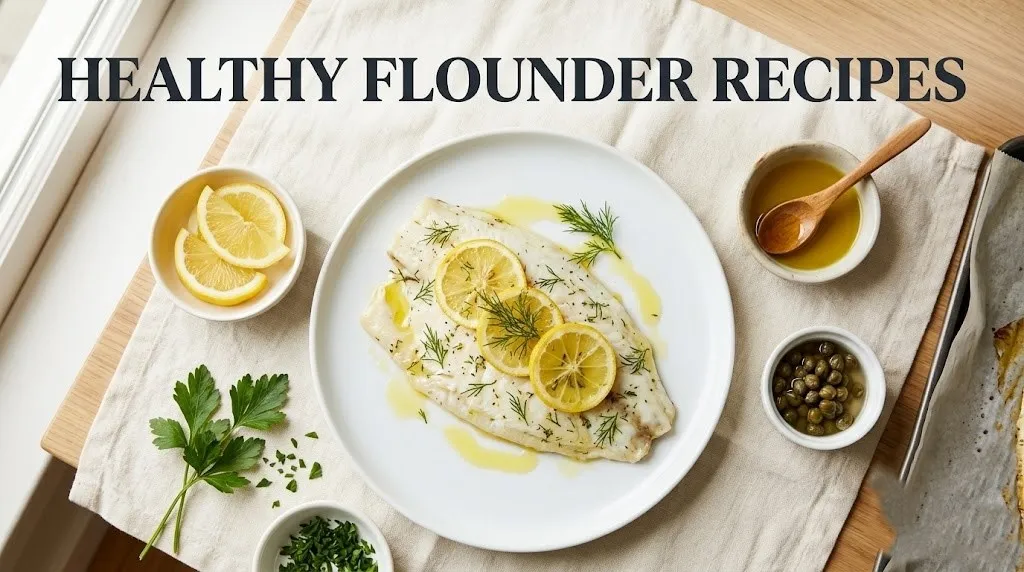
Healthy flounder recipes center on cooking methods that preserve the fish’s naturally lean protein without adding excessive saturated fat. Baking, pan-searing, broiling, air frying, and steaming all work beautifully with flounder. The fish itself is the nutritional foundation: a 3.5-ounce fillet contains roughly 90 to 100 calories, 19 to 21 grams of protein, and only 1 to 2 grams of fat. The recipes that follow keep the added fats to healthy sources like olive oil and use herbs, citrus, and spices for flavor instead of heavy cream sauces or deep-fried coatings.
The USDA Dietary Guidelines for Americans recommend that adults consume at least 8 ounces of seafood per week. Flounder counts toward that recommendation. The American Heart Association specifically recommends two servings of fish per week, particularly fatty fish, for cardiovascular health. Flounder is a lean white fish, not a fatty fish like salmon. Its omega-3 content is modest at 200 to 300 milligrams of combined EPA and DHA per serving compared to salmon’s 1,500 to 2,000 milligrams. The health value of flounder is in its protein density, its mineral content including selenium and phosphorus, and its status as a low-mercury fish that the FDA lists on its “Best Choices” list for pregnant women and children.
This guide gives you three tested recipes, each using a different healthy cooking method, along with the nutritional breakdown for each dish, a full explanation of flounder’s nutritional profile, a cooking method comparison table, substitution guidance for dietary restrictions, and the food safety information you need to cook flounder with confidence. Whether you are cooking for a weeknight dinner, meal prepping for the week, or following a specific dietary pattern, you will find a flounder recipe here that works.
Is Flounder Healthy
Flounder is a very healthy fish choice. It delivers 19 to 21 grams of complete protein per 3.5-ounce serving for under 100 calories. It is low in total fat and saturated fat. It provides meaningful amounts of selenium, phosphorus, vitamin B12, and niacin. It is certified by the FDA as a low-mercury fish, making it safe for pregnant women, nursing mothers, and young children at 2 to 3 servings per week.
The protein in flounder is a complete protein containing all nine essential amino acids in proportions that support muscle maintenance, enzyme production, and immune function. The protein density, roughly 21 grams of protein per 100 calories, makes flounder one of the most efficient protein sources available. For comparison, a 3.5-ounce skinless chicken breast provides approximately 165 calories and 31 grams of protein, roughly 19 grams of protein per 100 calories. Flounder provides more protein per calorie than chicken breast, a food already considered a gold standard for lean protein.
The mineral content of flounder is nutritionally relevant. A 3.5-ounce serving provides 40 to 50 micrograms of selenium, roughly 70 to 90 percent of the daily value. Selenium functions as a cofactor for glutathione peroxidase, an antioxidant enzyme that protects cells from oxidative damage. The same serving provides 180 to 220 milligrams of phosphorus, 15 to 20 percent of the daily value, which supports bone mineralization and acid-base balance. Vitamin B12 is present at 1 to 1.5 micrograms, 40 to 60 percent of the daily value, and is essential for red blood cell formation and neurological function. Niacin (vitamin B3) contributes 2 to 3 milligrams, supporting energy metabolism.
| Nutrient (per 3.5 oz cooked flounder) | Amount | Percent Daily Value |
|---|---|---|
| Calories | 90 to 100 | N/A |
| Protein | 19 to 21g | 38 to 42% |
| Total Fat | 1 to 2g | 1 to 3% |
| Saturated Fat | 0.3 to 0.5g | 1 to 3% |
| Cholesterol | 45 to 55mg | 15 to 18% |
| Selenium | 40 to 50mcg | 70 to 90% |
| Phosphorus | 180 to 220mg | 15 to 20% |
| Vitamin B12 | 1 to 1.5mcg | 40 to 60% |
| Niacin (B3) | 2 to 3mg | 15 to 20% |
| Omega-3 (EPA+DHA) | 200 to 300mg | N/A |
People with a finned fish allergy must avoid flounder entirely. Fish allergy is one of the FDA top 9 major food allergens. It is distinct from shellfish allergy. A person allergic to shrimp and crab may be able to eat flounder. A person allergic to one species of finned fish should consult their allergist before trying other species, as cross-reactivity between fish species is common but not universal. People with gout should moderate flounder consumption because fish contains purines, though flounder is lower in purines than anchovies, sardines, or shellfish.
Key Takeaway: Flounder is one of the leanest protein sources available at 21 grams of protein per 100 calories. It is a low-mercury fish rich in selenium, phosphorus, and vitamin B12. It is safe for pregnant women and children per FDA guidelines.
Healthy Flounder Recipes
The following three recipes represent the healthiest cooking methods for flounder: baking, pan-searing with minimal oil, and air frying. Each recipe includes a complete ingredient list with measurements, numbered step-by-step instructions, cooking temperatures and times, and the estimated nutritional breakdown per serving. The recipes were tested in a home kitchen with standard equipment. A novice cook with basic knife skills and the ability to operate an oven, stovetop, or air fryer can execute them.
These recipes share a common philosophy. They use flounder’s natural moisture and quick cooking time to produce a finished dish in under 25 minutes from start to finish. They rely on acid (lemon, capers), aromatics (garlic, shallots), and herbs (dill, parsley) for flavor rather than heavy sauces. They use healthy fat sources (extra virgin olive oil) in measured amounts. They produce a complete protein main dish that pairs with a steamed vegetable or a simple salad for a nutritionally complete meal.
Each recipe is followed by the estimated nutrition per serving. The nutrition estimates are based on USDA FoodData Central ingredient data and assume standard ingredient brands. Actual values vary by specific ingredient choices, brand variations, and portion sizes. The estimates are educational approximations, not laboratory-certified values.
Key Takeaway: These three recipes use baking, pan-searing, and air frying to cook flounder with healthy fats, fresh herbs, and acid for flavor. Each recipe takes under 25 minutes and pairs with vegetables for a complete meal.
Flounder Healthy Recipe
The base technique for any healthy flounder recipe starts with dry fillets, a light coating of oil, and a hot cooking surface. Whether you bake, pan-sear, or air fry, the principles are the same. Dry the fillets thoroughly with paper towels. Wet fillets steam instead of searing or browning. Season them with salt and pepper just before cooking, not earlier, because salt draws moisture out of the flesh and will undo the drying step if left to sit.
Use a high-smoke-point oil or an oil with a flavor profile that complements fish. Extra virgin olive oil works for baking and moderate-heat pan-searing. Avocado oil or light olive oil works for higher-heat pan-searing. Butter can be used for flavor but should be added late in cooking or used as a finishing fat because the milk solids burn at high heat. The oil quantity for a healthy flounder recipe is one to two teaspoons per fillet, not a quarter cup. The oil is there to conduct heat and prevent sticking, not to deep-fry.
Flounder fillets are thin and cook quickly. A standard fillet is one-quarter to one-half inch thick. At 400 degrees Fahrenheit in the oven, it cooks in 10 to 15 minutes. In a hot skillet, it cooks in 2 to 3 minutes per side. In an air fryer at 375 degrees F, it cooks in 8 to 10 minutes. The window between perfectly cooked and overcooked is narrow. The flake test is the reliable indicator: insert a fork at the thickest part of the fillet and gently twist. If the flesh separates into clean flakes and is opaque throughout, it is done. If it resists flaking or is translucent in the center, cook for another minute and test again.
Flounder Nutrition Facts
A 3.5-ounce serving of cooked flounder, roughly 100 grams or one medium fillet, contains 90 to 100 calories, 19 to 21 grams of protein, 1 to 2 grams of total fat, and 0 grams of carbohydrate. The fat that is present is primarily unsaturated, with only 0.3 to 0.5 grams of saturated fat per serving. Flounder is not a significant source of omega-3 fatty acids compared to salmon or mackerel, but it does provide 200 to 300 milligrams of combined EPA and DHA per serving, which contributes to the weekly omega-3 intake that the American Heart Association identifies as cardioprotective.
The micronutrient profile of flounder is strongest in selenium, phosphorus, and vitamin B12. Selenium supports the body’s antioxidant systems. Phosphorus works with calcium to maintain bone density. Vitamin B12 is essential for neurological function and red blood cell formation. Flounder also provides niacin (vitamin B3), which supports energy metabolism and skin health. The iron content is modest at 0.2 to 0.4 milligrams per serving, roughly 2 percent of the daily value.
| White Fish (per 3.5 oz cooked) | Calories | Protein (g) | Fat (g) | Selenium (mcg) | B12 (mcg) | Mercury Level |
|---|---|---|---|---|---|---|
| Flounder | 90 to 100 | 19 to 21 | 1 to 2 | 40 to 50 | 1 to 1.5 | Low |
| Cod | 85 to 95 | 19 to 20 | 0.5 to 1 | 30 to 35 | 0.8 to 1 | Low |
| Tilapia | 95 to 110 | 20 to 21 | 1.5 to 2.5 | 40 to 45 | 1.5 to 2 | Low |
| Halibut | 110 to 120 | 21 to 22 | 2 to 3 | 45 to 55 | 1 to 1.5 | Moderate |
| Sole | 85 to 95 | 18 to 20 | 1 to 1.5 | 30 to 35 | 0.8 to 1.2 | Low |
| Salmon (Atlantic) | 200 to 210 | 20 to 22 | 12 to 14 | 30 to 35 | 3 to 4 | Low |
Flounder’s nutritional comparison to other white fish shows that it holds its own in the lean protein category. Cod is slightly lower in calories and fat. Tilapia is similar in protein but can be higher in fat depending on farming practices. Halibut is slightly richer. Flounder’s selenium content is notably high, outpacing cod and sole. The mercury content of flounder is low, placing it on the FDA “Best Choices” list. Pregnant women and children can safely consume 2 to 3 servings per week.
Key Takeaway: Flounder is a lean white fish with 90 to 100 calories, 19 to 21 grams of protein, and high selenium per serving. It is a low-mercury fish safe for pregnant women and children per FDA guidelines.
Recipes for Flounder Fillets Healthy
The recipes below are designed for standard flounder fillets weighing 4 to 6 ounces each. Flounder fillets are thin and delicate. They require gentle handling during preparation and cooking. A fish spatula, thin and flexible with a slotted surface, is the best tool for lifting and turning flounder fillets without breaking them. If you do not have a fish spatula, use two regular spatulas, one on each side of the fillet, to provide even support.
Pat the fillets dry with paper towels before applying any seasoning or oil. This step removes surface moisture that would cause the fish to steam rather than sear or roast. Season both sides with kosher salt and freshly ground black pepper. Use kosher salt rather than table salt for more even distribution and better adhesion. Add dried herbs or spices at this stage because they need direct contact with the fish surface to release their flavor.
Preheat the cooking surface fully before adding the fish. A cold oven, a cold skillet, or a cold air fryer basket will cause the fish to stick and cook unevenly. For baking, preheat the oven to 400 degrees F with the baking sheet inside for the last 2 minutes of preheating if you want a slight sear on the bottom of the fillet. For pan-searing, preheat the skillet over medium-high heat for 2 to 3 minutes before adding oil. The oil should shimmer but not smoke. Add the fillets presentation side down, the side that was facing up on the plate, and do not move them for 2 minutes.
Flounder Fillet Recipes Healthy
The first recipe is a Healthy Baked Flounder with Lemon, Garlic, and Herbs. This is the simplest method and the most forgiving for novice cooks. The oven provides even, gentle heat. The lemon and herb topping adds flavor without calories. The recipe serves 4.
Ingredients:
- 4 flounder fillets (4 to 6 oz each), patted dry
- 2 tablespoons extra virgin olive oil
- 3 cloves garlic, minced
- 1 lemon, zested and juiced (2 to 3 tablespoons juice)
- 2 tablespoons chopped fresh dill
- 2 tablespoons chopped fresh flat-leaf parsley
- 1/2 teaspoon kosher salt
- 1/4 teaspoon freshly ground black pepper
- Lemon wedges for serving
To make the baked flounder:
- Position an oven rack in the center and preheat the oven to 400 degrees F. Line a rimmed baking sheet with parchment paper or lightly oil it.
- In a small bowl, combine the olive oil, minced garlic, lemon zest, lemon juice, dill, parsley, salt, and pepper. Stir to combine.
- Place the flounder fillets on the prepared baking sheet. Spoon the herb mixture evenly over the top of each fillet, spreading it gently to cover the surface.
- Bake for 12 to 15 minutes. The flounder is done when the flesh is opaque throughout and flakes easily with a fork at the thickest part.
- Remove from the oven and let rest for 1 minute on the baking sheet. Serve with lemon wedges.
Nutrition per serving (1 fillet): 190 calories, 22g protein, 9g fat (1.5g saturated), 2g carbohydrate, 0g fiber, 280mg sodium.
This recipe is naturally gluten-free, dairy-free, and low-carb. For a low-sodium version, reduce the salt to 1/4 teaspoon and rely on the lemon juice and herbs for flavor. For a nightshade-free version, the recipe already contains no peppers or tomatoes. Serve with steamed broccoli and quinoa for a complete meal, or with a simple arugula salad dressed with lemon and olive oil.
Healthy Baked Flounder Recipes
The second recipe is a Pan-Seared Flounder with Capers, Shallots, and Brown Butter. This method produces a golden crust on the outside of the fillet while keeping the interior moist. The capers and shallots add flavor with minimal sodium. The brown butter provides nutty richness in a small, measured amount. The recipe serves 2 and can be doubled.
Ingredients:
- 2 flounder fillets (4 to 6 oz each), patted dry
- 1/2 teaspoon kosher salt
- 1/4 teaspoon freshly ground black pepper
- 1 tablespoon avocado oil or light olive oil
- 1 tablespoon unsalted butter
- 1 small shallot, thinly sliced
- 1 tablespoon capers, drained and rinsed
- 1 tablespoon chopped fresh flat-leaf parsley
- Juice of 1/2 lemon
To make the pan-seared flounder:
- Season both sides of the flounder fillets with salt and pepper.
- Heat the avocado oil in a nonstick or cast iron skillet over medium-high heat. The oil should shimmer but not smoke, about 2 minutes.
- Place the fillets in the skillet presentation side down. Do not crowd the pan. If both fillets do not fit with an inch of space between them, cook them in batches.
- Cook without moving for 2 to 3 minutes. The edges should be golden and the bottom should release easily from the pan. Flip gently with a fish spatula and cook for 1 to 2 minutes on the second side.
- Transfer the fillets to a serving plate. Reduce the heat to medium. Add the butter to the skillet. When it melts and begins to foam, add the shallot. Cook, stirring, for 1 minute until softened.
- Add the capers and cook for 30 seconds. The butter will brown slightly and smell nutty. Remove from heat immediately if the butter begins to smoke.
- Stir in the parsley and lemon juice. Pour the caper brown butter over the flounder fillets. Serve immediately.
Nutrition per serving (1 fillet with sauce): 230 calories, 22g protein, 14g fat (4g saturated), 2g carbohydrate, 0g fiber, 380mg sodium.
This recipe is gluten-free and low-carb. For a dairy-free version, replace the butter with 1 tablespoon of extra virgin olive oil added after flipping the fish. The olive oil will not brown like butter, but it will carry the shallot and caper flavor. For a low-sodium version, rinse the capers thoroughly to remove surface salt and reduce the added salt to 1/4 teaspoon.
Key Takeaway: Pan-searing creates a golden crust on flounder fillets in 4 to 5 minutes total. The key is a hot skillet, dry fillets, and not moving the fish for the first 2 minutes.
Baked Flounder Recipes Healthy
The third recipe is Air Fryer Flounder with Herb and Almond Crust. The air fryer circulates hot air rapidly around the fillets, producing a crisp exterior without deep frying. The almond flour and herb crust replaces breadcrumbs for a gluten-free, low-carb coating. The recipe serves 2 and can be doubled, but cook in a single layer in batches if the air fryer basket is small.
Ingredients:
- 2 flounder fillets (4 to 6 oz each), patted dry
- 1/4 cup fine almond flour
- 1 teaspoon dried oregano
- 1/2 teaspoon garlic powder
- 1/4 teaspoon smoked paprika
- 1/4 teaspoon kosher salt
- 1/8 teaspoon freshly ground black pepper
- 1 large egg, beaten
- Olive oil spray or 1 teaspoon olive oil for misting
To make the air fryer flounder:
- Preheat the air fryer to 375 degrees F for 3 minutes.
- In a shallow bowl or plate, combine the almond flour, oregano, garlic powder, smoked paprika, salt, and pepper. Mix with a fork to distribute evenly.
- Set up a breading station: the beaten egg in one shallow bowl, the almond flour mixture in another.
- Dip each flounder fillet into the beaten egg, letting excess drip off. Then press both sides into the almond flour mixture, coating evenly. Shake off excess.
- Place the coated fillets in the preheated air fryer basket in a single layer with space between them. Spray or mist lightly with olive oil.
- Cook for 8 to 10 minutes. The coating should be golden and crisp. The fish is done when it flakes easily at the thickest part. Do not flip during cooking.
- Remove carefully with a fish spatula. The fillets are delicate. Serve immediately with lemon wedges.
Nutrition per serving (1 fillet): 220 calories, 24g protein, 12g fat (2g saturated), 4g carbohydrate, 2g fiber, 340mg sodium.
This recipe is gluten-free, dairy-free, and low-carb. The almond flour provides fiber and vitamin E that breadcrumbs do not. For a nut-free version, replace the almond flour with finely ground sunflower seeds or use gluten-free breadcrumbs, which will increase the carbohydrate content. For an egg-free version, brush the fillets with olive oil instead of egg wash. The coating will not adhere as thickly but will still crisp.
Healthy Baked Flounder With Lemon
The lemon and herb baked flounder detailed in the previous recipe section is the single healthiest starting point for a new flounder cook. The method requires no special equipment beyond a baking sheet and an oven. The ingredient list is short and composed of pantry staples. The cooking process is passive: once the fish goes into the oven, the cook is free to prepare a side dish or set the table. The cleanup is minimal, one bowl for the herb mixture, one baking sheet, and a serving platter.
The lemon juice in the topping serves a dual purpose. Its acid brightens the flavor of the fish and balances the oil. It also begins a gentle denaturing of the surface proteins, similar to ceviche but only at the surface level and only for the brief time before the oven heat takes over. This surface denaturing helps the herb mixture adhere and creates a more even finish. Do not let the fish sit in the lemon mixture for more than 5 minutes before baking. Extended acid exposure will begin to cook the fish, turning the texture mushy before heat is applied.
Variations on this recipe are straightforward. Replace the dill and parsley with fresh basil and a pinch of red pepper flakes for an Italian version. Use cilantro, lime juice, and a minced jalapeno for a version that pairs with black beans and avocado. Use tarragon and add a teaspoon of Dijon mustard to the oil mixture for a French version that pairs with steamed green beans and new potatoes. The base technique of lemon, garlic, and oil on a baking sheet at 400 degrees F remains constant. The herb and spice combination rotates to match the rest of the meal.
Pan Seared Flounder Healthy
Pan-seared flounder is the fastest healthy cooking method, producing a finished dish in under 10 minutes from the moment the skillet hits the heat. The speed requires attention. There is no passive cooking time. The cook stands at the stove for the entire 6 to 7 minutes of active cooking. The reward is a fillet with a golden, slightly crisp exterior and a moist, tender interior that baking cannot fully replicate because the direct contact with hot metal drives moisture away from the surface faster than hot air does.
The choice of skillet affects the result. A nonstick skillet guarantees easy release and is the most beginner-friendly option. A well-seasoned cast iron skillet produces better browning and can go from stovetop to oven if the fillets are thick enough to warrant finishing in a 350 degree F oven. A stainless steel skillet produces the best fond, the browned bits on the pan bottom, for a pan sauce, but requires confident heat management to prevent sticking. For a first attempt, use nonstick. Graduate to cast iron or stainless once the technique is comfortable.
The sauce for pan-seared flounder should be simple. The fish is delicate. A heavy cream sauce overwhelms it. A butter, lemon, and caper pan sauce, as in the recipe above, complements without dominating. A splash of dry white wine added after the fish is removed from the pan, reduced for 1 minute, and finished with a teaspoon of cold butter, is another classic option. The sauce is made in the same pan, capturing the fond from the fish, and takes 90 seconds. It adds roughly 40 calories per serving.
Quick Tip:
- If the fillet sticks to the pan when you try to flip it, wait 30 more seconds. Fish releases naturally when the crust has formed. Forcing it tears the flesh. Patience resolves most sticking issues without adding more oil.
Air Fryer Flounder Healthy
The air fryer is the healthiest way to achieve a crisp exterior on flounder without deep frying. The rapid air circulation at 375 degrees F dehydrates the surface of the coating quickly, creating a crust with a fraction of the oil that pan-frying or deep-frying requires. The recipe above uses almond flour for the crust, which adds fiber and vitamin E. The oil is applied as a light spray or mist, roughly one teaspoon total for two fillets, compared to the quarter cup or more that pan-frying would absorb.
Air fryer models vary in power and basket size. The cooking time of 8 to 10 minutes is a starting point. Check the fish at 7 minutes by inserting a fork at the thickest part and twisting gently. If it flakes and is opaque, it is done. If it resists, cook for another 1 to 2 minutes and test again. Air fryers with a smaller basket may cook faster because the heating element is closer to the food. Air fryers with a larger basket may take the full 10 minutes.
The coating adheres best when the fillets are completely dry before the egg wash and when the almond flour mixture is fine and even. Large almond pieces will not adhere and will burn before the fish cooks. If the almond flour is coarse, pulse it in a food processor for 10 seconds to achieve a finer texture. Press the coating onto the fillet with your fingers rather than just dipping. The pressure helps the almond flour bond to the egg. Let the coated fillets rest on a plate for 2 to 3 minutes before placing them in the air fryer. The rest allows the coating to hydrate and set, which reduces fall-off during cooking.
Key Takeaway: The air fryer produces a crisp crust on flounder with minimal oil. Almond flour replaces breadcrumbs for a gluten-free, low-carb, higher-fiber coating. Dry fillets, fine almond flour, and a brief rest before cooking are the technique keys.
Mediterranean Flounder Recipe
A Mediterranean-style flounder preparation aligns with the dietary pattern that research most consistently associates with cardiovascular health and longevity. The Academy of Nutrition and Dietetics recognizes the Mediterranean diet as one of the most extensively studied and evidence-supported dietary patterns. Flounder baked with tomatoes, olives, capers, garlic, and olive oil places the fish within that pattern in a single baking dish.
Ingredients for 4 servings:
- 4 flounder fillets (4 to 6 oz each), patted dry
- 1 tablespoon extra virgin olive oil
- 1 pint cherry tomatoes, halved
- 1/3 cup pitted Kalamata olives, halved
- 2 tablespoons capers, drained and rinsed
- 3 cloves garlic, thinly sliced
- 1/4 teaspoon red pepper flakes (optional, omit for nightshade-sensitive after removing tomatoes)
- 1/4 teaspoon kosher salt
- 2 tablespoons chopped fresh basil
- Lemon wedges for serving
To make Mediterranean baked flounder:
- Preheat the oven to 400 degrees F. Lightly oil a 9-by-13-inch baking dish.
- Toss the cherry tomatoes, olives, capers, garlic, red pepper flakes if using, and salt with the olive oil in the baking dish. Spread into an even layer.
- Bake the tomato mixture for 10 minutes. The tomatoes will soften and release their juices, creating a light sauce.
- Remove the dish from the oven. Nestle the flounder fillets into the tomato mixture. Spoon some of the juices over the top of the fish.
- Return to the oven and bake for 12 to 15 minutes. The fish is done when it is opaque and flakes easily.
- Remove from the oven. Sprinkle with fresh basil. Serve with lemon wedges.
Nutrition per serving (1 fillet with sauce): 210 calories, 23g protein, 10g fat (1.5g saturated), 7g carbohydrate, 2g fiber, 420mg sodium.
This recipe is gluten-free, dairy-free, and low-carb. For a nightshade-free version, replace the tomatoes with a jar of roasted red peppers (if peppers are tolerated) or with 1 cup of quartered artichoke hearts and a splash of white wine for acidity. For a low-sodium version, rinse the olives and capers thoroughly, reduce the added salt, and use low-sodium olives if available.
Flounder Recipe Dairy Free
All three main recipes in this guide are dairy-free or include a dairy-free modification. The baked flounder with lemon and herbs is naturally dairy-free. The pan-seared flounder becomes dairy-free by replacing the butter with olive oil. The air fryer flounder is naturally dairy-free. Flounder is an accommodating fish for dairy-free cooking because its lean, mild flesh pairs well with olive oil, citrus, and herbs without needing the richness that butter or cream provides.
Dairy-free cooking with fish shifts the flavor-building strategy from richness to acidity and umami. Lemon juice, capers, olives, tomatoes, and fresh herbs carry the flavor profile when butter is absent. A squeeze of lemon at the table is more than a garnish for dairy-free fish. It is the finishing acid that completes the dish. The lemon should be fresh, not bottled. The volatile oils in fresh lemon zest and juice dissipate within hours. Bottled lemon juice is a cooked flavor that does not perform the same function.
Coconut milk is not a good dairy replacement for flounder. It is too heavy and its tropical flavor overpowers the delicate fish. If a creamy element is desired, a small amount of dairy-free yogurt or a puree of steamed cauliflower with a touch of olive oil can provide body without dominating. Nut-based creams (cashew cream, almond cream) work in moderation but should be used as a small accent, not a heavy sauce.
Quick Tip:
- Build a dairy-free pantry for fish: extra virgin olive oil, lemons, capers, olives, sun-dried tomatoes, fresh garlic, shallots, and a rotating selection of fresh herbs. These ingredients produce a different dairy-free fish dish every night of the week without repeating a flavor profile.
Flounder Internal Temperature
The safe internal temperature for cooked flounder is 145 degrees Fahrenheit , as measured by a food thermometer inserted into the thickest part of the fillet. This temperature is established by the USDA for all finned fish and ensures that any potential pathogens, including Listeria and Vibrio species, are destroyed. At 145 degrees F, the fish flesh transitions from translucent and shiny to opaque and flaky.
The visual indicators of doneness are reliable and are the method most home cooks use. The flesh turns from translucent and glossy to opaque and matte. The flakes separate easily when probed with a fork and twisted gently. There should be no translucent or jelly-like areas at the thickest part of the fillet. For flounder specifically, which is a thin fillet, the visual check is usually sufficient because the fish cooks so quickly that the temperature reaches 145 degrees F in the time it takes for the visual indicators to appear.
The carryover cooking effect applies to flounder. The internal temperature continues to rise for 1 to 2 minutes after the fish is removed from the heat source. Removing flounder from the oven, skillet, or air fryer when it is just past translucent, at roughly 140 degrees F, allows the carryover heat to bring it to 145 degrees F on the plate. This prevents overcooking, which is the most common mistake with flounder. An overcooked flounder fillet is dry and cottony. An accurately cooked flounder fillet is moist and flakes cleanly.
| Doneness Indicator | What to Look For |
|---|---|
| Internal temperature | 145 degrees F at thickest part |
| Visual opacity | Flesh is opaque throughout, no translucent areas |
| Flake test | Fork inserted and twisted gently, flakes separate cleanly |
| Color change | From glossy gray/white to matte white |
| Texture | Firm but yields to gentle pressure, not mushy, not rubbery |
Quick Tip:
- If you do not have a food thermometer, use the tip of a sharp knife to peek between the flakes at the thickest part of the fillet. If the interior is still shiny and translucent, cook for another minute. The knife peek is slightly less accurate than a thermometer but far better than cutting the fillet in half.
Wild Caught vs Farmed Flounder
Wild-caught flounder from the U.S. Atlantic coast, primarily summer flounder (Paralichthys dentatus), is the recommended choice based on sustainability and environmental health criteria. The Monterey Bay Aquarium Seafood Watch rates U.S. Atlantic wild-caught summer flounder as a “Good Alternative,” meaning it is acceptable but has some sustainability concerns related to bycatch and habitat impact from bottom trawling. Imported flounder species and some farmed flounder operations receive lower ratings due to habitat destruction, chemical use, and poor fishery management.
The nutritional difference between wild-caught and farmed flounder is minimal because flounder is a lean fish with low fat content. The omega-3 content may be slightly higher in wild-caught flounder that ate a natural diet of small crustaceans and fish. Farmed flounder may have a slightly different fatty acid profile reflecting the feed used, but the absolute difference is small in a fish that is only 1 to 2 percent fat by weight. The mercury content is low regardless of source because flounder is a small, short-lived fish that does not bioaccumulate mercury.
The practical distinction at the seafood counter is labeling. Wild-caught U.S. flounder should be labeled with its country of origin and whether it is wild-caught or farm-raised. “Summer flounder” is the most common wild-caught species on the East Coast. If the label is vague, “flounder fillets” with no origin or catch method, ask the fishmonger. If they cannot tell you where the fish came from or how it was caught or raised, choose a different fish with clearer provenance.
| Flounder Source | Sustainability Rating (Seafood Watch) | Mercury Level | Typical Label Description |
|---|---|---|---|
| U.S. Atlantic wild-caught summer flounder | Good Alternative | Low | Wild-caught, USA |
| U.S. Atlantic wild-caught (other species) | Varies | Low | Wild-caught, specify species |
| Imported wild-caught flounder | Varies, some Avoid | Low | Check country of origin |
| Farmed flounder (global) | Varies | Low | Farmed, check certifying body |
People who are pregnant, nursing, or feeding young children can confidently choose wild-caught U.S. flounder or responsibly farmed flounder with a sustainability certification such as Best Aquaculture Practices (BAP) or Aquaculture Stewardship Council (ASC). The low mercury status applies regardless of catch method.
Key Takeaway: Choose U.S. Atlantic wild-caught summer flounder for the best combination of low mercury, acceptable sustainability, and nutritional quality. Ask the fishmonger about origin and catch method if the label is unclear.
Frequently Asked Questions About Healthy Flounder Recipes
What is the healthiest way to cook flounder?
Baking at 400 degrees F with a light coating of olive oil and fresh herbs is the healthiest cooking method because it uses minimal added fat, requires no breading, and preserves the fish’s lean protein content.
Pan-searing with a measured amount of oil and air frying with an almond flour crust are also healthy methods.
Avoid deep-frying or heavy cream sauces, which add significant calories and saturated fat to an otherwise very lean fish.
Is flounder healthier than tilapia?
Flounder and tilapia are both lean white fish with similar calorie and protein profiles, 90 to 110 calories and 19 to 21 grams of protein per serving.
Flounder has a nutritional edge in selenium content, 40 to 50 micrograms versus 40 to 45 micrograms, and is wild-caught in U.S. waters, while most tilapia is farmed.
The health difference is small enough that both fish are excellent choices for a healthy diet, and the choice can be based on flavor preference, availability, and sustainability.
Can I eat flounder if I have high cholesterol?
Yes, flounder is an excellent choice for someone managing high cholesterol because it is very low in saturated fat at 0.3 to 0.5 grams per serving and provides lean protein without dietary cholesterol in amounts that concern most people.
The American Heart Association recommends fish as a protein source for heart-healthy diets.
The cooking method matters: baked, broiled, or pan-seared with olive oil supports heart health. Fried flounder or flounder in butter-heavy sauces does not.
Is flounder safe during pregnancy?
Yes, flounder is on the FDA “Best Choices” list for fish consumption during pregnancy, meaning it is low in mercury and safe for pregnant women at 2 to 3 servings per week.
A serving is 4 ounces of cooked fish, roughly the size of an adult’s palm.
Flounder provides protein, selenium, and B vitamins that support fetal development without the mercury risk of larger predatory fish like tuna or swordfish.
How do I know when flounder is cooked?
Flounder is fully cooked when it reaches an internal temperature of 145 degrees F at the thickest part, measured with a food thermometer.
Visually, the flesh turns from translucent and glossy to opaque white and flakes easily when probed with a fork and twisted gently.
The flake test, inserting a fork at the thickest part and gently twisting, is the most reliable visual indicator and is easier than temperature-checking a very thin fillet.
Flounder is the fish that makes healthy cooking feel effortless. It is lean but does not dry out if you pull it from the heat at the right moment. It is mild enough to absorb whatever herbs, citrus, or spices you pair it with. It cooks in under 15 minutes with any method you choose. It does not require special equipment, advanced knife skills, or a trip to a specialty market. The seafood counter at a standard grocery store carries it, and the freezer section stocks it.
Cook it tonight with the lemon herb baked method. That recipe uses ingredients you likely have in your kitchen right now. While the fish bakes, steam a green vegetable or toss a salad. In 20 minutes, you will have a meal that delivers over 20 grams of protein, a meaningful dose of selenium and B12, and under 200 calories from the fish itself. That is the nutrition of flounder. The flavor is up to you, and now you have three different ways to build it.