
Keto bread is best described as a highly processed, fiber-reinforced wheat product that can support a ketogenic diet metabolically but is not automatically healthier than whole-grain bread. It solves a specific problem, keeping net carbohydrates near zero, while introducing new nutritional trade-offs you will not find in a traditional loaf. Whether that trade works for you depends entirely on your health priorities and how your digestive system handles concentrated isolated fibers.
The commercial keto bread market exploded because people following a ketogenic diet genuinely miss the texture of a sandwich. Standard whole-wheat bread delivers about 12 to 15 grams of net carbs per slice, which can consume most of a strict 20 to 30 gram daily limit in one meal. According to the USDA FoodData Central database, a typical slice of whole-wheat bread contains roughly 70 to 80 calories with 12 to 14 grams of total carbohydrate. Keto bread brands claim to slash digestible carbohydrates by 90 percent or more, creating a category that now occupies significant shelf space in mainstream grocery stores.
This article walks through what you are actually eating when you buy a loaf of keto bread, how your body responds to it, and whether it deserves a regular spot in your eating pattern. You will learn to read the ingredient panel with the same scrutiny a food scientist would, understand why the fiber source matters more than the net carb count, and decide if a homemade alternative might serve you better.
is keto bread healthy
Keto bread is metabolically compatible with a ketogenic diet but is not inherently a health food in the way whole, minimally processed foods are. It occupies a gray zone between a practical tool for maintaining a low-carbohydrate lifestyle and an ultra-processed product that can introduce digestive strain. Judging its healthfulness requires separating the macronutrient promise from the ingredient reality.
The primary nutritional case for keto bread rests on its minimal digestible carbohydrate content. A standard slice of commercial keto bread typically contains 30 to 60 calories, zero to one gram of sugar, and four to six grams of protein. These numbers make it easy to fit into a strict ketogenic eating plan without disrupting ketone production. The Academy of Nutrition and Dietetics acknowledges that very-low-carbohydrate diets can be therapeutically useful for specific populations, including people with drug-resistant epilepsy and some individuals with type 2 diabetes working under medical supervision.
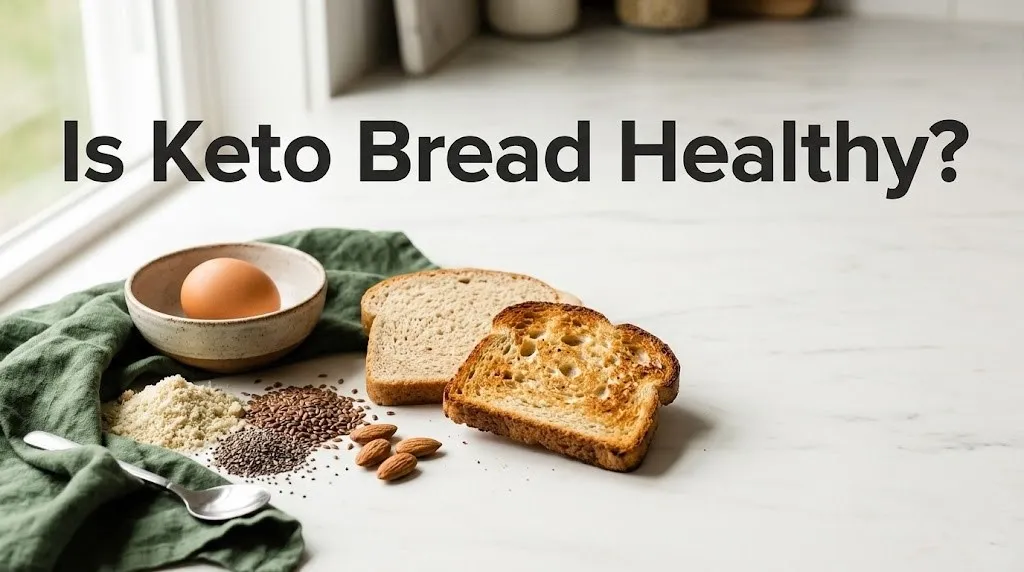
However, the ingredient list tells a different story about long-term health. Most commercial keto breads rely on a foundation of modified wheat starch, isolated wheat protein, and concentrated seed or wood-pulp fibers. These are not ingredients you would find in a home kitchen. A 2024 commentary in the American Journal of Clinical Nutrition renewed the call for nutrition scientists to distinguish between minimally processed foods and industrially modified products regardless of their macronutrient profile. The processing question does not make keto bread “bad,” but it does mean you cannot assume it is automatically nutritious just because it says “keto” on the label.
| Aspect | Standard Whole-Wheat Bread | Commercial Keto Bread |
|---|---|---|
| Primary ingredient | Whole-wheat flour | Modified wheat starch or resistant starch |
| Processing level | Moderate | High/Industrial |
| Satiety after 1 hour | Moderate to high | Moderate |
| Digestive tolerance | Generally well tolerated | Variable, can cause bloating |
what is keto bread made of
Commercial keto bread is built from a combination of modified wheat starches, concentrated wheat proteins, isolated fibers from oats, bamboo, or psyllium husk, and a fat source such as sunflower oil or butter. These ingredients are assembled to mimic the crumb structure, chew, and toastability of conventional bread while eliminating nearly all digestible carbohydrate. The formulation represents a feat of food science, not a traditional baking process.
Resistant wheat starch forms the backbone of most recipes. Standard wheat starch is a long chain of glucose molecules that digestive enzymes rapidly break down into sugar. Resistant wheat starch has been chemically or thermally altered so those enzymes cannot access most of its bonds. It passes through the small intestine intact and arrives in the large intestine where gut bacteria ferment it. Wheat protein isolate, sometimes labeled as vital wheat gluten at higher concentrations, provides the elastic network that traps gas bubbles during proofing and gives the loaf its springy texture. This ingredient pushes the protein content of keto bread far higher than conventional white bread.
Fat adds moisture and mouthfeel. Sunflower oil, avocado oil, and butter appear frequently on ingredient panels. Yeast is still used for leavening, but without sugar from starch to feed on, bakers often add a small amount of inulin or a zero-calorie sweetener like allulose to fuel fermentation. Monk fruit extract and stevia may appear as sweeteners, though they contribute nothing to structure.
Key ingredients typically found in a commercial keto loaf:
- Modified or resistant wheat starch
- Wheat protein isolate or vital wheat gluten
- Oat fiber, bamboo fiber, or cellulose fiber
- Psyllium husk powder
- Oil (sunflower, avocado, or butter)
- Inulin or chicory root fiber
- Yeast, salt, and preservatives
keto bread nutrition facts
A single slice of commercial keto bread, typically weighing 26 to 32 grams, contains 35 to 60 calories, 3 to 5 grams of fat, 6 to 10 grams of total carbohydrate, 5 to 9 grams of dietary fiber, 0 to 1 gram of sugar, and 4 to 6 grams of protein. The net carbohydrate count, calculated by subtracting fiber and certain sugar alcohols from total carbohydrates, lands between zero and two grams per slice. These figures position keto bread as one of the lowest-carbohydrate bread products available.
The macronutrient profile varies considerably between brands. Some manufacturers add flaxseed meal, chia seeds, or coconut flour to improve the fatty acid profile and increase the perception of whole-food ingredients. These additions can bump the calorie count to 80 or 90 per slice while contributing small amounts of alpha-linolenic acid, the plant-based omega-3 fatty acid. Other brands keep the ingredient list spartan, prioritizing shelf stability and neutral flavor.
Micronutrient content is generally poor unless the product has been specifically fortified. Traditional enriched wheat bread is required by FDA standards of identity to contain added thiamin, riboflavin, niacin, folic acid, and iron. Keto bread falls outside these standards and is not subject to the same fortification requirements. A few manufacturers voluntarily add a vitamin and mineral blend to approximate the nutrient content of enriched bread, but this is the exception rather than the rule. If you rely on bread as a source of B vitamins and iron, check whether your chosen keto brand provides them.
Quick Tip:
- Always read the total carbohydrate line, not just the net carb callout on the front of the package.
- Check for added fortification if you previously relied on wheat bread for iron and folate.
- Compare the fiber source to the protein source; ideally the protein outweighs the fiber.
keto bread vs regular bread nutrition
Keto bread and regular whole-wheat bread serve fundamentally different nutritional roles, and comparing them solely on calorie or carb content misses the larger picture of what each contributes to a daily eating pattern. Whole-wheat bread provides a matrix of intact grain components including the bran, germ, and endosperm, delivering naturally occurring fiber, B vitamins, magnesium, zinc, and phytonutrients. Keto bread is a constructed product designed to deliver a bread-like eating experience while contributing almost no digestible energy from starch.
The calorie difference is meaningful but not enormous. Two slices of whole-wheat bread supply roughly 140 to 160 calories and 24 to 28 grams of total carbohydrate with about 4 grams of naturally occurring fiber. Two slices of keto bread supply roughly 70 to 120 calories and 12 to 18 grams of total carbohydrate, of which 10 to 16 grams are fiber. The protein content in keto bread is higher, typically 8 to 12 grams for two slices versus 6 to 8 grams in whole wheat. This higher protein count comes from the concentrated wheat gluten added for structure.
| Nutrient (per 2 slices) | Whole-Wheat Bread | Commercial Keto Bread |
|---|---|---|
| Calories | 140-160 | 70-120 |
| Total carbohydrate | 24-28 g | 12-18 g |
| Dietary fiber | 4 g | 10-16 g |
| Net carbohydrate | 20-24 g | 0-4 g |
| Protein | 6-8 g | 8-12 g |
| Fat | 2-3 g | 6-10 g |
| Naturally occurring micronutrients | B vitamins, magnesium, zinc, iron | Minimal unless fortified |
keto bread fiber content explained
The high fiber count on a keto bread label comes primarily from isolated functional fibers like oat fiber, bamboo fiber, resistant wheat starch, and cellulose, not from the intact grain fiber found in whole-wheat kernels. These isolated fibers are extracted and concentrated to a degree that is rare in the whole-food supply. They behave differently in the digestive tract than the fiber matrix found in broccoli, oats, or lentils.
Oat fiber is an insoluble fiber made by grinding the outer husk of the oat grain. It absorbs several times its weight in water and adds bulk without contributing any digestible calories. Bamboo fiber works similarly and appears on ingredient lists when manufacturers want a clean-tasting, colorless fiber source that does not affect flavor. Resistant wheat starch is unique because it resists digestion in the small intestine but can be partially fermented in the colon, producing short-chain fatty acids including butyrate. This fermentation process is what allows some manufacturers to claim prebiotic benefits, though the actual dose of butyrate produced from one or two slices is small.
Insoluble fibers speed intestinal transit time, which can benefit regularity, but they do not form the viscous gel in the stomach that soluble fibers like beta-glucan from oats create. That gel is responsible for the cholesterol-lowering effects associated with oat-based cereals. The American Heart Association specifically identifies soluble fiber from whole grains, legumes, and certain fruits as the type linked to improved blood lipid profiles. Most keto bread fiber is the insoluble type, so do not expect the same heart-health benefits you would get from a bowl of steel-cut oatmeal.
Key Takeaway: The fiber number on a keto bread label is driven by isolated, concentrated sources rather than intact whole grains, meaning it supports low net carb claims but does not replicate the full spectrum of health benefits linked to fiber from whole foods.
keto bread and blood sugar impact
For the majority of people, commercial keto bread produces a minimal or negligible rise in post-meal blood glucose. Continuous glucose monitor data published in small observational studies and shared widely by the metabolic health community shows a nearly flat glycemic response after eating one or two slices compared to the distinct rise seen after standard wheat bread. This flat response is precisely what makes the product appealing for people managing insulin resistance, type 2 diabetes, or those who simply want to avoid post-lunch energy crashes.
However, “minimal” does not mean identically zero for everyone. The modified wheat starch used in some formulations can contain a small fraction of digestible starch depending on how thoroughly it was processed. Individual digestive physiology matters too. Some people produce enzymes or harbor gut bacteria capable of breaking down a portion of what is labeled as resistant starch. If you are using a blood glucose meter or a continuous monitor, test your own response to a specific brand rather than assuming the “zero net carb” claim applies universally to your body.
The insulin response is harder to pin down without laboratory testing. Even when blood glucose stays flat, certain amino acids from the concentrated wheat protein can trigger a modest insulin release. This cephalic and amino-acid-stimulated insulin secretion is normal and not inherently problematic. It does not signal that the bread is “secretly spiking insulin” in a way that would derail ketosis for most users. A 2023 study in the American Journal of Clinical Nutrition examining postprandial insulin responses to high-protein, low-carbohydrate meals found that protein-induced insulin elevation was transient and did not impair fat oxidation rates.
is store-bought keto bread processed
Yes, commercial store-bought keto bread fits the definition of an ultra-processed food under the NOVA classification system used by public health researchers globally. The product is assembled from fractionated ingredients including modified starches, isolated proteins, extracted fibers, industrially refined oils, and preservatives. This does not automatically mean it is harmful, but it categorically separates keto bread from the “whole food” or “minimally processed” food categories that nutrition guidelines consistently recommend forming the foundation of a healthy dietary pattern.
The degree of processing varies by brand, but no nationally distributed shelf-stable keto bread escapes the industrial modification category. A product that lists its first ingredient as “modified wheat starch” has undergone hydrolysis, heat treatment, or enzymatic alteration to change the chemical bonds of the original starch molecule. The wheat protein has been separated, washed, and dried into a concentrated powder. The fiber has been mechanically milled and separated from its parent plant material. These are not inherently dangerous processes, but they produce an ingredient profile that bears little resemblance to the wheat berry that entered the facility.
The Harvard T.H. Chan School of Public Health has noted that ultra-processed foods tend to be associated with higher overall calorie intake and lower satiety per calorie consumed, possibly due to their altered food matrix and reduced chewing requirement. Keto bread, with its soft, uniform crumb, requires less mechanical breakdown than a dense, seed-studded whole-grain loaf. This difference in oral processing time may subtly affect satiety signaling, though direct research on keto bread specifically is not available.
Think of the difference between store-bought keto bread and whole-grain bread like the difference between a high-tech puffer jacket and a wool sweater. Both keep you warm, both have a legitimate use case, and both are “jackets” in the functional sense. But one is built from a single natural material with a known history of use, while the other is an engineered assembly of synthetics and treatments that achieve a performance spec. You choose based on the conditions you face, not because one is morally superior.
healthiest keto bread brands to look for
No single brand dominates the market as the definitively healthiest option, but you can rank them by ingredient quality and transparency. Better choices tend to share several characteristics: a shorter ingredient list, the presence of recognizable whole-food ingredients like almond flour or flaxseed meal, oil sources you would cook with at home such as avocado or olive oil, and the absence of cellulose-heavy filler fibers listed without a clear plant source.
Base Culture and Unbun produce keto-friendly breads that lean closer to a whole-food formulation, using almond flour, eggs, and ground flaxseed rather than modified wheat starch. These products are typically found in the refrigerated or frozen section because they lack the preservatives required for shelf-stable distribution. They have a denser, more crumbly texture that some people find less bread-like, but their ingredient panels read closer to what you would produce in your own kitchen.
Among shelf-stable brands, look for those that clearly state the source of each fiber. “Oat fiber” or “psyllium husk” signals a known plant origin. Vague terms like “vegetable fiber” or “plant fiber” without further specification make it impossible to know what you are eating. The presence of butter or coconut oil as the fat source is neutral nutritionally but signals a manufacturer less reliant on highly refined seed oils.
Key factors to scan on the label:
- Ingredient list length: Shorter lists with recognizable foods rank higher.
- Fiber sources named: Oat fiber, psyllium husk, flaxseed meal are preferable to generic “plant fiber.”
- Oil type: Avocado oil, olive oil, or butter beat “vegetable oil blend.”
- Refrigeration requirement: Requires refrigeration often signals fewer preservatives.
- Fortification status: Added vitamins and minerals compensate for what processing strips away.
keto bread and digestion side effects
Digestive distress is the most common complaint from people who start eating keto bread regularly, and it is a direct consequence of the concentrated fiber load hitting the gut microbiome. Gas, bloating, abdominal cramping, and changes in bowel frequency are widely reported in online forums and product reviews. These symptoms typically arise because the large intestine suddenly receives a bolus of fermentable and non-fermentable fibers it is not accustomed to processing.
The total fiber in two slices of keto bread can exceed 14 grams, which is roughly half the daily fiber recommendation for an adult woman in a single sandwich. For someone whose baseline fiber intake was previously low, this sudden load can overwhelm the gut’s adaptive capacity. The bacteria that ferment resistant starch and soluble fibers produce hydrogen, carbon dioxide, and methane as metabolic byproducts. The result is distension and pressure that feels uncomfortable.
Psyllium husk, a common ingredient in keto bread, absorbs water and forms a viscous gel. If water intake is inadequate, this gel can slow transit and contribute to constipation rather than relieve it. Insoluble fibers like oat and bamboo fiber add bulk and accelerate transit, which can swing the pendulum toward loose stools if introduced too aggressively. The National Institutes of Health notes that fiber intake should be increased gradually over several weeks to allow the gastrointestinal system to adapt. This guidance applies especially to concentrated, isolated fibers of the type found in keto bread.
Quick Tip for Digestive Tolerance:
- Start with half a slice per day for the first five days.
- Drink at least 12 ounces of water alongside each serving.
- Avoid pairing keto bread with other high-fiber or sugar-alcohol-sweetened foods in the same meal.
- Pause for 48 hours if bloating becomes painful, then restart at a lower dose.
keto bread and weight loss results
Keto bread can support a weight loss effort by providing a low-calorie, low-carbohydrate vehicle for sandwich fillings, but it does not possess any unique fat-burning property. Weight loss on a ketogenic diet is driven by sustained caloric deficit and the appetite-modulating effects of elevated ketone bodies, not by any single product. Swapping a 160-calorie whole-wheat sandwich for a 100-calorie keto bread sandwich saves 60 calories, which adds up meaningfully over weeks if the rest of the diet remains unchanged.
The risk with keto bread is the same as with any “diet” replacement food. Some people unconsciously compensate by adding extra butter, mayonnaise, cheese, or generous spreads of nut butter because the bread itself feels like a free food. Two tablespoons of butter add 200 calories. Two tablespoons of commercial mayonnaise add 180 calories. The sandwich can easily end up at 500 calories regardless of what the bread contributed. The total caloric load of the finished meal matters more than the net carb count of the bread alone.
Satiety is another variable that affects weight loss outcomes over time. Anecdotal reports from users are split. Some find the high protein and fat content of a keto bread sandwich keeps them satisfied for hours. Others report feeling hungry again within 90 minutes, possibly because the bread’s texture is soft, requires minimal chewing, and triggers less oral processing satiety signaling. If you notice you are reaching for snacks sooner after a keto bread sandwich than after a more textured, whole-food meal, consider adding crunchy vegetables or a side salad to extend the mechanical and sensory experience of eating.
Key Takeaway: The weight loss value of keto bread lies purely in its low-calorie, low-carb swap function. It is a convenience tool, not a metabolic accelerator, and its usefulness depends entirely on what you put between the slices.
homemade keto bread vs store-bought
Homemade keto bread gives you complete control over ingredient quality, fat source, and fiber type, while store-bought versions offer convenience and a texture that is difficult to replicate at home without industrial equipment. The decision between the two is a trade-off between time and ingredient transparency, not between “healthy” and “unhealthy.”
A typical homemade keto bread recipe uses almond flour, coconut flour, eggs, butter or olive oil, psyllium husk powder, and baking powder. These are whole-food or minimally processed ingredients. Almond flour retains the fat and fiber matrix of the whole almond, including vitamin E and magnesium. Psyllium husk provides the same soluble fiber function it serves in commercial bread, but you can measure it yourself and control the proportion relative to other fibers. There is no modified starch, no unspecified vegetable fiber, and no preservative system designed to keep a loaf shelf-stable for three weeks.
The texture of homemade keto bread is denser, more crumbly, and less elastic than the store-bought alternative. This is because vital wheat gluten is hard to source in the right concentration for home bakers, and the modified wheat starch that gives commercial keto bread its springy crumb is not available at retail. Some people genuinely prefer the nuttier, heartier texture of a homemade loaf, especially when toasted. Others find it falls short of the sandwich bread experience they want.
| Factor | Store-Bought Keto Bread | Homemade Keto Bread |
|---|---|---|
| Ingredient transparency | Variable; read labels carefully | Complete control |
| Texture | Soft, springy, close to conventional bread | Dense, crumbly, more like quick bread |
| Shelf life | 1-3 weeks at room temp or refrigerated | 5-7 days refrigerated |
| Cost per loaf | $6-12 | $4-8 (ingredients) |
| Preservatives | Common in shelf-stable brands | None |
| Common fiber source | Resistant wheat starch, oat fiber, bamboo fiber | Psyllium husk, almond flour, coconut flour |
who should avoid keto bread
People with celiac disease, wheat allergy, or significant non-celiac gluten sensitivity should avoid the vast majority of commercial keto breads. The foundational ingredients of most brands are wheat-derived modified starches and wheat protein isolates. These ingredients are processed from wheat and contain gluten, even if the label focuses on the fiber content rather than the grain source. The term “modified wheat starch” on an ingredient panel is a wheat-derived ingredient, and it is not safe for someone who must maintain strict gluten avoidance.
Individuals with irritable bowel syndrome, particularly the constipation-predominant or mixed subtypes, should approach keto bread cautiously. The concentrated fermentable fibers in these products can exacerbate symptoms of bloating, distension, and abdominal pain. The low-FODMAP diet, which is the most widely studied dietary intervention for IBS, identifies excess fructans and galacto-oligosaccharides as common triggers. While resistant starch and oat fiber are not directly restricted on low-FODMAP protocols, large doses of any isolated fiber can provoke symptoms in a sensitized gut.
Anyone with a history of intestinal strictures, bowel obstruction, or slow-transit constipation should seek individualized medical guidance before adding products containing concentrated psyllium or high levels of insoluble fiber to their diet. A sudden increase in bulky, water-absorbing fiber can theoretically contribute to obstruction risk in people with anatomically narrowed intestinal segments. This is a rare outcome, but it is documented in the clinical literature and warrants caution in higher-risk individuals.
Who should exercise caution or avoid keto bread:
- People with celiac disease or wheat allergy
- Those with IBS who react to fiber loads
- Anyone with a history of bowel obstruction or stricture
- People who experience persistent bloating after consuming isolated fibers
- Individuals aiming to minimize ultra-processed food intake
Key Takeaway: Keto bread solves a real problem for metabolically healthy people following a ketogenic diet who tolerate wheat and high fiber loads, but it is not a universally safe product, and specific medical conditions elevate the risk of adverse reactions well beyond mild bloating.
Frequently Asked Questions About Keto Bread
Is keto bread actually good for you?
Keto bread is good for keeping carbohydrate intake low while enjoying a sandwich, but it is not a nutrient-dense food in its own right.
Its value depends on your metabolic goals and whether you tolerate concentrated wheat fibers well.
For daily nutrition, whole-food sources of fiber and protein will serve you better long-term.
Does keto bread spike insulin?
Keto bread produces a minimal blood glucose rise in most people, though the protein content can trigger a modest, transient insulin response.
This is a normal physiological reaction to amino acids and does not typically disrupt ketosis.
If you monitor your blood ketones, test your own response to a single serving to confirm.
Can I eat keto bread every day?
You can eat keto bread daily if your digestion tolerates the fiber load and you are not using it to displace more nutrient-dense whole foods.
Start with one slice per day and increase only if your gut feels comfortable.
Rotate with other low-carbohydrate food options like lettuce wraps or egg-based wraps to vary your fiber sources.
What is the healthiest keto bread on the market?
The healthiest keto bread for you is the one with the shortest, most recognizable ingredient list that your body digests without distress.
Brands that use almond flour, eggs, and flaxseed meal as a base tend to be less processed than wheat-starch-based shelf-stable loaves.
Check the refrigerated or frozen section for options with fewer additives and preservatives.
Why does keto bread upset my stomach?
Keto bread can upset your stomach because it delivers a large, concentrated dose of isolated fibers like resistant wheat starch, oat fiber, and psyllium husk.
Your gut bacteria ferment these fibers rapidly, producing gas and drawing water into the colon.
Reduce your portion to half a slice, drink more water, and increase slowly over two weeks to give your digestive system time to adapt.
Keto bread is a tool, not a nutrition strategy. It makes a ketogenic eating pattern more practical for people who want a sandwich or toast and are willing to trade some degree of food processing and digestive adjustment for that convenience. The right approach is to treat it as an occasional bridge food, not a daily staple, while building the majority of your meals around whole foods that do not require an ingredient decoder to understand.
If you decide to keep keto bread in your rotation, choose the brand with the fewest ingredients you do not recognize, introduce it slowly, and pay attention to how your gut feels an hour and a day later. Your body’s feedback matters more than the net carb math on the front of the package.
The single best thing you can do with keto bread is to use it as a temporary replacement while you learn to build satisfying meals that do not depend on any bread at all. A plate of slow-roasted salmon over a bed of sautéed greens with olive oil will always outperform even the cleanest keto sandwich in terms of nutrient density. Let keto bread serve your goals, not define your plate.