Healthy chicken and broccoli recipes are the backbone of meal prep, fitness nutrition, and busy weeknight cooking because the combination delivers a rare trifecta: complete lean protein, fiber-rich cruciferous vegetables, and a neutral flavor base that absorbs almost any sauce or spice profile you throw at it. This is not a single-recipe article. It is a technique-driven collection of tested recipes that solve the common failures of this classic pairing, dry chicken, soggy broccoli, and bland sauce.
The nutritional partnership between chicken breast and broccoli is worth understanding before you cook. A 6-ounce serving of boneless, skinless chicken breast provides roughly 54 grams of protein and all nine essential amino acids. A cup of cooked broccoli delivers roughly 5 grams of fiber, more than 100 percent of the daily value for vitamin C, and a hefty dose of vitamin K1. The Academy of Nutrition and Dietetics regularly highlights the combination of lean poultry and cruciferous vegetables as a model for nutrient-dense meal construction.
You will leave this article with three complete recipes built around distinct techniques, stir-frying with velveting, sheet pan roasting, and casserole baking. You will learn the specific food science steps that make each one work, the exact macros per serving, and how to store, reheat, and customize every dish for gluten-free, dairy-free, and low-carb eating patterns.
Healthy Chicken and Broccoli Recipes
Healthy chicken and broccoli recipes are simply those that prioritize nutrient density and cooking techniques that protect the ingredient quality of both the lean poultry and the cruciferous vegetable. That means high-heat, fast cooking methods, sauces built from whole-food ingredients rather than sugar-laden bottled products, and a deliberate balance of protein, fiber, and healthy fats in every serving.
The health profile of these recipes comes from what they are not, as much as what they are. They are not deep-fried. They are not coated in heavy cream sauces that dilute the protein-to-calorie ratio. They are not served over massive portions of refined white rice that overshadow the vegetables. A well-designed chicken and broccoli recipe keeps the protein above 40 grams per serving, the fiber above 4 grams, and the added sugar as close to zero as possible. This is not about restriction. It is about building a meal where every component earns its place on the plate.
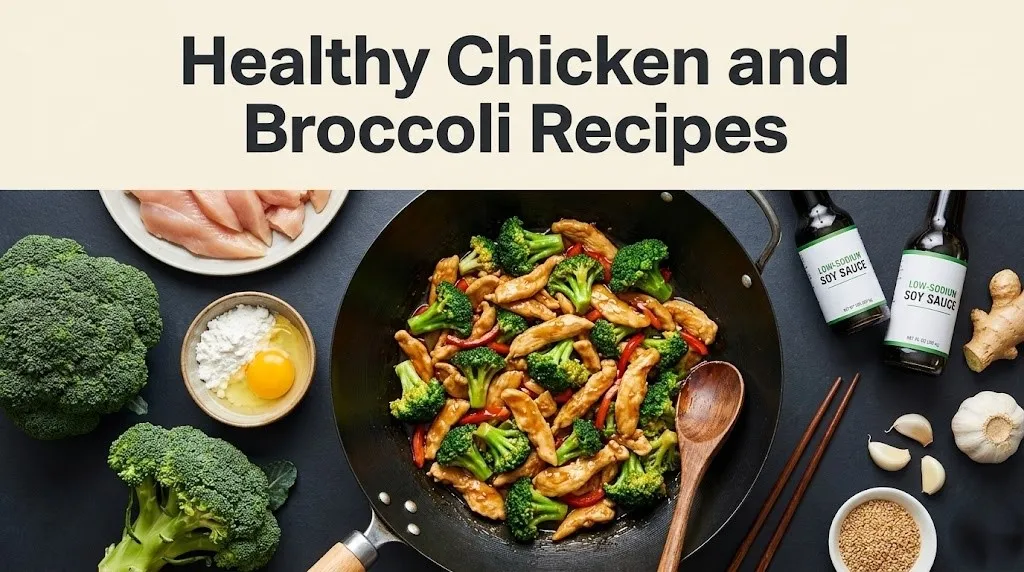
The recipes that follow have been tested in a home kitchen with standard equipment. They do not require a commercial wok burner, a sous vide circulator, or any single-use gadget. You need a sharp chef’s knife, a large nonstick skillet or carbon steel pan, a rimmed baking sheet, a medium saucepan, and a reliable instant-read meat thermometer. If you own those five items, you can execute every recipe in this article. Difficulty varies depending on your comfort with timing and heat management, not your equipment inventory.
| Recipe | Primary Technique | Calories per Serving | Protein per Serving | Fiber per Serving |
|---|---|---|---|---|
| Classic Velveted Stir-Fry | Velveting + wok stir-fry | 360 to 410 | 45 to 50g | 4 to 5g |
| Sheet Pan Lemon Garlic | High-heat roasting | 320 to 370 | 42 to 48g | 5 to 6g |
| Quinoa Cheddar Casserole | Casserole baking | 380 to 440 | 38 to 44g | 6 to 7g |
Key Takeaway: A healthy chicken and broccoli recipe earns that label by protecting the protein density of the chicken and the fiber and vitamin content of the broccoli through fast, high-heat cooking and sauces made from whole ingredients.
Chicken Broccoli Recipe Healthy
A chicken broccoli recipe is healthy when it uses cooking techniques that preserve the lean protein structure of the chicken without adding excessive saturated fat and keeps the broccoli’s fiber, vitamin C, and sulforaphane precursor compounds intact. The specific recipe matters less than the technique behind it.
The most common mistake in chicken and broccoli recipes is treating both ingredients the same way. Chicken breast is lean, low in connective tissue, and prone to drying out when overcooked. It needs either a protective coating, a velveting step, or a carefully monitored cooking time. Broccoli is a fibrous, water-rich vegetable that needs brief, high-heat cooking to break down its cellular structure without turning it into mush. Recipes that throw raw chicken and raw broccoli into a pan at the same time and cook them together until “done” will reliably produce dry chicken, soggy broccoli, or both. A healthy recipe respects the different cooking requirements of the two ingredients.
The recipes in this article separate the chicken and broccoli cooking steps. In the stir-fry, the chicken is velveted and cooked first, removed from the pan, and the broccoli is cooked separately before the two are reunited in the sauce. In the sheet pan recipe, the chicken and broccoli are roasted together but the broccoli is cut large and the chicken is pounded to an even thickness so they finish at the same time. In the casserole, the chicken and broccoli are both pre-cooked before assembly. The separation of cooking steps is the structural insight that makes these recipes work.
Healthy Chicken Broccoli Recipe
The foundational healthy chicken broccoli recipe is a properly velveted stir-fry, and it starts with understanding that the velveting step, coating the sliced chicken in a cornstarch and egg white mixture and briefly blanching it, is what prevents the dry, chewy chicken that ruins most homemade versions. This is the recipe that will make you stop ordering takeout.
To velvet chicken for this recipe, slice two boneless, skinless chicken breasts (roughly 1.5 pounds total) against the grain into thin strips, about a quarter-inch thick. In a medium bowl, combine one egg white, one tablespoon of cornstarch, one teaspoon of soy sauce, and a pinch of white pepper. Whisk until smooth. Add the chicken and mix thoroughly with your hand until every strip is coated. Refrigerate for 20 minutes. Bring a medium pot of water to 160 to 170 degrees Fahrenheit, just below a simmer where small bubbles form on the bottom but do not break the surface. Slide the chicken in, stir gently to separate, and cook for 45 to 60 seconds until the exterior turns opaque white. Drain immediately and set aside. The chicken is now protected by a thin starch jacket that will keep it tender when you stir-fry it later.
For the broccoli, cut one large head into uniform 1.5-inch florets. Bring a separate pot of water to a rolling boil. Drop the broccoli in for exactly 60 seconds, then immediately transfer it to a bowl of ice water. This blanching and shocking step sets the bright green color and par-cooks the broccoli so it only needs a brief toss in the hot wok to finish. The full recipe, including the stir-fry sauce and assembly, is detailed in the stir-fry section below.
Quick Tip:
- The water for velveting must be 160 to 170 degrees Fahrenheit, not boiling.
- Boiling water will cause the starch coating to slough off and the chicken to overcook.
- A probe thermometer clipped to the side of the pot is the most reliable way to maintain the correct temperature.
Chicken and Broccoli Healthy Recipe
A chicken and broccoli healthy recipe succeeds or fails on its sauce, because the sauce is what carries the flavor and, when poorly constructed, adds unnecessary sugar, sodium, and calories that undermine the nutritional integrity of the lean protein and vegetable base. The best stir-fry sauce is a simple balance of salty, savory, and slightly sweet.
The master sauce for all the stir-fry variations in this article is built from four core ingredients: low-sodium soy sauce, which provides salt and umami, rice vinegar for acid brightness, toasted sesame oil for nutty depth, and a small amount of cornstarch dissolved in cold water to thicken the sauce so it clings to the chicken and broccoli instead of pooling at the bottom of the bowl. Aromatics, fresh garlic and ginger, are minced and bloomed in the hot pan before the sauce is added to release their volatile oils.
The sweetness in a classic brown stir-fry sauce typically comes from brown sugar, honey, or oyster sauce. In this recipe, sweetness is kept minimal, one teaspoon of honey or mirin for the entire batch, which divides into four servings. The result is a sauce that has fewer than 3 grams of added sugar per serving compared to 10 to 15 grams in a typical takeout stir-fry. The difference is palpable and, once you adjust to it, preferable. You taste the chicken, the broccoli, and the nutty sesame, not a sugar glaze.
- Master stir-fry sauce: 3 tablespoons low-sodium soy sauce, 1 tablespoon rice vinegar, 1 teaspoon toasted sesame oil, 1 teaspoon honey or mirin, 1 teaspoon cornstarch dissolved in 2 tablespoons cold water.
- Aromatics: 3 cloves garlic minced, 1 tablespoon fresh ginger grated.
- This sauce yields enough for 4 servings and can be doubled and stored in the refrigerator for up to 5 days.
Chicken and Broccoli Stir Fry Healthy
The healthy chicken and broccoli stir-fry is the execution of all the prep work done in the previous sections. You have velveted chicken, blanched broccoli, minced aromatics, and a whisked sauce. The actual cooking takes less than five minutes, and that speed is what preserves the texture and nutritional quality of the dish.
To finish the stir-fry, place your largest skillet, carbon steel pan, or wok over high heat. The pan must be hot enough that a drop of water evaporates on contact before you add any oil. Add one tablespoon of neutral oil with a high smoke point, such as avocado oil or grapeseed oil, and swirl to coat. Add the blanched broccoli florets and stir-fry for 60 to 90 seconds until the edges begin to char slightly. The slight char on the broccoli adds a smoky depth that blanching alone cannot provide. Remove the broccoli to a plate.
Wipe the pan briefly, return it to high heat, and add another tablespoon of oil. Add the garlic and ginger and stir-fry for 15 seconds until fragrant. If the aromatics burn, start over. Burnt garlic is acrid and will ruin the dish. Add the velveted chicken and stir-fry for one minute to reheat and develop a light sear on the edges. Return the broccoli to the pan. Whisk the sauce one final time to re-suspend the cornstarch and pour it around the perimeter of the pan, not directly onto the food, so it hits the hot metal and thickens immediately. Toss everything together for 30 seconds until the sauce coats every piece and turns glossy. Serve immediately over steamed brown rice, quinoa, or cauliflower rice.
To make the stir-fry:
- Heat 1 tablespoon of avocado oil in a large skillet over high heat.
- Stir-fry the blanched broccoli for 60 to 90 seconds until lightly charred, then remove to a plate.
- Wipe the pan, add another tablespoon of oil, and bloom the garlic and ginger for 15 seconds.
- Add the velveted chicken and stir-fry for 1 minute to reheat and lightly sear.
- Return broccoli to the pan, pour sauce around the perimeter, toss for 30 seconds until glossy, and serve immediately.
Chicken and Broccoli Macros and Calories
A standard serving of the healthy chicken and broccoli stir-fry, defined as 6 ounces of cooked chicken breast, 1 cup of cooked broccoli florets, and roughly 1.5 tablespoons of the master stir-fry sauce, delivers approximately 360 to 410 calories, 45 to 50 grams of protein, 12 to 15 grams of fat, 10 to 14 grams of total carbohydrates, and 4 to 5 grams of dietary fiber. These numbers assume no rice or other grain on the side.
The protein content is the standout. At 45 to 50 grams per serving, this single dish meets or exceeds the per-meal protein target for most active adults. The Academy of Nutrition and Dietetics suggests roughly 20 to 30 grams of protein per meal for general health, with higher targets of 30 to 40 grams or more for athletes, people in a caloric deficit, and older adults aiming to preserve lean mass. A chicken and broccoli stir-fry clears those targets with room to spare.
The carbohydrate content is low enough that this dish fits comfortably into a low-carbohydrate eating pattern without requiring modification, though it is not ketogenic due to the small amount of starch in the velveting and sauce. The fiber is respectable at 4 to 5 grams, about 15 to 18 percent of the daily value of 28 grams. If served with a half-cup of brown rice, the totals shift to roughly 470 to 520 calories, 48 to 53 grams of protein, 28 to 33 grams of carbohydrates, and 6 to 7 grams of fiber.
| Component | Calories | Protein | Carbs | Fiber | Fat |
|---|---|---|---|---|---|
| 6 oz cooked chicken breast | 280 | 54g | 0g | 0g | 6g |
| 1 cup cooked broccoli | 55 | 4g | 11g | 5g | 0.5g |
| 1.5 tbsp stir-fry sauce | 35 | 1g | 3g | 0g | 3g |
| Total per serving | 370 | 59g | 14g | 5g | 9.5g |
Key Takeaway: The stir-fry delivers nearly 60 grams of protein and 5 grams of fiber in a 370-calorie package. Add a half-cup of brown rice and you are at roughly 500 calories with the same protein and more fiber.
How to Velvet Chicken for Stir Fry
Velveting chicken for stir-fry involves coating thinly sliced chicken in a mixture of egg white, cornstarch, and a small amount of soy sauce or rice wine, then briefly blanching the coated chicken in water held at 160 to 170 degrees Fahrenheit until the exterior turns opaque. This technique creates a protective starch layer that locks in moisture and gives the chicken its characteristic silky texture.
The science is straightforward. The egg white and cornstarch form a thin, water-insoluble coating around each strip of chicken when they hit the hot water. This coating prevents the muscle proteins from directly contacting the high heat of the wok, which would cause them to contract violently and squeeze out moisture. The coating also provides a slightly tacky surface that sauce clings to, improving the flavor distribution in the finished dish. This is the same technique used in Chinese restaurant kitchens, scaled down for a home cook without a deep-fryer.
The alternative method, using baking soda instead of egg white and cornstarch, works via a different mechanism. Tossing sliced chicken with a small amount of baking soda, roughly three-quarters of a teaspoon per pound of chicken, and letting it sit for 15 to 20 minutes raises the pH of the meat’s surface, which inhibits protein bonding during cooking and results in a more tender texture. This method is faster and does not require the blanching step, but the resulting texture is slightly less silky and the chicken must be rinsed thoroughly before cooking to remove any residual baking soda taste.
- Cornstarch and egg white velveting: superior texture, requires blanching step, neutral flavor.
- Baking soda tenderizing: faster, no blanching, requires thorough rinsing, slightly less silky.
- Both methods produce significantly better results than cooking uncoated chicken directly in a hot pan.
Chicken and Broccoli Meal Prep
Chicken and broccoli stir-fry can be meal prepped for up to four days in the refrigerator, but the broccoli will lose its bright green color and some of its textural integrity by day three, which is why the best meal prep strategy is to store the components separately and assemble just before eating. This approach adds a few minutes to your daily routine and preserves the quality of the dish far better than pre-assembled containers.
The optimal workflow is to prepare the velveted chicken, blanched broccoli, and stir-fry sauce on Sunday. Store each component in a separate airtight container in the refrigerator. The chicken will hold for four days. The blanched broccoli will hold for three days with good color and texture, and up to five days if you are less concerned about appearance. The sauce will hold for five to seven days. Each morning, or the night before, combine one portion of chicken and one portion of broccoli in a microwave-safe container. Store the sauce separately. At mealtime, microwave the chicken and broccoli for 90 seconds to 2 minutes, then toss with the room-temperature sauce. The carryover heat from the food will warm the sauce sufficiently.
For the sheet pan recipe, the chicken and roasted broccoli hold up better as pre-assembled meals because the broccoli has already been roasted to a caramelized, slightly dehydrated state that does not degrade as quickly in the refrigerator. Portion the roasted chicken and broccoli into containers with a lemon wedge. Reheat in the microwave for 2 minutes or in a toaster oven at 350 degrees Fahrenheit for 5 to 7 minutes for crispier results. The casserole portions and reheats beautifully for up to five days and is the most meal-prep-friendly of the three recipes.
- Stir-fry: store components separately, combine and sauce at mealtime.
- Sheet pan: pre-portion into containers, reheat in microwave or toaster oven.
- Casserole: pre-portion into containers, reheats well for up to 5 days.
- Freeze any of these recipes for up to 3 months in freezer-safe containers.
Sheet Pan Chicken and Broccoli Healthy
A healthy sheet pan chicken and broccoli recipe uses high-heat roasting at 425 degrees Fahrenheit to caramelize the broccoli and create a browned crust on the chicken while keeping the interior moist, all on a single pan that requires minimal cleanup. This is the lowest-effort, highest-reward recipe in the collection.
Preheat the oven to 425 degrees Fahrenheit with a rack positioned in the center. Line a large rimmed baking sheet with parchment paper or a silicone mat. Slice two large boneless, skinless chicken breasts in half horizontally to create four thin cutlets of roughly even thickness, about half an inch. This step is non-negotiable. A full-thickness chicken breast will not cook through before the broccoli burns. Pound any uneven spots gently with the heel of your hand.
Cut one large head of broccoli into 1.5-inch florets. On the prepared baking sheet, toss the broccoli florets with 1.5 tablespoons of olive oil, half a teaspoon of kosher salt, and a quarter teaspoon of black pepper. Push the broccoli to the edges of the sheet pan, leaving the center open. Place the four chicken cutlets in the center. Brush each cutlet with a mixture of one tablespoon olive oil, the zest of one lemon, two minced garlic cloves, and half a teaspoon of dried oregano. Season the chicken generously with salt and pepper. Roast for 12 minutes, then flip the chicken cutlets and stir the broccoli. Roast for another 10 to 13 minutes until the chicken reaches 165 degrees Fahrenheit on an instant-read thermometer and the broccoli edges are browned and crisp. Squeeze the zested lemon over the entire pan before serving.
- Parchment paper or a silicone mat prevents sticking and makes cleanup trivial.
- The 12-minute flip-and-stir step ensures even cooking and browning on both sides.
- Lemon zest in the marinade and lemon juice at the end provide layered citrus flavor without added calories.
Key Takeaway: The sheet pan recipe is the best entry point for a beginner cook because the oven manages the heat and the single-pan setup eliminates timing coordination between multiple pans.
Healthy Chicken and Broccoli Pasta
A healthy chicken and broccoli pasta dish uses a light, broth-based or olive oil-based sauce rather than a heavy cream sauce, and the pasta itself should be a whole grain or legume-based variety to add fiber and protein. The goal is a balanced plate where the pasta is a supporting player, not the main event.
Cook eight ounces of whole wheat penne, rotini, or chickpea pasta in heavily salted boiling water until al dente. Reserve one cup of the starchy pasta water before draining. While the pasta cooks, slice two chicken breasts into bite-sized pieces and season with salt, pepper, and half a teaspoon of red pepper flakes. Heat one tablespoon of olive oil in a large skillet over medium-high heat. Cook the chicken pieces until golden and cooked through, about 5 to 6 minutes. Remove to a plate.
In the same skillet, add another tablespoon of olive oil and four cups of small broccoli florets. Cook for 3 to 4 minutes until bright green and slightly softened. Add three minced garlic cloves and cook for 30 seconds. Deglaze the pan with half a cup of low-sodium chicken broth, scraping up any browned bits from the bottom. Add the cooked pasta, the cooked chicken, and a quarter cup of grated Parmesan cheese. Toss everything together, adding reserved pasta water a splash at a time until a light, glossy sauce coats every piece. Finish with the juice of half a lemon and a handful of chopped fresh parsley.
- Whole wheat or chickpea pasta adds roughly 5 to 7 grams of fiber per serving compared to 2 to 3 grams in white pasta.
- The starchy pasta water is the key to a light sauce that clings without cream or butter.
- For a gluten-free version, use chickpea or lentil pasta and verify that your chicken broth is certified gluten-free.
Healthy Chicken and Broccoli Casserole
A healthy chicken and broccoli casserole relies on a from-scratch cheese sauce made with low-fat milk and sharp cheddar, bound with a whole grain like quinoa instead of white rice or pasta, and topped with a light, crunchy element like whole wheat breadcrumbs rather than a thick blanket of melted cheese. This is comfort food that earns its nutritional profile.
Preheat the oven to 375 degrees Fahrenheit. Cook three-quarters of a cup of dry quinoa according to package directions and set aside. Blanch four cups of small broccoli florets in boiling water for 2 minutes, drain, and set aside. In a large skillet, heat one tablespoon of olive oil over medium heat. Add one diced yellow onion and cook until softened, about 4 minutes. Add three minced garlic cloves and cook for 30 seconds. Sprinkle three tablespoons of whole wheat flour over the onions and stir constantly for one minute to cook out the raw flour taste.
Slowly whisk in two cups of low-fat milk, a half-cup at a time, stirring continuously to prevent lumps. Bring to a gentle simmer and cook until thickened, about 3 to 4 minutes. Remove from heat and stir in one and a half cups of shredded sharp cheddar cheese, tossed beforehand with a teaspoon of flour to prevent clumping, along with a teaspoon of Dijon mustard, half a teaspoon of salt, and a quarter teaspoon of black pepper. Stir until the cheese is fully melted into a smooth sauce. Fold in three cups of cooked, shredded or diced chicken breast, the blanched broccoli, and the cooked quinoa. Transfer to a 9 by 13 inch baking dish lightly coated with cooking spray. Top with a quarter cup of whole wheat breadcrumbs mixed with a tablespoon of olive oil. Bake for 20 to 25 minutes until bubbly and golden on top.
To make this casserole:
- Cook quinoa and blanch broccoli. Preheat oven to 375 degrees Fahrenheit.
- Saute onion and garlic, add flour to make a roux, then whisk in low-fat milk to form a bechamel.
- Melt sharp cheddar cheese into the bechamel off the heat with Dijon mustard, salt, and pepper.
- Fold in cooked chicken, broccoli, and quinoa. Transfer to a greased 9 by 13 inch baking dish.
- Top with breadcrumbs, bake for 20 to 25 minutes until golden and bubbly.
Ground Chicken and Broccoli Recipes
Ground chicken and broccoli recipes are an underrated, budget-friendly, and extremely fast alternative to whole chicken breast recipes. Ground chicken cooks in under five minutes and the small crumb texture distributes evenly with finely chopped broccoli, creating a dish that eats like a hearty, protein-packed grain bowl or lettuce wrap filling.
For a ground chicken and broccoli skillet, heat one tablespoon of sesame oil in a large skillet over medium-high heat. Add one pound of ground chicken and break it up with a spatula. Cook until no longer pink, about 4 to 5 minutes. Season with a pinch of salt and pepper. Add three cups of very finely chopped broccoli, essentially a rough mince, and two minced garlic cloves. Cook for 3 minutes until the broccoli is tender but still has a slight bite. The fine chop is critical here. Large florets will not integrate with the ground chicken and will cook unevenly.
Pour in a sauce made from two tablespoons of low-sodium soy sauce, one tablespoon of hoisin sauce, one teaspoon of rice vinegar, and half a teaspoon of sriracha. Stir to coat everything and cook for one more minute. Serve the mixture over steamed brown rice, in lettuce cups for a low-carb option, or stuffed into a halved and roasted sweet potato. The entire dish, start to finish, takes under 15 minutes and costs significantly less than recipes using whole chicken breasts. Ground chicken thigh, if you can find it, is juicier and more flavorful than ground breast, with only a small increase in fat content.
- Ground chicken cooks in 4 to 5 minutes, making this the fastest recipe in the collection.
- Finely chopping the broccoli is essential for even cooking and integration with the ground meat.
- The mixture works as a rice bowl base, lettuce wrap filling, or stuffed sweet potato topping.
Dairy Free Chicken and Broccoli
All three core recipes in this article, the stir-fry, the sheet pan, and the pasta, can be made dairy free with simple substitutions that do not compromise flavor or texture. The casserole is the only recipe that is fundamentally dairy-dependent and cannot be adapted without a complete structural rework, which is why a separate dairy-free soup recipe is provided as the alternative comfort food.
For the stir-fry, the master sauce contains no dairy to begin with. The only caution is to use a soy sauce that is not labeled as containing dairy-derived ingredients, which is occasionally the case with some seasoned soy sauce blends. Standard Kikkoman or tamari are dairy free. For the sheet pan recipe, the olive oil and lemon base is already dairy free. For the pasta dish, the Parmesan cheese at the end can be replaced with nutritional yeast, which provides a similar savory, umami quality. Use two tablespoons of nutritional yeast in place of the quarter cup of Parmesan and add an extra pinch of salt.
The best dairy-free comfort food option for chicken and broccoli is a creamy soup built on a base of pureed cannellini beans or cashew cream instead of dairy. A can of drained, rinsed cannellini beans blended with a cup of chicken broth and a tablespoon of nutritional yeast until completely smooth creates a creamy, protein-rich soup base that contains zero dairy. Saute diced onion, carrot, and celery in olive oil, add the bean puree and additional broth, bring to a simmer, and add cooked shredded chicken and finely chopped broccoli. The soup is creamy, satisfying, and nutritionally dense. It freezes well and can be made in large batches.
- Stir-fry and sheet pan recipes are naturally dairy free with standard ingredients.
- Nutritional yeast replaces Parmesan in the pasta dish for a dairy-free umami boost.
- Pureed cannellini beans create a creamy soup base without any dairy products.
Key Takeaway: Dairy-free chicken and broccoli is not a compromise. The natural flavors of the aromatics, soy sauce, and roasted or stir-fried vegetables carry the dish without requiring butter or cream.
Gluten Free Chicken and Broccoli Stir Fry
The chicken and broccoli stir-fry is easily made gluten free by substituting tamari for soy sauce and verifying that all other bottled condiments, specifically hoisin and oyster sauce if you use them, are certified gluten free. The velveting cornstarch is already gluten free. The challenge is not the recipe structure but the label reading.
Tamari is a Japanese fermented soybean product similar to soy sauce but traditionally brewed without wheat. Most commercial tamari brands are gluten free, but you must check the label because some include a small amount of wheat or are produced in facilities that also process wheat. Coconut aminos are an alternative with a slightly sweeter, less intense flavor profile. They work in stir-fry sauces but will produce a milder result than soy sauce or tamari. If you use coconut aminos, reduce or eliminate the added sweetener, honey or mirin, in the sauce to avoid an overly sweet final dish.
The rice vinegar and toasted sesame oil in the master sauce are gluten free by nature. The fresh garlic, ginger, chicken, and broccoli are obviously gluten free. The only other hidden gluten risk is in the chicken broth, if you use it for deglazing or the pasta dish. Some commercial broths contain yeast extract derived from barley, which contains gluten. Look for broths labeled gluten free, or use a homemade stock. The sheet pan recipe is entirely gluten free as written, with no substitutions required.
- Replace soy sauce with tamari, verifying the tamari is labeled gluten free.
- Check hoisin, oyster sauce, and chicken broth labels for hidden wheat or barley.
- Coconut aminos can replace tamari but will produce a sweeter, milder sauce.
Chicken and Broccoli Soup Healthy
A healthy chicken and broccoli soup uses a clear, flavorful broth rather than a heavy cream base, and it loads the bowl with shredded chicken and small broccoli florets so that every spoonful delivers protein and fiber. This is the recipe for when you are tired of chewing, feeling under the weather, or simply want a big batch of something warm to reheat all week.
In a large Dutch oven or soup pot, heat one tablespoon of olive oil over medium heat. Add one diced yellow onion, two diced carrots, and two diced celery stalks. Cook until softened, about 6 to 8 minutes. Add three minced garlic cloves and one tablespoon of grated fresh ginger. Cook for one minute until fragrant. Pour in eight cups of low-sodium chicken broth and bring to a simmer. Add one pound of boneless, skinless chicken breasts, whole. Poach the chicken in the simmering broth for 12 to 15 minutes until cooked through. Remove the chicken to a cutting board and shred with two forks.
Return the shredded chicken to the pot. Add four cups of very small broccoli florets, about half-inch pieces, and simmer for 3 to 4 minutes until just tender. Stir in the juice of one lemon and a handful of chopped fresh dill or parsley. Taste and adjust salt and pepper. For a heartier soup, add a cup of cooked brown rice or quinoa at the end. The broth is light and golden, infused with ginger and garlic, and the small broccoli pieces cook quickly enough that they retain their color and a slight bite. A parmesan rind simmered in the broth from the beginning adds savory depth without dairy in the final bowl.
- Poaching the chicken in the broth builds flavor in the liquid while gently cooking the meat.
- Small half-inch broccoli florets cook in 3 to 4 minutes and retain their texture.
- A squeeze of lemon at the end brightens the entire pot without adding calories.
Low Carb Chicken and Broccoli Recipes
The stir-fry and sheet pan chicken and broccoli recipes are already low in carbohydrates, each containing roughly 10 to 14 grams of total carbohydrates per serving, with 4 to 5 grams of fiber, yielding only 5 to 10 grams of net carbohydrates. These recipes fit comfortably into a low-carbohydrate eating pattern without any modification.
For a strict ketogenic version, the cornstarch in the velveting and sauce is the only carbohydrate source that requires attention. Replace the cornstarch velveting with the baking soda tenderizing method described earlier, which uses zero carbohydrates. For the sauce, replace the cornstarch thickener with a pinch of xanthan gum, roughly one-eighth of a teaspoon, whisked into the sauce ingredients. Xanthan gum is a powerful thickener. Use less than you think you need and add more only if necessary after the sauce has come to a simmer.
The casserole and pasta recipes are not easily made ketogenic, but the soup can be kept extremely low carb by omitting any added grain. The ground chicken and broccoli skillet served in lettuce cups is already a ketogenic meal as written, with roughly 8 to 10 grams of net carbohydrates per serving. The sheet pan recipe served over cauliflower rice is the most satisfying and straightforward ketogenic dinner in the collection, requiring no ingredient substitutions beyond the natural pairing with a low-carb base.
- Stir-fry and sheet pan recipes have 5 to 10 grams of net carbs per serving as written.
- Baking soda tenderizing and xanthan gum replace cornstarch for a strict keto version.
- Lettuce cups and cauliflower rice are the ideal low-carb serving vessels.
Key Takeaway: Chicken and broccoli is a naturally low-carb combination. The only modifications for strict keto are swapping cornstarch for baking soda and xanthan gum, which are invisible changes to the final dish.
How to Keep Broccoli Bright Green When Cooking
Broccoli stays bright green when it is cooked briefly at high heat and then either served immediately or shocked in an ice bath to halt the cooking process. The green color comes from chlorophyll, which degrades into a dull olive-brown compound called pheophytin when exposed to heat and acid over time. Your goal is to cook the broccoli just long enough to become tender but not long enough to lose its chlorophyll structure.
Blanching is the most reliable method for preserving color. Bring a large pot of water to a rolling boil. Salt it heavily, roughly one tablespoon of kosher salt per quart of water. The salt seasons the broccoli and also raises the boiling point of the water slightly. Drop the broccoli florets in and cook for exactly 60 seconds for small florets, 90 seconds for larger pieces. Immediately transfer the broccoli to a large bowl of ice water. The ice bath stops the cooking cold and locks in the bright green color. This blanched broccoli can be held in the refrigerator for several days and quickly reheated in a hot pan or microwave without losing significant color.
For roasting, high heat is the color-preserving mechanism. At 425 degrees Fahrenheit, the broccoli’s exterior dehydrates and caramelizes before the interior has time to overcook and dull. The browned edges are a different chemical reaction, Maillard browning, that adds flavor complexity without destroying the green chlorophyll in the center of the floret. The key is to not overcrowd the pan, which creates steam, and to not roast at a temperature below 400 degrees Fahrenheit, which cooks the broccoli through before any browning occurs.
- Blanch for 60 seconds in heavily salted boiling water, then shock in ice water.
- Roast at 425 degrees Fahrenheit or higher with enough oil to coat and enough space between florets.
- Never cover broccoli with a lid during cooking, as trapped steam accelerates chlorophyll degradation.
Chicken and Broccoli Stir Fry Sauce Healthy
A healthy chicken and broccoli stir-fry sauce is built on low-sodium soy sauce or tamari as the salty umami base, with rice vinegar for acidity, toasted sesame oil for nutty richness, fresh garlic and ginger for aromatic heat, and a minimal amount of sweetener, just enough to round the edges, not to make the dish taste sweet. The sauce should enhance the chicken and broccoli, not mask them.
The master sauce recipe detailed earlier, three tablespoons low-sodium soy sauce, one tablespoon rice vinegar, one teaspoon toasted sesame oil, one teaspoon honey, one teaspoon cornstarch dissolved in two tablespoons cold water, is the starting point. From there, you can vary the flavor profile without changing the nutritional balance. For a spicy version, add one teaspoon of sriracha or a quarter teaspoon of red pepper flakes to the sauce. For an earthy version, add half a teaspoon of dark soy sauce, which is thicker, slightly sweeter, and gives the dish a deeper brown color. For a citrus version, add the zest of one orange or tangerine to the sauce.
The sauce can be made in advance and stored in a sealed jar in the refrigerator for up to a week. The cornstarch will settle, so shake or whisk thoroughly before using. If you are meal prepping, make a double batch of sauce and use it across multiple meals during the week. It works on any combination of protein and vegetable, not just chicken and broccoli. Tofu and bok choy, shrimp and snow peas, beef and bell peppers, all work with this master sauce.
- Base sauce: low-sodium soy sauce, rice vinegar, toasted sesame oil, honey, cornstarch slurry.
- Spicy variation: add sriracha or red pepper flakes.
- Earthy variation: add a small amount of dark soy sauce for color and depth.
- Citrus variation: add orange or tangerine zest to brighten the sauce.
The combination of chicken and broccoli is a nutritional workhorse that deserves better than the bland, dry, soggy versions most people settle for. The difference between a mediocre chicken and broccoli dinner and a genuinely good one is not a secret ingredient or an expensive piece of equipment. It is technique. Velveting the chicken. Blanching or high-heat roasting the broccoli. Building a sauce that has structure without sugar overload. Separating the cooking steps so each ingredient gets exactly what it needs.
Pick one recipe from this article and cook it this week. The sheet pan is the best starting point if you are tired or new to cooking. The stir-fry is the one to master if you want to stop ordering takeout. The casserole is the one to make on Sunday if you need lunches that will hold up until Friday. Each recipe teaches a transferable skill that applies to every other protein and vegetable in your kitchen.
You now know how to velvet, how to blanch and shock, how to roast at high heat, and how to build a sauce that tastes clean and balanced. These are tools, not just recipes. Use them on chicken and broccoli first, then use them on everything else.