
The most popular food in the world, measured by the number of people who eat it daily, is rice (Oryza sativa). According to the United Nations Food and Agriculture Organization (FAO), more than 50% of the global population relies on rice as a daily dietary staple, and it supplies roughly 20% of all calories consumed by humans worldwide.
That said, “popular” is a word that does a lot of work depending on what you measure. By commercial revenue and cultural trend data, pizza is the dominant global dish, with the global pizza market projected to reach approximately $145 billion by 2025. By total agricultural production volume, wheat (Triticum aestivum) technically outweighs rice. The answer to this question depends entirely on how you define the question.
This guide breaks down the top foods by real consumption data, explains exactly what each one contains nutritionally, and tells you who benefits most and who should be more careful. You’ll also find the most popular cuisines by country, the world’s top street foods, and what the food trends of 2026 are actually showing.
What Is the Most Popular Food in the World?
The most popular food in the world by daily human consumption is rice, a grain eaten by an estimated 3.5 billion people every day across Asia, Latin America, Sub-Saharan Africa, and beyond.
Rice’s dominance comes down to three hard-to-beat qualities: it’s calorie-dense, inexpensive to produce, and culturally embedded in the eating patterns of the world’s most populous nations. China and India alone account for the majority of global rice consumption. According to the International Rice Research Institute, rice provides more than 20% of global per capita energy and roughly 13% of global dietary protein intake.
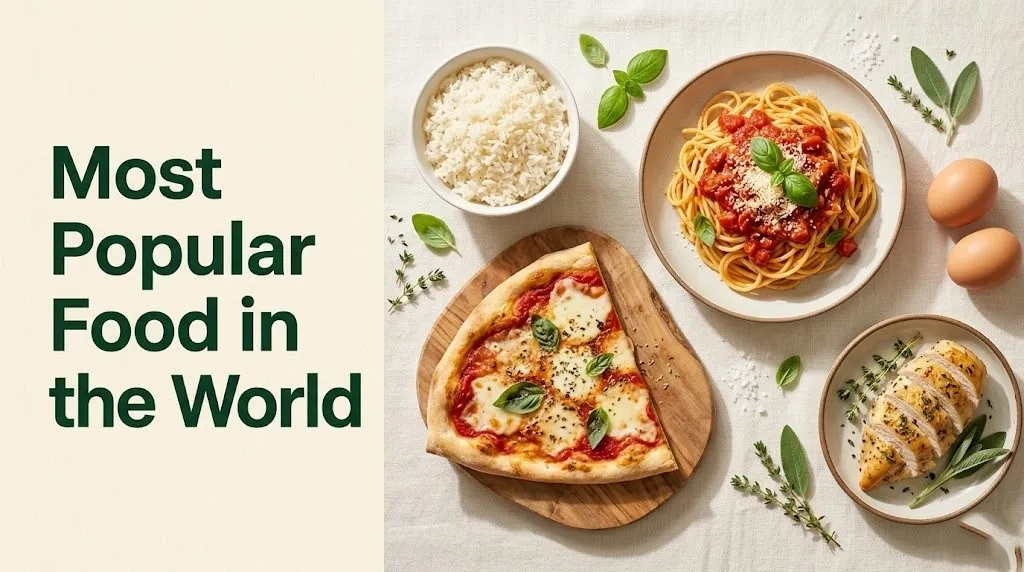
The distinction between “most consumed” and “most loved” matters here. Surveys measuring food preference, such as YouGov’s cross-national polling, frequently place Italian food and specifically pizza as the cuisine most people say they enjoy most. That’s a different question from what most people actually eat for sustenance each day.
Think of it this way: the world’s most-watched film and the world’s most-watched broadcast are rarely the same thing. Rice is the daily broadcast. Pizza is the blockbuster event.
| Measurement Framework | Top Food | Data Source |
|---|---|---|
| Most people eating it daily | Rice | FAO, International Rice Research Institute |
| Highest global market revenue | Pizza | Market research projections, 2024-2025 |
| Most widely preferred cuisine (survey) | Italian food | YouGov cross-national survey |
| Most viral street food (social data) | Tacos | Remitly/TikTok post volume analysis, 2024 |
| Most total agricultural production by weight | Wheat | FAO global crop data |
Most Consumed Food Worldwide
The most consumed food worldwide, by caloric contribution to the human diet, is white rice (Oryza sativa, polished). It is followed closely by wheat-based products and then by maize (corn, Zea mays).
The FAO tracks global food consumption by caloric availability rather than preference, which gives us the clearest scientific picture. Under this framework, rice and wheat together underpin the diets of the majority of people on Earth. Both are carbohydrate-dense grains that can be stored, transported, and cooked with minimal equipment.
Eggs (Gallus gallus domesticus eggs) consistently rank as the world’s most widely consumed animal-derived food, with production figures estimated in the hundreds of billions annually. Chicken (Gallus gallus domesticus meat) is the most consumed meat globally, outpacing beef and pork in total volume.
Key foods by consumption tier:
- Tier 1 (dietary staples, billions of people daily): Rice, wheat bread, pasta, corn/maize products
- Tier 2 (near-universal consumption, multiple times weekly): Eggs, chicken, potatoes, onions, tomatoes
- Tier 3 (broadly popular, culturally significant): Pizza, hamburgers, noodles, sushi, tacos, kebabs
How Is Food Popularity Measured?
Food popularity is measured through at least four distinct methods, each of which produces a different answer.
The first and most reliable for dietary significance is caloric contribution data from organizations like the FAO, which tracks how much of a population’s total energy intake comes from each food category. This is where rice and wheat dominate. The second method is agricultural production tonnage, which ranks wheat first globally because of its use across bread, pasta, pastry, and animal feed.
The third method is commercial market revenue, which reflects what people pay money for. By this measure, pizza consistently leads, with delivery platforms reporting staggering order volumes globally. The fourth method is social and survey data, including Google search volume, TikTok post counts, and YouGov preference surveys. These tend to favor trending, aspirational foods like tacos, sushi, and ramen over staple grains.
Understanding which measurement framework a source uses is the only way to evaluate its claim that “X is the most popular food.” A source citing pizza’s $145 billion market isn’t wrong. Neither is one citing rice’s 3.5 billion daily consumers.
| Measurement Method | What It Captures | Best Used For |
|---|---|---|
| FAO caloric contribution data | Dietary survival and dependence | Understanding global food security |
| Agricultural production tonnage | Raw crop volume | Understanding farming and supply chains |
| Commercial market revenue | Spending and economic demand | Understanding food industry trends |
| Social and survey preference data | Cultural desire and aspirational eating | Understanding food culture and trends |
Key Takeaway: “Most popular food in the world” has four valid answers depending on your measurement lens. By daily caloric sustenance, it’s rice. By commercial revenue, it’s pizza. By preference surveys, it’s Italian food broadly. By social media traction, it’s tacos.
Most Popular Food in the World: Full Ranked List for 2026
The most popular foods globally in 2026, combining FAO consumption data, commercial market figures, and cross-national preference research, rank as follows.
Rice holds the top position by daily consumption and caloric contribution. Pasta and bread follow closely as the other primary wheat-based staples eaten globally. Chicken is the world’s most consumed meat. Pizza leads all prepared dishes by commercial revenue and global market size.
| Rank | Food | Primary Reason for Ranking | Estimated Reach |
|---|---|---|---|
| 1 | Rice (Oryza sativa) | Most people eating it daily for calories | 3.5 billion+ daily consumers |
| 2 | Wheat bread | Most widely produced grain-based product | Consumed on every continent |
| 3 | Pasta | Second-largest wheat staple by consumption | Global production: 14.3 million tons/year |
| 4 | Chicken | Most consumed meat worldwide | Outpaces beef and pork globally |
| 5 | Eggs | Most universal animal food source | Hundreds of billions produced annually |
| 6 | Pizza | Highest commercial revenue of any single dish | $145 billion+ global market projected by 2025 |
| 7 | Potatoes (Solanum tuberosum) | Dominant staple in Europe and the Americas | 84% preference rate in U.S. YouGov data |
| 8 | Noodles (wheat and rice-based) | Dominant in East and Southeast Asian diets | Eaten by hundreds of millions daily |
| 9 | Hamburgers | Most globally recognized fast food format | U.S. origin, consumed in 100+ countries |
| 10 | Tacos | #1 street food by TikTok post volume globally | 1.8 million TikTok posts; growing fast |
People following halal dietary guidelines will note that chicken, eggs, rice, pasta, and potatoes all feature naturally in halal eating when prepared appropriately. Vegans will find rice, pasta, potatoes, and bread largely compatible with plant-based eating, though specific preparation methods vary.
Is Rice the Most Popular Food in the World?
Rice is the most popular food in the world by the metric that matters most to food security researchers: how many people depend on it every single day to meet their caloric needs.
According to the FAO, over 50% of the world’s population consumes rice as a primary food source, and it remains the dominant staple across South Asia, Southeast Asia, East Asia, and large portions of Sub-Saharan Africa and Latin America. The world consumed roughly 510 million metric tons of milled rice in the 2025/2026 consumption year, according to World Population Review data citing FAO figures.
Rice’s cultural penetration is remarkable. In Mandarin Chinese, the character 饭 (fàn), meaning “cooked rice,” is also used to mean “meal” itself. In Japanese, gohan means both “cooked rice” and “a meal.” That linguistic overlap reflects a dietary reality: for billions of people, eating and eating rice are interchangeable concepts.
White rice and brown rice are the same grain processed differently. Brown rice retains its bran layer, which contains dietary fiber, phenolic antioxidants, thiamine (vitamin B1), niacin (vitamin B3), and phosphorus. White rice has the bran polished away, leaving a starchier, faster-digesting grain with fewer micronutrients. Per 100g of cooked white rice (USDA FoodData Central): 130 calories, 28.1g carbohydrates, 2.69g protein, 0.28g fat, and 21% of the Daily Value for manganese.
People managing type 2 diabetes or insulin resistance should be aware that white rice carries a glycemic index of approximately 64. Harvard T.H. Chan School of Public Health research has associated high white rice intake with elevated diabetes risk in certain populations. Pairing white rice with protein, fat, or fiber-rich vegetables reduces its overall glycemic impact at a meal level.
Is Pizza the Most Popular Food in the World?
Pizza is the most popular food in the world by commercial market revenue, global brand reach, and consumer preference surveys, even though it doesn’t top the list for raw caloric contribution.
The global pizza market was projected to reach approximately $145 billion in revenue by 2025, according to market research cited by multiple food industry sources. Americans consume an average of 13 kilograms of pizza per year per capita, according to Euronews data citing Coldiretti figures, making the U.S. the world’s largest per capita pizza-consuming nation despite pizza’s Italian origins. Italy itself produces roughly 2.7 billion pizzas annually, equivalent to about 46 per person per year.
A standard slice of cheese pizza (approximately 107g) contains roughly 270 to 300 calories, 10 to 12g of fat, 7 to 9g of protein, and 34 to 36g of carbohydrates. The exact values shift substantially based on crust thickness, cheese quantity, and toppings. Thin-crust Margherita pizza made with tomato, fresh mozzarella, and basil sits at the healthier end. Deep-dish pizza loaded with processed meat toppings sits at the far other end.
Pizza is not suitable for people with celiac disease or non-celiac gluten sensitivity unless specifically made with a certified gluten-free crust. Many pizzerias offer gluten-free bases, but cross-contamination risk varies by kitchen. People watching sodium intake should know that a single cheese pizza slice can contain 400 to 700mg of sodium, depending on the sauce and cheese used.
Most Popular Street Food in the World
The most popular street food in the world by social media traction in 2024 is tacos, which generated approximately 1.8 million TikTok posts, according to data compiled by Remitly from TikTok post volumes.
Pani puri (India) ranked second with 734,200 posts, and the American hot dog placed third with 653,700. This social data reflects cultural enthusiasm and global food travel trends more than it reflects daily dietary dependence. Still, it’s a meaningful measure of what food cultures people most want to share, eat on the go, and celebrate publicly.
Street food matters nutritionally because it’s how hundreds of millions of people in lower-income countries access their daily calories. In many parts of South Asia, West Africa, and Southeast Asia, street vendors provide affordable, calorie-dense meals that constitute a significant portion of daily intake for urban workers.
The most popular street foods by region include:
- Latin America: Tacos, empanadas, tamales, ceviche, churros
- South Asia: Pani puri, chaat, samosas, vada pav, dosa
- Southeast Asia: Pad Thai, nasi goreng, satay, banh mi, pho
- East Asia: Ramen, gyoza, takoyaki, dan bing, scallion pancakes
- Middle East and North Africa: Shawarma, falafel, kofta, manakish
- Europe: Crepes, currywurst, fish and chips, waffles, gelato
- North America: Hot dogs, tacos, lobster rolls, funnel cake, poutine
Key Takeaway: The world’s most popular street food by current data is the taco, but “street food” means something much broader than trend dishes. For the majority of people eating street food daily, it’s their primary affordable calorie source, not a recreational food experience.
Most Popular Cuisine in the World
The most popular cuisine in the world by cross-national preference survey is Italian food, according to YouGov research that polled populations across multiple countries.
YouGov found that 99% of Italians enjoy Italian food (unsurprisingly), but also that over 90% of people in Spain, France, Sweden, and the UK named Italian food as their favorite foreign cuisine. Filipinos and Australians mirrored this pattern, with 90% of respondents from both countries citing Italian as a top preference. Chinese food ranked second in the YouGov data, and Japanese food placed third.
Google search data and Instagram hashtag volume tell a slightly different story. Chinese food ranks first in both Google search volume and Instagram hashtag frequency, according to Ambassador Cruise Line research aggregating data across these platforms. This gap between survey preference and search behavior likely reflects the fact that Chinese cuisine is more diverse and regionally varied than Italian, making it a broader object of curiosity.
Italian cuisine’s global appeal comes from accessibility: pizza and pasta are foods that cross cultural, economic, and age barriers with minimal friction. You don’t need to grow up eating Italian food to enjoy a bowl of spaghetti or a slice of Margherita pizza.
| Cuisine | YouGov Preference Rank | Google Search Rank | Instagram Hashtag Rank |
|---|---|---|---|
| Italian | 1st | 3rd | 2nd |
| Chinese | 2nd | 1st | 1st |
| Japanese | 3rd | Top 5 | Top 5 |
| American | 7th globally | Top 5 in U.S. | Varies |
Most Popular Food by Country
The most popular food in any given country depends heavily on climate, agricultural tradition, religious practice, and economic access. There is no single food that dominates every nation equally.
In China and across much of South and Southeast Asia, rice is the uncontested daily staple. In India, rice dominates in the south while wheat-based flatbreads like roti and chapati lead in the north. In Japan, short-grain japonica rice forms the base of the traditional diet. In most of Europe, wheat products (bread, pasta, pastry) are the primary grain staples, with rice consumption growing but secondary.
In the United States, potatoes ranked as the most preferred food in YouGov market research, with both french fries and mashed potatoes earning an 84% approval rating. In Mexico, corn (maize) products are the cultural and dietary core, expressing themselves through tortillas, tamales, and pozole. In West Africa, cassava (Manihot esculenta) and millet (Pennisetum glaucum) are foundational staples across many nations.
Regional patterns by continent:
- Asia: Rice dominant; noodles secondary; strong wheat presence in Central Asia
- Europe: Wheat bread and pasta; potatoes prevalent in Northern and Eastern Europe
- Africa: Cassava, maize, millet, sorghum; rice growing in coastal West Africa
- Latin America: Maize, rice, beans; tortilla is the most widely eaten single food form
- North America: Potatoes, wheat bread; rice consumption increasing with cultural diversity
- Oceania: Wheat bread dominant; rice growing with Asian-Australian population
Nutritional Value of the World’s Most Popular Foods
The nutritional value of the world’s most popular foods varies enormously, from lean high-protein options to calorie-dense refined grain dishes. Knowing the specific numbers helps you make real decisions, not vague ones.
Per 1 cup (186g) of cooked white rice: approximately 242 calories, 53g carbohydrates, 5g protein, 0.5g fat, and minimal fiber. It supplies manganese (essential for bone formation and enzyme function), phosphorus, and B vitamins including thiamine and niacin.
Brown rice (Oryza sativa, whole grain) in the same serving contains a similar calorie count but adds approximately 3.5g of dietary fiber and meaningfully higher amounts of magnesium and phenolic antioxidants. Think of the fiber in brown rice like a speed governor on your digestive system: it slows glucose absorption, which smooths out the blood sugar response compared to the white rice equivalent.
| Food | Serving Size | Calories | Carbs (g) | Protein (g) | Fat (g) | Notable Nutrient |
|---|---|---|---|---|---|---|
| Cooked white rice | 1 cup (186g) | 242 | 53 | 5 | 0.5 | Manganese, B vitamins |
| Cooked brown rice | 1 cup (195g) | 216 | 45 | 5 | 2 | Dietary fiber, magnesium, phenolics |
| Pasta (cooked, plain) | 1 cup (140g) | 220 | 43 | 8 | 1.3 | Iron, folate (B9) |
| Cheese pizza (1 slice) | 1 slice (~107g) | 272 | 34 | 12 | 10 | Calcium, protein |
| Roast chicken breast | 3 oz (85g) | 140 | 0 | 26 | 3 | Protein, niacin, selenium |
| Boiled egg | 1 large (50g) | 78 | 0.6 | 6 | 5 | Choline, vitamin D, B12 |
Source: USDA FoodData Central. All values are approximate and depend on preparation method and specific variety.
People with celiac disease must avoid wheat-based pasta and pizza dough; certified gluten-free versions using rice flour, chickpea flour (Cicer arietinum flour), or corn flour are widely available. People watching sodium intake should note that restaurant-prepared pasta dishes and pizza can contain far more sodium than home-cooked versions of the same dishes.
Key Takeaway: White rice and pasta are very similar in calories per serving, but brown rice and whole-wheat pasta both deliver significantly more fiber and micronutrients, making them the better nutritional choice when accessible and affordable.
Health Benefits of the World’s Most Popular Foods
The world’s most popular foods carry real, documented health benefits when eaten as part of a balanced dietary pattern, though the benefits vary significantly based on preparation and portion.
Rice provides fast, reliable energy from carbohydrates. Brown rice delivers phenolic antioxidants that research in the Journal of Nutritional Biochemistry has associated with reduced oxidative stress. It’s naturally gluten-free, making it the safest grain staple for people with celiac disease or gluten sensitivity. According to a 2024 review on WebMD, medically reviewed by registered dietitian Christine Mikstas, brown rice may also support blood sugar regulation due to its lower glycemic index of approximately 55 compared to white rice’s index of approximately 64.
Eggs are one of the most nutritionally complete foods in the standard diet. A single large egg delivers 6g of complete protein (containing all essential amino acids), choline (critical for brain function and liver health), vitamin D (calciferol, supporting calcium absorption), and vitamin B12 (cobalamin, supporting nerve health). The Academy of Nutrition and Dietetics notes that eggs provide dietary cholesterol but that the relationship between egg consumption and cardiovascular risk is more nuanced than once believed, with moderate intake of up to one egg per day considered appropriate for most healthy adults.
Chicken is the world’s most consumed meat for good nutritional reasons. A 3-ounce (85g) serving of roasted skinless chicken breast provides approximately 26g of protein, 3g of fat, and significant amounts of niacin (vitamin B3), selenium, and vitamin B6 (pyridoxine). It’s a high-protein option compatible with a wide range of dietary patterns including low-fat, diabetic-friendly, and Mediterranean-style eating.
Benefits across top globally popular foods:
- Rice (brown): Provides sustained energy, dietary fiber, manganese, phenolic antioxidants; gluten-free
- Eggs: Complete protein source; supplies choline, vitamin D, vitamin B12; quick to prepare
- Chicken (skinless): High protein, low fat, rich in niacin and selenium; widely compatible with dietary restrictions
- Pasta (whole wheat): Source of complex carbohydrates, iron, folate; whole wheat version adds fiber
- Tomatoes (base of pizza sauce and pasta sauce): Rich in lycopene (an antioxidant), vitamin C (ascorbic acid), and potassium
Most Popular Food in the World for People With Dietary Restrictions
The world’s most popular foods can accommodate most major dietary restrictions, but preparation method and specific ingredients determine whether a dish is truly suitable.
For gluten intolerance or celiac disease: Rice is the safest grain-based staple. It’s naturally gluten-free and widely available globally. Standard pasta and pizza dough contain gluten from wheat and are not safe for people with celiac disease without certified gluten-free alternatives. Many brands now produce pasta made from rice flour, chickpea flour, or lentil flour (Lens culinaris flour) that closely match the texture of traditional durum wheat pasta.
For people following halal dietary guidelines: Rice, eggs, vegetables, and most plant-based preparations are inherently halal. Chicken and beef are widely available in halal-certified forms. Pizza and fast-food burgers require verified halal certification for the meat components.
For vegans and vegetarians: Rice, pasta, bread, potatoes, and most grain staples are plant-based by nature. Pizza and pasta can easily be prepared without meat or dairy. Eggs are suitable for vegetarians who include them (lacto-ovo vegetarians) but not for vegans.
For people managing type 2 diabetes or blood sugar: Pairing white rice with protein (chicken, eggs, legumes) and fiber-rich vegetables significantly moderates its glycemic impact. Brown rice, whole-wheat pasta, and cauliflower rice offer lower-glycemic alternatives. The American Diabetes Association recommends focusing on total carbohydrate quality and portion size rather than eliminating grains entirely.
| Dietary Restriction | Safe Popular Foods | Use Caution With | Avoid or Verify |
|---|---|---|---|
| Celiac disease / gluten-free | Rice, eggs, chicken, potatoes | Oats (cross-contamination risk) | Standard pasta, pizza dough, wheat bread |
| Halal | Rice, eggs, vegetables, legumes, halal-certified chicken | Restaurant dishes (verify preparation) | Non-certified meat preparations |
| Vegan | Rice, pasta, bread, potatoes, vegetables | Pizza (contains dairy), pasta sauces with meat | Eggs, chicken, meat-topped pizza |
| Type 2 diabetes / blood sugar management | Brown rice, whole-wheat pasta, eggs, chicken | White rice (monitor portions) | Large servings of refined grain dishes |
| Low-sodium | Home-cooked rice, fresh chicken, eggs | Restaurant pasta and pizza (high sodium) | Processed and packaged versions |
Key Takeaway: Nearly every one of the world’s most popular foods has a version suitable for most dietary restrictions. The key variable is preparation method and sourcing, not the food category itself.
How to Cook the World’s Most Popular Foods at Home
Cooking the world’s most popular foods at home is achievable with basic equipment, though technique makes a meaningful difference in both flavor and nutritional outcome.
To cook perfect steamed white rice:
- Measure 1 cup (185g) of long-grain or jasmine white rice per 2 servings.
- Rinse the rice under cold water until the water runs mostly clear. This removes excess surface starch and reduces gumminess.
- Combine rinsed rice with 1.5 cups (355ml) of cold water and a pinch of salt in a medium saucepan.
- Bring to a boil over medium-high heat, then immediately reduce heat to the lowest possible setting.
- Cover tightly and cook for 18 minutes without lifting the lid.
- Remove from heat and let rest, covered, for 5 minutes before fluffing with a fork.
To prepare a basic tomato pasta sauce from scratch:
- Heat 1 tablespoon (15ml) of olive oil in a wide pan over medium heat.
- Add 2 cloves of minced garlic and cook for 60 seconds until fragrant but not browned.
- Pour in one 400g can of crushed whole tomatoes (Solanum lycopersicum) and stir.
- Add half a teaspoon of dried oregano and a pinch of red pepper flakes.
- Simmer uncovered for 20 to 25 minutes, stirring occasionally, until the sauce thickens.
- Taste and adjust salt and pepper; toss with 200g of cooked pasta (Triticum durum semolina pasta) per 2 servings.
To cook a basic chicken breast:
- Pat two boneless, skinless chicken breasts (approximately 170g each) dry with paper towels.
- Season both sides with half a teaspoon of salt, a quarter teaspoon of black pepper, and half a teaspoon of paprika per breast.
- Heat 1 tablespoon (15ml) of olive oil in an oven-safe skillet over medium-high heat.
- Sear the chicken for 4 minutes per side until golden brown.
- Transfer the skillet to an oven preheated to 190°C (375°F) for 15 to 18 minutes, until the internal temperature reaches 74°C (165°F) on a meat thermometer. This is the USDA-recommended safe internal temperature for poultry.
- Rest for 5 minutes before slicing.
Most Popular Food Trends in 2026
The most notable food trend of 2026 is the widening gap between globally consumed staple foods and the foods that dominate digital food culture. Rice feeds the most people. Fermented Korean dishes, regional Indian street foods, and plant-based interpretations of classic comfort dishes dominate what people post, search, and aspire to eat.
According to data collected by Oura’s nutrition research team analyzing millions of meal logs from May 2025 through February 2026 across English-speaking countries, chicken, eggs, and bananas remain the most universally logged foods globally. Regional standouts show jacket potatoes in the UK, burritos in the United States, and vegemite on toast in Australia as culturally distinctive logged meals.
Key food trends shaping what people eat and order in 2026:
- Plant-based versions of classic dishes: Cauliflower pizza crusts, lentil pasta, chickpea-based flatbreads, and jackfruit used as a meat substitute in tacos and burgers have moved from niche health food stores into mainstream supermarket shelves.
- Fermented and probiotic-rich foods: Kimchi, miso, kefir, and kombucha are being incorporated into dishes where they weren’t traditionally used. The research behind the gut microbiome’s role in immunity and metabolic health is driving this, particularly work published in journals like Cell and Nature Medicine on microbial diversity.
- High-protein reformulations: Pasta made from legume flours (chickpea, lentil, edamame), bread fortified with pea protein (Pisum sativum protein isolate), and rice bowls built around protein anchors like grilled chicken, tofu, or tempeh dominate meal-prep culture.
- Regional street food going global: Pani puri from India, pho from Vietnam, and birria tacos from Mexico have moved from niche cultural restaurants to mainstream delivery menus across North America and Europe.
- Reduced-waste cooking: Using whole chickens, rice bran, and tomato skins for broths and sauces reflects both economic pressure and environmental awareness shaping consumer behavior in 2026.
People following a Mediterranean dietary pattern, which the Academy of Nutrition and Dietetics consistently rates among the most evidence-backed approaches to long-term health, will find that most 2026 food trends align naturally with its principles: whole grains, plant-forward proteins, olive oil, fermented dairy, and abundant vegetables.
Frequently Asked Questions About the Most Popular Food in the World
What is the most popular food in the world right now?
By daily consumption volume, rice (Oryza sativa) is the most popular food in the world right now, eaten by an estimated 3.5 billion people every day.
By commercial market size, pizza leads with a global market projected at approximately $145 billion.
Both answers are correct depending on how you define “most popular.”
Is rice or pizza more popular worldwide?
Rice is more popular by the number of people who eat it daily as a dietary staple, particularly across Asia, Africa, and Latin America.
Pizza is more popular by global commercial revenue and consumer preference surveys conducted in wealthier nations.
These two foods are measuring different things: survival-level daily consumption versus consumer spending and cultural preference.
What is the number one most eaten food on Earth every day?
Rice is the number one most eaten food on Earth every day, with the FAO reporting that over 50% of the world’s population relies on it as a primary caloric source.
Wheat-based products collectively rival rice in total tonnage but are more dispersed across bread, pasta, noodles, and pastry rather than consumed as a single unified dish.
Eggs are the most widely eaten animal-derived food, with production estimated in the hundreds of billions annually across nearly every country.
What is the most popular street food in the world?
Tacos are the most popular street food in the world by TikTok post volume, generating approximately 1.8 million posts, according to Remitly research from 2024.
Pani puri from India placed second, and the American hot dog placed third in the same analysis.
Street food popularity by social data reflects cultural enthusiasm, not necessarily the foods that feed the most people daily through street vendor channels.
Which cuisine is considered the most popular in the world?
Italian cuisine is considered the most popular in the world according to YouGov cross-national preference surveys, with pizza and pasta crossing cultural and geographic barriers more consistently than any other cuisine.
Chinese cuisine ranks first in Google search volume and Instagram hashtag frequency, reflecting the enormous diversity and global curiosity surrounding Chinese regional cooking.
Japanese cuisine ranks third by most measures, driven particularly by the global spread of sushi, ramen, and Japanese convenience food culture.
The single most practical thing you can take from all of this: the world’s most eaten food and the world’s most enjoyed food are not the same dish, and confusing them leads to bad nutritional conclusions. Rice sustains more people than any other food. That makes it worth understanding nutritionally, not dismissing as plain or uninteresting.
If you want to eat more like most of the world eats, center your meals around whole grains (especially brown rice or whole-wheat pasta), lean proteins like chicken or eggs, and vegetables. That pattern is backed by more population-level health data than any trending food you’ll find on a top 10 list.
Start simple. Bowl of brown rice, grilled chicken breast, roasted vegetables. That’s essentially the dietary foundation of billions of people living long, active lives.