Rice is the most eaten food in the world, serving as the primary daily caloric source for more than 3.5 billion people across Asia, Africa, and Latin America. It is not even close. Rice, specifically Oryza sativa (Asian rice) and to a lesser extent Oryza glaberrima (African rice), anchors more meals on this planet than any other single food by a wide margin.
The Food and Agriculture Organization (FAO) of the United Nations reports that global rice production exceeded 510 million metric tons in the 2024 crop year, a figure that dwarfs wheat at roughly 400 million metric tons and maize at 390 million metric tons for direct human consumption. Those three grains together supply over 40 percent of the world’s dietary energy. Rice leads them all. It is the caloric engine of human civilization.
This article explains which food truly holds the title, how to compare rice against wheat and maize across different measurement lenses, what the nutritional profile of rice looks like, how it affects health when eaten daily, and how to prepare it in ways that maximize its benefits for people managing blood sugar, heart health, or weight. Every answer is grounded in data from the FAO, USDA, and peer-reviewed nutrition research as of 2026.
What Is the Most Eaten Food in the World? The Data Behind the Answer
The most eaten food in the world by total volume and by the number of people who depend on it daily is rice. More than half the global population eats rice as a dietary staple, and in countries like Bangladesh, Cambodia, and Laos, it supplies over 50 percent of total daily caloric intake. No other food comes close to that level of human reliance.
Measuring the world’s most eaten food depends on which metric you choose. By tonnage, sugar cane tops the list because it is the world’s largest crop by harvest weight, but nearly all of it gets processed into refined sugar or ethanol. By acreage, wheat is the largest crop with over 220 million hectares planted globally. But by the number of human beings who spoon it, lift it with chopsticks, or roll it into a ball with their fingers every single day, rice is the unqualified winner.
The FAO estimates that global rice consumption per person averages about 54 kilograms (119 pounds) annually. In some Southeast Asian countries the figure exceeds 150 kilograms per year. Wheat-based diets in North Africa and Central Asia produce a comparable staple food dominance, but wheat’s global average per capita consumption sits closer to 67 kilograms, and a far higher fraction of wheat becomes animal feed and industrial products. Rice is overwhelmingly eaten directly by humans. That distinction matters.
Maize (corn) presents the clearest competitor, but the comparison reveals a critical nutrition distinction. The United States grows more maize than any other country, yet less than 15 percent of it becomes food for people. The rest feeds livestock, runs through ethanol plants, or gets exported. In sub-Saharan Africa and parts of Latin America, maize is indeed a human staple, often ground into flour for porridge or flatbreads. But globally, rice feeds more human mouths directly than maize does.
Rice vs. Wheat vs. Maize: Which Grain Dominates Global Plates
Rice dominates global human diets, wheat is the most widely cultivated grain by land area, and maize is the highest-yielding crop by total output. Each grain tells a different story depending on whether you measure by calories consumed, hectares planted, or metric tons harvested. The table below breaks down the three contenders that actually compete for the title of the world’s most important food.
| Grain | Annual Global Production (metric tons, 2024) | Direct Human Consumption (%) | Primary Edible Form | Regions Where It Dominates |
|---|---|---|---|---|
| Rice (Oryza sativa) | 510 million | ~90 percent | Cooked whole grain | East, South, and Southeast Asia, West Africa |
| Wheat (Triticum aestivum) | 400 million | ~75 percent | Milled flour, bread, pasta | North Africa, Central Asia, Europe, North America |
| Maize (Zea mays) | 390 million (human food portion) | ~15 percent direct, remainder indirect | Whole kernel, milled flour, processed starch | Sub-Saharan Africa, Latin America, Southern Africa |
Sources: FAO World Food Situation report 2025, USDA Grain: World Markets and Trade, January 2026
Wheat feeds people through a complex processing chain. The grain gets milled into white flour, whole-wheat flour, and semolina before becoming bread, pasta, noodles, couscous, and pastries. That milling step removes the bran and germ in refined products, stripping out most of the fiber, B vitamins, and minerals unless enrichment adds them back. Rice, by contrast, is often eaten with less processing in its core consuming regions, though polished white rice dominates global trade.
Maize consumption tells a nutritional story worth paying attention to. In the United States and Europe, maize eaten directly by humans is mostly in processed forms: corn syrup, corn starch, corn oil, and snack products. In Africa and Latin America, maize is a whole-grain staple prepared through nixtamalization, the same alkali treatment used for tortillas that unlocks bound niacin and adds calcium. That preparation step separates a nutrient-dense traditional food from the industrial corn derivatives that dominate Western diets.
Key Takeaway: Rice wins the title because nearly all of it goes directly into a human mouth. Wheat feeds the most people across the most countries but is diluted by industrial uses. Maize produces staggering tonnage but feeds more livestock and fuel tanks than people.
Why Rice Became the World’s Staple Food
Rice became the world’s staple food because it delivers more calories per hectare than any other grain, thrives in flooded conditions that kill competing crops, and stores for months or years without spoiling when kept dry. Those three agricultural advantages, combined with its culinary versatility, explain how a single grass species came to feed more people than any other plant.
One hectare of irrigated rice paddies produces 6 to 10 metric tons of paddy rice per year in modern systems. That translates to roughly 20 to 35 million calories per hectare, enough to feed 25 to 40 people their full daily energy needs for a year. Wheat and maize yields per hectare are broadly similar in total tonnage, but rice’s near-total direct human consumption gives it the edge in feeding efficiency. Very little rice becomes animal feed or industrial starch.
Paddy cultivation also stabilizes soil fertility in ways that dryland grain farming does not. Flooded rice fields support nitrogen-fixing cyanobacteria and aquatic ferns like Azolla that add nitrogen to the soil without synthetic fertilizer. This biological nitrogen fixation, studied extensively by the International Rice Research Institute (IRRI) in the Philippines, helps explain how Chinese, Indian, and Southeast Asian farmers have maintained rice yields on the same fields for over 1,000 years. That is agricultural sustainability by any definition.
Rice stores without refrigeration. Milled white rice kept dry and cool remains edible for two to five years. Brown rice, with the bran layer intact, has a shorter shelf life of about six months before the natural oils in the bran turn rancid. For households without reliable electricity, rice is the original shelf-stable food, more practical than wheat flour which attracts pests and absorbs humidity faster. That storage reliability is part of the nutrition story. A food that does not spoil is a food that gets eaten, reliably, year after year.
The Nutritional Profile of White Rice and Brown Rice
White rice and brown rice start as the same grain, but milling removes the bran and germ to produce white rice, stripping away most of the fiber, vitamins, minerals, and phytonutrients in the process. The nutritional gap between the two is substantial, and it matters for anyone eating rice multiple times a day as a caloric foundation.
Brown rice retains the bran layer, which contains dietary fiber, magnesium, phosphorus, selenium, manganese, and B vitamins including thiamin (vitamin B1), niacin (vitamin B3), and vitamin B6. The germ, also intact in brown rice, holds vitamin E and essential fatty acids. White rice is essentially pure endosperm starch with trace protein and whatever vitamins are added back through fortification or enrichment programs in certain countries.
| Nutrient (per 1 cup cooked, ~195g) | White Rice (unenriched) | Brown Rice | Difference |
|---|---|---|---|
| Calories | 242 | 248 | Similar |
| Carbohydrates (g) | 53 | 52 | Similar |
| Protein (g) | 4.4 | 5.5 | Brown rice slightly higher |
| Dietary Fiber (g) | 0.6 | 3.2 | Brown rice contains 5x more |
| Magnesium (mg) | 12 | 86 | Brown rice contains 7x more |
| Phosphorus (mg) | 43 | 162 | Brown rice contains nearly 4x more |
| Manganese (mg) | 0.2 | 1.8 | Brown rice contains 9x more |
| Selenium (mcg) | 14 | 12 | Similar |
| Niacin (mg) | 0.4 | 3.0 | Brown rice much higher if unenriched |
Source: USDA FoodData Central, standard reference values for medium-grain cooked rice
The Harvard T.H. Chan School of Public Health has noted in dietary guidance materials that replacing white rice with brown rice is associated with a lower risk of type 2 diabetes in large cohort studies. The mechanism likely involves the fiber, magnesium, and lower glycemic load of the intact grain. White rice has a glycemic index in the high 70s to low 90s depending on variety and cooking method. Brown rice sits in the 50 to 68 range.
White rice is not nutritionally empty, but it is nutritionally stripped. It remains a useful source of easily digestible energy, which matters for athletes, people recovering from illness, and young children with high energy needs. Enriched white rice regains some B vitamins and iron added after milling, a public health policy that has reduced beriberi and anemia in rice-dependent populations. But enrichment does not restore the fiber, magnesium, or phytonutrient complex of the whole grain.
Is Eating Rice Every Day Healthy?
Eating rice every day can be perfectly healthy, provided the portion aligns with energy needs, the variety is at least partly whole-grain, and the rest of the plate includes vegetables, protein, and healthy fat. The nutritional verdict on rice depends on processing, quantity, and what accompanies it. Rice itself is neutral. The pattern around it tips the balance.
Hundreds of millions of people in Japan, Korea, Thailand, and India eat rice three times a day and maintain some of the lowest obesity rates and longest life expectancies globally. The World Health Organization (WHO) data on life expectancy consistently places Japan and South Korea, both high per capita rice-consuming nations, near the top of the global ranking. That outcome says less about rice itself and more about the total dietary pattern: moderate portions, plenty of vegetables, fermented foods, fish, and minimal ultra-processed foods.
Portion size is where rice eating tips from healthy to excessive for many people. A standard serving of cooked rice is half a cup, about 120 calories and 25 grams of carbohydrate. A typical restaurant serving in the U.S. is two to three cups, sometimes more. That single change in portion accounts for most of the “is rice fattening” conversation. Rice is calorically dense for its volume. Measuring it rather than scooping freely makes a measurable difference across months of daily eating.
Concerns about arsenic in rice are scientifically valid and deserve context. Rice absorbs arsenic from soil and water more efficiently than other grains. The FDA has monitored arsenic in rice products since 2011 and recommends that consumers vary grains rather than relying exclusively on rice, especially for infants and pregnant women. Rinsing rice thoroughly and cooking it in excess water, then draining, reduces inorganic arsenic content by 40 to 60 percent according to FDA research. This is a genuine safety practice worth implementing, not a reason to eliminate rice from the diet.
Key Takeaway: Daily rice eating works when portions are modest, brown rice appears in the rotation, and the plate includes vegetables and protein. The healthiest rice-eating cultures treat rice as a base, not the whole meal.
What Is the Healthiest Way to Cook Rice?
The healthiest way to cook rice is the pasta method: boiling rice in excess water, then draining before serving. This technique reduces inorganic arsenic content by up to 60 percent compared to the absorption method where all water gets absorbed into the grain. It also produces a lighter, less sticky texture that works well for salads, meal prep bowls, and side dishes.
The absorption method, simmering rice in a measured amount of water until it all disappears into the grain, remains the most common home technique. It is convenient and produces the fluffy or sticky texture many recipes require. But it also concentrates any arsenic present in the cooking water into the rice. For brown rice, which retains more arsenic in the bran layer, the pasta method is a particularly useful swap.
Rinsing rice matters more than most cooks realize. Running cold water through raw rice until the water runs clear removes surface starch that would otherwise gelatinize into gluey cooked grains. Rinsing also removes talc or glucose coatings sometimes added to commercial white rice for sheen, and it reduces free arsenic residues. A 2024 study in the journal Environmental Science and Technology found that thorough rinsing alone removed 10 to 15 percent of inorganic arsenic from white rice samples.
To cook rice with the pasta method for maximum nutrient retention and reduced arsenic:
- Rinse 1 cup of raw brown or white rice under cold running water for 60 seconds until the water runs nearly clear.
- Bring 6 cups of water to a rolling boil in a large pot.
- Add the rinsed rice and boil uncovered for 15 minutes for white rice, 30 minutes for brown rice.
- Drain the rice through a fine-mesh strainer, discarding the cooking water.
- Return the drained rice to the warm pot, cover with a lid, and let it steam off the heat for 5 minutes.
This method produces fluffy, separated grains and significantly lowers arsenic exposure. It also works for jasmine, basmati, and most long-grain varieties. Short-grain and sushi rice, which depend on retained starch for proper stickiness, lose their desired texture with this technique. For those varieties, the standard absorption method works better, and selecting rice from regions with lower soil arsenic, like California or parts of South Asia, mitigates the exposure concern.
Rice for Diabetics: Glycemic Impact and How to Lower It
Rice can be part of a diabetes-friendly diet when the variety, cooking method, and cooling step are chosen to lower its glycemic impact. White rice, particularly jasmine and sticky varieties, has a high glycemic index that spikes blood sugar quickly. Brown rice, parboiled rice, and cooked-then-cooled rice all produce a gentler glucose response.
The glycemic index of rice varies by type and processing. Basmati rice, especially the brown variety, has a GI around 50 to 55, putting it in the moderate range. Jasmine rice scores in the 80s, similar to pure glucose in its speed of absorption. Parboiled rice, also called converted rice, is partially boiled in the husk before milling, a process that drives some B vitamins from the bran into the endosperm and alters the starch structure to make it more resistant to digestion. The resulting GI falls in the 55 to 65 range.
Cooling cooked rice changes its starch chemistry in a way that directly benefits blood sugar control. When rice cools, some of the gelatinized starch retrograde into resistant starch, a type of carbohydrate that behaves more like soluble fiber in the digestive tract. Resistant starch resists digestion in the small intestine and ferments in the colon instead of dumping into the bloodstream as glucose. Reheating the cooled rice does not destroy the resistant starch once it has formed. A National Institutes of Health (NIH)-funded study published in the Asia Pacific Journal of Clinical Nutrition in 2025 confirmed that cooked and cooled white rice produced a 20 to 25 percent lower post-meal blood glucose response compared to freshly cooked rice from the same batch.
Practical tips for lowering the glycemic impact of rice at home:
- Choose brown basmati or parboiled rice as your daily staple.
- Cook rice the night before, refrigerate overnight, and reheat portions as needed.
- Add a tablespoon of coconut oil or ghee to the cooking water, then cool the rice. Research from the American Chemical Society suggests this combination of added fat and cooling increases resistant starch formation.
- Limit a rice serving to half a cup of cooked grains and fill the rest of the bowl with non-starchy vegetables and a lean protein.
Fortified Rice and Golden Rice: The 2026 Nutrition Technology Story
Fortified rice is white rice that has vitamins and minerals added back after milling to address specific nutrient deficiencies in populations that depend on rice as their primary food. Golden Rice is a genetically engineered variety that produces beta-carotene in the grain itself, a biological intervention designed to combat vitamin A deficiency. Both technologies represent public health responses to the nutritional limitations of polished white rice.
Standard rice fortification coats milled rice grains with a vitamin and mineral powder, usually containing iron, zinc, folic acid, thiamin, and niacin, bound with a water-resistant edible coating. The fortified kernels are then blended with regular rice at a ratio of roughly 1 to 100 grains. When cooked, the fortified kernels release their nutrients into the pot. The World Food Programme and various national governments distribute fortified rice through school feeding programs and food aid channels. The technology is straightforward and effective. The coating stays intact during washing if the rice is not scrubbed aggressively.
Golden Rice works differently. The grain itself produces beta-carotene, the same orange pigment found in carrots and sweet potatoes, because it carries genes from maize and a soil bacterium inserted into the rice genome. The human body converts beta-carotene into retinol, the active form of vitamin A. After more than two decades of development and regulatory review, Golden Rice received commercial approval in the Philippines in 2021 and Bangladesh in 2023, with planting expanding through 2026. The International Rice Research Institute and the Bill and Melinda Gates Foundation have supported Golden Rice development as a potential tool against vitamin A deficiency, which the WHO estimates causes 250,000 to 500,000 cases of childhood blindness annually.
Critics of Golden Rice have raised concerns about genetic modification in staple crops and whether the beta-carotene levels will remain effective under real-world storage and cooking conditions. Proponents argue that the technology reaches populations that supplements and food diversification programs have not. The 2026 evidence base is still growing. What is clear is that the nutritional limitation of white rice as a near-exclusive staple is a genuine global health problem, and both fortification and biofortification are attempts to solve it within the constraints of how people actually eat.
Key Takeaway: Rice fortification and Golden Rice are not competing ideas. They address the same fundamental problem: billions of people eat white rice as their primary food, and white rice alone does not provide complete nutrition. The best solution for any given community depends on infrastructure, cost, and cultural acceptance.
Rice Around the World: Regional Staple Forms and Their Nutritional Differences
Rice takes on distinct forms and nutritional profiles across the major rice-eating regions of the world. The variety of the grain, the method of cooking, and the traditional accompaniments all shift the health equation of a rice-based meal. Understanding these regional patterns helps explain why rice can support excellent health outcomes in one context and contribute to rising diabetes rates in another.
In Japan, short-grain japonica rice is the staple, cooked with minimal water to a sticky consistency that can be picked up with chopsticks. A traditional Japanese meal pairs a modest bowl of rice, about 150 grams cooked, with miso soup, grilled fish, pickled vegetables, and a small dish of fermented soybeans (natto). The protein, fiber, and fermented food components slow digestion and blunt the glycemic response. Japanese rice consumption per capita has actually declined over the past 50 years while life expectancy has risen, a reminder that rice is part of a pattern, not a single-cause food.
In South India, parboiled rice and idli rice form the backbone of a cuisine that includes fermented rice-and-lentil batters for idli and dosa. Fermentation increases the B-vitamin content and partially breaks down the carbohydrates, reducing the glycemic load. The lentils in the batter add complete protein through the rice-legume amino acid complementation. This is a nutritionally sophisticated grain preparation method that predates modern nutrition science by centuries.
In West Africa, Oryza glaberrima, the indigenous African rice species, is still cultivated alongside Asian rice varieties introduced centuries ago. Jollof rice, a beloved dish across Nigeria, Ghana, and Senegal, cooks rice in a tomato and pepper base with onions and often a small amount of meat or fish. The tomatoes contribute lycopene and vitamin C. The portion sizes can be generous, and the refined white rice base plus fried plantains plus seasoned oil can add up calorically, but the dish remains a culturally central, nutritionally mixed food that varies widely by household.
The table below compares regional rice-eating patterns and their nutritional implications.
| Region | Dominant Rice Type | Typical Meal Pattern | Glycemic Impact | Nutritional Strengths |
|---|---|---|---|---|
| Japan | Short-grain white | Small bowl, with fish, soup, pickles | Moderate (slowed by protein and fat) | Portion control, variety, fermented foods |
| South India | Parboiled, fermented | Idli, dosa with lentil batter | Low to moderate (fermentation, legume pairing) | Complete protein, B vitamins from fermentation |
| West Africa | Long-grain white | Jollof rice with tomato base, meat or fish | Moderate to high | Lycopene from tomatoes, protein accompaniments |
| Southeast Asia (Thailand, Vietnam) | Jasmine white | Large portion with small protein and vegetable sides | High (high GI rice, large portion) | Lighter on saturated fat, fresh herbs |
Rice Alternatives: Can Other Grains Match Rice’s Global Role?
Other grains can match rice’s nutritional role, but none match its unique combination of culinary neutrality, short cooking time, and cultural embeddedness across so many distinct cuisines. Quinoa, millet, sorghum, and buckwheat all offer superior nutritional profiles to white rice, but they cost more, cook differently, and lack the centuries of recipe infrastructure that rice has accumulated.
Quinoa (Chenopodium quinoa) is the closest thing to a nutritional upgrade with a similar plate role. One cup of cooked quinoa provides 8 grams of complete protein, all nine essential amino acids, and 5 grams of fiber. It cooks in 15 minutes, roughly the same time as white rice. The Academy of Nutrition and Dietetics has identified quinoa as a nutrient-dense whole grain that fits into almost any dietary pattern. Its limitations are price, quinoa costs two to four times as much as rice per pound, and a slightly bitter saponin coating that requires thorough rinsing before cooking.
Millet and sorghum are the grains most likely to expand their global footprint through 2026 and beyond. Both are drought-tolerant crops that grow where rice and wheat struggle. Millets, including finger millet (Eleusine coracana) and pearl millet (Pennisetum glaucum), are naturally gluten-free, high in fiber, and rich in magnesium. The Food and Agriculture Organization declared 2023 the International Year of Millets, and market data shows that millet-based products, pasta, breakfast cereals, and ready-to-eat grain pouches, have grown in availability since then.
Cauliflower rice is not a grain. It is a vegetable minced into grain-sized pieces, and it provides about 25 calories per cup compared to 200 for rice. It is a useful calorie reduction tool, particularly for people managing type 2 diabetes or following a very low-carbohydrate eating pattern. But it does not replace rice nutritionally. It lacks the carbohydrate energy, the protein, and the specific B vitamins that rice delivers. Think of cauliflower rice as a vegetable serving, not a grain equivalent. Rotating it into meals adds fiber and vitamin C while reducing overall calorie density, which is a legitimate strategy for some dietary goals.
| Rice Alternative (1 cup cooked) | Calories | Protein (g) | Fiber (g) | Notable Nutrients |
|---|---|---|---|---|
| White Rice | 242 | 4.4 | 0.6 | Manganese, selenium (if enriched) |
| Brown Rice | 248 | 5.5 | 3.2 | Magnesium, phosphorus, manganese |
| Quinoa | 222 | 8.1 | 5.2 | Complete protein, iron, magnesium |
| Millet | 207 | 6.1 | 2.3 | Magnesium, phosphorus, B vitamins |
| Cauliflower Rice | 25 | 2.0 | 2.0 | Vitamin C, vitamin K |
The Future of Rice: Climate, Nutrition Science, and Sustainability in 2026
The future of rice as the world’s most eaten food depends on whether rice farming can adapt to rising temperatures, water shortages, and the need for more nutrient-dense varieties. The grain that built civilization is now under pressure from the climate conditions that civilization created. The responses underway are scientific, agricultural, and culinary.
Methane emissions from flooded rice paddies account for roughly 10 to 12 percent of global agricultural methane, according to the Environmental Protection Agency and the Intergovernmental Panel on Climate Change. Rice paddies are the largest human-made source of atmospheric methane, produced by anaerobic bacteria decomposing organic matter in flooded soils. Alternate wetting and drying (AWD) is a farming technique where paddies are allowed to dry between flooding events rather than remaining continuously submerged. The International Rice Research Institute has demonstrated that AWD reduces methane emissions by 30 to 50 percent without decreasing yields, and the technique is being scaled across Vietnam, Bangladesh, and parts of India through 2026.
Salt-tolerant rice varieties are expanding the land base where rice can grow as sea-level rise pushes saltwater into coastal rice paddies, especially in the Mekong Delta and Bangladesh. Researchers at IRRI and national breeding programs have developed varieties that yield acceptably in brackish water conditions that would kill standard rice plants. This is adaptation, not mitigation, and it is happening faster than many outside agriculture circles realize.
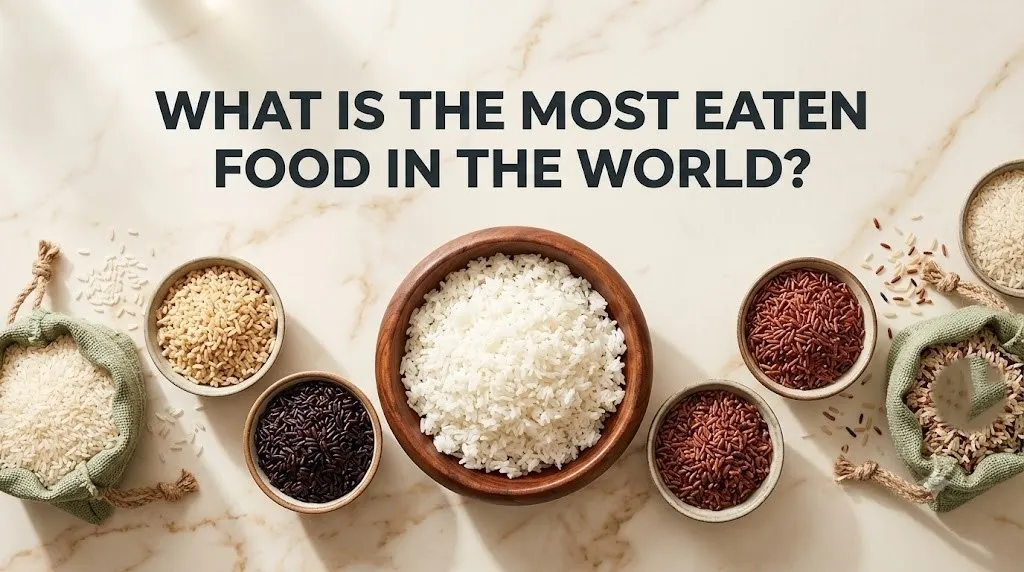
Nutritionally, the trend toward pigmented rice varieties continues to gain traction. Black rice (Oryza sativa L. indica), also called forbidden rice, contains anthocyanins, the same antioxidant pigments found in blueberries and blackberries. Red rice varieties carry proanthocyanidins in the bran layer. These compounds are associated with reduced oxidative stress and inflammation in preliminary studies, though the human trial evidence specific to pigmented rice remains limited as of 2026. They are not a substitute for vegetables, but they do turn a bowl of rice from a fiber-free starch vehicle into a modest source of phytonutrients. The color is the clue. Darker bran means more plant compounds.
Key Takeaway: Rice in 2026 is a food in transition. Climate adaptation is reshaping how and where it is grown. Nutrition science is pushing both ancient pigmented varieties and modern biofortified ones back into the spotlight. The world’s most eaten food is not static, and the changes happening now will shape what rice means for global health in the decades ahead.
Frequently Asked Questions About the World’s Most Eaten Food
Is rice or wheat more consumed globally?
Rice is the most consumed grain for direct human eating, feeding over 3.5 billion people as a daily staple.
Wheat is planted on more hectares but a larger share goes to animal feed and industrial uses.
By the total number of human mouths fed, rice is the clear winner.
Which country eats the most rice per person?
Bangladesh, Cambodia, and Laos lead the world in per capita rice consumption at over 150 kilograms per person per year.
Myanmar and Vietnam follow closely behind.
In these countries, rice supplies 50 to 70 percent of total daily calories.
What is the healthiest rice to eat daily?
Brown basmati or parboiled rice are the healthiest choices for daily eating because they deliver more fiber and a lower glycemic impact.
Brown rice retains the bran and germ layers with their magnesium, phosphorus, and B vitamins.
Rotating with black rice or red rice adds anthocyanin antioxidants to the mix.
Can eating rice every day cause diabetes?
Eating white rice every day in large portions is associated with a higher risk of type 2 diabetes in large observational studies.
The risk depends on portion size, rice variety, and what accompanies the rice on the plate.
Substituting brown rice for white rice and keeping portions to half a cup or one cup cooked lowers the risk.
What food will replace rice in the future?
No single food is positioned to replace rice as a global staple within the foreseeable future.
Millets and sorghum are expanding as climate-resilient alternatives in drought-prone regions.
Quinoa offers a nutritional upgrade but remains too expensive for mass staple replacement.
Rice earned its place at the center of the global table through an unmatched combination of agricultural productivity, storage stability, and culinary adaptability. Understanding what that means for your own plate comes down to three choices: the variety you buy, the amount you eat, and what you eat alongside it. Those decisions matter more than the fact that rice is a staple.
The single most actionable thing you can do this week is switch one of your rice-based meals from white to brown, or cook your white rice a day ahead to let the resistant starch develop, or try the pasta cooking method to lower arsenic exposure. Any one of those changes, repeated across weeks of meals, adds up to a measurable shift in fiber intake, glycemic control, and long-term health without giving up the food that feeds the world.
Rice is not the problem. How it is processed, portioned, and plated determines whether a bowl of it supports your health or works against it. The same grain that fuels half the planet can fuel you well too. You just have to treat it with a little more intention than a quick scoop from the rice cooker.