Making healthy dog treats at home gives you full control over every ingredient your dog puts in their mouth. These recipes use real, dog-safe foods that deliver actual nutritional value, not filler starches and artificial preservatives.
Treats account for a meaningful portion of many dogs’ daily food intake. According to the American College of Veterinary Nutrition (ACVN), treats should represent no more than 10% of a dog’s total daily caloric intake. That makes ingredient quality genuinely matter, not just a preference.
This guide covers what makes a treat nutritionally sound, which ingredients are safe and which are dangerous, six tested recipes for different needs and life stages, storage guidance, and portioning by dog size and age. Whether you have a senior dog with dental issues or a high-energy puppy, there’s a recipe here that fits.
Healthy Dog Treats Recipe: What You Need to Know First
A healthy dog treat recipe uses ingredients that are safe for canine digestion, provide genuine nutritional value, and stay within a dog’s caloric limits for the day.
This is different from what many commercial treats offer. Many mass-market dog treats rely on corn syrup, artificial colorings, and preservative compounds like BHA (butylated hydroxyanisole) and BHT (butylated hydroxytoluene), which have raised ongoing safety questions in veterinary research. Homemade versions let you skip all of that entirely.
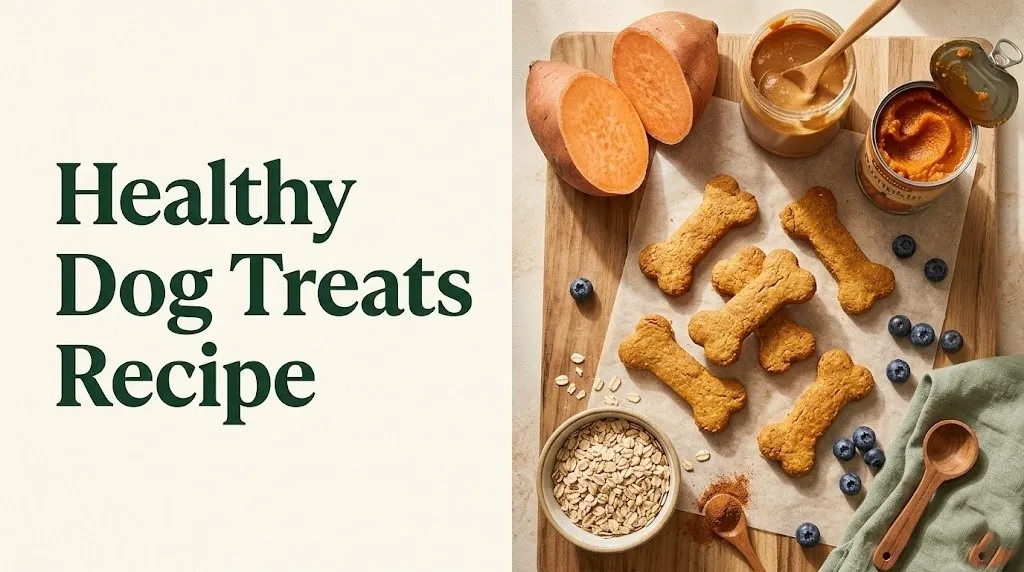
At its core, a well-designed homemade treat includes a protein source, a fiber-rich carbohydrate, a binding agent like egg, and a flavoring dogs actually respond to. The ratio matters too. Too much fat can stress a dog’s pancreas. Too much sugar, even from natural fruit, can cause blood sugar swings, especially in older dogs.
Dogs don’t need treats to be elaborate. A three-ingredient peanut butter and pumpkin biscuit, baked correctly and sized appropriately, does the job better than most commercial options costing several dollars per bag.
| Component | What It Does | Example Ingredients |
|---|---|---|
| Protein source | Supports muscle maintenance, satiety | Egg, ground turkey, canned salmon |
| Fiber-rich carb | Supports digestion, provides energy | Pumpkin puree, sweet potato, oats |
| Binding agent | Holds shape, adds protein | Egg, unsweetened applesauce |
| Flavor element | Palatability for the dog | Xylitol-free peanut butter, parsley, cheddar |
| Fat source (limited) | Energy, coat health | Coconut oil (in small amounts), natural peanut butter |
What Makes a Dog Treat Healthy
A dog treat is genuinely healthy when it delivers usable nutrients, contains no toxic compounds, and fits within the dog’s daily caloric budget without displacing proper meals.
The word “healthy” gets used loosely in pet food marketing. A treat can be made from “real chicken” and still be loaded with sodium, artificial flavors, and preservatives that add up over time. Conversely, a homemade treat made from plain pumpkin and oats provides soluble fiber (beta-glucan), potassium, and vitamin B6 with almost no processing at all.
Three markers separate a genuinely good treat from marketing noise:
- Ingredient transparency: You can name every ingredient and know what it does.
- Appropriate fat content: Treats should not be a primary fat source. The Association of American Feed Control Officials (AAFCO) sets minimum fat levels for complete dog foods; treats should contribute fat in proportion.
- No toxic compounds: This means no xylitol, no grapes or raisins, no onion or garlic powder, no macadamia nuts, no chocolate, no nutmeg, and no raw yeast dough.
Dogs with known medical conditions including pancreatitis, kidney disease, diabetes, or confirmed food allergies need treat recipes reviewed by a veterinarian before any new ingredients are introduced. A brief conversation with your vet takes five minutes and prevents a potentially serious reaction.
Quick Tip:
- Read peanut butter labels every time you buy a new jar. Some brands switch formulations and add xylitol with no obvious change to packaging.
- Use plain canned pumpkin, not pumpkin pie filling. Many pie filling brands contain nutmeg, which is toxic to dogs.
Healthy Dog Treat Ingredients: The Safe and Beneficial List
The best ingredients for homemade dog treats are whole foods that dogs can digest efficiently and that provide identifiable nutrients.
Beta-carotene, found in both pumpkin (Cucurbita pepo) and sweet potato (Ipomoea batatas), converts to vitamin A in dogs and supports eye function, immune response, and skin health. Both ingredients are also high in dietary fiber, which supports regular bowel movements and healthy gut motility.
Rolled oats (Avena sativa) provide soluble fiber in the form of beta-glucan, along with iron, manganese, and B vitamins including thiamine (B1) and riboflavin (B2). For most dogs, oats digest well. Dogs with confirmed grain sensitivity or celiac-equivalent conditions, though rare in dogs, should avoid oats entirely.
Eggs deliver complete protein with all essential amino acids, plus selenium and riboflavin. Always use fully cooked eggs. Raw egg whites contain avidin, a compound that blocks absorption of biotin (vitamin B7) when consumed regularly.
| Ingredient | Key Nutrients | Notes |
|---|---|---|
| Pumpkin puree | Fiber, beta-carotene, potassium | Plain only. Not pie filling. |
| Sweet potato (cooked) | Beta-carotene, vitamin B6, fiber | Plain, no butter or seasoning |
| Rolled oats | Beta-glucan, iron, B vitamins | Avoid for grain-sensitive dogs |
| Egg (cooked) | Complete protein, selenium, riboflavin | Fully cooked only |
| Xylitol-free peanut butter | Protein, niacin, healthy fats | Check label every time |
| Plain Greek yogurt | Protein, calcium, probiotics | Unsweetened only; avoid in lactose-intolerant dogs |
| Blueberries | Antioxidants, vitamin C, manganese | Whole or mashed; small treat size |
| Canned salmon (plain) | Omega-3 fatty acids (DHA/EPA), protein | No salt added; no seasoning |
| Banana | Potassium, vitamin B6, fiber | High natural sugar; use sparingly |
| Carrots | Beta-carotene, fiber, vitamin K | Low calorie; great for dental chewing |
Key Takeaway: The safest homemade dog treat ingredients are whole, minimally processed foods with identifiable nutrients. Always check peanut butter labels for xylitol and use plain pumpkin, never pie filling.
How to Make Healthy Dog Treats at Home: Base Method
Making healthy dog treats at home follows a straightforward baking method that works across most recipes.
The base process involves mixing dry ingredients (flour, oats), wet ingredients (pumpkin, egg, peanut butter), combining into a dough, rolling to thickness, cutting into shapes, and baking at 350°F (175°C) until firm. Thickness matters more than most beginner bakers realize. Thinner treats (¼ inch / 6 mm) bake to a crunchier texture. Thicker treats (½ inch / 12 mm) stay softer, which suits senior dogs or dogs with dental sensitivities.
Here is the universal base method:
Base Homemade Dog Treat Method:
To make a standard baked dog treat dough:
- Preheat your oven to 350°F (175°C). Line a baking sheet with parchment paper.
- Mix 2 cups (240g) whole wheat flour or brown rice flour in a large bowl with ½ tsp baking powder (not baking soda).
- In a separate bowl, whisk 2 large eggs, ⅓ cup (85g) plain pumpkin puree, and 3 tbsp (48g) xylitol-free peanut butter until smooth.
- Combine wet and dry ingredients. Mix until a firm dough forms. Add 1 to 2 tbsp water if the dough is too dry to roll.
- Roll dough on a lightly floured surface to ¼ inch (6 mm) thickness for crunchy treats or ½ inch (12 mm) for softer ones.
- Cut with a cookie cutter or knife into pieces appropriate for your dog’s size. A small breed treat should be no larger than 1 inch x 1 inch. A large breed treat can be 2 to 3 inches.
- Place on prepared baking sheet. Bake for 20 to 25 minutes until firm and lightly golden.
- Cool completely on a wire rack before storing. At least 30 minutes at room temperature.
Never skip the full cooling step. Storing warm treats creates interior steam that leads to mold within days.
Peanut Butter Dog Treat Recipe Without Xylitol
A peanut butter dog treat made without xylitol is the most popular homemade option because dogs find the flavor highly palatable and it comes together in under 30 minutes.
Xylitol is the critical variable here. According to the ASPCA Animal Poison Control Center, xylitol causes a rapid release of insulin in dogs, leading to hypoglycemia (low blood sugar) and potentially liver failure even in small amounts. Always use natural peanut butter with one or two ingredients: peanuts, and optionally salt. Brands like 365 by Whole Foods, Adams, and Smucker’s Natural are generally xylitol-free, but labels change. Read every time.
Peanut Butter Banana Dog Biscuits:
Yield: approximately 30 treats (small to medium size)
Prep time: 10 minutes
Cook time: 22 minutes at 350°F (175°C)
Calories per treat (small): approximately 30 to 40 calories
Ingredients:
- 2 cups (240g) whole wheat flour (substitute brown rice flour for grain-sensitive dogs)
- 1 ripe medium banana (118g), mashed
- ⅓ cup (85g) xylitol-free, unsalted peanut butter
- 2 large eggs
- 2 tbsp (30ml) water (add only if dough is too dry)
Instructions:
- Preheat oven to 350°F (175°C). Line a baking sheet with parchment.
- Mash the banana in a large bowl until no large lumps remain.
- Add peanut butter and eggs. Whisk together until fully combined.
- Stir in flour gradually until a firm dough forms.
- Add water one tablespoon at a time if dough crumbles when pressed.
- Roll on a lightly floured surface to ¼ inch (6 mm) thickness.
- Cut into bone or circle shapes appropriate for your dog’s size.
- Bake 20 to 22 minutes until firm and golden on the edges.
- Cool completely on a rack before storing. Do not store warm.
Dogs with pancreatitis or obesity should have peanut butter treats only rarely, if at all, due to fat content. Small breeds should get treats no larger than 1 inch to prevent choking.
Pumpkin Dog Treat Recipe
A pumpkin dog treat recipe works well for dogs with sensitive stomachs or irregular digestion because pumpkin’s soluble fiber supports bowel regularity in both directions.
Veterinary nutritionists frequently recommend 1 to 4 teaspoons of plain pumpkin puree per day for dogs with mild digestive upset. Baking it into a treat delivers that benefit in a form dogs actually want to eat.
Pumpkin Oat Dog Bites:
Yield: approximately 36 small treats
Prep time: 10 minutes
Cook time: 25 minutes at 350°F (175°C)
Calories per treat: approximately 25 to 35 calories
Ingredients:
- 1½ cups (180g) whole wheat flour or oat flour (blended rolled oats)
- ½ cup (45g) rolled oats (Avena sativa)
- ½ cup (123g) plain canned pumpkin puree
- 2 large eggs
- 1 tsp cinnamon (Ceylon cinnamon is safe in small amounts for dogs; Cassia cinnamon in large quantities can cause issues, so use no more than 1 tsp total in the full batch)
Instructions:
- Preheat oven to 350°F (175°C).
- Combine flour, oats, and cinnamon in a bowl.
- In a separate bowl, whisk eggs and pumpkin until smooth.
- Pour wet ingredients into dry. Mix to a firm dough.
- Roll to ¼ inch (6 mm) and cut into small rounds or squares.
- Bake 23 to 25 minutes until set and lightly firm.
- Cool fully on a rack before storing.
Grain-sensitive dogs should substitute oat flour with chickpea flour (Cicer arietinum) in equal measure. Dogs with diabetes or insulin resistance should receive pumpkin treats in limited quantities, as pumpkin contains natural carbohydrates.
Sweet Potato Dog Treats Recipe
Sweet potato dog treats are among the most nutrient-dense options you can bake because sweet potatoes (Ipomoea batatas) carry beta-carotene, vitamin B6, potassium, and dietary fiber in one ingredient.
A medium sweet potato (130g) provides roughly 103 calories, 3.8g fiber, 2.3g protein, and high levels of beta-carotene, which converts to vitamin A and supports vision, immune defense, and skin integrity in dogs. That nutritional profile means these treats do more than just taste good.
Sweet Potato Chews (Dehydrated Style):
Yield: varies by potato size; approximately 20 to 30 slices per potato
Prep time: 5 minutes
Cook time: 3 hours at 250°F (120°C)
Calories per slice: approximately 10 to 20 calories
Instructions:
- Preheat oven to 250°F (120°C).
- Wash and peel 2 large sweet potatoes.
- Slice lengthwise into ¼ inch (6 mm) thick strips. Thicker slices stay chewy. Thinner ones get crispier.
- Lay slices flat on a parchment-lined baking sheet. Do not overlap.
- Bake for 1.5 hours, flip each slice, then bake another 1.5 hours.
- Remove when slices are dried through but still slightly pliable.
- Cool completely. Store in an airtight container in the refrigerator.
These dehydrated slices are excellent for large breeds who benefit from a longer-lasting chew. Dogs with diabetes should receive sweet potato treats sparingly due to the natural sugar content. Think of the dehydration process like concentrating the flavors and nutrients into a chewy strip, similar to making fruit leather for humans, but without added sugar or preservatives.
Key Takeaway: Pumpkin and sweet potato are the two most nutritionally productive bases for homemade dog treats. They provide fiber, beta-carotene, and potassium with minimal calories, making them appropriate for most dogs when served plain and unseasoned.
Oat-Based Dog Treat Recipe
An oat-based dog treat recipe provides soluble fiber, sustained energy, and B vitamins in a format that most dogs tolerate easily.
Rolled oats (Avena sativa) work differently from refined flours. Their soluble fiber, primarily beta-glucan, slows the movement of food through the digestive system and supports stable blood glucose levels. For dogs that tend toward loose stools or inconsistent energy, oat-based treats offer a gentle, food-first solution.
Banana Oat Dog Cookies:
Yield: approximately 24 treats
Prep time: 10 minutes
Cook time: 20 minutes at 350°F (175°C)
Calories per treat: approximately 35 to 45 calories
Ingredients:
- 2 cups (180g) rolled oats (blended into oat flour in a food processor or blender)
- 1 ripe medium banana (118g), mashed
- 1 large egg
- ¼ cup (62g) plain Greek yogurt (unsweetened, no artificial sweeteners)
- 1 tbsp (10g) ground flaxseed (Linum usitatissimum; source of plant-based omega-3 fatty acids)
Instructions:
- Blend rolled oats in a blender until fine flour forms. Takes about 30 seconds.
- Preheat oven to 350°F (175°C).
- Mash banana in a bowl. Add egg, yogurt, and flaxseed. Mix thoroughly.
- Stir in oat flour until dough is firm. It will be slightly sticky.
- Drop by tablespoon onto parchment-lined baking sheet, 1 inch apart.
- Flatten slightly with the back of a spoon.
- Bake 18 to 20 minutes until edges are firm and tops are set.
- Cool completely before serving or storing.
Dogs with lactose intolerance should replace Greek yogurt with an additional 2 tablespoons of unsweetened applesauce. This substitution maintains moisture without dairy. Dogs with confirmed grain sensitivity should use a different recipe base entirely.
Grain-Free Dog Treat Recipes
Grain-free dog treat recipes use alternative flours like chickpea flour, coconut flour, or potato flour in place of wheat or oat-based ingredients.
One important note before going grain-free by default: grain-free does not automatically mean better. The FDA investigated a potential link between grain-free diets high in peas, lentils, and legumes and dilated cardiomyopathy (DCM) in dogs between 2018 and 2022. The investigation did not establish definitive causation, but it remains under review by veterinary cardiologists. Dogs with a specific diagnosed grain intolerance benefit from grain-free recipes. Dogs without that diagnosis do not automatically need them.
Grain-Free Chickpea and Turkey Treats:
Yield: approximately 28 treats
Prep time: 12 minutes
Cook time: 22 minutes at 350°F (175°C)
Calories per treat: approximately 40 to 50 calories
Ingredients:
- 1½ cups (180g) chickpea flour (Cicer arietinum)
- ½ cup (113g) cooked ground turkey (no seasoning, no salt)
- 1 large egg
- ¼ cup (62g) plain pumpkin puree
- 2 tbsp (30ml) water
Instructions:
- Preheat oven to 350°F (175°C).
- Cook ground turkey thoroughly in a pan without oil or seasoning. Cool completely.
- Combine chickpea flour in a bowl with pumpkin and egg. Mix well.
- Add cooled ground turkey. Mix until evenly distributed.
- Add water to bring dough together. It should hold its shape when pressed.
- Roll to ¼ inch (6 mm) and cut into small rounds.
- Bake 20 to 22 minutes until firm.
- Cool fully on a rack before storing.
Always confirm with your veterinarian before switching a dog with diagnosed cardiac conditions to any grain-free diet or treat recipe, given the ongoing DCM research. Chickpea flour is high in plant-based protein and fiber, making these treats genuinely filling for dogs prone to overeating.
Key Takeaway: Grain-free treats serve dogs with diagnosed grain intolerance well, but dogs without that condition don’t need them. Check with your vet if your dog has any history of cardiac issues before committing to a grain-free treat routine.
Dog Treats for Dogs With Allergies
Homemade dog treats are one of the best tools for managing food allergies in dogs, because you control every single ingredient.
Food hypersensitivity in dogs most commonly involves beef, dairy, wheat, egg, chicken, lamb, soy, pork, rabbit, and fish, according to research published in the journal Veterinary Evidence. The most effective approach to identifying and managing these reactions is an elimination diet followed by controlled reintroduction, overseen by a veterinarian or a board-certified veterinary nutritionist.
For allergy-prone dogs, treats should follow the same limited-ingredient principle as the elimination diet. If your dog is on a novel protein diet (rabbit or venison, for example), the treats must also use only that protein. Introducing a different protein in a treat while the elimination diet is in progress invalidates the results.
Limited Ingredient Salmon Bites:
Yield: approximately 30 small bites
Prep time: 10 minutes
Cook time: 20 minutes at 350°F (175°C)
Calories per treat: approximately 20 to 30 calories
Ingredients:
- 1 can (142g) plain canned salmon (no added salt, in water, drained)
- 1 cup (120g) brown rice flour (Oryza sativa)
- 1 large egg
Instructions:
- Preheat oven to 350°F (175°C).
- Drain salmon thoroughly. Remove any large bones (small soft bones are safe and add calcium).
- Combine salmon, egg, and brown rice flour in a bowl. Mix to a firm dough.
- Roll to ¼ inch (6 mm) and cut into small pieces.
- Bake 18 to 20 minutes until firm.
- Cool completely before serving.
These treats provide omega-3 fatty acids including docosahexaenoic acid (DHA) and eicosapentaenoic acid (EPA), which support coat health, joint function, and inflammatory response in dogs. Dogs with fish allergies cannot use salmon-based treats, obviously. In that case, stick to the protein source your vet has cleared.
Senior Dog Treat Recipes: Soft Chew Options
Senior dogs need softer treats because dental health changes with age, and hard biscuits can cause discomfort or injury in dogs with worn or missing teeth.
Dogs are generally considered seniors at 7 years and older, though large and giant breeds age faster and may reach senior status at 5 to 6 years. Along with dental changes, senior dogs often have reduced caloric needs and may have underlying conditions like arthritis, kidney disease, or hypothyroidism that affect what ingredients are appropriate.
Soft Chicken and Pumpkin Bites:
Yield: approximately 24 soft bites
Prep time: 10 minutes
Cook time: 18 minutes at 325°F (163°C)
Calories per treat: approximately 25 to 35 calories
Ingredients:
- ½ cup (112g) plain cooked chicken breast, finely shredded (no seasoning, no skin)
- ½ cup (123g) plain canned pumpkin puree
- 1 large egg
- ¾ cup (90g) whole wheat flour or brown rice flour
Instructions:
- Preheat oven to 325°F (163°C). Lower temperature keeps treats softer.
- Shred cooked chicken into very fine pieces.
- Mix chicken, pumpkin, and egg together until combined.
- Stir in flour gradually until a soft dough forms. This dough is softer than standard biscuit dough.
- Drop by teaspoon onto a parchment-lined baking sheet.
- Flatten to ½ inch (12 mm) thickness.
- Bake 16 to 18 minutes until just set. Do not overbake. These should remain soft.
- Cool fully before serving.
Dogs with kidney disease should avoid high-protein treats. In those cases, consult a veterinary nutritionist before using any chicken-based recipe. Store soft treats in the refrigerator as they spoil faster than crunchy baked treats.
Puppy-Safe Homemade Treats
Puppy-safe homemade treats need to be sized appropriately for small mouths and made from ingredients that won’t stress a developing digestive system.
Puppies have different caloric requirements than adult dogs. A puppy’s daily caloric need depends on breed, size, and growth stage, and can be significantly higher per kilogram of body weight than an adult dog’s. Treats for puppies should still follow the 10% rule: no more than 10% of total daily calories should come from treats. Because puppies eat frequently and in smaller amounts, portion treats accordingly.
Simple Pumpkin Puppy Bites:
Yield: approximately 40 tiny treats
Prep time: 8 minutes
Cook time: 15 minutes at 350°F (175°C)
Calories per tiny treat: approximately 15 to 20 calories
Ingredients:
- 1 cup (120g) whole wheat flour
- ¼ cup (62g) plain canned pumpkin puree
- 1 large egg
- 2 tbsp (30ml) water
Instructions:
- Preheat oven to 350°F (175°C).
- Mix flour, pumpkin, and egg in a bowl until combined.
- Add water a tablespoon at a time until dough just comes together.
- Roll to ¼ inch (6 mm) thickness.
- Cut into very small pieces, no larger than ½ inch x ½ inch for small breed puppies.
- Bake 13 to 15 minutes until firm.
- Cool completely before serving.
Avoid honey, high-sugar fruits, or any ingredient with added sweeteners in puppy treats. A puppy’s digestive system is more sensitive than an adult dog’s. If your puppy has had stomach issues, loose stools, or vomiting after new foods, introduce any treat slowly: one or two pieces on day one, then monitor for 48 hours before continuing.
Key Takeaway: Senior dogs need softer textures due to dental changes, and puppies need tiny, simply-made treats with mild ingredients. Neither group benefits from the same treat that works for a healthy three-year-old Labrador.
How Many Treats Can I Give My Dog Per Day
The number of treats you can give your dog per day depends on the dog’s body weight, daily caloric need, and the caloric content of each treat.
The ACVN’s general guideline is that treats should not exceed 10% of total daily caloric intake. A 10 lb (4.5 kg) dog needs approximately 275 to 350 calories per day total. Ten percent of that is 27 to 35 calories from treats. A homemade peanut butter biscuit at 35 calories per treat means that a 10 lb dog should get one treat per day, maximum.
Scale that up for larger dogs:
| Dog Size | Estimated Daily Calories | 10% Treat Allowance | Treats Per Day (at 35 cal/treat) |
|---|---|---|---|
| 5 lb (2.3 kg) | ~175 cal | ~17 cal | 0 to 1 (half treat) |
| 10 lb (4.5 kg) | ~300 cal | ~30 cal | 1 treat |
| 20 lb (9 kg) | ~500 cal | ~50 cal | 1 to 2 treats |
| 40 lb (18 kg) | ~850 cal | ~85 cal | 2 to 3 treats |
| 60 lb (27 kg) | ~1,100 cal | ~110 cal | 3 treats |
| 80 lb (36 kg) | ~1,400 cal | ~140 cal | 3 to 4 treats |
Think of the treat allowance like a daily budget. The same way a person has a caloric budget for snacks, your dog has one too. Spending the whole budget on one large treat leaves nothing for the rest of the day.
Dogs being trained with treats need very small pieces, pea-sized or smaller, to keep training sessions within the caloric limit. Reduce the treat size, not the number of training rewards.
How to Store Homemade Dog Treats
How you store homemade dog treats determines whether they last three days or three months.
The key difference from commercial treats is the absence of preservatives. Commercial treats use humectants and antimicrobial agents to stay shelf-stable for a year or more. Homemade treats have no such protection, so storage method is everything.
| Storage Method | Treat Type | Shelf Life | Notes |
|---|---|---|---|
| Airtight container, room temperature | Fully baked, crunchy | 3 to 5 days | Dry, cool location. Avoid humidity. |
| Airtight container, refrigerator | Crunchy or soft | 1 to 2 weeks | Keeps moisture out. Prevents mold. |
| Zip-lock bag or airtight container, freezer | Any type | Up to 3 months | Freeze in single layers first. Then bag. |
| Refrigerator (soft/fresh treats) | Soft treats, meat-based | 4 to 5 days | Mandatory for meat-based recipes. |
Freezing is the best method for batch cooking. Bake a large batch on one day, freeze individual portions in weekly amounts, and pull each week’s supply into the refrigerator. This approach takes about two hours of total baking time for a full month of treats.
One practical tip: freeze treats in a single flat layer on a baking sheet for 2 hours before transferring to a bag. This prevents treats from sticking together in one solid block. It works exactly the same way as freezing individual portions of soup or fruit before bagging.
Always cool treats completely before any storage method. Storing warm treats in any sealed container creates internal moisture that accelerates mold growth, sometimes within 24 to 48 hours.
Frequently Asked Questions About Healthy Homemade Dog Treats
Can I make healthy dog treats without flour?
Yes, flourless dog treats can be made using ingredients like oat flour (blended rolled oats), mashed sweet potato, pumpkin puree, or egg as the primary binder and structure.
Recipes using mashed banana and egg alone, or sweet potato and egg, produce soft drop-style treats that require no flour at all.
These work especially well for dogs with grain sensitivities or wheat allergies.
How long do homemade dog treats last?
Crunchy baked dog treats stored in an airtight container in the refrigerator last 1 to 2 weeks.
At room temperature in a cool, dry place, expect 3 to 5 days before quality declines.
Frozen treats last up to 3 months when stored in an airtight bag after fully cooling.
What is the healthiest ingredient to put in dog treats?
Plain canned pumpkin puree (Cucurbita pepo) is one of the most nutritionally useful single ingredients for homemade dog treats.
It provides soluble fiber, beta-carotene, potassium, and vitamin B6, supports digestive regularity, and is low in calories at roughly 49 calories per cup (245g).
It also functions as a binding agent, reducing the amount of flour or egg needed in most recipes.
Are homemade dog treats better than store-bought?
Homemade dog treats give you complete ingredient control, which means no artificial preservatives, no fillers, and no hidden sweeteners like xylitol.
Whether they are nutritionally superior to commercial treats depends entirely on the recipe: a homemade treat made from refined flour, butter, and sugar is not an improvement over a quality commercial biscuit.
The advantage is transparency, not automatic nutrition superiority.
How many homemade treats can I give my dog each day?
The American College of Veterinary Nutrition recommends treats not exceed 10% of a dog’s total daily caloric intake.
For a 20 lb (9 kg) dog with a daily need of approximately 500 calories, that means no more than 50 calories from treats per day.
A standard homemade biscuit runs 30 to 50 calories, which means one to two treats per day at most for a dog that size.
Closing
Homemade healthy dog treats are straightforward when you know which ingredients are safe, which are genuinely useful, and how much your dog should actually be eating. The recipes in this guide cover the most practical, dog-safe options across life stages, from pumpkin puppy bites to soft senior chicken treats.
Start with one recipe. Match the treat size to your dog’s body weight. Stick to the 10% daily calorie rule.
If your dog has a known health condition, runs on a prescription diet, or has shown any history of food reactions, bring your chosen recipe to your veterinarian before introducing it. That conversation takes two minutes and makes everything that follows genuinely safe.