A healthy adult dog can go approximately 3 to 5 days without food, provided it has access to water. That said, “can survive” and “should be left without food” are very different standards, and the real answer depends heavily on your dog’s age, size, and current health.
Food refusal in dogs is one of the most common reasons owners call a veterinarian. According to the American Veterinary Medical Association (AVMA), changes in appetite are among the earliest and most reliable indicators that something is wrong with a dog’s health. What looks like picky eating may sometimes signal pain, nausea, stress, or serious illness.
This guide covers how long dogs can realistically go without eating, how the timeline changes by breed size and life stage, what causes food refusal, which warning signs demand immediate veterinary attention, and exactly what to feed your dog once it starts eating again.
How Long Can a Dog Go Without Food?
A healthy adult dog can survive without food for roughly 3 to 5 days, but this figure comes with important conditions. It applies only to dogs that are otherwise well, properly hydrated, and not experiencing an underlying illness.
The body’s response to food deprivation follows a predictable sequence. First, the liver burns through stored glycogen (the body’s short-term glucose reserve). Once glycogen is depleted (within roughly 24 hours), the body shifts to burning fat. After fat stores are significantly reduced, the body begins breaking down muscle protein for energy, which is where serious damage starts.
Think of it like a car running on a nearly empty tank. The engine can keep running on fumes for a little while, but the longer it does, the more internal strain accumulates. A dog that goes 4 days without food hasn’t simply skipped some meals; it has begun to burn through its own tissue.
The 3 to 5 day range is not a safe window to use. A dog refusing food for more than 24 hours warrants close monitoring. Any refusal beyond 48 hours in an adult dog of average health should prompt a veterinary call.
| Timeframe Without Food | What’s Happening in the Body | Owner Action |
|---|---|---|
| Under 12 hours | Normal between meals; no concern | Monitor |
| 12 to 24 hours | Glycogen stores declining | Watch closely, check for other symptoms |
| 24 to 48 hours | Fat burning begins; energy levels may drop | Contact your veterinarian |
| 48 to 72 hours | Muscle catabolism risk rises | Veterinary visit warranted |
| 72 hours or more | Serious metabolic stress | Emergency veterinary care |
Can a Dog Go 24 Hours Without Food?
Yes, most healthy adult dogs can go 24 hours without food without immediate medical danger. Missing one meal is not an emergency for an otherwise healthy, hydrated adult dog.
That said, 24 hours without food is not the same as 24 hours without concern. If your dog skips one meal, note the time and watch for other symptoms: lethargy, vomiting, diarrhea, excessive thirst, or changes in behavior. A single skipped meal with no other symptoms may mean your dog is simply not hungry due to heat, stress, or a minor digestive upset.
The 24-hour threshold does not apply equally to all dogs. Puppies under 3 months, toy and small breeds, pregnant or nursing dogs, and dogs with diabetes or any chronic illness should not go even 12 hours without food without veterinary guidance. Their metabolic reserves and blood glucose regulation are not comparable to a healthy adult Labrador.
Quick Tip:
- If your dog skips one meal, remove the bowl after 20 minutes and try again at the next scheduled mealtime.
- Do not add extra treats or table scraps to compensate. This can reinforce selective eating.
- If the second meal is also refused, call your veterinarian.
Can a Dog Go 2 Days Without Food?
A dog going 2 days (48 hours) without food has crossed from “monitoring territory” into “veterinary contact territory.” Most healthy adult dogs will not suffer irreversible harm at this point, but the body is under real metabolic stress.
By 48 hours, the liver’s glycogen reserves are long depleted. The body is drawing on fat stores, and early signs of catabolism may begin. Blood glucose in smaller dogs may already be dropping to levels that cause weakness, trembling, or disorientation.
The WSAVA Global Nutrition Guidelines emphasize that voluntary fasting lasting more than 3 days causes measurable deterioration in body condition and can impair immune function. Getting to a veterinarian before that point is the right standard.
Two days without food is also long enough that the underlying cause needs investigation. A dog that won’t eat for 48 hours is communicating something. Pain, nausea, gastrointestinal obstruction, dental disease, kidney disease, or emotional distress can all produce this pattern, and none of those conditions improve by waiting.
Key clinical note: If your dog has not eaten in 48 hours and you have not yet spoken with a veterinarian, call one today. This applies regardless of whether your dog appears otherwise comfortable.
Key Takeaway: Most healthy adult dogs can handle 24 hours without food, but 48 hours is the point where you call your vet, not the point where you wait and see.
How Many Days Can a Dog Go Without Food?
The maximum a healthy adult dog can go without food before severe organ stress begins is roughly 5 to 7 days, though significant harm occurs well before that endpoint. This figure is derived from veterinary emergency medicine cases, not a safe management guideline.
After 5 days without food, a dog faces protein malnutrition, severe electrolyte imbalances, and potential organ dysfunction. The immune system weakens. The gut lining begins to break down from lack of nutrients. Recovery becomes significantly harder and slower the longer the fast continues.
The answer to “how many days” is less useful than the answer to “at what point do I act.” The right threshold for a veterinary call is 24 to 48 hours, not 5 days. The 5-day figure describes a survival extreme, not a management strategy.
| Days Without Food | Clinical Status | Veterinary Urgency |
|---|---|---|
| 1 day | Mild stress; manageable | Monitor closely |
| 2 days | Moderate stress; fat catabolism | Call vet |
| 3 days | High stress; muscle catabolism begins | Vet visit same day |
| 4 to 5 days | Severe; risk of organ impairment | Emergency care |
| 6 to 7 days | Life-threatening | Emergency critical care |
Breed, age, and baseline health dramatically shift these timelines. A 7-year-old dog with kidney disease may face organ stress at day 2 in the same scenario where a 3-year-old healthy Beagle has not yet reached critical status at day 4.
How Long Can a Dog Live Without Eating Food?
The longest a dog can survive without eating is generally cited at 5 to 7 days for healthy adults, with rare documented cases extending to 10 days under controlled conditions. These are survival extremes, not norms, and they all involve adequate water intake.
Without food, the body cycles through three metabolic phases. First, it depletes glycogen from the liver and muscles within 24 hours. Second, it shifts to lipolysis (fat burning) for energy, producing ketone bodies that the brain can use as a partial fuel substitute. Third, once fat reserves are significantly depleted, gluconeogenesis from muscle protein becomes the primary energy source, which causes rapid muscle wasting and organ stress.
A dog’s body composition affects how long it survives each phase. A dog with more body fat has a longer “buffer” in the fat-burning phase. A lean, muscular dog moves faster into the protein catabolism phase, which causes damage faster.
The Journal of Veterinary Internal Medicine documents cases of dogs surviving extended fasting periods, but these are observed in medical contexts with monitoring, not situations where a dog should be left alone and waited on.
How Long Can Dogs Live Without Food and Water?
Without both food and water, a dog’s survival window drops dramatically to approximately 2 to 3 days. Water is the more immediately life-threatening deprivation.
Dehydration progresses faster than starvation. A dog losing just 10% of its body weight in water enters a state of serious dehydration. Losing 12 to 15% can be fatal. The body’s ability to regulate temperature, maintain blood pressure, eliminate waste, and transport nutrients to cells all depend on adequate hydration.
Food provides energy over days. Water maintains fundamental cellular function hour by hour. The two are not equivalent in urgency.
Signs of dehydration in dogs:
- Skin that doesn’t spring back quickly when gently pinched (loss of skin elasticity)
- Dry, sticky gums
- Sunken eyes
- Lethargy and weakness
- Reduced or no urination
- Dark yellow urine when urination occurs
How Long Can Dogs Last Without Food and Water?
Without food and water together, a dog cannot safely go beyond 48 to 72 hours without serious medical intervention. This is not a gray area.
Think of the body’s water supply as the logistics network that keeps every other system running. When water disappears, the “roads” for delivering nutrients, removing waste, and regulating temperature all shut down simultaneously. Food deprivation alone stresses the body over days. Combined water deprivation compresses that timeline into hours.
According to the AVMA, dehydration is a medical emergency that requires prompt veterinary attention. A dog that has had no water for 24 hours or longer, especially in warm weather or with any physical exertion, needs fluid support immediately.
| Deprivation Type | Approximate Safe Window | Emergency Threshold |
|---|---|---|
| Food only (water available) | 24 to 48 hours before vet call | 72 hours |
| Water only (food available) | 12 to 24 hours before vet call | 48 hours |
| Food and water combined | 12 hours before vet call | 24 hours |
Dogs in hot environments, exercising dogs, nursing mothers, and puppies should be treated as high-priority cases regardless of the general timeline above.
Key Takeaway: Water deprivation is more immediately life-threatening than food deprivation. A dog without water for more than 24 hours needs veterinary help today.
How Long Dogs Can Go Without Food by Size and Breed
A dog’s size and breed directly affect how quickly food deprivation becomes dangerous, and this is the detail most people searching this topic actually need.
Small and toy breeds (under 10 pounds) have disproportionately low glycogen reserves relative to their metabolic rate. Their blood glucose can drop to hypoglycemic levels within 12 to 24 hours without food. A Chihuahua or Yorkshire Terrier skipping two meals is a more urgent situation than a Labrador Retriever skipping two meals.
Large and giant breeds (over 50 pounds) have greater glycogen and fat stores, which extends their metabolic “buffer.” However, they face their own risks: extended fasting in large, deep-chested breeds can increase susceptibility to gastric dilatation and volvulus (bloat) when feeding resumes, particularly if the dog then eats too quickly.
| Dog Size | Approximate Weight | Safe Fasting Window | Key Risk |
|---|---|---|---|
| Toy breed | Under 10 lbs | Under 12 hours | Hypoglycemia |
| Small breed | 10 to 25 lbs | 12 to 24 hours | Blood glucose drop |
| Medium breed | 25 to 50 lbs | 24 to 48 hours | Energy depletion |
| Large breed | 50 to 90 lbs | 24 to 72 hours | Muscle catabolism |
| Giant breed | Over 90 lbs | Up to 72 hours | Bloat risk on refeeding |
A veterinarian is the right person to assess your specific dog’s risk, particularly when breed, age, and any pre-existing conditions interact.
How Long Can a Puppy Go Without Food?
A puppy should not go more than 4 to 6 hours without food, and very young puppies (under 4 weeks) need feeding every 2 to 3 hours. Puppies have almost no glycogen reserves and an extremely fast metabolic rate.
Neonatal puppies (0 to 3 weeks) depend entirely on mother’s milk or formula every 2 to 3 hours. Missing even one feeding cycle can cause dangerous drops in blood glucose, which presents as weakness, crying, shivering, and in severe cases, seizures or loss of consciousness.
Puppies aged 3 to 12 weeks should eat at minimum 3 to 4 times per day. Food gaps longer than 6 to 8 hours put them at risk of hypoglycemia. Puppies aged 3 to 6 months may be moving to 3 meals per day, but still should not skip meals without monitoring.
Key risk factors for puppies:
- Any puppy under 12 weeks who refuses two consecutive feedings needs veterinary evaluation.
- Tiny or “runt” puppies have even lower reserves and need closer monitoring.
- Puppies in warm weather dehydrate faster, compounding the risk.
- Puppies recently weaned or changing food types may temporarily show reduced appetite, but complete refusal is not normal.
A veterinarian familiar with your puppy’s breed and birth history is best positioned to give you an exact feeding schedule and alert thresholds specific to your animal.
How Long Can a Senior Dog Go Without Food?
A senior dog, generally defined as 7 years or older (or 5 years for giant breeds), faces higher risk from food deprivation than a healthy adult at peak condition. Many senior dogs have reduced organ reserve, lower muscle mass, and compromised metabolic regulation.
A senior dog refusing food for more than 24 hours should prompt a veterinary call regardless of other symptoms. The absence of obvious distress does not rule out a serious underlying condition in an older animal.
Older dogs are more likely to experience pain-related food refusal from dental disease, arthritis, or internal illness. They are also more susceptible to hepatic lipidosis (fat mobilization into the liver), which can damage liver function during extended fasting. Their kidneys may already be working harder, and even 48 hours without adequate nutrition can stress a system with less functional reserve.
According to the AAHA Senior Care Guidelines, senior dogs require more frequent health monitoring overall, and any behavioral change including appetite loss should be evaluated promptly rather than attributed to “old age” without investigation.
Quick Tip:
- Track your senior dog’s meal intake weekly, not just when you notice a problem.
- A gradual decline in food interest over weeks is as concerning as an abrupt refusal.
- Warming wet food slightly (to body temperature, not hot) can increase palatability for dogs with reduced smell sensitivity, which is common in older animals.
Key Takeaway: Puppies and senior dogs face much shorter safe fasting windows than healthy adult dogs. Both groups need veterinary evaluation after a single missed meal combined with any other symptom.
Why Is My Dog Not Eating?
Dogs stop eating for two broad categories of reasons: behavioral (choice, preference, or routine disruption) and medical (pain, nausea, illness, or physiological change).
Behavioral causes of food refusal include:
- A recent change in food brand, flavor, or texture
- A change in feeding location, bowl type, or routine
- Stress from environmental changes (moving, new people, new pets, loud events)
- Overfeeding of treats, table scraps, or chews that reduce hunger at mealtime
- Picky eating reinforced by owners offering alternatives when food is refused
Medical causes of food refusal include:
- Dental pain from broken teeth, gum disease, or oral infection
- Gastrointestinal upset, obstruction, or infection
- Nausea from medications, toxin ingestion, or systemic illness
- Kidney disease, liver disease, or endocrine disorders (diabetes, hypothyroidism, Addison’s disease)
- Cancer or chronic pain from musculoskeletal conditions
The practical way to distinguish between the two: behavioral refusal typically involves a dog that is otherwise alert, energetic, and interested in treats or other non-meal foods. Medical refusal typically involves a dog that is less interested in food generally, shows other symptoms (lethargy, vomiting, changes in water intake, behavioral withdrawal), or whose refusal came on suddenly rather than as a gradual pattern.
Dog Refusing Food but Drinking Water: What It Means
A dog that is drinking water but refusing food is showing a pattern that narrows the likely causes considerably. This combination suggests nausea, gastrointestinal discomfort, or a food-specific aversion more than complete systemic shutdown.
When a dog drinks normally but won’t eat, the most common explanations include:
- Nausea from gastrointestinal irritation, motion sickness, or medication side effects
- Oral pain making eating physically uncomfortable while drinking remains tolerable
- Selective food aversion, often following a food change or a previous episode of vomiting after a meal
- Early-stage systemic illness where thirst remains intact but appetite has dropped
This pattern is generally more reassuring than a dog refusing both food and water. It suggests the body’s water-seeking instinct is still functioning, which buys more time than complete food and water refusal. However, it does not eliminate medical causes.
According to the Veterinary Clinics of North America: Small Animal Practice, unexplained appetite loss in the presence of normal or increased water intake can sometimes indicate early-stage kidney disease, diabetes mellitus, or Cushing’s disease (hyperadrenocorticism), all of which should be assessed by a veterinarian if food refusal continues beyond 24 to 48 hours.
When Should I Take My Dog to the Vet for Not Eating?
Take your dog to the veterinarian if it hasn’t eaten for more than 24 to 48 hours, or sooner if any additional symptoms are present. For puppies, toy breeds, senior dogs, or dogs with any known medical condition, the threshold drops to 12 to 24 hours.
The following signs indicate you should seek veterinary care immediately, regardless of how long the fast has lasted:
- Vomiting (especially more than once or containing blood)
- Diarrhea that is bloody, persistent, or severe
- Visible signs of pain (hunching, whimpering, reluctance to move)
- Distended, hard, or visibly bloated abdomen
- Extreme lethargy or collapse
- Seizures or loss of consciousness
- Pale, blue, or white gums
- Known or suspected ingestion of a foreign object or toxic substance
Some owners wait because their dog “seems fine otherwise.” The important point is that many serious conditions, including gastrointestinal obstruction, early-stage kidney failure, and internal bleeding, do not always cause obvious distress in dogs until they are advanced. Dogs evolved to mask pain and illness. The absence of crying or obvious suffering is not a reliable clinical indicator.
When you call or visit a veterinary clinic, bring information about when your dog last ate, what it normally eats, any recent changes in food, environment, or routine, any medications it is taking, and any other behavioral changes you’ve noticed.
Key Takeaway: Don’t use your dog’s outward comfort level as the primary signal for when to call a vet. The right trigger is duration of food refusal, not how distressed the dog appears.
What to Feed a Dog That Won’t Eat Dog Food
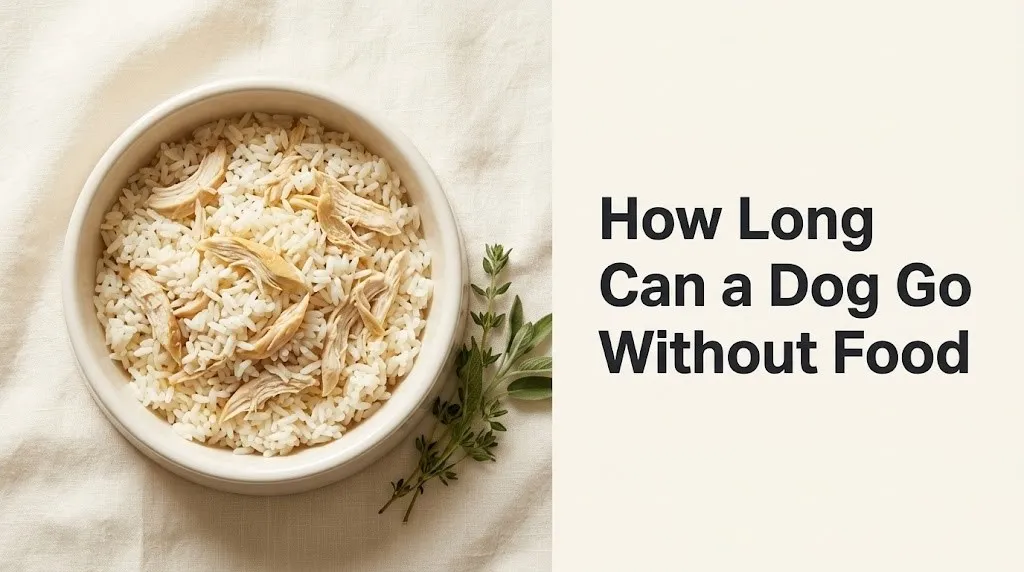
When a dog has refused its regular food, the standard veterinary approach is to offer a bland diet of plain boiled chicken breast and plain white rice in a 1:2 ratio (one part chicken to two parts rice) for 24 to 48 hours before gradually reintroducing regular food.
This works because the bland diet is highly digestible, low in fat, free from additives, and unlikely to cause further gastrointestinal irritation. It gives the digestive system something manageable while the underlying cause resolves.
How to prepare a basic bland diet for a dog:
- Use boneless, skinless chicken breast. Trim all visible fat.
- Place in a pot of plain water. No salt, garlic, onion, or seasoning.
- Boil until fully cooked through (internal temperature of 165°F / 74°C). No pink anywhere.
- Let cool completely before serving. Never serve hot food.
- Shred the chicken into small pieces. Mix with plain white rice at a 1:2 ratio.
- Offer a small portion (about 25% of normal meal size) first to check tolerance.
- If tolerated, offer regular small portions every 4 to 6 hours for 24 to 48 hours.
For dogs with chicken protein allergies or sensitivities, boiled lean ground turkey or boiled white fish such as cod, with plain white rice, is a widely used alternative. Confirm with your veterinarian if your dog has a known protein allergy.
Bone broth (low sodium, no onion or garlic) poured over regular kibble can also increase palatability for dogs with minor food aversions. Use products specifically labeled safe for dogs, or make your own using plain meat bones simmered in water.
How to Get a Dog to Eat Again After Not Eating
Getting a dog to eat again after a period of food refusal requires addressing both the underlying cause and the behavioral pattern that may have developed around the food.
Start with the veterinary step. If your dog has been off food for 24 hours or more and you’ve received veterinary clearance that no serious medical issue is present, the return-to-eating strategy is practical and gradual.
Steps to restart regular eating:
- Offer the bland diet (boiled chicken and rice) at small, frequent portions for 24 to 48 hours.
- Once the dog is eating the bland diet reliably, begin mixing in the regular food at 25% regular food to 75% bland.
- Over the next 3 to 5 days, gradually shift the ratio: 50/50, then 75/25, then 100% regular food.
- Feed at consistent times in a calm, low-traffic location. Routine supports appetite.
- Remove food after 20 minutes whether it’s eaten or not. Do not leave food out all day; this reduces mealtime urgency.
- Avoid using high-value treats as bribes during this period. Treats that are more exciting than regular food can reinforce selective eating.
If the dog continues to refuse food even after the gradual reintroduction and veterinary evaluation, a veterinarian may discuss prescription appetite stimulants such as mirtazapine (an antiemetic with appetite-stimulating properties) or capromorelin (a ghrelin receptor agonist approved for dogs by the FDA). These are medical tools, not first-line home strategies.
Warming wet food slightly (to around 100°F / 38°C, not hot) can enhance the aroma and increase palatability, particularly for dogs with reduced smell sensitivity due to age or illness.
| Refeeding Stage | Day | Food Composition | Portion Size |
|---|---|---|---|
| Bland diet introduction | Day 1 | 100% boiled chicken and rice | 25% of normal |
| Bland diet established | Day 2 | 100% boiled chicken and rice | 50% of normal |
| Transition begins | Day 3 | 25% regular food, 75% bland | 75% of normal |
| Mid-transition | Day 4 to 5 | 50% regular food, 50% bland | Normal |
| Full return | Day 6 to 7 | 75% regular food, 25% bland | Normal |
| Regular feeding restored | Day 8 | 100% regular food | Normal |
Key Takeaway: Reintroduce food gradually over 6 to 8 days after a fast. Rushing back to regular portions or regular food too fast risks re-triggering gastrointestinal upset and setting back progress.
Frequently Asked Questions About How Long a Dog Can Go Without Food
Can a dog go 24 hours without food?
Yes, most healthy adult dogs can go 24 hours without food without immediate medical danger.
A single skipped meal in an otherwise alert, active adult dog is rarely an emergency on its own.
However, puppies, toy breeds, senior dogs, and dogs with any health condition should not go 12 to 24 hours without food before a veterinary call.
How long can a dog go without food before it becomes dangerous?
Food refusal becomes a veterinary concern at 24 to 48 hours for healthy adult dogs.
Beyond 72 hours, the risk of organ stress, muscle catabolism, and electrolyte imbalance rises sharply.
Puppies and small breeds reach the danger threshold in as little as 12 hours, which is why life stage and body size change the answer significantly.
What should I feed my dog after it hasn’t eaten for a day or more?
Start with a bland diet of plain boiled chicken breast and plain white rice in a 1:2 ratio.
Offer small portions every 4 to 6 hours for the first 24 to 48 hours, then gradually reintroduce regular food over 5 to 7 days.
Confirm with your veterinarian that no underlying condition requires a different dietary approach before starting home refeeding.
Why is my dog not eating but still drinking water?
A dog drinking water but refusing food most often has nausea, oral pain, a food aversion, or an early-stage systemic illness.
This pattern is generally less immediately alarming than refusing both food and water, but it still warrants veterinary attention if it lasts more than 24 to 48 hours.
Conditions including early kidney disease, diabetes, and Cushing’s disease can present this way, according to Veterinary Clinics of North America.
How long can a puppy go without eating?
Puppies under 4 weeks need feeding every 2 to 3 hours. Puppies 3 to 12 weeks old should not go more than 4 to 6 hours without food.
Missed feedings in puppies can cause hypoglycemia rapidly, presenting as weakness, trembling, or in severe cases, seizures.
Any puppy under 12 weeks that refuses two consecutive feedings should be seen by a veterinarian the same day.
Your dog’s appetite is one of the most reliable windows into its overall health. When that window closes, even briefly, it’s worth taking seriously rather than assuming it will resolve on its own.
The 3 to 5 day survival figure exists in emergency medicine contexts. In everyday ownership, a 24-hour refusal is the prompt to pay attention, and 48 hours is the prompt to call your vet. Knowing that the right timeline is far shorter than the survival maximum is the most useful thing you can take from this guide.
For any dog outside the healthy adult average (puppies, seniors, small breeds, dogs with any ongoing condition), move faster and contact your veterinarian sooner. The cost of an early call is low. The cost of waiting too long is not.