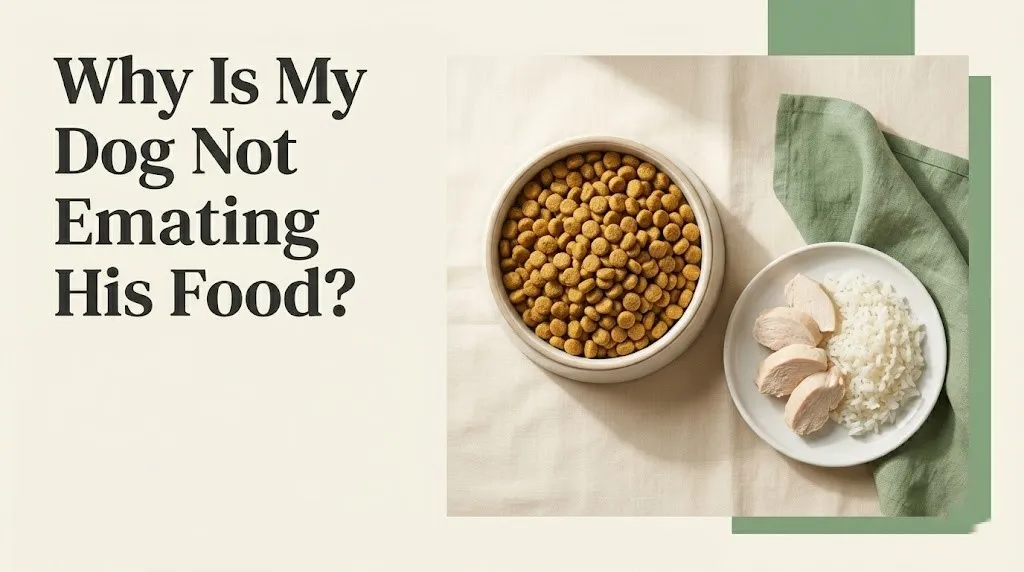
When your dog is not eating his food, the cause is usually one of three things: a medical problem, a behavioral pattern, or an issue with the food itself. Most healthy adult dogs who miss a single meal are not in danger, but consistent refusal lasting more than 48 hours always deserves attention.
Dogs communicate through behavior, and appetite changes are one of the most reliable early signals that something has shifted. According to the Merck Veterinary Manual, inappetence (the veterinary term for reduced or absent appetite) in dogs can stem from dozens of causes ranging from mild gastrointestinal upset to serious systemic illness. Knowing which category your dog falls into makes all the difference.
This article walks through 16 specific reasons your dog may be refusing food. It covers the medical causes, the behavioral ones, the food-related triggers, and gives you a clear decision framework for what to do at each stage, including when a veterinarian needs to be involved.
Why Is My Dog Not Eating His Food
Your dog not eating his food most often signals one of three things: a health issue, a learned behavior, or a problem with the food itself.
The challenge is that these three causes can look identical from the outside. A dog sitting in front of his bowl and walking away could be nauseated, could have dental pain, could be bored with that food, or could have been quietly rewarded for refusal through table scraps and hand-feeding over months.
Before assuming the worst, consider the full picture. Is your dog drinking water normally? Is he active and alert? Did anything change recently, including a new food bag, a new household routine, or a veterinary visit?
| Factor | What It Might Indicate |
|---|---|
| Skipping one meal, otherwise normal | Likely minor: upset stomach, stress, heat |
| Skipping 2+ meals, still active and drinking | Monitor; check food quality and environment |
| Skipping meals plus lethargy or vomiting | Veterinary evaluation needed promptly |
| Skipping meals plus bloated abdomen | Emergency veterinary care immediately |
| Skipping meals, toy or small breed dog | Higher urgency due to hypoglycemia risk |
The American Veterinary Medical Association (AVMA) recommends that any dog refusing food for more than 48 hours, or any dog showing additional symptoms alongside appetite loss, should be evaluated by a licensed veterinarian rather than managed at home.
Breed size and age matter here significantly. A healthy 5-year-old Labrador missing one meal in warm weather is a different situation from a 12-year-old Chihuahua who hasn’t eaten in two days. Your veterinarian is the right person to assess your individual dog.
Is It Normal for a Dog to Skip a Meal
Yes, a healthy adult dog occasionally skipping a single meal is generally within the range of normal behavior.
Dogs are not machines. Their appetite responds to temperature, activity level, stress, and minor digestive fluctuations, much like human appetite does. A dog who ate more at yesterday’s meal, had a particularly hot day, or experienced a mild upset stomach may simply not be hungry at the next feeding.
Think of it like your own appetite after a large holiday meal. The body simply isn’t ready for another full portion.
That said, context determines everything. Small breed dogs (those weighing under 10 pounds) and very young puppies are at higher risk of developing hypoglycemia (low blood sugar) if they go without food for extended periods. The Cornell University College of Veterinary Medicine advises that toy breed puppies, in particular, should not skip meals without monitoring and should be seen by a veterinarian if refusal continues beyond one feeding.
Key points for assessing whether skipping a meal is normal:
- Dog is bright, alert, and interested in its environment
- Dog is drinking water normally
- No vomiting, diarrhea, or visible discomfort
- Dog is an adult or adolescent of a medium to large breed
- No recent exposure to toxins, new medications, or extreme stress
If all five of those apply, waiting and watching through one missed meal is reasonable. If any of those conditions does not apply, earlier veterinary contact is the wiser choice.
Why Did My Dog Suddenly Stop Eating His Food
A dog that suddenly stops eating his food after previously eating well is more likely reacting to a specific trigger than developing a new chronic preference.
Sudden refusal is behaviorally distinct from gradual disinterest. When the change happens overnight or within a single day, the most common triggers are a change in the food itself (new bag, new formula), a recent medical event (vaccination, medication, illness onset), or a sudden environmental stressor.
The Association of American Feed Control Officials (AAFCO) sets minimum nutritional standards for commercial dog foods, but it does not regulate palatability. This means a food can technically meet all nutritional requirements while smelling or tasting noticeably different to a dog than the previous batch. Dogs have approximately 300 million olfactory receptors compared to approximately 6 million in humans, according to research published in the Journal of Veterinary Behavior. A formula change, even a minor one, is something they will detect before you do.
| Trigger Type | Example | Action |
|---|---|---|
| New bag of same food | Batch variation, staleness | Check freshness date; try small amount from a fresh bag |
| Formula or recipe change | Manufacturer update | Check packaging for “new formula” labeling |
| Recent vaccination | 12 to 24 hours post-vaccine appetite dip | Normal; monitor for 48 hours |
| New medication | Antibiotics, pain relievers, NSAIDs | Discuss with prescribing veterinarian |
| Illness onset | Infection, pain, metabolic issue | Evaluate other symptoms; contact vet if 48 hours pass |
| Household stress | New pet, move, schedule change | Address environmental cause; monitor food intake |
If your dog stopped eating immediately after receiving a new bag of food, that is worth investigating before assuming illness. Storing kibble in an airtight container away from heat and humidity preserves palatability and reduces oxidative degradation of fats, which is a primary cause of rancidity.
Key Takeaway: A dog suddenly refusing food is more likely reacting to a specific, identifiable trigger than developing a chronic problem. Start by ruling out the food itself before assuming a health crisis.
Medical Reasons a Dog Won’t Eat
Many medical conditions directly suppress a dog’s appetite, and food refusal is often one of the earliest visible signs that something is physically wrong.
The list of medical causes is broad. Some are acute and resolve quickly. Others are chronic and require ongoing management. A dog that is unwell rarely announces it clearly, which is why appetite change is so worth paying attention to.
Common medical causes of appetite loss in dogs include:
- Gastrointestinal upset: Nausea, gastritis, or intestinal inflammation reduces appetite directly. The dog may also lip-smack, drool, or eat grass.
- Dental disease and oral pain: A dog with a cracked tooth, gum infection, or mouth sore may avoid food because chewing hurts. This is one of the most underdiagnosed causes of refusal in adult and senior dogs.
- Pancreatitis: Inflammation of the pancreas causes nausea, abdominal pain, and appetite loss. High-fat meals or dietary indiscretion (eating garbage or table food) are common triggers.
- Kidney disease: The accumulation of uremic toxins in the bloodstream causes significant nausea and appetite suppression. This is particularly common in senior dogs.
- Liver disease: Impaired liver function disrupts normal metabolism and can cause nausea and general malaise.
- Infections: Bacterial, viral (including parvovirus), and parasitic infections all affect appetite.
- Hypothyroidism: Reduced thyroid function slows metabolism and can reduce food interest.
- Addison’s disease (hypoadrenocorticism): A condition involving insufficient adrenal hormone production. Appetite loss is one of its early signs.
- Gastrointestinal obstruction: A dog that has swallowed a foreign object may refuse food and may also vomit. This is a medical emergency.
- Cancer: Many forms of cancer cause appetite suppression through metabolic changes, nausea, or physical discomfort.
According to the Merck Veterinary Manual, the presence of concurrent symptoms (vomiting, diarrhea, lethargy, abdominal distension, or significant weight loss) alongside appetite loss substantially increases the likelihood of an underlying medical condition requiring diagnosis and treatment.
Why Is My Dog Not Interested in Food: Behavioral Causes
Behavioral appetite loss means a dog is physically capable of eating but has learned, through experience, that refusing food leads to something better.
This is one of the most common and most misunderstood categories of dog food refusal. It develops gradually, usually through well-intentioned owner behavior: offering table scraps when the dog leaves his bowl, adding toppers to entice eating, hand-feeding when the dog refuses the bowl, or switching foods frequently in response to any hesitation.
Dogs are remarkably good at associating cause and effect. If refusing kibble reliably produces chicken, a dog will refuse kibble. This is not stubbornness. It is learned behavior, and it is reinforced every time the pattern repeats.
The distinction between behavioral and medical refusal often comes down to two things: consistency and selectivity.
| Indicator | Behavioral Cause | Medical Cause |
|---|---|---|
| Eats treats eagerly | Common | Less common |
| Refuses bowl but takes food by hand | Common | Less common |
| Weight stable, energy normal | Yes | Often no |
| Sudden onset vs. gradual pattern | Usually gradual | Often sudden |
| Eating improved after environment change | Yes | Usually no |
| Eating other foods readily | Yes | Often no |
The American Animal Hospital Association (AAHA) recommends structured meal feeding (offering food for 15 to 20 minutes, then removing the bowl if uneaten) rather than free-choice feeding as a strategy for dogs prone to food manipulation behavior. This approach helps reset a dog’s relationship with mealtimes without creating deprivation.
Behavioral food refusal requires patience and consistency, not sympathy meals. A healthy adult dog will not choose starvation over kibble indefinitely.
Can Stress Cause a Dog to Stop Eating
Yes, psychological and environmental stress can directly suppress a dog’s appetite, sometimes for several days.
Dogs are highly attuned to their environment. Changes that seem minor to a human owner can be deeply disruptive to a dog’s sense of security and routine. The stress response in dogs activates similar neurological pathways to those in humans, including the release of cortisol and adrenaline, which suppress digestive activity and reduce appetite.
Common stress triggers that cause dogs to stop eating include:
- Moving to a new home
- Arrival of a new pet or baby in the household
- Owner travel, absence, or schedule change
- Loud ongoing noise (construction, fireworks, thunderstorms)
- Loss of a companion animal or human
- Changes to the dog’s usual feeding location or bowl
- Boarding or rehoming
Stress-related appetite loss typically resolves once the stressor is removed or the dog adapts to the new situation. In most cases, this takes between two and seven days.
If the stressor is ongoing (such as a permanent household change), the dog may need more structured support. Research published in the Journal of Veterinary Behavior has documented that routine, predictable schedules are one of the most effective tools for reducing anxiety-related food refusal in dogs. Feeding at the same time, in the same location, with the same bowl helps reestablish a sense of normalcy.
Dogs with diagnosed anxiety disorders may benefit from behavioral intervention under the guidance of a veterinary behaviorist. Appetite suppression lasting more than a week in a stressed but otherwise healthy dog warrants a veterinary conversation.
Key Takeaway: Stress and behavioral patterns cause genuine appetite loss in dogs, but the treatment is completely different from medical appetite loss. Correctly identifying which type you’re dealing with determines what to do next.
Why Won’t My Dog Eat Dog Food but Will Eat Treats
A dog that refuses his regular food but eagerly eats treats is almost certainly displaying behavioral appetite manipulation, not illness.
Treats are almost always more palatable than standard dog food. They are typically higher in fat, salt, and flavor compounds, which makes them intensely appealing to a dog’s highly developed olfactory system. When a dog learns that turning down the bowl reliably leads to a treat, the pattern repeats and strengthens.
This does not mean treats are nutritionally appropriate as meal replacements. Most commercial dog treats are not AAFCO-certified as complete and balanced diets. They are designed as supplements, not primary nutrition sources. A dog subsisting primarily on treats will develop nutritional deficiencies over time.
Quick Tip:
- Stop offering treats as meal substitutes the moment you notice refusal behavior.
- Return to offering only the regular food, placed down for 15 to 20 minutes, then removed.
- Most healthy adult dogs will eat their regular food within 2 to 3 days of this approach being consistently applied.
- If your dog has a diagnosed health condition affecting appetite, involve your veterinarian before making any food management changes.
One important caveat: if a dog who previously ate regularly and without hesitation suddenly begins refusing his bowl but accepting treats, rule out oral pain first. A dog with a sore tooth may be able to manage the soft texture of a treat but find chewing hard kibble painful. A veterinary dental exam is appropriate if this pattern appears suddenly in an adult dog who previously had no refusal behavior.
Dog Stopped Eating After New Bag of Food
A dog refusing food immediately after opening a new bag is a food quality or palatability issue far more often than a behavioral problem.
Rancidity is the most common culprit. Dog food, particularly dry kibble, contains fats that oxidize over time, especially when exposed to heat, humidity, or air. A bag stored improperly or a batch with slightly off production timing can smell and taste meaningfully different to a dog. Because dogs evaluate food almost entirely through smell, a rancid bag may be rejected immediately even if it looks fine to the owner.
Manufacturer formula changes are the second most common reason. Some brands update their recipes without prominent labeling changes. A slightly different protein source, fat level, or additive profile can be undetectable to a human but immediately noticeable to a dog.
To assess whether the food itself is the problem:
- Check the best by date on the bag. If it is within range, check when the bag was opened and how it has been stored.
- Open the bag and smell it yourself. Fresh kibble should smell neutral to mildly savory. Rancid food often smells sour, bitter, or strongly fishy even for non-fish formulas.
- Compare the current bag’s label ingredients list to the previous one if you have it. Note any changes in protein sources or ingredient order.
- Try offering a small amount from a new, separately purchased bag of the same food. If the dog eats from the new bag, the old batch is likely the problem.
- Report quality concerns to the manufacturer’s customer service line. Most reputable brands will request batch numbers and may issue a replacement.
The AAFCO requires that all commercial dog foods meeting its nutritional profiles pass established quality standards, but batch-to-batch palatability variation is not subject to the same regulatory oversight as nutritional content.
Dog Not Eating but Drinking Water
A dog that is refusing food but continuing to drink water normally is showing a more moderate picture than one who is refusing both.
Continued water intake is a reassuring sign. It suggests the dog is not severely nauseated (extreme nausea suppresses both eating and drinking), is maintaining some basic metabolic function, and is not in acute distress. However, it does not mean everything is fine.
Several conditions cause selective food refusal while preserving water intake:
- Mild gastrointestinal upset or nausea without vomiting
- Dental or oral pain (dog avoids chewing but still laps water)
- Low-grade infection or fever
- Early-stage kidney disease (increased thirst alongside appetite loss is a specific pattern worth noting with your vet)
- Behavioral food refusal (healthy dogs drink normally regardless of whether they are eating)
The critical distinction here involves increased water intake alongside appetite loss. If your dog is drinking noticeably more water than usual while also refusing food, that specific combination is a recognized pattern for conditions including diabetes mellitus, early kidney disease, and Cushing’s disease (hyperadrenocorticism) in dogs. The Cornell University College of Veterinary Medicine identifies polydipsia (excessive drinking) paired with weight loss or appetite change as a symptom cluster that always warrants veterinary blood panel evaluation.
Normal water intake for dogs ranges from approximately 0.5 to 1 ounce of water per pound of body weight per day. A 30-pound dog drinking roughly 15 to 30 ounces of water daily is within the typical range. Meaningfully above that, especially paired with food refusal, warrants investigation.
Key Takeaway: A dog refusing food but drinking water normally is in a lower-urgency category than one refusing both. But if water intake is noticeably increased, that specific combination deserves a veterinary conversation sooner rather than later.
Dog Not Eating and Seems Tired
A dog that is both refusing food and noticeably lethargic is showing a symptom combination that requires veterinary evaluation, not a wait-and-see approach.
Lethargy is the body’s response to expending energy fighting illness, managing pain, or coping with a significant physiological disruption. When it appears alongside appetite loss, the two symptoms together are more medically meaningful than either one alone.
This combination can indicate:
- Systemic infection (bacterial, viral, or parasitic)
- Parvovirus in unvaccinated or under-vaccinated dogs (particularly puppies). This is a medical emergency requiring immediate care.
- Pancreatitis (abdominal pain, nausea, lethargy, food refusal are classic signs)
- Liver or kidney disease in progression
- Internal bleeding or trauma following an injury
- Severe anemia from any cause
- Toxin ingestion (including common household items such as xylitol, grapes, raisins, onion, and certain medications)
According to the ASPCA Animal Poison Control Center, toxin ingestion is a medical emergency requiring immediate contact with a veterinarian or animal poison control hotline. If you have any reason to believe your dog may have eaten something toxic, do not wait to observe for further symptoms.
The combination of food refusal and lethargy lasting more than 24 hours in an adult dog, or more than 12 hours in a puppy or small breed dog, should prompt a same-day veterinary call rather than continued home monitoring.
How Long Can a Dog Go Without Eating
A healthy adult dog can typically go without food for three to five days before malnutrition becomes a direct physical threat, but that window is not an excuse to wait.
The three-to-five-day figure comes from veterinary references including the Merck Veterinary Manual and applies to otherwise healthy adult dogs with no concurrent illness, adequate water intake, and reasonable body condition. In practice, the threshold for veterinary contact is much shorter: 48 hours of food refusal in an adult dog, or 24 hours in puppies, toy breeds, or senior dogs.
Dogs with underlying health conditions, very low body weight, or chronic illness may deteriorate more rapidly. A dog who is already nutritionally compromised has less metabolic reserve.
| Dog Type | Reasonable Monitoring Window | Escalation Point |
|---|---|---|
| Healthy adult, medium/large breed | Up to 24 hours | Veterinary contact at 48 hours |
| Healthy adult, small/toy breed | Up to 12 hours | Veterinary contact at 24 hours |
| Puppy under 6 months | 6 to 8 hours | Veterinary contact at 12 to 16 hours |
| Senior dog (7+ years) | Up to 12 hours | Veterinary contact at 24 hours |
| Dog with known health condition | Any refusal | Contact managing veterinarian promptly |
The danger with extended fasting in dogs is not simply caloric deprivation. It includes hypoglycemia (particularly in small breeds), hepatic lipidosis risk in some cases, electrolyte imbalance, and compromised immune function. Water intake must be maintained throughout any monitoring period.
What to Do If Your Dog Won’t Eat
The right response when your dog won’t eat depends directly on how long the refusal has lasted and what other symptoms are present.
Start by observing systematically rather than reacting immediately. Check for concurrent symptoms: lethargy, vomiting, diarrhea, bloating, apparent pain, unusual drooling, or weight loss. Note how long the refusal has been going on and whether anything changed recently.
Day 1 (first missed meal):
- Do not add treats, table scraps, or food toppers to entice eating.
- Offer the regular food at the normal time in the normal location.
- Leave the bowl down for 15 to 20 minutes, then remove it.
- Ensure fresh, clean water is available at all times.
- Monitor for any additional symptoms.
Day 2 (second consecutive missed meal):
- Continue the structured meal offering approach.
- Check the food itself for freshness and smell.
- If no other symptoms are present and the dog is active, you can try warming wet food slightly (to approximately body temperature, around 100 degrees Fahrenheit) to increase palatability.
- If other symptoms appear at any point, contact your veterinarian.
Day 2 to 3 with continued refusal and no other symptoms:
- Veterinary contact is appropriate even without additional symptoms.
- Describe the timeline, any changes in the environment or food, and your dog’s current behavior and water intake.
At any point, contact your vet immediately if:
- Dog shows lethargy, vomiting, diarrhea, or abdominal distension
- Dog is a puppy, toy breed, or known to have a health condition
- Dog has consumed a potential toxin
Key Takeaway: The action you take when your dog won’t eat should be calibrated to the timeline and symptoms, not to your anxiety level. Structured observation for 24 to 48 hours is appropriate for healthy adult dogs. For puppies, seniors, and small breeds, the clock moves faster.
What to Feed a Dog That Won’t Eat
When a dog with mild appetite loss needs nutritional support, a bland diet of plain boiled chicken breast and plain white rice is the most widely recommended starting point in veterinary practice.
This combination is gentle on an irritated digestive system, highly digestible, and palatable enough for most dogs to accept even when they are refusing their regular food. It contains no added seasonings, no onion or garlic (both of which are toxic to dogs), and no high-fat ingredients that could worsen nausea or trigger pancreatitis.
To prepare a basic bland diet for a dog:
- Use boneless, skinless chicken breast (Gallus gallus domesticus). Remove all skin and fat.
- Place chicken in a pot of plain water. Do not add salt, broth, or any seasoning.
- Bring to a boil, then reduce to a simmer. Cook until the internal temperature reaches 165 degrees Fahrenheit throughout, approximately 15 to 20 minutes depending on thickness.
- Remove from heat and allow to cool completely before serving.
- Cook plain white rice (Oryza sativa) separately in water only, no butter or salt.
- Shred or dice the cooked chicken into small pieces.
- Combine at a ratio of approximately one part chicken to two parts rice by volume.
- Serve at room temperature or slightly warm. A 30-pound dog typically receives 1 to 1.5 cups of this mixture per meal, twice daily, as a general starting reference. Your veterinarian can provide a weight-appropriate amount for your specific dog.
This diet is not nutritionally complete for long-term use. It lacks adequate calcium, vitamins, and minerals to meet AAFCO standards for a complete canine diet. Use it only as a short-term transitional food, for no more than 3 to 5 days, then gradually transition back to the regular diet.
For dogs with a known chicken allergy or intolerance, plain boiled turkey or plain boiled white fish can substitute as the protein source.
Dog Not Eating for 2 Days: When to Call a Vet
A dog that has not eaten for two full days needs veterinary contact, regardless of whether other symptoms are present.
Forty-eight hours is the standard threshold cited by the American Veterinary Medical Association (AVMA) and reinforced by veterinary practice guidelines for when home monitoring should transition to professional evaluation. At this point, the risk of an underlying condition that requires diagnosis outweighs the benefit of continued waiting.
When you contact your veterinarian, be prepared to provide:
- Exact timeline: When did the dog last eat normally? When did refusal begin?
- Water intake: Is the dog drinking normally, more than usual, or less?
- Other symptoms: Vomiting, diarrhea, lethargy, behavioral changes, changes in urination
- Recent events: New food bag, vaccination, medication, travel, household change
- The dog’s baseline: Age, breed, known health conditions, body weight
Your veterinarian may recommend bloodwork including a complete blood count (CBC) and biochemistry panel, urinalysis, and potentially imaging depending on what the physical examination reveals. These tests help distinguish behavioral and food-related refusal from systemic illness.
Do not delay seeking veterinary care because the dog “seems otherwise fine.” Many serious conditions, including early kidney disease, liver dysfunction, and certain cancers, present with appetite loss long before dramatic symptoms appear. Earlier evaluation improves treatment outcomes and prevents preventable deterioration.
How to Get a Picky Dog to Eat
Getting a picky dog to eat consistently requires addressing whether the pickiness is behavioral or physical before making any changes.
If your veterinarian has confirmed there is no underlying medical cause and the dog is healthy, behavioral pickiness is almost always rooted in learned patterns that can be unlearned. The key is consistency and patience, not an ever-escalating menu of options.
Strategies that veterinary nutritionists at Tufts University Cummings School of Veterinary Medicine recommend for food-selective dogs include:
- Structured meal times: Offer food for 15 to 20 minutes, then remove the bowl. Feed at the same times daily. This creates a predictable, limited window for eating.
- Remove competing options: Stop all between-meal treats, table scraps, and food toppers for at least 1 to 2 weeks while resetting the eating pattern.
- Warming food slightly: Bringing wet food or kibble with added warm water to a temperature just above room temperature (around 95 to 100 degrees Fahrenheit) releases aromatic compounds and increases palatability without changing the nutritional profile.
- Food bowl evaluation: Some dogs refuse food from metal bowls due to the reflection or sound. Some dislike deep bowls that press their whiskers. A flat plate or a different bowl material sometimes resolves a refusal that looks like pickiness.
- Consistent feeding location: Feed in the same quiet spot each time. Noise, foot traffic, or proximity to another pet’s bowl can suppress appetite in sensitive dogs.
One thing to avoid: cycling through multiple food brands rapidly in response to refusal. This reinforces the pattern and makes it harder to establish stable eating behavior. Choose a nutritionally complete food that your veterinarian endorses and commit to it for a minimum of two to three weeks before evaluating results.
Key Takeaway: Picky eating in dogs is almost always a learned behavior that the owner has inadvertently reinforced. Consistent structure, not dietary variety or special treatment, is what breaks the cycle.
Dog Loss of Appetite in Old Age
Senior dogs (generally those aged 7 years and older for most breeds, and 5 years and older for giant breeds) experience appetite changes for a combination of physical and metabolic reasons that are distinct from those affecting younger dogs.
As dogs age, their sense of smell and taste diminishes. Since dogs evaluate food almost entirely through olfactory input, reduced smell sensitivity means food that previously smelled appetizing may no longer trigger the same interest. This is a gradual, normal physiological change. Wet food or kibble with warm water added can partially compensate for this by intensifying aroma.
Beyond sensory changes, senior dogs face a higher prevalence of conditions that suppress appetite. Dental disease affects an estimated 80 percent of dogs over age 3, according to the American Veterinary Dental College, and the prevalence increases with age. A senior dog who seems “picky” may actually be avoiding food because chewing causes pain.
Metabolic conditions including chronic kidney disease, liver dysfunction, and hypothyroidism all increase in prevalence in older dogs and all suppress appetite as a primary symptom. The AAHA Senior Care Guidelines recommend that dogs 7 years and older receive twice-yearly veterinary wellness examinations rather than annual ones, specifically because early detection of these conditions changes outcomes.
Appetite loss in a senior dog should never be attributed to “just old age” without ruling out treatable causes. A veterinary examination including bloodwork is the appropriate first step for any senior dog showing reduced food interest, particularly if the change is new or progressive.
| Age Group | Breed Size | “Senior” Classification Starts |
|---|---|---|
| Giant breed (90+ lbs) | Great Dane, Mastiff | 5 years |
| Large breed (50 to 90 lbs) | Labrador, Golden Retriever | 7 years |
| Medium breed (25 to 50 lbs) | Beagle, Cocker Spaniel | 8 years |
| Small/toy breed (under 25 lbs) | Chihuahua, Yorkie | 10 years |
Frequently Asked Questions About Dog Appetite Loss
How long can a dog go without eating before it becomes dangerous?
A healthy adult dog can go approximately three to five days without food before malnutrition poses a direct physical risk, according to veterinary references including the Merck Veterinary Manual.
In practice, the threshold for veterinary contact is 48 hours for healthy adult dogs and 12 to 24 hours for puppies, toy breeds, and senior dogs.
Water intake must be maintained throughout any period of food refusal, and the presence of any additional symptom shortens the observation window considerably.
Should I be worried if my dog skips just one meal?
A single missed meal in an otherwise alert, active, and healthy adult dog is generally not cause for immediate concern.
Dogs can experience temporary appetite dips due to heat, mild nausea, minor stress, or simple variation in hunger levels.
If the dog is behaving normally, drinking water, and shows no other symptoms, monitoring through the next scheduled meal is a reasonable first step.
Why will my dog eat treats but refuse his regular food?
A dog eating treats while refusing regular food is almost always displaying a learned behavioral pattern rather than a medical problem.
Treats are more palatable than standard food due to higher fat and flavor compound content, and dogs learn quickly that refusing the bowl leads to something more appealing.
The exception is oral pain: a dog with a sore tooth may manage soft treats but avoid chewing hard kibble, so a sudden onset of this pattern in a previously consistent eater warrants a veterinary dental check.
What can I feed my dog to get him eating again?
A bland diet of plain boiled chicken breast and plain white rice (combined in a ratio of one part chicken to two parts rice by volume) is the standard first-line food for a dog with mild appetite loss or gastrointestinal upset.
This combination is easy to digest, low in fat, and palatable enough for most dogs to accept even when refusing regular food.
It is not nutritionally complete for long-term use and should be transitioned back to the regular diet within three to five days, with veterinary guidance for dogs with any underlying health conditions.
Why did my dog suddenly stop eating his food overnight?
An overnight change in eating behavior most often points to a specific trigger: a new bag of food with batch variation, a recent vaccination, a new medication, or an acute illness onset.
Check the food first: smell the kibble, compare the new bag’s ingredient list to the previous one, and try a small amount from a separately purchased bag of the same food.
If the food checks out and the dog also shows lethargy, vomiting, abdominal pain, or any other symptom, same-day veterinary contact is the right call rather than continued home monitoring.
What to Do When Your Dog Refuses Food
Food refusal in dogs is rarely random. Every case falls into one of three categories: a medical issue, a learned behavior, or a problem with the food itself. Once you identify which category applies to your dog, the path forward becomes clear.
Start by ruling out the obvious: check the food quality, assess your dog’s behavior and energy level, and note how long the refusal has lasted. For healthy adult dogs, structured monitoring for up to 48 hours is reasonable. For puppies, seniors, small breeds, and any dog showing additional symptoms, contact your veterinarian sooner.
Don’t try to fix behavioral pickiness with special foods or treats. And don’t assume appetite loss in an older dog is simply aging. In both cases, a clear-eyed look at what’s actually happening gets you to the right answer faster.