Street-style tteokbokki is not healthy as a regular meal. It is a high-carbohydrate, high-sodium dish made from dense rice cakes swimming in a sugary, spicy sauce. A single 1-cup serving contains roughly 320 to 350 calories, 70 grams of carbohydrates, less than 1 gram of fiber, and 800 to 1,200 milligrams of sodium.
The Korean Nutrition Society recommends a daily sodium intake of 2,000 milligrams or less for adults. A single serving of restaurant tteokbokki can deliver more than half that limit. The chewy rice cakes, while satisfying, are made from glutinous rice flour, a refined grain with a high glycemic index.
We will walk through the exact nutritional profile, the specific reasons this dish can be a health challenge, the 2026 healthy variations including konjac and cauliflower rice cakes, and a homemade recipe that preserves the spicy, savory soul of tteokbokki with a fraction of the sodium.
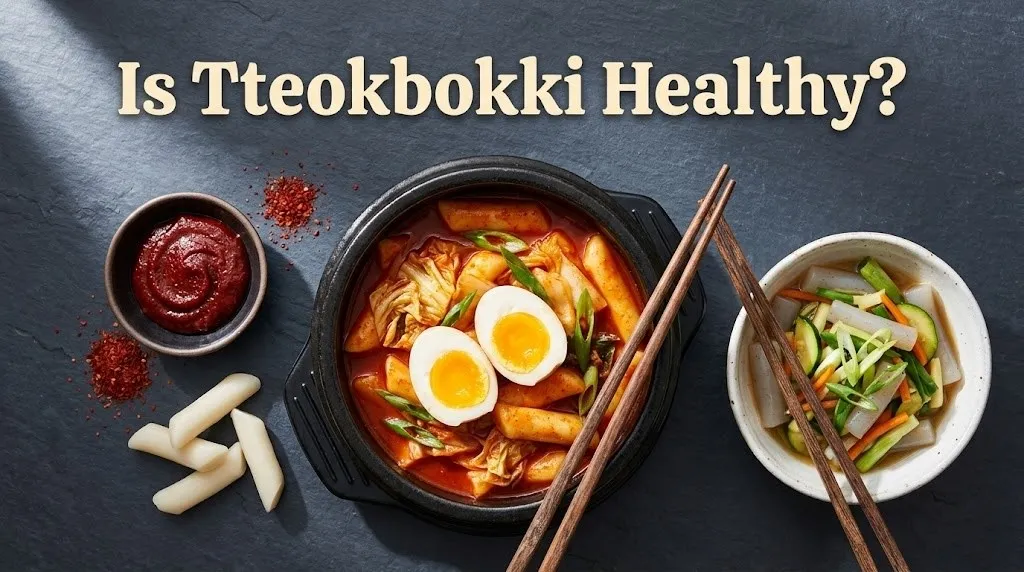
Is Tteokbokki Healthy
No, traditional street-style tteokbokki is not a healthy food. It is a refined-carbohydrate bomb with a high-sodium sauce and minimal protein, fiber, or micronutrient density. It is a comfort food, not a health food.
The health evaluation depends on the version. A homemade tteokbokki made with a reduced-sodium gochujang sauce, added vegetables, and a boiled egg is significantly healthier. A street cart version swimming in corn syrup and fish cake is significantly less healthy.
The dish occupies a similar nutritional space to other refined-carbohydrate street foods like ramen or fried rice. It is low in fat, which distinguishes it from fried street foods, but the high carbohydrate and sodium load create a different set of health concerns.
Tteokbokki Nutrition Facts
A 1-cup, 250-gram serving of standard street-style tteokbokki contains 320 to 350 calories, 68 to 72 grams of carbohydrates, 4 to 6 grams of protein, 1 to 2 grams of fat, less than 1 gram of fiber, and 800 to 1,200 milligrams of sodium.
The carbohydrate content is primarily starch from the garaetteok, the cylindrical rice cakes made from glutinous rice flour. These rice cakes are dense and chewy. A single cup of tteokbokki contains roughly 5 to 6 rice cakes, each contributing about 12 grams of carbohydrate.
The fat content is low because the sauce is water-based. There is no oil in a traditional tteokbokki sauce. The dish is boiled, not fried. The low fat content is the one clear nutritional advantage over fried street foods.
| Nutrient | Street-Style Tteokbokki (1 cup) | Homemade Healthy Tteokbokki (1 cup) |
|---|---|---|
| Calories | 330 | 250 |
| Carbohydrates | 70g | 40g |
| Fiber | 0.5g | 4g |
| Protein | 5g | 12g |
| Sodium | 1,000mg | 400mg |
| Fat | 1.5g | 3g |
Tteokbokki Calories
A 1-cup serving of street tteokbokki contains 320 to 350 calories. This is similar to a bowl of ramen or a slice of pepperoni pizza. The calorie density is high for a food with almost no fiber or protein.
The calories come almost entirely from the rice cakes and the sugar in the sauce. A single garaetteok rice cake contains roughly 50 to 60 calories. A cup of tteokbokki contains 5 to 6 rice cakes. The remaining calories come from the gochujang, corn syrup, and fish cake.
Restaurant portions are often larger than a single cup. A large order shared with friends can easily be 2 to 3 cups per person, delivering 700 to 1,000 calories before adding cheese, ramen noodles, or fried sides.
What Is Tteokbokki Made Of
Tteokbokki is made from garaetteok, long, cylindrical rice cakes made from glutinous rice flour, water, and salt. The rice cakes are simmered in a sauce made from gochujang, gochugaru, soy sauce, sugar, garlic, and anchovy or kelp stock.
Fish cakes, eomuk, are a common addition. They are processed fish protein sheets, similar to surimi, that add a savory depth and a chewy texture. Scallions, cabbage, and boiled eggs are frequent add-ins that increase the nutritional value.
The modern street food version often includes corn syrup or oligosaccharide as a sweetener, which increases the carbohydrate load. The sauce is cooked down until thick and glossy, coating each rice cake in a spicy, sweet, savory glaze.
Key Takeaway: Tteokbokki is fundamentally rice, sugar, and salt, dressed up with chili paste and fish cake; the add-ins like cabbage and egg can improve it, but the base is a refined-carb dish.
Is Tteokbokki Fattening
Tteokbokki can contribute to weight gain when eaten regularly in large portions because of its high carbohydrate and calorie density combined with very low fiber and protein. The lack of satiety-promoting nutrients means you can eat a large volume without feeling full for long.
The glycemic index of glutinous rice flour is high. The blood sugar spike from a bowl of tteokbokki triggers a strong insulin response. Insulin promotes fat storage. The blood sugar crash an hour or two later triggers hunger again. This cycle promotes overconsumption over the course of the day.
Tteokbokki is not uniquely fattening. It is fattening in the same way that any refined-carbohydrate, low-fiber, high-sugar food is fattening when eaten in excess. The street food context also matters. Tteokbokki is often eaten as a snack between meals, adding a surplus of calories rather than replacing a meal.
Is Tteokbokki Good for Weight Loss
Standard street-style tteokbokki is not good for weight loss. The high carbohydrate content, low protein, low fiber, and high sodium profile work against the goals of a weight-loss eating plan.
A homemade healthy tteokbokki can fit into a weight-loss plan. The adjustments are specific. Reduce the rice cake portion by one-third. Add a boiled egg and a cup of cabbage. Use a low-sodium gochujang or make your own sauce with less sugar. The resulting dish is 250 to 280 calories with 12 grams of protein and 4 grams of fiber.
Portion control is the primary strategy. A single cup of homemade tteokbokki with added vegetables and egg is a reasonable meal. A double portion of street tteokbokki with cheese and ramen noodles is a calorie surplus event.
Is Tteokbokki High in Sodium
Yes, tteokbokki is extremely high in sodium. A single 1-cup serving can contain 800 to 1,200 milligrams of sodium, which is 40 to 50 percent of the daily recommended limit.
The sodium comes from multiple sources. Gochujang contains roughly 150 to 200 milligrams of sodium per tablespoon. Soy sauce adds another 300 to 400 milligrams. The anchovy stock is salty. The fish cake is processed and salted. The cumulative sodium load is high even before adding any additional salt.
A 2026 homemade healthy version can reduce the sodium to 400 to 500 milligrams per serving by using low-sodium soy sauce, reducing the gochujang, and replacing the fish cake with fresh vegetables or a low-sodium protein like a boiled egg.
Key Takeaway: Sodium is the single largest nutritional concern with tteokbokki; a single serving can deliver half the daily limit, and a large portion can exceed it entirely.
Healthy Tteokbokki Recipe
This 2026 healthy tteokbokki recipe preserves the spicy, savory, chewy soul of the dish while cutting the carbohydrates by 40 percent and the sodium by 60 percent.
To make healthy homemade tteokbokki:
- In a small bowl, whisk 1 tablespoon of low-sodium gochujang, 1 teaspoon of gochugaru, 1 teaspoon of low-sodium soy sauce, and 1/2 teaspoon of honey or monk fruit sweetener.
- In a shallow pan, bring 1 cup of water to a simmer with a 4-inch piece of dried kelp and 2 dried anchovies. Remove the kelp and anchovies after 5 minutes.
- Add 1 cup of sliced cabbage and 1/2 cup of sliced onion to the broth. Simmer for 3 minutes.
- Add 1 cup of garaetteok rice cakes and the sauce mixture. Stir continuously over medium heat for 5 to 7 minutes until the sauce thickens and coats the rice cakes.
- Top with 1 halved boiled egg, a sprinkle of sesame seeds, and chopped scallions.
The dried kelp and anchovy stock creates the authentic depth without the high-sodium anchovy powder or commercial stock packets. The cabbage adds bulk and fiber, reducing the rice cake portion without reducing the visual volume of the dish.
Low Calorie Tteokbokki
A low calorie tteokbokki uses konjac rice cakes or a mix of cauliflower rice cakes and traditional rice cakes. Konjac rice cakes are made from glucomannan, a soluble fiber from the konjac plant. They contain roughly 10 calories per serving compared to 200 calories for the same volume of rice cakes.
The texture of konjac rice cakes is different. They are slightly more gelatinous and less chewy than glutinous rice cakes. They absorb the sauce flavor identically. The mouthfeel is distinct but satisfying if you approach it as a different food rather than a direct substitute.
A 50/50 blend of konjac rice cakes and traditional rice cakes is the best compromise for texture purists. The calorie count drops from 330 to roughly 180 per serving. The fiber increases. The carbohydrate load drops by 40 percent.
How to Make Healthy Tteokbokki
The three principles for healthy tteokbokki are: reduce the sodium, increase the fiber, and add protein. The sauce is the sodium source. The rice cakes are the fiber gap. The missing protein is the satiety gap.
The sauce can be lightened by using reduced-sodium gochujang, replacing half the gochujang with pureed roasted red pepper for body, and using a pinch of cayenne to bring the heat back up. The sugar can be replaced with a zero-calorie sweetener or omitted entirely if you prefer a less sweet, more savory sauce.
The fiber gap is filled with vegetables. Cabbage, zucchini noodles, mushrooms, and carrot ribbons add bulk, chew, and visual appeal. The protein gap is filled with a boiled egg, grilled chicken breast, pan-seared tofu, or edamame.
Tteokbokki vs Ramen Nutrition
A 1-cup serving of tteokbokki contains 330 calories, 70 grams of carbohydrate, and 5 grams of protein. A 1-cup serving of ramen contains 380 calories, 50 grams of carbohydrate, and 8 grams of protein. Tteokbokki has more carbohydrate. Ramen has more fat because the noodles are fried.
| Nutrient | Tteokbokki (1 cup) | Ramen (1 cup) | Korean Fried Chicken (3 wings) |
|---|---|---|---|
| Calories | 330 | 380 | 450 |
| Carbs | 70g | 50g | 25g |
| Protein | 5g | 8g | 28g |
| Fat | 1.5g | 14g | 22g |
| Sodium | 1,000mg | 1,200mg | 800mg |
Tteokbokki is the lowest-fat option of the three. It is the highest-carbohydrate option. It is not clearly healthier or unhealthier than ramen. It depends on the individual’s health goal. A low-fat diet favors tteokbokki. A low-carb diet favors ramen or chicken.
Vegan Tteokbokki Healthy
A vegan healthy tteokbokki replaces the fish cake and anchovy stock with plant-based alternatives. The kelp stock alone provides the umami depth. Sliced king oyster mushrooms or pan-fried tofu replace the fish cake.
The gochujang must be checked for animal products. Some brands contain fish sauce or anchovy extract. A vegan gochujang uses fermented soybean paste as the umami base. Mother-in-Law’s and Sempio offer vegan gochujang options in 2026.
The protein is sourced from edamame, tofu, or tempeh added to the simmer. A vegan tteokbokki with added protein and vegetables is nutritionally comparable to the healthy homemade version with egg.
Gluten Free Tteokbokki Healthy
Traditional tteokbokki is not gluten free. The garaetteok rice cakes are made from glutinous rice flour, which is gluten free despite the confusing name. But the soy sauce, gochujang, and fish cake commonly contain wheat.
A gluten-free healthy tteokbokki uses tamari instead of soy sauce, gluten-free gochujang, and omits the fish cake or uses a gluten-free fish cake. The rice cakes themselves are naturally gluten free.
The texture and flavor are nearly identical. Tamari is slightly richer than soy sauce. Gluten-free gochujang uses rice flour instead of wheat flour as the thickener. The dish remains authentically spicy and satisfying.
Konjac Tteokbokki Healthy
Konjac tteokbokki is the lowest-carbohydrate and lowest-calorie version available in 2026. Konjac rice cakes are made from the glucomannan fiber of the konjac plant. A 1-cup serving contains 20 to 30 calories, 5 grams of carbohydrate, and 3 grams of fiber.
The health benefits are the significant calorie reduction and the prebiotic fiber. Glucomannan is fermented by gut bacteria into short-chain fatty acids that nourish colon cells. The satiety is high because the soluble fiber absorbs water and expands in the stomach.
The texture is the compromise. Konjac rice cakes are more gelatinous and less toothsome than glutinous rice cakes. They have a slight snap and then a soft, jelly-like chew. They are best in a heavily sauced tteokbokki where the texture difference is masked by the bold flavors.
Homemade Tteokbokki Sauce Healthy
The healthiest homemade tteokbokki sauce replaces half the gochujang with pureed roasted red bell pepper, uses low-sodium soy sauce or coconut aminos, and sweetens with a small amount of honey or monk fruit sweetener.
The roasted red pepper adds body, vitamin C, and a natural sweetness that reduces the need for added sugar. A half-cup of pureed roasted red pepper contains 50 calories, 2 grams of fiber, and 100 percent of the daily value for vitamin C.
The sauce comes together in a blender in 2 minutes. It stores in the refrigerator for up to a week. The flavor is slightly less intense than a full-gochujang sauce, but the heat can be adjusted upward with additional gochugaru or cayenne.
Key Takeaway: A roasted red pepper and gochujang blended sauce is the single most effective health upgrade for homemade tteokbokki, reducing sodium and sugar while adding fiber and vitamin C.
Frequently Asked Questions About Tteokbokki
Is tteokbokki healthy for weight loss?
Traditional street-style tteokbokki is not ideal for weight loss due to its high carbohydrate and low protein content.
A homemade version with reduced rice cakes, added vegetables, and a protein source can fit into a calorie-controlled eating plan.
Portion control is essential. Stick to a single cup.
How many calories are in a bowl of tteokbokki?
A standard 1-cup serving of street tteokbokki contains 320 to 350 calories.
A large restaurant portion with cheese and ramen noodles can exceed 800 calories.
A homemade healthy version with vegetables and egg is roughly 250 calories.
Why is tteokbokki so high in sodium?
The sodium comes from gochujang, soy sauce, anchovy stock, and fish cake, all of which are salty processed ingredients.
A single serving can deliver 800 to 1,200 milligrams of sodium.
Reducing the gochujang, using low-sodium soy sauce, and omitting the fish cake cuts the sodium by half.
Can I eat tteokbokki on a diet?
Yes, you can eat a modified, portion-controlled tteokbokki on a diet.
Use konjac or half-konjac rice cakes, add cabbage and a boiled egg, and make a reduced-sodium sauce.
A 250-calorie homemade bowl is a satisfying, diet-compatible meal.
What is the healthiest way to eat tteokbokki?
Make it at home with a roasted red pepper and gochujang sauce, plenty of vegetables, and a lean protein.
Reduce the rice cake portion by one-third or use konjac rice cakes.
The homemade version controls the sodium, adds fiber and protein, and keeps the authentic spicy flavor.
Tteokbokki is a delicious, chewy, spicy, satisfying dish that belongs in the same category as ramen and fried chicken. It is a comfort food, not a health food. The street cart version is a refined-carb and sodium bomb. The homemade version, with extra vegetables, a lighter sauce, and a boiled egg, is a genuinely reasonable meal.
The konjac rice cake is the 2026 hack that transforms the dish from a guilty pleasure into a high-fiber, low-calorie snack that can be eaten weekly instead of monthly. The texture is different. Accept it. The sauce is the star. The rice cake is the vehicle.
Make the sauce at home. Control the sodium. Pile in the cabbage. Your K-drama snack habit just got a lot healthier.