Sushi can be a genuinely effective food for weight loss when you build your meal around sashimi and simple rolls, control the rice portion, and skip the heavy sauces. A well-ordered sushi meal delivers lean protein, healthy fats, and controlled carbohydrates in a format that feels indulgent without breaking your calorie deficit.
The Academy of Nutrition and Dietetics emphasizes that sustainable weight loss depends on finding nutrient-dense foods you actually enjoy eating. Sushi fits that description for millions of people. A typical 8-piece salmon roll contains roughly 300 to 350 calories and 18 grams of protein. The same number of calories from a fast food cheeseburger delivers half the protein and significantly less satiety.
This guide walks you through exactly how to order sushi that supports weight loss, from the best and worst rolls to the sauces that silently add hundreds of calories. You will find a full calorie comparison table by roll type, specific strategies for navigating a sushi menu, and honest answers about sodium, mercury, and how often you can eat sushi while dieting.
Is Sushi Healthy for Weight Loss?
Sushi is healthy for weight loss when you prioritize sashimi and simple nigiri over elaborate rolls, control the portion of sushi rice, and avoid heavy sauces like spicy mayo and eel sauce. The core ingredients are fish, rice, and seaweed, and those are weight-loss compatible.
The protein content of the fish is the strongest weight loss argument for sushi. A standard sushi meal with 6 pieces of salmon nigiri delivers roughly 24 grams of protein, which promotes satiety and helps preserve lean muscle mass during a calorie deficit. Protein has the highest thermic effect of food, meaning your body burns more calories digesting it compared to carbohydrate or fat.
The rice is the variable that determines whether sushi helps or hinders weight loss. Sushi rice is seasoned with sugar and rice vinegar, which adds about a teaspoon of sugar per cup of cooked rice. A standard sushi roll contains roughly one cup of rice, contributing 200 calories and 44 grams of carbohydrate. Rice is not inherently fattening, but the quantity matters. Rolls that are heavy on rice and light on fish can be calorie-dense without being particularly satiating.
Is Sushi Healthy for Losing Weight? The Direct Answer
Sushi is healthy for losing weight when the meal is built on lean protein from fish, includes fiber from vegetables and seaweed, and keeps added fats and sugars from sauces to a minimum. The weight loss outcome depends on the specific order.
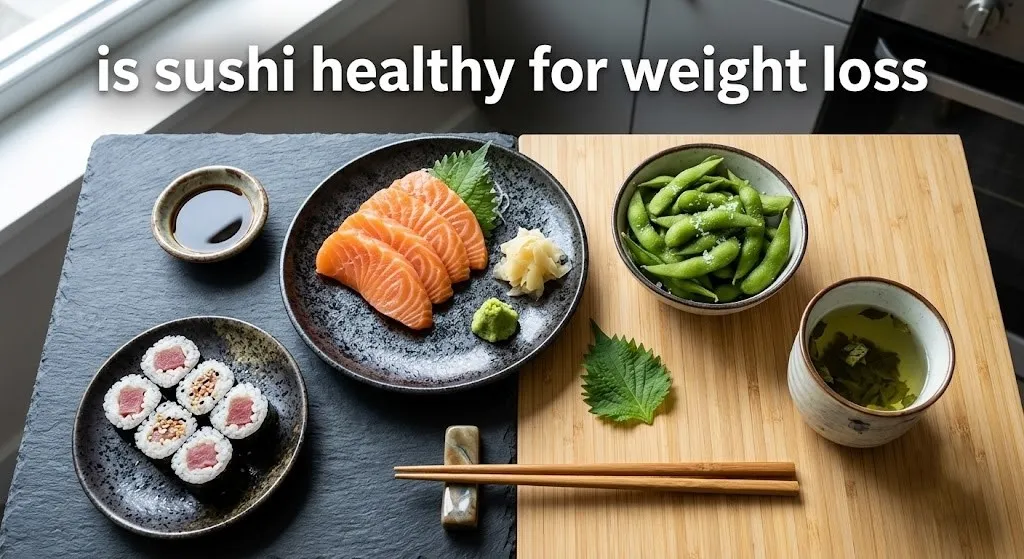
A weight-loss-friendly sushi order might include a bowl of edamame to start, a serving of salmon sashimi, and one simple roll like a tuna or cucumber roll. This meal delivers roughly 450 to 550 calories, 35 to 40 grams of protein, and 8 to 10 grams of fiber. It is filling, nutrient-dense, and fits easily into a 1,500 to 1,800 calorie daily target.
A weight-loss-unfriendly sushi order might include a tempura shrimp roll, a spicy tuna roll with extra spicy mayo, and a dragon roll with eel sauce. This meal can exceed 1,000 calories with 40 grams of fat, much of it from mayonnaise and fried batter. The protein is lower relative to the calorie count. The satiety per calorie is poor.
Sushi is not a magical weight loss food. It is a menu. What you choose from that menu determines the outcome. The distinction between a sashimi platter and a deep-fried roll platter is several hundred calories and a completely different macronutrient profile.
Key Takeaway: Sushi works for weight loss when the order is protein-forward and sauce-light. It works against weight loss when the order is rice-heavy, fried, and sauce-drenched.
Sushi Calories Breakdown by Roll Type
The calorie content of sushi varies dramatically by roll type. Understanding the approximate range for each category helps you make informed choices without needing to look up every item.
A standard sushi roll, called a maki roll, contains 6 to 8 pieces and is made with nori seaweed on the outside, sushi rice, and a filling. The filling determines the calorie range. A simple cucumber roll might contain 140 calories. A salmon avocado roll might contain 300 to 350 calories. A shrimp tempura roll with spicy mayo can contain 500 to 600 calories.
| Sushi Roll Type (8 pieces) | Approximate Calories | Protein | Key Ingredients |
|---|---|---|---|
| Cucumber roll (kappa maki) | 140 | 2 g | Cucumber, rice, nori |
| Tuna roll (tekka maki) | 200 | 15 g | Tuna, rice, nori |
| Salmon roll (sake maki) | 220 | 16 g | Salmon, rice, nori |
| California roll | 300 | 9 g | Imitation crab, avocado, cucumber |
| Salmon avocado roll | 350 | 18 g | Salmon, avocado, rice |
| Spicy tuna roll | 350 | 17 g | Tuna, spicy mayo, rice |
| Shrimp tempura roll | 500 | 12 g | Fried shrimp, avocado, eel sauce |
| Dragon roll | 550 | 14 g | Tempura, eel, avocado, eel sauce |
Nigiri, a slice of fish over a small oval of rice, is lower in calories per piece because the rice portion is smaller. One piece of salmon nigiri contains roughly 50 to 60 calories. A 6-piece nigiri meal with a side of edamame delivers protein and satiety for a reasonable calorie count.
Best Sushi Rolls for Weight Loss
The best sushi rolls for weight loss are simple rolls with a single lean protein and a vegetable, wrapped in nori with a standard portion of rice and no heavy sauces. These rolls are sometimes the least expensive and least advertised items on the menu.
The tuna roll, also called tekka maki, is a straightforward roll of raw tuna and rice. Eight pieces deliver roughly 200 calories and 15 grams of protein. The salmon roll provides a similar profile with slightly more fat from the salmon, including omega-3 fatty acids. The cucumber roll is the lowest-calorie option and works well as a filler to add volume to a meal without adding significant calories.
The yellowtail and scallion roll combines a flavorful, moderately fatty fish with green onion. The fat in yellowtail adds satiety. The vegetable rolls, including the cucumber roll, avocado roll, and pickled radish roll, are low in calories and add fiber. A combination of one protein roll and one vegetable roll creates a satisfying meal with a reasonable calorie count.
Quick Tip:
- Order one protein-heavy roll like a tuna or salmon roll. Add a vegetable roll for volume and fiber. This combination typically stays under 450 calories.
- Avoid any roll with the words “tempura,” “crunch,” “spicy,” or “dragon” if you are strictly counting calories.
Worst Sushi Rolls to Avoid on a Diet
The worst sushi rolls for weight loss are those that combine fried ingredients, multiple heavy sauces, cream cheese, and extra rice. These rolls can contain more calories than a burger and fries.
The shrimp tempura roll is fried shrimp wrapped in rice and nori, often drizzled with eel sauce. The frying adds roughly 100 to 150 calories of oil. The eel sauce adds sugar. The total calorie count can reach 500 to 600 calories for eight pieces. The protein content is modest relative to the calorie count because the shrimp is a smaller portion than a fish filling and the batter dilutes the protein density.
The dragon roll is a calorie bomb. It typically contains shrimp tempura, cucumber, and avocado on the inside, with thinly sliced avocado and eel on the outside, finished with eel sauce and spicy mayo. A single dragon roll can contain 550 to 650 calories. The fat content, from the fried shrimp, avocado, eel, and two sauces, can exceed 25 grams. This is not a sushi roll. It is a fried seafood and avocado delivery system.
The Philadelphia roll combines smoked salmon, cream cheese, and cucumber. Cream cheese adds roughly 100 calories and 10 grams of fat, predominantly saturated. The protein from the smoked salmon is offset by the calorie density of the cheese. The spider roll, made with fried soft-shell crab, and any roll with “crunch” in the name, meaning tempura flakes, fall into the same category.
Key Takeaway: Avoid rolls with “tempura,” “crunch,” “dragon,” or “Philadelphia.” These words signal fried ingredients, cream cheese, and heavy sauces that can push a single roll past 500 calories.
Sashimi vs Sushi for Weight Loss
Sashimi is superior to sushi for weight loss because it eliminates the rice entirely. A sashimi meal delivers pure fish protein and healthy fats with essentially zero carbohydrate. The calorie per gram of protein is lower, and the satiety per calorie is higher.
Sashimi is thinly sliced raw fish served without rice. A standard 6-piece sashimi appetizer of salmon contains roughly 180 calories and 22 grams of protein. A 6-piece salmon nigiri meal contains roughly 300 to 360 calories and 24 grams of protein because the rice adds 120 to 180 calories. The protein is almost identical. The calorie difference is entirely from the rice.
For someone following a lower-carbohydrate weight loss approach, sashimi is clearly the better choice. For someone following a balanced macronutrient approach, nigiri or simple rolls can fit comfortably. The advantage of sashimi is that it leaves more calorie budget for additional food. A sashimi platter with a side of seaweed salad and a bowl of miso soup is a filling 400-calorie meal with 40 grams of protein.
The trade-off with sashimi is satiety from volume. Rice adds physical bulk to the meal. Sashimi alone, while protein-dense, may not feel as filling to someone accustomed to a larger plate. Adding vegetable sides like edamame, cucumber salad, or a seaweed salad adds volume and fiber without significantly increasing calories.
Sushi Rice Calories and Carb Content
Sushi rice is the primary source of calories and carbohydrate in a sushi meal. Understanding its contribution helps you make informed trade-offs rather than fearing rice as inherently fattening.
A standard sushi roll contains roughly 1 cup of cooked sushi rice, which provides 200 calories, 44 grams of carbohydrate, 1 gram of fiber, and 4 grams of protein. The rice is seasoned with a mixture of rice vinegar, sugar, and salt. The added sugar contributes roughly 4 grams, or 1 teaspoon, of added sugar per cup of prepared sushi rice.
The carbohydrate in sushi rice is mostly starch, which digests quickly and raises blood sugar. The glycemic index of sushi rice is roughly 70 to 80, which is considered high. This is higher than plain steamed white rice because the added sugar accelerates the glucose response. For someone with insulin resistance or diabetes, this is a meaningful consideration. For a metabolically healthy person in a calorie deficit, the carbohydrate from sushi rice is not inherently problematic.
The portion size of sushi rice is what matters most for weight loss. A single roll’s worth of rice is a reasonable carbohydrate portion. Three rolls’ worth of rice is roughly 600 calories from rice alone, before any protein or fat. The rice itself is not the enemy. The quantity is.
Key Takeaway: One cup of sushi rice adds 200 calories. A single roll is reasonable. Multiple rolls in one meal can push the carbohydrate and calorie count past the point of a deficit-friendly meal.
Sushi Protein and Satiety for Dieting
The protein content of sushi is its strongest weight loss attribute. Protein is the most satiating macronutrient, and sushi fish delivers it in a lean, digestible form that also provides omega-3 fatty acids and micronutrients.
Satiety is the feeling of fullness and the suppression of hunger after a meal. Protein promotes satiety through multiple mechanisms: it slows gastric emptying, stimulates the release of satiety hormones like peptide YY and GLP-1, and has a higher thermic effect than carbohydrate or fat. A 2015 study in the American Journal of Clinical Nutrition found that higher-protein meals increased post-meal satiety and reduced subsequent calorie intake compared to lower-protein meals with the same calorie content.
A sushi meal built around salmon, tuna, or yellowtail delivers 30 to 40 grams of protein, which is in the range that research associates with maximal satiety per meal. The omega-3 fatty acids in fatty fish may also contribute to satiety signaling, though the effect is less pronounced than protein. The combination of high protein and moderate healthy fat makes sushi fish unusually satiating for its calorie density.
The limitation is the rice. The carbohydrate in rice can blunt the satiety effect of the protein if the portion is large, because carbohydrate, particularly high-glycemic carbohydrate, does not promote satiety as effectively as protein or fiber. This is why a sashimi-heavy meal is more satiating per calorie than a rice-heavy roll platter.
Soy Sauce Sodium and Water Retention
Soy sauce adds significant sodium to a sushi meal, which can cause temporary water retention that masks fat loss on the scale. This is a cosmetic and psychological issue, not a fat gain issue.
A single tablespoon of standard soy sauce contains roughly 900 milligrams of sodium. A typical sushi meal might include 2 to 3 tablespoons of soy sauce between dipping and any soy-based sauces already on the rolls. That is 1,800 to 2,700 milligrams of sodium, which is 78 to 117 percent of the American Heart Association’s ideal daily limit of 2,300 milligrams.
Sodium causes the body to retain water to maintain electrolyte balance. This water retention can register as 1 to 3 pounds on the scale the morning after a sushi meal. This weight is not fat. It is temporary water weight that will flush out over the following 24 to 48 hours as sodium balance is restored. However, for someone weighing themselves daily and tracking progress, this temporary spike can be demoralizing.
The solution is not to avoid soy sauce entirely. It is to use less. Request low-sodium soy sauce, which contains roughly 500 to 600 milligrams of sodium per tablespoon. Dip lightly rather than soaking each piece. Use tamari for a gluten-free option with similar sodium content. The sushi meal itself is not causing fat gain. The scale spike is a hydration artifact.
Quick Tip:
- Use 1 tablespoon of soy sauce total for the entire meal. Pour it into a small dish so you can see the portion.
- Low-sodium soy sauce cuts sodium by 30 to 40 percent.
- Drink extra water after a sushi meal. Hydration helps the body excrete excess sodium more efficiently.
How to Order Sushi for Weight Loss
Ordering sushi for weight loss follows a clear strategy: start with a non-rice appetizer, choose sashimi or simple rolls as your main, add vegetable-based sides, and go light on sauces.
The edamame starter is a strategic move. A bowl of steamed edamame provides roughly 150 calories, 12 grams of protein, and 6 grams of fiber before the sushi arrives. This takes the edge off hunger, making it easier to order moderately and resist the temptation of multiple heavy rolls.
To assemble a weight-loss-friendly sushi order:
- Start with a bowl of steamed edamame or a seaweed salad.
- Order one serving of sashimi, roughly 6 pieces, or a sashimi platter if you are hungry.
- Add one simple roll: tuna roll, salmon roll, cucumber roll, or avocado roll.
- Skip any roll with the words “tempura,” “crunch,” “spicy,” “dragon,” or “Philadelphia.”
- Request sauces on the side. Dip sparingly.
- Drink water or unsweetened green tea. Avoid soda and sweetened beverages.
A meal ordered this way, with edamame, 6 pieces of salmon sashimi, and one tuna roll, contains roughly 500 to 550 calories, 40 grams of protein, and 10 grams of fiber. It is filling, nutrient-dense, and fits within a weight loss calorie budget.
Healthy Sushi Rolls With Brown Rice
Brown rice sushi rolls offer a fiber upgrade over white rice rolls, adding roughly 3 grams of fiber per roll and lowering the glycemic index. The trade-off is a nuttier flavor and a chewier texture that not everyone prefers.
Brown rice is a whole grain that retains its bran and germ. A cup of cooked brown sushi rice provides roughly the same 200 calories as white sushi rice but includes 3.5 grams of fiber compared to less than 1 gram. That fiber slows digestion, moderates the blood sugar response, and contributes to satiety. The American Diabetes Association recommends whole grains over refined grains for blood sugar management.
The availability of brown rice sushi varies by restaurant. Sushi restaurants that cater to health-conscious clientele are more likely to offer a brown rice option. Chain sushi restaurants and grocery store sushi counters increasingly include brown rice rolls as standard menu items. If brown rice is available, ordering a roll with brown rice instead of white improves the fiber content of the meal without changing the calorie count.
A brown rice salmon avocado roll delivers roughly the same calories as the white rice version, about 350 calories, but with an additional 3 grams of fiber. This fiber helps offset the sugar-spiking effect of the sushi rice seasoning. The overall glycemic response to the meal is lower.
Sushi vs Other Takeout for Dieting
Sushi compares favorably to most other takeout options for weight loss. It typically delivers more protein per calorie and less saturated fat than pizza, burgers, Chinese takeout, or fried chicken.
A standard sushi meal of edamame, 6 pieces of salmon sashimi, and one tuna roll contains roughly 550 calories, 40 grams of protein, and 8 grams of fiber. A standard fast food meal of a cheeseburger, small fries, and a diet soda contains roughly 650 calories, 25 grams of protein, and 4 grams of fiber. The sushi meal has more protein, more fiber, and fewer calories.
| Takeout Meal | Calories | Protein | Fiber | Saturated Fat |
|---|---|---|---|---|
| Sushi (sashimi + tuna roll + edamame) | 550 | 40 g | 8 g | 3 g |
| Cheeseburger + small fries | 650 | 25 g | 4 g | 12 g |
| Pepperoni pizza (2 slices) | 600 | 24 g | 2 g | 10 g |
| Chicken lo mein (2 cups) | 600 | 20 g | 2 g | 3 g |
| Fried chicken sandwich + side | 700 | 30 g | 1 g | 8 g |
Sushi’s advantage is consistent across the comparison: higher protein, higher fiber, lower saturated fat. The sodium content of sushi can be higher than some alternatives due to soy sauce, but the overall nutritional profile is stronger for weight loss.
Key Takeaway: Sushi beats burgers, pizza, and Chinese takeout on protein per calorie and fiber. The protein and fiber combination supports satiety during a calorie deficit.
Sushi Mercury Concerns for Frequent Eaters
Mercury accumulation is a legitimate concern for people who eat sushi multiple times per week as a weight loss strategy. Tuna, particularly bigeye and bluefin tuna, accumulates higher levels of mercury than salmon, shrimp, or eel.
The FDA classifies fish by mercury content. Lowest mercury options include salmon, shrimp, crab, and scallops. Moderate mercury options include yellowfin tuna and halibut. Highest mercury options include bigeye tuna, bluefin tuna, king mackerel, and swordfish. A person eating sushi three to four times per week should choose predominantly from the lowest mercury category.
Mercury is a neurotoxin that accumulates in the body over time. The FDA advises that adults can safely consume 2 to 3 servings per week of low-mercury fish. A serving is 4 ounces. A typical sashimi serving is 3 to 4 ounces. A typical roll contains roughly 2 to 3 ounces of fish. Eating a roll or sashimi meal three times a week falls within the safe range if the fish is predominantly salmon, shrimp, or yellowtail.
Pregnant women, women who may become pregnant, and young children should follow more restrictive FDA guidelines for fish consumption. For these groups, sushi with raw fish is generally not recommended due to the combined risks of mercury and foodborne illness.
Sushi Condiments and Hidden Calories
Sushi condiments can silently add 200 to 400 calories to a meal. Spicy mayo, eel sauce, and generous drizzles of oil-based sauces are the primary culprits.
Spicy mayo is a mixture of mayonnaise and sriracha or chili paste. Two tablespoons contain roughly 100 calories and 10 grams of fat, predominantly from soybean or canola oil. Eel sauce, also called unagi sauce, is a reduction of soy sauce, sugar, and mirin. It is essentially a sweetened soy syrup. Two tablespoons add roughly 80 calories and 16 grams of sugar.
Cream cheese, a standard ingredient in Philadelphia rolls and some fusion rolls, adds 100 calories and 10 grams of fat per ounce. Tempura flakes, often sprinkled on top of “crunch” rolls, are pieces of deep-fried batter that add roughly 50 to 100 calories and 5 to 10 grams of fat per roll.
Wasabi and pickled ginger are essentially calorie-free. Wasabi is a root with antimicrobial properties. Most wasabi served in the United States is horseradish dyed green, not true wasabi root. Pickled ginger, called gari, is thinly sliced ginger pickled in sweet vinegar. It adds negligible calories and serves as a palate cleanser between different types of fish.
Key Takeaway: Spicy mayo, eel sauce, and cream cheese add hundreds of calories. Request sauces on the side, use them sparingly, and choose rolls that do not include them as standard ingredients.
Sushi for Diabetics and Blood Sugar
Sushi can work for people with diabetes, but the rice portion, the added sugar in the seasoning, and the glycemic index of white rice require careful management.
The American Diabetes Association recommends that people with diabetes monitor the total carbohydrate content of meals and choose whole grains over refined grains when possible. A standard sushi roll with white rice contains roughly 44 grams of carbohydrate, of which approximately 4 grams are added sugar from the seasoning. This is a significant carbohydrate load for a single meal component.
A better strategy for diabetics ordering sushi is to emphasize sashimi, which contains zero carbohydrate, and to limit rice-based rolls to one per meal. Brown rice rolls, if available, provide more fiber and a lower glycemic response. A meal of edamame, salmon sashimi, and one brown rice cucumber roll delivers protein, fiber, and a controlled amount of carbohydrate from a whole grain source.
Soy sauce does not directly affect blood sugar, but the sodium content is a consideration for diabetics who also have hypertension, which is a common comorbidity. The same low-sodium soy sauce strategy applies.
Can You Eat Sushi Every Day on a Diet?
Eating sushi every day on a diet is not recommended due to mercury accumulation risk, high sodium intake, and the monotony that can undermine dietary adherence. Sushi is a healthy part of a weight loss diet, but variety in protein sources is healthier.
The mercury concern is the strongest argument against daily sushi consumption. Even low-mercury fish like salmon should not be eaten every day if the total weekly intake exceeds the FDA’s recommended 2 to 3 servings. Rotating protein sources across the week, including poultry, eggs, legumes, and lean meat, reduces mercury exposure and provides a wider range of micronutrients.
The sodium intake from daily sushi, even with low-sodium soy sauce, would be difficult to keep within the American Heart Association’s recommended limits. Two tablespoons of low-sodium soy sauce contain roughly 1,000 to 1,200 milligrams of sodium. Added to the sodium naturally present in fish and any other seasonings, this is a significant daily load.
Sushi can be part of a weight loss diet 2 to 3 times per week without concern. More frequently than that, the mercury and sodium considerations become meaningful. A diverse diet is a healthier diet regardless of the weight loss context.
Sushi Meal Prep and Homemade Options
Making sushi at home gives you complete control over the ingredients, portions, and sauces. A homemade sushi bowl is the simplest approach and requires no rolling skills.
A sushi bowl, sometimes called a chirashi bowl or a deconstructed sushi bowl, layers seasoned sushi rice or brown rice with sashimi-grade fish, vegetables, and toppings. The assembly takes 10 minutes. The rice can be made ahead and refrigerated.
To prepare a weight-loss-friendly sushi bowl at home:
- Purchase sushi-grade or sashimi-grade fish from a reputable fishmonger. Inform them you are eating it raw.
- Cook 1 cup of brown rice. Season with 1 tablespoon of rice vinegar and a pinch of salt. Skip the added sugar used in traditional sushi rice to save calories.
- Slice 4 ounces of salmon or tuna into thin pieces.
- Arrange the rice in a bowl. Top with the fish, sliced cucumber, shredded carrot, half an avocado, and shredded nori.
- Drizzle with 1 tablespoon of low-sodium soy sauce or tamari. Add a small amount of wasabi and pickled ginger.
- Sprinkle with sesame seeds.
This bowl contains roughly 550 calories, 30 grams of protein, 10 grams of fiber, and controlled sodium. It provides the sushi experience with complete control over every ingredient.
Key Takeaway: A homemade sushi bowl gives you full control over the rice portion, fish quality, and sauce amount. It is the healthiest and most cost-effective way to eat sushi on a diet.
Frequently Asked Questions About Sushi and Weight Loss
How many calories should I eat in a sushi meal for weight loss?
A weight-loss sushi meal should fall between 400 and 600 calories. A meal of edamame, 6 pieces of sashimi, and one simple roll fits this range and delivers roughly 35 to 40 grams of protein. This leaves room for other meals within a 1,500 to 1,800 calorie daily target.
Is sashimi healthier than sushi for weight loss?
Sashimi is healthier than sushi for weight loss because it eliminates the rice calories and carbohydrate. A sashimi meal provides the same protein with fewer total calories. The trade-off is less physical volume and satiety from the meal’s size.
Can I eat sushi rice and still lose weight?
Sushi rice can be part of a weight loss diet. One roll’s worth of rice contributes 200 calories. The key is limiting the rice to one or two rolls per meal, not eliminating it entirely. Weight loss is about total calorie balance, not individual food restriction.
What is the healthiest sushi roll to order?
The healthiest sushi roll for weight loss is the tuna roll or salmon roll. These simple rolls contain fish, rice, and nori with no heavy sauces, fried ingredients, or cream cheese. Eight pieces deliver roughly 200 to 220 calories and 15 to 16 grams of protein.
Does soy sauce make you gain weight?
Soy sauce does not directly cause fat gain. It contains negligible calories. The sodium in soy sauce causes temporary water retention that can increase scale weight by 1 to 3 pounds. This water weight flushes out within 24 to 48 hours of normal hydration.
Sushi is one of the best takeout options available to someone losing weight. The fish is lean protein. The seaweed is fiber. The rice is a controlled portion of carbohydrate. The whole package, ordered thoughtfully, is a nutrient-dense, satisfying meal that supports a calorie deficit.
Next time you open the sushi menu, start with the sashimi. Add one simple roll. Skip the tempura and the spicy mayo. Drink water or tea. Eat slowly. Your calorie tracker will reflect a high-protein, moderate-carbohydrate meal that leaves room for the rest of your day. And the scale the next morning, even if it ticks up temporarily from sodium, will trend down over time if you keep making choices like this one.