If you cannot get food out of an extraction site, do not panic and do not poke at the socket with a sharp object. The safest first step is a gentle salt water rinse. Mix half a teaspoon of salt in 8 ounces of warm water, take a sip, and gently tilt your head from side to side. Let the water fall out of your mouth. Do not swish aggressively. Do not spit.
The American Association of Oral and Maxillofacial Surgeons (AAOMS) warns that aggressive rinsing or spitting in the first 24 to 72 hours can dislodge the protective blood clot in the socket, leading to a painful condition called dry socket, or alveolar osteitis. The healing socket is fragile. Treat it like a wound, not a dirty dish.
We will walk you through the exact removal steps, the specific warning signs that mean you need to call your dentist, the week-by-week healing timeline, and the specific foods you can eat safely at each stage of recovery.
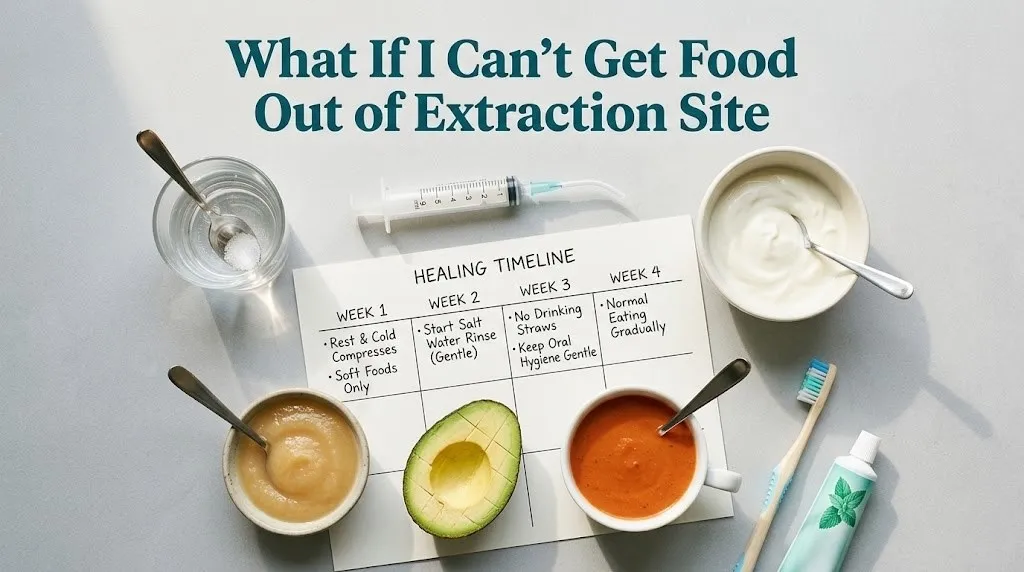
What If I Can’t Get Food Out of Extraction Site
Stop trying to remove the food for a moment. Rinse gently with warm salt water. Use a curved tip irrigation syringe filled with warm saline solution if your dentist provided one. The syringe tip should be placed gently at the opening of the socket. Do not insert it deeply.
The salt water rinse is the universal first step. The saline is mildly antimicrobial. The warmth soothes the tissue. The gentle flow of water can dislodge small food particles without disturbing the blood clot. Do this after every meal during the first week.
If the food particle does not dislodge with gentle rinsing, leave it alone. Small food particles, like a grain of rice or a seed fragment, will often work their way out naturally as the socket heals and the tissue contracts. The body is good at expelling foreign material from a healing wound.
What Happens If Food Gets Stuck in Wisdom Tooth Hole
If food gets stuck in a wisdom tooth hole and is not removed, the primary risk is localized inflammation and a low-grade infection called pericoronitis or localized socket infection. The risk of a dry socket specifically from food impaction is low unless you poke at the socket aggressively.
The food particle acts as an irritant. The surrounding gum tissue becomes red, swollen, and tender. There may be a foul taste or odor. This is the bacteria in the food particle fermenting in the warm, moist environment of the socket.
If the food particle is large and remains for several days, it can mechanically disrupt the formation of granulation tissue, the pink, bumpy healing tissue that fills the socket from the bottom up. The healing is delayed, not permanently damaged. Remove the particle gently and the healing resumes.
Can Food Get Stuck in Wisdom Tooth Hole
Yes, food can get stuck in a wisdom tooth hole. The extraction socket is a literal hole in the gum and bone. It is roughly the size and shape of the tooth that was removed. Food falls into it by gravity.
The risk of food impaction is highest during the first 2 to 3 weeks after extraction. The socket is deep and the protective blood clot is gelatinous. Food particles can sink into the soft clot or become trapped under the edges of the surrounding gum tissue.
After 3 to 4 weeks, the socket fills in from the bottom with granulation tissue. The hole becomes shallower. Food impaction becomes less common. After 6 to 8 weeks, the socket is mostly or completely closed, and food impaction is rare.
Key Takeaway: Food impaction is a normal, expected part of the healing process for the first 2 to 3 weeks, not a sign that the surgery has failed.
What Happens If Food Gets Stuck in Extraction Site
If food gets stuck in the extraction site and is left there, the food will begin to decompose. Bacteria in the mouth break down the food particles. This produces a foul odor and a bad taste. The local tissue may become inflamed.
The socket is healing from the bottom up. A food particle sitting in the clot or on top of the granulation tissue can physically block the migration of new cells. The healing slows. Removing the particle allows the healing process to resume normally.
A genuine infection, with spreading pain, swelling, pus, and fever, is rare from food impaction alone. More commonly, the issue is localized irritation and delayed healing. If you notice increasing pain, swelling, or a fever, the clinical guidance is to contact your dentist or oral surgeon for an evaluation.
Can’t Get Food Out of Wisdom Tooth Hole
If you cannot get the food out after a salt water rinse and a gentle irrigation with a syringe, eat something soft that might physically pull the particle out. A spoonful of yogurt, applesauce, or mashed potato can sometimes envelop a small particle and carry it away during swallowing.
If the food remains stuck and you are concerned, call your dentist. The dental office can irrigate the socket with a more powerful stream of sterile saline and remove the particle in seconds. This is a routine post-operative visit. It is not an emergency.
Do not use toothpicks, paper clips, safety pins, or any sharp household object to pick at the socket. This is the single most common cause of dry socket after the first 48 hours. A sharp object can puncture the blood clot or the delicate granulation tissue.
What If I Get Food Stuck in My Socket
If you feel food in the socket, the first step is always the gentle salt water rinse. Do not skip to the irrigation syringe if you are within the first 48 hours. The blood clot is most fragile during this window.
After 48 hours, if your dentist provided an irrigation syringe, fill it with warm salt water. Place the curved tip gently at the opening of the socket. Depress the plunger slowly and steadily. The stream of water will gently flush out the food particle.
After eating, make the salt water rinse a habit. Every meal, followed by a rinse. The socket stays cleaner. The food particles do not accumulate and harden. The healing environment is more favorable.
What Happens If Food Get Stuck in Wisdom Tooth Hole
The grammatical variation “food get stuck” refers to the same scenario. The food particle sits in the extraction socket. The body’s healing process works around it or is slowed by it.
The particle will not permanently embed in the gum. As the socket heals from the bottom up, the new tissue pushes upward. Any foreign material is gradually pushed to the surface and expelled. This is the natural wound-healing process.
The particle may dissolve partially if it is a soft food. A small piece of bread or pasta will soften and break down in the saliva. A hard, fibrous particle like a popcorn kernel or a nut fragment will not dissolve and must be physically removed.
How to Remove Food From Wisdom Tooth Hole
To remove food from a wisdom tooth hole safely, follow this step-by-step sequence:
- Rinse gently with warm salt water (1/2 teaspoon salt in 8 ounces of water).
- If the particle remains, fill a curved tip irrigation syringe with warm saline.
- Place the tip at the opening of the socket. Do not insert it deeply.
- Depress the plunger slowly. The stream of water will flush out the particle.
- Rinse again with plain warm water to clear any remaining debris.
Do this after every meal for the first 2 weeks. The socket will stay clean. The healing will proceed normally.
Food Stuck in Wisdom Tooth Hole Won’t Come Out
If the food is stuck and will not come out with irrigation, leave it alone for 12 to 24 hours. The socket is a dynamic healing environment. Tissue shifts. Fluid flows. A particle that is stuck now may be loose by tomorrow.
Call your dentist if the particle remains stuck after 24 hours, if you experience increasing pain, or if you notice a foul taste that does not resolve with rinsing. A quick in-office irrigation solves the problem.
Do not escalate to sharp objects. The risk of dry socket from mechanical trauma is far greater than the risk of a retained food particle. The food particle is an annoyance. A dry socket is a genuinely painful complication.
Dry Socket From Food Stuck
A dry socket from food stuck is rare. Dry socket is caused by the premature loss of the blood clot from the socket. The primary causes are aggressive spitting, sucking through a straw, smoking, and mechanical disruption from poking.
Food impaction itself does not cause dry socket. The act of trying to remove the food with a toothpick or a sharp object can puncture the clot and cause a dry socket. The removal attempt is the risk, not the food.
Symptoms of a dry socket include severe, radiating pain starting 3 to 5 days after extraction, visible bone in the socket, and a foul odor or taste. The pain is not subtle. It is sharp, throbbing, and often radiates to the ear. A dry socket requires a dentist’s care for pain management and medicated packing.
Key Takeaway: The food particle is an annoyance. The toothpick you use to dig it out is a genuine danger. Irrigate gently. Do not pick.
What to Eat After Tooth Extraction
Eat soft, cool, or room-temperature foods for the first 24 to 48 hours. The goal is to provide adequate nutrition for wound healing without disturbing the blood clot.
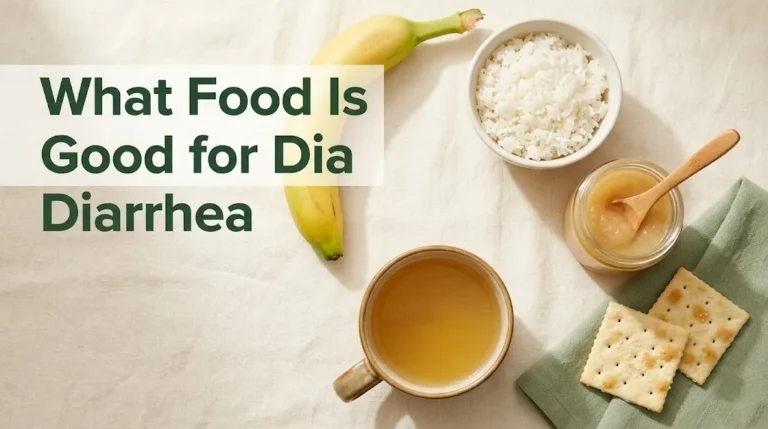
The best immediate post-extraction foods are yogurt, applesauce, smoothies consumed from a cup or spoon, not a straw, mashed potatoes, scrambled eggs, and cream soups served warm, not hot.
Protein is particularly important. The body requires amino acids to synthesize collagen and rebuild the tissue in the socket. A study in the journal Nutrients found that adequate protein intake is associated with faster wound healing in surgical patients. Yogurt, eggs, and protein smoothies are the best sources.
Wisdom Tooth Hole Healing Timeline
The healing timeline is predictable and follows a specific sequence.
| Time After Extraction | Healing Stage | What the Socket Looks Like | Foods to Eat |
|---|---|---|---|
| Day 1 to 3 | Blood clot formation | Dark red, gelatinous clot filling the hole | Cold or room-temp soft foods: yogurt, applesauce, smoothie (no straw) |
| Day 4 to 7 | Granulation tissue formation | Pink, bumpy tissue growing from the bottom | Warm soft foods: mashed potatoes, scrambled eggs, oatmeal |
| Week 2 to 3 | Tissue filling in | Hole noticeably shallower, pink tissue | Soft foods: pasta, soft bread, steamed vegetables |
| Week 4 to 8 | Socket closure | Hole mostly or completely closed | Normal diet, cautious with hard, crunchy, or sharp foods |
| Month 2 to 6 | Bone remodeling | Socket fully closed, bone filling in | Normal diet |
The socket heals from the bottom up. The granulation tissue is the foundation. The gum tissue grows over the top. The bone remodels over months.
How to Clean Wisdom Tooth Socket
Clean the wisdom tooth socket after every meal for the first 2 weeks. The salt water rinse is the primary cleaning method. The irrigation syringe is the secondary method.
Do not use mouthwash containing alcohol in the first week. Alcohol is an irritant to the healing tissue. Chlorhexidine mouthwash may be prescribed by your dentist for a specific post-operative period. Follow the prescription exactly.
Brush your teeth gently, avoiding the extraction site. A soft-bristled toothbrush and a slow, careful technique keep the rest of the mouth clean without disturbing the socket.
Safe Foods After Tooth Extraction
Safe foods after tooth extraction are soft, smooth, and free of small, hard particles. The consistency must not require chewing or suction.
- Yogurt: High in protein, soft, cold, and probiotic-rich to support oral flora.
- Applesauce: Smooth, no chewing, no particles, and a source of vitamin C.
- Mashed potatoes: Calorie-dense, soft, and can be thinned with milk or broth.
- Scrambled eggs: High protein, soft, and can be eaten at room temperature.
- Smooth soup: Cream of tomato, butternut squash, or blended lentil. No chunks. Served warm.
- Oatmeal: Soft, warm, and filling. Ensure it is smooth, not chunky.
- Cottage cheese: High protein, soft, and requires no chewing.
- Avocado: Mashed, smooth, rich in healthy fats and calories for healing.
Foods to Avoid After Tooth Extraction
Avoid foods that are hard, crunchy, sharp, or require suction to consume.
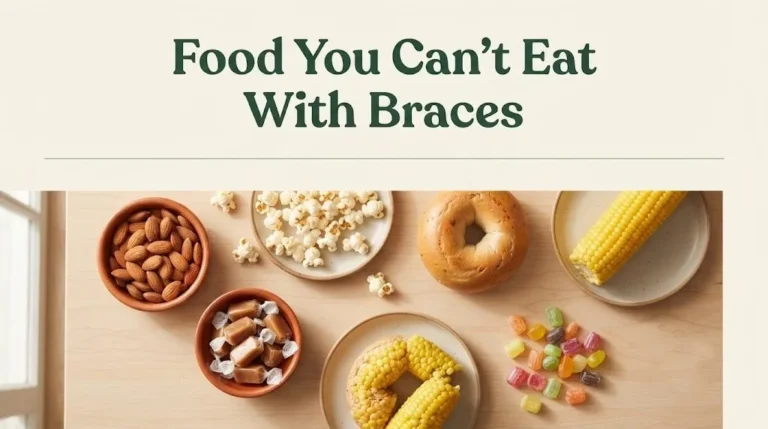
- Popcorn: The kernels are the perfect size and shape to lodge in a socket.
- Nuts and seeds: Hard, sharp, and can easily become trapped.
- Chips and pretzels: Crunchy and sharp. Tortilla chips are particularly problematic.
- Rice and quinoa: Small grains that can easily pack into a socket.
- Steak and tough meats: Require chewing that stresses the surgical site.
- Spicy foods: Can irritate the healing tissue.
- Straws: The suction can dislodge the blood clot. Never use a straw for the first week.
- Smoking: Nicotine constricts blood vessels and slows healing. The sucking motion can dislodge the clot.
Frequently Asked Questions About Food Stuck in Extraction Sites
How do you get food out of a wisdom tooth hole?
Rinse gently with warm salt water after every meal.
Use a curved tip irrigation syringe if provided by your dentist.
Do not use toothpicks or sharp objects.
What happens if food stays in an extraction site?
The food can cause localized irritation, bad breath, and a foul taste.
The socket healing may slow slightly.
The particle will often work its way out naturally as the tissue heals.
Can food stuck in a socket cause dry socket?
Food itself does not cause dry socket.
Aggressive poking with sharp objects to remove the food is a common cause of dry socket.
Irrigate gently. Do not pick.
How long until food stops getting stuck in wisdom tooth holes?
Food impaction is most common for the first 2 to 3 weeks.
The socket fills in with granulation tissue over 3 to 4 weeks.
After 6 to 8 weeks, the socket is mostly closed and food impaction is rare.
What should I eat the first week after tooth extraction?
Eat soft, smooth foods like yogurt, applesauce, mashed potatoes, scrambled eggs, and smoothies.
Avoid hard, crunchy, sharp foods and anything that requires a straw.
Protein and vitamin C support the healing process.
The hole in your gum where a tooth used to be is a healing wound, not a permanent trap. The food particle that is stuck in there today will be gone tomorrow, either dissolved, flushed out, or pushed out by the healing tissue growing from the bottom of the socket.
Rinse with salt water. Irrigate gently if you have a syringe. Do not dig at it with a toothpick. The salt water and the syringe are your tools. The toothpick is your enemy.
Eat the yogurt. Eat the mashed potatoes. Avoid the popcorn and the straws. In six weeks, the hole will be gone. The food impaction problem is temporary. The dry socket is the real thing to fear, and it is almost entirely preventable.