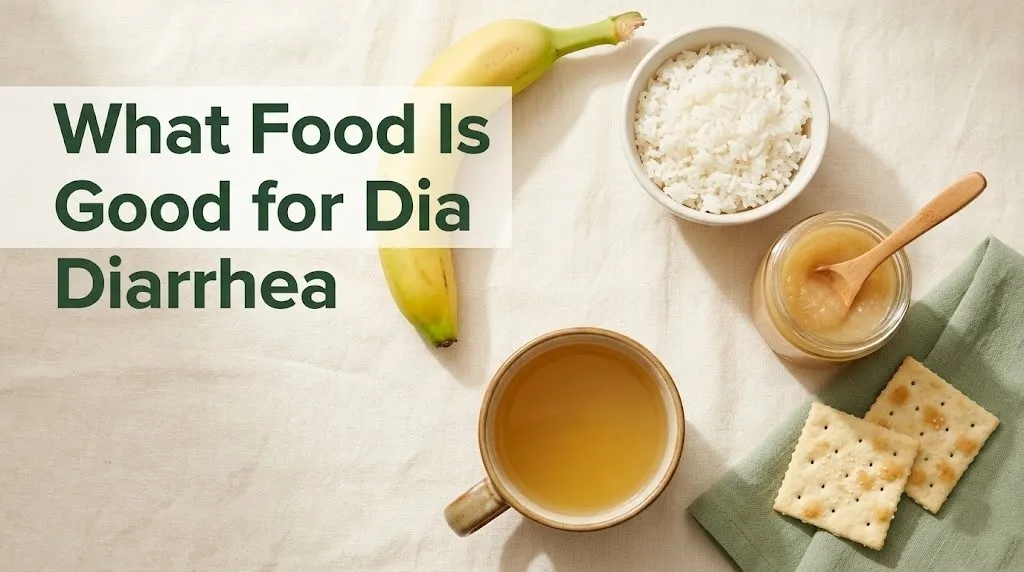
The best foods for diarrhea are low-fiber, easily digested options that slow intestinal transit and help your body reabsorb fluid. Bananas, plain white rice, applesauce, and plain white toast are the most well-established starting points.
Diarrhea causes your body to lose fluid and electrolytes faster than you can replace them. According to the World Health Organization (WHO), dehydration from diarrheal illness is one of the leading preventable causes of illness worldwide, which is why what you eat and drink matters as much as resting.
This guide covers the specific foods that calm an upset digestive system, the drinks that replace what you’ve lost, the foods that will make things worse, and a phased plan for getting back to your normal diet safely.
What Food Is Good for Diarrhea?
Foods that are good for diarrhea are low in insoluble fiber, easy to digest, and gentle on an irritated intestinal lining.
When your digestive system is moving too fast, high-fiber or fatty foods speed things up further. What you want are foods that act more like a slow-release brake: simple starches, soluble fiber sources, and plain proteins that your gut can process without extra effort.
The National Institute of Diabetes and Digestive and Kidney Diseases (NIDDK) describes a “bland diet” as the standard first-line dietary approach for acute diarrhea. This means plain, low-seasoning, low-fat foods served at moderate temperatures.
| Food Category | Best Options | Why They Help |
|---|---|---|
| Simple starches | White rice, plain crackers, plain pasta | Low fiber; easy to digest; slows transit |
| Soluble fiber sources | Bananas, applesauce, cooked carrots | Pectin absorbs water; adds stool bulk |
| Plain proteins | Boiled chicken breast, plain eggs | Provides amino acids without added fat |
| Starchy vegetables | Boiled white potato (no skin) | Easily digested; replaces potassium |
| Broths | Plain chicken or vegetable broth | Replaces sodium and fluid lost |
People with celiac disease or non-celiac gluten sensitivity should replace wheat-based options like crackers and toast with plain rice cakes or corn-based crackers. The core principle stays the same: keep it plain and low-fiber.
What Food Helps Stop Diarrhea?
Foods that help stop diarrhea work by slowing intestinal movement and thickening stool consistency.
The mechanism is not magic. Soluble fiber, particularly a compound called pectin, absorbs water in the intestine and forms a gel-like substance. That gel slows how quickly food moves through, giving your colon more time to absorb fluid. The result is firmer, less frequent stools.
Bananas (Musa acuminata) are one of the most reliable options. A medium banana provides approximately 422mg of potassium and around 3g of soluble fiber, mostly as pectin. Slightly underripe bananas also contain resistant starch, which ferments slowly in the colon and supports fluid absorption rather than disrupting it.
Cooked applesauce (not raw apple, which has insoluble fiber in the skin) provides pectin in a form the gut can use immediately. Plain oatmeal made with water, not milk, delivers beta-glucan, a soluble fiber that research published in the British Journal of Nutrition has linked to reduced stool frequency in mild diarrheal illness.
Quick Tip:
- Choose slightly underripe bananas over very ripe ones; they contain more resistant starch and less sugar
- Cook carrots, apples, and oatmeal before eating them; heat breaks down cell walls and makes the soluble fiber more accessible
- Avoid adding butter, milk, or sugar to any of these foods during the acute phase
Best Foods to Eat When You Have Diarrhea
The best foods to eat when you have diarrhea are plain, low-fat, low-fiber options that your digestive system can absorb quickly without extra effort.
Think of your gut during a diarrheal episode like a highway under emergency construction: everything needs to move slowly, with minimal load, and on a clear, simple route. Fatty foods, raw vegetables, and high-fiber grains are like trucks on a single-lane road. Plain white rice is a bicycle. Your gut wants bicycles right now.
Here are the most effective food choices, organized by what they provide:
- Bananas: pectin (soluble fiber) and potassium; eat at room temperature
- Plain white rice: simple starch; low fiber; absorbs excess intestinal fluid
- Applesauce (unsweetened, cooked): pectin; easy to eat even with nausea
- Plain white toast: simple carbohydrates; easy digestion; provides energy
- Boiled skinless chicken breast: lean protein with minimal fat
- Plain boiled white potato (no skin): potassium and easily digested starch
- Plain oatmeal (made with water): beta-glucan soluble fiber; gentle on the stomach
- Plain saltine crackers: sodium replacement; low fiber; settles the stomach
- Clear broth (chicken or vegetable, low-sodium): fluid and electrolyte replacement
- Plain scrambled eggs (no butter, no cream): easy-to-digest protein
People managing type 2 diabetes should be aware that white rice, plain pasta, and white bread are high-glycemic options. Boiled white potato with skin removed, or small portions of plain oatmeal, are lower-glycemic alternatives that still qualify as bland diet foods.
Key Takeaway: The foods that genuinely help during diarrhea are not about restriction for restriction’s sake. They’re about giving your gut low-load, easily absorbed options while it recovers.
The BRAT Diet for Diarrhea
The BRAT diet stands for Bananas, Rice, Applesauce, and Toast, and it remains one of the most widely recognized dietary frameworks for managing acute diarrhea.
Each of the four BRAT foods is low in fiber, low in fat, and easy to digest. Together they provide simple carbohydrates for energy and soluble fiber for stool firming. The diet was widely used in pediatric care for decades, and many adults still find it a useful starting framework.
The Academy of Nutrition and Dietetics updated its guidance in recent years to note that the BRAT diet alone is too nutritionally narrow as a long-term approach. It is low in protein, fat, and several key micronutrients. As a short-term strategy for the first 24 to 48 hours of acute diarrhea, it is reasonable. Beyond that, adding plain boiled chicken, eggs, and low-sodium broth provides necessary protein without disrupting recovery.
| BRAT Food | Key Nutrient | Why It Helps |
|---|---|---|
| Banana | Potassium, pectin | Replaces lost electrolytes; slows transit |
| Rice (white) | Simple starch | Easy digestion; low fiber; absorbs fluid |
| Applesauce | Pectin | Soluble fiber gels in the gut; firms stool |
| Toast (white) | Simple carbohydrates | Provides energy; low fiber; mild sodium |
People following a gluten-free diet can substitute rice cakes for toast and maintain the same dietary intent. The goal is low-fiber, plain carbohydrates, not specifically wheat.
Bland Diet Foods for Diarrhea
A bland diet for diarrhea means foods that are low in fat, low in fiber, mildly seasoned, and easy on the gastrointestinal tract.
The BRAT diet is a subset of the broader bland diet framework. A full bland diet adds more variety while keeping the same guiding principle: minimize anything that stimulates intestinal motility or irritates the gut lining. This means no spices, no acidic foods, no high-fat cooking methods.
The NIDDK recommends progressing from the strictest bland foods in the first 24 hours toward a wider bland diet by days 2 to 3, as symptoms improve. By day 3 to 4, most adults with uncomplicated diarrhea can begin reintroducing more varied foods.
Appropriate bland diet foods beyond the BRAT core:
- Plain boiled or baked chicken (no skin, no seasoning beyond a small amount of salt)
- Plain boiled white pasta (no sauce, no butter, no cheese)
- Plain mashed white potato (no butter, no milk, no skins)
- Plain rice porridge (congee style, made with water or low-sodium broth)
- Plain cream of rice cereal (made with water)
- Plain cooked carrots (boiled until soft; soluble fiber content increases when cooked)
- Plain boiled or poached eggs (no added fat)
People with irritable bowel syndrome (IBS) should note that a low-FODMAP version of the bland diet may be more appropriate. Some standard bland foods, including certain starchy vegetables and cooked apples, are moderate-FODMAP and may worsen symptoms for IBS sufferers specifically.
Soluble Fiber Foods That Help With Diarrhea
Soluble fiber is the specific type of dietary fiber that helps reduce diarrhea by absorbing water in the gut and slowing intestinal movement.
Most people know fiber as something that “keeps you regular,” meaning it prevents constipation. That makes the fiber-diarrhea connection feel backwards. But the key is the type of fiber. Insoluble fiber speeds up gut transit. Soluble fiber does the opposite: it dissolves in water, forms a gel, and acts as a physical brake on how quickly contents move through the intestine.
A helpful way to picture this: insoluble fiber is like adding gravel to a river, speeding water flow. Soluble fiber is like adding a sponge. Same material family, completely different effect.
The best soluble fiber sources for diarrhea include:
- Bananas: pectin concentration is higher in slightly underripe bananas
- Cooked applesauce: the heat processing makes pectin more bioavailable than raw apple
- Oatmeal: beta-glucan, a specific soluble fiber, at approximately 2.5g per half-cup dry oats
- Cooked carrots: pectin content increases significantly with cooking
- Psyllium husk: the most concentrated soluble fiber source; used in supplements like Metamucil; can help firm loose stools at doses of 5 to 10g per day with adequate water
A 2022 analysis in the American Journal of Clinical Nutrition found that soluble fiber supplementation reduced the duration of acute diarrheal episodes by an average of approximately one day compared to controls.
People with wheat allergy should note that plain oatmeal is naturally gluten-free, but must be certified gluten-free to avoid cross-contamination risk if they also have celiac disease.
Key Takeaway: The soluble vs. insoluble fiber distinction is the single most important piece of food science for anyone managing diarrhea. Getting this right changes which foods you reach for and which you avoid.
Foods That Naturally Firm Up Loose Stools
Foods that naturally firm up loose stools contain soluble fiber or resistant starch, both of which increase stool bulk and slow intestinal transit.
Beyond pectin and beta-glucan, resistant starch is worth understanding. It’s a type of starch that bypasses digestion in the small intestine and is fermented slowly in the colon. This slow fermentation produces short-chain fatty acids, which support fluid absorption in the large intestine. Slightly underripe bananas, cold cooked white rice, and plain boiled potatoes that have been cooled all contain meaningful amounts of resistant starch.
| Food | Stool-Firming Mechanism | Best Preparation |
|---|---|---|
| Slightly underripe banana | Pectin + resistant starch | Room temperature; raw |
| Cold cooked white rice | Resistant starch increases after cooling | Cook, cool, then eat |
| Cooked applesauce | Pectin gel | Heated, unsweetened |
| Cooked oatmeal | Beta-glucan gel | Made with water, no additives |
| Cooked white potato (cooled) | Resistant starch after cooling | Boiled, cooled, no skin |
| Cooked carrots | Pectin | Boiled until soft |
One practical note: reheating cooled cooked rice or potato reduces resistant starch content back toward original levels. If you’re eating these specifically for stool-firming benefit, eating them at room temperature after cooking and cooling is more effective than reheating.
People managing blood sugar levels, including those with type 2 diabetes, will find that cooled cooked potato and cold rice have a meaningfully lower glycemic response than their freshly cooked equivalents, which is a practical benefit during recovery.
What to Drink When You Have Diarrhea
The most important drink for diarrhea recovery is water, but plain water alone does not replace the electrolytes your body is losing with every loose stool.
Diarrhea causes simultaneous loss of sodium, potassium, chloride, and water. Your intestine uses a co-transport mechanism: sodium and glucose move together across the gut wall, and water follows. This is why the WHO’s Oral Rehydration Solution (ORS) contains both glucose and sodium, not just water. Drinking plain water when you’re significantly dehydrated replaces volume but not electrolytes, which can actually dilute remaining blood sodium levels.
Best drink options for diarrhea:
- Oral rehydration solution (ORS): the gold standard; WHO-formulated versions contain the correct sodium-glucose ratio for optimal absorption
- Plain water: drink steadily throughout the day, but pair with sodium-containing foods or ORS if symptoms are severe
- Clear broth (chicken or vegetable, low-sodium): provides sodium and fluid
- Coconut water (plain, unsweetened): approximately 600mg of potassium per cup; less sodium than ORS but a reasonable supplemental option
- Weak black tea (no milk, no sweetener): the tannins in tea may have a mild astringent effect on the gut lining
- Diluted fruit juice (50% juice, 50% water): provides some electrolytes but avoid high-sugar versions
Drinks to avoid during diarrhea: full-strength fruit juice, caffeinated drinks, alcohol, and carbonated beverages. These increase intestinal fluid secretion and can worsen symptoms.
Electrolyte Foods for Diarrhea Recovery
Electrolyte replacement during diarrhea is not just about drinks. Specific foods deliver sodium, potassium, and chloride in forms your gut can absorb alongside carbohydrates.
The WHO’s oral rehydration science shows that electrolytes absorb most effectively when paired with glucose. This is why saltine crackers eaten alongside water are more effective at rehydration than water alone. The sodium in the cracker and the starch in the flour create conditions for the sodium-glucose co-transport mechanism to work.
| Food | Key Electrolyte | Amount (approx.) |
|---|---|---|
| Medium banana | Potassium | 422mg |
| Plain broth (1 cup) | Sodium | 400 to 900mg depending on brand |
| Plain boiled potato (medium) | Potassium | 610mg |
| Saltine crackers (5 crackers) | Sodium | 180 to 200mg |
| Coconut water (1 cup) | Potassium | 600mg |
| Applesauce (0.5 cup, unsweetened) | Potassium | ~90mg |
People with hypertension or kidney disease who are managing sodium intake should prioritize low-sodium broths and coconut water over saltines and standard-sodium broths, and confirm appropriate electrolyte strategies with their medical provider, particularly during extended diarrheal illness.
Key Takeaway: Rehydration during diarrhea is both a fluid and an electrolyte problem. Eating sodium alongside carbohydrates, not just drinking water, is how your gut actually absorbs what it needs.
What Not to Eat When You Have Diarrhea
Foods to avoid when you have diarrhea are those that increase intestinal motility, stimulate fluid secretion, or irritate an already inflamed gut lining.
The common mistake is eating a normally “healthy” diet during a diarrheal episode. Raw vegetables, legumes, and whole grain foods are excellent under normal circumstances. During active diarrhea, their high insoluble fiber content speeds up gut transit and makes stool more liquid, not less.
Specific categories to avoid:
- High-fat foods: fried foods, fast food, fatty meats, full-fat dairy; fat stimulates a gut reflex that increases motility
- Raw vegetables and salads: insoluble fiber accelerates intestinal transit; gas-producing compounds worsen cramping
- Cruciferous vegetables: broccoli, cabbage, Brussels sprouts; produce gas and stimulate bowel movement
- Legumes: beans, lentils, chickpeas; high in insoluble fiber and fermentable carbohydrates
- Dairy products (except plain yogurt): lactose can be temporarily harder to digest after gastroenteritis because diarrheal illness reduces lactase enzyme activity in the gut lining
- Spicy foods: capsaicin (the compound in chili peppers) directly stimulates gut motility receptors
- Caffeinated drinks: coffee, energy drinks, and strong tea stimulate intestinal movement and increase fluid loss
- Alcohol: acts as an osmotic agent in the gut, drawing water into the intestinal lumen and worsening loose stools
People who are normally lactose tolerant may find they temporarily cannot tolerate dairy well after a bout of gastroenteritis. This is a documented short-term effect and typically resolves within one to two weeks of recovery.
Foods That Make Diarrhea Worse
Foods that make diarrhea worse either speed up intestinal transit, increase fluid secretion into the gut, or feed intestinal bacteria in ways that produce more gas and cramping.
Spicy foods deserve specific attention. Capsaicin (the active compound in chili peppers) binds to TRPV1 receptors throughout the gastrointestinal tract. This triggers a faster gut contraction response, which is part of why spicy food sometimes causes urgency in healthy people. During active diarrhea, this effect becomes significantly more pronounced.
Artificial sweeteners are a frequently overlooked trigger. Sorbitol, mannitol, and xylitol (found in sugar-free gum, candies, and some “no-sugar-added” products) are poorly absorbed by the small intestine. They pull water into the gut by osmosis, which is precisely the mechanism that makes diarrhea worse. According to research published in the Journal of Nutrition, even small amounts of polyol sweeteners can produce loose stools in otherwise healthy adults.
Other foods that consistently worsen diarrhea:
- Full-strength fruit juice: the high fructose concentration has an osmotic effect in the gut
- High-sugar foods: cookies, candy, and sugary cereals ferment quickly and feed gas-producing bacteria
- Ultra-processed snack foods: high in fat, artificial additives, and low in anything that benefits digestion
- Raw stone fruits (peaches, plums, cherries): naturally high in sorbitol
People following a vegan or plant-based diet during diarrhea face a specific challenge: many standard plant-based protein sources (legumes, raw nuts, raw seeds, cruciferous vegetables) are on the avoidance list. Plain white rice with well-cooked tofu, mashed banana, and plain oatmeal made with water are the most practical vegan-compatible bland options.
Probiotic Foods for Diarrhea Recovery
Probiotic foods contain live beneficial bacteria that may shorten the duration of diarrhea and help restore a balanced intestinal environment during and after illness.
The evidence for probiotics in diarrhea is one of the more studied areas in gastroenterology nutrition. A 2020 systematic review in the American Journal of Clinical Nutrition found that specific probiotic strains, particularly Lactobacillus rhamnosus GG and Saccharomyces boulardii, reduced the duration of acute infectious diarrhea in both children and adults by approximately one day compared to placebo.
The best food-based probiotic sources include:
- Plain yogurt with live active cultures: look for products listing Lactobacillus acidophilus or Lactobacillus bulgaricus on the label; choose low-fat, unsweetened versions during acute illness
- Kefir (plain, unsweetened): a fermented milk drink with a wider range of bacterial strains than standard yogurt; approximately 10 to 20 billion colony-forming units (CFUs) per cup
- Plain miso soup (low-sodium): fermented soybean paste; a gentler option and useful for sodium replacement simultaneously
A practical note on timing: introducing probiotic foods is most appropriate during the recovery phase rather than at peak symptom intensity. If you’re still experiencing frequent loose stools, hold off on yogurt or kefir until symptoms begin to stabilize. The fat content in dairy-based probiotics can be counterproductive during active diarrhea.
People with compromised immune systems, including those undergoing chemotherapy or living with HIV, should confirm the safety of consuming live culture foods with their medical provider before doing so, as live bacterial strains carry a small theoretical risk in severely immunocompromised individuals.
Key Takeaway: Probiotic foods are most useful in the later stages of recovery, not at peak illness. Timing matters as much as the food itself.
What to Eat After Diarrhea Stops
After diarrhea stops, the goal is a gradual, phased return to your normal diet over three to five days, starting with continued bland foods and progressively adding complexity.
Your gut lining undergoes physical stress during a diarrheal illness. The cells lining the intestinal wall need time to regenerate and for digestive enzyme production to normalize. Jumping back to a full, varied diet the moment symptoms stop is the most common reason for a relapse.
Phased return timeline:
| Phase | Timeline | Foods to Introduce |
|---|---|---|
| Phase 1 (Active symptoms) | Hours 0 to 24 | BRAT foods, clear broth, ORS, plain crackers |
| Phase 2 (Symptoms stabilizing) | Days 1 to 2 | Add plain boiled chicken, plain eggs, plain oatmeal |
| Phase 3 (Symptoms stopped) | Days 3 to 4 | Add plain yogurt, cooked vegetables (carrots, zucchini), plain pasta |
| Phase 4 (Returning to normal) | Days 5 to 7 | Gradually reintroduce regular foods; avoid high-fat and spicy foods for a few more days |
The Academy of Nutrition and Dietetics notes that most adults can return to a normal diet within five to seven days of uncomplicated acute diarrhea. If symptoms return when reintroducing specific foods, that may indicate a dietary trigger, lactose intolerance, or a condition worth discussing with a healthcare provider.
Reintroduce dairy slowly and in small portions. Yogurt with live cultures is a better first dairy choice than milk or cheese, as the fermentation process reduces lactose content and the cultures support gut recovery simultaneously.
Best Food for Diarrhea in Children
The best foods for diarrhea in children follow the same bland diet principles as adults, but with age-appropriate portions and extra attention to fluid replacement.
Dehydration in children progresses faster than in adults. The Centers for Disease Control and Prevention (CDC) emphasizes that children with diarrhea should be offered fluids first and frequently: oral rehydration solution (ORS) such as Pedialyte in small, frequent amounts is the preferred approach for children under five with significant fluid loss.
For children old enough to eat solid foods:
- Bananas: easy to mash for younger children; familiar and well-tolerated
- Plain white rice: cooked soft; small portions
- Plain applesauce (unsweetened): appropriate from infancy onward for children who have already introduced solids
- Plain white toast (for children over 12 months): torn into small pieces
- Plain boiled chicken (shredded): appropriate for children over 12 months
- Plain crackers: saltines in small amounts for children who tolerate them
According to the Journal of Pediatric Gastroenterology and Nutrition, the “starve a fever, feed a cold” approach is outdated for diarrhea management in children. Restricting food during diarrheal illness is not recommended. Age-appropriate bland foods should be offered as soon as the child shows any interest in eating.
Breastfed infants should continue breastfeeding throughout a diarrheal illness. Breast milk contains antibodies and is the optimal fluid source during illness for infants. Formula-fed infants should continue their regular formula alongside ORS as directed by their pediatric provider. If a child under two years is experiencing diarrhea lasting more than 24 hours, or any child shows signs of significant dehydration (no tears, sunken eyes, fewer wet diapers), prompt medical evaluation is warranted.
What to Eat With Traveler’s Diarrhea
Traveler’s diarrhea requires the same core dietary approach as any acute diarrheal illness, but with added attention to food and water safety to avoid compounding the problem.
Traveler’s diarrhea is typically caused by bacterial pathogens including Escherichia coli (enterotoxigenic strain), Campylobacter jejuni, Salmonella, or Shigella, contracted through contaminated food or water. The CDC estimates that it affects between 30% and 70% of international travelers, depending on destination.
The dietary approach during active traveler’s diarrhea mirrors the standard bland diet: simple starches, plain protein, soluble fiber sources, and aggressive fluid replacement with ORS. The additional food safety layer is where things differ.
Food safety rules during traveler’s diarrhea:
- Eat only foods that have been fully cooked and served hot
- Choose packaged, sealed crackers and commercially pasteurized foods when available
- Avoid raw fruit unless you can peel it yourself with clean hands
- Avoid raw vegetables, salad bars, and fresh juices in high-risk areas
- Drink only bottled water, boiled water, or water treated with appropriate purification; use bottled water even for brushing teeth in high-risk regions
The CDC recommends carrying oral rehydration salts in pre-packaged sachets when traveling internationally. These can be mixed with safe water and are far more effective than sports drinks or soft drinks for replacing the specific sodium-glucose ratio lost during diarrheal illness.
People who are pregnant and experience traveler’s diarrhea should seek medical evaluation promptly, as certain bacterial causes and some standard treatments are contraindicated during pregnancy.
Key Takeaway: Traveler’s diarrhea adds a food safety dimension to the standard diarrhea diet. The foods are the same; the rules about what’s safe to put in your mouth are stricter.
When Diarrhea Needs More Than Food Changes
Dietary management is appropriate for uncomplicated, short-duration diarrhea in otherwise healthy adults. Certain signs mean the situation is outside what food choices alone can address.
Diarrhea that lasts more than two days in adults or more than 24 hours in children under two, or that is accompanied by a fever above 102 degrees Fahrenheit (38.9 degrees Celsius), blood or mucus in the stool, severe abdominal cramping, or signs of significant dehydration requires medical evaluation. Food and fluid management support recovery but cannot treat the underlying cause in these situations.
Signs of significant dehydration in adults, as noted by the NIDDK, include:
- Little or no urination for eight or more hours
- Dark yellow or amber urine
- Dizziness when standing
- Rapid heart rate
- Dry mouth and extreme thirst
People with inflammatory bowel disease (IBD), including Crohn’s disease and ulcerative colitis, may experience diarrhea as part of a disease flare rather than an acute illness. The bland diet approach may provide short-term symptomatic relief but should be managed in coordination with a gastroenterologist. IBD flares often require treatment beyond dietary modification.
Older adults over 65 are at higher risk of rapid dehydration during diarrheal illness. Kidney function declines with age, which affects how quickly the body can rebalance fluid and electrolytes. Diarrhea lasting more than 24 hours in an older adult, particularly one taking diuretics or blood pressure medications, warrants a call to their healthcare provider to review whether medications need temporary adjustment.
Frequently Asked Questions About Food and Diarrhea
What is the fastest food to help stop diarrhea?
Plain white rice and ripe bananas are among the fastest-acting foods for slowing diarrhea.
White rice provides easily digestible starch with minimal fiber, which reduces the load on your intestines and slows transit time.
Bananas contribute pectin, a soluble fiber that gels in the gut and firms up stool consistency within a few hours.
Is yogurt good to eat when you have diarrhea?
Plain yogurt with live active cultures can help, but timing matters.
During peak active diarrhea, the fat in yogurt may worsen symptoms; it’s better suited to the stabilizing and recovery phases.
A 2020 review in the American Journal of Clinical Nutrition found that specific probiotic strains in yogurt, particularly Lactobacillus rhamnosus GG, shortened diarrhea duration when consumed during illness.
Can I eat eggs when I have diarrhea?
Yes, plain cooked eggs are one of the better protein sources during diarrhea.
They’re low in fiber, easy to digest, and high in protein, which supports recovery without stimulating extra gut motility.
Prepare them scrambled or poached without butter, oil, or dairy, and keep seasoning minimal.
How long should I stick to a bland diet when I have diarrhea?
Most adults with uncomplicated diarrhea follow a strict bland diet for the first 24 to 48 hours.
A gradual return to normal eating over three to five days after symptoms improve is the approach recommended by the Academy of Nutrition and Dietetics.
If symptoms return when reintroducing specific foods, that pattern is worth tracking and discussing with a healthcare provider.
What should I drink when I have diarrhea?
Oral rehydration solution (ORS) is the most effective drink during diarrhea because it contains the correct sodium-to-glucose ratio for intestinal fluid absorption.
Plain water is essential but should be combined with sodium-containing foods or drinks, since water alone does not replace electrolytes lost through loose stools.
Clear broth, plain coconut water, and weak black tea without milk are reasonable supplemental options; avoid caffeine, alcohol, and undiluted fruit juice.
Getting Back to Normal: Practical Next Steps
Start with the foods that actually work: bananas, plain white rice, applesauce, plain toast, clear broth. These aren’t folk remedies. They’re low-fiber, soluble-fiber-rich, easily digested foods that give your gut a genuine chance to recover.
Keep drinking. Pair fluids with sodium-containing foods or use an oral rehydration solution if symptoms are significant. Water alone won’t restore what loose stools take from your body.
Give yourself three to five days to fully return to your normal diet. The foods you add back, and the order you add them in, matters more than most people realize.