A healthy C-section incision is clean, closed, and healing along a predictable timeline: the edges are approximated, there is no drainage after the first 24 to 48 hours, redness decreases rather than spreads, and the area becomes less tender with each passing day. The incision should not be your only focus. Healing happens from the inside out. The nutrients you eat in the days and weeks after surgery are the raw materials your body uses to rebuild skin, muscle, and fascia. Protein, vitamin C, zinc, and adequate calories are as much a part of incision care as keeping the wound clean and dry.
The American College of Obstetricians and Gynecologists (ACOG) provides clear wound care guidance: keep the incision clean and dry, wash gently with mild soap and water, pat dry thoroughly, and monitor for signs of infection. What ACOG does not typically cover in a standard postpartum visit is the nutrition that drives tissue repair. Approximately 1.2 million C-sections are performed annually in the United States, according to CDC data through 2025. Every one of those surgical incisions requires protein and micronutrients to heal. The nutritional guidance that should accompany wound care instructions is often missing from the discharge conversation.
This guide combines the medical wound care standards you need from ACOG and the Academy of Nutrition and Dietetics with the nutritional science of tissue repair from the NIH Office of Dietary Supplements. It covers incision care, signs of infection, the specific nutrients and foods that support healing, a week-by-week recovery timeline, nutritional strategies for simultaneous breastfeeding and healing, and practical recovery guidance including how to sleep and how to manage post-surgical constipation.
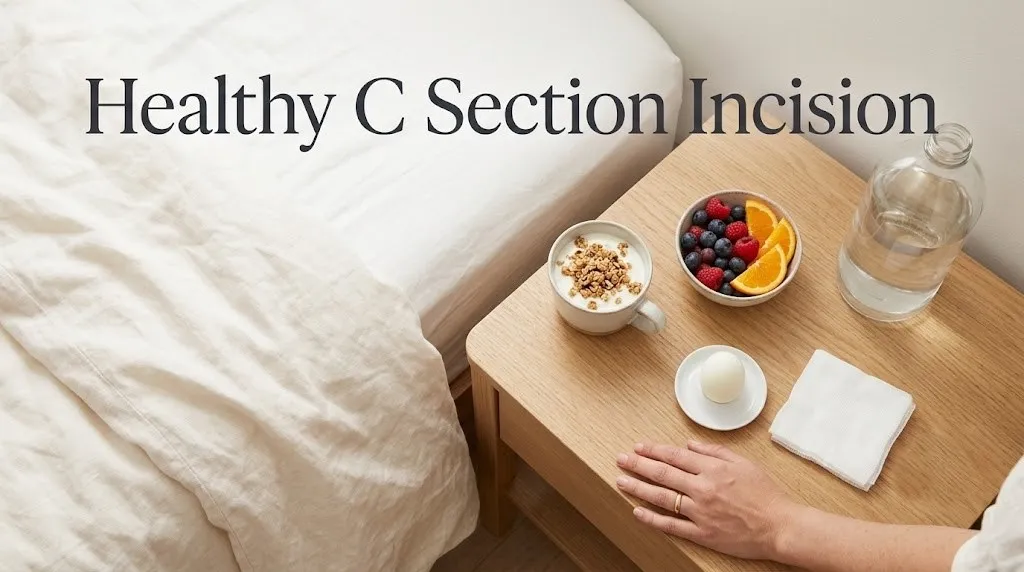
Healthy C Section Incision
A healthy C-section incision follows a predictable healing trajectory. In the first 24 to 48 hours after surgery, the incision is closed with sutures, staples, or surgical glue and covered with a sterile dressing. There may be a small amount of serosanguinous drainage, clear fluid tinged with blood. This is normal. The edges of the incision should be aligned and touching. The surrounding skin may be slightly pink. Some swelling is expected. The incision will be tender.
By days 3 to 5, the dressing is typically removed. The incision should be dry with no active drainage. The edges remain closed. Bruising may appear around the incision as blood from deeper layers rises to the surface. This is normal and will fade over one to two weeks. The pinkness should not be spreading outward. Redness that expands beyond the immediate incision line or becomes more intense after day 3 is a reason to contact your healthcare provider.
By weeks 2 to 3, the external incision should be fully closed. The scar will be red or pink and slightly raised. This is the proliferative phase of healing where collagen is being deposited rapidly. The incision should not be painful at rest, though it may be tender when pressed or when you move suddenly. By week 6, the standard postpartum visit timing, the incision should be a healed scar. The scar will continue to remodel for 6 to 12 months, flattening and fading.
| Healing Timeline | What to Expect | When to Call Your Provider |
|---|---|---|
| First 24 to 48 hours | Closed, covered, minimal drainage | Large amount of drainage, separation, fever over 100.4 F |
| Days 3 to 5 | Dressing removed, dry, edges closed, bruising may appear | Spreading redness, pus, increasing pain |
| Weeks 1 to 2 | Incision closed, tenderness decreasing | Opening of incision, foul odor, fever |
| Weeks 2 to 3 | Healed externally, pink raised scar | Warmth, increasing redness, discharge |
| Week 6 | Scar formed, healing well | Pain at rest, any opening, continued drainage |
Individual healing varies. Factors that slow wound healing include uncontrolled diabetes, smoking, infection, malnutrition, and certain medications including chronic corticosteroids. A person with well-controlled blood sugar, adequate nutrition, and no infection will heal faster than someone with these complicating factors. Your obstetrician or midwife is the person to evaluate your specific incision and determine whether your healing is on track.
Key Takeaway: A healthy C-section incision is closed, dry, and progressively less tender. Redness should decrease, not spread. Any opening, pus, spreading redness, or fever over 100.4 degrees F requires immediate medical attention.
C Section Incision Care
C-section incision care follows a simple set of instructions that protect the wound from infection and mechanical stress. The core principles are keep it clean, keep it dry, and protect it from pressure and friction. These principles apply whether the incision was closed with sutures, staples, or surgical glue. The specific care differs slightly by closure method.
To clean the incision, allow warm water and mild, fragrance-free soap to run over the area in the shower. Do not scrub the incision. Do not apply washcloths, loofahs, or sponges directly to the wound. Use your hand to gently cup water over the area. Rinse thoroughly to remove all soap residue. Pat the area dry with a clean, soft towel. Do not rub. The towel should be designated for incision drying and changed daily to prevent bacterial transfer. The ACOG recommends this gentle cleaning once daily or as directed by your provider.
Keep the incision dry throughout the day. After showering, ensure the area is completely dry before dressing. If the incision is below a belly fold or skin overhang, a condition common in the postpartum period, lift the fold gently and dry the area underneath. A clean, dry piece of gauze or a soft cotton cloth can be placed over the incision to absorb moisture and prevent skin-on-skin friction. Change the gauze daily or when it becomes damp.
Do not apply creams, ointments, powders, or alcohol to the incision unless specifically instructed by your healthcare provider. These products can trap moisture, introduce bacteria, or irritate the healing tissue. Vitamin E oil and scar creams are not recommended until the incision is fully closed and healed, typically after the 6-week postpartum visit. Applying them to an open or healing wound can cause infection and delay closure.
| Closure Method | Specific Care Instructions |
|---|---|
| Sutures (absorbable) | Will dissolve on their own in 2 to 6 weeks, do not pick or pull, clean as above |
| Staples | Removed by provider at 5 to 10 days postpartum, clean as above until then |
| Surgical glue (Dermabond) | Water can run over it, do not scrub, do not apply products, will peel off on its own |
| Steri-Strips | Leave in place until they fall off or provider removes them, can get wet, pat dry |
Quick Tip:
- After showering, use a blow dryer on the cool setting to dry the incision area completely. Hold the dryer 6 to 8 inches from the skin. The cool air dries the area without the friction of a towel. This technique is especially helpful for incisions under a belly fold where moisture accumulates.
Signs of Infection C Section Incision
A C-section incision infection requires prompt medical evaluation. Surgical site infections occur in approximately 2 to 7 percent of C-sections, according to CDC surveillance data. The signs of infection typically appear between days 4 and 10 after surgery, though infections can develop earlier or later. Recognizing the signs early reduces the risk of serious complications including wound dehiscence (opening) and systemic infection.
The cardinal signs of a C-section incision infection are spreading redness (erythema) that expands outward from the incision rather than diminishing, increased pain at the incision site that worsens rather than improves after day 3, purulent drainage (pus) that is yellow, green, or foul-smelling, warmth radiating from the incision area, and fever of 100.4 degrees Fahrenheit or higher. A fever in the postpartum period is a medical alert. Do not wait to see if it passes. Call your obstetrician or midwife immediately.
Other signs that require medical attention include wound dehiscence, where the incision edges separate and the wound opens. This can be partial (superficial layers only) or complete (full thickness of the incision opening). Any opening of the incision should be evaluated by your provider. A seroma, a collection of clear fluid under the incision, may present as swelling or a palpable fluid pocket. Small seromas may resolve on their own. Large seromas require drainage. A hematoma, a collection of blood under the incision, presents as a firm, painful swelling and requires evaluation.
| Symptom | What It May Indicate | Action to Take |
|---|---|---|
| Spreading redness | Cellulitis or wound infection | Call provider same day |
| Pus or foul-smelling drainage | Wound infection | Call provider same day |
| Fever over 100.4 degrees F | Systemic infection | Call provider immediately, may need ER |
| Incision opening (dehiscence) | Wound disruption | Call provider immediately, go to ER if large or complete |
| Increasing pain after day 3 | Possible infection or seroma | Call provider same day |
| Warmth at incision site | Inflammation or infection | Call provider same day |
A person who has had a C-section and is experiencing any of these symptoms should contact their obstetrician or midwife. The provider will determine whether an in-person evaluation is needed. If the provider’s office is closed and symptoms are severe, including fever, spreading redness, or wound opening, the emergency department is the appropriate setting for evaluation. Postpartum infections can progress quickly. Early treatment with antibiotics or wound care prevents more serious complications.
Key Takeaway: Signs of C-section incision infection include spreading redness, pus, fever over 100.4 degrees F, worsening pain, and incision opening. Any of these requires a call to your provider. Fever or wound opening may require an emergency department visit.
How to Clean C Section Incision
Cleaning a C-section incision is a gentle process that removes bacteria from the skin surface without disrupting the healing tissue. The recommended method from ACOG is to let warm water and mild soap run over the incision once daily during a shower. No scrubbing. No soaking. No direct application of washcloths or sponges. The shower water and a small amount of mild, fragrance-free, dye-free liquid soap are the only cleaning agents.
To clean the incision:
- Wash your hands thoroughly with soap and water before touching the incision area.
- In the shower, allow warm water to run over the incision. Do not direct the shower stream at high pressure onto the wound.
- Apply a dime-sized amount of mild, fragrance-free liquid soap to your hand. Gently cup water and let the soapy water run over the incision. Do not rub the soap directly into the wound.
- Rinse thoroughly by allowing clean water to run over the area until all soap residue is gone. Soap left on the skin can cause irritation.
- After the shower, pat the incision dry with a clean, soft towel designated for this purpose. Use a blotting motion, not a rubbing motion.
- Let the incision air dry for a minute before dressing. If moisture accumulates under a belly fold, use the cool setting on a blow dryer or place a clean, dry piece of gauze over the incision to wick moisture.
Do not take baths, use hot tubs, or go swimming until your healthcare provider clears you to do so. Submersion in water introduces bacteria to the healing incision. This clearance typically comes at the 2 to 3 week mark at the earliest, and sometimes not until the 6-week postpartum visit. The timing depends on your individual healing and your provider’s assessment.
| Cleaning Step | What to Do | What Not to Do |
|---|---|---|
| Hand hygiene | Wash hands before touching area | Never touch incision with unwashed hands |
| Showering | Warm water, mild fragrance-free soap | No hot water, no scented soaps, no scrubbing |
| Drying | Pat dry with clean towel, air dry | No rubbing, no shared towels |
| Moisture control | Gauze under fold, cool blow dryer | No powders, no creams unless prescribed |
| Bathing | Wait for provider clearance | No baths, hot tubs, or swimming until cleared |
Quick Tip:
- Keep a stack of clean, soft washcloths or gauze pads designated for incision drying. Use a fresh one each time you shower. Wash them in hot water with fragrance-free detergent. This reduces the bacterial load that contacts the healing incision.
C Section Recovery Nutrition
Nutrition for C-section recovery is wound-healing nutrition. The same principles that guide nutrition for any surgical recovery apply here, with the added demands of postpartum recovery and, for many, breastfeeding. The body requires increased protein, specific vitamins and minerals, adequate calories, and sufficient hydration to rebuild the layers of tissue cut during surgery.
The Academy of Nutrition and Dietetics identifies protein, vitamin C, zinc, and vitamin A as the primary nutritional priorities for wound healing. Protein provides the amino acids for collagen synthesis. Collagen is the structural protein that gives tensile strength to the healing incision. Vitamin C is a cofactor for the enzymes that cross-link collagen fibrils. Without adequate vitamin C, collagen synthesis is impaired and the wound heals weakly. Zinc is a cofactor for cell proliferation and protein synthesis. Vitamin A supports epithelialization, the regrowth of skin over the wound.
The calorie requirements for C-section recovery depend on breastfeeding status. A non-breastfeeding postpartum person needs approximately 1,800 to 2,200 calories per day depending on activity level and body size. A breastfeeding person needs an additional 450 to 500 calories per day, per the Academy of Nutrition and Dietetics and AAP lactation guidance. These are not precision numbers. They are starting points. Hunger and satiety cues, weight trends, and milk supply (if breastfeeding) are the real-time feedback mechanisms.
| Nutrient | Function in Wound Healing | Postpartum/Breastfeeding RDA | Top Food Sources |
|---|---|---|---|
| Protein | Collagen synthesis, tissue repair | 65 to 100g per day (varies by weight and breastfeeding) | Chicken, fish, eggs, Greek yogurt, lentils, tofu |
| Vitamin C | Collagen cross-linking, antioxidant | 120mg (lactating) | Bell peppers, citrus, strawberries, broccoli, kiwi |
| Zinc | Cell proliferation, protein synthesis | 12mg (lactating) | Oysters, beef, pumpkin seeds, chickpeas |
| Vitamin A | Epithelialization, immune function | 1,300mcg RAE (lactating) | Sweet potatoes, carrots, spinach, liver |
| Iron | Oxygen transport, blood loss replacement | 10 to 18mg (varies) | Lean red meat, lentils, spinach, fortified cereals |
| Fluid | Hydration, blood volume, milk production | 3 to 4 liters (lactating) | Water, herbal tea, soups, water-rich fruits and vegetables |
Key Takeaway: C-section recovery nutrition prioritizes protein, vitamin C, zinc, vitamin A, iron, and fluids. These nutrients support collagen synthesis, immune function, and tissue repair. Breastfeeding increases calorie and nutrient needs.
Foods to Eat After C Section
The foods to eat after a C-section are whole foods that deliver the wound-healing nutrients in forms that are easy to digest and prepare. The immediate postpartum period is not the time for complex cooking. Nutrient-dense foods that can be eaten with one hand while holding a baby are the practical priority. The people supporting the postpartum person, partners, family, friends, should be the ones preparing these foods.
High-protein foods that support wound healing include Greek yogurt (plain, can be eaten from the tub with a spoon), hard-boiled eggs (prep a dozen at once, store in the refrigerator for grab-and-go), rotisserie chicken (no preparation, shred for sandwiches and salads), cottage cheese (eat straight from the container), lentil soup (make a large pot and freeze in individual portions), and protein smoothies (Greek yogurt, milk, frozen fruit, a spoonful of nut butter, blend and pour into a cup with a straw).
Vitamin C-rich foods include bell peppers (slice into strips and eat raw with hummus), citrus fruits (oranges, clementines, grapefruit are portable and require no preparation), strawberries (wash and eat), kiwi (cut in half and scoop with a spoon), and broccoli (steam a large batch and reheat). These foods should be eaten raw or lightly cooked. Vitamin C degrades with prolonged heat. Fresh and raw sources deliver the highest potency.
Iron-rich foods replace the blood lost during surgery. A C-section involves an average blood loss of 500 to 1,000 milliliters, roughly one to two pints. The ACOG notes that this is approximately twice the blood loss of a vaginal delivery. Iron-rich foods include lean red meat (a slow-cooked beef stew is tender, easy to digest, and can be made in bulk), lentils (pair with vitamin C from bell peppers or a squeeze of lemon to enhance iron absorption), spinach (add to smoothies, soups, or egg dishes), and fortified whole grain cereals (a quick breakfast with milk).
| Post-C Section Food | Key Nutrient | Practical Preparation |
|---|---|---|
| Greek yogurt (plain) | Protein (23g per cup) | Eat from tub, add frozen berries |
| Hard-boiled eggs | Protein (6g each), choline | Boil a dozen, refrigerate, grab and eat |
| Rotisserie chicken | Protein (25g per 3 oz) | Shred for sandwiches, salads, soups |
| Bell pepper strips | Vitamin C (152mg per 100g) | Slice, eat raw with hummus |
| Oranges and clementines | Vitamin C (70mg per medium) | Peel and eat, no preparation |
| Lean beef stew | Iron, protein, zinc | Make in large batch, freeze portions |
| Lentil soup | Iron, protein, fiber | Make ahead, reheat individual bowls |
| Smoothie with yogurt and berries | Protein, vitamin C, fluid | Blend and drink from cup with straw |
Quick Tip:
- Set up a “recovery snack station” at your bedside or nursing chair. A small cooler or basket with Greek yogurt cups, cheese sticks, hard-boiled eggs, washed fruit, granola bars, and a large water bottle. You can eat without getting up, which matters when you are holding a sleeping baby or recovering from surgery.
Protein for Wound Healing C Section
Protein is the single most important nutrient for C-section incision healing. The incision cuts through skin, subcutaneous fat, fascia, and the uterine wall. Each of these layers heals through collagen deposition. Collagen is a protein. Without adequate dietary protein, the body cannot synthesize collagen efficiently. The wound heals more slowly. The resulting scar has lower tensile strength.
The protein target for C-section recovery is 1.2 to 1.5 grams of protein per kilogram of body weight per day. For a 70-kilogram (154-pound) person, that is 84 to 105 grams of protein per day. The standard adult recommendation of 0.8 grams per kilogram is for maintenance, not for healing from major surgery. The Academy of Nutrition and Dietetics supports higher protein intake during wound healing and recovery. If the person is breastfeeding, protein needs increase further. Breast milk contains protein. The body prioritizes milk production. If protein intake is inadequate, the body will maintain milk production at the expense of wound healing.
The amino acids in protein are not interchangeable for wound healing. Arginine and glutamine are conditionally essential during recovery, meaning the body’s demand exceeds its ability to synthesize them. Arginine supports collagen deposition and immune function. Glutamine fuels the rapidly dividing cells involved in wound closure. Foods rich in these amino acids include poultry, fish, eggs, dairy, legumes, nuts, and seeds. A varied protein intake from both animal and plant sources covers the amino acid spectrum.
| Food | Protein (g) | Serving Size | Easy Preparation |
|---|---|---|---|
| Chicken breast | 31 | 3.5 oz (100g) | Rotisserie, pre-cooked strips |
| Greek yogurt (plain, nonfat) | 23 | 1 cup | From tub, with fruit |
| Lentils (cooked) | 18 | 1 cup | Pre-made soup, dal |
| Cottage cheese (low-fat) | 14 | 1/2 cup | From tub, with fruit |
| Tofu (firm) | 10 | 3.5 oz (100g) | Pre-baked, add to soup |
| Eggs | 6 | 1 large | Hard-boiled in advance |
| Almonds | 6 | 1 oz (23 nuts) | Pre-portioned bags |
| Protein smoothie (milk, yogurt, PB) | 25 to 30 | 12 oz | Blend and drink |
Quick Tip:
- Track your protein intake for three days using a food diary or app. You are likely to find you are eating less protein than you think. The visual of a 3-ounce portion of chicken, roughly the size of a deck of cards, contains 25 to 30 grams. A day that includes two eggs at breakfast (12g), a cup of Greek yogurt at snack (23g), and a chicken breast at dinner (30g) totals 65 grams. Adding lentils or a protein smoothie pushes the total into the healing range.
Key Takeaway: The protein target for C-section recovery is 1.2 to 1.5 grams per kilogram of body weight, approximately 84 to 105 grams per day for a 154-pound person. Breastfeeding increases the requirement further.
Vitamins for C Section Healing
The specific vitamins that support C-section healing are vitamin C, vitamin A, and the B vitamins, particularly B6 and B12. These vitamins function as cofactors in the biochemical pathways that build new tissue. A deficiency in any of them slows wound healing. Obtaining them from food is preferable to supplementation unless a healthcare provider has diagnosed a specific deficiency.
Vitamin C (ascorbic acid) is the most important vitamin for wound healing. It is required for the hydroxylation of proline and lysine during collagen synthesis. Without vitamin C, the collagen triple helix cannot form properly. The result is weak scar tissue and delayed wound closure. The RDA for vitamin C is 120 milligrams per day for lactating women and 75 milligrams per day for non-lactating women. One medium red bell pepper contains 152 milligrams. One medium orange contains 70 milligrams. One cup of strawberries contains 85 milligrams. A diet that includes a variety of fruits and vegetables easily meets the vitamin C target without supplementation.
Vitamin A (retinol) supports epithelialization, the regrowth of the skin barrier over the wound. It also supports immune function, reducing infection risk. The RDA for lactating women is 1,300 micrograms of retinol activity equivalents per day. A medium sweet potato contains over 1,000 micrograms. A half cup of cooked spinach contains 570 micrograms. A half cup of cooked carrots contains 670 micrograms. Vitamin A is fat-soluble and stored in the liver. Deficiency is rare in developed countries. Supplementation above the RDA is not recommended unless a deficiency is diagnosed.
Zinc is a mineral, not a vitamin, but it is included here because of its role in cell proliferation and protein synthesis. Zinc deficiency impairs wound healing. The RDA for lactating women is 12 milligrams per day. Three ounces of oysters contain 74 milligrams, far exceeding the requirement. Three ounces of beef contain 5 milligrams. A quarter cup of pumpkin seeds contains 2.5 milligrams. Zinc supplementation is not routinely recommended for C-section recovery unless intake is known to be low or a deficiency is diagnosed.
| Nutrient | Food Sources | Daily Target (Lactating) | Supplementation Needed? |
|---|---|---|---|
| Vitamin C | Bell peppers, citrus, strawberries, broccoli | 120mg | No, food sources are sufficient |
| Vitamin A | Sweet potatoes, carrots, spinach, eggs | 1,300mcg RAE | No, unless diagnosed deficiency |
| Zinc | Oysters, beef, pumpkin seeds, chickpeas | 12mg | No, unless diagnosed deficiency |
| Iron | Red meat, lentils, spinach, fortified cereal | 10 to 18mg | Provider may recommend based on blood loss |
A standard prenatal vitamin continued into the postpartum period covers the baseline micronutrient needs for most people. Additional supplementation should be discussed with a healthcare provider. The focus should be on nutrient-dense foods that deliver these vitamins and minerals in their most bioavailable forms.
C Section Recovery Timeline Week by Week
The C-section recovery timeline extends from the day of surgery through 6 to 12 months for full scar maturation. The first 6 weeks are the most medically monitored period. The first 2 weeks are the most physically restricted. Understanding what to expect at each stage reduces anxiety and helps you distinguish normal healing from problems that need attention.
Week 1 (Days 0 to 7): The most intensive recovery period. Pain is managed with prescription medication transitioning to over-the-counter options. The incision is covered for the first 24 to 48 hours, then left open to air or covered with a light gauze. Bleeding from the uterus (lochia) is similar to a heavy period. Walking is encouraged but limited to short distances within the home. No lifting anything heavier than the baby. Nutrition priority: protein, vitamin C, fluids, fiber to prevent constipation.
Weeks 2 to 3: Pain decreases significantly. Pain medication may be over-the-counter only or discontinued entirely. The incision should be closed and dry. Lochia transitions from red to pink to brownish discharge. Activity increases to gentle walking. Nutrition priority continues as above. Calorie intake should be adequate to support healing and breastfeeding if applicable. Do not restrict calories during this phase.
Weeks 3 to 6: Energy begins to return. The incision is a healing scar. Exercise remains restricted per provider guidance. Typically cleared for driving at 2 to 3 weeks if off narcotic pain medication and able to perform an emergency stop without pain. The 6-week postpartum visit is the milestone for clearance to resume exercise, sexual activity, and full activity. Nutrition priority shifts to supporting long-term recovery, milk supply if breastfeeding, and gradual return to pre-pregnancy eating patterns if weight management is a goal.
| Recovery Phase | Activity Level | Incision Status | Nutrition Priority |
|---|---|---|---|
| Week 1 | Bed rest and very light activity | Dressed, then open to air | Protein, fluids, fiber, vitamin C |
| Weeks 2 to 3 | Gentle walking, light household | Closed, dry, healing | Sustained protein and micronutrient intake |
| Weeks 3 to 6 | Increasing activity, possibly driving | Scar forming | Balanced recovery diet, do not restrict calories |
| Week 6+ | Cleared for exercise and full activity | Healed scar | Gradual return to pre-pregnancy eating patterns if desired |
| 6 to 12 months | Full activity | Scar maturation, fading | Ongoing healthy eating |
Key Takeaway: The first week is the most intensive recovery. The incision closes within 2 weeks. Activity increases through week 6. Nutrition is prioritized for healing throughout, with protein, vitamin C, zinc, fluids, and fiber as the daily targets.
C Section Incision Healing Stages
The C-section incision heals in four overlapping biological phases: hemostasis, inflammation, proliferation, and remodeling. The external incision you see is the skin layer. The internal layers, fascia, muscle, and uterus, heal simultaneously through the same phases. The internal healing takes longer than the external closure suggests.
Hemostasis (minutes to hours): Immediately after surgery, the body forms a clot to stop bleeding. Platelets aggregate. Fibrin forms a provisional matrix. The wound edges are held together by sutures, staples, or glue. The body’s own clotting and the surgeon’s closure work together.
Inflammation (hours to days): The wound becomes red, slightly warm, and swollen. Immune cells, neutrophils and macrophages, enter the wound to remove debris and bacteria. This phase is normal and necessary. The inflammation should be localized and decreasing, not spreading. The redness that expands outward is a sign of infection, not normal healing.
Proliferation (days to weeks): New tissue forms. Fibroblasts lay down collagen. New blood vessels grow into the wound bed. The skin edges regenerate from the bottom up and the edges inward. This phase produces the pink, slightly raised scar. The wound gains tensile strength rapidly during this phase. Adequate protein, vitamin C, and zinc are the nutritional supports.
Remodeling (weeks to months): Collagen is reorganized. The scar flattens and fades from red to pink to a pale, flat line. The final tensile strength of the scar reaches approximately 80 percent of uninjured skin. This phase continues for 6 to 12 months. Silicone sheets and scar massage, after the wound is fully closed, can improve scar appearance. Discuss these with your provider at the 6-week visit.
| Healing Phase | Timeline | What Is Happening |
|---|---|---|
| Hemostasis | Minutes to hours | Clot formation, bleeding stops |
| Inflammation | Hours to days | Immune cells clean wound, normal redness and swelling |
| Proliferation | Days to weeks | Collagen deposition, new tissue formation |
| Remodeling | Weeks to months | Scar maturation, flattening, fading |
Breastfeeding After C Section Nutrition
Breastfeeding after a C-section adds approximately 450 to 500 calories per day to the nutritional demands of wound healing. The body prioritizes milk production. If calorie or nutrient intake is inadequate, milk supply is maintained at the expense of maternal tissue repair and energy levels. The breastfeeding parent’s nutritional needs are the highest of any recovery phase. Eating enough is the baseline. Eating enough of the right nutrients is the goal.
The calorie target for a breastfeeding person recovering from a C-section is approximately 2,200 to 2,700 calories per day depending on body size, activity level, and whether exclusive breastfeeding or supplementing with formula. This is not a time for calorie restriction. Milk supply is sensitive to energy availability. A sudden drop in calorie intake can reduce milk volume within 24 to 48 hours. The body can mobilize fat stores for energy, but extreme restriction or rapid weight loss can affect milk composition and supply.
Hydration is particularly important for the breastfeeding and healing combination. Milk is approximately 87 percent water. A breastfeeding person produces 25 to 35 ounces of milk per day. That is 25 to 35 ounces of water leaving the body daily through milk alone, in addition to normal water losses. The total fluid recommendation is 3 to 4 liters per day. Water, herbal teas, soups, and water-rich foods (fruit, yogurt, soups) all contribute. The classic advice to drink a glass of water every time you nurse is practical and effective.
| Nutrient | Breastfeeding RDA | Added for C-Section Healing | Top Food Sources |
|---|---|---|---|
| Calories | +450 to 500 per day | Do not restrict | Whole foods, nutrient-dense |
| Protein | 65g (based on 0.8g/kg + 25g) | Increase to 1.2 to 1.5g/kg | Greek yogurt, eggs, chicken, lentils |
| Fluid | 3 to 4 liters per day | Additional for healing | Water, herbal tea, soups, fruit |
| Vitamin C | 120mg | 120mg (no increase required) | Bell peppers, citrus, strawberries |
| Zinc | 12mg | 12mg (no increase required) | Beef, pumpkin seeds, chickpeas |
| DHA (omega-3) | 200 to 300mg per day | Supports healing and infant brain development | Salmon, sardines, walnuts, flaxseed |
Quick Tip:
- Set a water bottle at each nursing station. Take a drink every time the baby latches. This habit pairs hydration with an existing routine. The water bottle serves as a visual cue and a measurement tool. A 32-ounce bottle emptied twice daily provides 2 liters. Add soups, tea, and water-rich foods for the remaining fluid needs.
Key Takeaway: Breastfeeding adds 450 to 500 calories and 3 to 4 liters of fluid to the daily C-section recovery needs. Protein, vitamin C, zinc, and DHA support both milk production and wound healing. Calorie restriction during recovery can reduce milk supply.
C Section Scar Healing Foods
C-section scar healing foods are the same wound-healing foods that support the earlier phases of recovery, with an emphasis on nutrients that support collagen remodeling and skin health during the scar maturation phase. The scar continues to remodel for 6 to 12 months. The nutritional support during this phase is less urgent than during the acute healing phase but still relevant.
Protein remains important during scar remodeling. Collagen turnover continues throughout the remodeling phase. Adequate protein intake supports the ongoing synthesis and reorganization of collagen. The same daily target of 1.2 to 1.5 grams per kilogram applies during the early remodeling phase and can transition to maintenance levels (0.8 grams per kilogram) once the scar is fully mature.
Vitamin E is often mentioned in the context of scar healing. The evidence for oral vitamin E improving scar appearance is weak. Topical vitamin E is not recommended during the acute healing phase and has mixed evidence for scar improvement. Foods rich in vitamin E, including almonds, sunflower seeds, and spinach, are healthy components of a recovery diet but should not be relied upon as scar treatments.
Omega-3 fatty acids from fish, flaxseed, and walnuts support the inflammatory phase of healing and may help modulate the excessive inflammation that can lead to hypertrophic or keloid scarring. Two servings of fatty fish per week align with general health recommendations and may benefit scar quality.
| Scar Healing Food | Key Nutrient | Practical Suggestion |
|---|---|---|
| Salmon, sardines | DHA/EPA omega-3 | 2 servings per week |
| Bone broth, collagen peptides | Amino acids (proline, glycine) | Add to soups, smoothies |
| Citrus fruits, bell peppers | Vitamin C (ongoing collagen support) | Daily, with meals |
| Almonds, sunflower seeds | Vitamin E | As snacks, on salads |
| Sweet potatoes, carrots | Vitamin A | Roasted, in soups |
| Water, herbal tea | Hydration | Throughout the day |
Silicone sheets and gels are the topical treatments with the best evidence for improving scar appearance. These are applied to the fully closed, healed scar, not to the open wound. They should be discussed with your healthcare provider, typically at the 6-week postpartum visit or later. Nutrition supports scar healing from the inside. Topical treatments address the scar from the outside. Both approaches are complementary.
Fiber After C Section Constipation
Constipation after a C-section is common and can be severe. Multiple factors converge: the lingering effect of anesthesia on bowel motility, opioid pain medications that slow the gut, postpartum hormonal shifts, reduced physical activity, fear of pain with bearing down, and dehydration if fluid intake is inadequate. The incision itself is not directly affected by constipation, but straining to pass stool places pressure on the healing abdominal wall and can be intensely painful.
Fiber is the first-line nutritional strategy for constipation. The Academy of Nutrition and Dietetics recommends 25 grams of fiber per day for adult women. During C-section recovery, the combination of fiber and fluid is what moves the bowel. Fiber without fluid can worsen constipation. Fluid without fiber is not sufficient. The two must be consumed together.
Fiber-rich foods that are gentle on the digestive system include prunes (3 grams of fiber per 5 prunes, plus sorbitol which has a natural laxative effect), pears with the skin (5 grams of fiber per medium pear), oatmeal (4 grams of fiber per cup cooked), lentils (8 grams per half cup cooked), chia seeds (10 grams per 2 tablespoons, add to yogurt or smoothies), and ground flaxseed (3 grams per tablespoon, add to oatmeal or smoothies).
| Fiber-Rich Food | Fiber (g) | Serving Size | Gentle on Postpartum Digestion? |
|---|---|---|---|
| Prunes | 3 | 5 prunes | Yes, plus natural sorbitol |
| Pear with skin | 5 | 1 medium | Yes, soft and easy to eat |
| Oatmeal | 4 | 1 cup cooked | Yes, warm and soothing |
| Lentils | 8 | 1/2 cup cooked | Yes, in soup form |
| Chia seeds | 10 | 2 tbsp | Yes, when soaked in liquid |
| Ground flaxseed | 3 | 1 tbsp | Yes, add to foods |
| Broccoli | 5 | 1 cup cooked | Yes, cooked until soft |
Stool softeners, such as docusate sodium (Colace), are commonly prescribed after C-section. They work by drawing water into the stool, making it softer and easier to pass. They are not laxatives. They do not stimulate bowel contraction. They are safe for breastfeeding. If stool softeners plus fiber and fluid are not sufficient, a gentle laxative such as polyethylene glycol (Miralax) or senna may be recommended by a healthcare provider. Do not use stimulant laxatives without medical guidance during the postpartum period.
Key Takeaway: Post-C-section constipation is managed with 25 grams of fiber daily, 3 to 4 liters of fluid, and stool softeners if prescribed. Prunes, pears, oatmeal, lentils, chia seeds, and flaxseed are the best food sources. Increase fiber gradually and pair with water.
C Section Incision Opening What to Do
A C-section incision opening, called wound dehiscence, requires immediate medical evaluation. The severity ranges from superficial separation of the skin edges to complete opening of all tissue layers including the uterus. Any opening is a reason to contact your healthcare provider. A large or complete opening, or any opening accompanied by heavy bleeding, is a reason to go to the emergency department.
If you notice that part of your incision has opened, first, do not panic. Most dehiscence is partial and superficial. Cover the open area with a clean, dry gauze pad or a clean cloth. Do not attempt to clean the wound with water, soap, or any product. Do not attempt to push tissue back inside. Do not apply pressure unless there is active bleeding. Call your obstetrician or midwife’s office. Describe what you see: the length of the opening, the depth if visible, the color of the tissue, any drainage, and whether there is bleeding.
If the opening is larger than an inch, if you can see fatty tissue or deeper structures, if there is active bleeding, or if you have a fever over 100.4 degrees F, go to the emergency department. Do not wait for a call back from the provider’s office. Postpartum surgical complications require timely evaluation. A dehiscence that extends through the fascia is a surgical emergency.
| Incision Opening Scenario | Action |
|---|---|
| Small opening (less than 1/2 inch), superficial, no bleeding | Call provider, cover with clean gauze |
| Small opening with clear drainage | Call provider, cover with clean gauze |
| Opening larger than 1 inch | Go to emergency department |
| Opening with visible fatty tissue or deeper structures | Go to emergency department |
| Opening with active bleeding | Go to emergency department |
| Any opening with fever over 100.4 degrees F | Go to emergency department |
Wound dehiscence is more common in people with risk factors including obesity, diabetes, infection, malnutrition, smoking, and corticosteroid use. The best prevention is adequate nutrition, particularly protein and vitamin C, careful wound care, and avoidance of heavy lifting and strenuous activity during the first 6 weeks. Follow your provider’s activity restrictions.
How to Sleep After C Section
Sleeping after a C-section requires finding a position that does not strain the incision or the abdominal muscles. The incision is across the lower abdomen. Any movement that engages the core, sitting up from lying flat, rolling over, getting out of bed, pulls on the healing tissue. The right sleeping position reduces pain and protects the wound.
The safest sleeping position is on your back with a pillow under your knees. This position relaxes the abdominal muscles and prevents tension on the incision. A small, firm pillow or folded towel placed gently against the incision when you need to cough, sneeze, or laugh provides counter-pressure that reduces pain. This is called splinting. Hold the pillow against your incision with gentle, even pressure before you cough.
Side sleeping is possible with a pillow between the knees and another pillow supporting the belly. The pillow between the knees aligns the hips and reduces torque on the lower back and abdomen. The pillow supporting the belly prevents the abdominal tissue from pulling downward with gravity, which strains the incision. A body pillow or a U-shaped pregnancy pillow, the same one used during pregnancy, works well for side-sleeping after a C-section.
Do not sleep on your stomach until your incision is fully healed and your provider clears you. Stomach sleeping places direct pressure on the incision and can disrupt healing. Getting in and out of bed should use the log-roll technique. From a lying position, bend your knees, roll onto your side as a single unit without twisting your abdomen, then push up with your arms to a seated position. Reverse the motion to lie down. This technique minimizes abdominal engagement.
| Sleep Position | How to Set Up | Incision Safety |
|---|---|---|
| Back sleeping | Pillow under knees, pillow for incision splinting | Safest position |
| Side sleeping | Pillow between knees, pillow under belly for support | Safe with support |
| Stomach sleeping | Not recommended | Wait until cleared by provider |
| Getting out of bed | Log-roll technique | Protects incision from strain |
Quick Tip:
- Keep a small, firm pillow at your bedside for incision splinting. You will need it for coughing, sneezing, laughing, and the first few bowel movements. The counter-pressure reduces the sensation that the incision is pulling apart. This is normal. The wound is securely closed. The sensation is from the healing nerves and tissues. The splinting pillow makes it manageable.
Frequently Asked Questions About C Section Incision Health
How do I know if my C-section incision is healing properly?
A properly healing C-section incision is closed, dry, and less tender with each passing day. Redness should decrease, not spread.
By day 3 to 5, the dressing is removed and the incision should have no active drainage. By week 2 to 3, the external wound is closed.
Any spreading redness, pus, opening, or fever over 100.4 degrees F means the incision is not healing properly and requires medical evaluation.
What foods should I avoid after a C-section?
Avoid foods that cause constipation, which increases abdominal pressure and pain at the incision site. These include processed foods low in fiber, excessive cheese and dairy without fiber, and large amounts of red meat without vegetables.
Carbonated beverages can cause gas and bloating, which stretches the abdominal wall. Avoid them in the first week or two.
Foods that are safe during pregnancy, including sushi and deli meats, remain safe postpartum unless you are breastfeeding and your pediatrician has given specific restrictions related to infant allergy risk.
How much protein do I need for C-section recovery?
The target is 1.2 to 1.5 grams of protein per kilogram of body weight per day. For a 154-pound person, that is 84 to 105 grams daily.
This is higher than the standard adult recommendation of 0.8 grams per kilogram because protein is required for collagen synthesis and tissue repair.
A day with two eggs (12g), a cup of Greek yogurt (23g), a chicken breast (30g), and a cup of lentils (18g) totals 83 grams, meeting the target.
When can I take a bath after a C-section?
Most healthcare providers recommend waiting 2 to 3 weeks before submerging the incision in water. The incision must be fully closed and dry.
Showers are permitted and encouraged earlier, typically within 24 to 48 hours after surgery, following your provider’s specific instructions.
Do not take a bath, use a hot tub, or go swimming until your provider explicitly clears you at a follow-up appointment.
Why is my C-section incision itchy?
Itching is a normal part of the healing process. It occurs during the proliferative and remodeling phases when new skin cells are forming and nerve endings are regenerating.
Histamine is released as part of the inflammatory healing process and can cause itching.
Do not scratch the incision. Scratching can introduce bacteria and damage healing tissue. Cool compresses, loose clothing, and antihistamines (with provider approval during breastfeeding) can provide relief.
Your C-section incision is a surgical wound. It heals on a predictable timeline when given the right care and nutrition. Keep it clean and dry. Eat enough protein, vitamin C, and zinc. Drink more water than you think you need. Call your provider the moment you see spreading redness, pus, or an opening. Do not wait. The incision is the visible part of a surgery that cut through multiple layers of your body. It deserves the same attention you would give any major surgical wound.
The nutrition that heals your incision is the same nutrition that fuels milk production if you are breastfeeding, supports your energy as you care for a newborn, and rebuilds the blood and tissue lost during surgery. Protein at every meal. Fruits and vegetables for vitamins and fiber. Water constantly. This is not a diet. It is recovery eating. Do it with the same commitment you bring to feeding your baby.
You are recovering from major abdominal surgery. Treat yourself accordingly. Accept the help that is offered. Eat the food that is prepared for you. Rest when the baby rests, as much as the advice is cliche, it is true. The incision will heal. The scar will fade. The baby will grow. You will feel like yourself again. Give your body the time and the nutrients it needs to get there.