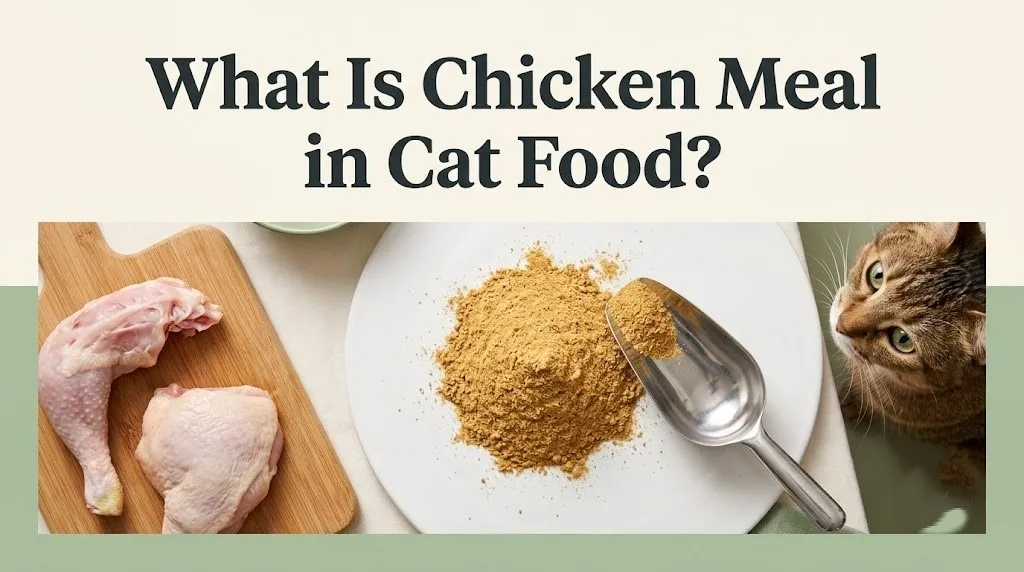
Chicken meal is not a mystery filler. It is a concentrated, high-protein powder made from clean chicken flesh, skin, and bone that has been rendered to remove water and fat. The resulting dry product contains roughly 60 to 70 percent protein by weight, making it one of the most protein-dense ingredients in commercial cat food.
This matters because your cat is an obligate carnivore. A cat’s body is designed to run on animal protein and fat, not carbohydrates. When you see “chicken meal” on a label, you are looking at a dehydrated, ground chicken product that packs more amino acids into a kibble than fresh chicken ever could. Fresh chicken is about 70 percent water. If it is the first ingredient, the actual protein contribution to the finished food drops once that water cooks off. Chicken meal starts dry. It stays dry. The protein number on the guaranteed analysis is largely built on ingredients like this.
This guide explains exactly what chicken meal is, how it is made, what AAFCO requires it to contain, and whether it is a healthy choice for your cat. You will learn the difference between chicken meal and chicken by-product meal, why some brands use meal instead of fresh meat, and how to read a pet food label without falling for marketing fear tactics that demonize perfectly good ingredients.
What Is Chicken By Product in Cat Food
Chicken by-product is the non-rendered, clean parts of a slaughtered chicken other than the skeletal muscle meat. This includes organs like the liver, heart, and gizzard, as well as necks and feet. It does not include feathers, heads, intestines, or manure. The AAFCO definition explicitly excludes those.
In many ways, a chicken by-product can be a nutritional goldmine for a cat. A feral cat eating a mouse does not fillet the breast meat and leave the rest. It eats the liver, rich in vitamin A and iron. It eats the heart, dense with taurine, an amino acid cats cannot synthesize and will die without. It crunches the bones for calcium. Organs are not waste. They are the most nutrient-dense part of the prey animal. Chicken by-product in cat food mirrors this whole-prey concept better than a boneless, skinless chicken breast ever could.
The problem with chicken by-product is not the ingredient category itself. It is the lack of transparency. A label that lists “chicken by-product” does not specify the ratio of liver to feet. A reputable manufacturer sourcing high-quality by-products creates a nutritious ingredient. A low-cost manufacturer might use a higher proportion of less digestible connective tissue. The ingredient name alone does not tell you which one is in the bag.
Key Takeaway: Chicken by-product sounds disgusting to human ears but aligns with the whole-prey diet a cat’s body expects. The quality depends on the manufacturer’s sourcing, which the label does not disclose.
What Is Chicken By Product Meal in Cat Food
Chicken by-product meal is chicken by-product that has been rendered, dried, and ground into a concentrated protein powder. It is the dehydrated version of chicken by-product, meaning it contains the same organ meats and bones in a dry, shelf-stable form with the water and most of the fat removed.
This ingredient is dense in both protein and minerals. Because it includes ground bone, chicken by-product meal is naturally high in calcium and phosphorus. This is beneficial in controlled amounts, especially for bone health, but the elevated ash content can be a concern for cats with specific urinary or kidney conditions. A cat with a history of struvite crystals or chronic kidney disease may need a diet with controlled mineral levels, and a food heavy in by-product meal might deliver more phosphorus than is ideal for that individual animal.
From a protein standpoint, chicken by-product meal is not inferior to chicken meal. It is different. Chicken meal is primarily muscle meat and skin with some bone. Chicken by-product meal is a broader mix that includes organ meats. The amino acid profile of the by-product meal is arguably more complete for a carnivore because organs supply micronutrients and amino acids that muscle meat alone lacks. The stigma attached to the phrase “by-product” is a human cultural bias, not a nutritional one.
What Is Chicken By-Product Meal in Cat Food
This is the same ingredient as “chicken by product meal,” written with a hyphen. The hyphenation does not change the legal or nutritional definition. It is a formatting variation that appears on different brands’ labels for the same rendered, dried, ground chicken by-product material.
The hyphenated version is sometimes used by manufacturers who want the ingredient name to read more cleanly on a packaging panel. It does not signal a different ingredient, a different quality tier, or a different manufacturing process. The AAFCO definition applies identically regardless of punctuation. A consumer reading a label should treat “chicken by-product meal” and “chicken by-product meal” as the same substance and evaluate it based on the overall recipe quality, not the presence or absence of a hyphen.
The practical takeaway is that searching for the hyphenated version of this ingredient will bring up the same information as the unhyphenated version. The nutritional properties, the rendering process, and the regulatory definition are identical. The only difference is the graphic design of the label.
Is Chicken Meal in Cat Food Bad
Chicken meal is not bad for cats. It is a high-quality, concentrated animal protein source that is nutritionally appropriate for obligate carnivores. The belief that chicken meal is a low-grade filler comes from a misunderstanding of the rendering process and a general cultural disgust with any part of the animal that is not a cleanly trimmed muscle cut.
The rendering process that creates chicken meal involves cooking clean chicken parts at controlled temperatures to separate fat from protein and drive off water. The resulting solids are ground into a powder. This process does not involve rotting carcasses, roadkill, or euthanized animals, all of which are explicitly prohibited by FDA regulations for pet food ingredients. The “4D meats” myth, which claims meal contains dead, dying, diseased, or disabled animals, applies to a pre-regulation era that ended decades ago. Modern pet food manufacturing operates under federal and state feed laws that define exactly what can and cannot enter the rendering stream.
A 2020 study published in the Journal of Animal Science examined the digestibility of various poultry meals and found that high-quality chicken meal had protein digestibility values exceeding 80 percent in feline models. That is comparable to many fresh meat sources. The amino acid availability, the actual usable protein the cat’s body absorbs, is strong. Chicken meal is not a scam ingredient. It is a practical, sustainable way to deliver the concentrated animal protein that cats require.
What Is Beef Meal in Dog Food
Beef meal in dog food is the canine equivalent of chicken meal for cats. It is rendered, dried, and ground beef tissue including muscle meat and some bone, with the water and fat removed. It serves the same purpose in a dog food recipe as chicken meal does in cat food. It provides a concentrated source of animal protein in a dry, shelf-stable form.
Dogs are facultative carnivores, not obligate carnivores like cats. They have more metabolic flexibility and can tolerate a more omnivorous diet. However, high-quality animal protein remains the ideal foundation for most healthy dogs. Beef meal delivers roughly 60 to 65 percent protein by weight, along with minerals like iron and zinc that are naturally present in red meat. The nutritional logic is identical to chicken meal. Removing the water weight concentrates the nutrients, making it an efficient ingredient for dry kibble where too much fresh meat would turn the dough into a sticky slurry that cannot be extruded properly.
The quality rules for beef meal are the same as for chicken meal. A named species meal like “beef meal” is preferable to a generic “meat meal” or “animal meal” because the species identification signals a more controlled supply chain. A dog owner evaluating a food that lists “beef meal” should apply the same critical lens as a cat owner evaluating “chicken meal.” The ingredient is not inherently good or bad. The overall recipe, the manufacturer’s reputation, and the dog’s individual health status determine whether that particular food is a good choice.
Protein Concentration Comparison:
| Ingredient | Water Content (approx.) | Protein Content (as-fed) | Protein Content (dry matter) |
|---|---|---|---|
| Fresh Chicken | 70% | 18-20% | 60-65% |
| Chicken Meal | 5-8% | 60-65% | 65-70% |
| Chicken By-Product Meal | 5-8% | 55-60% | 58-65% |
| Beef Meal | 5-8% | 60-65% | 65-70% |
Chicken Meal vs Fresh Chicken Nutrition
Chicken meal and fresh chicken are nutritionally similar on a dry matter basis, but chicken meal is far more concentrated because the water has been physically removed. A cat food that lists “chicken” as the first ingredient may actually deliver less chicken-derived protein to the finished kibble than a food that lists “chicken meal” third or fourth on the label.
The ingredient list orders items by pre-cooking weight. Fresh chicken is heavy because it is 70 percent water. It sits at the top of the ingredient list because it is weighed before the water cooks off. Once the kibble is extruded and dried, that fresh chicken has shrunk dramatically. The chicken meal, which went into the mixer already dry, did not shrink. It contributed its full protein payload. This is not a trick. It is basic food science, but it is frequently exploited by marketing departments that know consumers look for “real chicken” as the first ingredient.
A food with fresh chicken as the first ingredient and no concentrated protein meal anywhere on the list may have a low total animal protein content once the water weight is accounted for. A food with chicken meal as the first or second ingredient almost certainly has a higher total animal protein content. The most transparent approach is to look for both. A food that lists fresh chicken followed by chicken meal is leveraging the marketing appeal of fresh meat while backing it up with the protein density of a meal ingredient.
Key Takeaway: Fresh chicken sounds better to humans. Chicken meal delivers more actual protein to cats. The best foods often use both.
How Is Chicken Meal Made for Pet Food
Chicken meal is made through a controlled rendering process that grinds clean chicken parts, cooks them at moderate temperatures to separate fat from protein, and dries the remaining solids into a concentrated powder. The process is regulated by the FDA and must use ingredients that meet AAFCO definitions.
The raw materials for chicken meal consist of the parts of a chicken that remain after the skeletal muscle meat has been removed for human consumption. This includes the frames, backs, and necks, along with skin and small amounts of attached meat. These are not spoiled or diseased carcasses. They are the parts of the chicken that Americans, who overwhelmingly prefer boneless breast meat, do not eat. The rendering process takes these parts, grinds them, and cooks them in a continuous cooker at temperatures typically below 250 degrees Fahrenheit. The fat melts away and is separated for use as chicken fat in pet food. The remaining protein solids are dried and ground to a specific particle size.
The final product is a tan to brown powder with a mild, slightly savory smell. It is tested for protein content, fat content, moisture, ash, and microbial safety before it is shipped to pet food manufacturers. Quality chicken meal from a reputable rendering plant is a consistent, safe, and highly nutritious ingredient. The nutritional variability between batches is low because the rendering process is standardized.
Chicken Meal vs Chicken By-Product Meal Difference
The primary difference between chicken meal and chicken by-product meal is that chicken meal is made from the clean flesh, skin, and bone remaining after the muscle meat is removed, while chicken by-product meal includes the organs like liver, heart, and gizzard in addition to the frames and necks. Both are rendered, dried, and ground. Both are concentrated protein sources.
From a nutritional completeness standpoint, chicken by-product meal has a theoretical advantage for a carnivore because it includes organs. Liver is rich in vitamin A, folate, and iron. Heart is the richest natural source of taurine, the amino acid that prevents blindness and heart failure in cats. Chicken meal made from frames and skin alone lacks these organ-derived nutrients and may require synthetic supplementation to match the micronutrient profile of a by-product meal.
The practical difference for a pet owner is often about trust and transparency. A high-quality chicken meal from a named supplier is a known quantity. A chicken by-product meal from an unnamed, commodity supply chain is less predictable. The nutrient content of by-product meal can vary more from batch to batch depending on the ratio of organs to bones to connective tissue. This variability does not make by-product meal dangerous. It makes it less precise, which is why some premium manufacturers prefer chicken meal for consistency.
Ingredient Comparison Table:
| Feature | Chicken Meal | Chicken By-Product Meal |
|---|---|---|
| Raw Material | Frames, backs, necks, skin | Frames, necks, organs (liver, heart, gizzard) |
| Protein Content (approx.) | 60-65% | 55-60% |
| Organ Meats Included | No | Yes |
| Taurine Content | Lower | Higher (from heart) |
| Mineral Content (Ash) | Moderate | Higher (from organs and bone) |
| Variability | Lower | Potentially higher |
Is Chicken Meal a High Quality Protein for Cats
Yes, chicken meal from a reputable supplier is a high-quality protein for cats. It provides the essential amino acids that obligate carnivores require in a concentrated, highly digestible form. The quality is determined by the sourcing, the rendering conditions, and the manufacturer’s quality control, not by the word “meal” on the label.
Cats require specific amino acids from their diet, including taurine, arginine, methionine, and cysteine. These amino acids are abundant in animal tissue. Chicken meal, made from the protein-rich frames and attached tissues of chickens, supplies them. The protein in chicken meal is approximately 80 to 85 percent digestible in the feline digestive tract, meaning the cat absorbs and uses the vast majority of the amino acids. The remainder passes through as waste.
A poor-quality chicken meal, rendered at excessively high temperatures from degraded raw materials, will have lower digestibility and potentially damaged amino acids. This is where brand reputation matters. A manufacturer with transparent sourcing, in-house quality testing, and a long track record is more likely to use high-quality meal than a generic, lowest-bidder brand. The ingredient name “chicken meal” is not a quality guarantee. It is a category. The execution within that category separates a good food from a mediocre one.
What Does AAFCO Say About Chicken Meal
AAFCO defines chicken meal as the dry rendered product from a combination of clean chicken flesh, skin, and accompanying bone, exclusive of feathers, heads, feet, and entrails. The definition is legally enforced for pet foods sold in the United States that claim to meet AAFCO nutrient profiles.
The AAFCO Official Publication contains specific ingredient definitions that manufacturers must follow when labeling their products. For chicken meal, the definition requires that the raw material come from the parts of slaughtered chickens that are suitable for use in animal feed. It explicitly prohibits the inclusion of feathers, heads, feet, and intestinal contents. These exclusions are not voluntary guidelines. They are the legal requirements for using the name “chicken meal” on a pet food label. A product that included those excluded materials would be misbranded and subject to regulatory action by state feed control officials.
The definition also distinguishes chicken meal from other poultry meal categories. “Poultry meal” is a broader category that can include multiple bird species. “Chicken meal” must come only from chickens. This species specificity is valuable for pets with food sensitivities and for owners who want to know exactly what animal protein they are feeding.
Rendering Process for Chicken Meal Explained
The rendering process for chicken meal is a thermal separation technique that uses heat and mechanical pressure to remove water and fat from raw chicken tissue, concentrating the protein and minerals into a dry powder. The process is similar in principle to cooking ground beef in a skillet and draining the fat, scaled up to an industrial level.
Raw materials are first ground to a uniform particle size. They enter a continuous cooker, a long steam-jacketed cylinder, where they are heated to a temperature sufficient to kill pathogens but not so high that protein digestibility is destroyed. Modern rendering uses lower temperatures and shorter residence times than the rendering of 50 years ago, which is why the nutritional quality of meal ingredients has improved over time. After cooking, the material passes through a press or centrifuge that separates the liquid fat from the solid protein. The fat becomes chicken fat, a separate ingredient often listed further down the label. The solids are dried further and ground into a powder.
The rendering process is subject to FDA regulations under the Food Safety Modernization Act, which requires animal feed facilities to follow Current Good Manufacturing Practices. Rendering plants are inspected, and the final meal product is tested for protein, fat, moisture, and microbiological safety. This is not an unregulated back-alley operation. It is a controlled industrial process that converts materials that would otherwise go to waste into a nutritious pet food ingredient.
Key Takeaway: Rendering is cooking and dehydrating. It is not a mysterious or dangerous process. The quality of the input materials and the control of the cooking temperature determine the quality of the output.
How to Identify High Quality Cat Food Protein
A high-quality cat food protein is identified by a named species source, a concentrated protein meal as the primary animal protein driver, and a manufacturer with transparent sourcing and quality control practices. The ingredient label is the starting point, but it does not tell the whole story.
Look for a named meat meal like “chicken meal” or “salmon meal” as the first or second ingredient. This signals that the food derives most of its protein from animal sources, not from plant proteins like corn gluten meal or pea protein. A food that lists several different plant protein sources may be inflating its total crude protein number with ingredients that cats do not metabolize efficiently. A food with a named animal meal at the top and few or no plant protein concentrates is structurally designed for a carnivore.
The manufacturer’s transparency matters as much as the ingredient panel. A company that discloses its rendering suppliers, conducts in-house digestibility testing, and employs a board-certified veterinary nutritionist is operating at a higher quality standard than one that simply assembles ingredients from the lowest bidder. Contacting the manufacturer and asking where their chicken meal comes from is a reasonable and revealing step. A brand that cannot or will not answer that question is one worth avoiding.
Red Flags on Cat Food Labels:
- Generic “meat meal” or “poultry meal” instead of a named species
- Multiple grain or legume protein concentrates boosting total protein
- No animal protein source in the first two ingredients
- Manufacturer unwilling to disclose sourcing information
What Is Named Meat Meal vs Generic Meat Meal
A named meat meal like “chicken meal” or “beef meal” identifies the specific animal species, while a generic “meat meal” or “poultry meal” can come from any mammalian or avian species, often from a mixed and less traceable supply chain. Named meals are universally preferred by veterinary nutritionists because they offer transparency and consistency.
Generic meat meal is legally defined by AAFCO as the rendered product from mammal tissues, exclusive of any added hair, hoof, horn, hide trimmings, manure, and stomach contents. While this sounds acceptable on the surface, the key issue is the lack of species identification. The meal could come from beef, pork, lamb, or any combination thereof. The amino acid profile varies depending on the species mix, and the manufacturer does not guarantee consistency from batch to batch. This is less concerning for a healthy adult dog or cat with no sensitivities. It is highly problematic for a pet with a diagnosed food allergy or a condition requiring precise nutritional control.
Generic poultry meal is similarly variable, potentially containing chicken, turkey, duck, or other avian species. For a pet with a known chicken allergy, a food containing “poultry meal” is a gamble because chicken may be present even if it is not named. The safest choice for any pet, and particularly for pets with medical conditions, is a named species meal from a manufacturer that documents its supply chain.
Best Cat Food Brands Using Chicken Meal 2026
The best cat food brands using chicken meal in 2026 are those that pair it with fresh chicken or other named animal proteins, avoid generic meat meals, and manufacture in their own facilities with rigorous quality control. These brands treat chicken meal as a backbone ingredient that anchors the protein content of the food.
Purina Pro Plan continues to be a standard bearer in the veterinary-recommended category. Their formulas routinely list chicken meal or a named meat meal as a primary ingredient, and the company maintains its own rendering facilities and employs a large team of veterinary nutritionists. The ingredient quality is consistent, and the foods are tested in feeding trials rather than simply formulated on paper. Purina Pro Plan is not a boutique brand, and it does not market itself as one. It is a science-backed, widely accessible option.
Hill’s Science Diet and Royal Canin also use chicken meal extensively in their dry cat food lines, with the same institutional commitment to in-house quality control and feeding trial validation. These three brands collectively command the recommendation of a majority of practicing veterinarians, not because of marketing deals, but because they have the research infrastructure and safety record to back up their formulations.
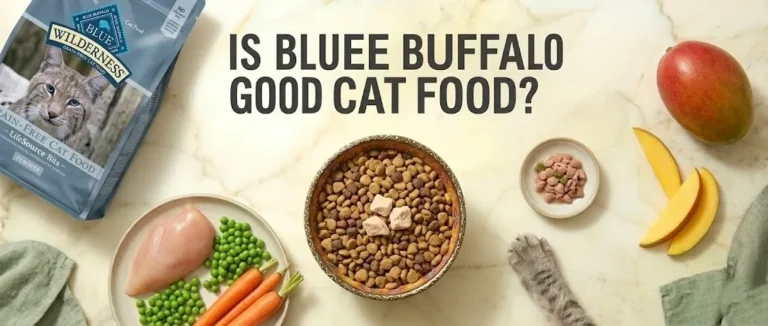
Wellness CORE and Blue Buffalo operate in the natural pet food space and use chicken meal in combination with fresh chicken and named animal fats. Their supply chain transparency is higher than the conventional brands, though they typically do not own their rendering facilities. The ingredient panels are shorter and the marketing emphasizes the absence of by-product meals, which appeals to consumers who prefer a simpler ingredient list.
Best Chicken Meal Cat Food Brands 2026 Summary:
| Brand | Primary Protein Strategy | Manufacturing | Price Tier |
|---|---|---|---|
| Purina Pro Plan | Chicken meal + fresh chicken | Own facilities | Mid |
| Hill’s Science Diet | Chicken meal + fresh chicken | Own facilities | Mid |
| Royal Canin | Chicken meal + chicken fat | Own facilities | Mid-Premium |
| Wellness CORE | Chicken meal + deboned chicken | Co-manufactured | Premium |
| Blue Buffalo | Chicken meal + deboned chicken | Co-manufactured | Premium |
Frequently Asked Questions About Chicken Meal in Cat Food
Is chicken meal bad for cats?
No, chicken meal is not bad for cats.
It is a concentrated, high-quality animal protein that provides the essential amino acids cats require.
The belief that it is low-quality comes from misconceptions about the rendering process, which is regulated and safe.
What is the difference between chicken meal and chicken by-product meal?
Chicken meal is made from clean chicken flesh, skin, and bone without organs.
Chicken by-product meal includes nutrient-rich organs like liver and heart.
Both are concentrated protein sources, but by-product meal has higher organ-derived nutrients.
Why do cat foods use chicken meal instead of fresh chicken?
Chicken meal is used because it is a concentrated protein source with the water already removed.
Fresh chicken is 70 percent water and shrinks during cooking, contributing less protein to the final kibble.
Chicken meal provides more protein density per pound, which is essential for dry food extrusion.
Is chicken meal a filler ingredient?
No, chicken meal is not a filler.
A filler is an ingredient with little to no nutritional value, like cellulose or peanut hulls.
Chicken meal is one of the most protein-dense and nutrient-rich ingredients in cat food.
What is the healthiest protein source in cat food?
The healthiest protein source is a named animal protein meal like chicken meal or salmon meal from a reputable manufacturer.
For obligate carnivores like cats, animal-based proteins provide the complete amino acid profile they need.
A combination of fresh meat and concentrated meal offers both hydration and protein density.
The word “meal” on a pet food label triggers a visceral reaction because it does not sound like food. It sounds industrial, processed, and less wholesome than a fresh chicken breast. But your cat does not share your word associations. A cat’s body recognizes amino acids, not marketing terms. Chicken meal delivers the protein, taurine, and minerals that a cat’s metabolism demands in a concentrated form that makes dry food physically possible to manufacture and nutritionally adequate to sustain life.
The next time you read a cat food label, do not flinch at the word “meal.” Look for the word before it. “Chicken meal” is a specific, regulated, valuable ingredient. “Poultry meal” is less specific. “Meat meal” is a red flag. Pair that ingredient reading with a basic understanding of the brand’s quality control and, for specific health concerns, a conversation with a veterinarian who knows your individual cat. The goal is not to find the most beautiful-sounding ingredient list. The goal is to find the food that keeps your cat healthy, active, and alive for as many years as possible.