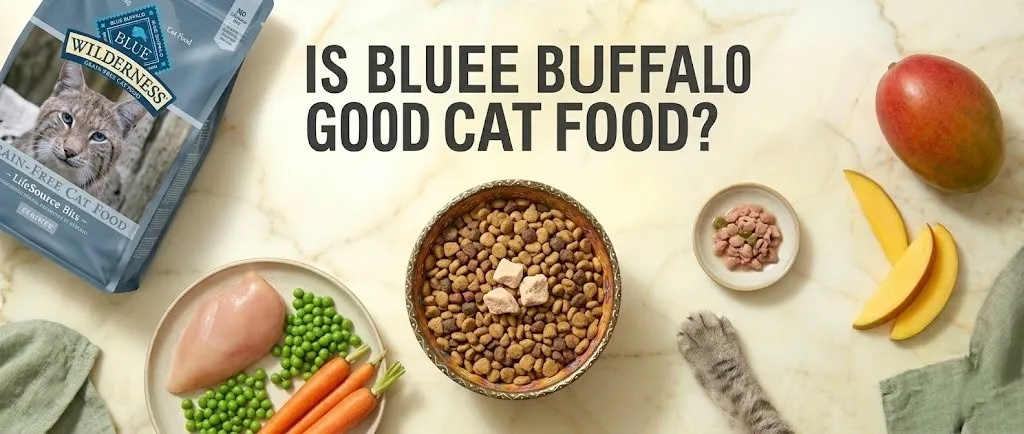
Blue Buffalo is a good but not elite cat food brand that delivers high-quality, named meat proteins and avoids the truly objectionable fillers like corn and by-product meals, yet it has a checkered history of recalls and marketing controversies that complicate its premium image. The food sits in the upper middle tier of the market. It is substantially better than grocery-store brands like Meow Mix or Friskies, but it does not match the rigorous scientific standards set by therapeutic lines from Hill’s Science Diet or Royal Canin.
The Blue Buffalo philosophy, “True Blue Promise,” is built on real meat as the first ingredient, no chicken or poultry by-product meals, and no corn, wheat, or soy. These are genuine nutritional advantages. A cat is an obligate carnivore. Its digestive system has evolved to process animal protein and fat, not corn gluten meal. The first ingredient in Blue Buffalo Wilderness Chicken Recipe is deboned chicken, followed by chicken meal. This is a solid protein foundation.
This audit examines the specific ingredients, the protein content, the best formulas, the brand’s recall history, and how it stacks up against Hill’s Science Diet. You will learn exactly what your cat is getting in the bowl and whether the premium price is justified by the nutritional reality. Your veterinarian is the only person qualified to recommend a specific food for your individual cat’s health conditions.
is blue buffalo good cat food
Blue Buffalo is a good cat food for healthy adult cats because it uses high-quality animal proteins, avoids common allergens like corn and soy, and meets the AAFCO nutrient profiles for adult maintenance. The food is nutritionally adequate and palatable. It is not a therapeutic diet, and it is not without its risks, but for the average, healthy cat without specific medical conditions, it is a solid choice.
The nutritional philosophy of Blue Buffalo aligns with the biological needs of a carnivore. Cats require 11 essential amino acids, including taurine and arginine, that are found almost exclusively in animal tissue. They lack the metabolic pathways to efficiently process large amounts of carbohydrate. Blue Buffalo’s high-protein, low-carbohydrate formulas respect this biology. The Wilderness line, in particular, boasts a crude protein content of 40 percent on a dry matter basis, which is excellent and closely mimics the macronutrient profile of a cat’s natural prey.
The risk with Blue Buffalo is the grain-free trend and the inclusion of pea protein and pea starch. While cats do not need grains, replacing them with large amounts of legumes (peas, lentils, chickpeas) may interfere with taurine metabolism in some cats. The FDA investigated a potential link between grain-free diets and dilated cardiomyopathy (DCM) in dogs. The link in cats is less clear, but the principle of caution applies.
| Nutritional Attribute | Blue Buffalo Rating | Notes |
|---|---|---|
| Protein Source | Excellent | Named meats, no by-product meals |
| Carbohydrate Source | Good (pulses) | Peas are less allergenic than corn, but taurine caution |
| Fillers | Good | No corn, wheat, soy |
| AAFCO Compliance | Adequate | Formulated to meet profiles, not feeding trial tested |
| Recalls | Concerning | Multiple recalls in past decade |
is blue buffalo a good cat food
Blue Buffalo is a good cat food brand in terms of ingredient quality and protein content, but it falls short of the highest veterinary standards due to a reliance on paper formulations rather than rigorous feeding trials. The indefinite article “a” frames Blue Buffalo as one choice among many, and it is a valid choice, but not necessarily the best choice.
The World Small Animal Veterinary Association (WSAVA) recommends selecting pet foods from manufacturers that employ a full-time, board-certified veterinary nutritionist, conduct AAFCO feeding trials, and own their manufacturing facilities. Blue Buffalo meets some of these standards but not all. The company employs nutritionists, but it does not consistently conduct feeding trials for all its formulas. Most Blue Buffalo bags state the food is “formulated to meet the nutritional levels established by the AAFCO Cat Food Nutrient Profiles.” This means the recipe was designed on a computer to meet the nutrient numbers. It does not mean the food was fed to real cats to confirm it supports long-term health.
The premium price of Blue Buffalo places it in competition with brands that do conduct feeding trials and own their facilities. A 3-pound bag of Blue Buffalo Wilderness costs roughly $18 to $22, comparable to the mid-tier lines of Hill’s and Royal Canin. The consumer is paying a premium for marketing language like “True Blue Promise” and “LifeSource Bits” rather than for a proven scientific track record of live-animal testing.
- Good: High-quality proteins, no corn/soy/wheat, palatable.
- Not best: Limited feeding trials, contract manufacturing, recall history.
- Price: Premium priced, but not premium tested.
Key Takeaway: Blue Buffalo offers premium ingredients. It does not offer premium scientific validation. You are paying for the ingredients, not the feeding trials.
blue buffalo cat food review 2026
The 2026 review of Blue Buffalo cat food reflects a brand in transition, solidifying its ingredient sourcing after the General Mills acquisition while facing increased scrutiny from veterinary nutritionists regarding its grain-free lines. The brand remains a top seller in the premium pet food category, but its reputation among veterinary professionals is mixed.
The General Mills acquisition, finalized in 2018, brought increased capital for sourcing and quality control but also raised concerns about corporate cost-cutting. In the years since, Blue Buffalo has maintained its commitment to its core ingredient philosophy. The 2026 ingredient panels are clean, with named meats leading the list. The company has expanded its wet food lines and introduced new limited-ingredient formulas.
The consumer perception of Blue Buffalo in 2026 is still colored by the 2014 Purina lawsuit, which revealed that some Blue Buffalo products contained poultry by-product meal despite “True Blue Promise” claims to the contrary. Blue Buffalo admitted the contamination occurred at a third-party supplier and has since tightened supply chain controls. The lawsuit is over a decade old, but the internet has a long memory. The brand’s reputation has recovered among everyday consumers but remains tarnished among highly informed pet owners and veterinary professionals.
- 2026 Ingredient Quality: Still strong. Named meats, no corn/soy/wheat.
- 2026 Veterinary Trust: Mixed. Limited feeding trials remain a sticking point.
- 2026 Corporate Stability: Owned by General Mills. Increased resources, mass-market scrutiny.
blue buffalo cat food ingredients
Blue Buffalo cat food ingredients start with deboned chicken, chicken meal, or fish meal as the first ingredient, followed by a blend of animal proteins, legumes, and the proprietary LifeSource Bits. The ingredient panel is intentionally designed to read well to a human consumer. The question is what the ingredients mean for a cat.
The protein sources in Blue Buffalo are genuine. Chicken meal is a concentrated powder made from rendered chicken flesh, skin, and bone, with the water and fat removed. It contains roughly 65 percent protein by weight, compared to 18 percent protein for fresh chicken. Having chicken meal as the second ingredient means the food has a significant protein foundation. Menhaden fish meal is a source of omega-3 fatty acids, EPA and DHA, which support skin, coat, and cognitive function.
The LifeSource Bits are the most unique feature of Blue Buffalo. These are dark, cold-formed kibble pieces that contain vitamins and antioxidants. The company claims the cold-forming process protects the nutrients from heat degradation during cooking. This is a valid food science principle. Heat-sensitive vitamins like vitamin C and some B vitamins do degrade during extrusion. However, whether the cat’s body absorbs these cold-formed vitamins better than standard vitamin supplements has not been independently verified.
- Proteins: Deboned chicken, chicken meal, fish meal.
- Carbohydrates: Peas, pea protein, pea starch, tapioca starch.
- Fats: Chicken fat (preserved with mixed tocopherols).
- Unique: LifeSource Bits (cold-formed vitamin and antioxidant package).
is blue buffalo good for cats
Blue Buffalo is good for cats that are healthy, active, and free of chronic medical conditions, particularly those that benefit from a high-protein, low-carbohydrate diet. For cats with a history of urinary crystals, kidney disease, or food allergies, Blue Buffalo may not be the best choice without specific veterinary guidance.
The high-protein formulation is a benefit for most cats. A lean, muscular cat with a high activity level will thrive on the dense amino acid profile of the Wilderness line. The protein supports lean muscle mass, and the fat from chicken fat and fish oil supports a glossy coat and sustained energy. Many cat owners report visible improvements in coat softness and litter box odor when switching to Blue Buffalo.
The legume content is the primary nutritional risk. Many Blue Buffalo grain-free formulas rely heavily on peas, pea protein, and pea fiber. While these ingredients are not toxic, they displace animal protein in the recipe and may alter the gut microbiome. A 2023 study in the Journal of Animal Science found that high-pulse legume diets altered microbial fermentation patterns in the feline colon. The long-term effects are not fully understood, but veterinary nutritionists tend to prefer formulas where animal protein, not plant protein, makes up the bulk of the total protein content.
- Benefits: High animal protein, shiny coat, healthy weight maintenance.
- Risks: High legume content, potential taurine concerns, not for urinary health.
- Verdict: Good for healthy adult cats. Consult a vet for cats with medical conditions.
Key Takeaway: Blue Buffalo is a good maintenance food for a healthy cat. It is not a therapeutic food for a sick cat, and its high legume content is a variable that veterinary nutritionists are still studying.
blue buffalo cat food protein content
The crude protein content of Blue Buffalo Wilderness dry cat food is 40 percent on a guaranteed analysis basis, which translates to roughly 45 percent on a dry matter basis after accounting for moisture. This is a high protein content that approaches the macronutrient profile of a cat’s natural prey, which is typically 50 to 60 percent protein on a dry matter basis.
The protein in Blue Buffalo comes from both animal and plant sources. The animal sources, deboned chicken, chicken meal, and fish meal, are the primary contributors. The plant sources, pea protein and alfalfa meal, boost the total protein percentage on the guaranteed analysis but provide a less complete amino acid profile for a carnivore. A cat’s body can use chicken protein far more efficiently than pea protein. When comparing brands, the source of the protein matters as much as the total percentage.
The protein-to-fat ratio is also important. The Wilderness line contains 18 percent crude fat, resulting in a protein-to-fat ratio of roughly 2.2 to 1. This is an excellent ratio for a cat, providing ample protein for muscle maintenance and enough fat for energy without encouraging obesity. Lower-quality cat foods often have protein-to-fat ratios of 1.5 to 1 or even lower, meaning they are relatively high in fat compared to protein.
| Blue Buffalo Formula | Crude Protein (min) | Crude Fat (min) | Dry Matter Protein |
|---|---|---|---|
| Wilderness Chicken | 40 percent | 18 percent | ~45 percent |
| Freedom Indoor | 32 percent | 15 percent | ~36 percent |
| Basics Limited Ingredient | 30 percent | 15 percent | ~34 percent |
best blue buffalo cat food formula
The best Blue Buffalo cat food formula for a healthy adult cat is the Wilderness High Protein Chicken Recipe, because it contains the highest percentage of animal protein, no grains, and a favorable protein-to-fat ratio. For cats with specific sensitivities, the Basics Limited Ingredient Diet line is the safest choice.
The Wilderness line is Blue Buffalo’s flagship. The chicken recipe leads with deboned chicken and chicken meal, and the carbohydrate sources are peas and pea starch. The formula is calorie-dense at roughly 400 calories per cup, so portion control is important for indoor cats. This formula is designed to mimic the ancestral diet, and it succeeds in delivering a high-protein, low-carbohydrate macronutrient split.
The Freedom Indoor line is a better choice for less active, indoor cats prone to weight gain. It contains 32 percent protein and 15 percent fat, with added fiber from pea fiber and cellulose to help control hairballs and promote satiety on fewer calories. The lower calorie density, roughly 350 calories per cup, makes portion control easier for cats that spend their days sleeping on the couch.
- Best Overall: Wilderness High Protein Chicken (40 percent protein).
- Best for Indoor Cats: Freedom Indoor Hairball Control (balanced calories, high fiber).
- Best for Sensitivities: Basics Limited Ingredient Duck and Potato (single protein source).
- Best for Kittens: Wilderness Kitten Chicken (DHA for brain development).
blue buffalo vs hill’s science diet cat
Blue Buffalo offers superior ingredient marketing with no corn, soy, or by-product meals, while Hill’s Science Diet offers superior scientific rigor with extensive feeding trials, veterinary-formulated therapeutic lines, and proven efficacy for specific medical conditions. The choice between the two depends on whether the cat is healthy or has a diagnosed medical condition.
Hill’s Science Diet does not lead with the same marketing flair as Blue Buffalo. The ingredient panel of Hill’s Science Diet Adult Chicken Recipe lists chicken as the first ingredient, but it also includes brewers rice, corn gluten meal, and whole grain corn. These are ingredients that Blue Buffalo’s marketing has taught consumers to fear. However, corn gluten meal is a highly digestible, concentrated protein source for cats, and it is not an inherently harmful ingredient. The Hill’s formula is developed by veterinary nutritionists and has been validated through decades of feeding trials.
The therapeutic edge is where Hill’s dominates. A cat with chronic kidney disease needs a precise phosphorus restriction and a specific omega-3 fatty acid profile. Hill’s Prescription Diet k/d is the gold standard for this condition. Blue Buffalo does not offer a therapeutic renal formula that can compete. A cat with feline lower urinary tract disease (FLUTD) needs a specific formulation to manage urinary pH and mineral content. Hill’s c/d Multicare is clinically proven to dissolve struvite stones. Blue Buffalo’s urinary formula, while adequate, does not carry the same level of clinical evidence.
| Comparison | Blue Buffalo | Hill’s Science Diet |
|---|---|---|
| Ingredients | No corn/soy/by-products | Contains corn/gluten/brewers rice |
| Feeding Trials | Rarely conducted | Extensively conducted |
| Therapeutic Diets | Limited | Gold standard (k/d, c/d, z/d) |
| Price | Premium | Premium |
| Best For | Healthy, active cats | Cats with medical conditions |
Key Takeaway: Feed Blue Buffalo to a healthy cat. Feed Hill’s Science Diet to a sick cat. The ingredient panel is less important than the clinical outcome.
blue buffalo for cats with urinary problems
Blue Buffalo is not the best choice for cats with a history of urinary crystals or FLUTD because many of its formulas contain higher magnesium and phosphorus levels than therapeutic urinary diets, and the grain-free formulations may alter urinary pH in ways that promote crystal formation. A cat with urinary problems needs a diet specifically designed to manage mineral balance and urine acidity.
The physiology of feline lower urinary tract disease is complex. Struvite crystals form in alkaline urine, typically with a pH above 7.0, when magnesium and phosphorus are present in high concentrations. Calcium oxalate crystals form in acidic urine, with a pH below 6.2, and are influenced by high calcium and oxalate levels. A therapeutic urinary diet like Hill’s c/d or Royal Canin Urinary SO is formulated to create a narrow urinary pH window, typically 6.2 to 6.4, that prevents both types of crystals while managing mineral levels.
Blue Buffalo does offer a Wilderness Urinary Tract Health formula. It contains cranberries to acidify the urine and controlled magnesium levels. The protein source is chicken, and it is grain-free. This formula is adequate for maintenance in a cat that has had one mild urinary episode. It is not proven to dissolve existing struvite stones, and it has not undergone the rigorous clinical trials that Hill’s and Royal Canin urinary formulas have completed. A cat with a confirmed history of urinary obstruction should be on a prescription therapeutic diet, not an over-the-counter urinary formula.
- Therapeutic urinary diets: Proven to dissolve stones and prevent recurrence.
- Blue Buffalo urinary formula: Adequate for maintenance, not treatment.
- Risk: Grain-free formulas may alter urinary pH unpredictably.
has blue buffalo had recalls
Yes, Blue Buffalo has had multiple significant recalls, including a 2017 recall for potentially elevated beef thyroid hormone and a 2015 recall for Salmonella risk. The brand has also been involved in legal controversies regarding ingredient mislabeling, which damaged trust among consumer watchdog groups.
The 2017 recall is the most significant incident in Blue Buffalo’s history. The FDA announced a voluntary recall of several canned dog food products due to potentially elevated levels of naturally occurring beef thyroid hormone. Ingestion of high levels of thyroid hormone can cause increased thirst, increased heart rate, and weight loss in dogs. While this recall was for dog food, it raised concerns about quality control across the entire Blue Buffalo manufacturing network.
The 2015 Salmonella recall involved a specific lot of cat treats. Salmonella can cause serious illness in cats, with symptoms including vomiting, diarrhea, and fever, and it poses a risk to humans handling the contaminated product. The 2014 Purina lawsuit, while not a recall, revealed that Blue Buffalo’s “True Blue Promise” regarding no by-product meals was not accurate for some products. Blue Buffalo publicly admitted the contamination and attributed it to a supplier error.
- 2017: Canned dog food recalled for elevated beef thyroid hormone.
- 2015: Cat treats recalled for Salmonella.
- 2014: Lawsuit revealed by-product meal contamination despite label claims.
- 2026: No major recalls in the last 3 years. Sourcing transparency has improved.
Frequently Asked Questions About Blue Buffalo Cat Food
Is Blue Buffalo better than Friskies?
Blue Buffalo is significantly better than Friskies in terms of ingredient quality and protein content.
Friskies uses meat by-products, corn, and artificial colors that Blue Buffalo explicitly avoids.
Blue Buffalo is a premium maintenance food. Friskies is an economy food.
Can Blue Buffalo cause urinary problems in cats?
Blue Buffalo can contribute to urinary problems in predisposed cats because its high-protein, grain-free formulas can alter urinary pH.
The magnesium and phosphorus levels, while within AAFCO limits, may be too high for a cat with a history of struvite crystals.
A cat with confirmed FLUTD needs a therapeutic urinary diet, not an over-the-counter food.
Why did Blue Buffalo have so many lawsuits?
The most famous lawsuit was the 2014 Purina case, which revealed that Blue Buffalo products contained poultry by-product meal despite “True Blue Promise” claims.
Blue Buffalo admitted the contamination came from a third-party supplier and settled the lawsuit.
The incident permanently damaged the brand’s reputation for trustworthiness among some consumers.
Is Blue Buffalo grain-free safe for cats?
Blue Buffalo grain-free food is safe for most healthy cats, but the high legume content may theoretically interfere with taurine metabolism.
The FDA’s investigation into grain-free diets and dilated cardiomyopathy was primarily focused on dogs.
If you feed a grain-free formula, ensure it is supplemented with adequate taurine.
Do vets recommend Blue Buffalo?
Most veterinarians acknowledge Blue Buffalo as a high-quality maintenance food for healthy cats.
Veterinarians rarely recommend it over therapeutic prescription diets for cats with medical conditions.
A board-certified veterinary nutritionist can help you determine if Blue Buffalo is the right choice for your individual cat.
Blue Buffalo is a good cat food. It is not a miracle food, and it is not a scam. It sits comfortably in the premium category, delivering real meat protein and avoiding the cheap fillers that define low-end grocery brands. For a healthy adult cat with no medical issues, a bowl of Blue Buffalo Wilderness is a nutritionally appropriate meal.
The marketing is aspirational, and the “True Blue Promise” has a documented history of imperfection. The recalls are real. The lawsuits happened. The brand has taken steps to improve quality control in the years since, and the 2026 product is more consistent and transparent than the 2014 version.
If your cat has urinary crystals, kidney disease, or food allergies, ask your veterinarian about a therapeutic diet. If your cat is healthy and you like what is on the ingredient panel, Blue Buffalo is a perfectly defensible choice. The best cat food is the one your cat thrives on, and for millions of cats, that food is Blue Buffalo.