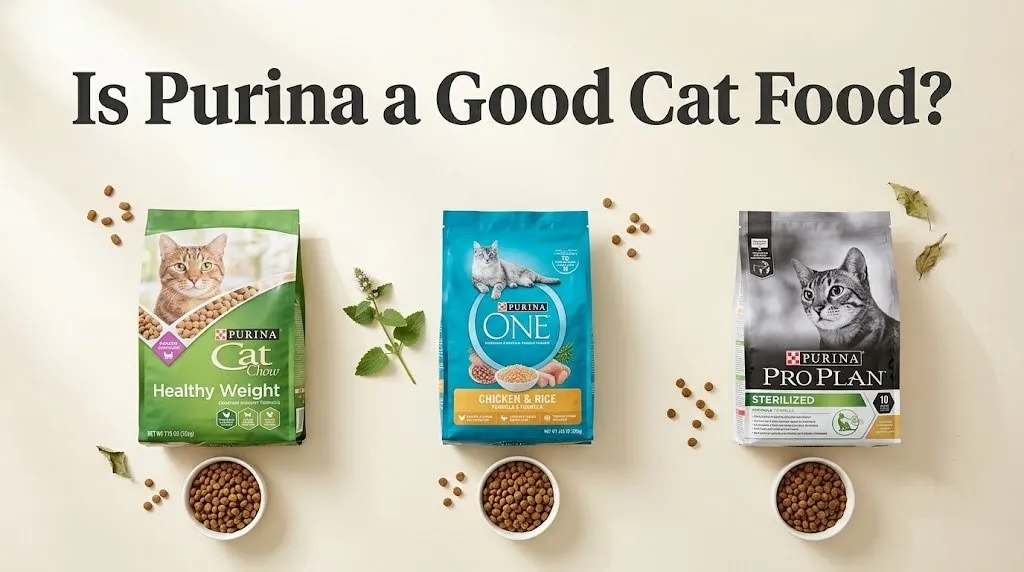
Purina is a good cat food brand at the Purina Pro Plan and Purina ONE tiers, where formulas meet rigorous AAFCO feeding trial standards and are developed by board-certified veterinary nutritionists employed by Nestle Purina. The answer gets less clear at the Cat Chow and Friskies tiers, which meet basic nutritional adequacy through formulation rather than live-animal testing. The single biggest misconception in online cat food discussions is treating “Purina” as one product. It is not. The $5 bag and the $25 bag share a parent company but differ fundamentally in ingredient sourcing, protein quality, and the research behind their recipes.
According to the World Small Animal Veterinary Association (WSAVA) Global Nutrition Guidelines, the most reliable indicator of a quality pet food is not the marketing or the ingredient list. It is whether the manufacturer employs full-time qualified nutritionists, conducts AAFCO feeding trials, owns its manufacturing facilities, and publishes peer-reviewed research. Purina checks those boxes across its premium lines. Fewer than a handful of global pet food companies meet all WSAVA criteria, and Nestle Purina is one of them.
This article walks you through the real differences between Purina Cat Chow, Purina ONE, and Purina Pro Plan so you can match the right tier to your cat’s age, health status, and your budget. We examine the ingredient sourcing, the AAFCO statements that matter more than the ingredient panel, the recall history, and the specific formulas worth buying if your cat has urinary issues, weight problems, or a sensitive stomach. A veterinarian is the right person to interpret your individual cat’s body condition, blood work, and health history when recommending a specific diet.
Is Purina cat food bad?
Purina cat food is not bad in the way that unregulated, nutritionally incomplete boutique brands can be bad. The brand meets AAFCO minimum nutrient requirements across every product line, and its premium tiers are backed by feeding trials that verify the food sustains life and health in real cats. The criticism Purina receives online generally falls into three categories: objection to specific ingredients like corn and by-product meals, distrust of large corporations, and conflation of the budget lines with the premium lines.
The ingredient objection is worth examining directly. Corn gluten meal and wheat appear in Purina formulas, particularly at the Cat Chow tier. These are not fillers in the sense of providing zero nutritional value. Corn gluten meal is approximately 60 percent protein and is a concentrated source of the amino acids methionine and cysteine. It also contributes to the urine-acidifying effect that helps prevent struvite crystal formation in cats. The argument against corn is that cats are obligate carnivores and derive more bioavailable nutrition from animal tissue. This is true. Animal protein is superior for cats. The question is whether the inclusion of plant-based protein sources makes a food actively harmful or simply less optimal than a meat-first formula. The veterinary consensus tends toward the latter view: corn in cat food is not toxic, it is just less ideal than chicken meal or salmon meal.
By-product meal is the other lightning rod ingredient. In AAFCO-defined terms, poultry by-product meal consists of the rendered, ground, clean parts of slaughtered poultry, including necks, feet, undeveloped eggs, and intestines, but explicitly excluding feathers. It is primarily organ meat, which is nutrient-dense. A wild cat consumes the liver, kidneys, and heart of its prey before the muscle meat. By-product meal delivers those same organ nutrients in a concentrated, shelf-stable form. It is not a low-quality ingredient by nutritional definition, even though the word “by-product” strikes consumers as unappetizing.
Purina cat food AAFCO statement
The AAFCO statement on a cat food label is the single most important piece of information for determining whether a food is nutritionally adequate, and it matters more than the ingredient list or the marketing claims. Every Purina product carries an AAFCO statement, but the wording of that statement reveals which products were tested on live cats and which were formulated on paper to meet nutrient profiles.
An AAFCO statement that reads “Animal feeding tests using AAFCO procedures substantiate that [Product Name] provides complete and balanced nutrition” means the food was fed to real cats in a controlled setting for a minimum of 26 weeks, and the cats remained healthy, maintained appropriate body weight, and showed normal blood work throughout the trial. This is the gold standard. Purina Pro Plan dry and wet formulas carry this feeding trial statement. Purina ONE carries it on many, though not all, formulas. Purina Cat Chow generally carries a formulated statement, meaning it meets the nutrient profile on paper but has not been verified through a live-animal feeding study.
A “formulated to meet AAFCO nutrient profiles” statement means a nutritionist designed the recipe to hit the required minimums and maximums for protein, fat, vitamins, and minerals. The food is almost certainly adequate, but the margin for unknown nutrient interactions or palatability issues is wider. A food that meets the nutrient profile on paper can still fail to support health in a real cat if nutrients are not bioavailable or if the food is unpalatable enough that cats refuse to eat enough of it. This is why WSAVA guidelines emphasize feeding trials as the preferred standard.
The life stage designation on the AAFCO statement tells you which cats the food is appropriate for. “All life stages” means the food meets the higher nutrient requirements for growth and reproduction, which makes it acceptable for kittens, pregnant or nursing queens, and adult cats. “Adult maintenance” means it is only appropriate for healthy adult cats, not growing kittens. Purina clearly labels each product’s life stage designation, and feeding a kitten an adult maintenance formula risks taurine and DHA deficiencies during critical neurological development.
| AAFCO Statement Type | What It Means | Which Purina Lines Use It |
|---|---|---|
| Animal feeding tests | Fed to real cats for 26 weeks; health verified | Pro Plan (all), ONE (most) |
| Formulated to meet profiles | Meets nutrient targets on paper | Cat Chow, Friskies, some Fancy Feast |
| All Life Stages | Safe for kittens, adults, pregnant/nursing | Pro Plan Kitten, ONE Kitten |
| Adult Maintenance | Only for healthy adult cats | Most adult formulas across lines |
Key Takeaway: The AAFCO feeding trial statement on Purina Pro Plan and most Purina ONE bags is the strongest independent assurance you can get short of a veterinary prescription that the food actually sustains feline health, not just looks good on an ingredient panel.
Purina cat food ingredients
Purina cat food ingredients span a wide range depending on the product tier, but the common architecture across most formulas is an animal protein source first, followed by a grain or grain-based protein, then fat sources, and finally the vitamin and mineral premix that ensures AAFCO compliance. The quality and specificity of each ingredient category changes substantially as you move from Cat Chow to Pro Plan.
Protein sources in Purina Pro Plan are named and specific: chicken, salmon, turkey, or beef listed as the first ingredient, often supported by chicken meal or salmon meal as a concentrated protein source. Chicken meal is rendered chicken tissue with moisture and fat removed, yielding roughly 65 percent protein by weight compared to fresh chicken at about 18 percent protein by weight. Both are legitimate protein sources. Meal ingredients deliver more protein per pound and are not inherently inferior to whole meat. Purina ONE also leads with named meat ingredients. Cat Chow and Friskies frequently list poultry by-product meal or meat and bone meal as the primary protein sources, which are less expensive but still AAFCO-compliant protein concentrates.
Grain and carbohydrate sources vary by line. Pro Plan uses brewer’s rice and wheat in many formulas, with grain-free alternatives available that substitute pea starch and potatoes. Purina ONE uses corn gluten meal and whole grain corn more prominently. Cat Chow uses ground yellow corn and corn gluten meal as primary carbohydrate and secondary protein sources. The carbohydrate content of dry cat food is inherent to the extrusion process. Kibble requires starch to hold its shape, which means no dry cat food is zero-carbohydrate. Wet foods from Purina, including Pro Plan pates and Fancy Feast classic pates, are significantly lower in carbohydrate because they do not require the starch binder.
Added functional ingredients appear in the premium lines. Pro Plan formulas include live probiotics (Bacillus coagulans) for digestive health, omega-3 fatty acids from fish oil for skin and coat, and specific amino acid ratios for urinary health. Purina ONE includes antioxidant blends and omega-6 fatty acids. These additions are backed by Purina’s internal research and, in the case of Pro Plan, published peer-reviewed studies on specific conditions like feline chronic kidney disease and weight management.
Purina Cat Chow vs Purina ONE
The difference between Purina Cat Chow and Purina ONE is the single most useful distinction for a cat owner trying to decide how much to spend on cat food. Cat Chow is a budget-friendly, nutritionally complete maintenance diet. Purina ONE is a mid-tier food with higher animal protein content, named meat ingredients, and more formulas backed by AAFCO feeding trials rather than formulation alone.
Purina Cat Chow is the entry-level line, sold at grocery stores and mass retailers, priced at roughly $0.50 to $0.80 per day for an average adult cat. The dry formulas list poultry by-product meal and corn gluten meal as primary protein sources. The nutrient profile meets AAFCO adult maintenance standards through formulation. Cat Chow is not a bad food. It has sustained millions of cats over decades. It is an adequate, affordable option for healthy adult cats whose owners have budget constraints. It is not the optimal choice for kittens, senior cats, or cats with health conditions because the protein quality is lower and the formulas are not feeding-trial tested.
Purina ONE is the mid-tier line, sold at pet specialty stores and mass retailers, priced at roughly $0.75 to $1.25 per day. The dry formulas list named meat ingredients like chicken or salmon first, use chicken meal as a concentrated protein source, and include more animal-sourced protein overall. The crude protein percentage runs about 34 to 36 percent in dry formulas compared to 30 to 32 percent in Cat Chow. Purina ONE formulas more frequently carry AAFCO feeding trial statements. The brand also offers wet food options, specialized formulas for indoor cats, senior cats, and kittens, and targeted health benefits like urinary tract health and weight management.
The decision between the two is genuinely about budget and cat health status. A healthy five-year-old indoor cat can do well on Purina ONE and derive real benefit from the higher animal protein and feeding trial verification. A healthy three-year-old cat on Purina Cat Chow is not at nutritional risk. The Cat Chow cat would almost certainly show improved coat condition, stool quality, and lean body mass on Purina ONE, but it would not develop a deficiency disease on Cat Chow.
| Factor | Purina Cat Chow | Purina ONE |
|---|---|---|
| First Ingredient | Poultry by-product meal | Named meat (chicken, salmon) |
| Protein Source Quality | Mix of animal and plant | Primarily animal |
| AAFCO Verification | Formulated | Feeding trials on most formulas |
| Crude Protein (dry) | 30-32% | 34-36% |
| Approximate Daily Cost | $0.50-$0.80 | $0.75-$1.25 |
| Specialized Formulas | Limited | Indoor, senior, kitten, urinary, weight |
Key Takeaway: Purina ONE is worth the extra $0.25 to $0.50 per day over Cat Chow for the named meat ingredients, higher animal protein, and feeding trial verification, unless your budget genuinely cannot stretch, in which case Cat Chow is still an adequate food that will not harm a healthy cat.
Purina ONE vs Purina Pro Plan
The step from Purina ONE to Purina Pro Plan is a jump in research investment, protein quality, and specialized health formulation that becomes increasingly relevant for cats with specific health conditions, performance demands, or life stage requirements. Pro Plan is Purina’s flagship line and the brand most frequently recommended and used by veterinarians and breeders.
Purina Pro Plan dry formulas deliver 40 percent or more crude protein, with named animal proteins as the dominant source. The ingredient panels are shorter and more transparent than Purina ONE. The formulas are all verified through AAFCO feeding trials. Pro Plan includes functional ingredients like live probiotics, guaranteed levels of omega-3 fatty acids from fish oil, and targeted amino acid ratios for specific health outcomes. The wet food lineup is extensive and includes pates, shreds, and gravy formulas that meet the same nutritional standards as the dry food.
The veterinary therapeutic diets within Pro Plan, labeled Purina Pro Plan Veterinary Diets, are a different category entirely. These are prescription foods designed for specific medical conditions: urinary oxalate and struvite management, chronic kidney disease, food allergies, gastrointestinal disorders, and weight management. These diets are developed with the same clinical rigor as human medical foods and are backed by peer-reviewed studies published in veterinary journals. They are available only through veterinarians and should only be fed under veterinary guidance.
For a healthy adult cat with no specific medical issues, Purina ONE is probably the sweet spot of cost and quality. Pro Plan becomes the right choice for kittens, whose neurological development depends on adequate DHA levels, for senior cats with changing protein requirements and joint health concerns, for active breeding cats, and for cats with digestive sensitivity, urinary history, or other health conditions that benefit from specific nutrient profiles. If your budget allows Pro Plan without strain, the higher protein quality and additional research backing provide real, though incremental, benefit.
Purina Pro Plan cat food review
Purina Pro Plan is the brand’s best cat food line, and it holds up under scrutiny from veterinary nutritionists, AAFCO standards, and ingredient quality analysis in ways that the lower tiers do not. The line is not perfect, and some formulas are stronger than others, but the overall architecture places Pro Plan among the top tier of commercially available cat foods that are not veterinary-exclusive therapeutic diets.
The dry food formulas consistently list a named meat ingredient first, followed by a named meat meal for concentrated protein, then a grain or starch component for kibble structure. Purina Pro Plan Complete Essentials Chicken and Rice Formula contains chicken, chicken meal, rice, corn gluten meal, and whole grain wheat as the first five ingredients. The guaranteed analysis shows 40 percent crude protein, 16 percent crude fat, 3 percent crude fiber, and 12 percent moisture. The caloric density is approximately 490 kilocalories per cup. This is a dense, protein-rich food appropriate for active adult cats.
The wet food lineup is where Pro Plan shines relative to cheaper lines. Purina Pro Plan Pate Chicken and Liver Entree contains chicken, liver, water, and meat by-products as the first ingredients, with no grain or starch fillers. The moisture content of 78 percent is appropriate for feline hydration, as cats evolved to obtain most of their water from prey and have a low thirst drive. The pate formulas are lower in carbohydrate than the shreds and gravy varieties, which use starch thickeners.
The probiotic inclusion in Pro Plan dry foods, Bacillus coagulans GBI-30, 6086, is a research-backed strain studied for feline digestive health. It survives the extrusion process and remains viable through the shelf life of the food. For cats with loose stools, intermittent digestive upset, or antibiotic-associated diarrhea, the probiotic in Pro Plan can provide measurable benefit, though it is not a substitute for veterinary diagnosis of underlying gastrointestinal disease.
Purina cat food protein source
The protein sources in Purina cat food range from named whole meats and meat meals in the premium lines to poultry by-product meal and plant-based proteins in the budget lines. Understanding what each protein source actually is and how it contributes to feline nutrition removes the emotional reaction to ingredient names and lets you evaluate the food based on its nutritional delivery.
Chicken meal is the most common protein concentrate in Purina ONE and Pro Plan. It consists of rendered chicken tissue from which moisture and fat have been removed, leaving roughly 65 percent protein and 12 percent fat by weight. Chicken meal provides more protein per ounce than fresh chicken because fresh chicken is approximately 70 percent water. A food that lists chicken meal as the first or second ingredient is getting more of its total protein from animal sources than one that lists fresh chicken first followed by grain proteins. Both placement strategies are legitimate, and the distinction matters less than the total animal protein percentage.
Poultry by-product meal in Cat Chow and Friskies is the ingredient most frequently criticized by consumers and most frequently defended by veterinary nutritionists. It contains the rendered, ground, clean parts of slaughtered poultry, primarily organ meats like liver, kidneys, and hearts, plus necks, feet, and undeveloped eggs. It explicitly excludes feathers. Organ meats are more nutrient-dense than muscle meat. Liver is the richest dietary source of vitamin A, which cats require preformed because they cannot convert beta-carotene from plants. A cat eating a mouse consumes the liver, kidneys, and intestines along with the muscle. By-product meal delivers those same organ nutrients in a processed form.
Plant-based proteins including corn gluten meal and soybean meal appear across all Purina dry food lines. They contribute to the total protein percentage and provide specific amino acids, but they are less bioavailable to cats than animal proteins and lack taurine, arginine, and arachidonic acid, which cats require from dietary animal tissue. A food with a high percentage of plant protein relative to animal protein may meet the crude protein guarantee on the label while underdelivering on the amino acids cats actually need. This is why the total protein percentage matters less than the source of that protein.
Key Takeaway: The protein percentage on the guaranteed analysis is not the whole story; a 34 percent protein Cat Chow with significant plant protein contributions does not deliver the same amino acid quality as a 40 percent Pro Plan where animal meals dominate the protein fraction.
Grain-free Purina cat food
Grain-free Purina cat food exists within the Purina ONE and Purina Beyond lines, and the brand’s position on grain-free formulation reflects the broader veterinary consensus that grain-free is a marketing preference, not a nutritional necessity for cats. Purina offers grain-free options to meet consumer demand while its own research veterinarians maintain that grain-inclusive diets are safe and appropriate for the vast majority of cats.
Purina Beyond Grain-Free is the primary grain-free line, positioned as a natural, limited-ingredient alternative. The dry formulas replace grains like corn and wheat with pea starch, potato protein, and cassava root flour as the carbohydrate binders required for kibble extrusion. The first ingredients are named meats and meat meals. The line is positioned as a mid-tier natural option, not as a therapeutic or performance diet.
The grain-free conversation in cat food is different from the grain-free conversation in dog food. In dogs, the FDA has investigated a potential link between grain-free diets high in legumes and dilated cardiomyopathy (DCM), a serious heart condition. That investigation has not extended to cats, and the mechanism remains unproven in both species. The American Association of Feline Practitioners has not issued a warning about grain-free cat food. Cats as obligate carnivores are adapted to a diet very low in carbohydrates, and a grain-free wet food that replaces grain starch with no carbohydrate at all is arguably closer to a cat’s evolutionary diet.
The practical argument for grain-free cat food is strongest for cats with confirmed grain allergies, which are rare, or for owners who prefer to avoid grains for personal reasons and are willing to pay the premium. The argument against grain-free is price and the absence of proven benefit over grain-inclusive formulas that meet AAFCO standards. A Purina ONE grain-free formula costs roughly 20 to 30 percent more than the standard grain-inclusive Purina ONE and delivers no proven health advantage for a cat without a specific grain sensitivity.
Best Purina cat food for kittens
The best Purina cat food for kittens is Purina Pro Plan Kitten Chicken and Rice Formula, which is formulated for growth and reproduction, verified through AAFCO feeding trials, and fortified with docosahexaenoic acid (DHA) from fish oil for brain and vision development. The dry formula contains 42 percent crude protein and 19 percent crude fat, a calorie-dense profile that supports the rapid growth phase from weaning through roughly 12 months of age.
Kittens have nutritional requirements that adult maintenance formulas do not meet. They need more protein per pound of body weight. They need more calories because their metabolic rate is higher. They need DHA, an omega-3 fatty acid concentrated in brain and retinal tissue, during the first year of neurological development. They need a carefully balanced calcium-to-phosphorus ratio, ideally between 1.1:1 and 1.4:1, to support skeletal growth without causing developmental orthopedic disease. Kitten formulas are designed to meet all of these requirements. Feeding a kitten an adult maintenance food risks inadequate DHA intake and suboptimal protein delivery during the most nutritionally sensitive period of a cat’s life.
Purina ONE Healthy Kitten Formula is the mid-tier alternative. It delivers 36 percent crude protein and includes DHA, though at a lower guaranteed level than Pro Plan. It is feeding-trial tested and meets AAFCO standards for growth and reproduction. The cost savings relative to Pro Plan are meaningful over the 12-month kitten period, and the nutritional difference is smaller than the gap between either kitten formula and an adult maintenance food. For a single kitten in a household with a moderate budget, Purina ONE Kitten is a fully adequate choice.
Wet food should be part of every kitten’s diet from weaning onward. Purina Pro Plan Kitten Chicken and Liver Pate and Purina ONE Kitten Chicken Recipe Pate provide the same growth-targeted nutrition in a high-moisture format that supports hydration and is easier for young kittens to eat. A rotation of dry and wet food through kittenhood establishes dietary flexibility and makes future transitions easier.
Purina cat food for senior cats
Purina cat food for senior cats is best represented by Purina Pro Plan Prime Plus, a line specifically formulated for cats aged seven and older, with adjusted protein levels, added omega-3 fatty acids for joint and cognitive health, and a proprietary nutrient blend that Purina’s research has linked to improved markers of aging in cats. The formulation addresses the specific metabolic and physiological changes that occur as cats age.
Senior cats face a predictable set of nutritional challenges. Their ability to digest and metabolize protein becomes less efficient, which means they need higher-quality, more digestible protein sources, not less protein. Their kidney function may decline, though protein restriction is only appropriate for cats with diagnosed kidney disease, not as a blanket senior strategy. Their joint cartilage thins, which omega-3 fatty acids from fish oil may help support, though the evidence is stronger for anti-inflammatory effect than for cartilage regeneration. Their sense of smell and taste diminishes, which means food palatability becomes more important for maintaining adequate intake.
Purina Pro Plan Prime Plus 7+ Chicken and Rice Formula delivers 38 percent crude protein from named animal sources, with a fat level of 16 percent that supports coat condition and calorie density for cats that tend to lose weight with age. It includes glucosamine for joint health and guaranteed levels of EPA and DHA from fish oil. The kibble is designed to be easier to chew for cats with dental wear.
Cats with diagnosed chronic kidney disease, hyperthyroidism, or other specific age-related conditions should not be fed an over-the-counter senior formula without veterinary guidance. These conditions require therapeutic diets, available through Purina Pro Plan Veterinary Diets, that restrict phosphorus and adjust protein type and level in ways that an over-the-counter formula cannot. A senior cat with normal blood work and a healthy body condition score does fine on an over-the-counter senior formula like Pro Plan Prime Plus or Purina ONE Senior.
Purina cat food for urinary health
Urinary health formulas from Purina address the two most common feline urinary conditions: struvite crystal formation and calcium oxalate crystal formation. These are different problems with different nutritional solutions, and feeding the wrong urinary formula can make the condition worse. The most widely available over-the-counter urinary health formula is Purina Pro Plan Urinary Tract Health, with veterinary-exclusive Purina Pro Plan Veterinary Diets UR for diagnosed cases.
Feline lower urinary tract disease affects a substantial portion of the domestic cat population. The exact prevalence varies by study, but veterinary data suggests 1 to 3 percent of cats seen in general practice are diagnosed annually. Struvite crystals form in alkaline urine and are managed by acidifying the urine through dietary formulation, typically by adjusting the mineral balance of magnesium, phosphorus, and calcium, and by using ingredients like DL-methionine that lower urinary pH. Purina’s urinary health formulas target a urinary pH of approximately 6.2 to 6.4, the range at which struvite crystals dissolve and do not reform.
Moisture is the most underappreciated urinary health intervention. Cats with low water intake produce concentrated urine that is more conducive to crystal formation regardless of dietary formulation. A cat eating only dry urinary health kibble still has more concentrated urine than a cat eating a wet food diet, even a non-urinary wet food. Adding water through wet food, multiple water bowls, and running water fountains is as important as the specific formula for preventing crystal recurrence.
Cats with a history of urinary blockage, particularly male cats, require veterinary management that goes beyond an over-the-counter urinary formula. A cat that has blocked once is at high risk of blocking again. The veterinary therapeutic diet for these cats is a prescription product, not a retail product, and the veterinary monitoring of urinary pH and crystal formation is part of the prevention plan.
| Urinary Condition | Targeted Urinary pH | Purina Product | Prescription Required |
|---|---|---|---|
| Struvite crystals | 6.2-6.4 (acidic) | Pro Plan Urinary Tract Health | No |
| Struvite dissolution | 5.9-6.2 | Pro Plan Veterinary Diets UR | Yes |
| Calcium oxalate | 6.5-6.8 (neutral) | Pro Plan Veterinary Diets UR Ox | Yes |
| Idiopathic cystitis | Stress reduction + moisture | Pro Plan Urinary Tract Health | No |
Key Takeaway: The over-the-counter Purina Pro Plan Urinary Tract Health formula is appropriate for cats with a history of uncomplicated struvite crystals; a cat that has obstructed or has oxalate crystals needs the prescription-strength formula and ongoing veterinary monitoring.
Purina cat food for weight management
Purina cat food for weight management is built on the principle of reducing calorie density while maintaining protein content so the cat loses fat mass, not muscle mass. Purina Pro Plan Weight Management and Purina ONE Healthy Weight are the two primary over-the-counter formulas, with a veterinary-exclusive Purina Pro Plan Veterinary Diets OM for diagnosed obesity requiring more aggressive intervention.
Feline obesity is the most common nutritional disorder in domestic cats, with studies estimating that over 50 percent of cats in the United States are overweight or obese. The health consequences include diabetes mellitus, joint disease, lower urinary tract disease, and reduced lifespan. A weight-loss diet for a cat must provide high protein relative to calories to preserve lean body mass during a calorie deficit. It must also include L-carnitine, an amino acid compound that supports the transport of fatty acids into mitochondria for energy metabolism. Both Purina Pro Plan and Purina ONE weight management formulas include L-carnitine.
The calorie difference between weight management and maintenance formulas is meaningful. A cup of Purina Pro Plan Weight Management dry food contains approximately 440 kilocalories compared to roughly 490 kilocalories in the standard adult formula. The difference of 50 calories per cup seems small, but over a month, that reduction translates to roughly a quarter-pound of potential weight loss without changing the volume of food the cat eats. Portion control matters more than formula choice. A weight management food overfed by 20 percent still causes weight gain.
Wet food is often more effective for feline weight loss than dry food of the same calorie density because the high moisture content provides more physical volume per calorie, which contributes to satiety. A 3-ounce can of Purina Pro Plan Weight Management wet food contains roughly 75 to 85 calories. Two cans per day provide 150 to 170 calories plus high moisture volume, which is an appropriate daily intake for a moderately active 10-pound cat during weight loss. A veterinarian can calculate a specific calorie target based on your cat’s current body condition score and ideal weight.
Purina cat food recalls
Purina cat food recalls are part of the brand’s safety history and deserve an honest accounting. The recall record shows several voluntary recalls across the company’s product lines since 2011, with none reported in the most recent period of 2024 to 2026 as of the current date. The existence of recalls is not, by itself, evidence of a bad brand. A company that never issues a recall either has perfect manufacturing, which does not exist, or does not have a functional quality control system capable of detecting problems.
The most notable Purina recall affecting cat food occurred in 2011, when Nestle Purina voluntarily recalled a limited number of bags of Purina ONE Vibrant Maturity 7+ dry cat food due to potential salmonella contamination. No cat illnesses were confirmed. In 2013, Purina recalled a single lot of Purina ONE Beyond White Meat Chicken and Whole Barley Recipe adult dry dog food, not cat food, due to possible salmonella contamination. In 2016, a limited recall of Purina Pro Plan Savory Meals wet dog food, again not cat food, was issued for inadequate vitamin and mineral levels.
Social media rumors about Purina products causing pet illness have circulated periodically, most recently in early 2024, when unverified claims circulated on Facebook and TikTok alleging that Purina Pro Plan was causing dogs and cats to become ill or die. The FDA investigated and found no causative link between Purina products and the reported illnesses. The agency released a statement noting that it had not identified any specific pathogen, contaminant, or nutritional deficiency in the products tested. Rumors without evidence should not be given the same weight as documented recalls with FDA involvement.
Quick Tip:
- Check the FDA’s Animal and Veterinary Recalls and Withdrawals page for current recall information rather than relying on social media
- Save the lot number and purchase date of your cat food bags until the food is fully consumed
- Any sudden change in your cat’s health warrants a veterinary visit, not an internet search, regardless of what food they eat
Purina cat food made in USA
The majority of Purina cat food sold in the United States is manufactured in company-owned facilities in the United States, primarily in St. Louis, Missouri, and other locations including Iowa, Georgia, and Pennsylvania. Purina advertises that over 99 percent of its pet food sold in the U.S. market is made in the U.S., with some specialty ingredients sourced globally.
Nestle Purina PetCare Company is headquartered in St. Louis, Missouri, where it operates its flagship manufacturing and research campus. The company owns and operates all of its U.S. dry pet food manufacturing facilities, a point that distinguishes it from smaller brands that contract with third-party co-packers over which they have less direct quality control. Owning the manufacturing facility means Purina controls the entire production chain from ingredient receiving through extrusion, packaging, and distribution. WSAVA guidelines list manufacturer-owned facilities as a positive indicator of quality control.
The “made in the USA” designation does not mean every ingredient is sourced domestically. Lamb for Purina formulas often comes from New Zealand or Australia. Certain vitamin premixes and amino acid supplements are manufactured in facilities in Europe and Asia. These globally sourced ingredients are subject to the same receiving and testing protocols as domestic ingredients when they arrive at Purina facilities. The FDA regulates imported pet food ingredients under the same safety standards as domestic ingredients.
Some Purina products sold in international markets are manufactured in facilities outside the United States, including in Canada, Europe, and Asia. These products are formulated for the regulatory and nutritional standards of the countries where they are sold. The ingredient sourcing and manufacturing location for a bag of Purina bought in London or Tokyo is different from the bag bought in Chicago.
Key Takeaway: Purina cat food sold in the U.S. is overwhelmingly made in the U.S. in company-owned facilities, which is a positive quality control indicator, though some ingredients are globally sourced and the international-market products have different manufacturing origins.
Purina cat food safety 2026
Purina cat food safety as of 2026 remains stable, with no active FDA recalls and no unresolved safety investigations involving the brand’s cat food products. The 2024 social media rumor incident, which alleged widespread illness linked to Purina Pro Plan, was investigated by the FDA and resulted in no findings of contamination, formulation error, or manufacturing defect. The FDA explicitly stated in a public update that testing did not identify a causative link between Purina products and the reported illnesses.
The safety infrastructure behind Purina cat food is substantial relative to smaller pet food brands. Nestle Purina employs board-certified veterinary nutritionists, food scientists, and quality assurance teams across its manufacturing network. The company conducts routine testing for pathogens including Salmonella, Listeria, and E. coli on both raw ingredients and finished products. It also tests for mycotoxins like aflatoxin, which can contaminate grain ingredients, and for nutrient levels to verify that the finished product matches the formulated recipe.
No cat food brand is zero-risk. Contamination events can occur even in well-managed facilities. The meaningful distinction is whether the company has the quality control systems to detect a problem before widespread illness occurs and the corporate willingness to issue a voluntary recall when a problem is identified. Purina’s recall history suggests both systems are in place. A cat owner can further reduce risk by storing dry food properly in a sealed container in a cool, dry location, discarding food past its best-by date, and washing food and water bowls daily to prevent bacterial biofilm formation.
Purina cat food feeding trials
AAFCO feeding trials are the most rigorous standard for verifying that a cat food sustains health in real animals, and Purina conducts more of these trials than any other pet food manufacturer. A feeding trial requires feeding the food to a minimum of eight healthy cats for 26 weeks, during which the cats must maintain body weight, show normal blood work, and not develop diet-related health problems. Purina Pro Plan formulas are verified through this process.
The distinction between feeding trials and formulated diets is practical, not theoretical. A formulated diet is designed by a nutritionist to meet all known nutrient requirements. The calculations are correct. But nutrient interactions, bioavailability, and palatability cannot be fully predicted on paper. A feeding trial catches formulation errors that look fine in the nutrient analysis but fail to support health in a living cat. Taurine deficiency in the 1980s, which caused dilated cardiomyopathy in cats, was partly the result of foods that met the taurine minimum on paper but had reduced bioavailability due to processing effects. Feeding trials would have caught that discrepancy.
Purina’s investment in feeding trials is tied to the company’s broader research infrastructure. The Purina Institute, the company’s research division, publishes peer-reviewed studies on feline nutrition topics including kidney disease, osteoarthritis, and cognitive decline. This research is conducted at the company’s St. Louis facility and is subject to animal welfare oversight. The existence of published, peer-reviewed feline nutrition research distinguishes Purina from pet food companies that rely solely on formulation and marketing.
Purina cat food animal nutritionists
Purina employs over 500 scientists, including board-certified veterinary nutritionists and PhD animal nutritionists, across its research and development division, the Purina Institute. This staffing level meets and exceeds the WSAVA recommendation that pet food manufacturers employ full-time qualified nutritionists responsible for product formulation and quality control.
A board-certified veterinary nutritionist is a veterinarian who has completed a residency in clinical nutrition and passed the examination of the American College of Veterinary Nutrition (ACVN) or the European College of Veterinary and Comparative Nutrition (ECVCN). This credential represents the highest level of formal training in animal nutrition. These specialists formulate Purina’s therapeutic diets, oversee the feeding trial program, and contribute to the company’s published research. No small or boutique pet food brand employs a full-time DACVN on staff because there are fewer than 100 board-certified veterinary nutritionists in the United States, and most work in academia, referral practice, or for the major pet food manufacturers.
The practical implication for a cat owner is that Purina’s formulations are designed by the same category of specialists who write the veterinary textbooks on feline nutrition. That does not guarantee that every Purina product is optimal for every cat, and it does not make the budget lines equivalent to the premium lines. But it does mean the nutritional decisions behind the formulas are made by people with the highest available credentials, not by marketing teams or ingredient trend followers.
Frequently Asked Questions About Purina Cat Food
Is Purina cat food recommended by veterinarians?
Yes, Purina Pro Plan and Purina ONE are widely recommended by veterinarians in the United States, and Purina Pro Plan Veterinary Diets are among the most commonly prescribed therapeutic diets in clinical practice.
The WSAVA Global Nutrition Guidelines list several criteria for selecting a pet food manufacturer, and Purina is one of a small number of companies that meets all of them.
A specific recommendation for your cat should come from your own veterinarian, who can assess your cat’s individual health history and nutritional needs.
What is the healthiest Purina cat food line?
Purina Pro Plan is the healthiest line because it uses named animal proteins, is verified through AAFCO feeding trials, and includes functional ingredients like probiotics and omega-3 fatty acids.
Purina ONE is a strong mid-tier option that delivers higher animal protein than Cat Chow at a lower price than Pro Plan.
The right choice depends on your cat’s age, health status, and your budget, not on a universal ranking.
Is Purina cat food made in China?
No, over 99 percent of Purina cat food sold in the United States is manufactured in company-owned facilities in the United States, primarily in Missouri, Iowa, Georgia, and Pennsylvania.
Some specialty ingredients, including certain vitamin premixes and lamb protein, are sourced from international suppliers.
Purina products sold in international markets are manufactured in facilities located in those regions.
Why do some people say Purina is bad for cats?
Criticism of Purina typically centers on the use of corn, wheat, and by-product meals in the budget lines, as well as a general distrust of large corporate pet food manufacturers.
The ingredient objections are largely about personal preference for whole-food ingredients rather than documented nutritional harm, as corn gluten meal and poultry by-product meal are AAFCO-compliant, nutrient-dense ingredients.
The premium Purina lines use named meat ingredients and fewer plant-based proteins, and the nutritional adequacy of every line is verified by AAFCO standards.
Is Fancy Feast as good as Purina Pro Plan?
No, Fancy Feast is a lower-tier product that meets AAFCO standards through formulation, uses less specific protein sources, and does not include the functional ingredients or feeding trial verification of Pro Plan.
Fancy Feast Classic Pates are a reasonable budget wet food option because they are low in carbohydrates and high in animal protein relative to dry food.
For a cat with no health issues on a tight budget, Fancy Feast wet food is a legitimate choice, but Pro Plan is the nutritionally superior product.
Purina is not one cat food. It is a portfolio that spans from perfectly adequate budget nutrition to veterinary-recommended therapeutic formulas, and the answer to whether it is good depends entirely on which tier you choose and which cat you are feeding. Purina Pro Plan is a genuinely excellent cat food backed by the most rigorous testing available. Purina ONE is a strong mid-tier choice. Cat Chow is adequate maintenance nutrition for healthy cats on a budget.
Read the AAFCO statement on the bag or can. Look for the words “animal feeding tests.” Choose a formula matched to your cat’s life stage. Feed a mix of wet and dry if your budget allows. And let your cat’s body condition, coat quality, energy level, and stool consistency be the final judges. The best cat food is the one that keeps your specific cat healthy, not the one that wins an ingredient panel beauty contest.